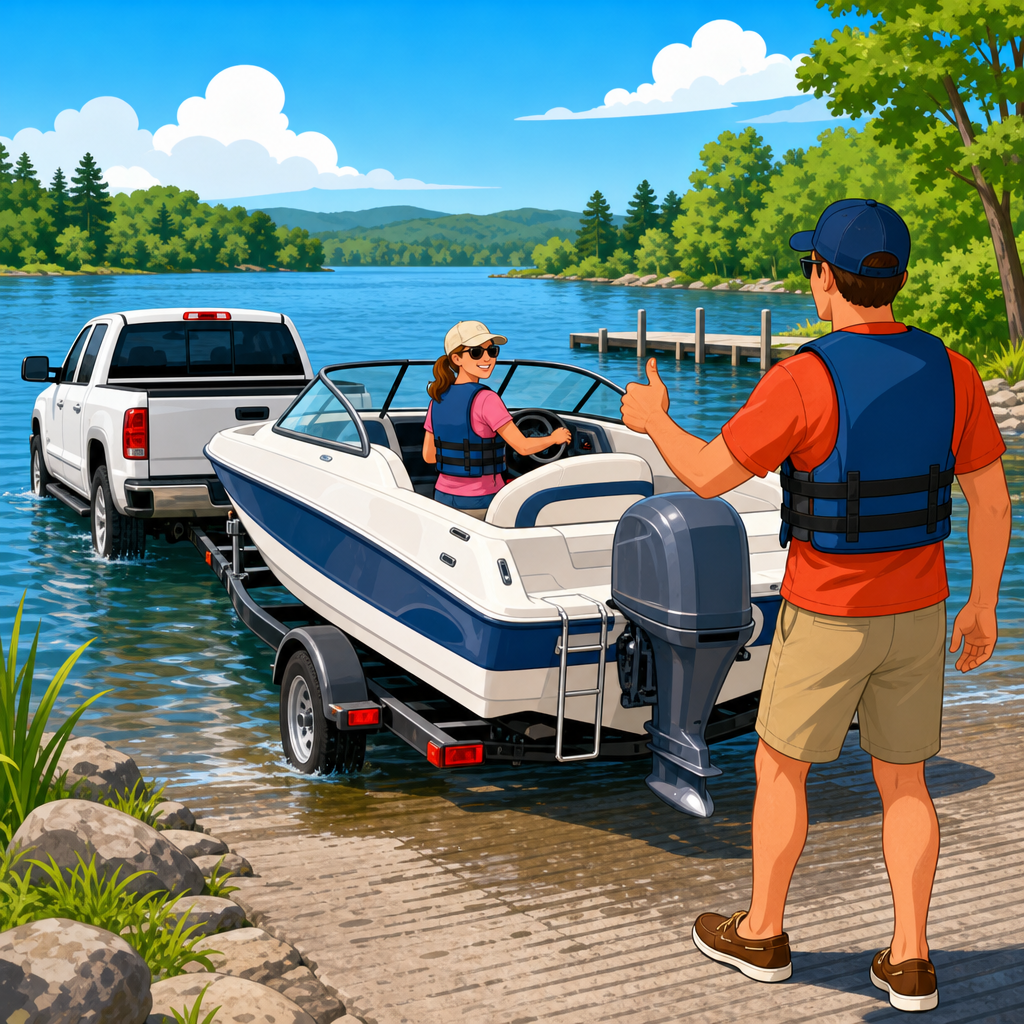
Launching and retrieving a boat from a trailer looks simple from the parking lot, yet it is one of the easiest places for small mistakes to become expensive damage, injuries, or a ruined day on the water. In the years I have spent trailering fishing boats, center consoles, and small cruisers, I have seen the same preventable problems repeat at ramps: missing drain plugs, overheated wheel bearings, winch straps clipped wrong, backing too deep, and rushed crews trying to learn while blocking the lane. A safe boat launch starts long before the ramp. It depends on trailer maintenance, towing discipline, ramp preparation, and a repeatable retrieval routine.
In practical terms, trailer maintenance and towing means keeping the trailer structurally sound, road legal, and correctly matched to the boat and tow vehicle. That includes tires, brakes, hubs, bunks, rollers, lights, straps, coupler, safety chains, tongue weight, and wheel bearings. Safe launching and retrieval means controlling the boat at every stage, using the ramp efficiently, and protecting people first. The reason this matters is straightforward: trailers carry thousands of pounds at highway speed, then transition onto wet, sloped surfaces where traction drops and errors multiply. According to U.S. Coast Guard boating safety guidance and state towing rules, equipment condition and operator preparation are central risk controls, not optional extras.
This hub article covers the full process and the maintenance principles behind it, so you can treat it as your foundation page for trailer maintenance and towing. If you trailer regularly, this is the system to follow before every trip, at the ramp, on retrieval, and during seasonal service. The goal is simple: launch faster, retrieve straighter, tow more safely, and avoid the mechanical failures that strand boats on roadsides or damage them at the waterline.
Start With Trailer Readiness Before You Ever Reach the Ramp
The safest launch begins in your driveway or storage yard. I use the same walkaround every time because routine catches what memory misses. Confirm the boat is centered on the trailer, the winch strap is tight, the safety chain from bow eye to trailer post is attached, transom straps are secure for travel, and the outboard or sterndrive is supported correctly. Check the drain plug before leaving, not when people are waiting behind you. Verify registration, trailer plate, and required safety gear. Then inspect the coupler on the hitch ball, lock the latch with a pin, cross the safety chains under the tongue, connect the breakaway cable if the trailer has brakes, and test all trailer lights.
Tires deserve more attention than many owners give them. Trailer tires usually age out before they wear out. Look for the DOT date code, sidewall cracking, uneven wear, tread separation, and underinflation. Inflate to the pressure listed on the tire sidewall unless the manufacturer specifies otherwise for the trailer setup. Underinflated trailer tires run hot and fail fast, especially in summer. Also confirm the load range matches the gross trailer weight. A tandem-axle trailer with marginal tires may feel fine at neighborhood speed and still suffer a blowout at highway temperature after thirty miles.
Wheel bearings, hubs, and brakes are the next critical system. After towing, place the back of your hand near each hub. Warm is normal; too hot to touch indicates trouble. Bearing protectors can help maintain grease pressure, but they do not replace proper inspection. If the trailer uses surge brakes, inspect the actuator, brake lines, and fluid level. If it has electric-over-hydraulic brakes, test the controller and verify prompt engagement. Corrosion is relentless on boat trailers, especially in salt water. Brake calipers seize, rotors rust, and wiring wicks moisture under insulation. Owners who rinse only the boat and ignore the trailer usually pay later.
Trailer balance also affects launching and retrieval because poor setup causes sway, hard braking, and difficult ramp handling. Tongue weight should generally be around 7 to 10 percent of total trailer weight for many boat trailers, enough to keep the rig stable without overloading the hitch. Too little tongue weight is a common cause of sway. Too much can squat the tow vehicle, reduce steering control, and overload rear suspension components. A properly matched tow vehicle should have enough rated towing capacity, payload, wheelbase, and braking ability for the boat, fuel, batteries, gear, and trailer combined, not just the dry hull weight listed in a brochure.
Prepare in the Staging Area, Not on the Ramp
If you want smoother launches, separate preparation from launching. Use the staging area to do every task that does not require the boat to be in the water. Remove the travel cover. Load coolers, tackle, dock lines, and fenders. Install the drain plug. Disconnect transom tie-downs, but leave the bow winch strap and safety chain attached until the trailer is on the ramp. Prime the outboard fuel system if needed, check battery switches, and make sure the key is in the boat. If you are launching with a crew, assign clear roles before you back down. One person handles the vehicle. One handles bow or stern lines. One watches clearance and communicates with hand signals.
At busy public ramps, this staging discipline matters as much as technical driving skill. Experienced trailer boaters are not faster because they rush. They are faster because they arrive organized. I keep two dock lines rigged before approaching the ramp, one at the bow and one at the stern, each long enough to control the boat in wind or current. That small habit prevents the common scramble where the boat floats free and drifts sideways into another lane or into concrete. It also protects the trailer and tow vehicle from unnecessary immersion while people search lockers for line.
Before backing, assess the ramp. Look at slope, lane width, algae on concrete, wind direction, current, dock position, and the drop-off at the end of the slab. Freshwater reservoirs can have low-water conditions that expose abrupt edges. Tidal ramps can have crosscurrent and slick surfaces. If the ramp is crowded, wait for a clean opening rather than trying to force a rushed maneuver. Safety at the launch ramp depends on patience and visibility. If you are new to backing a trailer, practice in an empty lot first. Learning at a crowded ramp is stressful for you and hazardous for everyone around you.
Backing Down and Launching the Boat Safely
When backing a trailer, put your hands at the bottom of the steering wheel. Move your hand left, and the trailer goes left; move it right, and the trailer goes right. Use small corrections and go slowly. Most oversteering starts when the driver waits too long, then makes a large correction that jackknifes the trailer. Back in a straight line if possible, using mirrors more than rear cameras because mirrors show the trailer’s angle continuously. If visibility is poor, use a spotter on the driver’s side where you can see them at all times. If you lose sight of the spotter, stop immediately.
The correct launch depth depends on trailer design and hull shape. Bunk trailers usually need the bunks wet but not deeply submerged, while roller trailers can launch with less water depth. A common benchmark is to back until the rear of the boat begins to float while the bow remains controlled by the winch. If you back too deep, the boat can float crooked over the bunks and become harder to control. If you do not back deep enough, people compensate by powering off aggressively, which erodes ramps and can damage the trailer or propeller. The engine should be started only when the water intake is submerged and the area behind the boat is clear.
Once the boat is floating and under control, set the parking brake on the tow vehicle before anyone steps near the waterline. Chock wheels if the ramp is steep and conditions warrant it. Then release the winch strap and bow safety chain only when the boat is ready to launch. Depending on the setup, the boat can be eased back by hand, allowed to float free, or held on a line and guided to the courtesy dock. Avoid power loading during launch. The prop wash can create dangerous turbulence around the ramp, and in shallow water it increases the chance of striking bottom or sucking debris into the cooling system.
| Stage | What to do | Why it matters |
|---|---|---|
| Before departure | Inspect tires, lights, coupler, chains, bearings, brakes, straps, and plug | Prevents roadside failures and forgotten essentials |
| Staging area | Load gear, rig lines, remove tie-downs, prepare engine, assign crew roles | Keeps the ramp clear and reduces rushed mistakes |
| Backing down | Use mirrors, small steering inputs, a visible spotter, and slow speed | Improves control and avoids jackknifing |
| Launch depth | Submerge enough for flotation but keep the boat aligned on bunks or rollers | Prevents crooked launches and trailer contact damage |
| After launch | Move the boat to the dock, park the tow vehicle, clear the lane promptly | Maintains ramp flow and reduces collision risk |
On-Water Awareness and Ramp Etiquette During Retrieval
Retrieval starts before the trailer touches the water. While still offshore or in the marina basin, prepare dock lines, fenders if needed, and a retrieval plan based on wind and current. If the wind is pushing the boat off the trailer centerline, approach from the upwind side so the drift helps rather than hurts. If current is present, maintain enough steerage to stay aligned without excessive throttle. Good boat handling at idle speed matters more here than horsepower. I often tell new owners that retrieval is a docking maneuver with a narrow target, not a race to get out of the water.
When the tow vehicle is bringing the trailer down, use approximately the same depth that worked for launch, then adjust based on conditions. Too deep is the most frequent retrieval error on bunk trailers because the boat loses the guides that help center it. With the trailer set, approach slowly and square to the centerline. In calm conditions, idle onto the bunks until the bow reaches the winch post area, then attach the winch strap and pull the boat snug. In wind or current, a line handler on the dock can help keep the bow aligned. The key is controlled momentum, not throttle.
Many ramps and marinas prohibit or discourage power loading for good reason. A hard burst of throttle to drive the boat onto the trailer can scour sediment from under the ramp slab, creating voids and long-term structural damage. It also increases the chance of striking the winch post, bow stop, or trailer frame. Some hulls and trailer combinations require a brief application of power to settle the boat the last few inches, but that should be minimal and only where allowed. Most retrieval problems are solved by changing trailer depth, not by adding engine force.
Once the boat is attached to the winch and safety chain, pull the rig up to the staging area before doing final securing work. There, install transom straps, remove the drain plug if local practice and regulations support draining away from the ramp, secure electronics and gear, and verify that the outboard is locked in the correct trailering position. This step keeps the lane moving and lowers stress for everyone. Ramp etiquette is part of safety. Predictable, efficient operators create fewer conflicts, and fewer conflicts mean fewer injuries and less equipment damage.
Maintenance Priorities That Make Launch and Retrieval Easier
Trailer maintenance is not separate from ramp performance; it determines ramp performance. Bunks should support the hull evenly and have intact carpet or synthetic surfaces without exposed fasteners. Rotten wood bunks, bent brackets, and misaligned guides cause loading problems and hull damage. Rollers should spin freely and match the hull shape they are intended to support. Winches need clean gears, a working ratchet, and a strap or cable without frays, kinks, or crushed sections. Safety chains must be sized for the load and attached to solid points, not thin brackets that can tear loose under shock loads.
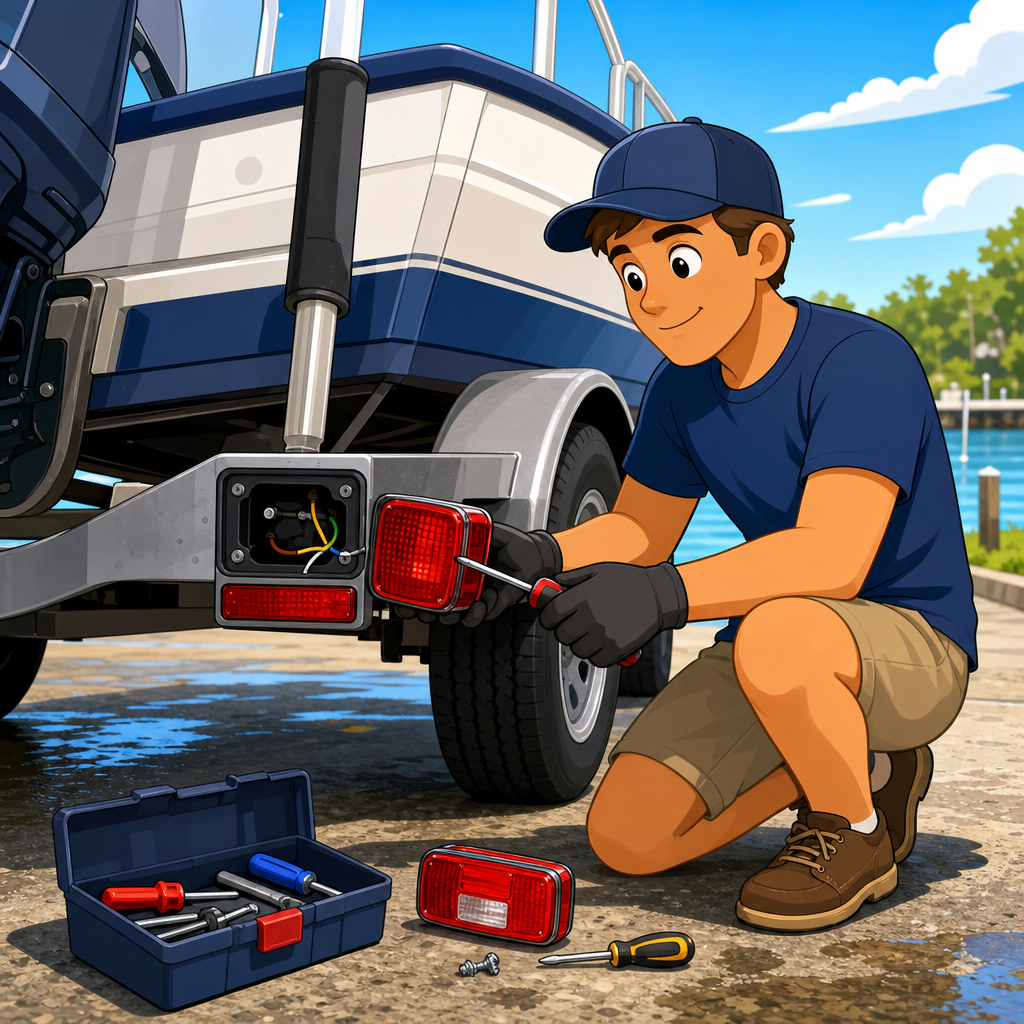
Lighting and wiring deserve scheduled service, especially on submerged trailers. Modern sealed LED trailer lights are more reliable than older incandescent assemblies, but they still fail from corroded grounds, damaged harnesses, or bad connectors. Heat-shrink marine-grade butt connectors and tinned copper wire last longer than automotive-grade quick fixes. I recommend checking lights every trip and opening the harness at least seasonally if the trailer sees salt water. Trailer frames should also be inspected for rust, cracked welds, especially near spring hangers, crossmembers, and tongue junctions.
Suspension and axle components are often overlooked because they fail gradually. Leaf springs corrode from the inside out, equalizers wear oval, U-bolts lose clamping force, and worn bushings let the trailer track poorly. These issues show up at the ramp as crooked retrievals and on the road as unstable handling or uneven tire wear. Brake flushing, bearing repacking intervals, and torque specifications should follow the trailer manufacturer’s service schedule, but heavy use, long storage, and salt exposure justify more frequent attention. Carry spares: a hub kit, wheel bearing set, grease, jack, lug wrench, extra straps, and fuses can turn a breakdown into a short delay instead of an all-day recovery.
Common Mistakes, Special Conditions, and a Safer Routine
The most common launch mistake is forgetting the drain plug. The second is removing the bow winch strap too early. The third is backing too deep or too shallow and trying to solve setup errors with throttle. Other routine mistakes include leaving transom straps on during launch, failing to set the parking brake, standing between the boat and dock, and letting inexperienced helpers improvise. A safer routine is written, not assumed: walkaround inspection, staging checklist, controlled launch, prompt lane clearing, measured retrieval, and post-ramp securing. That routine works whether you tow a sixteen-foot aluminum boat or a heavy fiberglass walkaround.
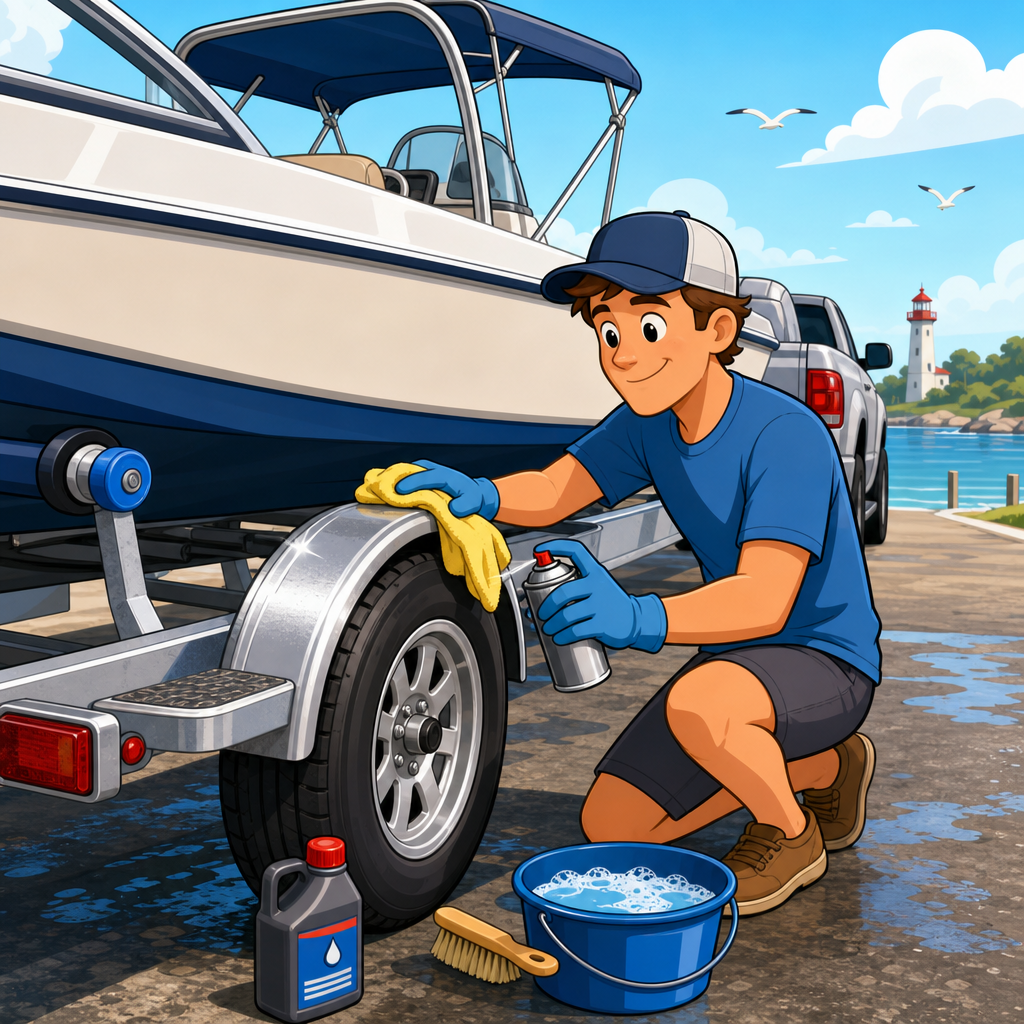
Special conditions require adjustments. In crosswinds, rig both bow and stern lines so one person can keep the boat parallel to the dock. In strong current, approach slightly upstream and use short gear engagements to maintain alignment. On steep ramps, four-wheel drive can improve traction, but it is not a substitute for good tires and judgment. In salt water, rinse brakes, axles, wheels, springs, frame, and coupler thoroughly after every trip. In freezing climates, never submerge hot hubs in icy water if you can avoid it; rapid cooling can draw water past seals and shorten bearing life. If you tow long distance, stop after the first few miles and recheck straps, hub temperature, and coupler security.
The main benefit of mastering boat trailer maintenance and towing is consistency. A well-maintained trailer tows straighter, brakes better, and loads more predictably. A practiced launch routine reduces stress on the crew, the boat, and everyone waiting behind you. A disciplined retrieval process cuts down on hull scratches, bent guide-ons, overheated transmissions, and avoidable ramp arguments. If this page is your starting point for trailer maintenance and towing, use it as your baseline standard. Build a checklist, service the trailer on schedule, practice backing before peak season, and refine one reliable system. Safe launching and retrieval is not luck. It is preparation repeated until it becomes habit.
Frequently Asked Questions
What should I do before I back my trailer down the ramp?
The safest launch starts well before your trailer reaches the water. Pull into the staging or prep area first so you can get the boat and trailer ready without blocking the ramp. Install the drain plug, remove the transom straps, check that the battery switch is on if your boat uses one, and make sure all required safety gear is on board. Tilt the motor or outdrive up enough for backing, but not so high that you forget to lower it before starting. Load dock lines and fenders where they can be reached quickly, and decide who will handle the bow line, stern line, and vehicle. If you are launching alone, have a clear plan for where the boat will go once it floats free.
You should also inspect the trailer itself before backing down. Confirm the winch strap is centered and properly attached to the bow eye, the safety chain is still connected until the boat is ready to float, and the trailer coupler is latched securely on the hitch. Check your tires and wheel bearings if you have been towing any distance, especially on hot days. A quick walkaround often catches problems that turn into major delays at the ramp. Taking two extra minutes in the prep lane is far safer than trying to solve preventable mistakes while half-submerged at the launch.
How deep should I back the trailer into the water when launching a boat?
One of the most common ramp mistakes is backing too deep. In most cases, the trailer should be submerged only enough so the boat begins to float while still being guided by the bunks or rollers. If you back in too far, the boat can drift off crooked, slide unexpectedly, or become difficult to control in wind or current. With bunk trailers, a good starting point is usually having the tops of the fenders near the waterline, then adjusting based on ramp angle, boat size, and trailer design. Roller trailers often need less depth than many people expect.
The right depth is whatever allows the boat to launch with control, not force. If you have to power the boat hard off the trailer, you may not be deep enough. If the boat wants to float away before you are ready, you are probably too deep. The best approach is to back in gradually, set the parking brake, step out carefully, and assess how the boat is sitting. Over time, you will learn the sweet spot for your exact setup. That consistency matters because predictable launches reduce stress, prevent hull damage, and keep you from becoming the crew everyone else at the ramp is waiting on.
What is the safest way to launch and retrieve a boat if I am by myself?
Solo launching and retrieval can be done safely, but only if you slow down and keep the process simple. Before you approach the ramp, complete every prep step in the staging area, including attaching a bow line long enough to control the boat from the dock or shoreline. When launching alone, back down to the proper depth, keep the winch strap and safety chain attached until the boat is in position to float, then release them only when you are ready. Depending on the ramp and your boat, you may be able to guide the boat off by hand, or you may need to board from the dock and back it off gently. The key is to avoid jumping between boat, trailer, and dock or trying to rush the sequence.
For solo retrieval, prepare the trailer first, then bring the boat in under control at idle speed. If conditions are calm, you can often align the bow with the bunks and use steady throttle to ease the boat forward until the bow reaches the winch post. In wind or current, it may be safer to secure the boat to the dock first, walk up, position the trailer, and then load. Once the bow is close enough, attach the winch strap and safety chain before pulling out. Never rely solely on engine thrust to hold the boat in place while you scramble forward. Solo ramp work is really about discipline: keep your footing, use lines, wear a life jacket near the water, and do not let impatience create a bad decision.
What mistakes cause the most damage or safety problems at the boat ramp?
The biggest problems are usually not dramatic mechanical failures but ordinary skipped steps. Forgetting the drain plug can flood a boat quickly and turn a routine launch into an emergency. Leaving transom straps attached while trying to launch can damage hardware or confuse the crew. Unhooking the winch strap too early can let the boat slide off the trailer unexpectedly. Backing too deep can put the tow vehicle at risk, make the boat difficult to control, and sometimes lead to wheels dropping off the edge of the ramp. On retrieval, driving the boat too hard onto the trailer can damage the hull, bunks, winch stand, or ramp area, and in some locations it is prohibited because prop wash erodes the ramp.
There are also safety issues that happen away from the waterline but matter just as much. Overheated wheel bearings, underinflated trailer tires, weak winch straps, corroded safety chains, and poorly adjusted brakes can all create serious trouble during the trip to and from the ramp. Slippery surfaces are another major hazard. People get hurt climbing onto wet trailer tongues, stepping from the dock to the boat at the wrong moment, or wading where footing is uneven. The best way to avoid these problems is to use a repeatable checklist every time. Experienced boaters are not safer because they rush; they are safer because they follow the same proven order and do not assume they will remember everything under pressure.
How do I retrieve the boat onto the trailer correctly without damaging it?
Good retrieval starts with setup and alignment. Before bringing the boat in, back the trailer to the right depth for your ramp and trailer style. Too shallow and the boat will stop short or sit crooked; too deep and it may float over the bunks and fail to center properly. Approach the trailer slowly, keeping the boat lined up with the bunks or rollers well before the bow reaches the rear of the trailer. Idle speed is usually enough. Small steering corrections early are far better than sharp, last-second adjustments near the winch post.
Once the boat is centered, ease forward until the bow reaches the winch stand or sits close enough to connect the winch strap safely. Attach the strap to the bow eye correctly, verify the hook is oriented securely, and crank the boat snug instead of trying to force everything with engine power. Then connect the safety chain. After the rig is pulled up the ramp and away from traffic, stop in the staging area to finish securing the boat. That is the right time to install transom straps, raise the motor for travel, remove the drain plug if appropriate for storage or transport, and do a final walkaround. A careful retrieval protects the hull, trailer, and drivetrain, and it also keeps the ramp moving smoothly for everyone else.