Long-distance boating exposes an engine to the hardest version of its job: sustained load, changing water conditions, vibration, heat, salt, and long periods when a small issue can grow into a trip-ending failure. The best engine maintenance tips for long-distance boating are not glamorous, but they are decisive. Clean fuel, stable cooling, healthy electrical systems, proper lubrication, and disciplined inspections keep propulsion dependable when you are hours from a marina. I have worked through enough fouled filters, overheated outboards, and dead house banks offshore to know that reliability is built before departure, not improvised on the water.
Engine care and troubleshooting cover the routine practices, inspections, adjustments, and diagnostic steps that protect performance and reduce the chance of breakdowns. For boaters, that means understanding how fuel delivery, ignition, charging, cooling, belts, hoses, and corrosion control work together under marine conditions. It also means knowing the difference between preventive maintenance and corrective repair. Maintenance is changing fluids, inspecting anodes, replacing impellers, and testing batteries on schedule. Troubleshooting is reading symptoms correctly when the engine cranks slowly, loses power, overheats, alarms, smokes, or stalls under load.
This hub article matters because engine problems offshore rarely stay isolated. A weak alternator can leave electronics underpowered. A restricted fuel vent can mimic a bad injector. A neglected seawater impeller can overheat the powerhead and damage exhaust components. Long-distance boating demands systems thinking: one fault often appears somewhere else first. Manufacturers such as Yamaha, Mercury, Honda Marine, Volvo Penta, Suzuki, Yanmar, and Cummins publish service schedules for that reason, and standards from the American Boat and Yacht Council shape how fuel, electrical, and ventilation systems should be maintained and inspected.
If you want a practical starting point, focus on four priorities. First, follow the service interval for oil, filters, gearcase lubricant, impellers, belts, and spark plugs. Second, inspect fuel quality and water separation before every major run. Third, monitor operating data such as oil pressure, voltage, temperature, and fuel burn, because trends reveal problems early. Fourth, carry the spares and tools needed to handle the failures most likely to happen underway. Everything else in engine care and troubleshooting builds on those basics, and this article organizes the subject so you can create a maintenance routine that supports real cruising distance.
Build a maintenance schedule around hours, seasons, and conditions
The most effective maintenance plan for long-distance boating uses three clocks at once: engine hours, calendar time, and operating environment. Hour-based service catches wear from use. Calendar-based service catches degradation from age, moisture, and oxidation. Environment-based service accounts for saltwater, silty rivers, tropical heat, cold storage, and ethanol-blended fuel. In practice, I treat manufacturer intervals as the floor, then shorten them for hard use. An outboard running long passages at cruising rpm in warm saltwater needs more frequent inspection than a lightly used lake boat, even if the hour meter looks similar.
Record every service event in a simple log with date, engine hours, parts used, torque values where relevant, and any abnormal findings. That log becomes your diagnostic history. If fuel economy declines after a propeller change, if a battery starts failing three months after a charging issue, or if a thermostat was replaced right before a repeat overheat alarm, the timeline matters. Good records also support resale value and help any technician understand what has already been ruled out. Many owners use manufacturer apps, but a spreadsheet and a waterproof notebook still work extremely well.
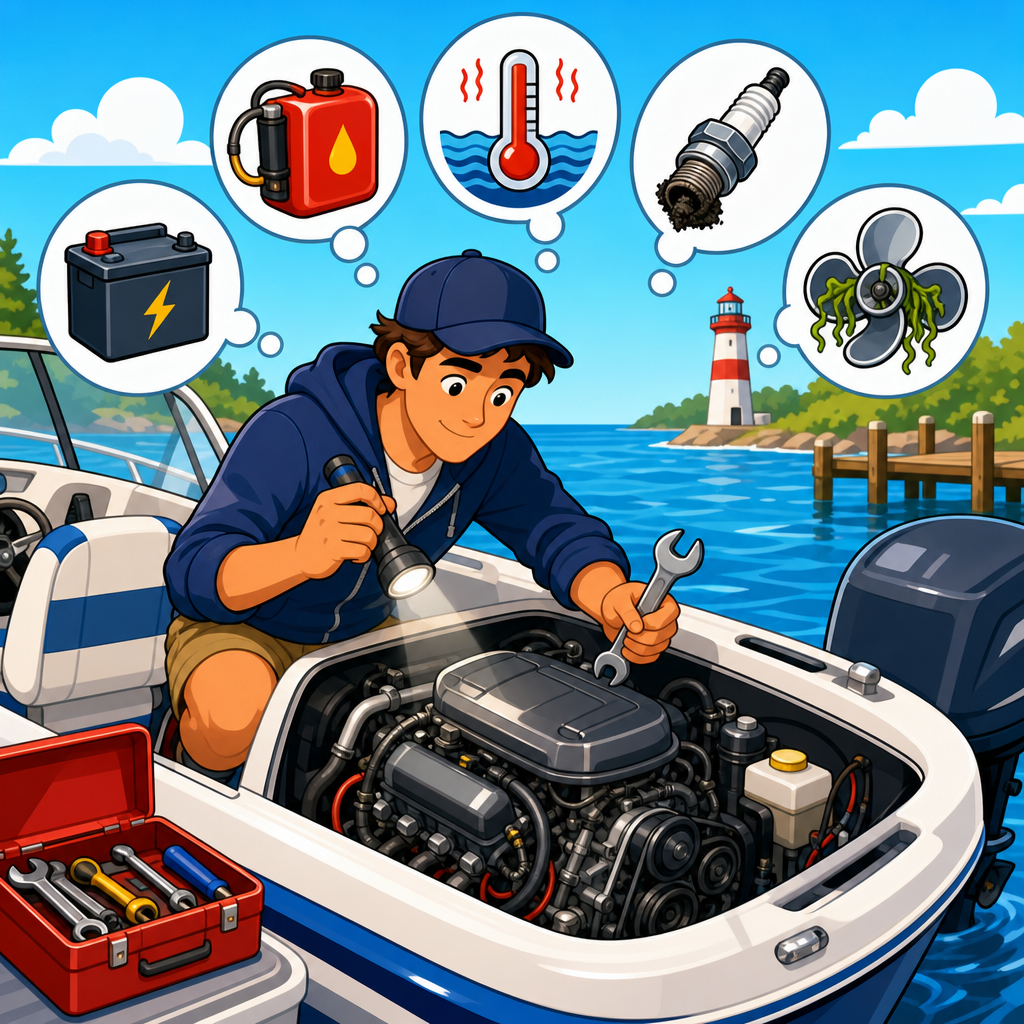
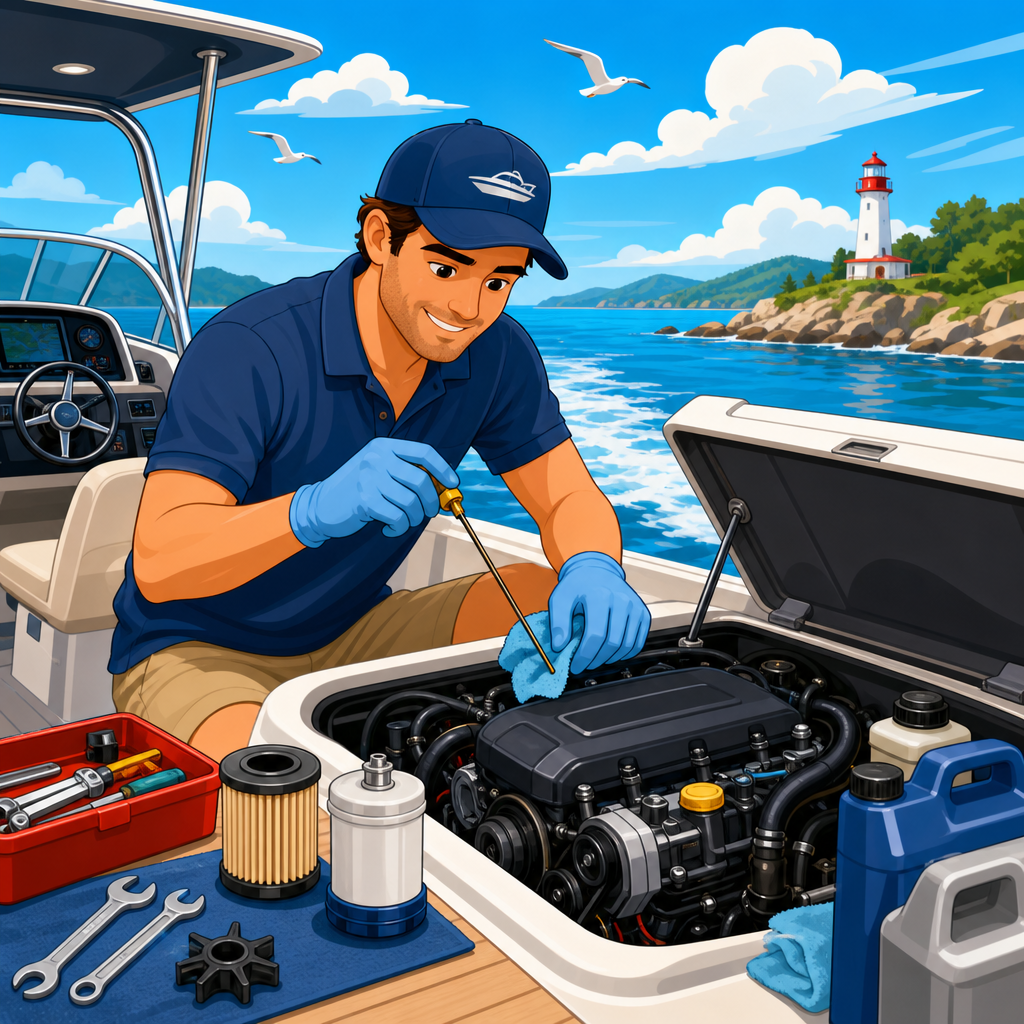
Pre-departure checks should be fast and repeatable. Before a long run, inspect engine oil level and condition, coolant level on closed-cooled systems, gearcase or transmission area for leaks, battery voltage, belt tension, seawater strainer condition, and fuel-water separator bowls. Start the engine early enough to verify charging voltage, telltale flow on outboards, exhaust water discharge, idle quality, and alarm function. A two-minute walkaround often reveals what an expensive tow later confirms: loose hose clamps, chafed wiring, salt creep around terminals, and stains that show a leak started before you left the dock.
Seasonal service is where long-range reliability is won. Replace impellers at recommended intervals rather than waiting for weak flow. Change thermostats if corrosion or sticking is suspected. Service injectors or carburetors when storage quality has been poor. Inspect motor mounts, shaft alignment, and cutless bearings on inboards. For sterndrives, pay close attention to bellows, gimbal bearings, and u-joints because water intrusion there can become catastrophic. Winterization and recommissioning also belong in the engine-care conversation: improper layup creates springtime failures that look random but are often the result of old fuel, corrosion, or trapped water.
Protect the fuel system because most offshore problems begin there
Fuel problems are the most common cause of avoidable loss of power and no-start conditions in cruising boats. Modern gasoline is less storage-friendly than many boaters realize, particularly when ethanol is involved. Diesel offers better energy density and safety characteristics for many passagemaking boats, but it brings its own risks, especially microbial growth in tanks with water contamination. In either case, the maintenance objective is the same: keep fuel clean, dry, and moving through unrestricted components. That means tanks, vents, pickup tubes, anti-siphon valves, primer bulbs, pumps, filters, rails, injectors, and return lines all deserve routine attention.
Use a quality 10-micron fuel-water separator suited to your engine and change it before a major trip, not after a problem appears. Racor systems are common for good reason: clear bowls and vacuum gauges make diagnosis easier. If a boat begins to lose rpm at higher throttle settings but idles normally, suspect restricted fuel flow first. A collapsing fuel hose liner, clogged tank vent, dirty separator, or weak low-pressure pump can all create that pattern. One practical test is to observe whether performance temporarily improves after changing the filter or loosening the fuel cap, which can reveal vent restriction.
Fuel management also includes how you buy and store fuel. Purchase from busy docks with known turnover, especially before a long passage. Keep tanks as full as practical during storage to reduce condensation, but leave room for thermal expansion. For diesel, periodic polishing may be worthwhile for larger tanks or boats that sit. For gasoline, stabilizer can help during layup, but it is not a cure for stale fuel. If phase separation has occurred in ethanol-blended gasoline, additives will not reverse it; the contaminated fuel must be removed. This is one area where prevention is cheaper than every attempted shortcut.
| Symptom | Likely fuel-related cause | First check | Practical fix |
|---|---|---|---|
| Engine surges at cruise | Restricted flow or air leak | Separator, hose clamps, primer bulb | Replace filter, tighten fittings, inspect hoses |
| Engine dies after several minutes | Blocked tank vent | Fuel cap and vent line | Clear vent obstruction, replace damaged line |
| Hard starting after storage | Stale fuel or injector varnish | Fuel age, service history | Drain bad fuel, service injectors, replace filters |
| Loss of top-end rpm | Clogged pickup or weak pump | Vacuum gauge, pressure test | Clean pickup, replace pump if pressure is low |
Carry spare filters, a filter wrench, absorbent pads, and a safe container for contaminated fuel. On diesel boats, knowing how to prime and bleed the system after a filter change is essential. On outboards, inspect quick-connect fittings for worn O-rings and air leaks. On older boats, replace aging fuel hoses with marine-rated hose that meets current permeability and ethanol-resistance requirements. If you are building out your wider Boat Maintenance & Repairs knowledge base, fuel quality, fuel filter replacement, and diagnosing power loss deserve their own detailed guides linked from this hub, because they account for a large share of real-world engine troubleshooting.
Keep the cooling and lubrication systems ahead of failure
Marine engines live or die by temperature control. Raw-water cooling systems ingest sand, grass, shells, and salt, while closed-cooled systems depend on heat exchangers, coolant chemistry, and pressure caps to transfer heat effectively. The best habit is to treat every overheat warning as urgent. Continuing to run hot can warp components, burn exhaust hoses, damage turbochargers on diesel engines, and shorten oil life dramatically. On outboards, a weak telltale is not always a complete diagnosis, but it is a clear sign to inspect the water pump, passages, and thermostat before the next serious run.
Impellers deserve special respect. They age from time as well as use, and a partially failed impeller can still pump enough water at idle to fool you while starving the engine at cruise. Replace impellers on schedule and inspect for missing vanes. If vanes are missing, find them downstream in the cooling circuit because they often lodge in passages or coolers and continue causing intermittent overheating. On inboards and diesels, also inspect seawater strainers, pump covers, cam plates, heat exchangers, aftercoolers, and mixing elbows. Restricted exhaust elbows are a classic hidden cause of heat and power issues in aging diesel installations.
Lubrication maintenance is equally central. Engine oil does more than reduce friction; it carries contaminants, stabilizes temperature, and supports hydraulic components such as variable valve systems or lifters in some engines. Use the viscosity and specification the manufacturer calls for, then verify oil condition by sight and, for diesels or high-use boats, by analysis. Black oil in a diesel is normal quickly after change; milky oil is not and can indicate water intrusion. Rising oil level may suggest fuel dilution. Gearcase lubricant with a milky appearance points to water intrusion through seals, and that problem should be corrected before bearings fail.
For long-distance use, trend monitoring beats guesswork. Note normal oil pressure at idle and cruise, normal coolant temperature, and normal charging voltage for your engine package. If the data drifts, investigate before an alarm sounds. A healthy operator responds to changing numbers, not just flashing lights. This hub should connect naturally to deeper articles on impeller replacement, overheating diagnosis, oil analysis, lower-unit maintenance, and exhaust elbow inspection, because those jobs sit at the intersection of routine care and serious troubleshooting, exactly where most owners either save a trip or lose one.
Electrical reliability, corrosion control, and smart troubleshooting underway
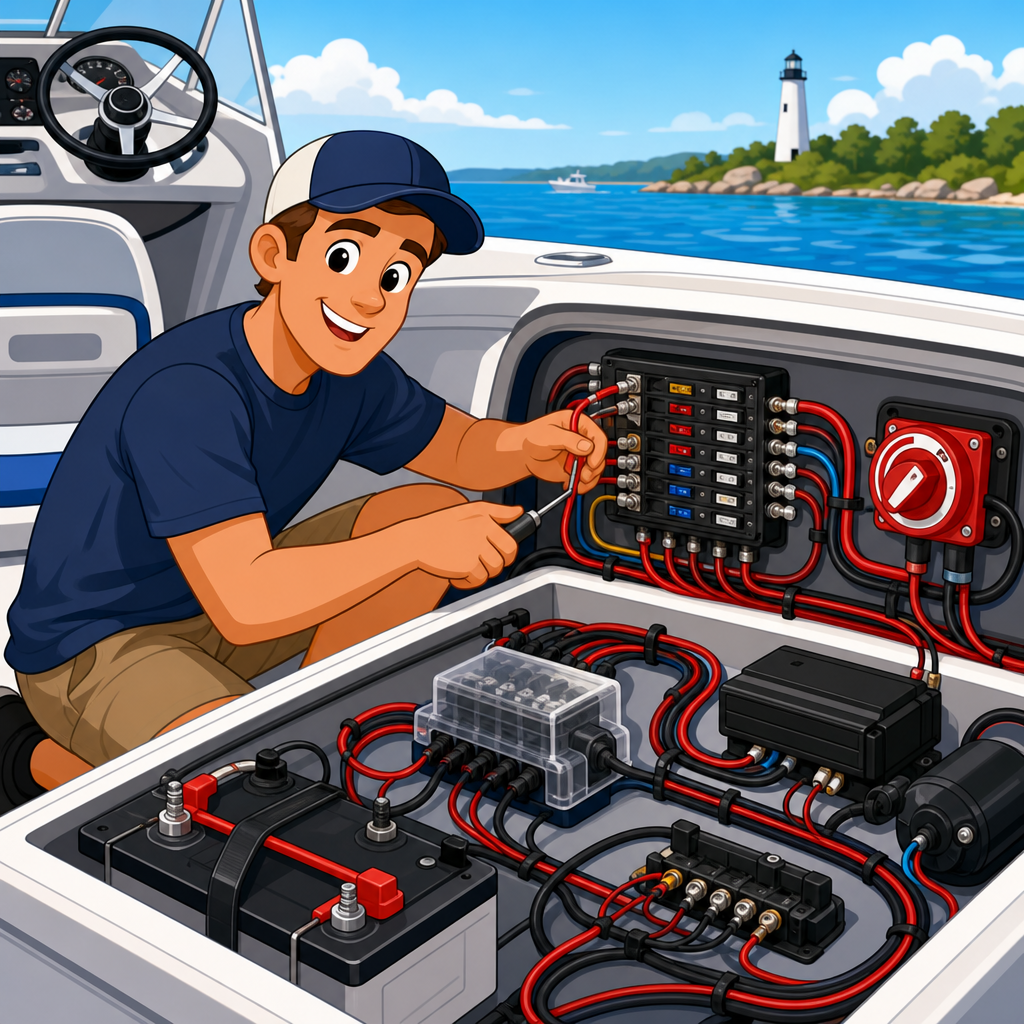
Many “engine” failures are electrical failures wearing an engine disguise. Corroded battery terminals can mimic a bad starter. A weak ground can create sensor faults. Low system voltage can disable fuel pumps, electronic control modules, and gauges in confusing ways. For long-distance boating, test batteries with more than a dashboard voltmeter. Use a multimeter, inspect resting voltage, confirm charging voltage under load, and load-test suspect batteries. Clean terminals, protect them appropriately, and verify that cranking voltage does not collapse below the engine manufacturer’s acceptable range. On twin-engine boats, make sure emergency cross-connect procedures are understood before you need them.
Corrosion management is constant in the marine environment. Salt creates conductive residue that accelerates terminal degradation, connector failure, and bonding issues. Inspect harness plugs, fuse blocks, starter connections, alternator outputs, and engine grounds for green or white corrosion products. Replace heat-damaged or stiff cables rather than trying to save them. Anodes should be monitored, but understand their role correctly: they protect submerged metals from galvanic corrosion; they do not fix stray current faults. If anodes disappear unusually fast, investigate shore power grounding, bonding continuity, and leakage with a qualified marine electrician before expensive metal loss follows.
Troubleshooting underway should be systematic. Start with the symptom, then confirm what changed. Did the engine lose power gradually or instantly? Does the issue occur only under load? Are alarms active? Is voltage stable? Is fuel primer bulb vacuum increasing? Is cooling water flow reduced? Fast diagnosis comes from narrowing variables rather than replacing parts at random. I teach owners to check air, fuel, spark or ignition, cooling, and compression in that order of accessibility, while always considering control-system faults on electronically managed engines. A scan tool compatible with your brand can turn guesswork into evidence within minutes.
Long-distance preparedness also means carrying the right spares: belts, impeller, engine oil, gear lube, coolant where applicable, fuel filters, spark plugs for gasoline engines, hose clamps, fuses, relays, a serpentine belt tool if needed, and a compact electrical kit. Add a service manual, torque references, and part numbers specific to your engine model. The main benefit of disciplined engine care and troubleshooting is simple: you convert uncertainty into routine. Build your schedule, inspect before every run, learn your engine’s normal readings, and link this hub to deeper maintenance guides so every trip starts with a system you trust.
Frequently Asked Questions
What engine maintenance matters most before a long-distance boating trip?
Before a long run, focus on the systems most likely to turn a manageable issue into a breakdown: fuel, cooling, lubrication, belts and hoses, batteries, and the charging system. Start with the basics by checking engine oil level and condition, transmission fluid if applicable, coolant level on closed-cooled engines, and the condition of seawater strainers and impellers. Look for any sign of oil sheen, coolant residue, salt buildup, loose hose clamps, worn belts, or fuel seepage around filters, fittings, and injector or carburetor connections. A small leak that seems harmless at the dock can become a major reliability problem after hours of vibration and sustained engine load.
Fuel quality is especially important for long-distance boating because contaminated fuel, clogged filters, or water in the system often show up when the engine is working hardest. Replace fuel filters on schedule or sooner if there is any doubt, drain water separators, and carry spare filter elements aboard. It is also smart to inspect the fuel tank vent and lines for cracks, restrictions, or loose connections. On the cooling side, confirm strong raw-water flow, inspect the impeller if service is due, and make sure the thermostat and heat exchanger are maintained according to the manufacturer’s schedule. Overheating rarely begins as a dramatic failure; it often starts as restricted flow, scale buildup, or a neglected impeller.
Finally, do not skip a test run under realistic load. Let the engine come fully up to operating temperature and watch oil pressure, voltage, and temperature closely. Listen for changes in idle quality, belt squeal, unusual vibration, or exhaust note. The best pre-trip maintenance is not just replacing parts on a calendar. It is verifying that every critical system works correctly before you are far from assistance.
How can I prevent fuel problems during long-distance boating?
Fuel problems are among the most common reasons marine engines lose power or quit entirely on long passages, so prevention needs to be deliberate. The first priority is keeping water and debris out of the system. Use clean, reputable fuel sources, avoid filling from questionable docks when possible, and keep tanks topped off when practical to reduce condensation, especially in humid or fluctuating temperatures. Water in fuel can cause poor combustion, corrosion, microbial growth in diesel systems, and blocked filters at the worst possible time.
Routine filter maintenance is essential. Inspect and drain fuel-water separators regularly, and replace primary and secondary filters based on hours, season, or any sign of contamination. If your boat has a clear inspection bowl on the separator, check it often for water or sediment. Carry multiple spare filters, the tools to change them, and absorbent pads for cleanup. On longer runs, a partially clogged filter may not show up at idle, but under sustained throttle it can starve the engine and cause surging, hesitation, or shutdown. That is why fuel system maintenance is not just about cleanliness; it is about maintaining consistent flow under load.
It also helps to inspect the full fuel path. Check hoses for age cracks, softness, chafe, and loose clamps. Make sure the tank vent is clear, since a restricted vent can mimic major engine trouble by limiting fuel delivery. If you use fuel additives, use them thoughtfully and according to engine and fuel type, not as a substitute for mechanical maintenance. In long-distance boating, the safest approach is simple: start with clean fuel, keep water out, replace filters before they become restrictive, and be ready to service the system underway if conditions demand it.
Why is the cooling system so critical on extended runs?
The cooling system protects the engine from one of its biggest enemies: heat buildup under continuous load. During long-distance boating, an engine may spend hours running at cruise rpm, often in warm water, rough conditions, or areas with weeds, silt, or debris that challenge water flow. That means even a minor reduction in cooling efficiency can become a serious overheating event. Raw-water impellers, strainers, thermostats, heat exchangers, circulation pumps, coolant condition, and hose integrity all work together, and a weakness in any one of those areas can affect the whole system.
One of the smartest habits is checking for strong cooling-water discharge and monitoring engine temperature for even small deviations from normal. If your engine usually runs at a steady temperature and then begins creeping upward, that is a warning sign, not something to ignore until an alarm sounds. Raw-water strainers should be clean and properly sealed, intake paths should be free of obstructions, and impellers should be replaced on schedule because they often fail from age and set rather than obvious wear alone. On closed-cooled engines, coolant should be at the correct mixture and in good condition, and the heat exchanger should be serviced often enough to prevent scale, corrosion, or blockage.
Saltwater operation raises the stakes even further. Salt deposits, internal corrosion, and restricted passages can quietly reduce cooling efficiency over time. That is why flushing, inspection, and scheduled service matter so much for boats that spend time in salt or brackish water. Long-distance reliability comes from treating the cooling system as a top-tier maintenance priority, not an occasional check. If fuel keeps the engine running, cooling keeps it alive.
What should I inspect during the trip to catch engine trouble early?
On a long trip, disciplined inspections are what keep a minor issue from becoming a tow, a repair bill, or a dangerous situation offshore. The best practice is to build quick engine checks into your routine at fuel stops, anchorages, and any time conditions allow. Start with a visual scan of the engine compartment. Look for fresh drips, loosened clamps, belt dust, signs of chafe, dark soot, coolant residue, or anything that looks newly wet, shiny, or discolored. Use your senses as much as your eyes. Burnt smells, unusual vibration, changes in exhaust appearance, or a new mechanical noise often show up before a gauge reaches an alarm point.
Pay close attention to trends in engine instruments. Stable oil pressure, normal temperature, and proper charging voltage are more informative than a single reading in isolation. If voltage begins dropping, the charging system or battery connections may be deteriorating. If temperature rises slightly over the course of the day, cooling flow may be restricted. If rpm changes but boat speed does not, there may be a propeller issue, fouling, or a developing engine performance problem. Good operators do not just react to alarms; they notice drift from normal behavior and investigate early.
Fluid checks are equally important. Check engine oil and coolant levels as appropriate, inspect fuel-water separators, and confirm there is no water intrusion or contamination. On diesel boats, air leaks and fuel restriction can show up as harder starting, roughness, or inconsistent throttle response. On gasoline boats, ignition and charging issues can appear as misfire, weak starting, or unstable idle. A few minutes of organized inspection during the trip can add hours of dependable operation later. Long-distance boating rewards consistency, and engine checks should be treated as part of navigation discipline, not as optional maintenance.
What spare parts and maintenance supplies should I carry for long-distance engine reliability?
The right spare parts kit should be built around the failures you can reasonably diagnose and fix away from a marina. At minimum, carry engine oil, the correct coolant if applicable, transmission fluid if required, spare fuel filters, a spare raw-water impeller with gasket or O-ring, belts sized for your engine, replacement hose clamps, basic electrical connectors, fuses, and a small selection of marine-grade wire. Add spare spark plugs for gasoline engines, and for diesel setups, include enough filter capacity and tools to handle contaminated fuel if necessary. These are the items most likely to restore propulsion quickly when a common maintenance-related problem appears underway.
Tools matter just as much as parts. Bring the wrenches and sockets that actually fit your engine, screwdrivers, pliers, a filter wrench, a multimeter, a flashlight or headlamp, zip ties, rags, absorbent pads, and a manual or service reference for your specific engine model. Many boaters carry spare parts but forget the one tool needed to install them. It is also smart to label filters and belts ahead of time and rehearse access to service points at the dock. In rough water or fading light, familiarity saves time and reduces mistakes.
Most important, match your spares to your engine’s maintenance history and cruising profile. If your boat runs in weedy shallows, cooling-system spares become even more important. If you have had battery or charging issues in the past, carry extra terminals, fuses, and diagnostic tools. If the route includes remote stretches, be more conservative and carry more redundancy. The goal is not to turn the boat into a floating workshop. It is to have the parts and supplies that address the most likely trip-ending issues before they become trip-ending issues.