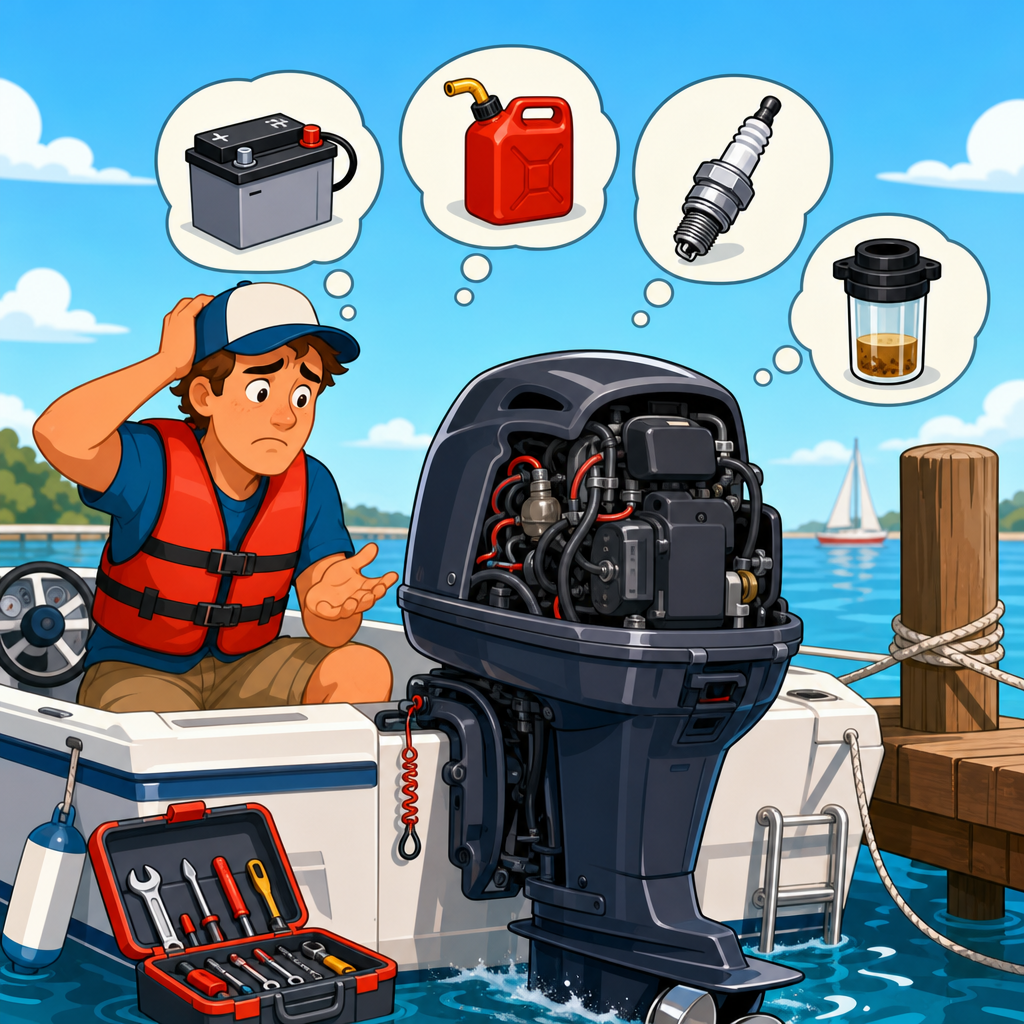
A boat engine that will not start is one of the most common and frustrating problems owners face, and in my experience diagnosing marine engines at the dock, the cause is usually predictable once you separate fuel, spark, air, battery power, and mechanical condition into a clear checklist. “Boat engine won’t start” can describe several different symptoms: the engine does nothing when you turn the key, it cranks slowly, it cranks normally but never fires, it starts and dies, or it runs briefly only with throttle input. Those differences matter because each points toward a different failure path. This hub article for engine care and troubleshooting explains the common causes, practical fixes, and the inspection process that saves time, parts, and money.
Boat engines operate in a harsher environment than car engines. Moisture promotes corrosion, fuel sits longer and degrades faster, batteries discharge between trips, and safety systems on modern outboards, sterndrives, and inboards add more possible no-start points. Ethanol-blended fuel can absorb water, battery terminals corrode invisibly under insulation, and a weak ground can mimic a dead starter. On top of that, marine engines often fail after periods of inactivity, which means preventive care is just as important as emergency troubleshooting. If you understand the starting system and the most likely points of failure, you can solve many no-start problems yourself and know when the issue requires a marine technician.
At a high level, every gasoline or diesel marine engine needs the same fundamentals to start: adequate battery voltage, proper cranking speed, clean fuel delivered at the correct pressure, sufficient air, correct ignition or compression, and intact safety interlocks. The exact parts vary by engine type. A carbureted outboard may have a primer bulb, choke, and simple ignition system. A fuel-injected four-stroke outboard adds an electric fuel pump, engine control module, sensors, and relays. A diesel inboard may rely on glow plugs, lift pumps, and high compression rather than spark plugs. Knowing which system your boat uses is the first step toward accurate troubleshooting.
Why this matters goes beyond convenience. Repeated failed starting attempts can flood an engine, drain batteries, damage a starter, and leave you stranded in current, wind, or traffic. A methodical diagnosis also prevents expensive guesswork. I have seen owners replace spark plugs, pumps, and even batteries when the real problem was a tripped kill switch or blocked tank vent. In the sections below, you will learn how to identify the symptom, test the most common causes, apply the right fix, and build a maintenance routine that makes future starting problems far less likely.
Start With the Symptom: No Crank, Slow Crank, Crank-No-Start, or Start-and-Die
The fastest way to diagnose a boat engine that will not start is to classify exactly what happens when you turn the key or push the start button. If nothing happens at all, suspect the battery switch, neutral safety switch, kill switch, fuse, ignition switch, starter relay, or battery connection. If the engine clicks once or cranks very slowly, think battery state of charge, cable corrosion, bad grounds, or starter motor drag. If it cranks normally but never fires, focus on fuel delivery, spark, injector operation, air intake, and engine management faults. If it starts and then stalls within seconds, suspect fuel restriction, primer issues, anti-siphon valve problems, idle air control faults, or contaminated fuel.
This symptom-first approach matters because marine engines share many components, but they fail in different ways. A fully charged 12-volt battery should typically show about 12.6 to 12.8 volts at rest. During cranking, voltage that drops sharply below roughly 10 volts often indicates a weak battery or excessive resistance in the cables. A click with no crank commonly means the solenoid is trying to engage but current cannot reach the starter with enough force. A healthy crank with no ignition usually means the starter circuit is fine, so your time is better spent checking for spark or fuel pressure than replacing electrical parts blindly.
Also pay attention to context. Did the engine run perfectly last weekend and fail after refueling? Fuel contamination becomes more likely. Did the problem appear after washing the boat or running in heavy spray? Moisture in ignition components or connectors moves up the list. Has the boat been stored for months? Expect stale fuel, sulfated batteries, and corrosion. These details are not incidental; they narrow the diagnostic tree immediately. Good troubleshooting always begins with the exact symptom and what changed before the failure.
Battery, Cables, and Starting Circuit Problems
Battery and cable faults are the leading cause of no-start complaints, especially when the boat has sat unused. Marine starting batteries lose charge over time, and partial charging shortens life by encouraging sulfation. Even when a battery has enough power to run lights or electronics, it may not have enough cold cranking amps to spin the engine at proper speed. Start with the basics: confirm the battery switch is on, inspect terminal tightness, and look for white, green, or black corrosion on posts, lugs, and ground points. Corrosion hidden under heat-shrink connectors is common on older boats.
Use a multimeter rather than relying on guesswork. Measure battery voltage at rest, then while cranking. If voltage collapses, charge-test the battery or load-test it according to the battery manufacturer’s rating. Check voltage drop across the positive cable from the battery to the starter and across the negative side from engine block to battery negative. Excessive voltage drop indicates resistance from corrosion, damaged cable strands, undersized wiring, or loose connections. In real dockside work, replacing a corroded ground cable often solves “bad starter” complaints immediately.
The starting circuit also includes the ignition switch, fuse or breaker, starter relay or solenoid, and neutral safety switch. Many engines will not crank unless the control is exactly in neutral. Worn shift cables can make the control look neutral when the switch does not agree. The emergency stop lanyard can prevent ignition or cranking depending on the engine design, so always verify it is clipped properly. If power reaches the relay but not the starter, the relay may have failed. If the relay engages but the starter does not turn, bench testing or current draw testing the starter is the next step.
| Symptom | Likely Cause | How to Check | Typical Fix |
|---|---|---|---|
| No sound, no crank | Battery switch off, blown fuse, bad ignition switch | Verify switch position and test for 12V at key switch | Reset switch, replace fuse, repair switch circuit |
| Single click | Weak battery, poor cable connection, faulty solenoid | Measure cranking voltage and inspect terminals | Charge battery, clean cables, replace solenoid |
| Slow cranking | Low battery, high resistance, dragging starter | Perform voltage-drop test on positive and ground cables | Replace cables or starter, fully charge battery |
| Cranks normally, no fire | No fuel, no spark, sensor or kill-switch issue | Check spark, fuel pressure, primer bulb, warning codes | Restore fuel delivery or ignition input |
| Starts then stalls | Fuel restriction, vent blockage, stale fuel | Loosen fuel cap briefly and inspect fuel quality | Clear vent, replace fuel, service filters |
Fuel Delivery Issues: Stale Gas, Water, Filters, Pumps, and Vents
If the engine cranks but will not fire, fuel problems are near the top of the list. Marine fuel systems are vulnerable because boats often sit for weeks, and ethanol-blended gasoline can oxidize, lose volatility, and absorb moisture. Water intrusion from bad fuel docks, leaking deck fills, or condensation can prevent starting or cause rough running and stalling. A simple clue is whether the primer bulb firms up. If it stays soft, fuel may not be reaching the engine because of an air leak, blocked line, failed check valve, collapsed hose, stuck anti-siphon valve, or empty tank.
Start with fuel quality. Use a clear sample jar from the water-separating fuel filter or tank drain if equipped. Water separates visibly beneath gasoline. Dark varnish smell or sour odor suggests aged fuel. Replace the spin-on water-separating filter if there is any doubt, and inspect the engine-mounted filter as well. On many outboards, a clogged low-pressure filter allows cranking but starves the engine before it can sustain combustion. Fuel-injected engines should also be checked for pump operation and fuel pressure with the manufacturer’s specified gauge. Hearing a pump prime does not guarantee correct pressure.
Do not overlook the tank vent. A blocked vent can create vacuum and stop fuel flow, especially after the engine runs briefly. I have diagnosed several “mystery” no-starts by loosening the fuel cap and hearing the tank breathe. Older hoses can also soften internally and shed particles, which then clog filters and injectors. USCG-rated marine fuel hose matters because automotive hose may deteriorate faster in a bilge environment. If contaminated fuel has circulated through the system, the proper fix is not just adding treatment; it often means draining the tank, replacing filters, cleaning the vapor separator or carburetor bowls, and refilling with fresh fuel.
Ignition, Air, and Engine Management Faults
On gasoline engines, an engine that cranks normally but never even attempts to fire may be missing spark. Start by checking the emergency stop switch, because many systems cut ignition instantly when the lanyard is not seated. Next inspect spark plugs, plug wires, ignition coils, and connectors. Wet plugs may indicate flooding, while dry plugs after repeated cranking may point back toward no fuel delivery. Use an approved spark tester rather than grounding a loose plug against the block; marine safety matters, especially around fuel vapors in enclosed spaces.
Spark plugs are consumable parts and often tell the story. Heavy carbon buildup can foul plugs and weaken spark. White deposits may indicate overheating or lean operation. Oil fouling may suggest ring wear, valve guide issues, or excessive idling on two-strokes. Replace plugs with the exact heat range and gap specified by the engine maker, whether that is Yamaha, Mercury, Suzuki, Honda, Volvo Penta, Indmar, or another brand. Random plug substitutions cause hard-start problems more often than owners expect.
Airflow issues are less common but still real. A blocked flame arrestor on an inboard or a restricted intake path can upset starting. On electronically controlled engines, sensors such as the crankshaft position sensor, throttle position sensor, engine coolant temperature sensor, or manifold absolute pressure sensor can cause no-start or start-and-stall conditions if their signals fall outside range. Modern outboards and sterndrives frequently store fault codes accessible through dealer software or multifunction displays. Reading those codes is not optional guesswork; it is the shortest path to the real failure. If compression is low across one or more cylinders, however, no amount of fuel or spark troubleshooting will restore a reliable start, and a mechanical diagnosis becomes necessary.
Mechanical Condition, Seasonal Maintenance, and When to Call a Pro
When electrical and fuel checks do not reveal the answer, assess the engine’s mechanical health. A compression test on gasoline engines and a compression or leakdown evaluation on diesels can uncover worn rings, burnt valves, head gasket failures, or timing problems. Engines with a timing belt or chain issue may crank unusually fast because compression is reduced. Overheating history, water ingestion, and long storage without fogging can all contribute to internal problems. Marine mechanics also inspect for seized accessories, hydrolock, and exhaust restrictions, especially on engines that have seen saltwater exposure.
Prevention is the most effective fix for recurring no-start issues. Keep batteries on a quality marine smart charger, not a constant trickle charger. Replace water-separating fuel filters at least annually or every 100 hours, whichever comes first. Use fresh stabilized fuel when storage is expected, and do not leave tanks nearly empty where condensation can increase. Inspect battery cables, grounds, and engine harness plugs every season. Change spark plugs on schedule, test compression when performance trends downward, and winterize correctly by following the manufacturer’s procedure for fogging, fuel stabilization, cooling system protection, and battery storage. These habits prevent the majority of spring no-start calls.
Call a professional when diagnostics point to high-pressure fuel systems, internal engine damage, advanced electronic faults, or persistent starting problems that return after basic repairs. That is especially true for direct-injection outboards, common-rail diesels, and engines that trigger guardian or limp-home modes. A qualified marine technician will use scan tools, fuel pressure gauges, current clamps, compression equipment, and factory service data to confirm the fault instead of swapping parts. If your boat engine will not start, the key is to work in order: verify battery power and cranking speed, confirm fuel quality and delivery, check spark or glow support, evaluate sensors and codes, then test mechanical condition. Build that process into your regular boat maintenance and repairs routine, and you will solve problems faster, avoid preventable failures, and get back on the water with confidence. For deeper guidance, use this hub as your starting point and continue into detailed articles on batteries, fuel systems, ignition, winterization, and seasonal engine service.
Frequently Asked Questions
What should I check first when my boat engine will not start?
The best first step is to identify exactly what the engine is doing when you turn the key, because “won’t start” can mean several very different problems. If nothing happens at all, focus first on battery power, battery switch position, cable connections, fuses, the safety lanyard, neutral safety switch, and ignition switch. If the engine cranks slowly, suspect a weak battery, corroded terminals, poor cable grounds, or high resistance in the starting circuit. If it cranks at normal speed but never fires, shift your attention to fuel delivery, spark, and air. If it starts and then dies, think about fuel contamination, clogged filters, a failing fuel pump, or an issue with idle air control on modern engines.
In practice, the most efficient approach is to separate the diagnosis into five categories: battery power, fuel, spark, air, and mechanical condition. Confirm that the battery is fully charged and the terminals are clean and tight. Verify that the kill switch is engaged properly and that the engine is in neutral. Listen for normal cranking speed. Check that fuel is actually reaching the engine, that the primer bulb is firm on outboards, and that there is fresh fuel in the tank. If the engine is getting fuel but still will not start, test for spark. This checklist-based process prevents random parts swapping and usually leads you to the fault much faster than guessing.
Why does my boat engine click or crank slowly instead of starting?
A clicking sound or slow cranking almost always points to an electrical supply problem rather than a fuel issue. Marine engines need strong battery voltage and solid cable connections to spin the starter with enough speed to start. If the battery is weak, the terminals are corroded, the ground connection is loose, or the cables are undersized or damaged internally, the starter may only click, drag slowly, or stop under load. On boats, this is especially common because moisture, salt exposure, vibration, and periods of non-use accelerate corrosion and battery deterioration.
Start by measuring battery voltage and, if possible, perform a load test rather than relying on voltage alone. A battery can show acceptable voltage at rest and still collapse under starting load. Inspect both positive and negative cables all the way from the battery to the engine, including the engine block ground. Clean connections until bright metal is visible, tighten them securely, and check the battery switch for proper operation. Also inspect the starter solenoid and main fuse or breaker. If the battery and cables are in good condition but the engine still cranks slowly, the starter motor itself may be failing, or the engine may have a mechanical issue creating excessive resistance. The key point is that slow cranking is usually solved in the starting circuit before you ever need to look at injectors, carburetors, or ignition components.
What causes a boat engine to crank normally but not fire?
If the engine cranks at a healthy speed but never actually starts, the problem is usually in the fuel, spark, or air side of the equation. Fuel-related causes are especially common: stale gasoline, water contamination, clogged fuel-water separators, blocked pickup tubes, collapsed fuel lines, a stuck anti-siphon valve, a weak fuel pump, or injectors that are not delivering properly. On carbureted engines, varnish buildup, stuck floats, or restricted jets can also prevent starting. On outboards, a soft or empty primer bulb can indicate that fuel is not being drawn forward correctly.
Spark problems are just as important. A failed ignition coil, bad spark plugs, damaged plug wires, faulty crank position sensor, or an activated kill circuit can all leave the engine cranking with no combustion. Air issues are less common but still possible, such as an intake obstruction or severe sensor faults on electronically controlled engines. A systematic check helps here: verify fresh fuel, confirm fuel pressure or fuel flow, inspect filters, and test for spark at the plugs. If both fuel and spark appear present, then consider timing or mechanical condition, including low compression. An engine that cranks normally but will not fire is rarely “mysterious” once you isolate these systems one by one.
Why does my boat engine start and then die after a few seconds?
An engine that starts briefly and then stalls usually means it can fire on the fuel already available during cranking, but it cannot continue receiving the correct fuel-air mixture once it is running. The most common causes include restricted fuel flow, a clogged fuel filter, water in the fuel, a failing fuel pump, a blocked tank vent, or contamination in the carburetor or injectors. In many dockside cases, the engine will run for a moment on primed fuel and then quit because it is not being replenished consistently. This symptom can also appear when an idle circuit is clogged or when an electronic engine control component is not maintaining proper idle operation.
Begin with the fuel system. Check the fuel-water separator, inspect the tank vent, make sure the primer bulb stays firm if applicable, and look for cracked lines or loose fittings that may be allowing air into the system. If the boat has been sitting, old fuel is a major suspect. On modern engines, scan for fault codes if equipment is available, because sensor or control issues can create an immediate stall condition. Also make sure the safety lanyard and ignition system are not intermittently cutting power. The fix is often straightforward once the symptom is interpreted correctly: the engine started, which tells you a lot. It usually means compression is at least adequate and the ignition system is doing something, so fuel delivery and idle control rise to the top of the list.
Can bad fuel or lack of maintenance keep a boat engine from starting?
Absolutely. Bad fuel and overdue maintenance are two of the biggest reasons marine engines become hard-starting or no-start engines. Boats often sit longer than cars, and fuel degrades over time, especially when exposed to heat, moisture, and ethanol-related issues. Water contamination, phase separation, varnish formation, and microbial growth in some fuel systems can all interfere with combustion and fuel delivery. A neglected fuel-water separator, dirty inline filter, old spark plugs, weak battery, corroded terminals, and aging hoses can turn a reliable engine into one that suddenly refuses to start at the dock.
Preventive maintenance makes a major difference. Replace fuel filters on schedule, keep the battery charged and tested, inspect terminals and grounds regularly, use fresh fuel, stabilize fuel when the boat will sit, and address water intrusion promptly. Check spark plugs, service the carburetor or injection system as recommended, and inspect primer bulbs and fuel lines for cracking or softness. Also pay attention to seasonal commissioning, because many “surprise” starting problems show up after winter storage due to discharged batteries, stale fuel, and overlooked corrosion. In real-world troubleshooting, maintenance history often tells the story before any tools come out. A well-maintained engine can still fail, of course, but neglected routine service dramatically increases the odds of a no-start condition.