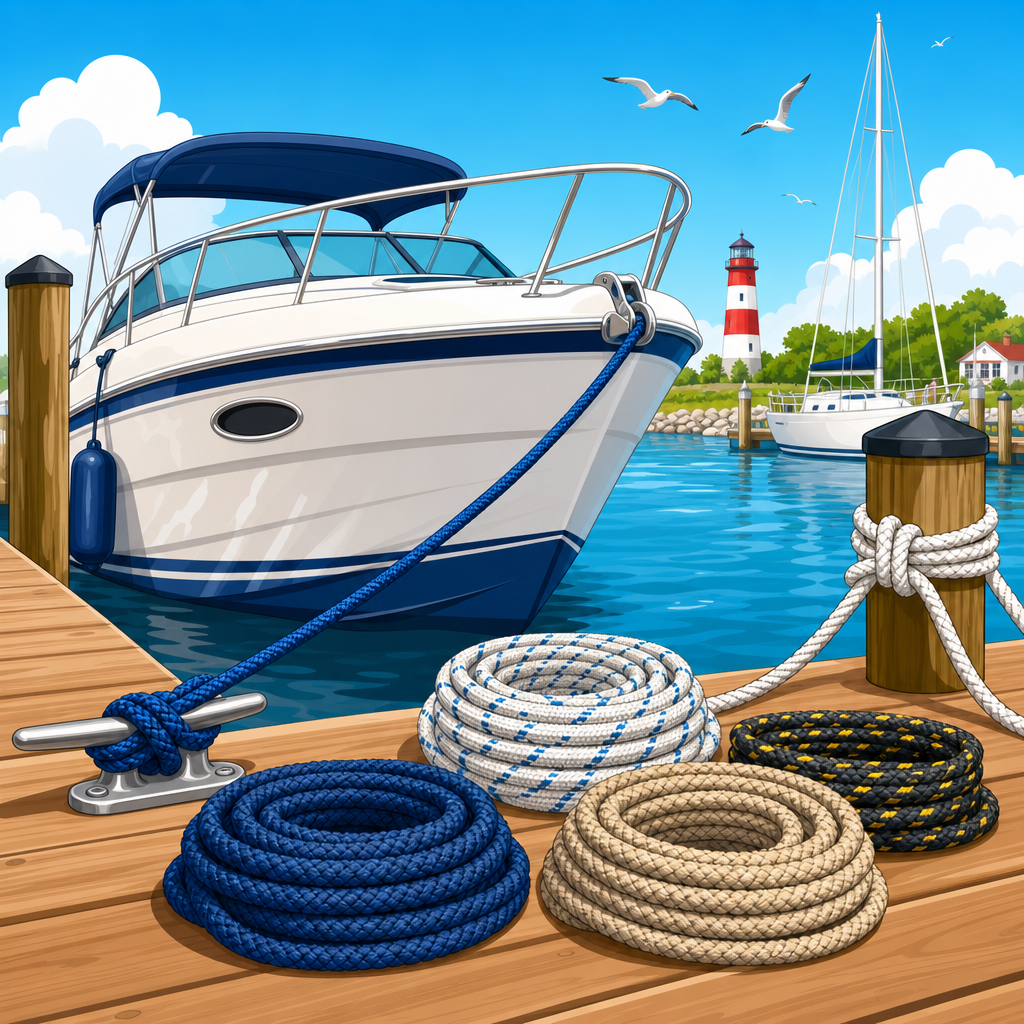
Best dock lines and ropes for secure boat mooring start with choosing the right material, diameter, length, and layout for your boat, because even a well-built cleat or dock cannot compensate for poor line selection. In practical marina work, I have seen expensive hulls scarred by cheap polypropylene, undersized nylon parted in a squall, and otherwise careful owners lose control at the dock simply because their line plan was improvised. Dock lines are the ropes used to secure a boat to a pier, slip, piling, or seawall, while mooring describes the full system of keeping the boat safely positioned against wind, wake, tide, and current. Anchors, dock lines, spring lines, fenders, shackles, chain, and cleats all work together, so choosing the best dock lines is not a narrow gear decision; it is the foundation of safe docking, reduced wear, and lower long-term maintenance. This hub article covers the core of anchors, ropes, and docking essentials, explains how to select line types for different boats and conditions, and gives you a practical framework you can use whether you run a small center console, a cruising sailboat, or a heavy inboard yacht.
The reason this topic matters is simple: mooring loads are dynamic, not static. A boat at rest is still constantly moving in three axes, and every wake, gust, tidal shift, and passing storm transfers force into the lines and hardware. Secure boat mooring therefore depends on elasticity, abrasion resistance, UV resistance, splice quality, chafe protection, and proper geometry between bow lines, stern lines, and spring lines. It also depends on matching your system to the environment. Freshwater docks, tidal estuaries, hurricane-prone coasts, inland reservoirs, and exposed mooring fields create very different stresses. Standards and guidance from organizations such as ABYC and common marine practice consistently point to the same conclusion: there is no single best rope for every use, but there is a best dock line setup for each boat and berth. If you want fewer docking mistakes, quieter nights in the slip, less hardware fatigue, and better protection during changing conditions, you need to understand the materials and methods behind secure boat mooring.
What makes the best dock lines for secure boat mooring
The best dock lines balance strength with controlled stretch. For most recreational boats, nylon remains the preferred dock line material because it absorbs shock loads better than polyester or polypropylene. That stretch matters. When a wake hits a tied boat, a low-stretch line transfers load sharply to cleats, chocks, and deck hardware, while nylon cushions the movement. Double-braid nylon is the common premium choice because it is strong, easy to handle, and looks neat on deck. Three-strand nylon is usually more affordable, has excellent elasticity, and is easy to splice, which is why many experienced boaters still trust it for everyday dock lines and anchor rodes. Polyester has better UV resistance and less stretch, making it useful where shape retention matters, but its lower elasticity makes it less forgiving as a primary dock line in surge. Polypropylene floats, which sounds helpful until you consider its poor UV durability and lower abrasion resistance; in marinas, it is rarely the best answer for permanent dock use.
Diameter and length matter as much as material. A common rule is to choose line diameter by boat length and displacement, then size up if your boat is heavy for its length or lives in rough conditions. Many 20- to 30-foot boats use 3/8-inch or 1/2-inch dock lines, while larger cruisers may need 5/8-inch or 3/4-inch lines. Length should support proper lead angles rather than just reach the cleat. Bow and stern lines often run about two-thirds to a full boat length, and spring lines are often at least a boat length so they can control fore-and-aft movement. I advise owners to buy matched sets instead of piecemeal leftovers because consistent diameter and stretch produce more predictable movement. Pre-spliced eyes are convenient, but custom splices sized to your pilings or cleats often fit better and reduce awkward loading. The best line on paper still fails early if it rubs on a rough chock, sits with a hard bend over a dock edge, or is tied with poor knot geometry that weakens the rope.
Choosing rope materials, construction, and sizes
When boaters ask which rope to buy, the answer starts with use case. For dock lines, double-braid nylon is the default recommendation for a reason. Its braided core and cover share load well, resist kinking, and run smoothly through fairleads. Three-strand nylon remains excellent for owners comfortable with traditional splices and those wanting maximum stretch for tidal slips or exposed docks. Polyester double braid is better suited to control lines and some running rigging than shock-absorbing dock duty, though it can work for lighter, well-protected berths. High-modulus fibers such as Dyneema are outstanding for low-stretch applications, soft shackles, and specialized anchoring tasks, but they are generally too inelastic to serve as the main answer for conventional dock lines on recreational boats. In other words, stronger is not always safer when the goal is load damping rather than absolute minimum elongation.
| Material | Key Strength | Main Limitation | Best Use |
|---|---|---|---|
| Nylon double braid | Shock absorption, strength, easy handling | Can stiffen with age and water absorption | Primary dock lines for most boats |
| Nylon three-strand | High stretch, simple splicing, good value | Can hockle and is less comfortable in hand | Dock lines, anchor rodes, backup lines |
| Polyester | UV resistance, lower stretch, shape stability | Less shock absorption | Control lines, some protected mooring setups |
| Polypropylene | Floats, inexpensive | Poor UV and abrasion performance | Utility use, not preferred for permanent docking |
Size selection should reflect both published breaking strength and practical working conditions. A line should be easy to grip, fit your cleats properly, and allow a proper cleat hitch without stacking dangerously high. Oversized line can be difficult to handle and may not seat correctly in smaller chocks; undersized line can cut into hands and deliver less abrasion reserve. On many marina docks, line failure happens from chafe long before tensile failure. That is why quality matters. Established rope makers such as New England Ropes, Samson, Yale Cordage, and Marlow publish technical data and maintain consistent manufacturing tolerances. For many owners, buying marine-grade rope from these brands through a chandlery is smarter than choosing generic hardware-store rope of unclear composition. If you are outfitting a new slip, build a small system instead of buying a single rope: four primary dock lines, two spring lines, chafe guards, correctly sized fenders, and a spare emergency line stored dry and labeled.
Docking essentials beyond rope: cleats, chafe gear, fenders, and hardware
Secure boat mooring is never only about the line. Hardware alignment and protection determine whether your rope performs as designed. Cleats must be properly backed and sized for the line, with enough horn length to secure a full cleat hitch cleanly. Chocks and fairleads should present smooth bearing surfaces with no sharp casting edges. On older boats, I often find hairline corrosion around aluminum cleat bases or loose backing plates under side decks, and those issues create hidden failure points under storm load. Chafe gear is equally important. Leather, tubular webbing, reinforced hose, or purpose-made chafe sleeves can dramatically extend dock line life where a rope passes through a hawsehole or rubs against a piling. If your berth has tidal movement or frequent wake action, chafe gear is not optional.
Fenders are part of the same system because they reduce side load transfer during contact. Cylindrical fenders work well along straight dock faces, while ball fenders can be useful on pilings and rough structures. Proper inflation matters: too hard and they bounce, too soft and they collapse. I recommend owners rig fenders before entering a slip, not after trouble begins, and carry at least one larger fender than they think they need. Hardware choices also include shackles, swivels, thimbles, and chain for anchor systems. For anchor rodes, galvanized chain paired with nylon rode remains standard because the chain improves seabed grip angle and abrasion resistance while the nylon provides shock absorption. If you use a windlass, line-to-chain splice compatibility is critical. Poorly matched rope and chain can jam a gypsy and become a safety issue when retrieval must happen quickly in current or rising wind.
How to rig bow, stern, and spring lines correctly
The most effective dock line arrangement controls movement in every direction. Bow lines lead forward from the bow to stop the boat from drifting aft. Stern lines lead aft from the stern to stop forward movement. Spring lines do the real precision work: a forward spring typically leads aft from near the bow area to a dock cleat behind the boat, while an aft spring leads forward from the stern area to a dock cleat ahead. Together they resist surge and keep the boat centered in the slip. In practice, many docking problems come from relying only on bow and stern lines. The boat then walks fore and aft with every wake, increasing cleat load, hull contact, and line wear.
Line angle is the detail that separates an adequate setup from a secure one. Longer lines generally reduce peak loads because they create more elastic system length. Crossing stern lines can help center a boat in some slips, especially where pilings and finger piers create awkward geometry, but crossed lines should not rub continuously. In tidal areas, leave enough adjustment for water level change without allowing dangerous slack. In fixed-dock situations, the best compromise often uses moderate slack combined with long springs and robust fender placement. On floating docks, shorter and more even line lengths may work because the dock rises and falls with the boat. Practice counts. I encourage owners to label lines by position and set them the same way every time. Consistent rigging reduces docking workload, which matters when wind or current eliminates thinking time.
Anchors, rodes, and mooring systems as part of the same hub
Any complete guide to anchors, ropes, and docking essentials must connect dock lines to anchoring, because many boaters move between slips, mooring balls, and overnight anchorages. Anchor choice depends on bottom type, boat size, and expected weather. Modern scoop anchors such as Rocna, Mantus, and Ultra set quickly and hold strongly across varied bottoms, while plow and fluke designs still have roles in certain conditions. The rode is just as important as the anchor. An all-chain rode offers excellent abrasion resistance and catenary weight, but it increases bow weight and requires a suitable windlass. Rope-chain combinations remain common on midsize recreational boats because they balance performance, handling, and cost. The nylon section still performs crucial shock absorption once wind increases enough to reduce pure catenary effect.
Permanent moorings add another layer. A proper mooring system may include mushroom or helix anchors, heavy chain, swivels, pickup pendants, and dedicated chafe protection. The weak point is often the pendant, not the anchor. For that reason, many harbormasters recommend dual pendants led to separate strong points. Inspection intervals matter too. Galvanized components wear from the inside where links articulate, and marine growth can hide serious loss of section. If your boat alternates between marina docking and mooring field use, maintain separate line sets for each task. Dock lines optimized for cleat-to-dock geometry are not always the best pendants for a mooring ball, where anti-chafe sleeves, reinforced eyes, and balanced load sharing become more important than cosmetic handling.
Common mistakes, maintenance routines, and replacement timing
The biggest mistakes in secure boat mooring are predictable: using the wrong material, underestimating chafe, tying short lines too tight, and leaving weather exposure unaddressed. Another frequent error is mixing old and new lines without considering stretch differences. A fresh double-braid nylon stern line paired with a stiff, aged spring line causes uneven load sharing, so one line does most of the work and fails sooner. Knots are another issue. A bowline is useful, but permanent dock lines are usually better with spliced eyes because a splice preserves more rope strength and sits cleaner on cleats and pilings. Watch for glazed fibers, flattened sections, hard spots, cover slippage, mildew odor from poor storage, and discoloration from UV and contamination. These are not cosmetic defects; they are service-life warnings.
Maintenance is straightforward but should be disciplined. Rinse salt and grit from lines, let them dry before long storage, and inspect wear points every month during the season. At haul-out or annually in warm climates, strip all dock lines from service and examine every eye splice, whipping, and chafe sleeve. Replace lines that show core exposure, serious stiffness, reduced diameter, or repeated shock loading from storms. There is no universal expiration date, but heavily used marina lines may deserve replacement every few seasons, while lightly used backups last longer if stored clean, dry, and dark. The main benefit of a well-managed system is not just avoiding catastrophic failure. Good dock lines reduce deck hardware strain, preserve gelcoat, improve docking confidence, and give you time to respond when conditions deteriorate. Review your current setup, upgrade weak components, and build a complete mooring system that matches your boat and your water.
Frequently Asked Questions
What type of rope is best for dock lines and secure boat mooring?
Nylon is widely considered the best all-around material for dock lines because it combines strength, stretch, and abrasion resistance in a way that suits real-world mooring conditions. That built-in stretch matters because a moored boat is constantly loading and unloading its lines as wind, wake, tide, and current change. A line with some elasticity helps absorb shock loads instead of transferring them directly to cleats, chocks, and deck hardware. This is one reason nylon, especially double-braid or three-strand nylon, remains the standard choice for most recreational boats.
Double-braid nylon is often preferred for its combination of strength, flexibility, and clean handling. It is easy on the hands, coils neatly, and works well with modern cleats and chocks. Three-strand nylon is also an excellent option, especially for boaters who want a traditional, durable line with a little more stretch. It tends to be more economical and very effective for docking and mooring, though it can kink more easily and may be less convenient to handle for some owners.
Polypropylene is usually a poor choice for permanent or primary dock lines. While it is inexpensive and floats, it has lower abrasion resistance, less durability in long-term use, and generally poorer performance under sustained mooring loads. In practice, cheap polypropylene lines often harden, chafe, and degrade faster than quality nylon. Polyester can be useful in some marine applications because it is strong and UV resistant, but it stretches less than nylon, so it is typically not the first choice where shock absorption is important.
If your goal is secure, dependable boat mooring, choose a high-quality marine-grade nylon dock line from a reputable brand and match it to your boat’s size and conditions. Material matters more than many owners realize. A strong cleat and a solid dock setup help, but the rope itself is what manages the dynamic load every minute your boat is tied up.
How do I choose the right dock line diameter for my boat?
The right diameter depends primarily on boat length, displacement, and the environmental loads the lines will see. As a general rule, larger and heavier boats need thicker dock lines because they impose greater loads during wind shifts, wake action, and surge. A commonly used starting point is about 1/8 inch of line diameter for every 9 to 10 feet of boat length, but that guideline should be treated as a baseline rather than a hard rule. A heavy cruiser, trawler, or sailboat may need thicker lines than a lightweight boat of the same length.
For example, boats in the 20- to 30-foot range often use 3/8-inch or 1/2-inch dock lines, while boats in the 30- to 40-foot range commonly move into 1/2-inch or 5/8-inch lines. Larger vessels may require 3/4-inch lines or more. It is also important to consider local conditions. A boat kept in a calm inland marina may be fine with standard sizing, but a boat exposed to strong tidal movement, frequent ferry wake, or storm-prone weather may benefit from stepping up in diameter for added strength and durability.
That said, bigger is not always better. Oversized lines can be awkward to handle, may not fit cleats or chocks properly, and can be unnecessarily stiff on smaller boats. Secure mooring comes from proper sizing, quality material, and correct line arrangement, not simply choosing the thickest rope available. You want a line that is strong enough for expected loads while still being flexible, easy to tie, and compatible with your hardware.
If you are unsure, check manufacturer recommendations for both your boat and the dock line product, then lean toward marine-grade nylon in a diameter that gives a healthy safety margin without becoming cumbersome. Proper diameter is one of the most important decisions in mooring because an undersized line may fail under shock load, while a well-sized line provides predictable, reliable performance over time.
How long should dock lines be, and how many lines do I need for proper mooring?
A good starting point is to carry enough dock lines to rig bow lines, stern lines, and at least two spring lines, because a proper mooring setup depends on controlling movement in multiple directions. Bow and stern lines help limit fore-and-aft drift and keep the boat positioned relative to the dock, while spring lines are what really stop the boat from surging forward and backward. Many docking problems happen not because the rope is weak, but because the line plan is incomplete or improvised.
As for length, a common rule is to have dock lines that are approximately equal to your boat’s length for bow and stern use, plus longer spring lines that can reach suitable cleats well forward or aft of the boat. For example, on a 30-foot boat, you might carry several 30-foot lines and a pair of longer 40- to 50-foot spring lines depending on slip layout. Boats in variable marina setups often benefit from having a few extra-long lines onboard, because not every dock presents ideal cleat placement or approach angles.
The exact number of lines depends on whether you are docking temporarily, keeping the boat in a slip full time, or preparing for rough weather. At a minimum, many owners carry four dedicated dock lines, but six or more is more practical for secure everyday mooring. Extra lines give you flexibility if one becomes chafed, if you need additional breast lines, or if changing tide and wind conditions require a more robust setup. Fenders should also be considered part of the overall docking system, since the best line arrangement works together with properly placed fender protection.
The most secure mooring arrangements are not random. They are planned so each line has a job, adequate lead, and room to work without excessive rubbing. Correct length matters because lines that are too short can create harsh angles and excessive loads, while lines that are too long may allow unnecessary movement. Good dock line selection includes not just rope quality, but having the right inventory of lengths and line types onboard for the slip, dock, or mooring arrangement you actually use.
What is the best way to prevent dock lines from chafing and wearing out?
Chafe is one of the biggest causes of dock line failure, and it often happens slowly enough that boat owners underestimate the risk until a line is badly damaged or parts under load. Every place a rope passes through a chock, over a gunwale edge, around a piling, or against rough dock hardware is a potential wear point. Even quality nylon lines will fail prematurely if they are allowed to rub continuously under motion. Preventing chafe is not optional if you want secure long-term mooring.
The first step is to rig lines so they lead as fairly and cleanly as possible. Avoid sharp angles, rough surfaces, and unnecessary movement. Then use chafe protection anywhere the line consistently contacts hardware or dock structure. This can include purpose-made chafe guards, reinforced sleeves, leather coverings, tubular webbing, or heavy-duty hose in some setups. The key is to protect the exact contact point and inspect that area regularly, especially after windy conditions or heavy boat traffic in the marina.
It also helps to use the right line layout. Proper spring lines can reduce surging, which in turn reduces repeated sawing motion at contact points. Matching line diameter to the load also matters because an undersized line will move and stretch more aggressively under strain, often accelerating wear. Clean, marine-grade cleats and smooth chocks are important too. Sometimes the issue is not the rope at all, but a burr, cracked fitting, or poorly aligned lead that slowly destroys an otherwise good dock line.
Routine inspection should be part of your docking habit. Look for glazing, flattened sections, fuzzing, cut fibers, stiffness, discoloration, and any area where the rope has lost its normal feel. If a line shows significant wear, replace it before it becomes a failure point. Secure mooring is built on prevention. A well-chosen dock line can last a long time, but only if chafe is managed deliberately and consistently.
Should I choose double-braid or three-strand nylon dock lines?
Both are excellent choices for secure boat mooring, and the right one often comes down to handling preference, budget, and the specific way you use your boat. Double-braid nylon is popular because it is strong, supple, attractive, and easy to coil and store. It tends to handle very cleanly at the dock, works well with spliced eyes, and gives many boat owners a more refined, user-friendly feel. For everyday marina use, especially on modern recreational boats, double-braid is often the premium option.
Three-strand nylon, however, remains a highly practical and dependable dock line material. It typically offers excellent shock absorption, solid durability, and a lower purchase price than comparable double-braid lines. Many experienced boaters appreciate its traditional construction and straightforward reliability. It is especially common on working boats, older sailboats, and among owners who prioritize function and value over appearance. The tradeoff is that three-strand can be stiffer to manage, may kink as it twists, and is not always as neat or comfortable in repeated handling.
From a performance standpoint, both can secure a boat very effectively when properly sized and