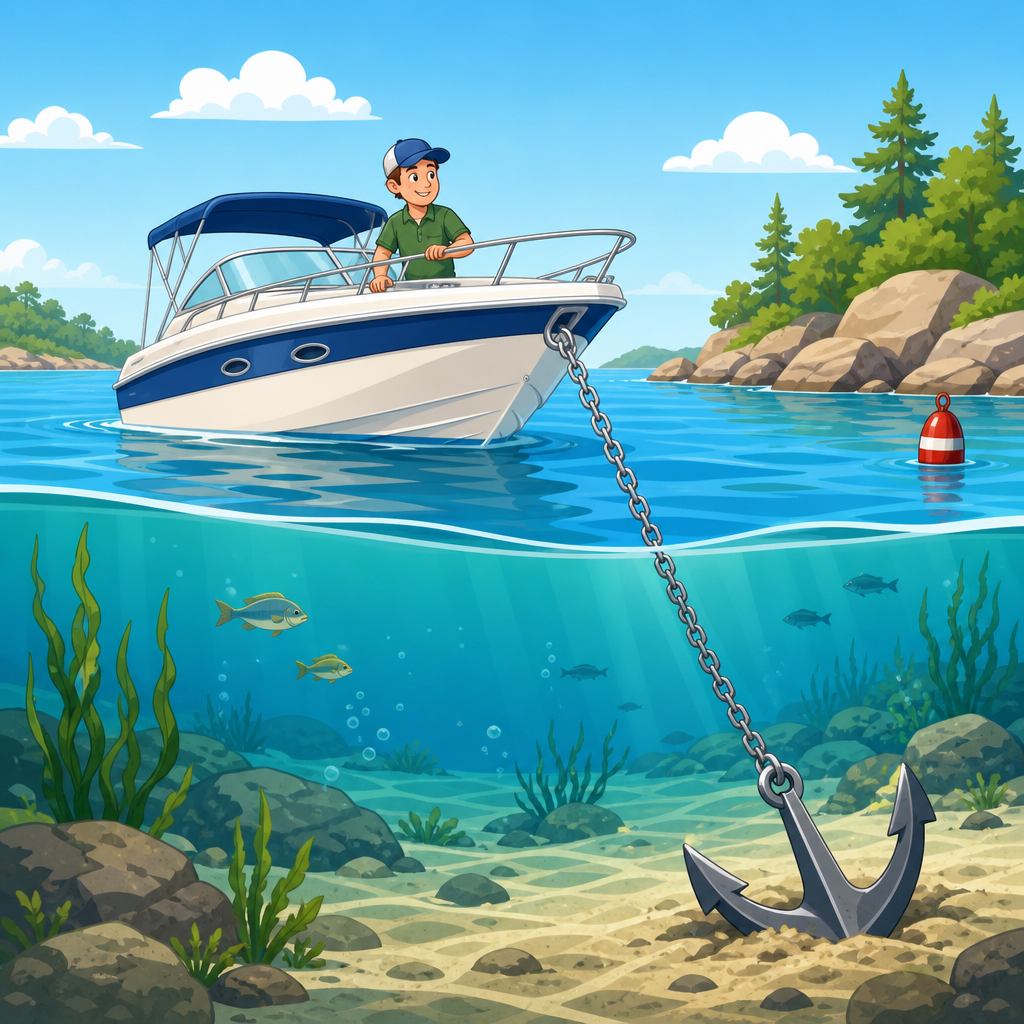
Anchoring a boat safely is one of the most important seamanship skills because a poorly set anchor can turn a calm stop into a slow drift toward rocks, traffic, or a lee shore. In practical terms, anchoring means using an anchor, rode, and attachment hardware to hold your boat in place by creating resistance between the seabed and the vessel. The rode is the full connection from boat to anchor, usually a mix of chain and rope, while scope is the ratio between rode deployed and the vertical distance from bow roller to bottom. I have seen more anchoring problems caused by wrong scope and weak setup habits than by storms. This matters for every boater, from a small fishing skiff to a cruising sailboat, because the right anchor system protects passengers, prevents hull damage, reduces stress at night, and gives you options when docking space is limited or weather changes unexpectedly.
Choose the right anchor, rode, and hardware
The first step in learning how to properly anchor your boat to avoid drifting is choosing gear that matches your boat, bottom conditions, and cruising style. Anchor design matters because different shapes interact with sand, mud, grass, rock, and coral in different ways. Modern scoop-style anchors such as the Rocna, Mantus, and Lewmar Epsilon set quickly and hold strongly in sand and mud, which is why many coastal cruisers now prefer them as primary anchors. Traditional plow anchors like the Delta and CQR are still common and can perform well, especially when sized correctly, but some older designs need more room and load to dig in. Danforth or fluke anchors are light and powerful in clean mud and sand, making them popular for small powerboats, yet they can struggle in thick grass or when the wind shifts hard. Claw anchors like the Bruce are forgiving and easy to stow, though their holding power per pound is often lower than newer generation designs.
Anchor size should follow the manufacturer’s guidance, not guesswork. In my experience, going one size up for a boat that anchors often is rarely regretted, especially if you cruise in tidal areas or anchor overnight. The rode deserves equal attention. All-chain rode improves catenary, abrasion resistance, and reset performance, and it works best with an anchor windlass and a properly sized bow roller. Rope-and-chain combinations are lighter and cheaper and make sense for trailer boats and smaller center consoles. Nylon is the standard rope material because it stretches under load, absorbing shock better than polyester. For chain, hot-dip galvanized G30, G43, or G70 should match the gypsy on your windlass. A mismatched chain can skip, jam, or wear the system dangerously fast.
Do not overlook shackles, swivels, thimbles, chafe gear, cleats, and snubbers. The weak point in many anchoring setups is not the anchor but a corroded shackle pin that was never moused with seizing wire or thread locker. If you use a swivel, buy a forged marine-rated model from a reputable brand and install it according to the load path recommended by the manufacturer. A nylon snubber on chain rode reduces shock loads, noise, and deck strain. These anchoring essentials and docking essentials belong in the same planning mindset: every connection must be stronger than the loads it will see and simple enough to inspect routinely.
Calculate scope correctly and account for tide, wind, and swing room
If boaters ask one question more than any other, it is how much anchor line to put out. The direct answer is this: use enough scope for the conditions, and measure it from the bow chock or roller to the seabed, not just the water depth on the sounder. A common baseline is 5:1 scope for lunch stops in settled weather and 7:1 for overnight anchoring. In stronger wind, rough chop, or poor holding ground, 10:1 may be appropriate. For example, if the depth is 12 feet, the bow roller sits 3 feet above the water, and the tide may rise 2 feet, your working depth is 17 feet. At 7:1 scope, you need about 119 feet of rode deployed.
Scope matters because a shallow pull angle helps the anchor stay buried. Too little scope lifts the anchor upward and breaks it free. Chain helps maintain that low angle, but chain is not a substitute for enough rode. Tidal range must be included at the start, especially in places where water can rise several feet overnight. I have watched boats appear secure at dusk, only to start skating backward after midnight because the tide shortened their effective scope and the breeze freshened. Swing room matters just as much. Your boat will arc around the anchor as wind or current shifts, so calculate the swing radius before you commit. Look for nearby boats with different anchoring styles, mooring balls, shoals, docks, and shore structures. A powerboat on short scope can swing very differently from a sailboat with a high windage rig.
| Condition | Recommended Scope | Best Use Case | Main Risk if Reduced |
|---|---|---|---|
| Calm daytime stop | 5:1 | Lunch, swimming, short fishing stop | Anchor may skip during wake or wind shift |
| Typical overnight anchoring | 7:1 | Protected anchorage, moderate forecast | Lower holding margin if breeze builds |
| Strong wind or poor holding | 10:1 | Front approaching, grass, loose mud | Anchor can unseat under load |
| Storm preparation | 10:1 or more | Only with ample room and verified set | Insufficient angle and shock absorption |
Use landmarks, chartplotter range rings, and anchor alarm functions to verify that your swing circle stays clear. Garmin, Raymarine, Simrad, and Navionics all offer practical tools here. Setting the alarm too tight creates nuisance alerts, but setting none at all is worse. Build in room for GPS error and natural yawing. Proper anchoring is not just dropping gear over the side; it is geometry, weather assessment, and local awareness working together.
Set the anchor properly and verify that it is holding
A good anchor only works if it is set correctly. Approach your chosen spot slowly from downwind or down current, whichever force is stronger, and stop where you want the boat to end up after drifting back on the rode. Lower the anchor; do not throw it. Throwing can foul the rode around the flukes or shank. As the boat drifts backward, pay out rode steadily so the anchor reaches the bottom first and then begins to orient and dig. Once you have laid out the initial scope, gently reverse to straighten the rode. Then increase engine load in stages to help the anchor bury.
The easiest way to confirm a set is to take transits on shore objects, monitor your chartplotter track, and feel the vibration through the rode. A dragging anchor often sends a shuddering, jerky signal up the line, while a well-set anchor feels steady and loaded. On a powerboat, I usually back down around 1500 to 2000 rpm depending on vessel size and conditions, then watch whether the bow stays fixed relative to shore marks. If the boat continues moving astern while the rode is tight, the anchor is not set. Start over rather than hoping it will improve. Resetting early is faster than dealing with a drift later in darkness.
Bottom type influences technique. In soft mud, let the anchor settle and load gradually so it can bury deeper rather than plowing a trench. In sand, a firm reverse set usually works well. In grass, you may need to try a cleaner patch or a different anchor style. In rock, many anchors can hook securely but retrieval may be difficult, and the hold may be less predictable under changing direction. Coral areas require special care because anchors can damage habitat and become trapped; use moorings where provided.
After the anchor is set, secure the rode to a cleat or snubber, not just the windlass. Windlasses are retrieval tools, not the primary load-bearing attachment in most installations. This single step prevents damage to the gearbox and deck structure and is one of the most overlooked anchoring essentials.
Use anchoring and docking essentials together for control and safety
Anchors, ropes, and docking essentials are part of one system of boat control. The same line handling habits that make docking safe also make anchoring more reliable. Bow cleats, stern cleats, dock lines, fenders, boat hooks, chain hooks, bridles, and chafe guards all support safe stops on the water. On boats that yaw excessively at anchor, a bridle can reduce sailing around the hook and distribute load more evenly. Catamarans commonly use bridles for this reason, but monohulls and powerboats can benefit too when conditions create side-to-side sheering.
Rope choice matters beyond anchor rode. Nylon dock lines stretch and absorb shock at the dock much like nylon anchor rope does at anchor. Double-braid nylon handles well and resists abrasion, while three-strand nylon remains common for anchor rodes because it stretches more and splices easily. Chafe protection is essential anywhere line passes through a fairlead or over a toe rail. I have replaced too many otherwise good lines that failed because they rubbed for hours at one hot spot. Leather, tubular webbing, or purpose-made chafe sleeves are cheap insurance.
Fenders may seem unrelated to anchoring, but they become critical if a dragging boat enters a crowded anchorage or if you raft up temporarily. Keep them rigged and ready. A boat hook helps recover a pickup line, fend off lightly, or guide rode away from another boat during close quarters. These are not accessories to buy later; they are core docking essentials that support anchoring safety and everyday seamanship.
Avoid common mistakes, prepare for weather, and recover cleanly
Most anchor dragging comes from a short list of preventable errors: undersized anchors, too little scope, poor bottom choice, failure to verify the set, and ignoring forecast changes. Another common mistake is anchoring over a pile of old chain or debris in crowded harbors, where the anchor may feel set but is actually fouled. Study charts, cruising guides, and local notices before entering unfamiliar anchorages. NOAA charts, harbor guides, and tide tables are not optional planning tools; they are basic risk controls.
Weather can change faster than many casual boaters expect. A protected cove in a southerly breeze can become untenable after a frontal wind shift to the north. When evaluating an anchorage, think one step ahead: what happens if the wind doubles, clocks thirty degrees, or the tide reverses at 2 a.m.? If the answer is that you will be on a rocky shore in minutes, choose another spot. In exposed conditions, consider a second anchor only if you know how to deploy and recover it without creating a tangle. More gear does not automatically mean more safety.
Anchor retrieval also deserves a methodical approach. Motor slowly toward the anchor while taking in rode; do not winch the full weight of the boat with the windlass. When the rode is vertical, a short forward movement usually breaks the anchor out. Wash mud from the anchor before it reaches the bow roller, and inspect the shackle, swivel, and first few feet of rode every time you retrieve. Repeated inspection is how small issues get fixed before they become failures. If the anchor is fouled, change the pull angle carefully rather than jerking violently. Many bent bow rollers and damaged windlasses are caused during hurried retrieval, not while anchored.
The best way to avoid drifting is to build a repeatable anchoring routine: choose the right anchor, calculate scope precisely, set with intent, confirm holding, monitor your position, and reassess when conditions change. Master these fundamentals and your boat will stay where you put it, your nights aboard will be calmer, and every trip under the broader Boating Gear and Equipment category will start with better control. Review your current anchor system, replace weak components, and practice in easy conditions before you need those skills in difficult ones.
Frequently Asked Questions
1. What is the correct way to anchor a boat so it does not drift?
The correct anchoring process starts well before the anchor touches the bottom. First, choose a protected anchorage with enough room to swing, good holding ground, and adequate depth for current tide and weather changes. Sand and mud generally provide better holding than weeds, rock, or hard clay. As you approach the spot, head slowly into the wind or current—whichever is stronger—because this keeps the boat under better control and reduces the chance of dropping the anchor while still moving too fast.
Once you are positioned, lower the anchor to the bottom in a controlled way rather than throwing it. Throwing can foul the rode or prevent the anchor from landing and orienting properly. After the anchor reaches the seabed, let the boat drift back naturally or reverse very slowly while paying out rode. The key is to lay the rode out in a straight line along the bottom so the anchor can dig in gradually. When you have deployed enough scope, snub the rode gently and allow the anchor to begin setting. Then apply light reverse power to test it, followed by a firmer reverse set once you are confident it is biting.
A proper set should feel steady, not jerky, and the boat should stop moving astern relative to a fixed point on shore or your GPS position. If the boat continues to slide back, the anchor may be dragging and should be reset. Good anchoring is not just about dropping metal overboard; it is about selecting the right location, using adequate scope, and confirming that the anchor is truly holding before you relax.
2. How much anchor rode and scope should I use?
Scope is one of the most important factors in preventing drift. Scope is the ratio of rode deployed to the vertical distance from the bow chock or roller down to the seabed, not just the water depth shown on your sounder. For example, if the water is 10 feet deep and your bow is 4 feet above the waterline, your vertical distance is about 14 feet. A 7:1 scope in that situation means deploying roughly 98 feet of rode.
As a general rule, 5:1 scope may be acceptable for short daytime stops in calm, protected conditions, while 7:1 is a common standard for more secure anchoring. In heavier weather, overnight situations, or when you expect wind shifts and current changes, many experienced boaters prefer even more scope if swinging room allows. More scope creates a lower pulling angle on the anchor, which helps it stay buried and maintain holding power.
The type of rode also matters. An all-chain rode can maintain a lower angle of pull because of its weight, while a rope-and-chain combination depends more heavily on proper scope to keep the load horizontal at the anchor. If boaters use too little rode, the pull becomes too vertical, and even a good anchor can break free. In practical terms, when people say their anchor “wouldn’t hold,” insufficient scope is often part of the problem. If in doubt and space permits, use more scope rather than less.
3. What type of anchor and seabed conditions work best for secure holding?
Not all anchors perform the same in all bottom types, so matching the anchor to expected conditions is essential. Modern scoop or plow-style anchors often set well in sand and mud and are popular because they can reset more reliably if the boat swings with changing wind or tide. Fluke anchors can provide excellent holding in softer bottoms but may struggle in heavy grass or rocky areas. Grapnel-style anchors are more common for small craft, tenders, or temporary use in rough bottoms, but they are not usually the best choice when maximum holding power is the priority.
Bottom composition matters just as much as anchor design. Clean sand is often considered ideal because many anchors can penetrate and develop strong holding there. Mud can also hold well, especially with the right anchor, though very soft mud may require more time and care for a solid set. Weed, grass, shell, and rock are much less predictable. In grassy areas, an anchor may seem set at first but actually be snagged on vegetation instead of buried in the seabed. On rock, an anchor may catch temporarily yet release suddenly if load direction changes.
The most reliable approach is to know your anchor type, understand where it performs best, and consult charts, cruising guides, or local knowledge about bottom conditions in the anchorage. Even a high-quality anchor can drag if it is used on poor holding ground or in conditions beyond its design limits. Secure anchoring is always a combination of proper gear, suitable seabed, and good technique.
4. How can I tell if my anchor is dragging after I set it?
There are several reliable ways to tell whether your anchor is holding or dragging, and experienced boaters usually use more than one. Immediately after setting, take visual bearings on fixed objects ashore, such as a tree lined up with a building or two landmarks that should remain in the same relative position. If those bearings begin to shift steadily, the boat may be moving. Electronics also help: many chartplotters and GPS units allow you to set an anchor alarm that alerts you if the boat moves beyond a chosen radius.
Another useful clue is how the boat behaves when you apply reverse power to set the anchor. If the bow swings around and the boat comes up firmly without continued rearward movement, that is a good sign. If the boat keeps sliding astern, shudders unevenly, or never really stops, the anchor may be skipping or dragging across the bottom. You can also feel the rode: a properly set anchor usually produces a steady load, while a dragging anchor may transmit vibration, pulsing, or intermittent jerks as it bounces or catches and releases.
After anchoring, continue monitoring conditions rather than assuming everything is fine. Wind can increase, current can turn, and nearby boats may indicate whether the anchorage is behaving normally. If your boat is not lying consistently with others under the same conditions, that can be a warning sign. At the first hint of dragging, do not wait and hope it improves. Reset immediately in better holding ground, deploy more scope, or move to a safer anchorage before the situation becomes urgent.
5. What are the most common anchoring mistakes that cause boats to drift?
One of the most common mistakes is using too little scope. Boaters often underestimate the true vertical distance to the bottom or fail to account for tidal rise, which leaves the rode too short and the pull angle too steep. Another frequent problem is dropping the anchor while the boat is still moving quickly astern or sideways. That can prevent the anchor from orienting and digging in correctly, and it may also foul the rode around the anchor itself.
Poor location choice is another major cause of drifting. Anchoring over weed, rock, or very hard bottom can make it difficult for the anchor to penetrate, even if the procedure is otherwise correct. Some boaters also fail to back down and test the set, assuming the anchor is secure just because it reached bottom. In reality, an anchor that has not been tested may only be resting lightly on the seabed and can start dragging as soon as wind increases. Using undersized gear, worn shackles, weak knots, or inadequate chain can also compromise the entire system.
Finally, many drifting incidents happen because people stop paying attention after anchoring. Conditions change, tides rise, wind shifts, and swing circles overlap with nearby boats. Good seamanship means reassessing the setup over time, not just at the moment the anchor is dropped. To avoid drifting, focus on the full system: appropriate anchor selection, sound attachment hardware, enough chain and rode, proper scope, a deliberate set, and active monitoring after the boat is anchored.