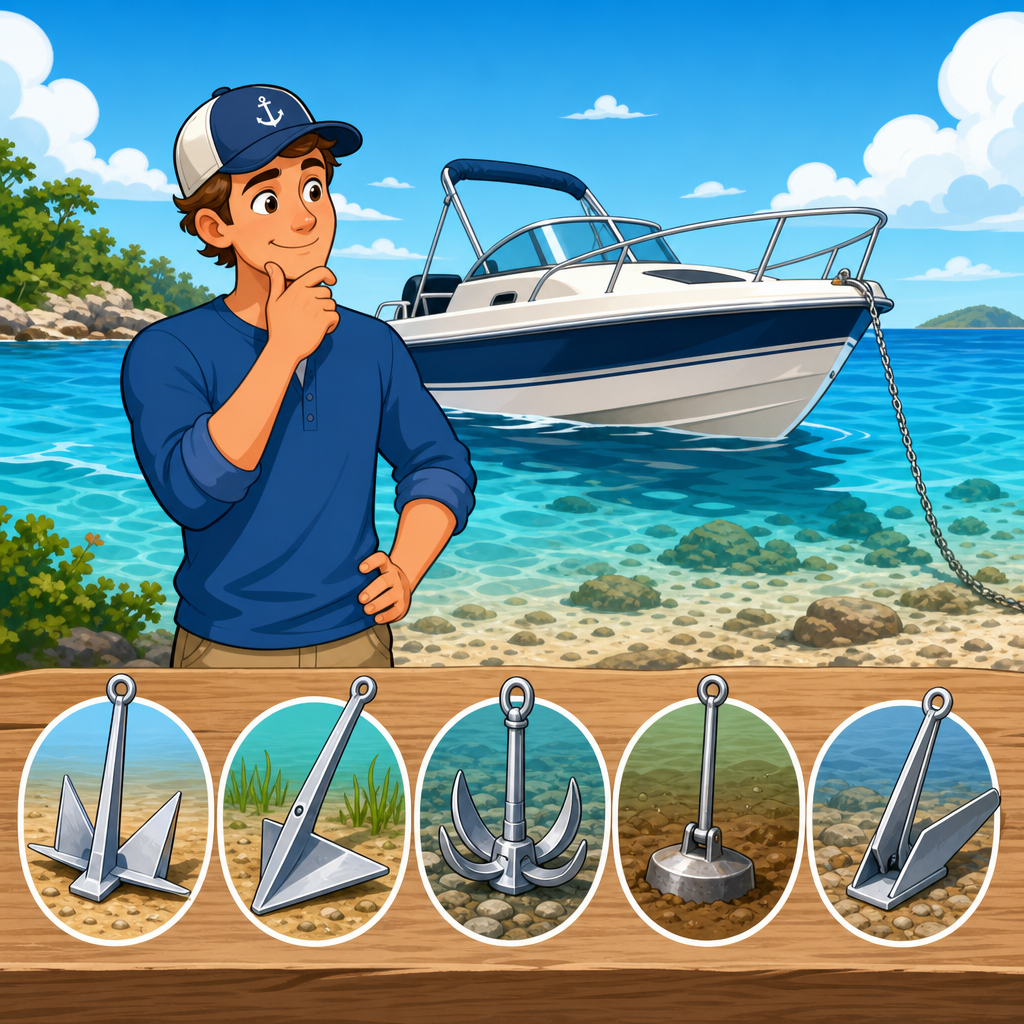
Choosing the best anchor for your boat starts with understanding that anchoring is a complete system, not a single piece of metal. An anchor must match your boat’s size, displacement, and windage, but it also has to work with the seabed, the rode, the chain, and the way you actually cruise. In practice, I have seen good anchors fail because the scope was too short, the chain was too light, or the skipper assumed one design worked everywhere. For a hub page covering anchors, ropes, and docking essentials, the goal is simple: help you select gear that sets reliably, holds through changing conditions, and integrates safely with cleats, windlasses, dock lines, and fenders. When you understand anchor types, rode materials, chain sizing, scope, and docking hardware together, you make better buying decisions and spend less time dragging, resetting, or replacing worn gear. That is why anchor selection matters for day boats, coastal cruisers, fishing boats, and liveaboards alike.
What makes an anchor the right choice
The best boat anchor is the one that consistently sets in your usual bottom conditions and holds your boat in the worst weather you reasonably expect to anchor in. That definition matters because there is no universal anchor for every hull, every seabed, and every cruising plan. A flats skiff anchoring in sand has different needs from a 38-foot cruising sailboat spending nights in tidal harbors, and both differ from a pontoon boat that mostly ties up at marinas. Start with your boat’s length, weight, freeboard, and profile to the wind. A lightweight center-console with high bow flare can generate surprising load in a squall, while a heavy displacement trawler may require more chain and a stronger windlass even if it drifts less at anchor.
Bottom type is the next filter. Sand and firm mud are forgiving and allow many modern anchors to bury deeply. Soft mud can favor designs with large fluke area. Weed and grass can prevent some anchors from penetrating enough to develop holding power. Rock and coral often require specialized approaches and extra caution because snagging becomes as important as holding. Your local use pattern also matters. If you anchor for lunch in settled weather, easy handling may rank above ultimate storm holding. If you anchor overnight often, reset performance during wind shifts becomes critical. In tests published by boating magazines and discussed widely among cruisers, modern scoop-style anchors routinely outperform older, traditional designs in sand and mud, especially after veering with current or tide. That is why many experienced boaters now treat anchor choice as primary safety gear, not an accessory.
Anchor types and where each one works best
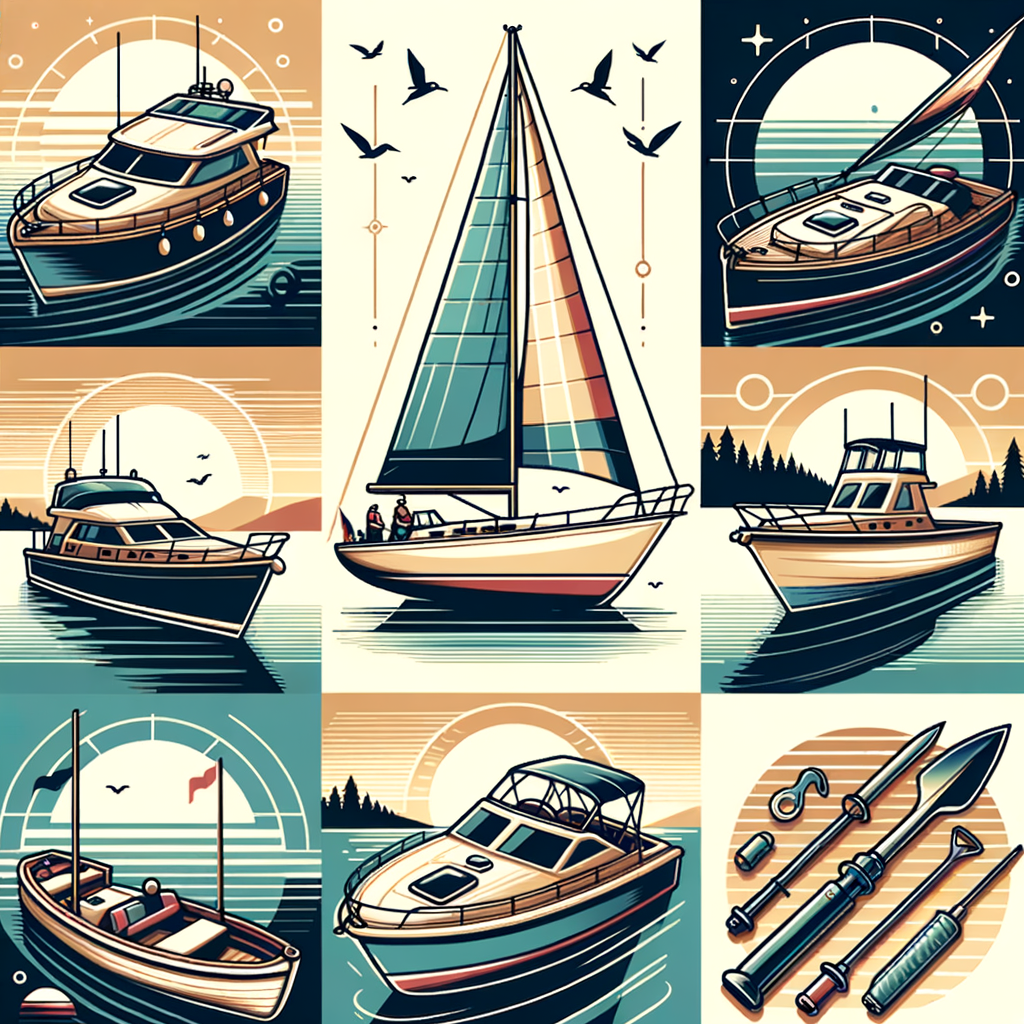
Most recreational boaters will choose among five common anchor categories: fluke, plow, claw, scoop, and grapnel. Fluke anchors, often called Danforth-style anchors, are lightweight for their holding power and excellent in sand or firm mud. They are popular on small powerboats because they stow flat and are easy to deploy by hand. Their weakness is performance in heavy weed, rocky bottoms, and conditions with large direction changes, where they may break out instead of resetting cleanly. Plow anchors, including CQR-style patterns, gained popularity because they handle a range of bottoms and fit many bow rollers, but they generally require more weight to match the holding of newer designs.
Claw anchors, often associated with the Bruce pattern, are simple, durable, and relatively easy to reset. They are common on cruising boats and work reasonably well in mixed bottoms, but they usually need more mass than high-efficiency anchors. Scoop anchors, such as Rocna, Manson Supreme, and similar roll-bar or roll-assisted designs, are now widely regarded as top all-around choices because they set fast, dig deep, and reset reliably. In my experience rigging and testing boats for coastal cruising, scoop anchors reduce the uncertainty that used to come with anchoring in crowded coves when the tide turns at 2 a.m. Grapnel anchors, meanwhile, are primarily for very small boats, kayaks, and temporary holding in rocky areas; they are not a serious primary anchor for larger boats. For a modern primary anchor, most boaters should compare scoop designs first, then fluke models for small boats in sandy regions, and claw or plow designs when bow-roller fit or handling requirements make them practical.
How to size the anchor, chain, and rode correctly
Anchor sizing should follow the manufacturer’s chart first, because reputable brands account for boat length, displacement, and intended use. Do not guess by copying what another boat at your marina uses. Two 30-foot boats can have very different loads if one is a heavy sailboat and the other is a beamy cabin boat with high windage. When in doubt, move up one size for overnight anchoring or exposed conditions, provided your bow roller, locker, and windlass can handle the added weight. Oversizing beyond that can create deployment problems and may reduce practical safety if the crew struggles to set or retrieve the gear properly.
The rode matters as much as the anchor. A typical anchoring system includes the anchor, chain leader or all-chain rode, nylon line, shackles, and a swivel only if it is rated correctly and genuinely needed. Nylon remains the standard rope because it stretches under load, reducing shock loads on cleats and hardware. Three-strand nylon is economical and easy to splice; eight-plait nylon stores more neatly in smaller lockers. All-chain rodes improve catenary, abrasion resistance, and setting consistency, especially on heavier boats, but they add bow weight and usually require a windlass. Chain size must match the windlass gypsy if one is installed, and the grade matters. High-test chain such as G43 can provide higher strength at a given size than BBB or proof coil, but only if every component in the system is compatible.
| Boat use | Best primary anchor approach | Typical rode choice | Main advantage |
|---|---|---|---|
| Small runabout, bay boat, pontoon | Fluke or small scoop anchor | Short chain plus nylon rope | Lightweight, easy manual handling |
| Center-console, family cruiser | Scoop anchor sized to manufacturer chart | Chain leader with nylon rode or all-chain | Fast setting and better reset performance |
| Coastal sailboat or trawler | Modern scoop anchor, often one size up for cruising | All-chain with snubber | Strong holding and improved abrasion resistance |
| Tender, dinghy, kayak | Small grapnel or fluke anchor | Light rope and minimal chain | Compact storage and quick deployment |
As a rule, use enough chain to keep the pull on the anchor as horizontal as possible. Then use adequate scope, meaning the ratio of rode length to water depth plus bow height. In calm lunch stops, 5:1 may work. For overnight anchoring, 7:1 is a common baseline, and more may be prudent in heavy weather or poor holding ground. Scope, not brute weight alone, is what allows an anchor to stay buried.
Matching the anchor to the seabed and weather
If you want the shortest answer to how to choose the best anchor for your boat, match the design to the bottom you anchor in most often. In sand, nearly any quality anchor can perform well if sized and set correctly, but scoop and fluke anchors are usually excellent. In firm mud, scoop anchors remain strong performers, while fluke anchors can generate very high holding power for their weight. In soft mud, larger fluke area helps, though retrieval can be messy and deep burial may demand patience. In grass or weed, penetration is the challenge; sharper, weighted-tip scoop anchors often outperform older plow and claw models. In rock or coral, no standard anchor works ideally, and local knowledge matters more than brand claims. You may need a grapnel-style setup for temporary use, a trip line in some cases, or better yet, a mooring ball where available.
Weather changes how conservative your choice should be. Wind creates the dominant load on most anchored boats, and gusts increase it rapidly. Current can also be severe, especially in tidal rivers and inlets. Short chop causes the boat to surge, increasing shock loads through the rode. That is why a nylon snubber on all-chain systems is not optional; it absorbs jerk loads and reduces noise and wear at the bow. If you routinely anchor overnight, choose a primary anchor with strong independent test history in setting and resetting after 180-degree shifts. If you boat mainly on inland lakes in fair weather, a lighter and simpler setup may be perfectly appropriate. Good gear selection is always conditional on use, not on marketing labels like offshore or premium.
Ropes, dock lines, and docking essentials that support anchoring safety
An anchor system does not operate in isolation from the rest of your deck gear. The same boat that anchors safely also needs dock lines that handle surge, cleats backed properly to the deck, chafe protection where lines cross fairleads, and fenders sized for beam and freeboard. I treat anchoring and docking as one equipment category because the loads are managed through the same principles: elasticity, abrasion resistance, secure attachment points, and predictable handling by the crew. For dock lines, nylon is again the standard because of stretch and shock absorption. Double-braid nylon is popular for docking because it handles cleanly and looks tidy, while three-strand remains cost-effective and easy to splice.
Line diameter should fit your cleats and your hands, not just a generic chart. Too-small line is hard to grip under load and can be harsh on hardware; too-large line may not cleat properly. Spring lines control fore-and-aft movement at the dock, breast lines control side movement, and properly placed fenders protect hull sides during crosswind docking. Chafe gear deserves more attention than it gets. A premium line can fail quickly if it saws over a rough chock for hours. Use reinforced hose, purpose-made chafe guards, or heavy-duty woven protection at known wear points. On anchor rodes, inspect the eye splice, thimble if used, and every shackle pin. Seizing wire or thread-locking methods are cheap insurance against vibration loosening a pin. These details are unglamorous, but they prevent the kind of nighttime failure that owners often blame on the anchor itself.
Common mistakes, maintenance, and a smart buying plan
The most common anchoring mistake is underestimating the entire system. Boaters buy a better anchor but keep an undersized chain leader, a sun-damaged nylon rode, or a marginal bow shackle. The next mistake is poor setting technique. Lower the anchor under control, let it reach bottom, pay out rode as the boat drifts back, then increase reverse power gradually to confirm it is dug in. Simply throwing an anchor overboard and hoping it catches is not a method. Another frequent error is ignoring swing room and bottom contour. Even a perfectly set anchor can become dangerous if the boat swings into shallow water, another vessel, or a lee shore as wind shifts.
Maintenance is straightforward but essential. Rinse anchors, chain, and swivels after saltwater use when practical. Inspect galvanizing for wear, especially at high-friction points. Replace shackles showing distortion, corrosion, or thread damage. Check rope for glazing, stiffness, cuts, and UV degradation. Service the windlass according to the manufacturer’s schedule, and confirm that your chain size and calibration still match the gypsy. If you are building a buying plan, prioritize in this order: primary anchor, correctly matched chain and rode, snubber or bridle if using chain, secondary anchor suited to a different bottom type, then upgraded dock lines, fenders, and chafe gear. That sequence delivers the biggest safety return per dollar.
The best anchor for your boat is the one that fits your hull, your cruising grounds, and your complete anchoring setup. For most modern recreational boats, a well-sized scoop anchor paired with properly matched chain and nylon rode is the strongest starting point because it sets quickly, holds well in common bottoms, and resets reliably when conditions change. Small boats used mainly in sand may do very well with a fluke anchor, while specialized local conditions can justify claw, plow, or grapnel designs. The key lesson is that anchors, ropes, and docking essentials should be chosen as a system: the anchor, rode, chain, cleats, dock lines, fenders, and chafe protection all contribute to real-world safety.
If you are upgrading gear under the Boating Gear & Equipment category, use this hub as your decision framework. Start by identifying your usual bottom type, weather exposure, and whether you anchor for lunch, overnight, or extended cruising. Then verify anchor sizing from a reputable manufacturer, match the rode to your boat and windlass, and inspect every connection point before the season begins. A careful, system-based approach will give you better holding, easier handling, and more confidence every time you leave the dock. Review your current setup today and replace the weakest link first.
Frequently Asked Questions
How do I choose the right anchor size for my boat?
The right anchor size depends on more than your boat’s length alone. A good starting point is the manufacturer’s sizing chart, but you should also factor in your boat’s displacement, windage, and how you actually use the boat. For example, a heavy cruising sailboat and a lightweight center console of the same length may not place the same load on an anchor. Boats with tall cabins, hardtops, or high freeboard create more wind resistance, which increases the strain on the anchoring system, especially in changing weather.
It is also important to think of anchoring as a system rather than a single purchase. Even the best anchor can underperform if paired with chain that is too light, insufficient rode, or poor deployment technique. If you routinely anchor overnight, visit exposed anchorages, or cruise in areas with tide and current shifts, it often makes sense to size toward the upper end of the recommended range rather than the bare minimum. In real-world use, a slightly more robust anchor setup usually provides better holding power, faster setting, and more confidence when conditions become less forgiving.
What type of anchor works best for different seabeds?
No single anchor is perfect in every bottom condition, which is why seabed type should play a major role in your decision. Modern scoop-style anchors are widely respected because they tend to set quickly and hold well in sand and mud, which are among the most common anchoring bottoms. Fluke anchors also perform very well in soft mud and sand, often delivering strong holding power for their weight, but they can be less versatile in mixed or weedy bottoms. Plow-style anchors are popular because they handle a range of conditions reasonably well, though some may not set as quickly as newer-generation designs.
Rock, heavy grass, shell, and hard clay can be more challenging. In these bottoms, the issue is often not just holding power but whether the anchor can penetrate and reset after a wind or tide shift. If you boat in one region consistently, choose an anchor design that matches the seabed you encounter most often. If you cruise widely, versatility becomes more important than specialization. In practical terms, many experienced boaters carry a primary anchor for general use and a secondary anchor better suited to specific bottom conditions or emergency situations. That approach gives you more flexibility than assuming one anchor design will work equally well everywhere.
How important are chain, rope, and scope when anchoring?
They are extremely important, and in many cases they make the difference between a secure set and a dragging anchor. The anchor itself is only one part of the system. Chain adds weight near the seabed, helping keep the pull on the anchor as horizontal as possible, which improves setting and holding. Rope provides length, shock absorption, and manageable weight for the rest of the rode. If the chain is too short, too light, or poorly matched to the boat and anchor, overall performance can suffer even if the anchor design is excellent.
Scope matters just as much. Scope is the ratio between the length of rode deployed and the depth of the water, including the height of the bow above the surface. Too little scope causes a steep upward pull that can break the anchor free or prevent it from setting properly in the first place. In calm conditions, boaters may get away with shorter scope temporarily, but for reliable holding, especially overnight or in wind, more conservative scope is usually the better choice. This is one of the most common reasons good anchors appear to “fail” in practice. Often the problem is not the anchor but a rode system or setup that never gave it a fair chance to work correctly.
Should I buy one all-purpose anchor, or carry more than one?
For many boaters, one well-chosen primary anchor is enough for routine day use, but carrying more than one anchor is often the smarter and safer approach. A primary anchor should be selected for the conditions you encounter most frequently, your boat’s size and handling characteristics, and the kind of anchoring you do most often. If you mainly stop for lunch in protected coves with sandy bottoms, your needs are different from someone who anchors overnight in tidal harbors or cruises in areas with weed, mud, and shifting winds.
A secondary anchor gives you options. It can serve as a backup if your primary anchor is fouled, lost, or damaged. It can also be used when a different anchor style is better suited to the bottom, or deployed in a two-anchor setup for added control in tight anchorages or reversing current. In addition, a spare anchor is valuable for emergency situations, including mechanical failure or the need to control the boat in difficult conditions. From a practical seamanship standpoint, carrying two anchors is less about redundancy for its own sake and more about being prepared for the reality that anchoring conditions are variable and no single setup is ideal in every scenario.
What mistakes do boaters make when choosing and using an anchor?
One of the biggest mistakes is focusing only on the anchor’s weight or brand reputation while ignoring the rest of the anchoring system. Boaters often assume that buying a popular anchor automatically solves the problem, but poor results frequently come from undersized chain, inadequate rode length, incorrect scope, or failure to match the anchor to the boat and local seabed. Another common mistake is choosing the minimum recommended size when the boat has high windage, carries cruising gear, or is used in more demanding conditions than the basic chart assumes.
Operational mistakes are just as common. Some skippers drop the anchor without backing down enough to confirm it has set, while others anchor in unsuitable bottoms and expect the gear to compensate. There is also a tendency to assume that if an anchor worked well once, it will work equally well everywhere. In reality, anchoring success depends on conditions, technique, and system design. The best approach is to choose an anchor that suits your boat and cruising grounds, pair it with an appropriate chain-and-rode setup, and practice proper deployment and retrieval. That combination is what delivers reliable holding power, not any single piece of equipment on its own.