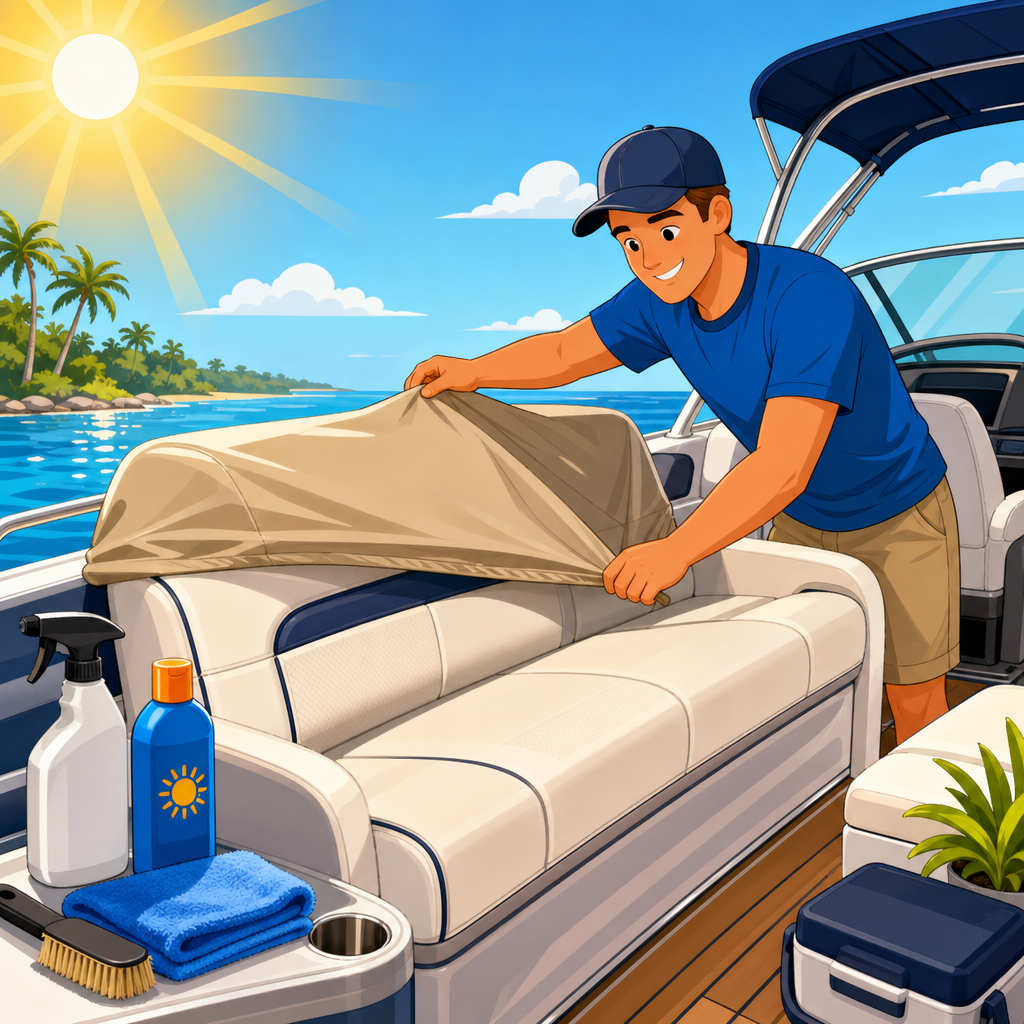
Boat upholstery takes more punishment than most owners expect. On any open deck, vinyl seats, bolsters, sun pads, coamings, and helm cushions absorb intense ultraviolet radiation, heat, salt, sunscreen chemicals, moisture, and abrasion at the same time. If you want to protect your boat’s upholstery from UV damage, you need more than an occasional wipe-down. You need a maintenance system that slows fading, prevents cracking, preserves stitching, and reduces the heat load that causes materials to age prematurely. In practical terms, boat upholstery usually means marine-grade vinyl wrapped over foam and fastened with polyester or PTFE thread, though some premium boats use woven acrylic, coated fabrics, or synthetic leather alternatives. UV damage refers to the breakdown caused by sunlight, especially UVA and UVB exposure, which weakens plasticizers, dries surfaces, bleaches color, and makes once-supple seating brittle. This matters because upholstery replacement is expensive, comfort suffers quickly, and neglected seating lowers resale value. I have seen boats with mechanically sound engines lose buyers simply because chalky seats and split seams made the entire vessel look tired. The good news is that UV damage is predictable and manageable when you understand materials, use the right protectants, clean correctly, ventilate properly, and cover the boat consistently.
Why marine upholstery fails in the sun
UV damage is not just cosmetic fading. On vinyl upholstery, sunlight breaks down the top coating, then attacks the plasticizers that keep the material flexible. As flexibility drops, the surface hardens, then micro-cracks form, especially on top edges, seat crowns, and leaning bolsters where the sun hits most directly. Heat accelerates the process. A white seat in full summer sun can become hot enough to stress adhesives and foam, while darker colors absorb even more radiant energy. Salt crystals, body oils, and sunscreen residues make the problem worse because they sit on the surface and interfere with protective coatings. Once the finish begins to degrade, dirt embeds more easily, mildew gains a foothold in seams, and every cleaning becomes harder.
Thread and foam fail differently but for related reasons. Standard polyester thread has decent weather resistance, yet prolonged UV exposure still weakens it, and cheap thread often goes first. That is why seams can split even when the vinyl still looks acceptable. Foam is damaged by water intrusion and heat cycling. If a cushion gets wet repeatedly and cannot dry, compression sets in, odors develop, and hidden mold can spread beneath an intact skin. In my experience, owners often blame “bad vinyl” when the real chain of failure started with no cover, clogged drains, and harsh cleaners that stripped the factory topcoat.
Choose materials and colors that resist UV damage
The best protection starts before damage appears. If you are refitting a boat or replacing cushions, specify true marine-grade materials from established brands such as Spradling, Morbern, or Costa Marine vinyls. Look for fabrics with proven UV stabilizers, mildew resistance, cold-crack ratings, and protective top finishes designed for repeated cleaning. For thread, PTFE products such as Gore Tenara are the benchmark because they resist UV breakdown far better than standard polyester. That one upgrade can dramatically extend seam life on sun-exposed cushions.
Color selection matters more than many buyers realize. Light neutrals, off-whites, sand, and pale gray reflect more solar energy than navy, black, or dark red. They stay cooler, reduce thermal expansion and contraction, and generally show less dramatic fading. Textured embossed vinyl can also hide minor wear better than slick high-gloss finishes. If your boat layout includes sun pads on the bow or aft deck, consider whether those surfaces truly need dark accent panels. On the boats I maintain regularly, the darkest inserts almost always age first, even when all seats are cleaned on the same schedule.
Construction details are equally important. Upholstery should have proper drainage, venting where appropriate, backing materials that do not trap water, and substrate choices that resist rot. A beautiful cushion wrapped over poor foam and plywood will not stay beautiful long. UV protection works best when the whole assembly is designed for marine use rather than adapted from automotive or patio furniture standards.
Clean upholstery correctly before applying protection
A protectant applied over sunscreen residue, fish slime, spilled drinks, or salt film will not perform well. Routine cleaning should be gentle, frequent, and methodical. Start by rinsing off loose salt and grit with fresh water. Then wash with a pH-balanced marine vinyl cleaner or mild soap solution using a soft microfiber cloth or soft-bristle brush. Agitate lightly around seams and textured grain where contaminants accumulate. Rinse thoroughly and dry fully before applying any UV protectant.
Avoid common mistakes. Bleach can weaken stitching and discolor surfaces. Ammonia-based household cleaners strip finishes and accelerate drying. Magic eraser-type melamine pads are abrasive enough to remove protective coatings if overused. Solvents such as acetone, MEK, or harsh degreasers can permanently damage vinyl. For mildew stains, use a marine product approved by the upholstery manufacturer rather than improvising with aggressive chemistry. If you are unsure, test in a hidden area first.
The practical rule is simple: clean often enough that dirt never requires extreme force. On heavily used coastal boats, weekly wipe-downs during season are not excessive. On trailered freshwater boats, every outing may not require a full clean, but sunscreen and food spills should never sit for days. When the surface feels squeaky clean and fully dry, it is ready for protection.
Use UV protectants that are made for marine vinyl
The most effective way to protect your boat’s upholstery from UV damage is to use a dedicated marine UV protectant on a predictable schedule. Products such as 303 Aerospace Protectant are widely trusted because they leave a non-greasy barrier that blocks a meaningful portion of UV exposure without making seats dangerously slick when applied correctly. Many manufacturers and detailers prefer water-based formulas that do not contain heavy silicone oils. They help preserve flexibility, reduce fading, and make later cleaning easier because contaminants release more readily from a maintained surface.
Application technique matters. Spray the protectant onto a microfiber applicator rather than directly onto the seat where overspray can hit fiberglass, isinglass, or decking. Work it evenly across the surface, paying attention to top edges, forward-facing bolsters, and seat backs exposed through windshields. Let it haze or dwell per label instructions, then buff off excess. More is not better; a thin, even layer is safer and performs better than a glossy buildup that attracts dust.
| Task | Recommended interval | Why it matters |
|---|---|---|
| Freshwater rinse | After every saltwater outing | Removes salt crystals that dry surfaces and trap grime |
| Light cleaning | Weekly during peak season | Prevents residue from bonding to vinyl topcoats |
| UV protectant application | Every 3 to 5 weeks in full sun | Maintains a sacrificial barrier against radiation and heat |
| Deep inspection of seams and foam | Monthly | Catches early cracking, loose stitching, and water intrusion |
| Cover and ventilation check | Before storage and after storms | Reduces trapped moisture while blocking direct sunlight |
Reapplication frequency depends on climate and use. In Florida, Texas, Arizona, Southern California, and tropical marinas, monthly treatment is realistic for uncovered boats. In covered slips or shorter northern seasons, intervals can stretch, but only if the surface still beads lightly and feels conditioned rather than dry. I rely on exposure, not the calendar alone. Horizontal cushions in constant sun need attention first.
Cover, shade, and ventilation do the heavy lifting
No liquid product can compete with physical shade. The single biggest step boat owners can take is to keep upholstery out of direct sun whenever the boat is not in use. A well-fitted mooring cover, cockpit cover, or full storage cover blocks UV before it reaches the vinyl. On lift-kept boats, cover systems with support poles or bows are essential because sagging fabric creates water pockets that stretch covers and funnel moisture into seams. Trailered boats benefit from snug, vented covers that reduce flapping at highway speeds and prevent abrasion.
Shade underway matters too. Biminis, T-tops, hardtops, and removable awnings protect helm seating and cockpit lounges from the worst midday exposure. Bow cushions remain vulnerable, which is why removable pads often last longer when owners store them below or take them home between trips. If your layout allows detachable backrests or filler cushions, use that feature. Upholstery cannot fade in a garage.
Ventilation is the balancing factor. Sealing cushions under a waterproof cover without airflow can invite condensation and mildew, especially in humid regions. Good covers include vents, mesh panels, or support structures that create an air gap. In enclosed cabins, cracked hatches, solar vents, and moisture absorbers help stabilize humidity. The goal is simple: block sun while allowing trapped moisture to escape.
Manage sunscreen, salt, stains, and daily wear
The substances people bring aboard are often as destructive as sunlight. Mineral sunscreens, tanning oils, insect repellents containing DEET, and colored beverages can stain or soften vinyl finishes if they sit too long. Encourage passengers to use towels on sun pads, especially after applying lotion. Keep microfiber towels and a spray bottle of fresh water on board for quick wipe-downs after swimming. Small habits prevent permanent marks.
Saltwater boats need stricter routines than many freshwater boats because salt remains active after the water evaporates. It abrades surfaces, attracts moisture, and can migrate into stitching and hardware areas. Fish blood, bait residue, and scale are another common issue on dual-console and center-console boats. Clean immediately with products safe for vinyl, then rinse thoroughly. Never scrub aggressively with stiff deck brushes meant for nonskid.
Mechanical wear also deserves attention. Snaps, zippers, watch bands, and metal gear corners create cuts that later widen as UV embrittles the material. Rotating loose cushions, using step pads where people board, and training guests not to kneel on seat crowns all reduce concentrated stress. Upholstery ages fastest where sun exposure and compression happen together.
Inspect regularly and repair small problems early
Preventive maintenance works only if you inspect with intent. At least once a month during boating season, check the hottest, brightest locations first: bow seating, aft sun lounges, helm bolster tops, and any cushion edge facing south or west in its slip. Look for dulling, chalkiness, color shift, seam puckering, loose welting, or tiny surface cracks. Press around seams to detect foam saturation and smell for mildew. Lift removable cushions and inspect the undersides, where hidden staining often reveals trapped moisture.
Early repairs are far cheaper than full replacement. A detailer or marine upholstery shop can restitch a weak seam before it blows out across a weekend. Small tears can sometimes be stabilized with color-matched marine repair compounds, though they are best viewed as temporary. If foam is wet, solve the water source first, whether that means improving cover fit, clearing drains, resealing hardware, or adding ventilation matting beneath cushions. I have seen owners replace upholstery twice without fixing a leaking snap base. The new vinyl failed for the same old reason.
Documentation helps if you manage a large boat or seasonal fleet. Keep a simple maintenance log with cleaning dates, protectant applications, stain incidents, and repairs. Patterns appear quickly. If one seat always fades faster, it probably has a unique exposure issue that can be corrected with shade, storage, or material changes.
Build a long-term deck and upholstery maintenance plan
Deck and upholstery maintenance should function as one system, not isolated chores. Dirty nonskid transfers grit to seats. Rust drips from hardware stain cushions. Poorly stored canvas leaks onto bolsters. Build routines that connect these surfaces. After every trip, remove trash, rinse salt, wipe seating, check drains, and open the boat to dry before covering. Weekly, clean vinyl properly and inspect hardware near upholstered areas. Monthly, apply UV protectant where needed, tighten cover supports, and review any developing issues.
Seasonally, decide whether some cushions should be removed from the boat entirely. Winter storage, hurricane season, or extended marina stays are ideal times to store loose cushions indoors. If you are reupholstering, use the opportunity to upgrade thread, foam, venting, and cover design rather than simply copying the original pattern. A hub page like this should guide every related task: stain removal, mildew control, canvas care, cushion repair, cover selection, and professional reupholstery planning all connect back to UV prevention because sun damage exposes every other weakness.
The core takeaway is straightforward. To protect your boat’s upholstery from UV damage, clean gently, apply a proven marine protectant on schedule, keep seats covered and ventilated, manage sunscreen and salt immediately, and repair small defects before they spread. Those habits preserve appearance, comfort, and resale value far better than any last-minute restoration. Start with your most exposed cushions this week, set a maintenance calendar, and make sun protection part of every post-trip routine.
Frequently Asked Questions
1. What causes boat upholstery to break down so quickly in the sun?
UV exposure is the biggest reason marine upholstery ages faster than many owners expect, but it is rarely the only factor. On a boat, vinyl, foam, stitching, welting, and backing materials are exposed to constant sunlight, high surface temperatures, salt residue, moisture, body oils, sunscreen chemicals, and repeated friction. Ultraviolet rays gradually weaken the plasticizers and protective finish in vinyl, which leads to fading, drying, hardening, and eventually cracking. At the same time, heat builds on open decks and dark-colored cushions, accelerating material breakdown and making seats hot enough to stress adhesives and seams. Salt crystals and airborne contaminants can also sit on the surface and act like abrasives if they are not rinsed away regularly.
That combination is what makes boat upholstery different from patio furniture or automotive seating. A helm seat or sun pad may look fine one season and then suddenly show chalking, split seams, or brittle panels the next. In many cases, the visible damage starts after the protective topcoat has already been compromised. Once that happens, UV rays penetrate more deeply, and deterioration speeds up. The best way to protect your boat’s upholstery from UV damage is to treat the problem as a full exposure issue, not just a sunshine issue. Regular cleaning, UV-blocking protectants, proper ventilation, and physical shade or covers all work together to slow aging and preserve the look and feel of the material.
2. What is the best routine for protecting boat upholstery from UV damage?
The most effective routine is a simple, repeatable maintenance system rather than occasional heavy cleaning. Start by rinsing upholstery with fresh water after outings, especially if the boat has been exposed to salt spray, sunscreen, food spills, or heavy traffic. This removes residues that can trap heat, stain the surface, and weaken vinyl over time. Follow that with a gentle marine-grade vinyl cleaner on a soft cloth or sponge. Avoid harsh household cleaners, bleach-heavy products, ammonia, or stiff brushes, because they can strip protective coatings and dry out the material.
Once the upholstery is clean and fully dry, apply a marine-safe UV protectant designed specifically for vinyl or marine seating surfaces. A quality protectant helps reduce fading, surface oxidation, and heat absorption while preserving flexibility. The key is consistency. During peak boating season, many owners benefit from applying protectant every few weeks, or more often if the boat sits uncovered in full sun. In between applications, wiping away dirt and sunscreen residue helps the protectant continue doing its job.
Physical protection matters just as much as chemical protection. Use fitted seat covers, cockpit covers, or a full boat cover whenever the boat is not in use. If possible, store removable cushions inside or in a shaded, ventilated area. Even a few extra hours each day out of direct sun can make a noticeable difference over the course of a season. If your boat is on a lift or trailer, positioning it to reduce all-day sun exposure can also help. The best results come from combining routine washing, UV treatment, and shade management rather than relying on any single product.
3. Are all upholstery protectants safe for marine vinyl, and how do I choose the right one?
No, not all protectants are appropriate for marine upholstery, and choosing the wrong product can do more harm than good. Some generic interior sprays or automotive dressings leave behind an oily or overly glossy film that attracts dirt, makes seats slippery, and may interfere with the vinyl’s breathable surface. Others contain ingredients that can accelerate drying, discoloration, or surface breakdown when exposed to strong marine conditions. For that reason, it is important to select a protectant that specifically states it is safe for marine vinyl and intended for UV defense, not just cosmetic shine.
Look for products designed to block or reduce UV degradation while maintaining the natural finish of the upholstery. A good marine protectant should help preserve color, limit surface drying, and reduce heat stress without creating a greasy feel. It should also be easy to reapply as part of your regular maintenance schedule. Before using any product across the entire interior, test it in a small, inconspicuous area to confirm that it does not alter the texture or appearance. This is especially important on newer premium vinyls, textured surfaces, or light-colored upholstery.
It also helps to think beyond the vinyl face itself. If your seating has visible stitching, embroidered logos, piping, or mixed materials, use products that are compatible with those details as well. During application, make sure the surface is clean and dry, and avoid over-applying. More product is not always better. A thin, even layer typically performs better than a heavy coating that collects dust and grime. When in doubt, follow the upholstery manufacturer’s care guidelines first, then choose a reputable marine brand that aligns with those recommendations.
4. How can I keep boat seats from fading, cracking, and getting too hot during the season?
Preventing fading, cracking, and heat buildup requires both surface care and temperature control. Fading happens when UV rays break down dyes and surface finishes, while cracking often follows when vinyl loses flexibility from repeated sun and heat exposure. To slow both problems, keep the upholstery clean, protected, and covered whenever possible. Dirt and chemical residues are not harmless; they can magnify wear and make the surface more vulnerable to sun damage. Sunscreen is a major offender on many boats because it can sit on seats for hours and gradually affect the vinyl’s finish if not cleaned away.
Heat management is equally important. Upholstery that stays excessively hot day after day tends to age faster, even if it is not visibly dirty. Use breathable, well-fitted covers that block direct sunlight without trapping excessive moisture underneath. If your boat has removable cushions, store them indoors or in a dry shaded compartment when practical. Light-colored upholstery generally stays cooler than darker tones, and shaded mooring or covered storage can dramatically reduce temperature stress. Ventilation also matters. If a cover is tight and non-breathable, trapped heat and moisture can create additional problems, including mildew and adhesive stress.
Inspect your seats regularly instead of waiting for visible damage to spread. Early signs such as dullness, stiffness, loose stitching, chalky residue, or tiny surface lines often indicate that UV and heat are already taking a toll. Addressing those signs early with cleaning, protectant application, and better cover habits can extend the life of the upholstery significantly. In short, if you want seats to stay cooler, softer, and better looking, reduce direct exposure, clean contaminants promptly, and maintain a reliable UV-protection routine all season long.
5. What are the biggest mistakes boat owners make when trying to protect upholstery from UV damage?
One of the most common mistakes is waiting until the upholstery looks damaged before taking action. By the time seats are visibly faded, brittle, or cracked, the material has usually been under stress for a long time. Preventive care is far more effective than trying to restore neglected vinyl. Another major mistake is using the wrong cleaning products. Household cleaners, degreasers, magic-eraser-type abrasives, strong solvents, and bleach-based sprays may seem effective in the moment, but they can strip away protective finishes and shorten the life of the material.
Another problem is inconsistent maintenance. Many owners clean seats only when they are visibly dirty and apply protectant once or twice a year, even though the boat sits uncovered in intense sun for months. UV protection works best when it is reapplied on a schedule that matches real exposure conditions. Ignoring covers is another expensive oversight. Even the best protectant cannot fully compensate for constant direct sunlight on open-deck seating. A quality cover system is one of the strongest defenses against fading, heat buildup, and stitching failure.
Owners also sometimes overlook seams, stitching, and hidden moisture. They focus on the seat surface while mildew develops underneath cushions or thread begins to degrade around high-exposure edges. Regular inspections, proper drying, and good airflow are essential parts of upholstery care. Finally, using products that leave a slick finish can create a safety issue, especially on helm seats and passenger seating where grip matters. The goal is not to make upholstery shiny. The goal is to preserve flexibility, color, comfort, and structural integrity. The most successful approach is practical and disciplined: clean gently, protect often, cover consistently, and correct small issues before they become expensive repairs.