The best East Coast destinations for boaters combine protected harbors, memorable passages, historic waterfront towns, and practical cruising infrastructure into one richly varied coastline. For anyone planning coastal cruising and island hopping, the U.S. East Coast offers an unusually dense mix of short day runs, offshore legs, tidal rivers, barrier islands, and bluewater gateways from Maine to the Florida Keys. In boating terms, coastal cruising usually means moving port to port along the shoreline with careful attention to weather, tides, inlets, and fuel range, while island hopping focuses on shorter passages between anchorages, marinas, and nearshore islands. I have run this coast in sections on sailboats and powerboats, and the same lesson always holds: the best destination is not simply the prettiest harbor, but the place where scenery, seamanship, shore access, and safe approach all line up. That matters because East Coast boaters are dealing with fast-changing weather, strong currents, busy commercial traffic, bridge schedules, hurricane planning, and highly seasonal cruising windows. Choosing the right destination shapes every part of the trip, from route planning and provisioning to anchoring strategy and crew comfort. A strong destination hub should answer practical questions quickly: where to go, when to go, what kind of boat fits, what hazards to expect, and what experiences justify the passage. This guide does that by organizing the East Coast into proven cruising regions and highlighting the ports and island chains that consistently reward boaters with reliable access, worthwhile stops, and enough variety to support weekend escapes, multiweek vacations, and full seasonal migrations.
What Makes an East Coast Boating Destination Truly Great
A great East Coast boating destination needs more than postcard appeal. It should have a well-marked approach, all-weather or at least fair-weather protection, nearby fuel and pump-out, decent groceries within reach, and enough room to choose between dockage and anchoring. On this coast, tidal range and current often matter as much as depth. In places like the Chesapeake Bay, current can shape arrival times; in Maine, fog and lobster gear change the risk picture; in the Florida Keys, shoaling and coral protection zones demand accurate charts and local awareness. The best destinations also reward different boating styles. A trawler crew may value long sheltered runs on the Intracoastal Waterway, while a center-console owner may prioritize quick island access and clear swimming water. Sailors often weigh prevailing wind angles, mooring availability, and harbor holding quality more heavily than resort amenities. I judge a stop by six factors: approach safety, weather protection, shoreside services, anchorage quality, nearby secondary stops, and whether the place still feels worth the effort after the lines are secured. Destinations that score well across those categories become repeat stops, not one-time checkmarks.
Seasonality is another major filter. New England shines from late June through early September, with shoulder-season opportunities for experienced crews. The Mid-Atlantic and Chesapeake often peak in spring and fall, when humidity and thunderstorm frequency are lower. The Carolinas and Georgia reward careful timing because shallow inlets, current, and shifting shoals can turn a casual plan into a technical arrival. South Florida and the Keys are prime in winter and early spring, though cold fronts, strong easterlies, and crowded marinas all affect route choices. In other words, the best East Coast destinations are not static winners; they are destinations that align with boat type, crew skill, and season.
New England Coastal Cruising: Maine, Cape Cod, and the Islands
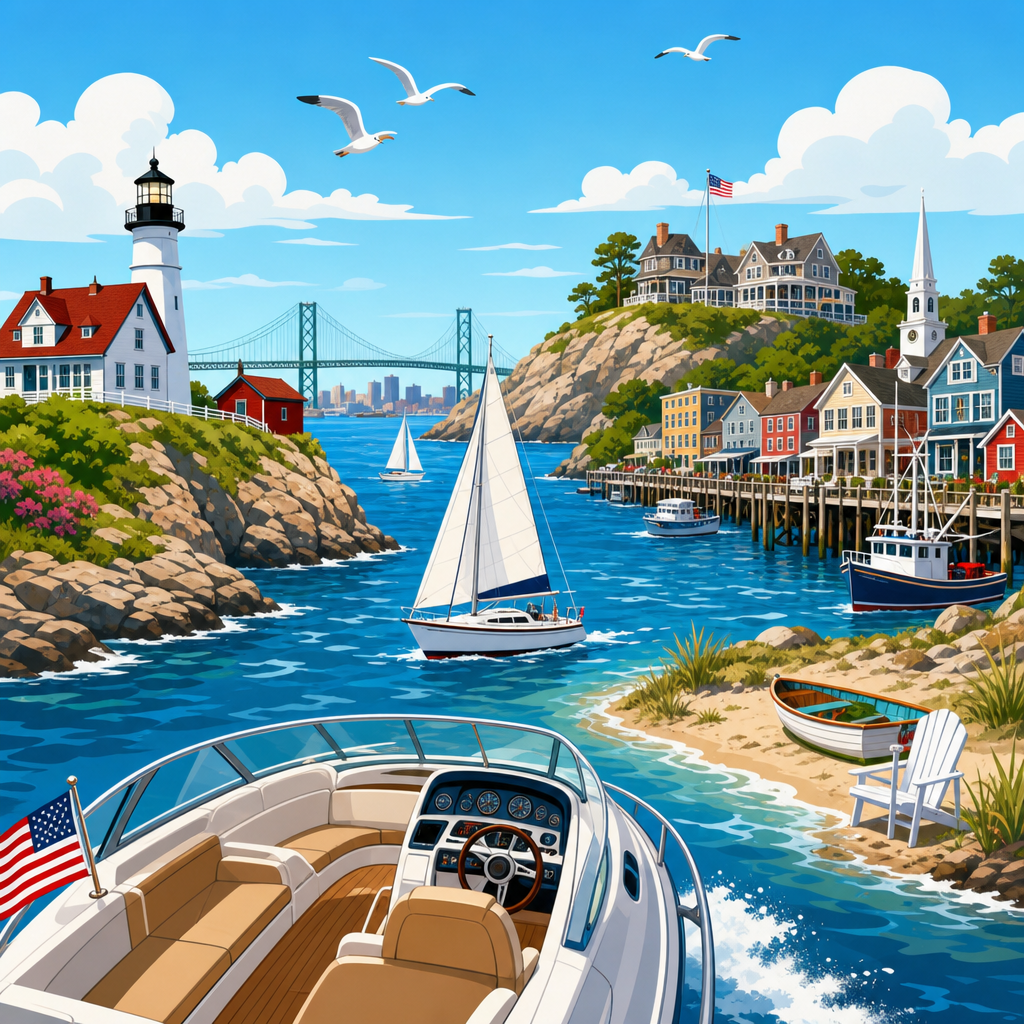
For boaters who want dramatic coastline, cool summer weather, and tightly packed harbors, New England is the East Coast’s classic cruising ground. Maine leads the list for experienced coastal cruisers because it offers hundreds of protected coves, granite-lined anchorages, and working waterfront towns with real maritime character. Mount Desert Island and the waters around Southwest Harbor, Northeast Harbor, and Somes Sound are especially rewarding. Casco Bay, Penobscot Bay, and Boothbay Harbor also stand out because you can string together short passages with scenic variety and dependable services. The tradeoff is that Maine demands close attention to fog, rocky ledges, and lobster pots. Electronic navigation helps, but local paper chart awareness and conservative speed still matter.
Cape Cod and the islands deliver a different style of cruising. Martha’s Vineyard, Nantucket, and Block Island are ideal for island hopping because each has a distinct identity and manageable passage lengths from major New England departure points. Edgartown remains one of the best all-around stops for transient boaters thanks to moorings, launch service, and easy town access. Nantucket Harbor rewards the longer run with a highly walkable destination and robust summer boating culture. Block Island is often the transitional stop between Long Island Sound and southern New England, and New Harbor remains one of the region’s most popular anchoring and mooring areas. These are not remote islands, but they are highly satisfying because a boater can experience open-water passage making and arrive somewhere that genuinely feels separate from the mainland.
Newport, Rhode Island, deserves special mention as a hub within the hub. It combines world-class marine services, protected harbor options, and easy jumping-off points to Narragansett Bay, Block Island, and Buzzards Bay. If a crew has only one New England stop, Newport often provides the broadest mix of sailing culture, repair capability, dining, and access to surrounding waters.
The Mid-Atlantic: Long Island Sound, New York Harbor, and New Jersey Gateways
The Mid-Atlantic rewards boaters who appreciate strategic cruising. Long Island Sound functions almost like an inland sea, giving boaters numerous protected destinations while still demanding respect for wind-against-tide chop and busy ferry traffic. Mystic, Connecticut, is a standout because it combines excellent maritime heritage with practical transient amenities. Greenport and Sag Harbor on the eastern end of Long Island are equally important, offering strong provisioning options and easy onward runs toward Block Island, Montauk, or the Peconics. These ports work well for boaters who want short cruising legs paired with polished town experiences.
New York Harbor is less about tranquil island hopping and more about iconic urban boating done carefully. Approaching Lower Manhattan by water remains one of the great East Coast passages, but it is a destination best handled with current planning, AIS awareness, and disciplined VHF monitoring. Liberty Landing Marina in Jersey City is popular for good reason: secure slips, reliable services, and direct skyline views. From there, a boater can continue north on the Hudson, east through Hell Gate with proper timing, or south toward the Jersey Shore.
Along New Jersey, Cape May is the clear standout. It is both a destination and a decision point, linking offshore traffic, Delaware Bay, and the Intracoastal route. Cape May works because it offers serious marina infrastructure, weather-waiting utility, and an attractive town that still feels built around maritime movement. Many crews underestimate New Jersey because they focus on open beach shoreline rather than destination harbors, but Cape May consistently proves its value on real cruising itineraries.
Chesapeake Bay: America’s Most Versatile Cruising Ground
If one East Coast region best balances accessibility, variety, and seamanship development, it is the Chesapeake Bay. The bay supports sailboats, trawlers, express cruisers, and trailerable boats better than almost any other coastal region because it offers long protected routes, countless creeks, deep boating culture, and a large network of marinas and boatyards. Annapolis is the obvious anchor destination. It combines historic appeal, marine retail, repair services, and central geography that allows easy branching north, south, or across the bay. St. Michaels, Oxford, Solomons, and Deltaville also rank highly for boaters seeking quieter but fully functional cruising stops.
The Chesapeake excels at coastal cruising because you can design trips around weather windows rather than endure constant offshore exposure. A crew can move from the Magothy to Annapolis, then down to the Rhode River, St. Michaels, Oxford, and the Little Choptank with relatively short hops and abundant bailout options. That flexibility matters for families and newer cruisers. It also supports shoulder-season travel when cold fronts or summer squalls require adaptable plans. Crab culture, maritime museums, and small-town waterfronts add depth beyond the boating itself.
| Region | Best For | Ideal Season | Key Watch-Out | Standout Stops |
|---|---|---|---|---|
| New England | Scenic harbor cruising and classic island hopping | Summer | Fog, rocks, lobster gear | Newport, Edgartown, Block Island, Mount Desert Island |
| Mid-Atlantic | Protected passages with urban and historic stops | Late spring to early fall | Traffic, current, exposed sounds | Mystic, Sag Harbor, New York Harbor, Cape May |
| Chesapeake Bay | Flexible cruising for mixed skill levels | Spring and fall | Thunderstorms, crab pots, summer heat | Annapolis, St. Michaels, Oxford, Solomons |
| Carolinas and Georgia | ICW transit and low-country exploration | Spring and fall | Shoaling, inlets, strong current | Beaufort, Wrightsville Beach, Charleston, Savannah |
| Florida and Keys | Winter cruising and warm-water island hopping | Winter to early spring | Fronts, shoals, coral rules, crowds | St. Augustine, Palm Beach, Biscayne Bay, Key West |
No Chesapeake itinerary is complete without at least one true anchoring destination. Harness Creek near Annapolis, the Wye River, and the many coves off the Piankatank and Great Wicomico show why the bay remains addictive. You can spend a week moving only twenty or thirty miles at a time and still feel that every stop changes the trip. For a hub article on coastal cruising and island hopping, the Chesapeake matters because it teaches route planning, anchoring judgment, and weather interpretation in an environment forgiving enough to build confidence.
The Carolinas and Georgia: Barrier Islands, Tides, and Low-Country Stops
The Carolinas and Georgia reward patient boaters who understand that mileage matters less than timing. This stretch of coast is central to many East Coast migrations, yet it is also a worthy destination in its own right. Beaufort, North Carolina, is one of the best examples. It offers history, walkable waterfront access, and immediate proximity to the Outer Banks and Cape Lookout National Seashore. For island hopping by small powerboat or capable cruising boat, the nearby barrier islands provide exactly the kind of beach-and-anchorage rhythm many boaters imagine when they plan a coastal trip.
Farther south, Wrightsville Beach is a practical and enjoyable stop with easy ocean access and strong appeal for mixed boating activities, including fishing, day cruising, and overnighting. Charleston, South Carolina, is one of the East Coast’s premier urban boating destinations because it combines major historical interest with serious marina infrastructure and nearby creek exploration. Savannah adds similar low-country character, though current, commercial traffic, and approach planning demand care.
This region’s challenge is shoaling. Inlets shift, charted depths age quickly, and certain Intracoastal segments become notorious for thin water. That does not make the Carolinas and Georgia poor destinations; it means they favor attentive skippers who check recent local notices, tide tables, and cruiser reports. In exchange, boaters get some of the coast’s most atmospheric scenery: marsh grass at golden hour, shrimp boats at dawn, and anchorages where dolphins move through the creek as the tide turns.
Florida Atlantic Coast and the Florida Keys
Florida turns East Coast cruising into a year-round possibility, but the state is best divided into two boating experiences. The Atlantic coast from St. Augustine through Palm Beach and Fort Lauderdale offers a mix of historic harbors, resort marinas, and offshore opportunities. St. Augustine stands out because it combines a genuinely interesting old town with straightforward appeal for transient cruisers. Fort Lauderdale is unmatched for marine services and refit capability, though it can feel more like a working yachting center than a relaxed cruising stop. Palm Beach and the Lake Worth area provide a useful blend of good access, provisioning, and staging for Bahamas-bound crews.
The Florida Keys are the East Coast’s most recognizable island-hopping destination and one of its most misunderstood. They are not simply tropical and easy. The Keys require close depth management, awareness of protected zones, and realistic planning around wind direction. Yet for boaters willing to prepare, the rewards are exceptional. Key Largo and Islamorada offer access to patch reefs, backcountry routes, and clear-water anchorages. Marathon is one of the most practical cruising bases in the entire chain because Boot Key Harbor provides mooring infrastructure, services, and a strong cruiser community. Key West remains the signature destination: historic, lively, and still deeply connected to life by water.
Biscayne Bay and Elliott Key also deserve hub-level attention because they give South Florida boaters a true island-hopping experience without requiring a full Keys transit. For weekend cruising, that accessibility is hard to beat. Families can anchor in clearer water, paddle mangrove edges, and still return to urban services within hours. That combination of convenience and escape explains why South Florida remains one of the busiest boating regions in the country.
How to Choose the Right Destination for Your Boat and Crew
The best East Coast destination depends on honest matching. If your boat has shallow draft, strong air conditioning, and a crew that prefers marina nights, the Chesapeake, South Florida, and parts of the Carolinas will likely be more comfortable than remote Downeast Maine. If you run a sailboat with moderate draft and enjoy harbor-to-harbor passages, Newport, Block Island, Nantucket, and Penobscot Bay become more compelling. Families with children usually do best in destinations with short runs, protected swimming areas, and flexible itinerary options, which is why the Chesapeake, Cape Cod islands, and Biscayne Bay often outperform more ambitious routes.
Range and weather tolerance matter just as much. A center-console can enjoy island hopping around Cape Lookout, Martha’s Vineyard, or the upper Keys, but only if sea state and fuel planning stay conservative. A trawler can make almost any region work, yet bridge clearances, current, and speed limitations affect how much territory feels enjoyable versus merely possible. New cruisers should favor regions with bailout marinas, multiple anchorage choices, and limited bar crossings. Experienced crews can seek more exposed or technical destinations where the passage itself is part of the reward.
The best East Coast destinations for boaters are the places where navigation realities, seasonal conditions, and memorable shoreside experiences align. New England delivers classic harbors and true island character. Long Island Sound and the Mid-Atlantic provide strategic cruising with standout urban and historic stops. The Chesapeake Bay remains the most versatile training and pleasure ground on the coast. The Carolinas and Georgia add low-country beauty and rewarding barrier-island exploration for attentive skippers. Florida and the Keys bring warm-water cruising, service density, and some of the country’s best island-hopping routes. Across all of them, the same principle applies: choose destinations based on your boat, your crew, and the season, not just the postcard image.
For a hub within Boating Destinations & Travel, this coastal cruising and island hopping guide should serve as the starting chart, not the final waypoint. Use it to narrow your region, then build a route around tides, marina availability, weather windows, and the type of experience you actually want, whether that means quiet anchorages, walkable harbor towns, or offshore hops between iconic islands. The East Coast rewards thoughtful planning with extraordinary range. One season can be spent tracing lobster-boat harbors in Maine; another can unfold among Chesapeake creeks or Keys mooring fields. Start with one well-matched destination, run it carefully, and let the coastline expand from there.
Frequently Asked Questions
What makes the East Coast such a strong region for boaters compared with other U.S. cruising grounds?
The East Coast stands out because it offers an unusually diverse range of boating experiences packed into one long, connected cruising corridor. A boater can move from the rocky harbors and fog-prone passages of Maine, to the protected bays and historic ports of New England, through the tidal rivers and busy yachting centers of the Mid-Atlantic, and then continue south into the marsh-lined Intracoastal Waterway, subtropical anchorages, and island chains of Florida. Very few other regions combine that much geographic variety with so many marinas, fuel docks, repair facilities, mooring fields, inlet options, and waterfront towns that are set up to welcome transient boaters.
Another major advantage is flexibility. The East Coast works for many kinds of boating styles, from short weekend runs and family cruising to seasonal migration and long-range passagemaking. If conditions offshore are favorable, experienced crews can make outside runs between major ports. If weather turns or a skipper prefers a more protected route, large portions of the coast also offer bays, sounds, rivers, canals, and ICW segments that reduce exposure. That means boaters can tailor their trips to vessel type, crew experience, schedule, and comfort level.
The East Coast is also rich in destination quality. The best stops are not just safe places to tie up; they are places with real character. You can dock within walking distance of colonial streets, seafood harbors, resort towns, national parks, beach communities, and working waterfronts with deep maritime roots. For many cruisers, that combination of practical infrastructure and memorable shoreside experience is what makes the region so rewarding. The result is a coastline where navigation skill, trip planning, scenery, and local culture all come together in a way that keeps boaters coming back year after year.
Which East Coast destinations are considered must-visit stops for boaters?
There is no single list that fits every vessel or cruising style, but several East Coast destinations are widely considered standout stops because they combine navigational appeal, scenery, boating services, and strong waterfront atmosphere. In New England, places like Newport, Rhode Island, and Martha’s Vineyard remain classics thanks to their protected harbors, sailing culture, moorings and marinas, and easy access to dining, provisioning, and historic districts. Farther north, Maine destinations such as Boothbay Harbor, Camden, Rockland, and Mount Desert Island attract boaters looking for dramatic coastlines, island-dotted passages, and a distinctly maritime cruising environment.
In the Mid-Atlantic and Chesapeake region, Annapolis is a top-tier stop because it offers outstanding marine services, protected access, and one of the most boat-oriented downtowns in the country. St. Michaels, Oxford, and other smaller Chesapeake towns are also favorites for cruisers who value sheltered waters, manageable day runs, and a relaxed pace. Farther south, Beaufort in North Carolina and Charleston in South Carolina consistently rank high for their mix of historic charm, strong marina options, and strategic location along major coastal routes. Savannah and the Georgia coast appeal to boaters who enjoy tidal rivers, marsh scenery, and less hurried cruising between ports.
In Florida, the options multiply. St. Augustine is a perennial favorite for its history and boater-friendly stopping points, while Palm Beach, Fort Lauderdale, and Miami provide access to world-class yachting infrastructure and offshore gateways. For many cruisers, the Florida Keys are the grand finale or central highlight, especially places like Key Largo, Marathon, Islamorada, and Key West. These areas combine protected anchorages, reef and bluewater access, island atmosphere, and some of the most distinctive boating on the East Coast. Ultimately, the best destinations depend on whether a boater prioritizes natural beauty, easy dockage, fishing, sailing conditions, nightlife, or quiet anchorages, but these ports consistently appear on the short list for good reason.
How should boaters choose the best East Coast destination for their boat, skill level, and travel goals?
The best destination is not always the most famous one. A smart choice starts with matching the cruising ground to the boat’s draft, range, speed, systems, and weather capability. A trawler or cruising powerboat may prioritize fuel availability, bridge clearances, and comfortable overnight stops along protected inside routes. A sailboat crew may focus more on harbor depth, mast clearance restrictions, tidal windows, and the quality of anchorages or mooring fields. Smaller center consoles and dayboats may be better suited to destinations with short runs, easy access to inlets, and nearby protected waters, while larger offshore-capable boats can comfortably incorporate longer open-water legs between ports.
Skill level matters just as much. Some East Coast destinations are ideal for newer boaters because they offer well-marked channels, abundant marinas, shorter distances between stops, and plenty of bail-out options if weather changes. Sections of the Chesapeake Bay, parts of coastal New England in settled summer conditions, and many ICW-linked towns can be approachable for boaters building experience. Other areas require more confidence and preparation because they involve strong tides, narrow entrances, current-sensitive passes, fog, shoaling, or limited weather windows. New England island routes, certain Carolina inlets, and exposed passages in South Florida can all demand more careful planning.
Travel goals should guide the final decision. If the priority is historic waterfront towns and easy evenings ashore, destinations like Annapolis, Newport, Charleston, and St. Augustine are excellent fits. If the goal is scenic cruising with quiet anchorages and nature-focused days, coastal Maine, parts of the Chesapeake, the Georgia marsh coast, and the Keys can be especially rewarding. If a crew wants a mix of offshore hops and social marina culture, South Florida and southern New England offer strong options. In practice, the best East Coast trip often comes from linking several destination types together rather than chasing a single marquee port. The most satisfying itinerary usually balances safe passages, realistic day lengths, reliable services, and places that suit the crew’s interests once the boat is tied up.
What practical factors should boaters plan for when cruising East Coast destinations?
East Coast cruising rewards preparation because conditions and infrastructure can vary dramatically from one region to the next. Weather is the first major factor. The farther north you cruise, the shorter the prime season may be, while southern destinations can be affected by extreme summer heat, thunderstorms, and the broader Atlantic hurricane season. Wind against current can create steep, uncomfortable conditions in inlets, sounds, and tidal rivers, even when forecasts appear manageable. Fog can be a real issue in northern waters, and afternoon convection is a frequent concern in the Southeast and Florida. Boaters should build flexibility into the schedule rather than forcing fixed passage dates.
The second major issue is water depth and tide. Much of the East Coast includes shifting shoals, dredged channels, current-heavy entrances, and tide-dependent marinas or anchorages. That is especially true in the Mid-Atlantic, the Carolinas, Georgia, and portions of Florida where shoaling is common and local knowledge matters. Updated charts, active cruising resources, notices to mariners, and recent local reports are essential. Boaters also need to think carefully about bridge openings, mast height, fuel range, pump-out availability, and whether a destination is better suited to docking, mooring, or anchoring.
Provisioning and maintenance are equally important. One reason the best East Coast boating destinations stand out is that they offer more than just transient slips. They provide haul-out services, mechanics, parts access, grocery options, laundry, transportation, and walkable downtown amenities. For longer trips, it makes sense to identify full-service hubs in advance, such as major yachting centers or established cruising towns, and then use smaller ports for more relaxed overnight stops. Good planning also means understanding reservation patterns, especially in peak summer in New England and during winter cruising season in Florida. A well-planned East Coast itinerary is less about rushing and more about staying ahead of weather, tide, and logistics so the cruising remains enjoyable and safe.
When is the best time of year to visit East Coast boating destinations?
The best time depends on which part of the coast you want to explore and what kind of experience you prefer. In general, late spring through early fall is the prime season for northern destinations such as Maine, Massachusetts, Rhode Island, Long Island, and much of coastal New England. Summer brings the most reliable access to marinas, waterfront businesses, and seasonal services, but it also means more traffic, higher rates, and crowded harbors in marquee ports. Many experienced boaters prefer late June, early July, or the shoulder weeks of September for a balance of good weather, long daylight, and slightly less congestion. In northern waters, water temperature, fog frequency, and the timing of tropical systems later in the season should all be considered.
The Mid-Atlantic and Chesapeake Bay have a somewhat longer cruising window. Spring and fall are often especially pleasant because temperatures are moderate, towns are active, and the worst summer heat and humidity are avoided. Summer remains highly popular, particularly for family cruising and shorter vacation trips, but thunderstorms and hot conditions can make long days less comfortable. Farther south, the Carolinas, Georgia, and much of Florida often shine in fall, winter, and spring, when temperatures are more moderate and cruising conditions are generally more comfortable than in the peak