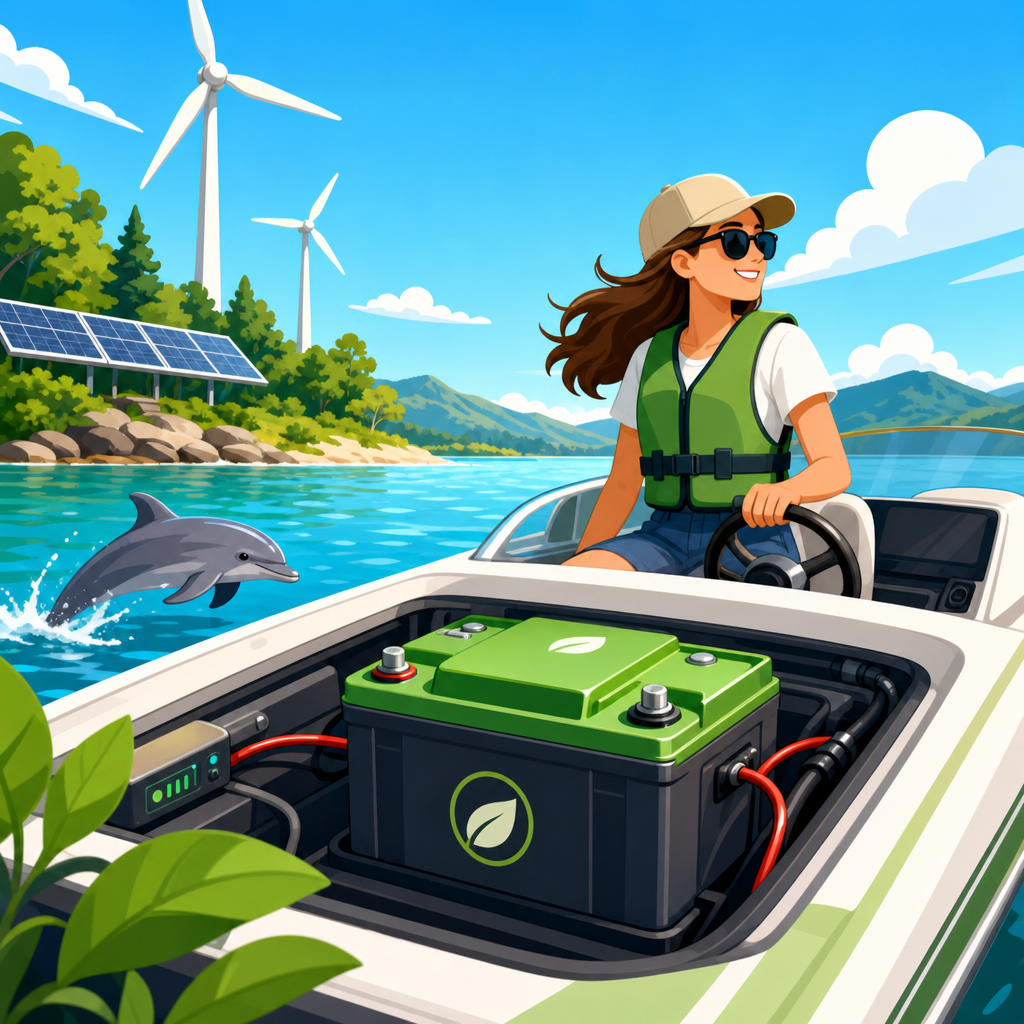
Choosing the best eco-friendly boat batteries for sustainability starts with understanding that a marine battery affects far more than engine starts and electronics runtime. It influences fuel efficiency, charging behavior, maintenance demands, onboard safety, and the environmental footprint of your entire boating setup. In practical terms, eco-friendly boat batteries are power systems designed to reduce waste, improve energy efficiency, last longer, and limit pollution across manufacturing, use, and disposal. For most boaters today, that conversation centers on lithium iron phosphate batteries, advanced AGM batteries, smart charging systems, solar integration, and responsible recycling.
I have worked through battery upgrades on fishing boats, center consoles, and electric auxiliary setups, and the pattern is consistent: the most sustainable marine power choice is usually the battery bank that delivers the longest service life with the fewest charging losses and the least maintenance. That matters because boating gear and equipment choices are cumulative. A battery that accepts charge efficiently can shorten generator runtime. A lighter battery can reduce load and improve range. A battery chemistry with stable thermal behavior can simplify installation and improve safety. When readers look for eco-friendly boating gear, batteries belong at the center of the conversation because nearly every other onboard system depends on them.
This hub article explains the leading battery types, what makes one option greener than another, and how to choose the right system for trolling motors, house loads, sailboats, small electric craft, and hybrid cruising setups. It also connects the wider category of eco-friendly boating gear: solar panels, battery monitors, energy-efficient lighting, low-draw refrigeration, and shore-power charging practices. If you want a marine battery setup that is cleaner, durable, and cost-effective over time, this guide gives you the framework to make that decision with confidence.
What Makes a Boat Battery Eco-Friendly
An eco-friendly boat battery is not simply a battery marketed as green. It should score well in four measurable areas: lifespan, charge efficiency, safety, and end-of-life handling. Lifespan matters because a battery that lasts ten years instead of three reduces manufacturing demand and waste. Charge efficiency matters because less energy is lost as heat during charging and discharging. Safety matters because leaks, off-gassing, and thermal instability create environmental and human risks. End-of-life handling matters because even excellent batteries eventually need recycling through established collection channels.
In marine use, the most sustainable battery is often the one that matches the duty cycle correctly. A poorly sized lithium bank can be less sustainable than a well-specified AGM system if the owner needs to replace inverters, chargers, or alternator components prematurely. Likewise, a cheap flooded lead-acid battery may appear affordable upfront but can consume more water, corrode terminals, vent gases, and require replacement years sooner. Sustainability in boating gear is rarely a single-product claim; it is systems thinking applied to real operating conditions.
For that reason, the best evaluation method is total lifecycle performance. Look at cycle life, depth of discharge, round-trip efficiency, vibration resistance, charging compatibility, and recyclability. Marine standards and manufacturer data sheets are useful here. Reputable brands publish cycle life at a stated depth of discharge, operating temperature limits, internal battery management protections, and recommended charging profiles. If those details are missing, that product should not lead your shortlist.
Lithium Iron Phosphate Batteries: The Leading Sustainable Choice
For most serious upgrades, lithium iron phosphate, commonly called LiFePO4, is the strongest eco-friendly battery option for boats. It offers high cycle life, typically around 3,000 to 6,000 cycles depending on depth of discharge and brand quality. By comparison, many flooded lead-acid batteries may deliver only a few hundred deep cycles, while quality AGM batteries often land in the mid-hundreds to roughly 1,000 cycles under favorable use. That difference alone has major sustainability implications because fewer replacements mean fewer materials extracted, shipped, and disposed of.
LiFePO4 also excels in usable capacity. A 100Ah lithium battery can usually provide much more real-world usable energy than a 100Ah lead-acid unit because it tolerates deeper discharge without the same damage penalty. Round-trip efficiency often exceeds 95 percent, reducing wasted shore power, solar harvest losses, and generator runtime. On boats with trolling motors or heavy house loads, I have seen owners recover meaningful daily energy savings simply because lithium accepts current faster and reaches a true full charge more reliably than older chemistries.
Safety is another reason LiFePO4 stands apart. Unlike some other lithium chemistries, it is known for strong thermal and chemical stability. That does not remove the need for proper installation, but it does make this chemistry especially suitable for marine environments. The best marine lithium batteries include a battery management system, low-temperature charging protection, cell balancing, short-circuit protection, and high/low voltage cutoffs. Brands often considered by boaters include Battle Born, RELiON, Dakota Lithium, Victron Energy-compatible system builds, and Mastervolt-integrated lithium banks on higher-end installations.
The limitations are real. Initial cost is higher, and charging compatibility must be checked carefully. Many older onboard chargers and alternator systems are not optimized for lithium charging profiles. In some cases, adding a DC-DC charger, external regulator, or new multi-bank charger is essential. Even so, when the whole system is planned correctly, LiFePO4 remains the benchmark for sustainable marine battery performance.
AGM and Other Lead-Acid Options: When They Still Make Sense
Absorbed glass mat batteries are the best lead-acid option for boaters who want lower maintenance and broader compatibility without moving fully to lithium. AGM batteries are sealed, spill-resistant, and generally safer and cleaner in use than flooded lead-acid batteries. They also have lower self-discharge rates, better vibration resistance, and no need for water top-offs. In many repower or retrofit projects, AGM remains a practical stepping stone because existing charging systems usually support it with minimal changes.
From a sustainability perspective, AGM has two strengths. First, lead-acid batteries benefit from a mature recycling infrastructure. In North America and Europe, lead-acid recycling rates are among the highest of any consumer battery category, often cited above 95 percent by industry and environmental agencies. Second, a premium AGM battery from a respected manufacturer can provide dependable service for years when used within moderate depth-of-discharge limits. Odyssey, Lifeline, Trojan, and NorthStar have all built strong reputations in marine and heavy-duty use.
Still, AGM is not the greenest choice on pure lifecycle efficiency. It is heavier, usually offers fewer deep cycles than LiFePO4, and wastes more energy during charging. Flooded lead-acid falls further behind because of maintenance demands, venting, and shorter service life in many marine applications. If you run a small skiff, a sailboat with modest electrical loads, or a weekend cruiser with an existing charger that would be expensive to replace, AGM can still be a reasonable eco-friendly boating gear decision. It is sustainable enough when it extends service life, avoids unnecessary system replacement, and is recycled properly at the end.
How to Compare the Best Eco-Friendly Boat Batteries
Battery selection becomes clearer when you compare the factors that affect both sustainability and onboard performance. The most important metrics are cycle life, usable depth of discharge, weight, charging efficiency, maintenance needs, and upfront cost. For a trolling motor angler, weight and recharge speed may be decisive. For a cruising sailboat, cycle life and solar compatibility often matter more. For a harbor boat that sits on shore power, long-term float behavior and charger compatibility can outweigh all else.
| Battery Type | Typical Cycle Life | Usable Depth of Discharge | Charge Efficiency | Maintenance | Best Use Case |
|---|---|---|---|---|---|
| LiFePO4 | 3,000-6,000 | 80%-100% | Very high | Low | House banks, trolling motors, electric propulsion |
| AGM | 400-1,000 | 50%-60% | Moderate | Low | Retrofits, starter batteries, moderate house loads |
| Flooded Lead-Acid | 300-700 | 50% | Lower | High | Budget setups with easy service access |
Use this comparison as a starting point, not a shortcut. Manufacturer quality matters enormously. A marine-rated lithium battery with a robust battery management system and published certifications is not equivalent to a no-name lithium pack with vague specifications. Likewise, a top-tier AGM battery can outperform a bargain unit by a large margin in vibration resistance and reserve capacity. In my experience, the sustainable choice is usually the battery that remains reliable through years of actual duty rather than the one with the lowest shelf price.
Best Battery Setups for Different Types of Boats
The best eco-friendly boat battery depends on the boat and how it is used. For bass boats and inshore fishing boats with trolling motors, LiFePO4 is usually the top choice because weight savings improve performance and battery voltage remains stable under load. A 24V or 36V lithium trolling motor bank can provide stronger thrust consistency through a full fishing day while recharging faster from shore power. That means less wasted energy and fewer battery replacements.
For cruising sailboats and trawlers with substantial house loads, a lithium house bank paired with solar panels and a battery monitor is often the most sustainable configuration. Victron Energy systems are widely used here because they combine smart shunts, MPPT solar controllers, inverter-chargers, and detailed system data. This setup helps owners track amp-hours, charging sources, and state of charge accurately, which is essential for preserving battery life. Efficient energy monitoring is part of eco-friendly boating gear because it prevents overcharging, chronic undercharging, and unnecessary generator use.
For small runabouts, tenders, and weekend powerboats, AGM can still be the right answer. If the main use is engine starting, bilge pump support, and occasional electronics, the gains from lithium may not justify the cost of updating chargers and charging logic. In that case, a high-quality AGM battery combined with LED lighting and a modern smart charger can still materially reduce waste and improve reliability. For electric outboards and small electric boats, lithium is effectively the standard because energy density, discharge behavior, and weight make other chemistries less practical.
Beyond Batteries: Building a Truly Eco-Friendly Boating Gear System
This page is a hub for eco-friendly boating gear, so batteries should be viewed as the anchor, not the whole strategy. The cleanest marine power system pairs the right battery bank with efficient energy generation, smart monitoring, and lower onboard consumption. Solar panels are one of the most effective additions because they reduce shore-power draw and cut generator hours. Flexible or rigid marine solar modules feeding an MPPT controller can keep house batteries topped off during anchoring or storage, extending battery life through steadier charge maintenance.
LED navigation lights, cabin lights, and spreader lights are another straightforward upgrade. They draw a fraction of the power of incandescent or halogen fixtures and last much longer. Energy-efficient refrigeration, variable-speed pumps, and low-draw electronics also reduce daily amp-hour consumption, which means smaller battery banks and gentler cycling. Even simple gear choices matter: a manual windlass handle as backup, efficient fans instead of continuous air conditioning, or a smart battery monitor that teaches better habits through real-time data.
Responsible charging is equally important. Many batteries fail early because they are chronically undercharged, overheated, or left connected to unsuitable chargers. A sustainable setup includes a charger with the correct profile, properly sized cabling, corrosion-resistant terminals, ventilation where required, and installation practices that follow manufacturer instructions and ABYC-oriented marine electrical principles. The battery is only as green as the system supporting it.
Recycling, Disposal, and Buying Recommendations
The final measure of sustainability is what happens when a battery reaches end of life. Lead-acid batteries should always be returned through marine dealers, auto-parts stores, battery distributors, or hazardous waste programs that participate in established recycling streams. Lithium marine batteries should go only to approved recycling or manufacturer take-back channels. Never place marine batteries in general trash. Proper disposal recovers materials, prevents contamination, and supports the circular side of cleaner boating equipment.
When buying, prioritize brands that publish technical specifications clearly, support marine applications directly, and provide warranty terms that match real use. For lithium, look for integrated battery management, low-temperature charging protection, and compatibility guidance for alternators and chargers. For AGM, look for reserve capacity, vibration resistance, and documented cyclic performance rather than generic marketing language. If you are building a broader eco-friendly boating gear plan, start with an energy audit: list your daily loads, charging sources, and time between charges. That single step prevents oversizing, undersizing, and expensive mistakes.
The best eco-friendly boat batteries for sustainability are the ones that fit your boat’s electrical profile, last for years, and work within a complete efficiency-minded system. For heavy cycling, house banks, trolling motors, and electric propulsion, LiFePO4 is the strongest long-term choice. For simpler retrofits and modest loads, quality AGM still has a valid place, especially when paired with reliable recycling and smart charging. Add solar, LED lighting, accurate monitoring, and responsible disposal, and your battery choice becomes more than a purchase decision. It becomes the foundation of cleaner, more dependable boating. Review your current power needs, compare battery chemistry honestly, and upgrade the system that will serve your boat sustainably for the long haul.
Frequently Asked Questions
What makes a boat battery eco-friendly compared to a standard marine battery?
An eco-friendly boat battery is designed to reduce environmental impact across its full life cycle, not just during use on the water. That usually means it lasts longer, charges more efficiently, requires less maintenance, and creates less waste over time. In many cases, lithium iron phosphate (LiFePO4) batteries are considered one of the strongest eco-conscious options because they provide thousands of charge cycles, maintain stable voltage, and avoid some of the more problematic materials found in older battery types. A longer service life is especially important for sustainability because replacing batteries less often reduces manufacturing demand, shipping emissions, and disposal volume.
Eco-friendly also refers to performance efficiency. A battery that accepts charge faster, loses less energy during charging, and delivers more usable capacity helps reduce generator runtime and engine idling. That can directly lower fuel consumption and emissions aboard a boat. Weight matters too. Lighter batteries can improve overall vessel efficiency, particularly on smaller boats where excess weight affects speed, handling, and fuel burn.
Another factor is maintenance and containment. Traditional flooded lead-acid batteries can require watering and carry a higher risk of acid leaks if improperly handled. Sealed AGM, gel, and especially LiFePO4 batteries generally reduce those concerns. Finally, a truly sustainable battery choice includes responsible recycling and proper end-of-life handling. Even the greenest battery is only part of the equation if it is not disposed of or recycled through the correct channels.
Are lithium boat batteries better for sustainability than lead-acid batteries?
In many boating applications, yes. Lithium batteries, particularly LiFePO4 marine batteries, are often better for sustainability because they typically last much longer than lead-acid batteries, offer deeper usable capacity, and charge with greater efficiency. A quality lithium battery may deliver several times the cycle life of a conventional lead-acid battery. That means fewer replacements over the years, which can significantly reduce waste and the environmental burden of production, transportation, and disposal.
Lithium batteries also tend to be lighter and more energy-efficient in day-to-day use. Because they hold voltage more consistently and can accept charging current quickly, they often reduce the amount of time a boat needs to run an alternator, generator, or shore charger to replenish power. For boaters focused on sustainability, that can translate into lower fuel use and fewer emissions, especially on cruising boats and vessels with heavy house loads.
That said, lead-acid batteries are not automatically the wrong choice. They remain widely available, usually cost less upfront, and benefit from an established recycling infrastructure. In some simple starting applications or low-demand setups, AGM batteries may still make practical sense. The most sustainable option depends on how the battery will be used. If a boater frequently cycles the battery bank, values long lifespan, and wants the highest charging efficiency, lithium often comes out ahead. If budget is the primary constraint and the battery use is limited, a high-quality sealed lead-acid battery paired with proper maintenance and recycling can still be a responsible option.
How do eco-friendly boat batteries improve fuel efficiency and overall boat performance?
Eco-friendly boat batteries can improve fuel efficiency in several ways, starting with weight reduction and charging efficiency. Lighter battery systems reduce the load a boat carries, which can improve performance and reduce fuel consumption, especially in smaller powerboats, fishing boats, and trailerable vessels. Lithium batteries are especially useful here because they can provide the same or greater usable energy at a much lower weight than traditional lead-acid batteries.
Charging behavior also plays a major role. Batteries that recharge quickly and efficiently reduce the amount of time engines or generators need to run to restore onboard power. On boats with refrigerators, navigation electronics, trolling motors, lighting, and inverters, inefficient charging can quietly increase fuel use over time. A more efficient battery bank helps the whole electrical system work smarter, not harder.
Performance benefits go beyond fuel savings. Eco-friendly batteries with stable voltage delivery can support electronics more reliably, which is important for modern marine systems. They may also allow deeper discharge without the same level of performance drop-off seen in older battery chemistries. That means more predictable runtime and less strain on the charging system. In real-world boating, sustainability is not only about reducing pollution; it is also about building a dependable power setup that wastes less energy and performs better over the long term.
What should boat owners look for when choosing the best eco-friendly marine battery?
Boat owners should start by matching the battery type to the boat’s actual electrical demands. The best eco-friendly battery is not simply the newest technology or the most expensive model. It is the one that fits the vessel’s use pattern, charging system, space constraints, and energy goals. First, consider whether the battery will be used primarily for engine starting, deep-cycle house loads, trolling motor duty, or a combination of functions. Different applications place very different demands on a marine battery.
Next, evaluate cycle life, usable depth of discharge, charging efficiency, weight, maintenance requirements, and safety features. Batteries that last longer and provide more usable power per cycle generally support better sustainability because they reduce replacement frequency. For many boaters, sealed and low-maintenance designs are preferable because they minimize the risk of spills, corrosion, and avoidable service issues. If considering lithium, it is essential to look for a battery with an integrated battery management system, strong thermal protections, and marine-specific construction.
Compatibility is equally important. A sustainable battery choice should work properly with the boat’s charger, alternator, solar system, and inverter if installed. An efficient battery can lose much of its real-world advantage if the charging setup is mismatched. Buyers should also check warranty support, expected service life, certifications, and recycling or take-back options from the manufacturer. Brands that provide transparent technical data and responsible end-of-life guidance are often a better long-term choice than products marketed with vague environmental claims.
How can boaters make their battery system more sustainable beyond just buying a greener battery?
Creating a more sustainable onboard power system involves much more than selecting an eco-friendly battery. One of the most effective steps is reducing unnecessary electrical demand. Switching to LED lighting, using energy-efficient marine appliances, managing inverter use carefully, and turning off idle electronics can all reduce battery cycling and charging needs. Lower consumption means less strain on the battery bank and less engine, generator, or shore power use.
Proper charging practices are also essential. Using a charger that matches the battery chemistry, avoiding chronic overcharging or deep undercharging, and monitoring battery health can dramatically extend service life. The longer a battery lasts, the lower its environmental impact per year of use. Adding solar charging can further improve sustainability by reducing reliance on fossil-fuel-powered charging sources and keeping the battery in a healthier state between trips.
Maintenance, installation, and disposal all matter as well. Batteries should be securely mounted, protected from excessive heat, and inspected regularly for cable corrosion, poor connections, or charging irregularities. Even maintenance-free batteries benefit from system checks that prevent premature failure. When a battery reaches the end of its life, recycling through an approved marine, automotive, or battery collection program is critical. Boaters who combine efficient batteries with smart energy management, compatible charging equipment, and responsible recycling will get the biggest sustainability gains from their entire electrical system.