Fuel spills and leaks from boats are a preventable source of water pollution, yet they remain one of the most common environmental problems at marinas, launch ramps, and private docks. In practical terms, a fuel spill is any unintended release during fueling, transfer, storage, or engine operation, while a leak is a slower escape from hoses, fittings, tanks, vents, carburetors, or bilges. I have seen both firsthand: a few ounces burped back through a deck fill can leave a rainbow sheen across an entire fairway, and a neglected hose clamp can drip enough gasoline into a bilge to create both a pollution event and a fire hazard. Preventing fuel spills and leaks matters because even small releases degrade water quality, harm fish and invertebrates, damage seagrass, create toxic vapors, and expose boat owners to cleanup costs, fines, and insurance claims.
For any boater focused on reducing water pollution while boating, fuel management is the highest-impact place to start. Gasoline and diesel contain hydrocarbons that can persist in sediments, injure wildlife, and concentrate in enclosed marina basins where circulation is poor. According to the U.S. Environmental Protection Agency and the U.S. Coast Guard, many reportable spills come from routine fueling mistakes rather than dramatic accidents. That is important because routine mistakes are controllable. Simple habits, proper equipment, and disciplined maintenance prevent most incidents. This article serves as a hub for the broader topic of reducing water pollution while boating by explaining what causes spills, how to fuel correctly, what inspections matter most, which gear should be on board, and how emergency response works when prevention fails.
Boat fuel pollution prevention also connects to larger sustainability goals. A clean bilge, a sealed fuel system, and careful fueling reduce hydrocarbon discharge, improve engine reliability, lower evaporative losses, and often save money through reduced waste. The same mindset also supports adjacent best practices such as proper oil disposal, sewage management, antifouling selection, graywater reduction, and low-wake operation in sensitive habitats. If you run a center console, sailboat, pontoon, cruiser, or small skiff, the fundamentals are the same: know your fuel system, inspect it on schedule, fuel slowly, avoid topping off, capture drips, and respond immediately to any sign of leakage. Done consistently, these actions protect waterways without making boating complicated.
Understand where boat fuel spills and leaks actually start
The first step in preventing fuel spills and leaks from your boat is knowing the failure points. Most releases begin in one of six places: the deck fill during fueling, the tank vent during expansion or overfill, aging fuel lines, loose clamps or fittings, portable tank connections, and oily bilge water discharged overboard. On older gasoline boats, ethanol-blended fuel can accelerate hose deterioration if components are not rated for current formulations. On diesel boats, seepage often appears around filter housings, return lines, injector fittings, or tank inspection ports. Portable outboard tanks frequently leak at quick-connect fittings or vent screws left open in hot weather. None of these are rare edge cases; they are standard service issues that become pollution incidents when ignored.
Heat and motion make these problems worse. Fuel expands as temperature rises, so a tank filled to the brim in the morning may vent liquid fuel by afternoon. Trailering, wave action, and wake impact can force fuel out of a vent or slosh it through a poorly sealed cap. During fueling, foam in the fill hose can trigger premature nozzle shutoff, tempting an operator to squeeze again and causing splashback. I have also seen boaters rely on bilge pads to mask a chronic leak instead of fixing the source. Absorbents are useful, but they are not a substitute for repairs. If the bilge smells strongly of fuel, if there is visible sheen near the transom, or if fuel use seems unusually high, assume there is a leak until proven otherwise.
Pollution can also originate from maintenance shortcuts. Reusing old hose clamps, installing automotive parts in a marine system, failing to support fuel lines against vibration, or skipping pressure testing after repairs can all create hidden weaknesses. Marine fuel systems are designed differently for a reason: they must resist corrosion, vibration, enclosed vapors, and ignition risks. Following American Boat and Yacht Council guidance and manufacturer specifications is not bureaucracy; it is core risk control. Boat owners who understand these common origins can focus their inspections where they matter most and prevent spills before they reach the water.
Use a disciplined fueling process every time
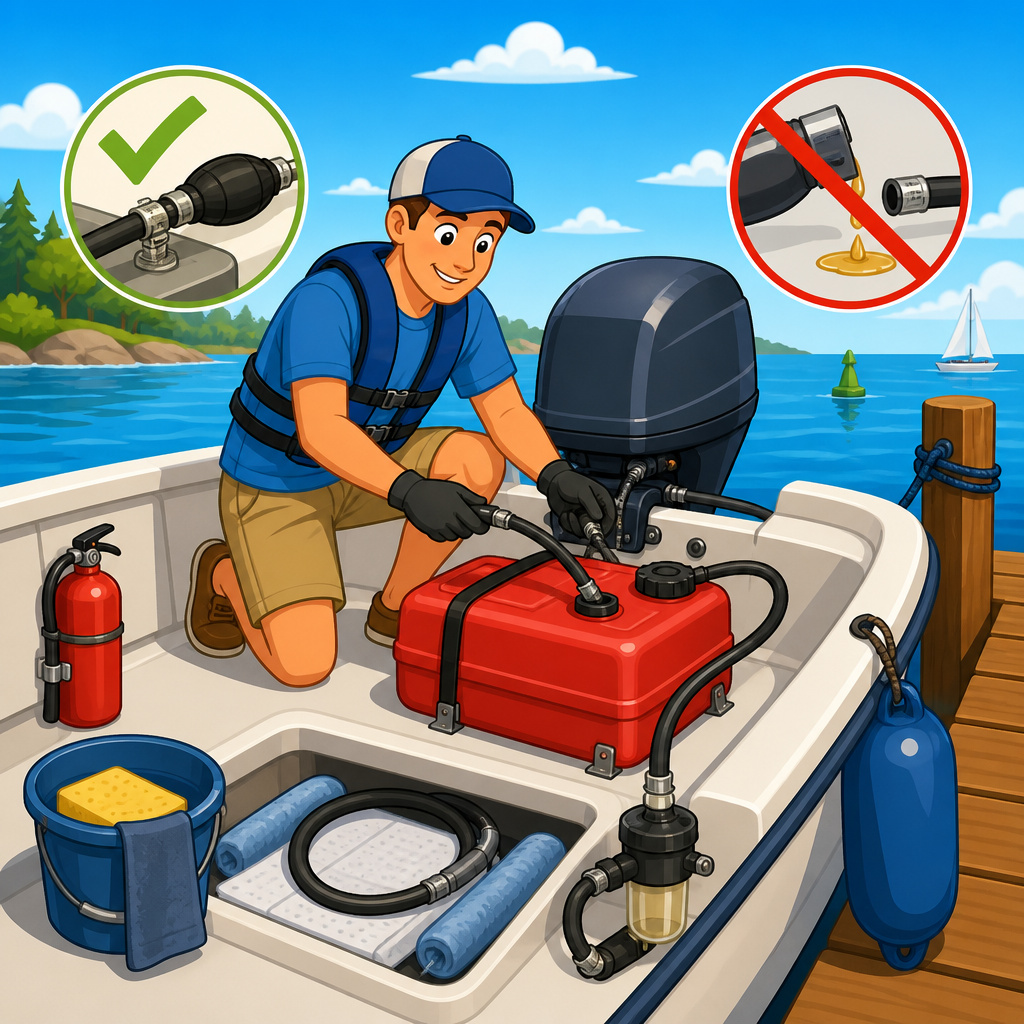
The safest fueling routine is simple and repeatable. Secure the boat, shut off engines and electrical equipment not required for fueling, ask passengers to disembark when practical, extinguish open flames, and close hatches, ports, and doors to reduce vapor entry into enclosed spaces. Before the nozzle enters the deck fill, place an absorbent pad around the fill opening and another near the vent if the vent outlet is accessible. Keep the nozzle in contact with the fill to reduce static risk, and fuel at the lowest practical rate. The goal is not speed. The goal is steady flow that minimizes foaming and gives you time to hear changes in tone that indicate the tank is nearing full.
Do not top off the tank. This is one of the clearest rules in clean boating and one of the most ignored. Leave expansion space, especially in warm climates. Many experienced operators stop at roughly 90 to 95 percent capacity, depending on tank design and expected temperature change. Watch the vent closely; if any fuel appears, stop immediately. If your boat has an integrated vent spill protector or carbon canister system, remember that those components reduce routine vent discharge but do not make overfilling harmless. After fueling, tighten the cap securely, wipe drips from the deck, stow used absorbents properly, ventilate the engine compartment, and perform a sniff test before starting the engine. On gasoline inboards, run the blower for the manufacturer-recommended interval before ignition.
Good fueling technique matters at portable tanks too. Remove tanks from the boat when filling if the manufacturer allows it, keep them upright in a stable location, and never fill them inside a vehicle or near drains. For jerry cans used to transfer fuel, choose marine-rated containers with functioning spouts and caps, secure them during transport, and pour through a funnel or transfer system designed to control splash. Fast, careless transfers are a leading cause of small but harmful spills at docks and shorelines.
Inspect and maintain the fuel system on a real schedule
Preventing boat fuel leaks depends less on guesswork and more on disciplined inspection intervals. At minimum, inspect the entire fuel system at the start of the season, monthly during heavy use, and immediately if you smell fuel, see staining, or notice fuel in the bilge. Focus on hoses for cracks, stiffness, swelling, abrasion, or soft spots; check clamps for corrosion and proper tension; examine the tank, sender gasket, and inspection plates for seepage; inspect the primer bulb, quick-connects, and fuel-water separator; and verify the vent line is clear and properly routed. Diesel owners should pay special attention to weeping around Racor-style filter housings, return fittings, and bleed screws after service. Gasoline owners should never dismiss odor as normal.
Use marine-rated replacement parts only. Fuel hose should meet the correct SAE and U.S. Coast Guard requirements for its location and permeability rating. Clamps should be stainless and appropriately sized, but doubled clamps are not automatically better; they must be installed correctly and only where suitable. If you replace a tank, verify material compatibility, grounding or bonding where required, fill and vent sizing, and support structure. After any significant repair, test the system before normal operation. A professional technician may use a pressure or vacuum test depending on the system design, and that verification is worth the cost when the alternative is a hidden leak over open water.
| Component | What to check | Typical warning signs | Action |
|---|---|---|---|
| Deck fill and cap | Seal condition, cap fit, corrosion | Fuel smell after fueling, wet deck | Replace gasket or cap; clean threads |
| Vent line and vent fitting | Kinks, blockages, routing, splash protection | Fuel spitback, slow fueling, vent discharge | Reroute or replace damaged parts |
| Fuel hose | Cracks, swelling, chafe, date code | Odor, seepage, poor engine performance | Install marine-rated hose |
| Clamps and fittings | Corrosion, tightness, alignment | Drips, staining, air leaks | Replace with proper marine hardware |
| Bilge and absorbents | Liquid presence, pad saturation | Sheen behind boat, persistent smell | Find source; never pump oily bilge overboard |
Documentation helps more than most owners expect. Keep a maintenance log with dates, engine hours, parts used, and any abnormalities found. Patterns emerge quickly: a clamp that repeatedly loosens may indicate vibration or a mis-sized barb, and a filter housing that begins to weep after every element change may need a new O-ring or different torque method. In marina management and survey work, the cleanest fuel systems are rarely accidental. They come from owners who inspect on a calendar, not only when something looks wrong.
Equip the boat and dock for spill prevention and fast response
Every boat that carries fuel should also carry basic spill-prevention gear. At a minimum, keep fuel-compatible absorbent pads, a small absorbent sock, nitrile gloves, heavy-duty disposal bags, and a flashlight for inspections. If you store portable tanks or transfer fuel from cans, add a stable funnel or transfer pump and enough absorbent material to ring the work area. At the dock, a clearly marked spill kit can stop a minor incident from spreading into neighboring slips. The right gear buys time, but only if it is easy to reach and crew members know where it is stored. During spring commissioning, I recommend a two-minute walkthrough showing everyone the fuel shutoff location, extinguisher placement, and spill kit contents.
Just as important is knowing what not to do. Never use dish soap or detergent to disperse fuel sheen. That practice is prohibited in many jurisdictions because it drives hydrocarbons into the water column instead of removing them. Never pump oily bilge water overboard, and never assume a small sheen is too minor to report if local regulations require notification. If a spill occurs, stop the source, contain what you safely can with absorbents, notify the marina, and follow federal, state, or local reporting rules. In the United States, the National Response Center is the key federal contact for reportable discharges. Fast reporting protects waterways and demonstrates responsible seamanship.
Technology can help, especially on larger boats. High-level fuel alarms, modern vent filters, vapor detectors, and bilge monitoring systems provide early warning before a leak becomes visible. These tools are valuable, but they complement rather than replace inspections. Sensors fail, batteries die, and alarms get ignored if they false-trigger repeatedly. A practical clean-boating program uses both technology and routine human checks.
Make fuel prevention part of a bigger clean-boating system
Fuel spill prevention works best when it is integrated into a broader plan for reducing water pollution while boating. Clean bilges prevent oil and fuel residues from washing overboard. Proper engine tune reduces unburned fuel discharge and visible exhaust. Thoughtful route planning avoids grounding incidents that can rupture tanks or lines. Responsible waste handling keeps oily rags, used filters, and contaminated absorbents out of ordinary trash where they can leak into stormwater systems. If your boat is kept in the water, pair fuel discipline with environmentally safer hull cleaning practices, cautious use of cleaning chemicals, and legal sewage management. Water quality declines through accumulation, and sustainable boating succeeds through systems rather than one-off gestures.
This page is a hub because fuel control intersects with every other pollution topic. Owners who master fueling practices usually become better at oil-change containment, bilge management, spill reporting, and marina etiquette. The same attention to detail also supports safer boating overall: fewer vapors, fewer engine shutdowns, fewer fire risks, and fewer emergency repairs. Start with a baseline inspection this week. Replace suspect hoses, stock absorbents, and adopt a no-top-off rule. Those steps are simple, measurable, and immediately effective.
The key takeaway is direct: most boat fuel spills and leaks are preventable with disciplined fueling, scheduled maintenance, and rapid response. Know your system, inspect the common failure points, use marine-rated parts, carry absorbents, and never ignore fuel odor or sheen. By making these practices standard, you reduce water pollution while boating, protect marine life, and improve the safety and reliability of your vessel. Review your fueling routine before your next trip, build a written inspection checklist, and make spill prevention part of how you operate every time you leave the dock.
Frequently Asked Questions
What are the most common causes of fuel spills and leaks on boats?
The most common causes of fuel spills and leaks on boats are overfilling during fueling, deteriorated hoses and fittings, damaged fuel tank vents, loose clamps, faulty primer bulbs, leaking carburetors, and poor storage or maintenance practices. In many cases, the problem starts during routine refueling. Boat owners may top off the tank too quickly, fail to listen for changes in tank sound, or continue pumping after the tank is already full, which can force fuel back out of the fill opening or vent line. Even a small amount of overflow can spread quickly across the water and create a visible sheen.
Leaks often develop more gradually. Fuel hoses can dry out, crack, soften, or separate internally over time, especially in older boats or those exposed to heat, vibration, and ethanol-blended gasoline. Hose connections at the tank, engine, primer bulb, and fuel-water separator are especially common trouble spots. Portable fuel tanks can leak from worn caps, damaged seals, or improper venting. Inboard and sterndrive boats may also develop leaks in inaccessible areas, which is why fuel odors in the bilge should never be ignored.
Another overlooked cause is poor engine and fuel system maintenance. A small seep at a fitting, a carburetor that drips after shutdown, or a vent line routed incorrectly can release fuel slowly enough to escape attention at first, yet still pollute the water and create a fire hazard. The key takeaway is that most spills and leaks are preventable. Regular inspection, careful fueling habits, and replacing worn components before they fail are the best defenses.
How can I prevent a fuel spill while fueling my boat?
The best way to prevent a fuel spill while fueling your boat is to slow down, stay present, and treat the process as a hands-on task from start to finish. Before fueling, secure the boat properly so it does not shift, turn off engines and electrical equipment, extinguish open flames, and ask passengers to step off if required by marina policy. Close all hatches, ports, and doors to help keep fumes out of enclosed spaces. Then identify the correct deck fill before you begin. Mistakenly pumping fuel into a water or waste fitting can create a serious mess and expensive damage.
Use absorbent pads or fuel bibs around the deck fill to catch drips before they hit the water. Insert the nozzle carefully and maintain contact between the nozzle and the fill pipe if recommended for grounding and static control. Most importantly, fuel at the slowest practical rate, especially as the tank nears full. Boat fuel systems are not like car fuel systems; they often vent differently, fill more slowly, and can “burp” fuel unexpectedly through the fill or vent. Listen closely as you fuel. A change in pitch or gurgling sound usually means the tank is getting close to full.
Do not top off the tank. Leave room for fuel expansion, particularly in warm weather. Trying to squeeze in extra fuel is one of the most common reasons for overflows. When finished, wait a moment before removing the nozzle to reduce splash-back, wipe up any drips immediately, and dispose of used absorbents properly. If your boat has an enclosed engine space, run the blower for the recommended time and check for fumes before starting the engine. Careful fueling takes a few extra minutes, but it is one of the easiest and most effective ways to protect the water and your boat.
What signs should I look for to catch a fuel leak early?
Early detection is one of the most important parts of preventing serious fuel leaks. The first and most obvious warning sign is the smell of gasoline or diesel where it should not be present. A persistent fuel odor near the bilge, engine compartment, fuel locker, or stern should always be investigated immediately. For gasoline boats in particular, fumes can accumulate in low areas and create an explosion risk, so never dismiss the smell as “normal.”
Visual clues matter just as much. Check for wet spots, staining, soft hoses, cracked fuel lines, discolored fittings, residue around hose connections, and fuel collecting under filters or near the tank. On the water, a rainbow sheen near the hull, transom, bilge discharge, or around the fuel vent can indicate a leak or spill. Portable tanks may show bulging, seepage around the cap, or dampness near seams. Primer bulbs that stay soft, fuel lines that feel brittle, or clamps with corrosion are all signs that service may be overdue.
Operational symptoms can also point to a leak or fuel system problem. Hard starting, rough idling, loss of power, unexplained fuel consumption, or a bilge that smells strongly of fuel after running may indicate a hidden issue. Make inspections part of your regular routine: before launching, before fueling, after fueling, and after every outing. Open compartments, use your eyes and nose, and do not hesitate to have a marine technician inspect the system if something seems off. Catching a leak early protects the environment, reduces repair costs, and can prevent a dangerous onboard emergency.
What maintenance steps help prevent fuel leaks from hoses, tanks, and fittings?
Preventive maintenance is the long-term solution to fuel leaks. Start with regular inspections of the entire fuel system, including the tank, fill hose, vent hose, supply line, return line if equipped, primer bulb, filters, fittings, and clamps. Look for cracking, abrasion, swelling, corrosion, stiffness, and signs of seepage. Marine fuel hoses should be rated for their intended use and replaced when they show age or damage, not just when they fail completely. Ethanol-compatible hose and components are especially important on gasoline-powered boats that use modern blended fuels.
Pay close attention to clamps and fittings. Loose or corroded hose clamps can allow slow leaks that are easy to miss until they become serious. Tanks should be secured properly so they do not shift and stress the connections. Fuel vents must remain clear and routed correctly; blocked or damaged vents can cause pressure issues, difficult fueling, and fuel blowback. If your boat has a fuel-water separator, replace it at recommended intervals and inspect the surrounding area for signs of leakage after installation.
It is also wise to maintain the engine side of the system. Carburetors, fuel pumps, injectors, and fuel rails can all develop leaks. Inspect these components during seasonal service, and never ignore drips, stains, or fuel odors after shutdown. For boats stored for long periods, stabilize the fuel if appropriate, keep tanks according to manufacturer guidance, and recheck the system before returning to service. The most responsible approach is to follow the boat and engine manufacturer’s maintenance schedule, use marine-grade replacement parts, and have questionable components evaluated by a qualified marine mechanic. A little preventive attention goes a long way toward stopping spills before they happen.
What should I do if fuel spills into the water or leaks into the bilge?
If fuel spills into the water, act immediately but calmly. Stop the source of the spill first by shutting off fueling, closing valves if applicable, or securing the leaking equipment. Do not use soap, detergent, or dishwashing liquid to disperse the sheen. That does not remove the pollution and is illegal in many areas because it pushes the fuel below the surface rather than allowing proper cleanup. Instead, notify the marina or dock operator right away and follow local reporting requirements. Even small spills may need to be reported depending on the location and the amount released.
If fuel has leaked into the bilge, do not start the engine or operate electrical equipment that could ignite fumes. Ventilate the area naturally and, if your boat is equipped with a blower for gasoline vapors, use it according to safety guidance only after assessing that doing so is appropriate and safe. Eliminate ignition sources, and use absorbent pads or bilge socks specifically designed for petroleum to soak up liquid fuel. Never pump oily or fuel-contaminated bilge water overboard. That is both environmentally harmful and often illegal.
After the immediate hazard is controlled, identify and repair the cause before using the boat again. Check hoses, clamps, vents, primer bulbs, filters, tanks, and engine components until the problem is confirmed. If there is any doubt about safety, call a marine technician or emergency responder. Keep spill response supplies on board at all times, including absorbent pads, disposal bags, gloves, and contact numbers for the marina and local spill reporting agency. Fast, informed action can minimize environmental damage, reduce fire risk, and help ensure a small problem does not become a major one.