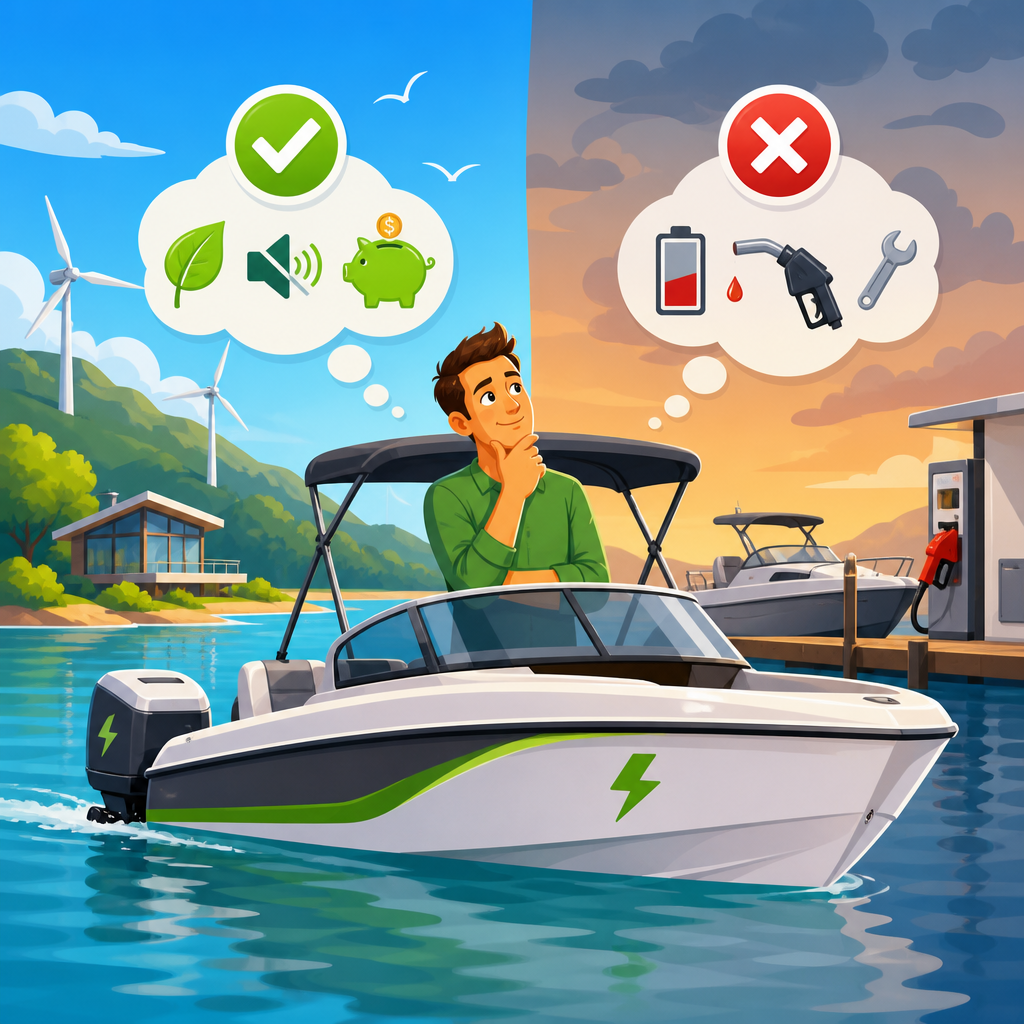
Electric boats are moving from niche curiosity to practical option, and for many owners the question is no longer whether they work, but whether they justify the upfront cost. In this guide, I will answer that question directly: electric boats are worth the investment when your boating pattern matches their strengths, especially short to moderate trips, predictable daily range, quiet operation, and access to charging. They are less compelling when you need long-distance cruising, high sustained speeds, or easy refueling far from shore power. That balanced view matters because “electric boats” covers everything from small inland fishing skiffs and electric pontoons to luxury day boats, sailboats with electric auxiliary drives, and hybrid commercial ferries. Solar-powered boats sit inside the same conversation, usually as electric boats that add photovoltaic panels to extend range, run house loads, or reduce charging time.
For buyers researching eco-friendly and sustainable boating, this topic matters for three reasons. First, operating economics are changing. Marine gasoline and diesel prices remain volatile, while battery costs have fallen sharply over the past decade and electric drivetrains require less routine maintenance. Second, regulation is tightening. Many lakes restrict combustion engines because of noise, shoreline disturbance, or emissions, and ports are under growing pressure to cut local air pollution. Third, the boating experience itself is different. Anyone who has spent a morning aboard a well-designed electric launch knows the appeal of instant torque, near-silent cruising, no exhaust smell, and simpler onboard systems.
Still, enthusiasm should not replace analysis. The real investment decision depends on battery chemistry, hull efficiency, charging infrastructure, duty cycle, payload, weather, and resale outlook. In practice, I advise buyers to compare total cost of ownership, not sticker price alone. A conventional outboard may look cheaper at purchase, but fuel, winterization, oil changes, impellers, filters, and corrosion-related service add up. By contrast, an electric setup trades fuel and maintenance savings against battery depreciation and charging constraints. Solar can improve self-sufficiency, but no realistic rooftop array turns a heavy planing boat into an all-day high-speed cruiser. To evaluate electric and solar-powered boats clearly, you need to understand where the technology excels, where it struggles, and which use cases create the best return.
How electric and solar-powered boats work in real use
An electric boat replaces or supplements an internal-combustion engine with an electric motor, a battery bank, power electronics, and a charging system. Most modern systems use lithium-ion batteries, often lithium iron phosphate for stability and long cycle life, though some high-performance marine packs use nickel manganese cobalt chemistries for greater energy density. The motor may be an outboard, inboard, pod drive, or saildrive. Power delivery is immediate, which means strong low-speed control and excellent docking behavior. Regenerative charging exists on some sailboats, where a spinning prop under sail feeds energy back into the battery, but regeneration on powerboats is limited because drag penalties are real.
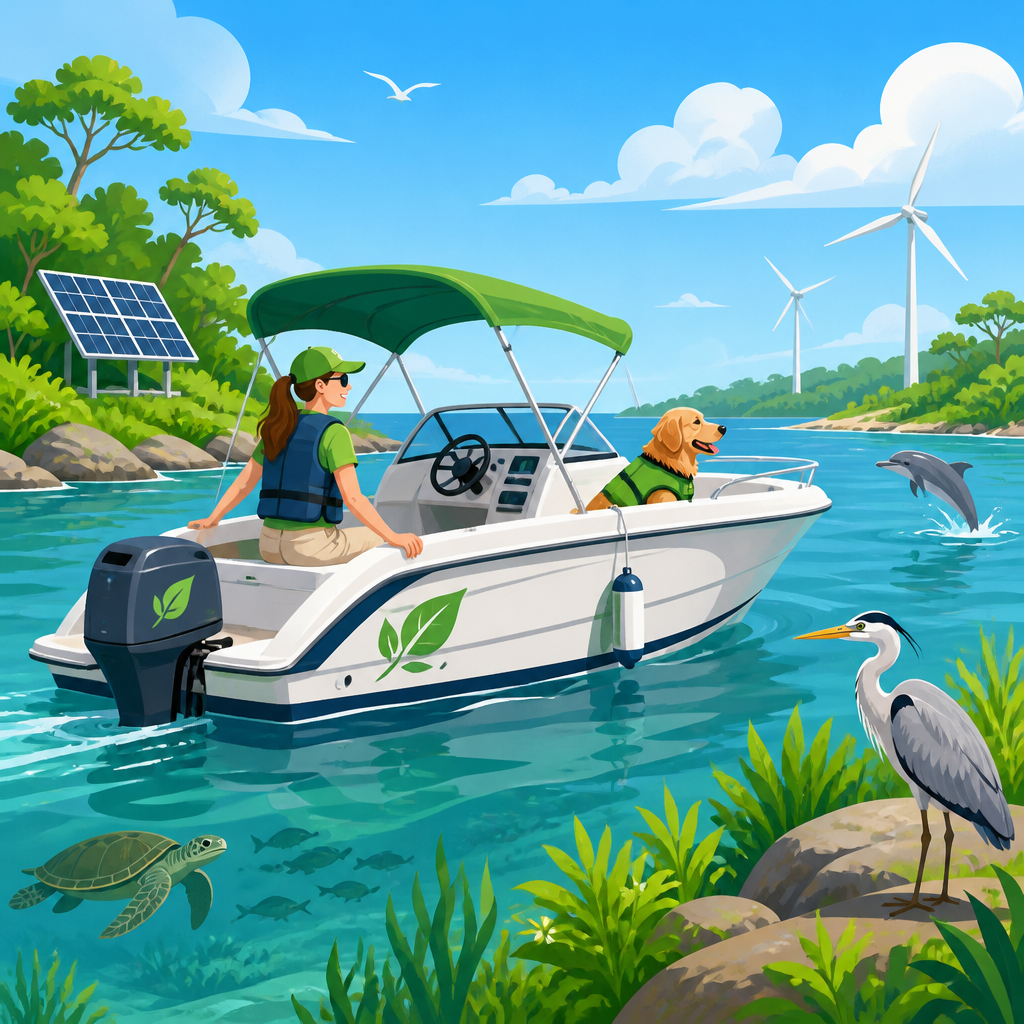
Solar-powered boats add photovoltaic panels, usually on a hardtop, canopy, cabin roof, or custom array. In my experience, solar works best as a range extender and hotel-load support system, not as the primary propulsion source for mainstream recreational powerboats. A few purpose-built solar catamarans with large panel area and very efficient hulls can cruise meaningfully on solar input alone, but that is a design-led exception. On a typical electric pontoon or center-console-sized platform, solar may offset refrigeration, navigation electronics, lighting, and a portion of propulsion energy during slow cruising. The benefit is still valuable because every kilowatt-hour harvested onboard reduces shore charging demand and increases practical autonomy.
Range is the specification most buyers misunderstand. Manufacturers may publish an attractive figure, but marine range varies dramatically with speed. The reason is hull physics. Displacement hulls move efficiently at modest speeds, while planing hulls require far more power to climb onto plane and maintain speed. Double your speed and your energy draw often rises by much more than double. That is why an electric launch at six knots can seem remarkably practical, while a heavy planing runabout at twenty-five knots may empty its battery quickly. Sea state, current, temperature, and load also matter. A headwind, extra passengers, or a fouled bottom can materially cut real-world range.
The biggest advantages of electric boats
The strongest case for electric propulsion is the combination of lower running costs, reduced maintenance, and superior onboard comfort. Electricity per mile is usually cheaper than marine fuel, especially for owners who charge at home or at marinas with reasonable shore-power rates. Maintenance is simpler because there are fewer moving parts, no engine oil, no spark plugs, fewer vibration-related failures, and less routine seasonal service. That does not mean “maintenance-free.” Batteries, cooling systems, high-voltage cabling, software, and corrosion protection still require attention. But compared with a gasoline sterndrive or outboard, the service calendar is notably lighter.
Noise reduction is not just a luxury feature; it changes how people use a boat. Electric motors are quiet enough that conversation, wildlife watching, and early-morning departures become easier. Anglers value reduced noise near shallow water. Waterfront communities notice lower acoustic impact. Commercial operators such as tour boats and hotel tenders benefit because guests perceive the ride as more refined. In Europe, where lakes and urban waterways often have stricter operating rules, electric sightseeing boats have proven this advantage for years. Amsterdam’s canal fleet, for example, has steadily shifted toward electric propulsion to improve local air quality and reduce engine noise in dense historic districts.
There is also a direct environmental benefit at the point of use. Electric boats produce no tailpipe emissions on the water, eliminating localized exhaust exposure for passengers and marina staff. They also remove the risk of fuel sheen from routine handling and reduce bilge contamination associated with oil and fuel systems. The overall climate impact depends on the electricity source used for charging, but even on mixed grids, efficient electric drivetrains can compare favorably with small marine combustion engines, which often operate inefficiently under variable load. For lakes, reservoirs, and harbors where local water and air quality are priorities, that distinction matters immediately.
The drawbacks buyers need to weigh carefully
The main disadvantage is upfront cost. Marine batteries, battery management systems, waterproof enclosures, and certified charging hardware are expensive, and marine integration must meet stricter safety requirements than many land-based electric systems. A high-quality electric outboard package can cost substantially more than a comparable gasoline outboard, and larger inboard systems rise quickly from there. Battery replacement is the long-term financial variable every buyer should model. Cycle life can be strong, often several thousand cycles depending on depth of discharge and thermal management, but batteries are consumable assets that gradually lose usable capacity.
Charging infrastructure is the second challenge. Trailered boat owners with home charging are in the best position because they can return with a full battery each trip. Slip holders may have shore power, but not all marina electrical systems are ready for higher-capacity charging, and some sites charge premium rates. Fast charging exists, yet it is nowhere near as widespread or standardized in boating as it is in road transport. Long-distance cruisers feel this limitation most. Refueling a gasoline boat takes minutes; recharging a large battery bank can take hours unless high-power service is available and compatible.
Performance tradeoffs are real. Batteries are heavy, and weight affects draft, trim, and hull efficiency. On compact boats, battery placement is critical to preserve handling. Cold weather can reduce available battery performance, while high continuous loads generate heat that must be managed carefully. Most important, electric propulsion rewards disciplined trip planning. If your boating style is spontaneous, with uncertain distances and frequent high-speed runs, range anxiety is not an abstract concept. It becomes a daily operating constraint. For some owners that is acceptable; for others it undermines the freedom they expect from boating.
Who gets the best value from electric propulsion
Electric boats make the most sense when usage is regular, predictable, and within a known range envelope. I have seen the strongest owner satisfaction in five segments: lake day boating, tender and yacht support use, waterfront resort operations, inland fishing on restricted waters, and sailboats replacing diesel auxiliaries. In those scenarios, boats often return to the same dock, follow repeatable routes, and prioritize quiet operation over top speed. Electric pontoons, small launches, and harbor shuttles perform especially well because they spend much of their time at efficient displacement or semi-displacement speeds.
Commercial fleets can benefit even more than private owners because utilization is high and operating data is measurable. If a ferry runs the same route daily, an operator can calculate energy demand accurately, size the battery correctly, and spread capital cost across many service hours. Norway’s electric ferry deployments demonstrate this logic. Short fixed routes with dependable charging windows are ideal for electrification, and the savings on fuel and maintenance improve over time. The same principle applies on a smaller scale to club launches, marina workboats, and eco-tour operators who market quiet, low-emission experiences as part of their brand.
| Use case | Why electric works | Main limitation |
|---|---|---|
| Lake pontoon | Short trips, quiet cruising, easy overnight charging | Limited high-speed range |
| Sailboat auxiliary | Low engine hours, regeneration potential under sail | Careful energy budgeting offshore |
| Harbor shuttle | Fixed route, predictable charging schedule | Infrastructure upgrades at dock |
| Fishing boat on restricted waters | Compliance with no-wake or low-emission rules | Payload can cut runtime |
| Luxury day boat | Premium user experience, low noise, strong torque | High purchase price |
By contrast, offshore anglers, long-range cruisers, and owners who regularly tow watersports participants at sustained speed may find present-day electric systems harder to justify. Hybrid propulsion can bridge some of that gap, and solar support can help with onboard loads, but physics still governs the decision. If your use case demands high energy density and rapid refueling, liquid fuel remains easier to live with today.
Total cost of ownership, resale, and buying criteria
The smartest way to judge whether electric boats are worth the investment is to calculate five-year or ten-year total cost of ownership. Include purchase price, installation, charger upgrades, insurance, routine service, winter storage needs, fuel or electricity, expected battery replacement timing, and estimated resale value. For many low-hour owners, the math is less favorable because fuel savings are modest if the boat sits most of the season. For high-use owners, savings compound faster. I recommend tracking cost per operating hour and cost per nautical mile, because those metrics expose whether the premium purchase price is being earned back in actual use.
Resale is improving but still market-specific. Demand is growing for established electric brands and professionally integrated conversions, especially where lake restrictions or sustainability goals create clear buyer demand. However, resale depends heavily on battery health documentation, software support, warranty transferability, and brand longevity. Buyers should ask for battery cycle count, state-of-health reports, ingress protection ratings, and details on service access. Marine surveyors increasingly evaluate electrical systems with more rigor, and that is a positive development. A documented battery management system and ABYC-aligned installation inspire far more confidence than an improvised conversion with unclear wiring standards.
When comparing models, focus on hull efficiency before motor power. The most satisfying electric boats are usually the ones designed around electric propulsion from the start, with efficient hull forms, sensible speeds, and balanced weight distribution. Check usable battery capacity, not just nominal capacity. Ask how range changes at several speeds, not only the marketing cruise figure. Evaluate charging time on standard shore power and on any faster option offered. For solar-equipped boats, examine actual daily solar yield in watt-hours based on panel area, panel orientation, and your boating climate. A realistic builder will provide transparent performance curves instead of broad promises. If you boat in this category regularly, shortlist electric and solar-powered boats alongside efficient hybrids, and compare them with your current operating pattern rather than an idealized future one.
Final verdict: are electric boats worth the investment?
Electric boats are worth the investment for owners whose priorities align with the technology: lower day-to-day operating costs, quieter cruising, simpler maintenance, cleaner local operation, and predictable trip planning. They are especially compelling on lakes, rivers, harbors, and short-route coastal use where charging is convenient and speeds are moderate. Solar adds meaningful value by supporting house loads and extending practical range, though it rarely replaces shore charging for mainstream powerboats. In these settings, the boating experience often feels better immediately, not just greener on paper.
They are not automatically the best choice for everyone. If you need long range, high sustained speed, remote refueling flexibility, or the lowest possible upfront cost, conventional propulsion still holds practical advantages. Battery replacement risk, marina charging limitations, and real-world range variation are not minor caveats; they are central buying factors. The right decision comes from honest use-case analysis, not trend following. Buyers who treat electric boats like any other serious capital purchase usually reach a clear answer quickly.
Start by mapping your typical trip length, cruising speed, docking access, and annual hours. Then compare those numbers against real electric boat performance data from reputable builders and installers. If the profile matches, electric propulsion can deliver both sustainability and strong ownership value. If it does not, waiting another product cycle may be the smarter investment. Use this hub as your starting point, then move deeper into specific topics such as battery lifespan, charging options, electric outboards, and solar integration before you buy.
Frequently Asked Questions
Are electric boats really worth the higher upfront cost?
For many owners, yes, but only when the boat will be used in ways that play to electric propulsion’s strengths. Electric boats usually cost more at the time of purchase because the battery system, motor, electronics, and charging hardware add meaningful upfront expense. That can make them look hard to justify at first glance. However, the ownership equation changes when you factor in lower fuel costs, less routine maintenance, quieter operation, and a more convenient day-to-day experience. There are no oil changes, fewer moving parts, less vibration, and generally fewer mechanical systems to service than with a conventional internal combustion setup.
The key issue is usage. If you mainly take short to moderate trips, return to the same dock or home marina, and value predictable daily boating rather than long-range flexibility, the investment can make excellent sense. In that scenario, an electric boat often delivers strong real-world value because you are using it in the exact environment where its efficiency, quietness, and charging practicality shine. On the other hand, if you regularly need long-distance cruising, high sustained speeds, or the ability to refuel quickly far from home, the higher upfront price becomes harder to recover in practical terms. So the honest answer is that electric boats are worth the investment for the right owner, but they are not automatically the best financial or operational choice for every boater.
What are the biggest advantages of owning an electric boat?
The biggest advantage is how pleasant and simple the boating experience becomes. Electric boats are exceptionally quiet, with almost no engine noise, far less vibration, and a smoother overall feel underway. That changes the onboard experience in a meaningful way. Conversations are easier, wildlife viewing is more enjoyable, and time on the water feels calmer and more refined. For many buyers, this is not a minor perk; it is one of the main reasons they choose electric in the first place.
Another major benefit is lower ongoing maintenance. Electric drivetrains are mechanically simpler than gasoline or diesel systems, so there are fewer service items and fewer components that wear in the traditional sense. Owners typically avoid many common engine-related maintenance tasks, which can reduce both downtime and annual operating costs. Charging can also be more convenient than fueling when the boat lives at a dock with power access, because the boat can recharge while not in use rather than requiring separate fuel stops. In addition, electric boats offer instant torque, responsive throttle control, and strong low-speed maneuverability, which can make docking and day cruising especially enjoyable. Finally, environmental benefits matter to many buyers. Zero exhaust emissions at the point of use, reduced noise pollution, and less fuel handling all make electric propulsion appealing for lakes, marinas, and eco-sensitive waterways.
What are the main disadvantages or limitations of electric boats?
The biggest limitation is range. Battery capacity is finite, and unlike a fuel tank, it cannot be replenished quickly in most boating situations. That means electric boats are best for owners whose routes are predictable and comfortably within the boat’s practical operating range. Speed also matters. As with electric cars, energy use rises significantly at higher speeds, so sustained fast cruising can reduce range faster than many first-time buyers expect. If your boating style involves covering long distances, making spontaneous extended trips, or running hard for long periods, electric may feel restrictive compared with gas or diesel.
Charging infrastructure is another challenge. While charging at a home dock or marina slip can be ideal, not every waterfront location has the power capacity, equipment, or policies needed to support routine charging. Public charging options for boats are also far less developed than they are for electric cars. Upfront cost remains a disadvantage as well, since electric boats often require a larger initial investment. Battery replacement over the long term is another consideration, even though battery life is improving. There are also trade-offs related to boat type and mission. Heavier vessels, offshore use, high-performance applications, and extended cruising are still areas where conventional propulsion often remains more practical. In short, electric boats are highly compelling in the right role, but they currently demand more planning and less operational flexibility than traditional boats.
How far can an electric boat go on a charge?
There is no single range figure that applies to all electric boats, because range depends heavily on hull design, boat size, battery capacity, load, water conditions, weather, and especially speed. A small electric dayboat used for calm, low-speed cruising can deliver very usable range for an afternoon on the water. But the same boat operated aggressively at higher speeds may see that range shrink dramatically. This is one of the most important realities for buyers to understand: electric boats can be very practical, but they reward realistic planning and disciplined expectations.
For most owners, the better question is not the maximum range in ideal conditions, but whether the boat can comfortably handle their normal routine with a safe margin. If your typical outing is a few hours of local cruising, watersports at moderate distances, or regular short runs from a marina to familiar destinations, many electric models can work well. If your plans involve all-day high-speed use or exploring far from charging access, range becomes a much more serious constraint. Buyers should look closely at manufacturer test assumptions, ask about real-world performance at different speeds, and think in terms of their actual boating habits rather than brochure headlines. In practice, electric range is often perfectly adequate for local recreational use, but less forgiving for long, fast, or highly variable trips.
Who should consider buying an electric boat, and who probably should not?
Electric boats make the most sense for owners who use their boats in a consistent, local, and relatively predictable way. Ideal candidates include day boaters, lake users, marina-based owners with charging access, waterfront homeowners, eco-conscious buyers, and anyone who strongly values quiet operation and low-maintenance ownership. They are especially attractive for short to moderate trips where the boat can be recharged between outings. If your boating is centered on leisure cruising, sunset trips, nearshore exploring, tender use, or calm recreational runs, an electric boat can be an excellent fit and may provide a more enjoyable ownership experience than a conventional engine boat.
They are less suitable for boaters who prioritize maximum range, refueling speed, offshore capability, heavy towing demands, or frequent high-speed operation over long distances. Long-distance cruisers, anglers covering large areas, commercial operators with minimal downtime tolerance, and owners boating in places with limited charging access may find current electric options restrictive. The decision really comes down to mission match. If your boating habits align with electric strengths, the investment can feel smart, modern, and deeply satisfying. If your needs regularly push beyond those strengths, a gas, diesel, or hybrid alternative may still be the more practical choice today.