How blockchain technology is promoting sustainable fishing practices is no longer a niche question for marine technologists. It sits at the center of a much larger shift in eco-friendly and sustainable boating, where vessel efficiency, traceable seafood, cleaner propulsion, smarter route planning, and digital compliance are converging into what many operators now call the future of green boating technology. In practice, blockchain is a tamper-resistant digital ledger shared across participants. Sustainable fishing practices are methods that protect fish stocks, reduce bycatch, respect labor standards, and limit environmental damage while keeping coastal economies viable. When these ideas meet on the water, the result is a system where every catch, fuel purchase, maintenance event, and landing record can be verified across a chain of custody. I have seen this firsthand in maritime projects where captains still relied on paper logs, processors used separate databases, and buyers had no reliable way to distinguish responsibly caught tuna from questionable supply. The gap was not a lack of goodwill; it was a lack of trustworthy, interoperable records.
This matters because fishing vessels are part of the broader boating ecosystem, and the same digital infrastructure that supports responsible fisheries also supports greener marinas, more efficient fleets, and better environmental reporting. Regulators increasingly require verifiable data. Consumers want proof, not slogans. Insurers, lenders, and certification bodies want records that stand up to audit. The United Nations Food and Agriculture Organization has repeatedly highlighted illegal, unreported, and unregulated fishing as a major threat to fish populations and coastal livelihoods. Meanwhile, the International Maritime Organization continues pushing emissions reduction and better operational efficiency across shipping and smaller commercial fleets. For boat owners and marine businesses, this creates both pressure and opportunity. Blockchain does not replace good fisheries science, cleaner engines, or sound seamanship. It strengthens them by making data harder to manipulate, easier to share, and more useful for decision-making. As a hub for the future of green boating technology, this article explains where blockchain fits, how it works in real operations, where it delivers measurable sustainability gains, and what limits decision-makers need to understand before adopting it at scale.
Why blockchain matters in the future of green boating technology
The future of green boating technology is not one invention. It is an operating model built from connected systems: low-emission propulsion, hull optimization, onboard sensors, digital catch documentation, weather routing, shore power, battery management, and verified environmental claims. Blockchain matters because it provides a trust layer across those systems. On a fishing trip, sensors can record location, water temperature, gear deployment times, refrigeration status, and fuel burn. A blockchain-based record can then anchor those data points so that crews, processors, auditors, retailers, and regulators can verify that the fish came from an approved zone, during an open season, using permitted gear, and under safe handling conditions.
That verification changes incentives. A skipper who invests in selective gear, efficient engines, or hybrid auxiliary systems can be rewarded if buyers can actually confirm those practices. Without a trustworthy chain of custody, sustainable operators often compete at a disadvantage against cheaper, less responsible supply. I have worked with marine data systems where a single manual spreadsheet broke traceability for an entire batch. Blockchain reduces that vulnerability by creating a shared ledger with time-stamped entries, permissions, and audit trails. It is especially useful when many parties do not fully trust one another yet still need one version of the truth.
In the boating sector, the same logic extends beyond fisheries. Marinas can log renewable shore power use. Charter fleets can document engine maintenance and waste disposal. Workboats can verify biofuel blends or battery cycle histories. Green boating claims become more credible when they are linked to immutable operational records rather than marketing copy. That is why blockchain belongs in any serious discussion about sustainable boating innovation.
How blockchain improves traceability from net to market
The most immediate sustainability benefit of blockchain in fisheries is end-to-end traceability. Traditional seafood supply chains are fragmented. A fish may move from vessel to tender, to processor, to cold storage, to exporter, to distributor, to restaurant or grocer. At each handoff, labels can be changed, lots can be mixed, and records can be lost. Studies by conservation groups and food fraud researchers have repeatedly found species substitution and origin mislabeling in seafood markets worldwide. When traceability fails, illegal catch can be laundered into legitimate trade, and sustainably caught fish lose their market premium.
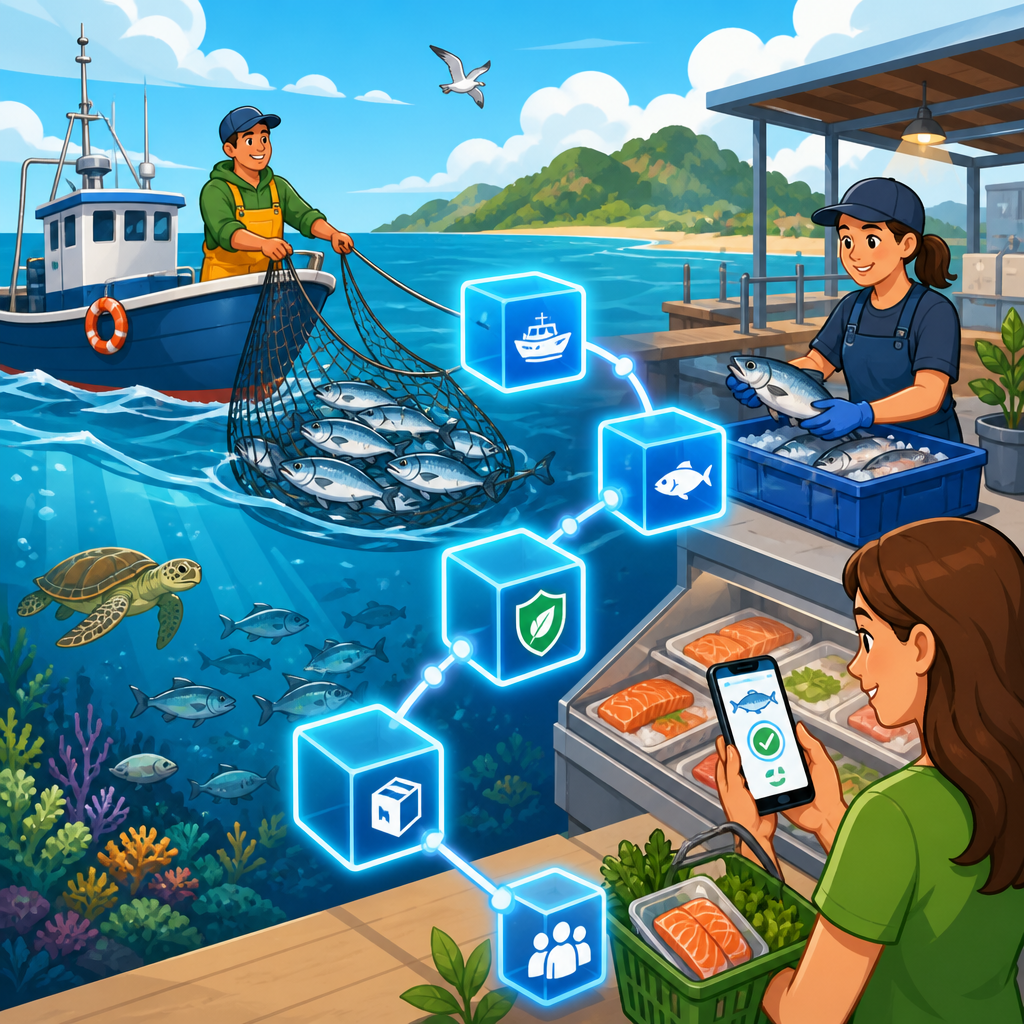
Blockchain systems address this by assigning a digital identity to a catch event or batch. That record can include the vessel ID, captain, permit, fishing area, date and time, species, gear type, and landing port. As the fish moves through the supply chain, each actor appends new verified events instead of replacing prior records. Smart labels, QR codes, RFID tags, and IoT sensors can connect physical products to digital records. IBM Food Trust, Provenance, and Wholechain are examples of platforms that have been used in food and fisheries traceability programs. The best implementations do not rely on blockchain alone; they combine it with vessel monitoring systems, electronic logbooks, observer data, and rigorous lot controls.
For sustainable fishing, that means a retailer can verify whether swordfish came from a certified fishery, whether shrimp was harvested in an approved area, or whether tuna stayed within required temperature ranges during transit. For green boating more broadly, the lesson is clear: sustainability improves when claims can be checked quickly and confidently across complex supply chains.
Reducing illegal fishing, bycatch, and waste through verifiable data
Illegal, unreported, and unregulated fishing undermines stock management, harms law-abiding operators, and often correlates with poor labor conditions. Blockchain helps by making documentation harder to alter after the fact. If a vessel’s catch declaration conflicts with geofenced location data, electronic monitoring footage, or port landing records, the discrepancy becomes easier to detect. Regulators still need enforcement capacity, but data integrity improves substantially when records are synchronized and shared across authorized participants.
Bycatch reduction also benefits from better records. If vessels log gear settings, haul times, hotspots, and non-target catches in a structured, tamper-resistant system, managers can identify patterns more quickly. In one practical workflow, a fleet targeting tuna could compare bycatch events against time of day, sea surface temperature, and hook depth, then adjust methods to avoid turtles or juvenile fish. Blockchain does not produce the biological insight by itself, but it preserves the quality of the operational data needed for adaptive management.
Waste reduction is another overlooked advantage. Seafood spoilage often results from temperature abuse, delays, and poor handling records. IoT thermometers and reefer sensors can feed data into a shared ledger so buyers know whether the cold chain was maintained. If a refrigeration unit fails on a small longliner, that incident can be recorded immediately, allowing downstream buyers to divert product before it is mislabeled or wasted. The broader green boating implication is that verified operational data helps fleets use fuel, ice, labor, and catch more efficiently, lowering both costs and environmental impact.
Where blockchain fits alongside electric propulsion, clean fuels, and smart vessels
Blockchain is often discussed as a software layer, but its value grows when paired with physical green boating technologies. Electric outboards, hybrid drivetrains, hydrogen pilots, advanced lithium iron phosphate battery systems, shore power integration, and solar-assisted auxiliaries all generate operational data. Fleet managers want to know charge cycles, energy sources, maintenance events, and emissions performance over time. A blockchain-backed record can verify those metrics for warranties, grants, carbon accounting, and resale value.
For fishing vessels, full electrification remains limited by range, payload, and charging infrastructure, especially offshore. However, harbor craft, small inshore workboats, tenders, and support vessels are already viable candidates for electric or hybrid systems. In those cases, blockchain can verify that a vessel actually used renewable marina power rather than diesel generation during charging. Similar logic applies to renewable diesel, methanol pilots, and certified sustainable biofuels. If a cooperative claims lower lifecycle emissions, buyers and regulators will ask for auditable fuel records.
Smart boating technologies also fit naturally into this framework. Modern vessels use NMEA 2000 networks, digital twins, engine telematics, AIS, weather routing tools, and maintenance software from providers such as Volvo Penta, Mercury Marine, Raymarine, Navico, and Yamaha. When key events from those systems are hashed to a ledger, maintenance intervals, fuel optimization measures, and compliance logs become far more reliable. That creates a practical bridge between sustainable fishing practices and the wider transition toward greener commercial and recreational boating.
| Green boating technology | What it records | How blockchain adds value | Sustainability outcome |
|---|---|---|---|
| Electronic catch documentation | Species, area, gear, time, permits | Creates tamper-resistant chain of custody | Less illegal catch and better stock protection |
| Hybrid or electric propulsion | Charge cycles, energy source, runtime | Verifies usage and maintenance history | Lower fuel use and cleaner operations |
| Cold-chain sensors | Temperature and transit events | Preserves handling records across parties | Less spoilage and less waste |
| Smart routing and telematics | Speed, route, fuel burn, idle time | Provides auditable efficiency data | Reduced emissions and operating cost |
Real-world adoption challenges and what operators should do next
Blockchain is useful, but it is not magic. The first limitation is the classic data problem: bad inputs still produce bad outputs. If crews enter false species codes or if tags are switched before scanning, the ledger will preserve inaccurate information very effectively. That is why robust onboarding, hardware controls, independent audits, and clear standard operating procedures matter more than buzzwords. The second limitation is connectivity. Many fisheries operate in remote areas with weak bandwidth, so systems need offline capture and delayed synchronization. The third is cost. Small-scale fishers may struggle with device purchases, software subscriptions, and training unless cooperatives, NGOs, governments, or buyers help fund deployment.
Standards and interoperability are also critical. The Global Dialogue on Seafood Traceability has pushed common data elements so information can move across platforms. GS1 standards can help with identifiers and product events. Without shared frameworks, each company builds a digital island and traceability breaks at the first handoff. Privacy needs careful handling too. Fishers may reasonably resist exposing sensitive fishing locations to commercial rivals, so permissioned ledgers and role-based access controls are usually more practical than fully public systems.
For operators planning the next step in green boating technology, the best approach is phased implementation. Start with a clear use case: proving legal catch, validating cold-chain integrity, documenting cleaner fuel use, or linking maintenance records to resale value. Map the data flow from vessel to buyer. Choose hardware that crews can use in rough conditions. Integrate with existing logbooks, sensors, and compliance systems instead of duplicating work. Measure results in reduced disputes, lower spoilage, better pricing, or faster audits. Sustainable fishing improves when technology serves real decisions on real boats.
The future of green boating technology will be shaped by systems that make sustainability visible, verifiable, and economically practical. Blockchain technology is promoting sustainable fishing practices because it turns fragmented marine data into a trusted record of how seafood was caught, handled, and delivered. That trust supports better fisheries management, discourages illegal activity, reduces waste, and rewards operators who invest in cleaner, more selective methods. It also connects directly to the wider eco-friendly boating transition, where electric propulsion, smart sensors, efficient routing, and accountable fuel use all depend on dependable records.
The key takeaway is simple: blockchain is not the sustainability solution by itself, but it is a powerful enabler when paired with good science, sound regulation, and workable onboard technology. For boat owners, fleet managers, seafood brands, and marine suppliers, the advantage is practical. Verified data improves compliance, strengthens market access, and makes green claims credible. As this sub-pillar hub on the future of green boating technology expands, the next step is to evaluate where traceability, telematics, clean propulsion, and digital reporting can create the biggest environmental and business return in your own operation. Start with one measurable workflow, build from proven standards, and make every voyage easier to trust.
Frequently Asked Questions
1. How does blockchain technology improve traceability in sustainable fishing?
Blockchain improves traceability by creating a shared, tamper-resistant record of every key event in the seafood supply chain, from the moment fish are caught to the point they reach distributors, retailers, restaurants, and consumers. In sustainable fishing, that matters because traceability is one of the strongest tools for proving that seafood was harvested legally, responsibly, and in line with environmental standards. Instead of relying on fragmented paper logs, isolated databases, or manually transferred records, blockchain allows catch information to be logged in a way that is time-stamped, transparent to authorized participants, and difficult to alter after the fact.
For example, a fishing vessel can record species, catch volume, GPS location, time of harvest, fishing method, and license details at the point of capture. That information can then be linked to later stages such as cold storage, processing, shipping, customs, and retail labeling. If each participant adds verified data to the same ledger, buyers gain a much clearer picture of where seafood came from and whether it matches sustainability claims. This helps reduce seafood fraud, mislabeling, and the mixing of legal catch with illegal or overfished stock.
Within the wider movement toward eco-friendly boating and greener marine operations, blockchain-based traceability also supports smarter oversight. It can connect with onboard sensors, digital compliance systems, and route records to strengthen accountability across the fleet. As a result, traceability is no longer just a marketing benefit. It becomes an operational and environmental safeguard that helps fisheries, vessel operators, regulators, and consumers make better decisions based on trustworthy data.
2. Can blockchain help prevent illegal, unreported, and unregulated fishing?
Yes, blockchain can play a meaningful role in combating illegal, unreported, and unregulated fishing, often referred to as IUU fishing, by making catch records more transparent, auditable, and difficult to manipulate. IUU fishing thrives in environments where documentation is weak, data is siloed, and oversight breaks down between vessels, ports, processors, and export channels. Blockchain addresses that gap by creating a single source of verifiable information that multiple approved parties can reference throughout the seafood chain.
When catch details are recorded at or near the time of harvest and linked to vessel identity, fishing permits, geolocation data, landing records, and transfer logs, it becomes much harder to disguise suspicious activity. A vessel claiming to have caught fish in one region, for instance, may be contradicted by route data or digital location records associated with the blockchain entry. Likewise, if fish enter the supply chain without a verified origin trail, that absence itself becomes a warning sign for buyers, inspectors, and regulators.
Blockchain is especially powerful when combined with other green boating and marine digitalization tools, such as satellite tracking, electronic logbooks, Internet of Things sensors, fuel and route optimization platforms, and automated compliance reporting. On its own, blockchain does not physically stop illegal fishing vessels. However, it raises the cost of deception, improves cross-border accountability, and gives legitimate market participants better tools to reject seafood that cannot be verified. Over time, that can help shift demand away from harmful and unlawful practices and toward fisheries that follow sustainability standards.
3. What role does blockchain play in the future of green boating technology?
Blockchain is becoming part of a broader digital infrastructure that supports the future of green boating technology, especially in commercial fishing and marine transport. While many people associate blockchain only with cryptocurrency, its real value in this setting is as a trusted ledger for environmental, operational, and compliance data. Sustainable boating increasingly depends on accurate records that can be shared across vessel owners, fleet managers, ports, certifiers, regulators, insurers, and seafood buyers. Blockchain helps make those records more reliable and more useful.
In practical terms, blockchain can support cleaner and more efficient marine operations by documenting fuel use, emissions performance, maintenance history, approved fishing zones, catch certification, and adherence to sustainability policies. If integrated with digital vessel systems, it can help verify that a boat is following efficient route plans, using lower-impact propulsion technologies, or participating in monitored sustainable harvest programs. That matters because green boating is not just about reducing fuel consumption. It is also about improving accountability across the full lifecycle of marine operations, including sourcing, navigation, energy use, and environmental reporting.
As the industry adopts hybrid propulsion, smarter navigation systems, and more connected onboard technologies, blockchain can act as a secure backbone for data integrity. It allows different systems and stakeholders to trust the same history of events without relying on a single organization to control the record. In that sense, blockchain supports a more transparent marine economy, where sustainability claims can be checked, verified, and backed by evidence rather than assumptions. That makes it an important building block in the evolution of cleaner, smarter, and more responsible boating practices.
4. How do consumers and seafood buyers benefit from blockchain-backed sustainable fishing?
Consumers and seafood buyers benefit because blockchain-backed records give them stronger confidence that the seafood they purchase is authentic, legally sourced, and aligned with sustainability goals. In traditional seafood supply chains, it can be difficult to verify whether a fish label is accurate, whether the product was harvested from a healthy fishery, or whether responsible labor and environmental standards were followed. Blockchain helps close that information gap by preserving a traceable history of the product’s journey.
For buyers such as wholesalers, retailers, restaurants, and hospitality groups, that transparency improves procurement decisions. They can check whether a supplier has documented chain-of-custody records, whether certifications are linked to verifiable catch data, and whether the seafood comes from approved vessels or regions. This reduces reputational risk and helps organizations meet growing customer expectations around sustainability, environmental responsibility, and ethical sourcing. In some cases, blockchain-backed verification can also streamline audits and reporting requirements, saving time while improving trust.
Consumers benefit in a more direct way as well. A package, menu entry, or QR code can potentially provide access to catch dates, harvest locations, species details, and sustainability certifications. That level of visibility makes it easier for people to support fisheries and vessel operators that are investing in responsible methods and greener marine practices. In a market increasingly shaped by environmental awareness, blockchain gives sustainability more substance. It turns broad claims into inspectable records, which helps honest producers stand out and gives buyers a clearer basis for choosing seafood that supports ocean health.
5. What are the challenges of using blockchain in sustainable fishing operations?
Although blockchain offers major advantages, implementing it in sustainable fishing operations comes with real challenges. One of the biggest is data quality at the point of entry. A blockchain ledger may be difficult to alter after information is recorded, but it is only as trustworthy as the original data submitted. If catch details are entered inaccurately, intentionally falsified, or not verified through sensors, inspections, or third-party oversight, the system can preserve bad information just as effectively as good information. That means successful adoption depends on strong verification processes, not blockchain alone.
Another challenge is integration. Fishing fleets, processors, ports, and regulators often use different software systems, reporting standards, and operational workflows. Getting all these participants to contribute compatible data to a shared ledger can be technically complex and operationally demanding. Smaller operators may also face barriers related to cost, connectivity at sea, crew training, equipment upgrades, and limited digital infrastructure. For blockchain to support sustainable fishing at scale, the technology must be practical for both large commercial fleets and smaller fisheries that play a vital role in coastal economies.
There are also governance and privacy considerations. Stakeholders need clear rules about who can access which data, how sensitive commercial information is protected, and how disputes are resolved if records conflict. In addition, some blockchain platforms raise concerns about energy consumption, although many modern enterprise systems are designed to be far more efficient than public cryptocurrency networks. Even with these challenges, the direction of travel is clear. As part of a wider move toward digital compliance, eco-friendly boating systems, smarter route planning, and transparent seafood sourcing, blockchain is becoming a valuable tool. The key is to deploy it thoughtfully, alongside verification technology, industry standards, and collaboration across the entire marine supply chain.