Artificial intelligence is changing how boats use fuel, and it is quickly becoming one of the most practical tools in green boating technology. In simple terms, AI in boating means software systems that analyze data from engines, navigation equipment, weather feeds, hull sensors, and onboard power systems to recommend or automate better decisions. Those decisions can include choosing a more efficient speed, plotting a lower-resistance route, adjusting trim, scheduling maintenance before efficiency drops, or blending battery and engine power more intelligently on hybrid vessels. I have seen the difference firsthand in fleet operations where captains relied on habit alone, then cut measurable fuel burn after adding data-driven voyage planning and engine analytics.
Fuel consumption matters for three reasons: cost, range, and emissions. For most recreational and commercial boat owners, fuel is one of the largest operating expenses. Every unnecessary gallon burned raises trip costs and shortens cruising range. It also increases carbon dioxide emissions, along with nitrogen oxides, particulate matter, and underwater noise associated with harder engine loading. Regulators are also pushing the industry toward cleaner operations. The International Maritime Organization has tightened energy efficiency expectations for larger ships, and while many pleasure boats are outside those formal rules, the technology trends flow downstream fast. Marinas, charter operators, and manufacturers are all under pressure to show environmental progress.
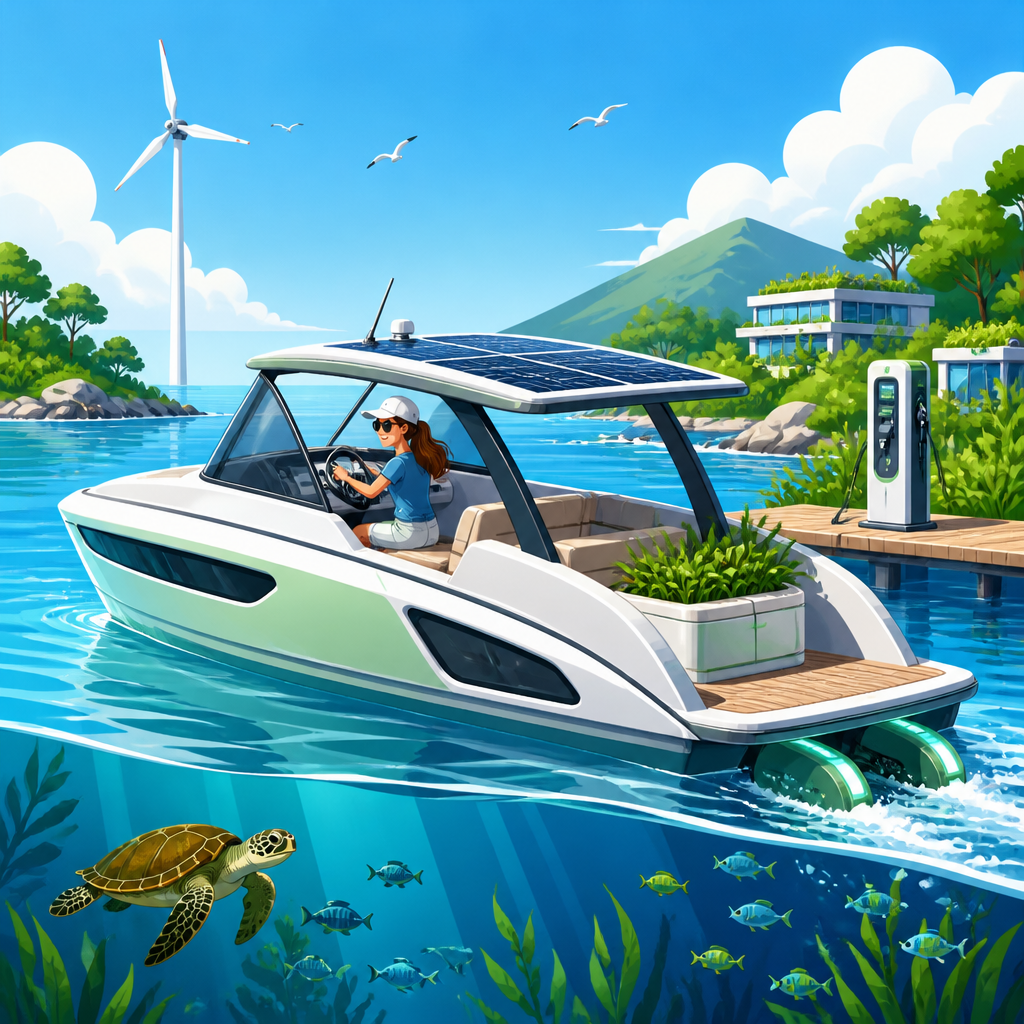
The future of green boating technology is not one single invention. It is a connected stack that combines electric propulsion, hybrid drivetrains, lightweight materials, better hull forms, renewable charging support, and intelligent software. AI sits at the center because it turns raw data into decisions. A modern boat can already generate data from GPS, automatic identification systems, engine control units, fuel flow meters, depth sounders, wind instruments, battery management systems, and thermal sensors. Without AI, most of that information is underused. With AI, patterns become visible: where the hull starts to foul, which RPM band wastes fuel in a head sea, when a current shift makes a route less efficient, or how generator run time can be reduced without affecting comfort.
This hub explains how AI is helping reduce fuel consumption in boating and why that matters to the broader move toward sustainable marine transport. It covers route optimization, engine performance, hybrid and electric integration, predictive maintenance, autonomous functions, and the barriers that still limit adoption. If you want a clear view of where eco-friendly boating is heading, start here: the biggest gains are coming from smarter operation, not just newer hardware.
Why fuel efficiency is the foundation of sustainable boating
The cleanest gallon of marine fuel is the one never burned. That is why fuel efficiency remains the foundation of sustainable boating, even as electric propulsion gets more attention. Full electrification works well for some use cases, especially small day boats, inland craft, ferries on short fixed routes, and tenders with predictable duty cycles. But many cruising yachts, fishing boats, workboats, and offshore vessels still depend on diesel or gasoline because of energy density, refueling convenience, and range requirements. In these cases, reducing fuel consumption delivers immediate environmental and financial benefits without requiring a complete vessel replacement.
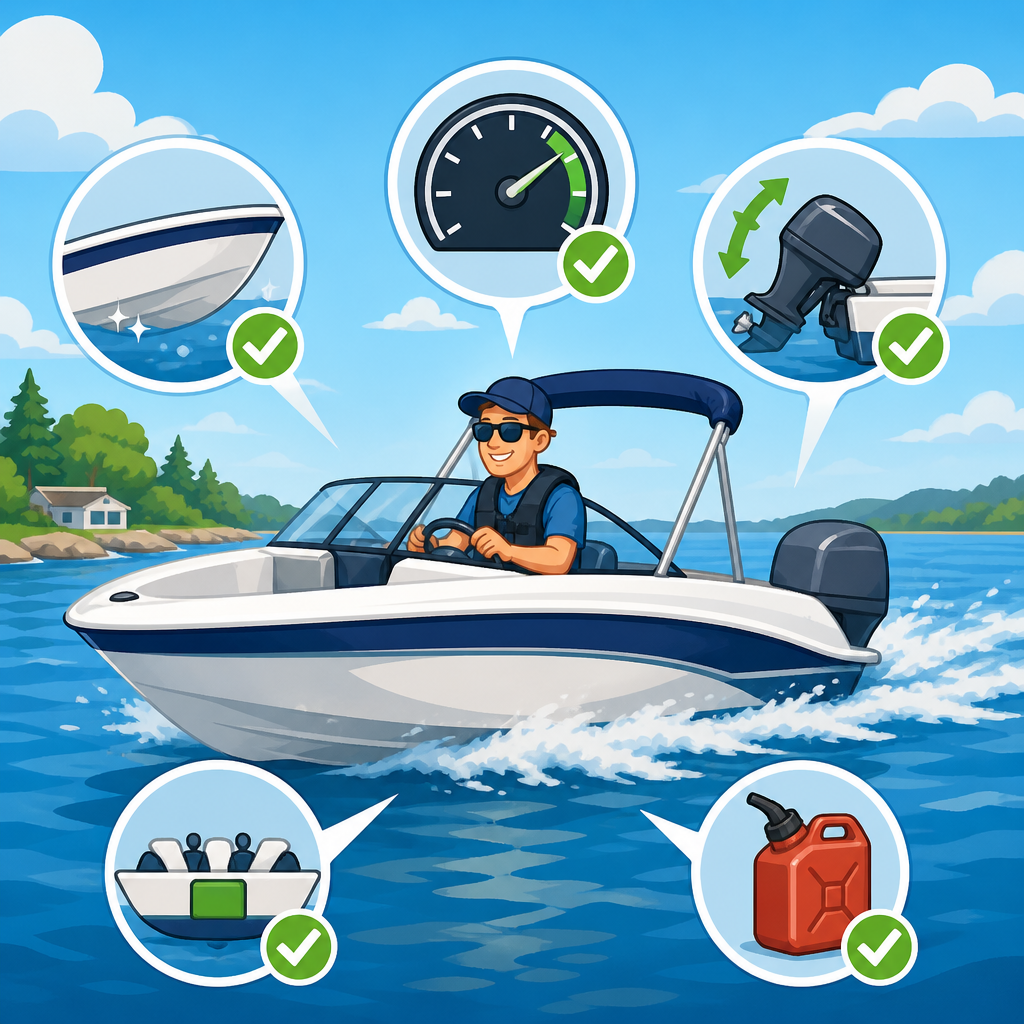
In practice, fuel efficiency in boating is affected by far more than engine size. Hull cleanliness, weight distribution, sea state, wind angle, propeller condition, trim angle, speed selection, hotel loads, and maintenance quality all influence consumption. A captain may think slowing down by two knots saves fuel, but on some planing hulls that speed band can actually be less efficient because the boat sits in a drag-heavy transition zone. Likewise, choosing the shortest route is not always the most efficient route if it means punching into stronger current or steeper waves. AI is useful because it can process these interacting variables faster and more consistently than a human working from instinct alone.
There is also a compounding effect. A boat that runs cleaner and more efficiently often experiences lower engine stress, fewer emergency repairs, and better trip planning. That supports sustainability beyond tailpipe emissions. Fewer breakdowns mean fewer replacement parts and fewer wasted journeys. Better voyage planning also reduces idle time at marinas and anchorages, where auxiliary engines and generators often run longer than owners realize. In every segment I have worked with, from charter catamarans to patrol craft, the first step toward greener operation was not a radical retrofit. It was measuring where fuel was being lost, then using software to correct it.
How AI reduces fuel consumption on the water
AI reduces fuel consumption by identifying the most efficient operating pattern for a specific vessel under specific conditions. At the core are machine learning models trained on historical and live data. These models compare speed, RPM, load, weather, route geometry, hull resistance, and power demand to predict the fuel cost of each operating choice. Instead of relying on a generic fuel curve from the manufacturer, AI can build a vessel-specific efficiency profile that reflects real use.
One of the most effective applications is route optimization. A smart voyage system can combine weather routing, wave forecasting, tides, current models, traffic density, and no-wake restrictions to suggest a course that minimizes fuel burn rather than just distance. Commercial shipping platforms such as Wärtsilä Fleet Optimisation, ABB Ability Marine Advisory, and Orca AI illustrate how this works at scale. Similar logic is moving into recreational and small commercial boating through connected chartplotters and app-based planning tools. If a boat can avoid a two-knot adverse current for three hours, the fuel savings are immediate and measurable.
Speed optimization is equally important. AI can recommend the “sweet spot” where fuel burn per nautical mile is lowest, which changes with displacement, sea conditions, payload, and hull form. On fast planing boats, that might mean staying clearly on plane rather than hovering just below it. On displacement trawlers, it may mean reducing speed slightly when head seas rise enough to increase resistance sharply. These are not guesses. They come from observed vessel data matched against environmental inputs.
Trim and propulsion settings are another major target. Interceptors, trim tabs, active foils, and controllable pitch propellers can all influence resistance and engine load. An AI-assisted control system can make small adjustments continuously, keeping the boat closer to peak efficiency than manual corrections usually do. This is especially helpful when passenger movement, fuel burn, or wave direction shifts the running attitude over time.
| AI application | Data used | How it saves fuel | Typical example |
|---|---|---|---|
| Route optimization | Weather, tides, currents, traffic, charts | Avoids adverse conditions and unnecessary distance | Re-routing a coastal passage to use favorable current |
| Speed optimization | RPM, fuel flow, hull resistance, sea state | Finds lowest fuel burn per mile for current conditions | Holding an efficient cruise speed in choppy water |
| Trim optimization | Pitch, roll, load distribution, wave angle | Reduces drag and improves propulsive efficiency | Automatically adjusting tabs as fuel tanks empty |
| Predictive maintenance | Vibration, temperature, exhaust, oil data | Prevents efficiency losses from wear or fouling | Detecting injector issues before fuel use rises |
| Hybrid energy management | Battery state, load demand, route profile | Uses electric and engine power at the right times | Running silent electric mode in a harbor approach |
Smarter engines, cleaner hulls, and predictive maintenance
Many fuel losses come from gradual degradation rather than dramatic failure. A slightly fouled hull, worn propeller edges, drifting sensor calibration, restricted fuel injectors, clogged air filters, or poor combustion timing can all push consumption upward before a crew notices. AI-based predictive maintenance addresses this by looking for small anomalies across multiple data streams. Instead of waiting for an alarm, the system identifies trends that signal declining efficiency.
Hull fouling is a good example. Biofilm and marine growth increase drag significantly, and even light fouling can raise fuel use enough to matter over a season. AI systems can infer fouling by comparing expected speed-through-water against power demand under similar conditions over time. If resistance is rising without another explanation, the software can flag the likely cause and recommend cleaning before fuel penalties become severe. Commercial operators have used this approach for years because unscheduled drydocking is expensive; it is now becoming relevant to private owners through cloud-based monitoring services.
Engine analytics offer similar gains. Modern marine engines already produce streams of diagnostic information through CAN bus and NMEA 2000 networks. AI can detect when one engine in a twin installation begins consuming more fuel at the same load, when exhaust temperatures suggest incomplete combustion, or when vibration patterns point to alignment or propeller issues. In one fleet project I reviewed, a persistent rise in fuel burn was traced not to operator behavior but to a gradually deteriorating turbocharger. The issue was corrected before it caused a larger failure, and fuel efficiency returned to baseline.
Maintenance also intersects with compliance and resale value. Digital service records, trend analysis, and documented efficiency improvements help owners prove that a boat has been operated responsibly. As sustainability reporting becomes more common in charter and commercial markets, this evidence matters. A vessel with verified fuel monitoring and maintenance analytics is easier to market than one operated on guesswork.
AI, hybrid propulsion, and the next generation of green boating
The future of green boating technology depends heavily on how well different power sources are coordinated, and this is where AI becomes indispensable. Hybrid propulsion systems pair internal combustion engines with electric motors, batteries, shore power charging, and sometimes solar support. Their promise is straightforward: run electric where it is most efficient or desirable, use combustion power where energy demand is higher, and recover or store energy when possible. The challenge is deciding when to switch modes. AI solves that decision problem.
On a hybrid cruiser, for example, AI can reserve battery capacity for marina maneuvering, anchorage quiet hours, or low-speed zones while using diesel at the most efficient load during open-water transit. On a ferry, software can time charging windows and route legs so that battery depletion, passenger load, and shore infrastructure remain balanced. On sailboats with auxiliary power, AI can coordinate solar input, hydrogeneration, house loads, and engine charging to reduce generator run time.
Electric boats benefit too. Range anxiety is real on the water because wind, waves, current, and speed changes affect energy use more dramatically than drivers expect on roads. AI-based energy prediction can estimate remaining range more accurately by using live conditions instead of static assumptions. That lets operators choose realistic speeds and charging stops. Companies such as Torqeedo, Candela, and Navier have pushed this conversation forward by combining electric propulsion with software-centric control, lightweight structures, and, in some cases, hydrofoiling designs that reduce drag dramatically.
Autonomy will play a larger role over time. Full self-driving boats are still limited to specific commercial and research contexts, but assisted autonomy is already useful. Docking assistance, collision avoidance, adaptive cruise control, and automated station keeping can all save fuel by reducing abrupt throttle changes and unnecessary maneuvering. As sensors improve, these functions will merge with energy management into a single efficiency layer across the vessel.
Limits, tradeoffs, and what boat owners should do next
AI is not magic, and the limitations matter. Data quality is the first constraint. If fuel flow meters are inaccurate, weather inputs are poor, or sensors are miscalibrated, recommendations will be weaker. Retrofit cost is another issue. Smaller boat owners may not justify a complex monitoring stack unless fuel use is high or the vessel runs often. There is also a human factor. Some captains distrust automation, and they are right to be cautious when software lacks transparency. Good systems explain why a recommendation is being made and allow manual override.
Cybersecurity and interoperability also deserve attention. A connected vessel can expose engine controls, navigation systems, and owner data if networks are not segmented and updated properly. Buyers should favor equipment that supports recognized marine networking standards, secure remote access, and vendor support with a long product roadmap. Integration matters because the best fuel insights come when engine data, navigation data, and power-system data speak the same language.
For owners who want practical results, the path is straightforward. Start with measurement: install accurate fuel flow monitoring, confirm engine data access, and log trip conditions consistently. Next, analyze patterns in speed, trim, route choice, and maintenance intervals. Then add smarter tools, whether that means AI-enabled charting, cloud fleet analytics, or hybrid energy management. The benefit is simple: lower fuel costs, longer range, reduced emissions, and a more future-ready boat. Green boating will be built as much by intelligent operation as by new propulsion hardware. If you are evaluating sustainable marine technology, begin with the systems that help your boat burn less fuel on its very next trip.
Frequently Asked Questions
1. How does AI actually reduce fuel consumption in boating?
AI reduces fuel consumption by turning large amounts of boating data into practical decisions that improve efficiency on the water. Modern AI systems can analyze engine performance, RPM, throttle position, GPS speed, weather forecasts, wave conditions, hull resistance, trim angle, and even onboard electrical demand. Instead of relying only on fixed rules or operator instinct, the system continuously looks for patterns that show when the boat is using more fuel than necessary.
For example, AI can recommend the most efficient cruising speed for current conditions, rather than simply aiming for maximum speed or a traditional “comfortable” pace. It can also suggest route changes that avoid headwinds, strong currents, or rough water that increase drag and fuel burn. On some vessels, AI can automatically adjust trim tabs, engine settings, or hybrid power usage to keep the boat operating in a more efficient range.
Another major benefit is that AI makes fuel savings dynamic. Conditions on the water change constantly, and what was efficient ten minutes ago may no longer be ideal. AI responds in real time, helping operators make smarter decisions throughout the trip. The result is lower fuel consumption, reduced emissions, less engine strain, and often a smoother, more predictable boating experience.
2. What kinds of boating data does AI use to improve efficiency?
AI works best when it has access to a wide range of accurate vessel data. In boating, that typically includes information from the engines, fuel flow meters, navigation systems, GPS, weather services, depth sounders, hull sensors, battery systems, and onboard power management equipment. Each data source tells part of the efficiency story, and AI combines them to produce better recommendations than any single instrument could provide on its own.
Engine data is especially important because it shows how hard the vessel is working. AI can compare fuel burn against speed, RPM, load, and temperature to identify the most efficient operating envelope. Navigation and GPS data help the system understand where the boat is, how fast it is moving over ground, and whether currents or route choices are increasing fuel use. Weather feeds add valuable context by showing wind direction, wave height, and approaching conditions that may affect resistance and throttle demand.
Hull and trim-related data also play a major role. If the hull is creating more drag than expected, AI may detect that the vessel is no longer performing at its normal efficiency baseline. Battery and auxiliary power data matter as well, especially on hybrid or electrically assisted boats, where energy usage decisions can shift overall fuel demand. By bringing all of this information together, AI can provide a much clearer picture of why fuel is being consumed and what can be done to reduce it.
3. Can AI help boat owners with maintenance as well as fuel savings?
Yes, and this is one of the most valuable long-term advantages of AI in boating. Fuel efficiency and maintenance are closely connected because a vessel that is not operating in top condition almost always burns more fuel. AI can monitor performance trends over time and detect subtle changes that may point to developing problems, such as a dirty hull, propeller damage, engine inefficiency, injector issues, clogged filters, improper trim behavior, or abnormal power draw from onboard systems.
Instead of waiting for a noticeable breakdown or a sharp increase in fuel costs, AI can flag early warning signs before the issue becomes serious. For instance, if the boat suddenly needs more throttle to maintain the same speed under similar conditions, the system may identify that as a possible maintenance concern. If engine load patterns no longer match historical performance, AI may recommend inspection or service. This type of predictive maintenance helps owners fix problems sooner, often at a lower cost and with less downtime.
The fuel-saving impact can be significant. A clean hull, a properly tuned engine, and a well-maintained propulsion system all contribute directly to lower fuel burn. AI helps remove the guesswork by showing when efficiency is slipping and why. Over time, this creates a more disciplined maintenance schedule, extends equipment life, improves reliability, and supports more consistent environmental performance.
4. Is AI-based fuel optimization only useful for large commercial vessels, or can recreational boaters benefit too?
AI-based fuel optimization is useful for both commercial and recreational boating. Large commercial vessels often receive the most attention because even small percentage improvements can translate into major fuel savings at fleet scale. However, recreational boaters can benefit in very practical ways as well, especially as marine electronics and connected systems become more affordable and user-friendly.
For private boat owners, AI can simplify decisions that directly affect fuel use, such as identifying the best cruising speed, suggesting a more efficient route, or alerting the operator when changing weather conditions are likely to increase consumption. On trailer boats, cruisers, fishing boats, and yachts, these recommendations can help reduce operating costs and extend range without requiring the owner to become an expert in engine mapping or data analysis.
AI is also helpful because many recreational trips involve variable conditions and mixed usage patterns. A boater may idle through a marina, accelerate offshore, troll for hours, and then return against changing wind and tide. AI can adapt to those shifts better than one-size-fits-all advice. Even when the system is not fully automated, simple onboard recommendations can improve day-to-day efficiency, make trip planning easier, and support greener boating habits without sacrificing convenience or performance.
5. Does using AI in boating require full automation, or can it work as a decision-support tool?
AI does not require full automation to be effective. In many cases, it delivers strong fuel-saving benefits as a decision-support tool that helps captains and boat owners make better choices while staying fully in control of the vessel. The system may present recommendations on speed, trim, route selection, maintenance timing, or power management, and the operator decides whether and how to apply them. This approach is often the most practical starting point because it improves efficiency without changing the essential role of human judgment on the water.
Decision-support AI is especially valuable because boating environments are complex and sometimes unpredictable. Experienced operators still need to consider safety, traffic, regulations, visibility, local knowledge, and passenger comfort. AI adds another layer of intelligence by rapidly processing data that would be difficult to interpret manually in real time. It can show where fuel is being wasted, predict how conditions ahead may affect efficiency, and highlight actions that reduce consumption with minimal effort.
On more advanced vessels, some AI functions can be automated, such as trim adjustment, hybrid energy balancing, or adaptive route optimization. But even then, the best systems are usually designed to support the operator rather than replace them. In other words, AI in boating is not just about autonomous control. It is about smarter operation, better awareness, and more informed decisions that reduce fuel use while maintaining safety and performance.