Sustainable boating technology has moved from a niche concern to a central priority for builders, marina operators, regulators, and owners who want cleaner, quieter, and more efficient time on the water. In practical terms, sustainable boating means reducing the environmental footprint of a vessel across propulsion, materials, energy use, maintenance, and end-of-life disposal while preserving safety and performance. Green boating technology includes electric and hybrid propulsion, hydrogen and fuel cell systems, advanced hull design, low-impact antifouling coatings, renewable onboard power, smarter batteries, and digital monitoring tools that cut waste. I have worked with owners evaluating retrofits and with yards comparing propulsion packages, and the change over the last decade has been dramatic: products that once felt experimental are now earning class approvals, entering serial production, and proving themselves in daily operation. That matters because recreational and commercial boating both face pressure from fuel costs, emissions targets, shoreline noise rules, and growing expectations from customers who do not want leisure or work on the water to come at the expense of water quality and marine habitats.
The future of green boating technology is not defined by a single breakthrough. It is a systems shift in which propulsion, charging, materials, route planning, marina infrastructure, and maintenance all work together. Battery electric boats are gaining ground in short-range use cases such as tenders, lake boats, patrol craft, ferries, and day cruisers. Hybrid architectures are bridging the gap for offshore passages and heavier hulls. Hydrogen, methanol, renewable diesel, and other lower-carbon fuels are being tested where energy density matters. Builders are redesigning hulls to need less power in the first place, and software now helps skippers optimize trim, speed, and charging windows. For owners researching eco-friendly and sustainable boating, this hub article explains the latest innovations, where they work best, what tradeoffs to expect, and which related topics deserve a deeper read next.
Electric Propulsion Is Reshaping Small Craft and Coastal Boating
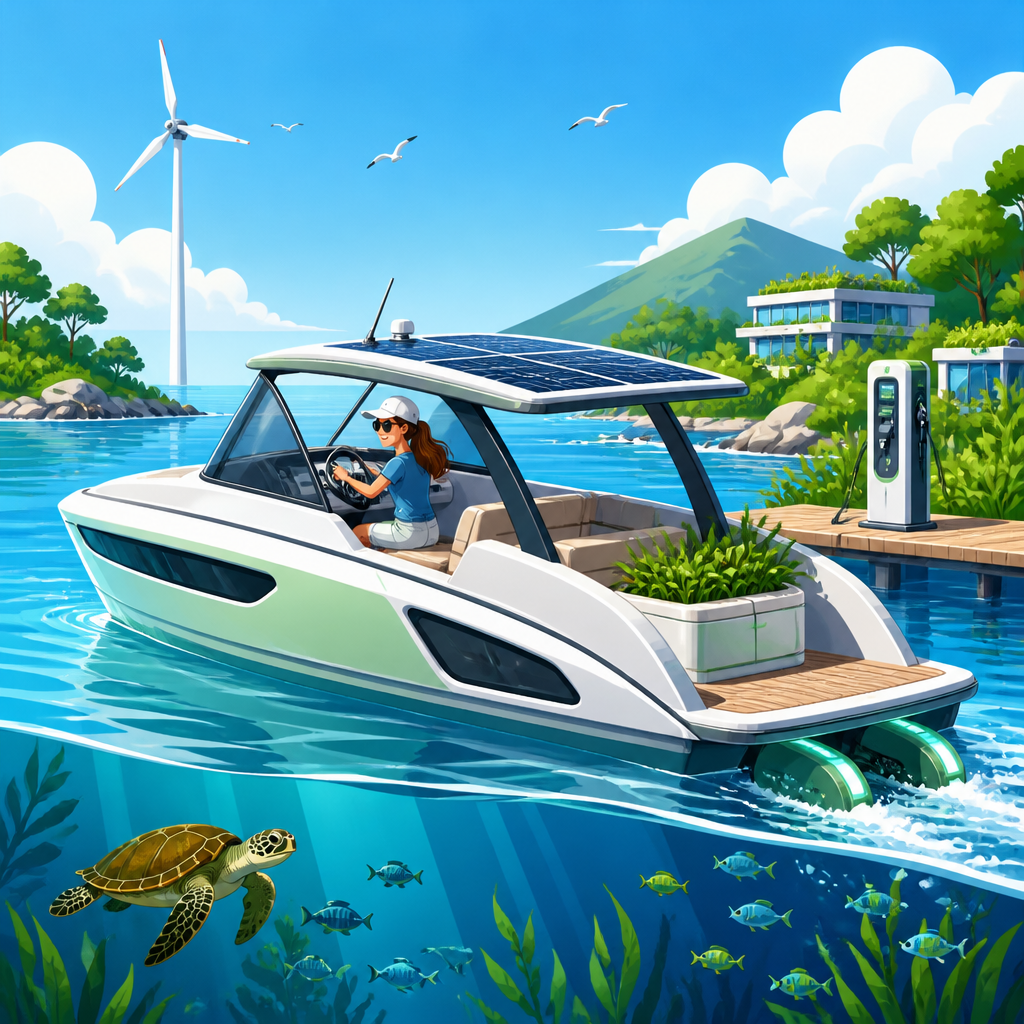
Electric propulsion is the most visible change in sustainable boating technology because it solves several problems at once: tailpipe emissions at the point of use, engine noise, vibration, and routine maintenance. Modern marine electric systems pair permanent magnet motors with lithium-ion battery packs, power electronics, thermal management, and digital controls. Brands such as Torqeedo, Mercury Avator, ePropulsion, Candela, and Vision Marine have moved the market beyond low-power trolling applications into practical propulsion for runabouts, tenders, ribs, and commuter craft. In my experience, the user reaction is immediate. First-time operators notice silent acceleration, precise low-speed control around docks, and the absence of fuel smells in enclosed marinas.
The main technical constraint is energy density. Marine batteries store far less energy per kilogram than diesel, so electric boats perform best where routes are predictable and charging is available. That is why electric ferries in Scandinavia, canal boats in Europe, lake day boats, and urban water taxis have become strong early use cases. Hydrofoiling electric boats add another leap in efficiency by lifting the hull clear of the water, sharply reducing drag. Candela has demonstrated this approach in passenger and recreational applications, showing how software, sensors, and lighter composite structures can stretch battery range. For many owners, the smartest question is not whether electric is good, but whether the boat’s duty cycle matches the technology.
Hybrid Systems Extend Range Without Abandoning Efficiency
Hybrid propulsion gives builders and owners a practical middle path between conventional engines and fully electric boating. In a marine hybrid setup, an internal combustion engine works alongside electric motors and battery storage. Systems can be parallel, where engine and motor both drive the shaft, or serial, where an engine acts mainly as a generator. The advantage is flexibility. Boats can leave a marina in near-silent electric mode, switch to engine power offshore, then recover energy through intelligent charging strategies. For displacement yachts, expedition vessels, and commercial workboats, that flexibility can be more valuable than chasing all-electric operation before the infrastructure is ready.
Real-world gains depend on vessel profile. A hybrid yacht that spends most of its life motoring at low speed, hoteling at anchor, and maneuvering in harbors can reduce fuel burn meaningfully. A planing boat that runs fast for long periods will see less dramatic benefits unless the hull itself is highly efficient. Builders such as Greenline have helped normalize hybrid thinking by integrating solar panels, battery storage, and optimized hotel loads so owners can spend nights at anchor without running a generator. That is an underrated environmental win. Reducing generator hours cuts noise, local emissions, and maintenance while making anchorages more pleasant for everyone nearby.
Hydrogen, Fuel Cells, and Alternative Marine Fuels
For larger vessels and longer routes, the future of green boating technology likely includes multiple fuels rather than a single universal answer. Hydrogen fuel cells generate electricity onboard through an electrochemical process, producing water vapor rather than combustion exhaust at the point of use. Several pilot projects in ferries and commercial craft are testing compressed hydrogen, liquid hydrogen, and fuel cell integration with batteries. The appeal is clear: quieter operation than combustion, zero local carbon emissions, and potentially faster refueling than recharging. The challenge is equally clear: hydrogen storage volume, system cost, bunkering infrastructure, and the fact that climate benefits depend heavily on how the hydrogen is produced.
Other lower-carbon marine fuels are advancing in parallel. Renewable diesel can often work in compatible diesel engines with limited modification and lower lifecycle emissions when sourced responsibly. Methanol is gaining interest in commercial shipping because it is easier to handle than hydrogen, though it carries lower energy density and different safety requirements. Biofuels may help decarbonize legacy fleets, but feedstock quality and supply chain transparency matter. The lesson from current trials is that boat owners should assess fuel innovation by use case, not hype. A harbor ferry, a sportfisher, and a bluewater passagemaker do not share the same operational constraints, so their sustainable fuel pathways will differ.
Smarter Batteries, Charging Networks, and Energy Management
The progress of sustainable boating depends as much on batteries and charging as on motors. Marine battery innovation is focused on safer chemistries, higher cycle life, better thermal management, and more precise battery management systems. Lithium iron phosphate batteries have become popular in marine applications because they offer strong cycle durability and improved thermal stability compared with some other lithium chemistries, although pack design, enclosure standards, and installation quality still matter enormously. Reputable systems now integrate fault detection, cell balancing, and remote diagnostics, helping operators protect expensive battery assets and reducing the risk of unexpected shutdowns.
Charging is also becoming more sophisticated. Fast DC charging can support commercial electric fleets with tight schedules, while AC shore power remains adequate for many recreational boats that recharge overnight. Marinas are slowly adapting electrical infrastructure, but capacity planning, load balancing, and utility coordination remain bottlenecks in older facilities. The best installations treat the marina as an energy system, combining shore power upgrades, smart meters, software scheduling, and sometimes stationary batteries or solar canopies to shave peak demand. Owners should also pay attention to hotel loads. Refrigeration, air conditioning, induction cooking, lighting, and electronics can drain energy faster than expected, which is why advanced energy dashboards are becoming standard on premium green boats.
| Technology | Best Use Case | Main Benefit | Key Limitation |
|---|---|---|---|
| Battery electric | Short-range day boats, ferries, tenders | Zero local exhaust, low noise, low maintenance | Range and charging dependency |
| Hybrid | Yachts, workboats, mixed coastal cruising | Fuel savings with operational flexibility | Higher system complexity and cost |
| Hydrogen fuel cell | Commercial routes, future long-range applications | Zero local carbon emissions at point of use | Storage and refueling infrastructure |
| Renewable diesel/biofuel | Existing diesel fleets | Lower lifecycle emissions with minimal retrofit | Feedstock quality and supply availability |
Efficient Hulls, Hydrofoils, and Lightweight Materials
The cleanest propulsion system is the one that has to push the least resistance through the water. That is why hull efficiency sits at the center of sustainable boating, even when owners focus first on engines or batteries. Naval architects are revisiting slender hull forms, catamarans, stepped designs, air lubrication experiments, and computational fluid dynamics to reduce drag across target speed ranges. In practical testing, small changes in hull geometry can deliver significant gains in energy consumption because marine resistance increases quickly with speed. If a builder cuts required power by even 15 to 25 percent through better hydrodynamics, every propulsion option becomes more viable.
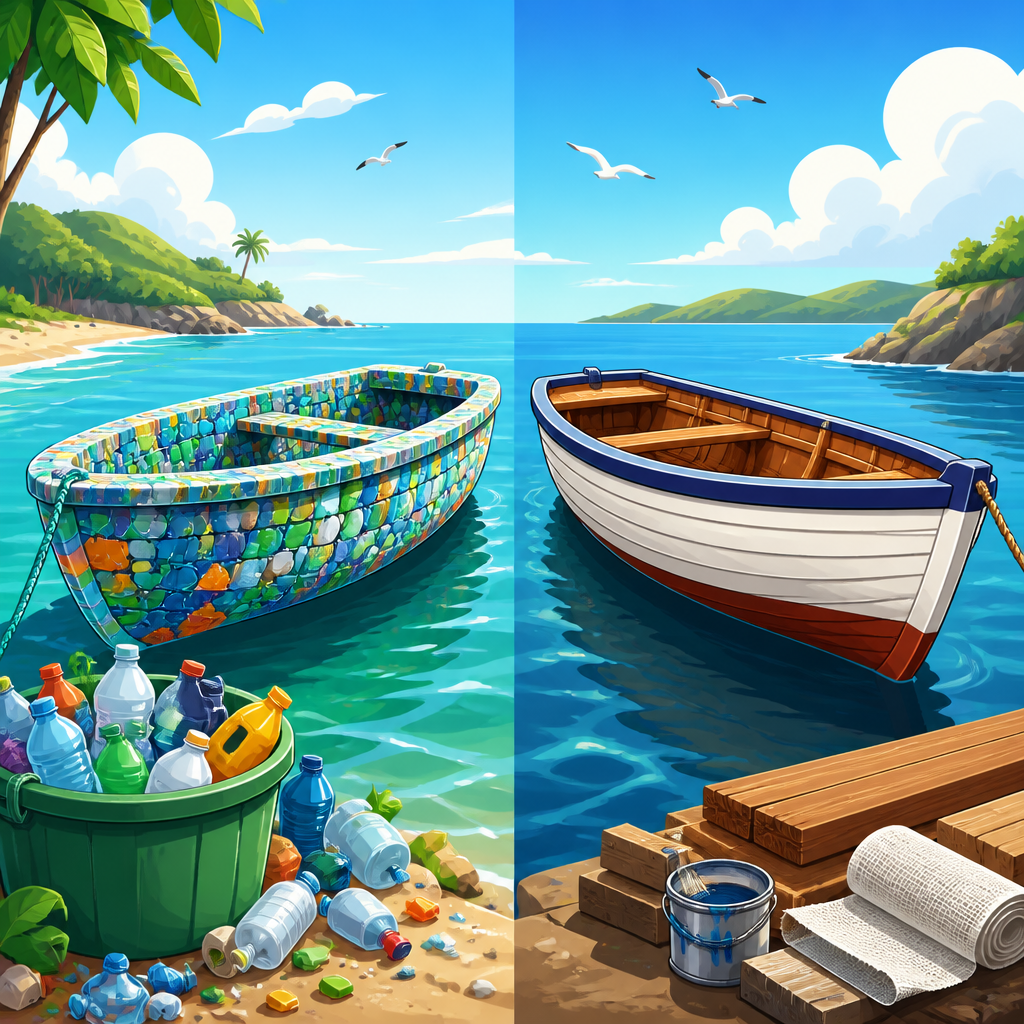
Materials matter too. Lightweight composites, recyclable thermoplastics, natural fiber reinforcements, and resin systems with lower environmental impact are all moving from concept stages into production niches. There are tradeoffs. Traditional fiberglass remains cost-effective and familiar, but recycling pathways are limited. Advanced composites can save weight and improve performance, yet repairs require trained technicians and careful process control. Some builders are now publishing lifecycle considerations more openly, including resin content, core materials, and modular component design that simplifies replacement. Hydrofoils represent the most dramatic efficiency jump in the right conditions by lifting the hull and reducing wetted surface. They are not universal, but in sheltered water commuter routes they may define the next generation of low-energy boating.
Cleaner Maintenance, Safer Coatings, and Waste Reduction
Sustainable boating is not only about what happens when a throttle is advanced. A significant share of a boat’s environmental impact comes from cleaning, painting, engine service, bilge management, and disposal of hazardous materials. Antifouling coatings are a prime example. Traditional biocidal paints can release copper and other compounds into the water, especially in crowded marinas with limited flushing. Newer foul-release coatings, hard coatings paired with regular cleaning, and more targeted biocide formulations are helping reduce that burden in suitable conditions. No single coating is best everywhere; local fouling pressure, water temperature, salinity, and haul-out schedules all affect performance.
Maintenance innovation also includes closed-loop washdown systems in boatyards, oil-absorbent bilge solutions, vacuum sanding tools for bottom work, and digital service logs that help owners replace parts based on actual condition rather than guesswork. I have seen simple operational changes produce outsized results: switching to biodegradable cleaners where appropriate, storing fuels correctly, inspecting seals before they fail, and training crews on waste sorting can prevent spills and reduce disposal costs. Marinas are part of this equation. Facilities with pump-out stations, recycling streams, stormwater controls, and clear environmental rules make sustainable choices easier for boaters, which is often the difference between good intentions and consistent practice.
Connected Boats, Route Optimization, and the Marina of the Future
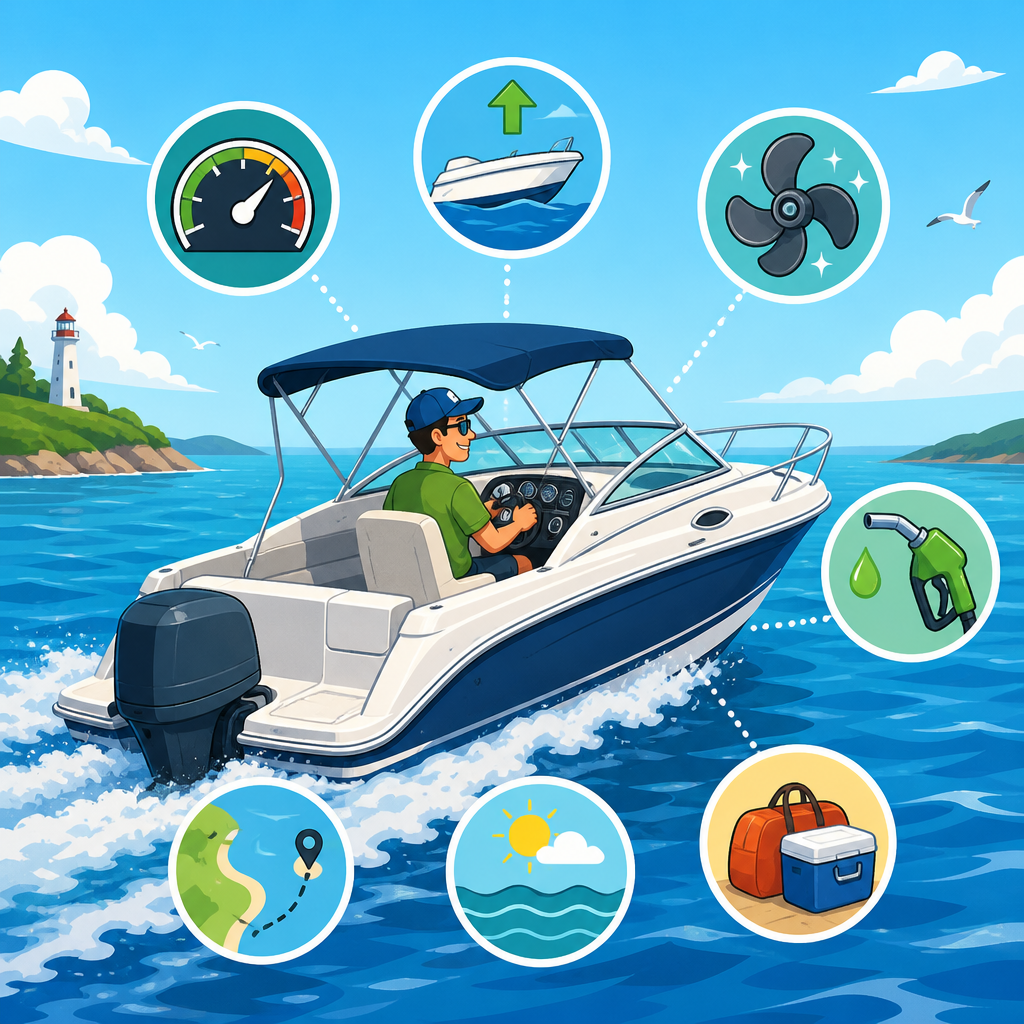
Digital technology is becoming one of the most effective green boating tools because it turns efficiency into a measurable operating habit. Modern monitoring platforms track battery state of charge, fuel flow, shore power use, solar yield, motor temperature, and route performance in real time. With that data, operators can choose a cruising speed that sharply lowers energy use, identify underperforming components, and schedule charging around utility rates or berth availability. Commercial fleets already use route optimization software to account for tides, currents, weather, and traffic. Recreational boaters are starting to benefit from the same logic through integrated chartplotter and app ecosystems.
The marina of the future is also becoming smarter and cleaner. Expect more docks with managed charging, reservation-linked energy access, shore power pedestals that communicate load, and maintenance facilities designed for electric drivetrains and battery safety protocols. Standards from organizations such as ABYC, ISO, and classification societies will continue to shape how these systems are installed and inspected. The broader point is that sustainable boating technology works best as an ecosystem. Boats need compatible marinas, marinas need utility planning, and owners need reliable service networks and realistic information. If you are building an eco-friendly and sustainable boating strategy, use this hub as the starting point, then explore propulsion, charging, materials, maintenance, and marina infrastructure in detail before your next purchase or retrofit decision.
The latest innovations in sustainable boating technology show that green boating is no longer limited to compromises or concept vessels. Electric propulsion is already practical for many short-range applications, hybrid systems are making cruising more efficient and quieter, and hydrogen and alternative fuels are expanding the conversation for larger craft and commercial operations. At the same time, better batteries, smarter charging, efficient hulls, advanced materials, cleaner coatings, and connected monitoring tools are improving every part of the boating lifecycle. The most important lesson is that the future of green boating technology is modular. Different boats will adopt different combinations of propulsion, energy storage, maintenance practices, and marina support depending on range, speed, payload, and budget.
For owners and marine businesses, that is good news. It means there are meaningful steps available now, even if a full zero-emission setup is not yet practical for your vessel. Start by evaluating your real operating profile, not your aspirational one. Then compare the technologies that fit it best, including hull efficiency, hotel loads, charging access, and maintenance impacts. Sustainable boating rewards informed choices more than marketing claims. Use this hub to guide your research, ask sharper questions of builders and installers, and identify the upgrades that will deliver cleaner, quieter, and more efficient days on the water. The future is arriving slip by slip, route by route, and refit by refit.
Frequently Asked Questions
1. What counts as sustainable boating technology today?
Sustainable boating technology now covers far more than simply swapping a fuel engine for an electric motor. It refers to a broad set of innovations designed to reduce a vessel’s environmental impact across its entire lifecycle, from manufacturing and daily operation to maintenance and eventual disposal or recycling. In practice, that includes electric and hybrid propulsion systems, hydrogen and other lower-emission fuel pathways, advanced battery storage, solar integration, smart energy management, recyclable and bio-based construction materials, low-toxicity bottom coatings, efficient hull designs, and marina infrastructure that supports cleaner charging, fueling, and waste handling.
What makes modern sustainable boating especially important is that it is no longer treated as a niche upgrade for a small group of eco-focused owners. Builders, marina operators, regulators, and consumers increasingly expect boats to be quieter, cleaner, and more efficient without sacrificing reliability or safety. As a result, the newest technologies are being designed around real-world usability. That means longer electric range for day boats, hybrid systems for mixed-use cruising, digital monitoring tools that help operators reduce wasted energy, and materials that improve durability while lowering emissions during production.
In simple terms, sustainable boating technology is about reducing fuel consumption, emissions, noise, water pollution, and waste while improving onboard efficiency and preserving performance. The most meaningful innovations are those that work together as a system rather than as isolated features. A boat with an efficient hull, intelligent power management, renewable charging support, and lower-impact materials will usually deliver greater environmental benefits than a vessel that relies on a single “green” component alone.
2. Are electric and hybrid boat propulsion systems practical for everyday use?
Yes, in many use cases they are increasingly practical, and their real-world value is growing quickly as battery performance, charging options, and power electronics improve. Electric propulsion is especially well suited to shorter trips, inland lakes, harbor cruising, tenders, ferries, and other applications where quiet operation, predictable routes, and access to charging make zero-emission cruising realistic. Owners often find that electric boats deliver immediate benefits such as lower noise, smoother acceleration, reduced vibration, simpler maintenance, and no direct exhaust emissions while underway.
Hybrid propulsion expands that practicality by combining electric drive with a conventional engine or generator, giving operators more flexibility. This is particularly useful for larger recreational boats, coastal cruisers, and vessels that need longer range or operate in areas where charging infrastructure is still developing. In a hybrid setup, the boat can run electrically at low speeds or in no-wake and environmentally sensitive zones, then switch to another power source for extended travel. That balance can reduce overall fuel use while maintaining operational confidence.
That said, practicality depends on matching the technology to the boating profile. Buyers should consider route length, speed expectations, time between charging opportunities, payload, local marina infrastructure, and seasonal use patterns. Electric systems are generally most effective when the boat is designed around them from the start, rather than treated as an afterthought. For many owners, the question is no longer whether electric or hybrid boating works at all, but which setup best fits their typical day on the water. As battery density improves and waterfront charging expands, the range of practical applications will continue to widen.
3. How are new materials and boatbuilding methods making boating more sustainable?
One of the most important shifts in sustainable boating is happening in the way boats are built. Traditional construction methods can involve energy-intensive manufacturing, difficult-to-recycle composites, solvent-heavy resins, and materials with a significant carbon footprint. Newer approaches aim to reduce these impacts by using recycled inputs, bio-based resins, responsibly sourced natural fibers, thermoplastic composites, lightweight aluminum, and other materials that offer a better balance of strength, durability, and lower environmental cost.
Lightweight construction is a major sustainability advantage because reducing vessel weight often improves efficiency immediately. A lighter boat typically requires less energy to move through the water, which can extend electric range or reduce fuel consumption in combustion or hybrid models. Hull design also matters. Advanced modeling and manufacturing techniques are helping builders create hull shapes that reduce drag, improve planing efficiency, and optimize stability, all of which support lower energy use over time.
Manufacturing itself is also becoming cleaner. Builders are adopting more precise fabrication techniques that reduce waste, using closed-mold processes that lower emissions during production, and thinking more seriously about end-of-life recovery. That final point is critical. A truly sustainable boat is not just efficient when new; it is also easier to repair, upgrade, disassemble, and recycle at the end of its service life. As circular-economy principles gain traction, the industry is placing more value on modular systems, longer-lasting components, and materials that can be reclaimed rather than discarded. These changes may not always be visible to the buyer at first glance, but they represent some of the most meaningful progress in green boating technology.
4. What role do marinas, charging networks, and onboard energy systems play in sustainable boating?
They play a central role, because even the most advanced sustainable boat depends on a broader support ecosystem to deliver its full environmental benefit. For electric and hybrid vessels, marina charging access is one of the biggest factors shaping convenience and adoption. More marinas are beginning to install dedicated charging stations, upgrade electrical capacity, and plan for future demand from larger battery-powered craft. These improvements help make low-emission boating more practical for everyday owners, charter fleets, water taxis, and commercial operators.
Onboard energy systems are equally important. Innovations in battery management software, power distribution, regenerative technologies, solar integration, and smart monitoring allow operators to use stored energy more efficiently and make better decisions while underway. For example, a modern energy management system can prioritize critical loads, reduce waste from nonessential systems, and give the captain a much clearer picture of range, charging status, and overall energy consumption. That kind of visibility is especially valuable in electric and hybrid boats, where efficient energy use directly affects trip planning and operating confidence.
Marinas are also becoming more sustainable in ways that go beyond charging. Better stormwater controls, improved sewage pump-out access, cleaner fueling practices, recycling programs, and more responsible maintenance facilities all reduce the environmental footprint of boating overall. In other words, sustainable boating is not just about what happens onboard the vessel. It also depends on whether the places where boats are stored, serviced, charged, and launched are evolving to support cleaner operations. The strongest long-term progress will come from boats, marinas, and energy infrastructure advancing together.
5. What should boat owners look for if they want a genuinely eco-friendlier vessel?
Owners should start by looking beyond marketing claims and focusing on measurable performance, lifecycle impact, and suitability for their actual boating habits. A genuinely eco-friendlier vessel is one that reduces emissions, energy waste, noise, and pollution in ways that align with how it will be used. That means evaluating the propulsion system, battery or fuel strategy, hull efficiency, materials, maintenance needs, and expected service life rather than assuming any single feature automatically makes a boat sustainable.
For some buyers, the best choice may be a fully electric boat designed for shorter recreational trips with reliable access to charging. For others, a hybrid model may deliver greater overall sustainability because it fits longer-range cruising patterns without requiring compromises that lead to inefficient operation. Owners should also ask about the source and recyclability of materials, the environmental profile of paints and coatings, the serviceability of major components, software tools for tracking energy use, and what happens to batteries or composite parts at end of life.
It is also smart to consider the operating environment. A boat used mainly in protected waterways, no-wake zones, or marinas may benefit greatly from silent electric propulsion and low-impact systems. Meanwhile, owners planning offshore or remote travel should prioritize designs that combine efficiency with dependable range and support infrastructure. Ultimately, the most sustainable purchase is not simply the newest technology. It is the boat that delivers the cleanest practical operation for its intended purpose, remains efficient over many years, and can be maintained responsibly with minimal waste and pollution. That is the standard more buyers, builders, and regulators are now working toward.