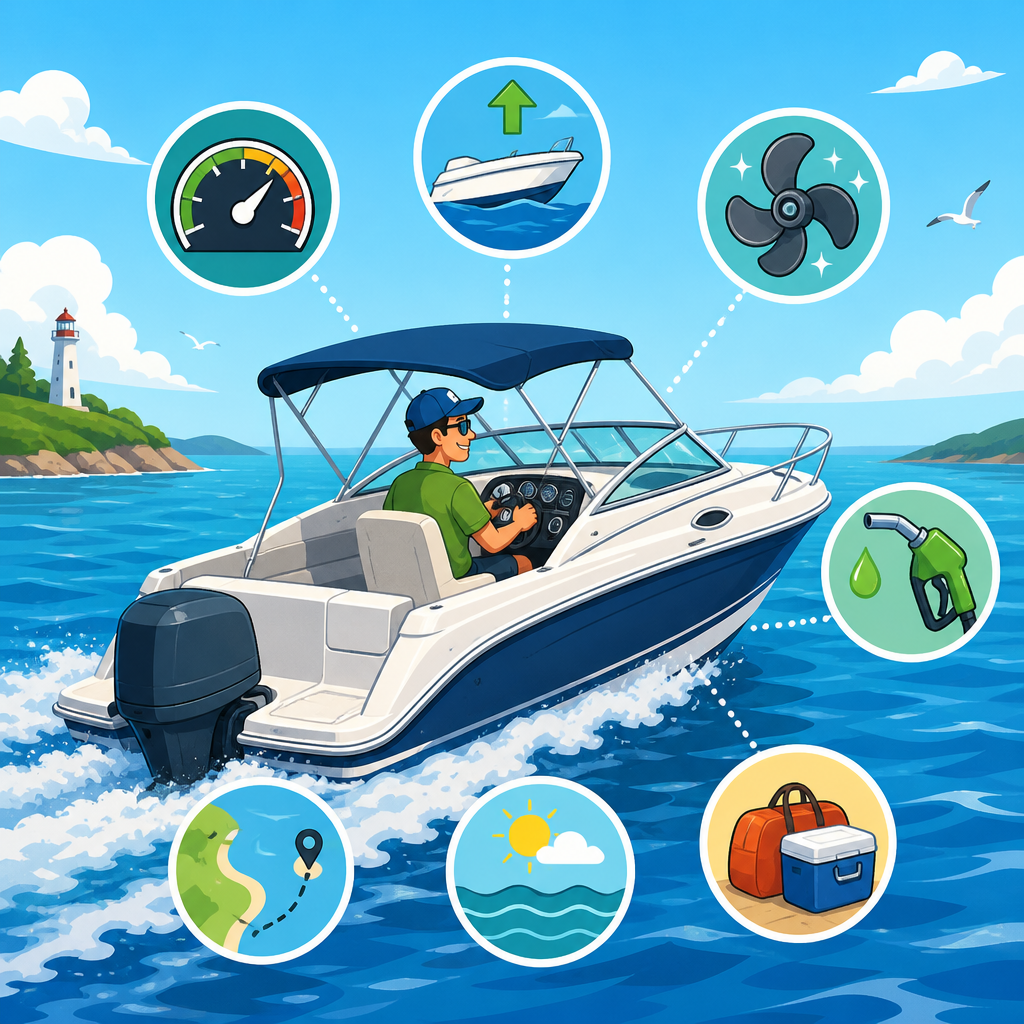
Fuel efficiency on the water is not just a cost issue; it is one of the most practical ways to make boating cleaner, quieter, and more sustainable. Learning how to minimize fuel consumption on your boat helps reduce operating expenses, extend cruising range, lower maintenance strain, and cut emissions that affect air quality and waterways. For any owner focused on eco-friendly and sustainable boating, efficient fuel use is a core habit, not a minor tweak.
In day-to-day marina conversations, “fuel economy” usually means how far a boat travels per gallon or liter. “Fuel consumption” refers to how much fuel the engine burns over time, often measured in gallons per hour. “Green boating practices” describe the operating, maintenance, and equipment choices that reduce environmental impact while preserving safety and performance. These concepts are tightly connected. A boat that is maintained correctly, loaded sensibly, and operated at the right speed almost always burns less fuel and leaves a smaller environmental footprint.
I have worked with owners who assumed fuel savings required expensive repowers or radical lifestyle changes. In practice, the biggest gains usually come from basics: clean hulls, properly pitched propellers, tuned engines, realistic trip planning, and disciplined throttle control. On many recreational boats, these steps can improve efficiency far more quickly than any aftermarket gadget. They also support the broader goal of green boating practices for every boater, because what saves fuel often reduces noise, wake, waste, and wear at the same time.
This hub article explains the main levers that control marine fuel use and shows how they fit into a wider sustainable boating approach. It covers boat speed, trim, propeller setup, hull condition, engine maintenance, route planning, weight management, electrical loads, and cleaner operating habits at the dock and underway. It also points toward the larger mindset behind responsible boating: use only what you need, prevent avoidable waste, and make decisions that protect both your budget and the waters you enjoy.
Run at the Most Efficient Speed, Not the Fastest Speed
The quickest answer to how to minimize fuel consumption on your boat is simple: slow down to the boat’s most efficient cruising speed. Fuel burn does not rise in a straight line with speed. Once a displacement hull approaches hull speed, or a planing boat pushes through the heavy transition before getting fully on plane, resistance climbs sharply. That means a small increase in speed can require a much larger increase in power and fuel.
On planing boats, I usually advise owners to identify the “sweet spot” where the boat is comfortably on plane, engine load is stable, and trim tabs or drive trim are not working excessively hard to hold attitude. That point is often in the midrange rather than near wide-open throttle. A fuel-flow display from Garmin, Simrad, or Yamaha Command Link makes this easy to see. If a boat runs 24 knots at 12 gallons per hour and 30 knots at 18 gallons per hour, the faster setting saves little time over moderate distances but costs much more fuel.
Displacement and semi-displacement boats benefit from the same discipline. Running just below the steep rise in wave-making resistance often produces the best nautical miles per gallon. The exact number varies by hull design, weight, and sea state, so the practical method is to record speed, rpm, and fuel burn during calm-water trials. Once you know the efficient range, make it your default rather than your occasional setting.
Use Trim, Propeller Setup, and Hull Condition to Reduce Drag
After speed, drag is the biggest driver of marine fuel consumption. Reducing drag starts with correct trim. Outboards and sterndrives trimmed too far down force the bow low and increase wetted surface. Trimmed too far out, they can cause prop slip and instability. Trim tabs should level the boat side to side first, then adjust fore-and-aft attitude only as much as needed. When the steering feels lighter and speed increases without extra rpm, you are usually moving toward an efficient running angle.
Propeller selection matters more than many owners realize. A prop with the wrong pitch, diameter, blade count, or cup can keep an engine outside its recommended wide-open-throttle range, which hurts both performance and economy. Mercury Marine, Yamaha, and Suzuki all publish target rpm ranges for a reason: if the engine cannot reach that range under normal load, it is effectively over-propped and forced to lug. Lugging increases fuel burn and long-term wear. If rpm runs too high too easily, the prop may be under-pitched, sacrificing efficiency and control.
Hull cleanliness is another major factor. Even a light layer of slime can increase drag enough to cause measurable fuel penalties, and barnacles make it much worse. In warm fouling-prone waters, I have seen neglected bottoms cut cruising efficiency dramatically within a season. Regular haul-outs, diver cleaning where appropriate, and the right antifouling coating are straightforward fuel-saving measures. The same applies to running gear. Clean propellers, shafts, rudders, and trim tabs reduce turbulence and restore designed performance.
| Fuel-saving factor | Typical problem | Practical fix | Why it works |
|---|---|---|---|
| Boat speed | Running well above efficient cruise | Use fuel-flow data to set a sweet-spot rpm | Lowers drag-related power demand |
| Trim | Bow too high or too low | Adjust engine trim and tabs in small increments | Reduces wetted surface and prop slip |
| Propeller | Wrong pitch or damaged blades | Match prop to manufacturer rpm range | Keeps engine in an efficient load band |
| Hull bottom | Slime, weeds, barnacles | Clean regularly and maintain antifouling | Cuts hydrodynamic resistance |
| Weight | Unused gear and full tanks everywhere | Remove excess load and balance cargo | Reduces displacement and improves trim |
Maintain the Engine and Fuel System Like Efficiency Equipment
Many boaters treat maintenance as a reliability issue only. It is also a fuel economy issue. An engine in tune produces the required power with less wasted fuel. On modern outboards and inboards, that means following the service schedule for spark plugs, filters, oil, gearcase lubricant, valve checks where specified, and software updates on electronically controlled systems. On diesel engines, injector condition, air filtration, turbocharger health, and clean fuel are especially important to efficient combustion.
Fuel contamination is a common hidden problem. Water in the tank, degraded gasoline with ethanol phase separation, microbial growth in diesel, or partially clogged fuel-water separators can all hurt combustion and force an engine to work harder. A boat that hesitates, smokes, idles unevenly, or loses top-end rpm is often burning fuel inefficiently long before it becomes a complete breakdown case. Replacing filters on schedule, keeping tanks dry and sealed, and buying fuel from high-turnover docks are simple steps with immediate value.
Do not ignore engine data. NMEA 2000 networks, manufacturer displays, and scan tools can reveal coolant temperature issues, oxygen sensor faults, excessive engine load, or charging-system inefficiencies that affect consumption. In service work, I have found that owners who monitor rpm, gallons per hour, voltage, and temperature catch small efficiency losses before they become costly repairs. Good records matter too. If your normal cruise used to be 10 gallons per hour and now takes 12 in similar conditions, something changed, and it is worth investigating.
Manage Weight, Balance, and Onboard Systems
Every extra pound pushed through the water requires energy. Weight management is one of the least glamorous but most effective green boating practices. Boats accumulate spare anchors, duplicate tools, old water toys, heavy coolers, and emergency gear that no longer matches the actual voyage profile. Start by removing items that have not been used in a season and are not safety-critical. Then look at consumables. Carrying full water and fuel tanks for short local trips adds unnecessary mass. For offshore passages, reserve capacity matters; for a half-day harbor run, overloading does not.
Balance matters as much as total weight. If passengers, batteries, dinghies, or gear are concentrated aft, the boat may struggle onto plane and run bow-high, increasing drag. Uneven side-to-side loading forces constant trim-tab correction, which adds drag as well. A simple reallocation of coolers, spare parts, and passengers can produce a visible improvement in hole shot and cruise efficiency.
Electrical demand influences fuel use too, especially on boats where the propulsion engine also supplies charging current. Refrigeration, air conditioning, watermakers, and large entertainment systems increase alternator load, which ultimately comes from fuel. Efficient LED lighting, modern battery monitors, and lithium battery systems paired with suitable charging equipment can reduce generator runtime and main-engine charging demand. Solar panels are not a universal solution, but on cruising boats they can offset hotel loads enough to cut idling and generator hours significantly.
Plan Smarter Trips and Adopt Cleaner Operating Habits
Trip planning is a direct fuel-saving tool. The shortest route is not always the most efficient if it runs into strong current, steep chop, or repeated no-wake transitions. Tides, current tables, weather routing, and local knowledge matter. On some inlets and rivers, leaving an hour later with a favorable tide can reduce fuel burn more than any hardware upgrade. Cruising into head seas at excessive speed is one of the fastest ways to waste fuel while punishing the hull and crew.
Idle time deserves attention. Long warmups on modern marine engines are usually unnecessary; manufacturers commonly recommend only enough time to stabilize systems before getting underway gently. Waiting at the dock with engines running, circling while preparing lines, or idling for extended conversations all burn fuel for no useful miles. The same logic applies to generators. If battery charging, cooking, or cooling can be scheduled efficiently, total run hours drop.
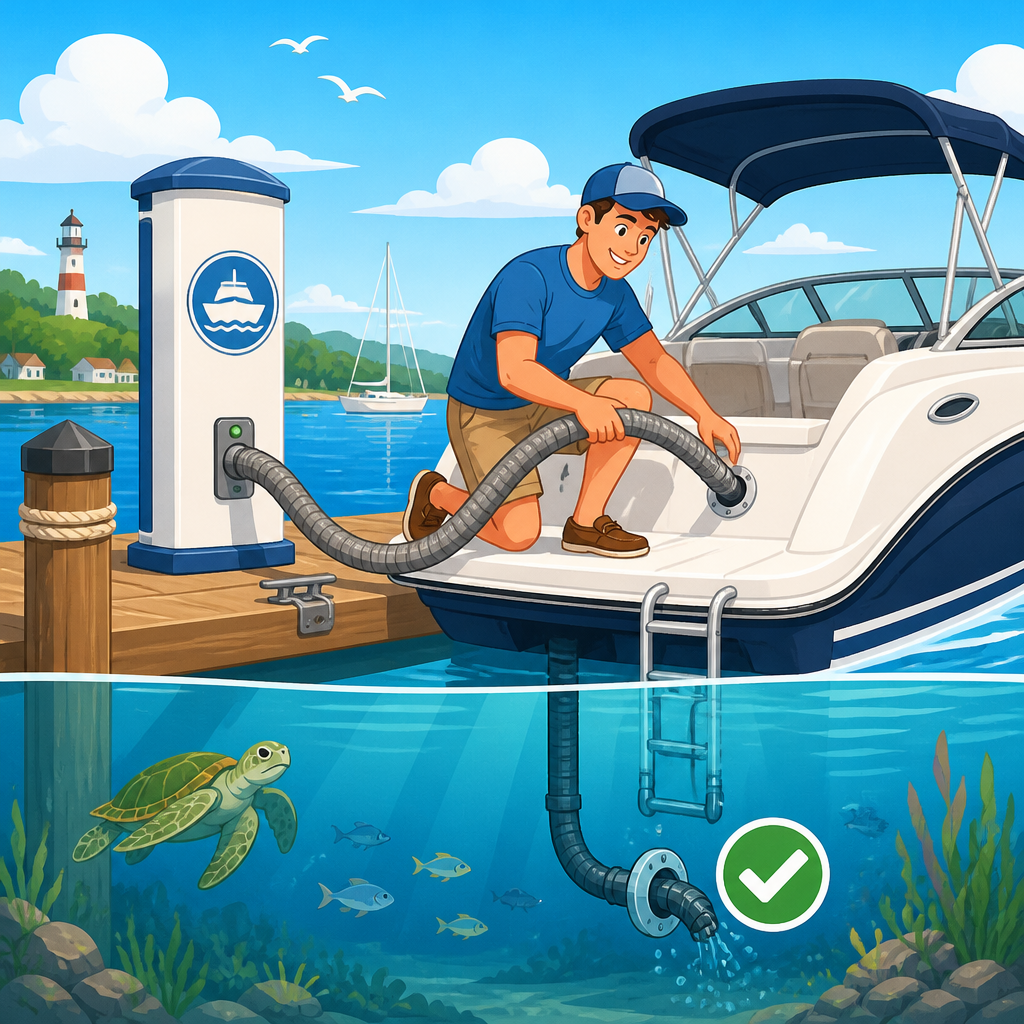
Dockside habits are part of green boating practices for every boater. Prevent fuel spills during refueling by slowing the fill rate near the top, listening for pitch changes, and using absorbent pads correctly. A single overflow harms water quality and wastes expensive fuel instantly. Choose marinas with pump-out access, recycling programs, and modern fueling systems. If you trailer your boat, proper tire pressure and moderate tow speed also support the sustainability picture by lowering fuel use before the boat even reaches the ramp.
For owners considering upgrades, focus first on proven returns. Fuel-flow instrumentation, a propeller evaluation, bottom restoration, and engine tune-up typically pay back faster than cosmetic modifications. If repowering is justified, newer outboards and common-rail diesels often deliver meaningful gains through improved combustion control, lean-burn strategies, and better diagnostics. Even then, technology works best when paired with disciplined operation.
The most effective way to minimize fuel consumption on your boat is to combine efficient speed, correct trim, a clean hull, the right propeller, strong maintenance, sensible loading, and thoughtful trip planning. None of these practices is complicated on its own, but together they change how a boat performs and how much it costs to enjoy. They also form the practical foundation of eco-friendly and sustainable boating, because lower fuel burn means lower emissions, less spill risk, and reduced wear on mechanical systems.
As a hub for green boating practices for every boater, this topic extends beyond fuel alone. The same mindset supports cleaner fueling, waste reduction, responsible anchoring, lower wake impact, efficient onboard energy use, and better maintenance decisions throughout the boat’s life. Start with a baseline: record your normal cruise rpm, speed, and fuel burn, inspect the bottom and propeller, and remove unnecessary weight. Then make one improvement at a time and measure the result. Small operational changes often produce the biggest real-world savings. If you want a cleaner, more economical boat, begin with the next trip and run it more intentionally.
Frequently Asked Questions
What is the most effective way to reduce fuel consumption on a boat?
The single most effective strategy is to operate your boat at its most efficient speed and engine load rather than simply running as fast as conditions allow. Every hull has a range where it moves through the water with less resistance and where the engine delivers better fuel economy. On many powerboats, that means cruising at a moderate RPM instead of full throttle. Pushing beyond that efficient range usually causes fuel burn to rise much faster than speed gains. In practical terms, you may use significantly more fuel for only a small reduction in travel time.
To find that sweet spot, track speed, RPM, and fuel burn over several trips if your boat has engine management data or a fuel flow meter. If it does not, you can still learn a lot by noting how the boat feels, how quickly it planes, and how far you travel on a known amount of fuel. Once you know the most efficient cruise setting, make it your default habit. This one change lowers operating costs, extends range, and reduces wear on the engine because you are not constantly demanding maximum output.
Fuel efficiency also improves when you combine smart throttle use with proper trim, balanced loading, and a clean hull. In other words, there is rarely one magic fix. The best results come from a system of good habits: cruise efficiently, avoid unnecessary idling, keep weight under control, and maintain the boat and engine consistently. Together, those habits make boating cleaner, quieter, and more sustainable without sacrificing enjoyment on the water.
How much does boat speed affect fuel economy?
Boat speed has a major effect on fuel economy because water resistance increases rapidly as speed rises. Unlike a car on a highway, a boat must constantly push through or over water, and that takes energy. As you increase throttle, the engine burns more fuel to overcome drag, hull resistance, wind, current, and wave action. At some point, each additional mile per hour becomes disproportionately expensive in fuel terms. That is why aggressive cruising is one of the fastest ways to shorten range and increase operating costs.
For displacement boats, the most efficient pace is often near hull speed, where the boat moves steadily without trying to exceed the natural limit created by its waterline length. For planing boats, efficiency usually improves once the boat is cleanly on plane, but then declines again if you keep increasing speed beyond the optimal cruise point. Running too slowly in a planing hull can also waste fuel if the boat is stuck in a bow-high transition mode. The goal is not simply “slower is always better,” but rather “run where the hull and engine are working efficiently together.”
In everyday use, even reducing cruising speed a little can produce noticeable savings over a season. Backing off the throttle by a few hundred RPM may cut fuel burn enough to add meaningful range, reduce engine strain, and make the ride more comfortable. It can also lower noise and emissions, which supports more eco-friendly boating practices. If you want a reliable rule, avoid wide-open-throttle operation except when truly necessary, and learn the RPM range where your boat performs best under normal load and conditions.
Does boat maintenance really make a noticeable difference in fuel use?
Yes, regular maintenance makes a very noticeable difference, and in many cases it is one of the easiest fuel-saving improvements to control. A dirty hull increases drag, forcing the engine to work harder to maintain speed. Even a modest buildup of slime, algae, or marine growth can reduce efficiency enough to affect fuel costs and range. Propeller damage also matters more than many owners realize. A dinged, bent, or fouled prop can disrupt water flow, reduce thrust, and make the engine burn extra fuel to produce the same performance.
Engine maintenance is just as important. Clean fuel filters, healthy injectors, proper ignition performance, correct oil, and unrestricted air intake all support efficient combustion. If an engine is overdue for service, running rough, or not reaching the proper RPM range, fuel economy often suffers before a major mechanical issue becomes obvious. The same principle applies to lower units, shaft alignment, and drivetrain components. Mechanical inefficiency anywhere in the system can turn into wasted fuel at the helm.
For owners focused on sustainable boating, maintenance is not just about preventing breakdowns. It directly affects emissions, noise, and the overall environmental footprint of each trip. A well-maintained boat requires less power to do the same job, which means less fuel burned and less pollution released into the air and surrounding waterways. Keeping the hull clean, the propeller in good condition, and the engine serviced on schedule is one of the most practical steps you can take to improve efficiency season after season.
How do weight, balance, and gear storage influence boat fuel efficiency?
Weight has a direct impact on fuel consumption because every extra pound requires more energy to move through the water. Boats loaded with unnecessary gear, full coolers, duplicate equipment, or oversized water and fuel loads for short outings often burn more fuel than needed. The effect becomes even more obvious on smaller boats and planing hulls, where excess weight can delay planing, increase bow rise, and force the engine to work harder across the entire speed range.
Balance matters just as much as total weight. Poorly distributed passengers or gear can create an inefficient running attitude, causing the hull to drag and the engine to use more power. Too much weight aft may lift the bow excessively, while poor side-to-side balance can increase resistance and make the boat handle poorly. Fuel-saving operation depends on the boat running level and cleanly through the water. That is why smart stowage is not just about safety and organization; it is also an efficiency tool.
A good approach is to carry what you truly need, remove items that rarely get used, and place heavier gear where it helps maintain proper trim. Review what stays onboard all season and whether it earns its place. On longer trips, plan your supplies carefully rather than automatically overloading the boat. When you reduce unnecessary weight and distribute the remaining load sensibly, you improve acceleration, cruising efficiency, range, and overall comfort. It is a simple habit that supports lower fuel costs and more responsible boating.
Can trimming the boat correctly and planning routes help save fuel?
Absolutely. Proper trim and smart route planning are two highly practical ways to cut fuel consumption without spending money on equipment upgrades. Trim affects how much of the hull stays in contact with the water and how efficiently the boat rides. If the bow is too high, the hull creates excess drag and visibility may suffer. If the bow is trimmed too far down, the boat may plow and waste energy. Correct trim helps the hull ride at its intended angle, which reduces resistance and allows the engine to operate more efficiently.
Small trim adjustments can make a meaningful difference, especially as load, speed, wind, and sea conditions change throughout the day. On outboard and sterndrive boats, trimming out gradually after getting on plane often improves efficiency, but too much can cause prop slip or unstable handling. Trim tabs can also help level the boat side to side and bring the bow into a more efficient attitude. The key is to make measured adjustments and observe changes in RPM, speed, and boat feel rather than setting trim once and forgetting it.
Route planning saves fuel by reducing unnecessary distance and avoiding conditions that force the boat to work harder. Favor routes that minimize pounding into steep chop, take advantage of favorable tides or currents, and avoid prolonged no-wake idling when practical and safe. Combining errands or destinations into a single well-planned run can also reduce total engine hours. Good planning does not mean sacrificing safety or convenience; it means operating with intention. When you pair efficient trim with thoughtful navigation, you conserve fuel, extend range, and support cleaner, more sustainable time on the water.