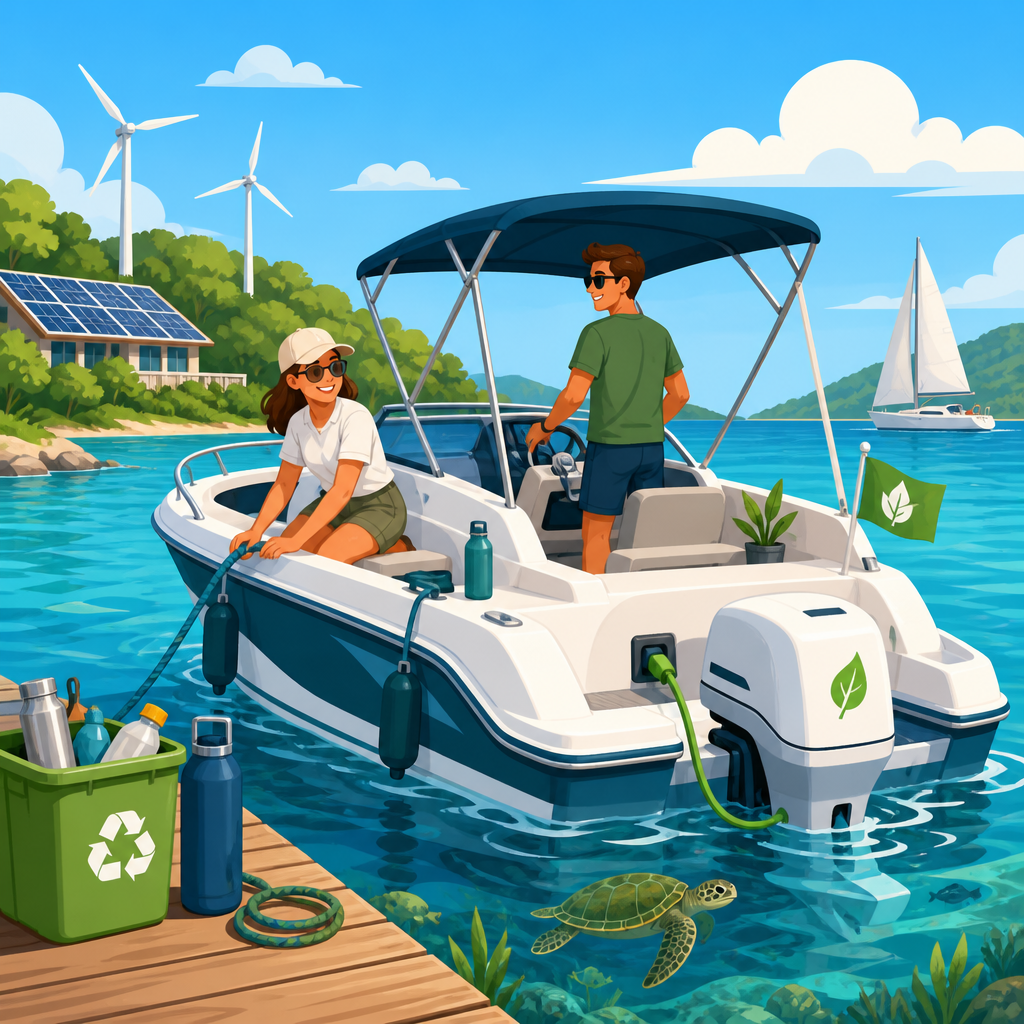

Solar-powered boats are moving from niche experiments to practical vessels, and their growth is reshaping the broader rise of eco-friendly boating. In simple terms, a solar-powered boat uses photovoltaic panels to convert sunlight into electricity, stores that energy in batteries, and feeds electric motors instead of relying only on gasoline or diesel engines. Eco-friendly boating is the larger category: it includes electric propulsion, cleaner hull materials, efficient route planning, shore-power charging, hybrid systems, and operating habits that reduce emissions, noise, and water pollution. As a hub topic within sustainable boating, solar propulsion matters because it connects every major question boat owners now ask: how to cut fuel costs, how to meet tighter environmental rules, how to protect waterways, and how to enjoy boating without the maintenance burden of combustion engines.
I have worked with marina operators, boat owners, and marine equipment suppliers long enough to see the shift clearly. Five years ago, many conversations about solar boats were speculative and centered on range anxiety. Today, buyers ask more practical questions: how many watts fit on a cabin roof, whether lithium iron phosphate batteries are worth the premium, how much regeneration a sailing catamaran can produce under way, and what charging profile works best with a modern MPPT controller. That change in buyer behavior is the strongest sign that eco-friendly boating is no longer a novelty. It is becoming a real purchasing category supported by better batteries, quieter electric drivetrains, smarter energy management, and visible consumer demand for low-impact recreation.
The growing popularity of solar-powered boats also reflects pressure from outside the boating industry. Tourism operators want cleaner guest experiences. Waterfront cities want less engine noise and fewer fuel slicks in sensitive harbors. Regulators in Europe and parts of North America are encouraging electrification through emissions rules, protected-area restrictions, and marina infrastructure grants. At the same time, solar module prices have fallen dramatically over the past decade, while battery energy density and cycle life have improved. Together, those trends make solar-assisted propulsion more realistic for ferries, canal boats, day cruisers, workboats, and tenders. Understanding why this segment is expanding helps boat owners evaluate technologies, compare costs, and identify where solar fits best within the wider movement toward sustainable boating.
Why solar-powered boats are gaining momentum
The popularity of solar-powered boats comes from a combination of economics, usability, and environmental performance. Traditional marine engines are expensive to operate and maintain. Fuel costs fluctuate, annual servicing adds up, winterization creates seasonal work, and engine hours directly affect resale value. Electric propulsion changes that cost structure. Electric motors have fewer moving parts, deliver instant torque, and require less routine maintenance than internal combustion engines. When solar energy offsets shore charging or extends time between charges, the operating case gets even stronger, especially for boats with predictable daily use profiles.
Noise reduction is another major driver. Anyone who has piloted an electric launch at dawn understands the difference immediately. Conversations become easier, wildlife disturbance drops, and passenger comfort improves. That benefit is not cosmetic. It matters for guided eco-tours, resort transfers, fishing on quiet inland waters, and urban passenger routes where noise complaints are common. Emissions reduction is equally important. A zero-emission electric boat at the point of use eliminates exhaust fumes around passengers and sensitive shorelines. It also avoids the minor but persistent fuel and oil contamination associated with combustion-powered boating. For lakes, wetlands, canals, and protected coastal areas, that is a meaningful operational advantage.
There is also a behavioral reason for growth: solar power makes electrification visible. Boat buyers may not fully understand amp-hours, charge curves, or inverter losses, but they instantly understand panels on a roof charging a battery bank in daylight. The technology feels intuitive and self-sufficient. That perceived independence matters in marinas with limited charging access and for owners who anchor frequently. While few recreational boats run on solar alone for every use case, many owners can cover house loads, refrigeration, navigation electronics, and part of propulsion demand with solar input. In real-world boating, partial coverage is often enough to transform the ownership experience.
How solar-powered boats work in real conditions
A solar-powered boat is an energy system, not just a motor with panels attached. The core components are photovoltaic panels, charge controllers, batteries, electric motors, motor controllers, and monitoring software. Most modern systems use monocrystalline panels because they offer the best efficiency per square foot, a crucial constraint on boats. A Maximum Power Point Tracking controller is standard because it extracts more usable energy from panels across changing light conditions than older PWM units. The batteries are typically lithium iron phosphate because that chemistry balances safety, cycle life, discharge depth, and weight better than lead-acid for marine use.
In practice, the boat’s daily energy budget determines whether solar is supplemental or central. A small lake launch might consume only a few kilowatt-hours on a weekend outing, making rooftop solar highly useful. A high-speed planing boat, by contrast, demands far more continuous power than available deck area can usually support. This is why the most successful solar-powered boats are displacement hulls, catamarans, canal boats, ferries with defined routes, and leisure craft that cruise efficiently at moderate speeds. Hull efficiency matters as much as electrical hardware. A slender displacement hull can travel comfortably on a fraction of the power needed by a heavier planing hull.
The table below shows why vessel type changes solar viability so dramatically.
| Boat type | Typical power demand | Solar suitability | Best use case |
|---|---|---|---|
| Small lake launch | Low | High | Short leisure trips, rentals, private lakes |
| Canal boat | Low to moderate | High | Slow cruising, liveaboard use, inland waterways |
| Passenger ferry | Moderate with fixed schedule | Medium to high | Short urban or resort routes with charging windows |
| Sailing catamaran | Low under sail, moderate under motor | High | Auxiliary propulsion, hotel loads, regeneration |
| Planing powerboat | High | Low to medium | Hybrid systems, house loads, limited low-speed use |
Energy management is where many projects succeed or fail. On installations I have reviewed, owners who monitor consumption closely nearly always report better satisfaction than those who focus only on peak motor power. Refrigeration, lighting, induction cooking, watermakers, and air conditioning can rival propulsion loads on cruising boats. Smart monitoring platforms from Victron Energy, Mastervolt, and other marine electrical brands help owners track generation, battery state of charge, and real-time draw. That visibility turns solar-powered boating from guesswork into a manageable operational system.
Environmental benefits and the limits that owners should understand
The clearest environmental advantage of solar-powered boats is the reduction of direct emissions on the water. No tailpipe emissions means no carbon monoxide around passengers, no diesel soot settling on decks, and no hydrocarbon exhaust in enclosed marinas or canals. Electric propulsion also reduces vibration and underwater noise, an issue receiving increasing attention in marine conservation. Researchers have linked vessel noise to stress and communication disruption in fish and marine mammals. While a single pleasure craft is not the only source, quieter propulsion is still a measurable improvement, particularly in heavily used inland or nearshore environments.
Water quality benefits are another strong argument. Conventional boats can release fuel residues, lubricants, and bilge contaminants into waterways through routine operation or accidental spills. Electric boats remove several of those pathways. They also reduce the need to transport and store marine fuels at sensitive sites. On protected lakes, hotel lagoons, and urban waterfronts, this lower contamination risk is often one of the main reasons authorities support electric fleets. Some destinations use electric and solar-powered boats as part of their public sustainability strategy because visitors notice the difference immediately.
Still, balanced evaluation matters. Solar-powered boats are not impact-free. Battery manufacturing has material footprints, end-of-life recycling systems are still improving, and shore electricity is only as clean as the local grid if solar input does not cover all charging. Performance limitations also remain. High-speed operation consumes energy rapidly, winter cloud cover reduces generation, and shaded moorings limit charging efficiency. A responsible buyer should see solar boating as a major reduction strategy, not a perfect environmental solution. The strongest results come when solar is paired with efficient hulls, moderate cruising speeds, quality battery management, and realistic trip planning.
Market growth, leading segments, and what buyers are choosing
Market growth in eco-friendly boating is no longer confined to one premium niche. The strongest adoption is happening in segments where routes are predictable and speed demands are modest. Canal tourism, inland rental fleets, harbor shuttle services, and resort transfers have become early leaders because operators can calculate energy use with unusual precision. In Europe, where inland waterways, short-range ferries, and environmental regulation create favorable conditions, adoption has been especially visible. The Netherlands, Norway, Germany, and parts of France have all supported electrified marine transport through policy, procurement, or local infrastructure investment.
Recreational buyers are also expanding the market. Pontoon boats, day cruisers, electric tenders, and cruising multihulls are among the most practical categories for solar integration. Owners increasingly choose solar not just for propulsion, but to run house systems with less generator time. That distinction is important because it widens the market. A buyer does not need a fully solar-propelled vessel to participate in eco-friendly boating. Adding panels, upgrading to lithium batteries, and switching hotel loads away from fossil-fuel generators can materially improve sustainability while reducing noise and maintenance.
Manufacturers are responding with better integrated designs. Instead of treating panels as awkward add-ons, builders now design hardtops, biminis, and coach roofs around solar geometry. Electric outboards from brands such as Torqeedo, ePropulsion, and Mercury’s emerging electric offerings have made smaller craft more accessible. On larger systems, integrated drives from companies like Oceanvolt and Vetus show how the sector is maturing. Buyers now expect marine-grade connectors, waterproof battery enclosures, thermal management, and app-based monitoring as standard features rather than experimental extras.
Financing and total cost of ownership are helping move decisions forward. Upfront prices remain higher than many conventional setups, but operating savings can be significant for boats with frequent use. Fleet operators tend to understand this first because they track fuel, downtime, and maintenance carefully. Private owners often see the benefit more slowly, yet once they compare engine servicing, fuel, generator repairs, and battery charging costs over several seasons, the economics become easier to justify. Resale trends are still developing, but well-executed electric and solar installations increasingly signal modernity rather than risk.
How this hub connects the rise of eco-friendly boating
Solar-powered boats sit at the center of the eco-friendly boating conversation because they connect technology, behavior, infrastructure, and policy. If you are building a complete understanding of sustainable boating, this topic naturally branches into several related areas. Electric boat motors deserve separate attention because motor type, cooling design, shaft configuration, and torque curves determine performance. Marine batteries also require deeper analysis, especially battery chemistry, charging safety, cycle life, and cold-weather behavior. Solar panel selection, MPPT tuning, and system sizing matter enough to justify their own technical guides.
Beyond hardware, the wider rise of eco-friendly boating includes marina charging infrastructure, shore power standards, hull design for efficiency, anti-fouling strategies with lower environmental impact, and route planning tools that reduce unnecessary energy use. Sustainable boating practices also include simple operational changes: slower cruising speeds, regular hull cleaning to reduce drag, lighter onboard loads, and smart anchoring habits that avoid seagrass damage. In other words, solar-powered boats are both a product category and a gateway topic. They lead boat owners toward a fuller understanding of how every onboard decision affects range, cost, comfort, and environmental impact.
For readers using this page as a hub, the practical next step is to evaluate boating style before evaluating equipment. Ask direct questions. How far do you travel on a typical day? Do you run at displacement speed or plane at high speed? Is your boat stored on a trailer, at a dock, or on a mooring? How much uninterrupted roof space is available for panels? What are your largest electrical loads beyond propulsion? The answers determine whether a fully solar-electric boat is realistic, whether a hybrid setup makes more sense, or whether solar should primarily support house systems while reducing generator dependence.
The rise of eco-friendly boating is not a passing trend. It is a structural change driven by better technology, tighter environmental expectations, and a more informed customer base. Solar-powered boats have become the most visible symbol of that change because they offer something boaters value immediately: quieter trips, simpler maintenance, lower operating emissions, and a clearer path toward energy independence on the water. If you are exploring sustainable boating, start with your actual use pattern, then compare propulsion, batteries, and solar options with that profile in mind. The smartest move is not to chase the biggest system, but to choose the most efficient, well-matched setup for the way you really boat.
Frequently Asked Questions
1. What is a solar-powered boat, and how does it work?
A solar-powered boat is a vessel that uses sunlight as a primary or supplemental energy source for propulsion and onboard electrical systems. In practical terms, photovoltaic panels mounted on the boat capture sunlight and convert it into electricity. That electricity is then routed through a charge controller to protect and regulate the flow of power into a battery bank, where energy is stored for later use. From there, the stored electricity powers an electric motor that turns the propeller, moving the boat through the water without depending entirely on gasoline or diesel.
What makes modern solar-powered boats especially important is that they are no longer just experimental concepts. Advances in solar panel efficiency, lithium battery technology, power management systems, and electric motors have made them increasingly practical for real-world use. Some vessels run primarily on solar energy in ideal conditions, while others use solar as part of a hybrid system that extends range, reduces fuel use, and lowers emissions. This flexible setup is one reason solar propulsion is gaining traction within the broader eco-friendly boating movement.
It is also helpful to distinguish solar-powered boats from the larger category of sustainable marine design. Eco-friendly boating includes not only solar panels, but also electric propulsion, cleaner materials, efficient hull shapes, improved route planning, shore-power charging, and low-impact operating practices. Solar power fits into this wider shift by giving boat owners a cleaner way to generate energy on the water, reducing noise, fuel dependency, and environmental impact at the same time.
2. Why are solar-powered boats becoming more popular now?
The growing popularity of solar-powered boats is being driven by a combination of technology improvements, environmental awareness, and changing consumer expectations. For years, solar boats were seen as limited to small-scale demonstrations or specialty projects. Today, however, better battery storage, more efficient solar panels, and stronger electric propulsion systems have made these boats far more usable for leisure, tourism, inland transport, and certain commercial applications. In other words, the technology has matured enough that people can now view solar boating as practical rather than purely experimental.
Another major factor is the broader rise of eco-friendly boating. Boat owners, manufacturers, and marina operators are under increasing pressure to reduce emissions, lower fuel consumption, and minimize water and noise pollution. Solar-powered boats align naturally with those goals. They offer quiet operation, reduced maintenance compared with combustion engines, and the ability to produce some of their own energy while underway or at anchor. For many buyers, that combination of sustainability and convenience is extremely appealing.
Economic considerations are also helping adoption. While upfront costs can still be higher than those of traditional boats, solar-powered systems can reduce long-term spending on fuel and engine maintenance. Electric motors generally have fewer moving parts than internal combustion engines, which can translate into lower servicing needs over time. As solar and battery prices continue to improve, more consumers and businesses are seeing solar propulsion as a smart long-term investment rather than a niche luxury.
Finally, public perception has changed. Sustainability is no longer a fringe concern in marine recreation and transport. As more people become comfortable with electric vehicles on land, they are also more open to electric and solar solutions on the water. That cultural shift, combined with visible innovation from boatbuilders, is helping move solar-powered boats into the mainstream.
3. What are the main benefits of solar-powered boats compared with traditional fuel-powered vessels?
The most obvious benefit is environmental performance. Solar-powered boats can significantly reduce or even eliminate direct exhaust emissions during operation, depending on the system design. That makes them especially attractive in lakes, rivers, protected coastal areas, and other environments where water quality and air quality are priorities. They also reduce the risk of fuel spills and lessen reliance on fossil fuels, which supports the larger transition toward cleaner marine transportation.
Another major advantage is quiet, smooth operation. Electric motors are much quieter than gasoline or diesel engines, which improves the onboard experience for passengers and reduces disturbance to wildlife and nearby boaters. This makes solar-electric propulsion particularly well suited for sightseeing boats, leisure cruising, fishing in sensitive areas, and hospitality-oriented marine experiences where comfort matters.
Lower operating and maintenance demands are also part of the appeal. Traditional marine engines require ongoing fuel purchases, oil changes, filter replacements, and more complex mechanical upkeep. Solar-powered boats, especially fully electric models, often have simpler drivetrains and fewer wear-prone components. Although batteries and electrical systems still require monitoring and eventual replacement, many owners appreciate the reduced routine maintenance and more predictable operating costs.
There is also an energy independence benefit. A boat equipped with solar panels can generate some of its own power throughout the day, helping support propulsion, lighting, electronics, refrigeration, and other onboard systems. This can be especially valuable for longer outings, anchoring, or off-grid cruising where access to charging infrastructure may be limited. Even when solar does not fully power the boat on its own, it can extend battery life and reduce the frequency of shore charging or generator use.
Just as importantly, solar-powered boats represent progress in marine design. They encourage efficiency across the entire vessel, from hull shape to weight distribution to energy management. In that sense, their benefits go beyond propulsion alone and contribute to a smarter, more sustainable boating ecosystem overall.
4. Are solar-powered boats practical for everyday recreational or commercial use?
Yes, in many cases they are increasingly practical, but suitability depends on how the boat will be used. For recreational boating on lakes, canals, calm coastal waters, and short-to-moderate day trips, solar-powered boats can be an excellent fit. They are particularly well matched to cruising, sightseeing, rental fleets, pontoon-style leisure boats, and other uses where steady efficiency is more important than high speed. For these applications, solar-electric systems can deliver a reliable, enjoyable, and low-emission experience.
Commercial use is also expanding. Tour boats, water taxis on short routes, research vessels, marina service craft, and hospitality-focused operations are among the most promising use cases. Operators in these segments often benefit from predictable routes, manageable daily distances, and the marketing value of a cleaner, quieter passenger experience. In tourism especially, solar-powered vessels can become part of the attraction, signaling innovation and environmental responsibility.
That said, practicality still depends on energy demands. High-speed boating, heavy loads, rough offshore conditions, and long-distance operation without charging support can be more challenging for fully solar-reliant systems. Solar panels have limited surface area, and weather conditions affect energy generation. For that reason, many practical boats today use solar as part of a broader electric or hybrid setup rather than as the sole power source. This allows operators to gain efficiency and sustainability benefits without sacrificing reliability.
It is best to think of solar boating not as a one-size-fits-all replacement for every vessel, but as a rapidly improving solution that already works very well in the right contexts. As battery density, charging networks, and solar integration continue to improve, the range of practical applications is expected to grow even further.
5. What challenges are still limiting wider adoption of solar-powered boats?
Despite the momentum, several challenges remain. The first is energy density. Sunlight is free and clean, but the amount of solar energy a boat can capture depends on panel size, orientation, weather conditions, and available deck or roof space. Boats have limited surface area, which means solar alone may not always generate enough power for larger vessels or more demanding propulsion needs. This is one reason why efficiency-focused designs are so important in the solar boating sector.
Battery limitations are another important factor. Although marine battery technology has advanced significantly, batteries still add cost, weight, and complexity. They must be carefully sized for the vessel’s intended use, and over time they will degrade and require replacement. For buyers comparing options, the upfront investment in solar panels, batteries, electric motors, and integrated control systems can be a barrier, even if long-term operating costs are favorable.
Infrastructure and market familiarity also play a role. While electric charging access at marinas is improving, it is not yet universal, especially in smaller boating regions. In addition, many consumers and commercial operators are still learning what solar-electric systems can realistically do. Misunderstandings about range, speed, charging needs, and performance can slow adoption, particularly among buyers who are used to the convenience and familiarity of fuel-powered boats.
There are also design and manufacturing challenges. Solar-powered boats perform best when the entire vessel is engineered around efficiency, including hull shape, weight reduction, electrical architecture, and onboard energy use. Retrofitting older designs can work, but purpose-built systems often perform better. That means manufacturers need to invest in new engineering approaches, and the industry as a whole must continue developing standards, training, and consumer education.
Even with these hurdles, the long-term outlook remains strong. The same concerns that once limited electric cars—cost, infrastructure, and range anxiety—have gradually improved through innovation and scale. The marine sector is following a similar path. As technology matures and sustainable boating becomes a larger priority, solar-powered boats are likely to become more accessible, more capable, and more widely adopted across both recreational and commercial markets.