Old boat oil is one of the most common waste streams generated during routine marine maintenance, and disposing of it correctly is essential for protecting waterways, staying compliant with environmental rules, and extending the life of your vessel. In practical terms, “old boat oil” includes used engine oil, gear lube, hydraulic fluid, oily bilge residues, and oil-soaked absorbent pads removed during service. Many owners think the problem ends when the oil comes out of the engine, but responsible disposal begins the moment the drain plug is loosened. If waste oil is spilled on the dock, mixed with other fluids, or tossed into household trash, it can contaminate soil, storm drains, marinas, and fisheries. A single quart of oil can create a visible sheen across a large surface area of water, and even small releases trigger cleanup costs and environmental harm.
I have handled seasonal oil changes for outboards, stern drives, and diesel auxiliaries in busy marinas, and the difference between a clean, planned job and a careless one is dramatic. The best approach is not just disposal; it is a complete eco-friendly boat maintenance system that reduces waste at every step. That includes choosing the right oil change equipment, preventing bilge contamination, storing used fluids safely, and delivering them to approved collection points. It also means understanding that used oil is usually recyclable. Re-refining can turn waste lubricant back into base oil for new products, which is far better than dumping or burning it improperly. For boat owners focused on eco-friendly and sustainable boating, mastering oil disposal is a core habit, not a minor housekeeping task.
This hub article covers the full scope of eco-friendly boat maintenance and repairs through the lens of oil management. You will learn how to dispose of old boat oil in an eco-friendly way, what supplies to use, where to take waste fluids, how to avoid common mistakes, and how to make related maintenance tasks cleaner and safer. Just as important, this page connects the broader practices that define sustainable boat care: leak prevention, filter handling, bilge protection, parts cleaning, and repair decisions that lower environmental impact over the long term. If you maintain your own boat or manage service work for others, these principles will help you protect the water you enjoy while keeping your engine room, trailer area, and marina slip in better condition.
What old boat oil includes and why proper disposal matters
Used boat oil is not one single material. It often includes crankcase oil from gasoline or diesel engines, lower unit gear oil, transmission fluid, hydraulic steering fluid, generator oil, and the oily residue captured in bilges and drain pans. Each fluid may have different additives, but all should be treated as controlled waste once removed from equipment. During normal engine operation, oil picks up combustion byproducts, microscopic metal particles, fuel dilution, water, acids, and degraded additives. That contamination is exactly why it should never be poured onto the ground, into the water, into septic systems, or into regular trash bins. In most regions, used oil recycling programs accept engine oil and sometimes related lubricants, but acceptance rules vary, so separation matters.
The environmental risk is straightforward. Oil interferes with oxygen exchange at the water surface, harms birds and marine mammals by coating feathers and fur, and introduces toxic compounds into sediments and food webs. In marinas, even small spills draw complaints quickly because sheens travel fast and are highly visible. Beyond the environmental impact, improper disposal can violate federal, state, provincial, or local rules. In the United States, the Environmental Protection Agency regulates used oil management, and many marinas also follow spill prevention requirements under Clean Water Act obligations. Harbor masters, boatyards, and service yards typically require owners to use absorbents and approved waste containers during maintenance for this reason.
From a maintenance perspective, careful oil handling also reveals mechanical problems earlier. Milky oil may indicate water intrusion. Metal glitter in drained lubricant can point to bearing or gear wear. Fuel-thinned oil can suggest injector, carburetion, or ring issues. When owners rush disposal, they often miss these clues. Sustainable maintenance is not only about waste reduction; it is about using each service interval to diagnose the boat responsibly and prevent larger failures that create more waste, expense, and emissions later.
How to dispose of old boat oil in an eco-friendly way
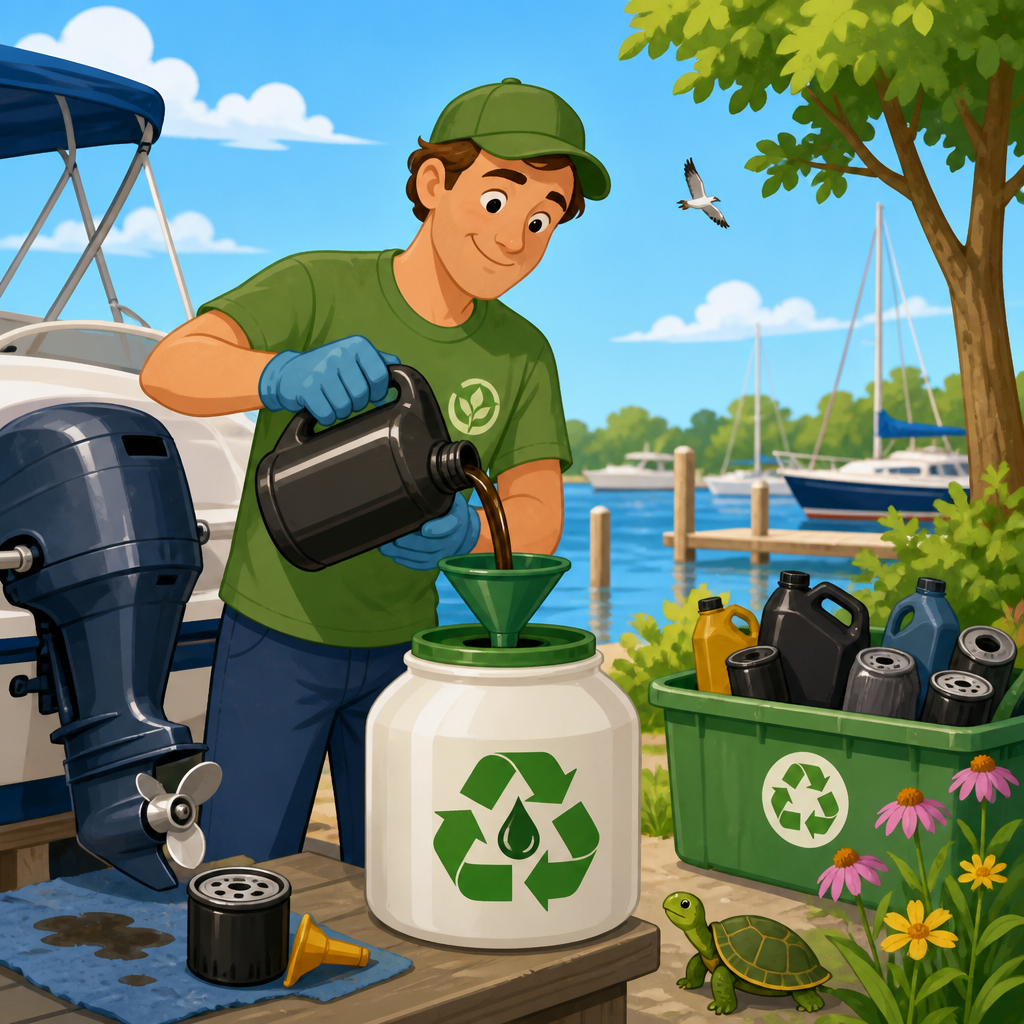
The most effective method is simple: capture every drop cleanly, keep waste streams separated, store them in sealed labeled containers, and deliver them promptly to an approved recycling or hazardous waste collection site. Start with a warm engine so the oil flows well, but not so hot that it creates a burn risk. Shut the engine down, secure absorbent pads under the service area, and use an extraction pump or drain pan sized for the oil capacity. For inboard engines and tight bilges, a manual or electric oil extractor usually prevents spills better than trying to maneuver an open pan. For outboards, keep the engine vertical and use a pan with a splash guard.
Transfer used oil immediately into a sturdy container with a screw cap. The best containers are the original oil bottles, purpose-built used-oil jugs, or high-density polyethylene containers designed for automotive fluids. Label each one clearly with the contents and date. Do not mix oil with gasoline, solvent, antifreeze, brake cleaner, paint, or bilge water. Once oil is contaminated with the wrong material, many recycling centers will reject it, turning a recyclable fluid into a more difficult waste problem. Keep the container upright in a secondary tray until transport, especially if it will ride in a tow vehicle or cockpit locker.
Next, take the oil to a verified collection point. Common options include marina recycling stations, municipal household hazardous waste facilities, county transfer stations, auto parts stores that accept used oil, and service shops with public collection tanks. Call first and ask three direct questions: Do you accept marine engine oil, do you accept gear lube or hydraulic fluid, and do you accept used oil filters? That phone call saves wasted trips and prevents improper drop-offs. If your marina offers waste oil tanks, ask whether filters must be drained and bagged separately. Many facilities require filters to be hot-drained for at least twelve hours before recycling the metal canister.
| Waste item | Best handling method | Common approved destination |
|---|---|---|
| Used engine oil | Collect in sealed labeled jug, keep uncontaminated | Marina tank, auto parts store, hazardous waste site |
| Gear oil or hydraulic fluid | Store separately unless facility confirms mixing is allowed | Hazardous waste site or marina collection program |
| Oil filter | Drain thoroughly, bag to prevent drips | Filter recycling or hazardous waste facility |
| Oil-soaked absorbent pads | Seal in approved bag or container | Facility following local oily waste rules |
| Oily bilge water | Pump into approved container, never overboard | Bilge water treatment or hazardous waste collection |
This process works because it addresses the whole chain: prevention, containment, transport, and recycling. Done correctly, it turns an easy-to-mishandle pollutant into a manageable maintenance output.
Tools and habits that make eco-friendly oil changes easier
Eco-friendly boat maintenance depends heavily on setup. The right tools reduce spills more than any cleanup product can. I recommend an oil extractor with a shutoff valve, a wide low-profile drain pan, nitrile gloves, absorbent socks, hydrophobic pads that repel water and absorb oil, a filter wrench sized to the engine, funnel caps, and dedicated fluid jugs with permanent labels. On trailer boats, wheel chocks and level positioning matter because a crooked hull can send oil to the wrong corner of the bilge or pan. On sailboats and cabin cruisers, good lighting and a drop cloth under the engine save a lot of mess.
Timing matters too. Perform oil changes when you are not rushed by a launch schedule, fuel dock traffic, or weather. Most accidental spills I have seen happened at the end of a long day when owners wanted to “just finish quickly.” Build a checklist: warm engine, shut off battery switch if appropriate, close seacocks if the procedure requires it, lay absorbents, loosen filter slowly, inspect drained oil, transfer to jug, wipe all fittings, and log the service. A written maintenance log may seem unrelated to sustainability, but it helps you avoid premature fluid changes on one hand and neglected service on the other. Both extremes create waste.
One more habit pays off: stage a spill kit before you start. A basic marina-ready kit contains absorbent pads, an absorbent boom, disposable bags, gloves, and a small dustpan or scraper for saturated material. If even a few ounces hit the bilge, remove them with pads immediately. Do not use dish soap or degreasers to disperse oil into the water. That only hides the sheen and can worsen the violation by sending contamination through the marina basin.
Related sustainable maintenance practices every boat owner should follow
Oil disposal is the hub, but eco-friendly boat maintenance and repairs extend well beyond one fluid change. Start with leak prevention. Replace brittle oil lines, worn drain gaskets, cracked fill caps, and seeping valve cover gaskets before they foul the bilge. Fit an absorbent pad under the engine where drips tend to land, and check it regularly. Bilges should stay as dry as possible because oily water is much harder to manage than separated oil. If your automatic bilge pump discharges a sheen, the problem began long before the pump cycled.
Filter handling deserves attention. Spin-on oil filters hold more residual oil than many owners expect. Puncturing and draining them may be allowed in some areas and restricted in others, so follow local rules and facility instructions. Fuel filters and water-separating elements can contain both hydrocarbons and contaminated fuel, making them a separate disposal stream. Keep them out of general trash unless your local authority explicitly permits disposal after draining. The same caution applies to oily rags, sorbents, and contaminated paper towels from engine cleaning.
Parts cleaning is another overlooked area. Solvent tubs and aerosol brake cleaners create hazardous waste quickly. Water-based parts washers, citrus-based degreasers approved for marine use, reusable shop towels managed through a laundering service, and targeted hand cleaning often reduce waste significantly. Bottom line: the cleanest repair is the one that controls residues at the source. When replacing a hose, changing a seal, or servicing a gearbox, prepare containment first, then remove the failed part. Sustainable repairs are usually more organized repairs.
Finally, choose durable components and proper intervals. Cheap filters that collapse, bargain gaskets that seep, and low-grade hoses that harden early create repeat waste. Using manufacturer-specified lubricants and torque values is not just good mechanics; it minimizes rework and accidental releases.
Where to take used oil, filters, and other marine waste
The best disposal location depends on where you boat. Full-service marinas often maintain used oil tanks and separate containers for filters and absorbents because their tenants generate predictable waste volumes. Municipal household hazardous waste facilities are usually the fallback option for trailer boat owners and people who service their boats at home. Some automotive chains accept used motor oil from the public, but marine-specific fluids such as lower unit gear oil or oily bilge mixtures may not be accepted, which is why verifying ahead of time matters.
If you belong to a yacht club, dry stack, or harbor district, ask whether they publish environmental guidelines. Many do, and the better programs list exactly where to take oil, batteries, solvents, antifreeze, fluorescent bulbs, and expired flares. Keep those contacts in your maintenance binder or phone notes. I also advise photographing posted recycling rules at the marina because requirements change seasonally and staff turnover can create confusion.
For boaters in remote areas, plan disposal before you begin maintenance. Transporting used oil long distances in open pickup beds or unsecured lockers increases spill risk. Use sealed containers inside a secondary tote, avoid overfilling, and never leave jugs in direct sun where expansion can force leaks. If no local facility accepts a specific marine waste stream, contact your county environmental department or state boating agency for guidance instead of improvising.
Common mistakes, tradeoffs, and the smartest next steps
The most common mistake is mixing fluids. One cup of gasoline in a used-oil jug can cause an entire container to be rejected. The second mistake is assuming bilge cleaner solves oily water disposal. It does not. If oil entered the bilge, absorb it physically and dispose of the absorbents properly. The third mistake is forgetting that old oil containers, funnels, and drip pans themselves become contaminated and should be managed carefully. Reuse dedicated tools when possible, but clean them in a controlled way, not at the dock with a hose.
There are tradeoffs in product choices too. Biodegradable lubricants can be useful in certain hydraulic and stern tube applications, but “biodegradable” does not mean safe to discharge, and compatibility with seals, operating temperatures, and manufacturer approvals must come first. Synthetic oils often last longer and protect better under marine loads, which can reduce waste volume over time, but they still require the same careful disposal as conventional oil. Sustainability in boating is rarely about one miracle product. It comes from disciplined maintenance, informed material choices, and proper end-of-life handling.
The key takeaway is simple: eco-friendly boat maintenance begins with prevention and ends with verified recycling. Capture oil cleanly, separate every waste stream, use approved collection sites, and treat filters, absorbents, and bilge residues with the same care as the oil itself. That approach protects water quality, keeps you aligned with marina and environmental rules, and usually results in a cleaner, more reliable engine room. If you want your boating habits to match your values, start with your next oil change: gather the right supplies, call your local collection site, and build a repeatable disposal routine you can trust every season.
Frequently Asked Questions
What counts as “old boat oil,” and why does it need special disposal?
Old boat oil includes far more than just drained engine oil. In a marine setting, it can refer to used engine oil, lower-unit or gear lube, hydraulic fluid, oily bilge water, oil filters, and even oil-soaked absorbent pads, rags, and sorbents removed during maintenance or spill cleanup. These materials often contain contaminants such as metal particles, fuel residue, combustion byproducts, water, and chemical additives that make them unsuitable for regular trash, storm drains, or dumping on land. Because boats operate so close to sensitive waterways, even a small amount of mishandled oil can spread quickly across the surface of the water, harm fish and birds, damage habitat, and create a long-lasting pollution problem.
Special disposal is necessary because used oil is both a regulated waste stream and a recyclable resource. When handled correctly, much of it can be collected, processed, and re-refined or used in approved recovery systems. When handled incorrectly, it can trigger environmental penalties, create fire and slip hazards, and contaminate soil, groundwater, marina basins, and municipal systems. The most eco-friendly approach starts with identifying each waste type correctly, keeping different fluids separated when possible, and sending them to the right recycling or hazardous waste collection program instead of treating everything as ordinary garbage.
Where can I dispose of used boat oil and related marine maintenance waste safely?
The best place to dispose of used boat oil is at an approved collection point that accepts marine or automotive waste oil. Many marinas, boatyards, municipal recycling centers, transfer stations, household hazardous waste programs, and some auto parts stores or service shops accept used oil for recycling. In many areas, there are also dedicated used-oil tanks or collection events for boaters. If you are disposing of more than just engine oil, such as oily bilge absorbents, used filters, or hydraulic fluid, it is important to confirm ahead of time what that facility accepts, because acceptance policies vary widely by location and waste type.
A smart process is to call before you go and ask specific questions: Do you accept used engine oil only, or also gear lube and hydraulic oil? Can you take oil filters if they have been properly drained? What about oil-soaked pads, contaminated rags, or bilge waste? Are there quantity limits, container requirements, or fees? This extra step prevents rejected loads and helps ensure the material goes into a proper recycling or disposal stream. For boaters who store their vessel at a marina, the marina office is often the first and best source of local guidance, since many facilities either maintain on-site collection or can direct owners to approved nearby programs.
Can I mix old boat oil with other liquids like fuel, antifreeze, or bilge water before disposal?
No. Mixing old boat oil with other liquids is one of the most common and costly disposal mistakes. Used oil should be kept separate from gasoline, diesel, solvents, antifreeze, cleaning chemicals, and excessive water whenever possible. Once oil is contaminated with the wrong materials, it may no longer qualify for standard recycling and can instead become a more expensive and more tightly regulated hazardous waste. That means fewer disposal options, higher handling costs, and greater environmental risk if there is a leak or spill. In practical terms, separating fluids at the time of maintenance is one of the easiest ways to make eco-friendly disposal simpler and more effective.
Bilge contents deserve special attention. Oily bilge water is not the same as clean used oil, and it should never be pumped overboard if it contains petroleum contamination. Instead, use absorbent pads to remove visible oil, collect contaminated materials in approved containers or bags as required by your local facility, and take them to a disposal or hazardous waste site that accepts oily marine waste. If your boat generates recurring oily bilge residue, address the source as well, such as engine leaks, overfilled systems, or loose fittings. Preventing contamination upstream reduces the amount of waste you generate and makes every future oil change more environmentally responsible.
How should I store and transport old boat oil before taking it to a recycling or disposal facility?
Store old boat oil in a clean, sturdy, leak-proof container with a tight-fitting lid, ideally the original oil container or a purpose-made fluid transport jug. Label the container clearly so there is no confusion about what is inside, and never use open buckets, food containers, or damaged jugs that could split, tip, or be mistaken for something else. Keep containers upright in a cool, dry, well-ventilated area away from direct sunlight, flames, sparks, and foot traffic. If you are collecting multiple waste streams, such as used engine oil, gear lube, and oily absorbents, store them separately unless your local disposal program specifically says they can be combined.
For transport, place the container upright in a secondary tray, bin, or lined box in your vehicle to catch any drips. Secure it so it cannot roll over during braking or turns. Keep oily pads, filters, and absorbents sealed in approved bags or containers, and drain oil filters as required by local rules before transport. It is also a good idea to carry basic spill-response items such as absorbent pads and gloves in case of accidental leakage. This may sound simple, but careful storage and transportation are a major part of eco-friendly disposal. They prevent avoidable spills at the dock, on the road, and at the drop-off site, and they show that the entire waste-handling process is being managed responsibly from start to finish.
What are the most eco-friendly best practices for handling boat oil during routine maintenance?
The most eco-friendly disposal strategy starts before the oil ever becomes waste. Use drip pans during oil changes, keep absorbent pads under filters and drain points, and avoid overfilling engines, gear cases, and hydraulic reservoirs. Inspect hoses, seals, gaskets, and fittings regularly so small leaks do not turn into chronic bilge contamination. If your boat has an oil extraction system, make sure it is working properly and use it carefully to reduce spills. Keeping waste streams clean and contained at the source makes recycling easier and reduces the chance that oil ends up in the water, in the marina yard, or mixed with other materials that complicate disposal.
It also helps to create a simple maintenance routine. Keep clearly marked containers onboard or in your workshop for used oil and oil-contaminated absorbents, maintain a log of what fluids were changed, and dispose of waste promptly instead of allowing containers to accumulate. Choose reusable spill-prevention tools where appropriate, but replace saturated absorbents and worn components before they fail. Finally, follow all marina rules and local, state, and federal disposal requirements, because compliance is part of environmental stewardship. Eco-friendly boat ownership is not just about getting rid of old oil at the end; it is about minimizing waste, preventing releases, and making sure every drop removed during service is managed in a way that protects waterways and supports responsible recycling.