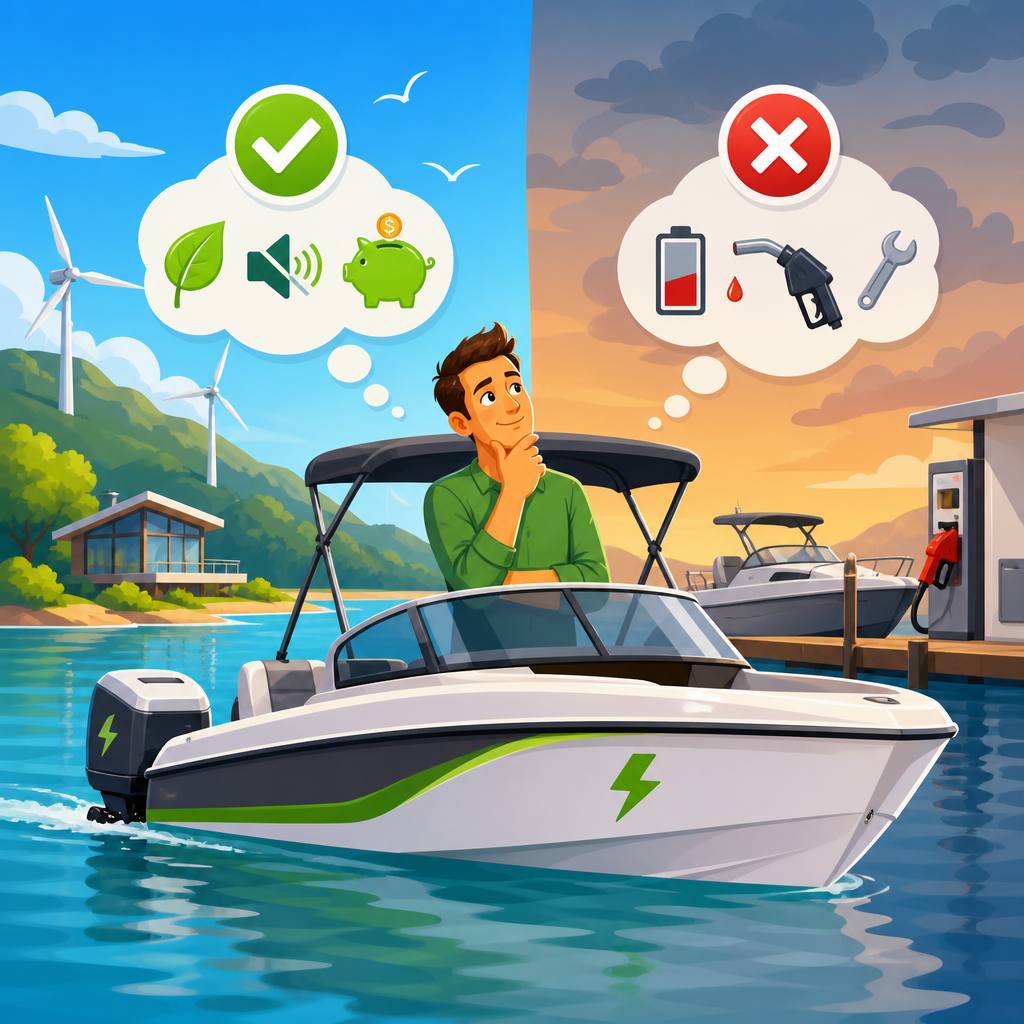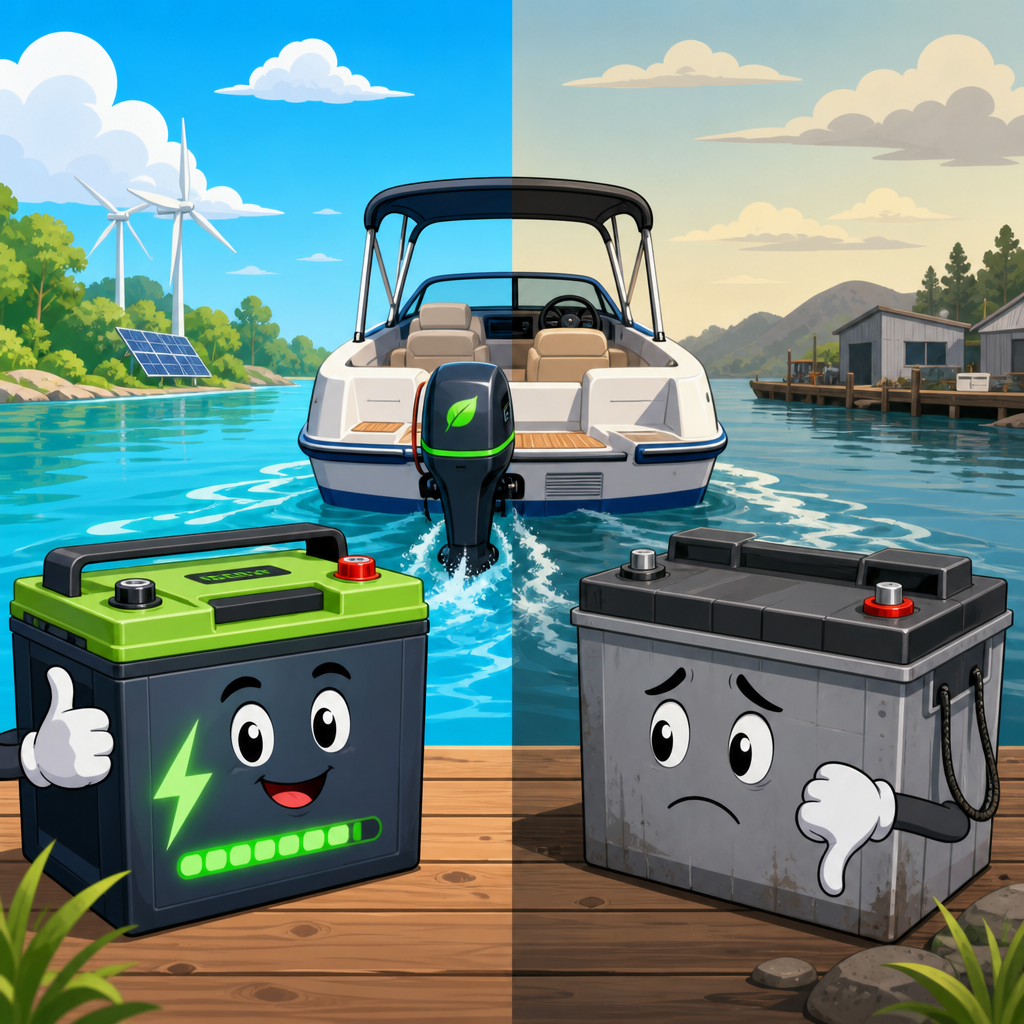
Electric boats depend on one decision more than any other: the battery bank. When owners compare lithium vs. lead-acid batteries for electric boats, they are really comparing range, charging speed, maintenance, safety, total cost, and how practical clean propulsion will feel on the water. I have helped spec battery systems for small electric launches, solar-assisted pontoons, and retrofit sailboats, and the pattern is consistent: the battery chemistry shapes the entire ownership experience. For a sub-pillar on electric and solar-powered boats, this comparison is the foundation because every later choice—motor size, solar array, charger, inverter, wiring, and cruising profile—flows from battery capability.
In plain terms, lead-acid batteries store energy using lead plates and sulfuric acid. Marine versions include flooded, AGM, and gel formats. Lithium batteries for boats usually means lithium iron phosphate, often written as LiFePO4, a chemistry favored for marine use because it is more thermally stable than nickel-manganese-cobalt cells used in some electric cars. Key terms matter. Capacity is measured in amp-hours or kilowatt-hours. Depth of discharge describes how much of that capacity can be used without shortening life. Cycle life estimates how many full charge-and-discharge cycles a battery can deliver before its capacity drops materially, commonly to 80 percent of original capacity.
This matters because electric propulsion imposes sustained loads that expose battery weaknesses quickly. A trolling motor on a fishing skiff may draw modest power, but an electric outboard pushing a displacement hull for several hours can demand continuous current. Solar-powered boats complicate the picture further. Solar panels produce energy gradually, so a battery must accept partial charging efficiently and hold usable energy overnight. The wrong battery chemistry can leave a boat heavy, under-ranged, slow to recharge, and expensive to maintain. The right one can make silent cruising realistic, especially for inland lakes, harbor tenders, canal boats, day cruisers, and auxiliary sailboat applications.
This hub article covers the full decision framework for electric and solar-powered boats. It explains performance differences, charging behavior, weight and space implications, safety and installation needs, cost over time, and where each chemistry still makes sense. It also sets context for related topics such as electric outboards, solar charging design, battery monitoring, shore-power integration, and sustainable boating upgrades. If you are planning a new electric boat, converting a small craft, or building a solar-assisted system, understanding lithium versus lead-acid is the clearest starting point.
Performance and usable energy on the water
The biggest practical difference between lithium and lead-acid batteries is usable energy. A lead-acid battery should usually be discharged only to about 50 percent if you want reasonable life. Some owners go deeper, but cycle life falls fast. A lithium iron phosphate battery can commonly be used to 80 or 90 percent depth of discharge with far less penalty. That means two banks with the same nameplate capacity do not deliver the same real-world range. A 10 kWh lead-acid bank may provide about 5 kWh of routine usable energy, while a 10 kWh LiFePO4 bank may provide 8 to 9 kWh.
Voltage behavior matters just as much. Lead-acid voltage sags progressively under load and drops further as state of charge declines. Electric motors respond to that sag with reduced performance or earlier low-voltage cutback, depending on controller design. Lithium holds a flatter voltage curve, so thrust feels more consistent throughout the discharge cycle. On water, that translates into steadier cruising speed and more predictable remaining range. It also simplifies power planning for accessories such as navigation electronics, refrigerators, bilge pumps, and inverter loads.
Weight is impossible to ignore. Lead-acid banks are heavy. A common deep-cycle AGM battery can weigh around 60 to 70 pounds for roughly 1.2 to 1.5 kWh of nominal energy, much of which is not practically usable. LiFePO4 often delivers similar or greater usable energy at a fraction of the mass. In small boats, saving even 150 to 300 pounds changes trim, acceleration, and draft. In displacement hulls, excess battery weight can increase wetted surface and cut efficiency. In planing hulls, weight can determine whether electric propulsion feels merely adequate or genuinely enjoyable.
For solar-powered boats, charging efficiency is another decisive factor. Lead-acid charging becomes increasingly inefficient as batteries approach full state of charge, and absorption stages can take hours. Lithium chemistry is much more efficient, often above 95 percent in practical use, and it can accept high current until nearly full. That means more of the energy harvested by panels actually ends up available for propulsion. It also means less generator or shore-power time for hybrid setups. For boaters trying to maximize renewable energy, lithium aligns better with the stop-and-go nature of solar charging.
| Factor | Lead-Acid Marine Batteries | Lithium Iron Phosphate Marine Batteries |
|---|---|---|
| Usable depth of discharge | About 50% | About 80% to 90% |
| Voltage under load | Drops steadily | Remains comparatively flat |
| Cycle life | Often 300 to 700 cycles | Often 2,000 to 5,000+ cycles |
| Charge acceptance | Slows markedly near full | High until nearly full |
| Weight per usable kWh | High | Low |
| Maintenance | Flooded types require attention | Minimal routine maintenance |
Charging systems, solar integration, and daily operating patterns
Battery choice cannot be separated from the charging architecture. In electric boats, the charging system may include shore power chargers, solar charge controllers, alternator inputs on hybrid sailboats, DC-DC chargers, and regenerative sources on a few niche drives. Lead-acid batteries are more forgiving of legacy charging equipment because many boats were built around them. However, “forgiving” does not mean “optimized.” Incorrect charging profiles shorten battery life either way. Lithium systems need chargers and controllers with suitable voltage setpoints and, in many cases, communication with the battery management system.
Solar integration strongly favors lithium. Maximum power point tracking controllers harvest panel output more effectively than PWM units, but even with a good MPPT controller, lead-acid batteries can bottleneck charging because acceptance current falls during absorption. On a sunny day, this can leave panels underutilized precisely when free energy is abundant. A lithium bank absorbs midday solar production much more readily. On one solar-assisted harbor launch I worked on, replacing AGM with LiFePO4 cut shore charging frequency dramatically because the battery could capture short, high-output solar windows that the AGM bank largely wasted.
Daily usage pattern should guide chemistry selection. If the boat is used occasionally for short outings and stored with dependable shore power, lead-acid may still be serviceable. If the boat runs frequent cycles, returns with a low state of charge, or relies on solar as a meaningful energy source, lithium becomes far more practical. Electric rental fleets have validated this repeatedly. Operators value quick turnaround, predictable range, and reduced maintenance labor. Those economics mirror private ownership when the boat is used often enough.
Cold-weather charging is one of the few areas where lithium requires special planning. Standard LiFePO4 batteries should not be charged below freezing unless they include internal heating or controlled low-temperature charge protection. Quality marine batteries from suppliers such as Victron Energy, Mastervolt, Battle Born, RELiON, and Epoch often address this through integrated battery management systems or system-level controls. Lead-acid batteries also lose performance in cold conditions, but they are less constrained during charging. In northern climates, winter storage and shoulder-season boating deserve explicit design attention.
Safety, installation standards, and maintenance demands
Safety discussions about marine batteries often suffer from confusion between lithium chemistries. For electric boats, LiFePO4 is the relevant comparison, not high-energy lithium cobalt variants associated with consumer electronics incidents. LiFePO4 is inherently more stable, but that does not make installation casual. A proper marine system needs a battery management system that monitors cell voltage, temperature, balancing, and overcurrent conditions. It also needs correctly sized fuses, disconnects, cable terminations, and charger settings. The American Boat and Yacht Council provides the benchmark most serious installers follow, especially standards affecting DC systems and lithium battery integration.
Lead-acid brings its own safety burdens. Flooded batteries can vent hydrogen during charging and require ventilation. Acid spills and corrosion remain real concerns, especially in rough water or neglected compartments. Terminal corrosion increases resistance and heat. AGM and gel batteries reduce some of these risks, but they are not maintenance-free in the broader system sense; owners still need to watch state of charge, equalization rules where applicable, and chronic undercharging. Sulfation is the silent killer of lead-acid banks in lightly used boats.
Maintenance is where owner experience diverges sharply. Lithium batteries generally need little routine attention beyond software checks, clean terminals, and verifying charger settings after any equipment change. Battery monitors such as the Victron SmartShunt or BMV series make state-of-charge tracking much more reliable than voltage-based guesswork. Lead-acid systems demand more discipline. With flooded batteries, electrolyte levels must be checked, distilled water added, and corrosion managed. With all lead-acid types, partial-state-of-charge operation degrades life, so regular full recharging is essential. Many boaters underestimate how hard that is to achieve in real marinas and mooring fields.
Installation space also affects safety and serviceability. Because lithium banks are smaller and lighter for the same usable energy, they can improve access for wiring, cooling, and inspection. Still, batteries should never be crammed into inaccessible voids simply because they fit. Good installations consider cable length, support structure, ingress protection, isolation from fuel systems, and emergency shutoff access. The cleanest electric boat systems are not just efficient; they are inspectable, labeled, and built so a technician can troubleshoot them without dismantling the vessel.
Total cost of ownership and where lead-acid still fits
Upfront price is the main reason lead-acid remains in the conversation. A lead-acid house or propulsion bank can cost much less initially than a lithium bank of similar nominal capacity. For buyers focused only on launch cost, that difference is persuasive. But on boats, total cost of ownership tells the more useful story. When you compare usable kilowatt-hours, cycle life, charging losses, replacement frequency, and labor, lithium often wins decisively over a multi-year horizon. This is especially true for propulsion banks, where deep cycling is routine rather than occasional.
A simple example illustrates the economics. Suppose a boat needs roughly 8 kWh of usable energy for a normal day. A lead-acid bank may require around 16 kWh nominal capacity to avoid excessive depth of discharge, plus the boat must carry the extra weight. A LiFePO4 bank might need only 9 to 10 kWh nominal. If the lead-acid bank lasts 400 to 600 meaningful cycles and the lithium bank lasts 3,000 cycles, replacement timing shifts from every few seasons to many years, depending on use. Add reduced shore-power losses and less maintenance, and the cost gap narrows fast.
That said, lead-acid still fits some electric and solar-powered boating scenarios. It can make sense for very small boats with low-power trolling applications, for owners with limited budgets who use the boat infrequently, or for temporary retrofit projects where the rest of the electrical system is not yet ready for lithium integration. AGM batteries are also familiar to many service yards, which can simplify support in remote areas. If the mission profile is light duty, shore charging is easy, and extra weight is not a major penalty, lead-acid can still be workable.
Most serious electric propulsion projects, however, benefit from lithium from the start. The chemistry supports longer range, faster charging, better solar utilization, lower weight, and steadier motor performance. For a sustainable boating strategy, that means a vessel is more likely to replace combustion hours consistently rather than only occasionally. If you are building out this subtopic further, the next practical steps are to estimate propulsion energy by hull type, match solar capacity to daily loads, review charger compatibility, and size a battery bank around usable energy rather than nameplate capacity. Do that, and the entire electric boat system becomes clearer, safer, and more capable.
Frequently Asked Questions
Which battery type gives better range for an electric boat: lithium or lead-acid?
Lithium batteries almost always deliver better real-world range for an electric boat because they provide more usable energy for the same rated capacity and far less weight. With lead-acid batteries, boat owners are usually advised not to discharge deeply on a regular basis, since repeated deep cycling shortens battery life. In practice, that often means only about 50% of the rated capacity is comfortably usable. Lithium batteries, especially lithium iron phosphate (LiFePO4) systems commonly used in marine applications, can typically be discharged much further without the same level of wear, so a larger percentage of the stored energy is available for propulsion.
Weight is the other major reason range improves with lithium. A lighter battery bank reduces hull drag and improves efficiency, especially on displacement hulls, small launches, and electric pontoons where extra mass directly affects performance. That can translate into longer cruising time, better throttle response, and less strain on the motor system. On retrofit sailboats and small recreational electric boats, replacing a heavy lead-acid bank with a properly engineered lithium system often changes the feel of the boat just as much as the endurance figures.
Another advantage is voltage stability. Lithium batteries tend to maintain a more consistent voltage during discharge, which helps electric motors perform more predictably over the course of a trip. Lead-acid voltage tends to sag more under load, especially as the battery empties, so operators may notice weaker performance before the bank is technically depleted. If range confidence matters and you want the most practical cruising distance from the space available onboard, lithium is usually the stronger option.
Are lithium batteries worth the higher upfront cost for electric boats?
In many cases, yes, lithium batteries are worth the higher initial investment because the total cost of ownership often ends up being more favorable over time. Lead-acid batteries are cheaper to buy at first, which can make them appealing for budget-conscious projects or boats used only occasionally. However, that lower purchase price does not tell the full story. Lead-acid banks generally have shorter cycle life, less usable capacity, slower charging, more weight, and more maintenance-related limitations. Those factors can add up quickly in a marine propulsion application.
Lithium batteries usually last significantly longer in cycle terms, meaning they can handle many more charge-and-discharge cycles before replacement is needed. For an electric boat that sees regular use, that longer service life can offset much of the upfront price difference. In addition, because lithium offers more usable energy per pound and per cubic foot, owners may be able to install a more compact system that better fits the boat and supports the desired cruising profile.
There is also a practical value that should not be overlooked: convenience. Faster charging, more consistent performance, reduced maintenance, and more predictable energy use can make electric boating far easier to live with. If the boat is a serious propulsion platform rather than a lightly used novelty, those operational benefits matter. Lead-acid can still make sense for low-use boats, very simple systems, or owners with a strict upfront budget, but for most active electric boat owners, lithium tends to be the better long-term investment.
How do charging speed and efficiency compare between lithium and lead-acid marine batteries?
Lithium batteries charge much faster and more efficiently than lead-acid batteries, and that difference can be a major advantage on the water. Lead-acid charging typically slows down substantially as the batteries approach full charge, especially during the absorption phase. That means the final portion of charging can take a long time, which is frustrating if you are trying to turn the boat around quickly between outings or rely on limited dockside charging windows. In contrast, lithium batteries can usually accept higher charge rates for much more of the charging cycle, allowing them to recover energy faster.
Charging efficiency is another important distinction. A larger percentage of the energy sent into a lithium battery ends up stored and available for propulsion, while lead-acid batteries lose more energy as heat and chemical inefficiency during charge and discharge. For electric boats that use shore power, onboard generators, solar input, or regenerative strategies in sailing applications, higher efficiency means less wasted energy and more practical range.
This becomes especially valuable in real marine use. A solar-assisted pontoon, for example, benefits far more from a battery chemistry that can absorb available charging current efficiently and quickly. The same is true for boats using dock chargers between short cruises. That said, lithium systems require compatible chargers, proper voltage settings, and an integrated battery management system. A well-designed setup is essential. But when the system is engineered correctly, lithium provides a clear advantage in charging speed, efficiency, and day-to-day usability.
What about maintenance and safety when choosing between lithium and lead-acid batteries for boats?
Lead-acid and lithium batteries have very different maintenance and safety profiles, and both deserve careful consideration in a marine environment. Lead-acid batteries, particularly flooded types, require more routine attention. Owners may need to monitor electrolyte levels, keep terminals clean, manage corrosion, ensure proper ventilation, and avoid extended periods of partial charge that can lead to sulfation. Even sealed AGM or gel lead-acid batteries reduce maintenance rather than eliminating the broader limitations of the chemistry.
Lithium batteries are generally lower maintenance in normal use. They do not require watering, they hold voltage better, and they are less affected by partial-state-of-charge operation. For many boat owners, that simplicity is one of the biggest advantages. However, lithium systems are not “install and forget” unless they are designed properly. Marine lithium banks should include a high-quality battery management system, appropriate fusing, correct cable sizing, proper enclosure planning, and chargers and alternator interfaces configured for the chemistry. Safety comes from engineering discipline, not just from the battery label.
For electric boats, lithium iron phosphate is usually the preferred lithium chemistry because it is more thermally stable than some other lithium-ion chemistries. That makes it a strong fit for marine propulsion when sourced from reputable manufacturers and installed to accepted standards. Lead-acid batteries have their own safety concerns as well, including gas venting, acid exposure, and very high fault current potential. In short, neither option should be treated casually. Lead-acid is familiar and simpler in some respects, while lithium can be extremely safe and reliable when installed as a complete, well-protected system.
When does lead-acid still make sense for an electric boat?
Lead-acid can still be a reasonable choice in specific electric boating scenarios, even though lithium is often the better overall performer. The most common reason is budget. If the project needs the lowest possible upfront cost and the owner understands the tradeoffs, lead-acid can provide a workable entry point. This is especially true for very short-range boats, low-speed lake launches, or occasional-use vessels where the battery bank is not cycled heavily and charging time is not a major concern.
Lead-acid may also make sense where extra weight is not especially harmful or may even be tolerable in the hull design, and where space is available for a larger battery bank. For example, a simple electric day boat used for brief evening cruises from a dock with overnight charging may not demand the performance advantages of lithium. In that case, the lower initial cost of AGM or gel batteries might be acceptable, provided expectations are realistic about range, battery lifespan, and recharge behavior.
That said, lead-acid becomes less attractive as usage intensity increases. If the boat is expected to run longer distances, recharge quickly, integrate solar effectively, or provide reliable propulsion on a frequent schedule, the weaknesses of lead-acid become much more noticeable. Most owners aiming for practical, enjoyable electric propulsion eventually place high value on usable capacity, reduced weight, and long-term durability. So while lead-acid still has a place in certain low-demand applications, lithium is usually the better fit for boaters who want the strongest combination of performance, convenience, and long-term value.