Marine sanitation devices are onboard systems that treat, store, or discharge sewage from boats in ways that reduce water pollution and protect public health. For anyone focused on eco-friendly and sustainable boating, understanding these systems is not optional. Human waste carries nutrients, bacteria, viruses, and oxygen-demanding organic matter that can damage fragile waterways, contaminate shellfish beds, and close swimming areas. I have worked with cruising boats, marina compliance checklists, and vessel refits long enough to see the same pattern repeatedly: most pollution problems are preventable when boaters understand how their sanitation equipment works and where legal discharge limits apply.
A marine sanitation device, often shortened to MSD, is the regulated equipment connected to a vessel toilet, holding tank, treatment unit, and discharge plumbing. In the United States, the Environmental Protection Agency and the U.S. Coast Guard classify MSDs into three broad types. Type I systems macerate and disinfect sewage before discharge, Type II systems biologically or chemically treat sewage to a higher standard, and Type III systems store sewage in a holding tank for later pump-out or discharge where legally allowed. On many recreational boats under 65 feet, the most common arrangement is a Type III holding tank linked to deck pump-out fittings and a Y-valve that must be secured in no-discharge waters.
This matters because boating pollution is cumulative. One illegal overboard discharge in a quiet anchorage may seem minor, yet repeated releases in marinas, lakes, estuaries, and mooring fields add nutrients that fuel algal blooms and bacteria that threaten people and wildlife. Reducing water pollution while boating is broader than sewage alone. It includes managing graywater, fuel, oil, detergents, bilge contamination, trash, and maintenance runoff. Still, sanitation is the central starting point because it is directly regulated, technologically manageable, and strongly linked to water quality outcomes. A good hub guide should answer three questions clearly: what equipment exists, what laws apply, and what habits keep discharges out of the water. This article covers each in practical terms.
How marine sanitation devices work and why they prevent pollution
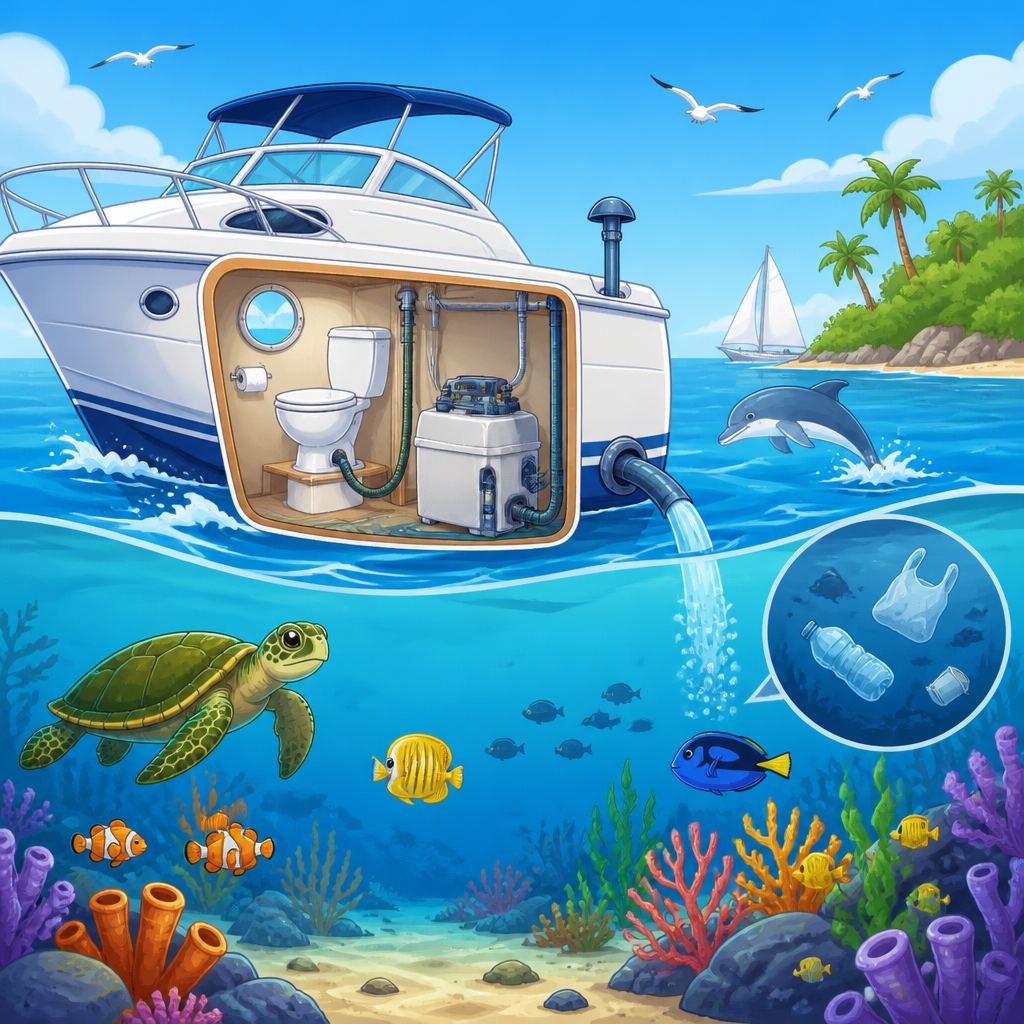
The job of an MSD is simple in principle: keep untreated sewage out of the water. In practice, the plumbing can be complex. A basic system starts at the marine toilet, which may be manual, electric, vacuum-assisted, or freshwater flush. Waste moves through sanitation hose to either a treatment unit or a holding tank. Vent lines allow airflow so tanks do not collapse during pump-out and so aerobic bacteria can break down waste more effectively. Deck fittings connect to marina pump-out stations. Overboard discharge lines, if installed, are controlled by seacocks and Y-valves and are heavily restricted by law in many waters.
Type I devices are common on some smaller commercial and older recreational vessels. They usually macerate waste and apply a disinfectant, often through chlorination or electrochemical treatment. Federal performance standards require fecal coliform bacteria counts to be below a set threshold and no visible floating solids in the effluent. Type II devices provide more advanced treatment and are more often found on larger vessels. They use biological treatment, aeration, or other processes to produce cleaner effluent. Type III devices, the familiar holding tank systems on many pleasure boats, do not treat sewage onboard. Their environmental value comes from containment. The waste stays in the tank until a pump-out facility removes it or until legal offshore discharge conditions are met.
In everyday boating, the holding tank is often the best pollution control tool because it is straightforward and reliable when maintained. Problems arise from poor installation or neglect. Permeated hoses cause odor. Blocked vents slow decomposition and make pump-outs difficult. Misrouted lines can allow accidental discharge. I have inspected boats where a simple vent loop or anti-siphon fitting was missing, creating both sanitation and flooding risks. Properly installed sanitation systems use odor-resistant hose, double-clamped below-waterline connections, accessible seacocks, and clearly labeled valves. Those details matter because a system only protects water if the operator can use it correctly every time.
Sewage pollution harms waterways in three main ways. First, pathogens such as E. coli and enterococci can make contact recreation unsafe and can force shellfish harvesting closures. Second, nitrogen and phosphorus from waste contribute to eutrophication, especially in enclosed bays and warm freshwater lakes. Third, organic waste raises biochemical oxygen demand, which can reduce dissolved oxygen levels as it decomposes. Fish kills usually have multiple causes, but nutrient enrichment and oxygen depletion are common factors. Preventing those impacts is the reason marine sanitation rules exist, and MSDs are the hardware that makes compliance possible.
Rules, no-discharge zones, and what boaters must know before releasing anything
If you want to reduce water pollution while boating, learn the legal map before you cast off. In U.S. waters, untreated sewage cannot be discharged from a boat within three nautical miles of shore. That baseline rule is only the starting point. Many inland lakes, rivers, reservoirs, and coastal areas are designated as no-discharge zones, where even treated sewage from Type I or Type II devices is prohibited. In those places, a Type III holding tank system must be used, and any Y-valve directing waste overboard must be secured in the closed position. Securing means more than intending to keep it closed. Accepted methods include a padlock, a non-releasable wire tie, or removing the valve handle where appropriate.
The reason no-discharge zones exist is straightforward: some waters are especially sensitive or heavily used. Drinking water reservoirs, shellfish grounds, marinas with poor flushing, and narrow estuaries cannot safely absorb even treated effluent. States request these designations, and the EPA approves them based on environmental need and pump-out availability. Boaters often assume open water means legal discharge everywhere, but local restrictions can be tighter than federal minimums. The U.S. Coast Guard can inspect installed MSDs for compliance, and marina operators increasingly post pump-out, no-discharge, and waste handling requirements to support local water quality programs.
International boaters also need to understand that standards vary. Many regions follow MARPOL Annex IV for sewage pollution from ships, but local coastal rules, inland navigation regulations, and marina bylaws may be stricter for recreational vessels. The practical takeaway is consistent worldwide: know the discharge standard for the water you are in, secure valves correctly, keep records where required, and use pump-out services as the default. Compliance is not just about avoiding fines. It directly reduces bacterial contamination in places where people swim, fish, and anchor overnight.
| Pollution source | Main risk to water | Best control on a recreational boat |
|---|---|---|
| Blackwater from toilets | Pathogens, nutrients, oxygen demand | Type III holding tank and pump-out |
| Graywater from sinks and showers | Detergents, grease, food particles | Use low-toxicity cleaners and minimize discharge in sensitive areas |
| Bilge water | Oil, fuel, solvents, metal residues | Keep bilges clean and use absorbent pads, never detergents |
| Fueling spills | Hydrocarbon contamination and sheens | Fill slowly, use absorbent collars, stop before tank overflow |
| Bottom cleaning and maintenance | Paint particles, copper, debris | Capture runoff and use approved boatyard practices |
Reducing water pollution while boating beyond sewage management
An effective sanitation plan sits inside a larger clean-boating routine. Graywater is a good example. On most recreational boats, water from sinks, showers, and galleys is less regulated than toilet waste, but that does not mean it is harmless. Dish soap, shampoo, food scraps, oils, and microfibers all enter the water column when discharged. In a remote anchorage with good flushing, the impact may be modest; in a crowded marina basin, repeated graywater releases can add noticeable nutrient and detergent loads. Choosing phosphate-free soaps, wiping greasy pans before washing, and using shore facilities when available are simple steps that meaningfully reduce pollution.
Bilge water causes another common misconception. Some owners see a little soap as the easiest way to disperse oily residue before pumping the bilge. That is exactly the wrong approach. Detergents do not remove petroleum from the environment; they spread it through the water and make enforcement harder because the visible sheen disappears. The right method is source control. Fix engine leaks, store fluids securely, place absorbent pads under drip points, and dispose of saturated materials through marina or municipal hazardous waste channels. If your automatic bilge pump cycles frequently, treat that as a maintenance alarm, not normal behavior.
Fueling is one of the most preventable boating pollution events. Temperature expansion, vent burps, and overfilling send gasoline or diesel straight into the water. Good practice means shutting off blowers and engines as appropriate, keeping absorbent material near the vent, listening to the fill tone change, and stopping before the tank is topped to the brim. I advise leaving headspace for thermal expansion, especially in summer. A cup of spilled fuel can spread widely on the surface, harm larvae and invertebrates, and trigger marina reporting obligations. Careful fueling protects both water quality and onboard safety.
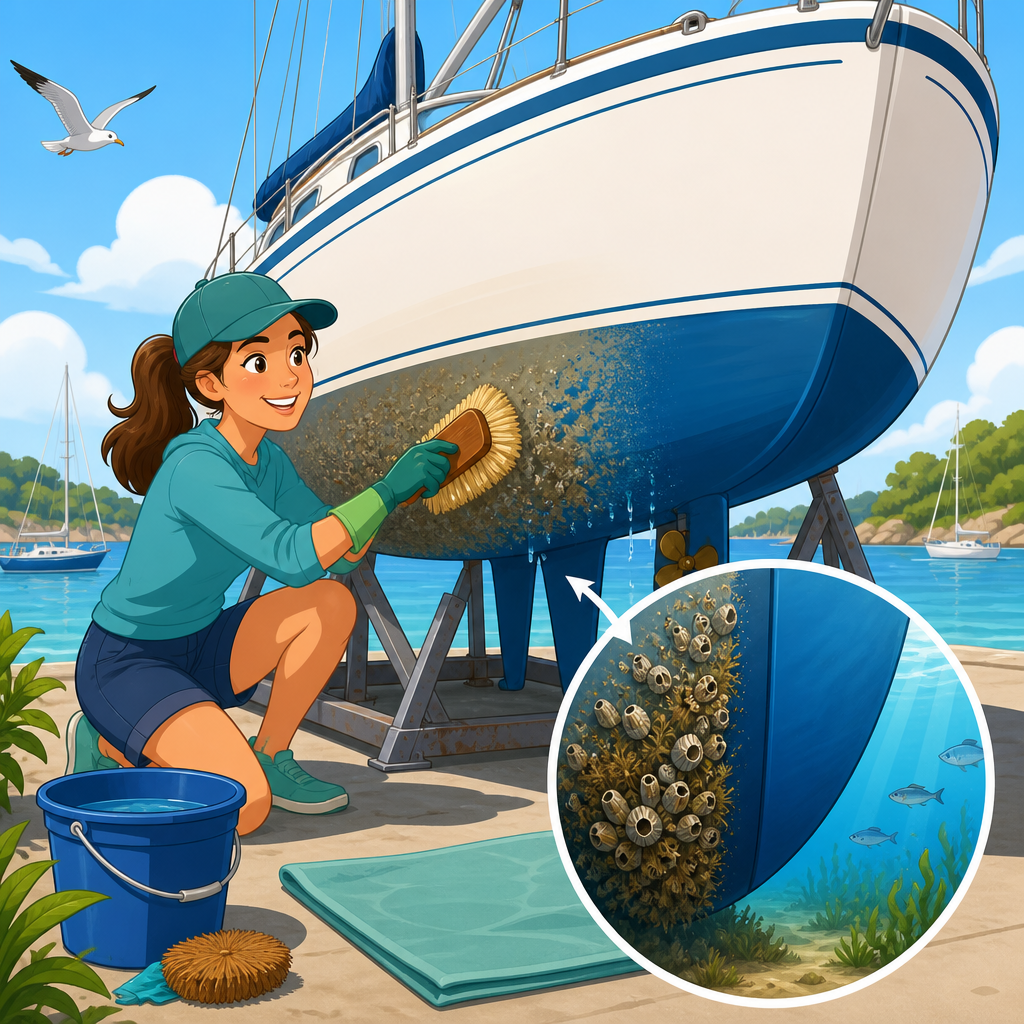
Maintenance choices also shape pollution outcomes. Hull cleaning can release antifouling paint particles containing copper or other biocides. Sanding, fiberglass work, and engine servicing can wash contaminants into storm drains and then into the marina basin. The cleanest operators use tarps, vacuum sanders, containment socks, and designated washdown areas that route water to treatment systems. If your marina participates in programs such as Clean Marina certification, follow those site rules closely. They are designed around known pollution pathways, not arbitrary bureaucracy. Sustainable boating is usually a series of ordinary habits done consistently rather than one expensive technology purchase.
Choosing, maintaining, and upgrading the right MSD for your boat
The best marine sanitation device for a boat depends on size, cruising pattern, crew count, available space, and where the vessel operates. For a trailerable freshwater boat used on no-discharge lakes, a portable toilet or compact Type III setup may be entirely adequate. For a coastal cruiser spending multiple nights aboard, tank capacity, vent design, and easy pump-out access become more important than treatment sophistication. For commercial passenger vessels or larger yachts, Type II systems may make sense when legal discharge, passenger load, and operating profile justify onboard treatment. There is no universal perfect system. There is only the system that is compliant, maintainable, and suited to actual use.
Maintenance determines whether an MSD keeps oceans clean or becomes a chronic source of leakage and odor. Replace sanitation hose when permeation appears. Inspect joker valves, duckbill valves, tank level senders, vent filters, hose clamps, and seacocks on a schedule, not after failure. Flush systems according to manufacturer guidance and winterize thoroughly to avoid cracked components. I recommend tracing every sanitation line physically at least once after buying a used boat. Documentation is often incomplete, and previous owners may have made unsafe modifications. A one-hour inspection can reveal a hidden Y-valve, an abandoned through-hull, or a blocked vent that explains years of poor performance.
Upgrades that usually pay off include larger vent lines for better aerobic action, high-quality odor-resistant hose, accurate tank monitoring, and rerouted plumbing that reduces standing waste in long hose runs. Composting toilets are another option some boaters consider to reduce blackwater generation. They can work well when installed thoughtfully and when users understand solids handling, urine diversion, ventilation, and local disposal rules. They are not a shortcut around sanitation responsibility; they simply change the waste stream. Whatever technology you choose, the standard is the same: no harmful discharge, no leaks, and clear procedures every crew member can follow.
Reducing water pollution while boating starts with one decision: treat every drop leaving your boat as your responsibility. Choose the right MSD, use pump-out facilities, secure discharge valves, and control graywater, bilge waste, fuel, and maintenance runoff with equal care. Clean boating is not complicated, but it does require discipline. If you manage sanitation well, you protect swimming beaches, fisheries, wildlife habitat, and the places that make boating worth doing. Review your system this week, fix one weak point, and make pollution prevention part of every departure checklist.
Frequently Asked Questions
What is a marine sanitation device, and why does it matter for clean boating?
A marine sanitation device, often called an MSD, is an onboard system designed to manage sewage from a boat in a way that reduces pollution and protects public health. Depending on the setup, an MSD may treat waste, temporarily store it for pump-out later, or discharge it only when legally allowed and in a controlled manner. The reason these systems matter is simple: untreated sewage is not just unpleasant, it is environmentally harmful. It can introduce bacteria, viruses, excess nutrients, and oxygen-demanding organic matter into the water. That combination can trigger algae growth, degrade water quality, contaminate shellfish beds, and force closures of swimming and recreation areas.
For boat owners who care about eco-friendly and sustainable boating, an MSD is one of the most important systems on board. It helps reduce the direct impact a vessel can have on sensitive waterways, marinas, anchorages, and nearshore habitats. In practical terms, it also supports compliance with boating regulations and avoids the serious consequences of illegal discharge. A properly selected and maintained system protects both the environment and the people using the water, which is exactly why marine sanitation devices are considered essential equipment rather than optional add-ons.
What are the main types of marine sanitation devices used on boats?
Marine sanitation devices are generally grouped into several common categories, and the right choice depends on the vessel, cruising area, and how the boat is used. One common approach is a treatment-based system that processes sewage before discharge. These systems are intended to reduce harmful contaminants to a lower level before any release occurs, though discharge rules still depend on where the vessel is operating. Another widely used option is a holding tank system, which stores sewage on board until it can be removed at a marina pump-out station or discharged where legal offshore. Holding tanks are especially common because they are straightforward, effective, and suitable for many recreational boats.
Some boats also use portable toilets with self-contained waste tanks, which can be practical for smaller vessels with limited space. Composting or alternative toilet systems may also appear on certain boats, particularly among owners focused on low-water-use and reduced discharge solutions, although legal acceptance and installation standards can vary by location and vessel type. The key point is that every system has tradeoffs involving installation space, maintenance, legal compliance, ease of use, and environmental impact. Boat owners should evaluate how often they cruise, whether they spend time in no-discharge zones, access to pump-out facilities, and the expectations of local regulations before deciding which MSD setup is most appropriate.
How do marine sanitation devices help protect oceans, lakes, and coastal waterways?
Marine sanitation devices protect waterways by limiting the release of untreated or poorly managed sewage into the environment. Human waste contains pathogens such as bacteria and viruses, as well as nitrogen, phosphorus, and organic matter that consume oxygen as they break down. When these pollutants enter enclosed marinas, estuaries, rivers, lakes, and busy coastal waters, the damage can be significant. Nutrient loading can fuel harmful algal blooms, oxygen depletion can stress or kill aquatic life, and contamination can spread through shellfish harvesting areas and popular swimming zones.
MSDs reduce these risks by creating a barrier between onboard waste and the surrounding water. A treatment unit lowers pollutant levels before discharge where permitted. A holding tank prevents waste from entering the water at all until it can be pumped out and handled through proper shoreside infrastructure. Even simple containment systems can make a major difference in crowded boating areas where flushing directly overboard would quickly degrade water quality. From a big-picture perspective, marine sanitation devices are part of responsible boating because they help preserve the places people boat in the first place. Clean anchorages, healthier marine habitats, safer recreation waters, and fewer public health risks all depend on preventing sewage pollution before it starts.
Are marine sanitation devices legally required, and where can boaters discharge waste?
In many places, yes, marine sanitation devices are legally required on boats with installed toilets, and the rules around discharge can be strict. Exact regulations vary by country, state, and local jurisdiction, but the general principle is that boat sewage must be managed in a way that protects water quality. Some waters allow discharge only if the waste has been treated to specific standards. Other areas, especially sensitive inland waters, harbors, marinas, and designated no-discharge zones, prohibit any sewage discharge and require boaters to retain waste on board for pump-out. That means compliance is not just about having an MSD installed, but also about using it correctly in the waters where you operate.
This is why responsible boaters should know three things: what system is on their vessel, what local discharge laws apply, and where the nearest pump-out facilities are located. A common compliance issue is having a system that can discharge overboard but failing to secure it properly in areas where discharge is banned. Another is assuming offshore rules apply everywhere, which they do not. Because enforcement can include fines and other penalties, it is wise to treat sewage rules as a routine part of passage planning and marina operations. The most reliable approach is to verify the current regulations for your cruising area, maintain clear labels and operating procedures on board, and default to pump-out and retention whenever there is uncertainty.
How should a boat owner maintain a marine sanitation device for reliable, eco-friendly performance?
Good maintenance is what turns a marine sanitation device from a legal checkbox into a dependable environmental protection system. At a basic level, owners should routinely inspect hoses, seals, clamps, valves, tank fittings, and vent lines for leaks, corrosion, blockages, and odor problems. A clogged vent can interfere with proper tank function, while aging hoses can allow persistent smells and eventually fail. Pumps and macerators should be operated according to manufacturer guidance, and tanks should be emptied before they become overfull. Regular flushing with the appropriate amount of water also helps reduce buildup, though overuse of water can fill holding tanks faster than expected.
It is also important to use products that are compatible with the specific system on board. Harsh chemicals can damage seals, interfere with treatment systems, or create downstream environmental problems. In many cases, simple preventive habits matter most: do not flush anything the system is not designed to handle, keep a maintenance schedule, and train everyone on board in proper use. If the boat cruises frequently or remains in warm climates, inspections should be even more consistent because heat and heavy use tend to reveal weaknesses quickly. A well-maintained MSD is cleaner, less likely to smell, easier to operate, and far more effective at keeping sewage out of the water. For sustainable boating, that reliability is every bit as important as the initial equipment choice.