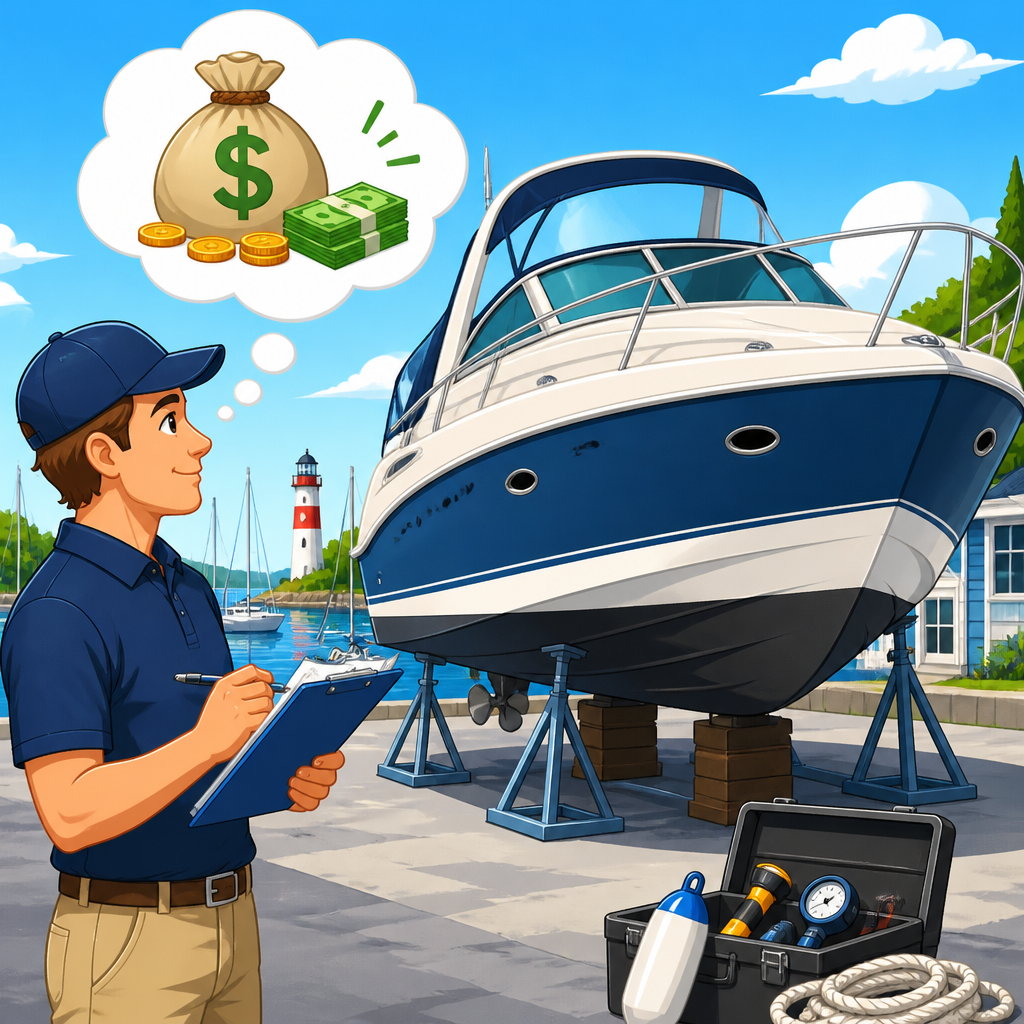
Buying a boat without a structured inspection is one of the fastest ways to turn an exciting purchase into an expensive repair project, which is why understanding how much a pre-purchase marine survey cost is only part of the larger question of how to inspect a boat before buying. A pre-purchase marine survey is a professional condition-and-value assessment performed by an accredited marine surveyor, while a buyer’s inspection is the broader process of evaluating hull structure, propulsion, electrical systems, maintenance history, safety gear, and sea-trial performance before money changes hands. In practice, I treat the survey as the anchor point of due diligence, not the entire job. Buyers who focus only on the survey fee often miss the larger financial picture: one missed wet core, neglected outdrive, or corroded fuel tank can cost far more than the survey itself. This matters because used boats have wide variation in care, environment, and usage history, and cosmetic shine can hide expensive structural or mechanical faults. A careful inspection process protects purchase value, helps negotiate price, satisfies lender and insurer requirements, and gives you a realistic first-year ownership budget. For anyone shopping under the broader Buying & Selling Boats category, this guide works as a hub: it explains typical marine survey pricing, what a survey includes, what it does not include, and the step-by-step inspection workflow smart buyers use before closing on a deal.
What a Pre-Purchase Marine Survey Costs and What Drives the Price
The short answer is that most pre-purchase marine surveys are priced by boat length, vessel type, and complexity. In many U.S. markets, a standard condition-and-value survey for a smaller recreational powerboat often runs about $20 to $30 per foot, while larger, more complex yachts, trawlers, sailboats, or high-performance vessels may fall around $25 to $40 or more per foot. In some areas, especially where travel, haul-out coordination, or scarce surveyor availability affects scheduling, rates can exceed those ranges. A 24-foot center console might therefore cost roughly $500 to $750 for the survey itself, while a 40-foot cruiser may run $1,000 to $1,600 or more. Those numbers usually exclude haul-out fees, engine diagnostics, oil analysis, sea-trial fuel, and specialized mechanic inspections.
Several factors change the total. Boat type matters because systems count matters. A simple outboard skiff is faster to assess than a twin-engine express cruiser with a generator, air conditioning, inverter, multiple tanks, and complex electronics. Construction matters too. Older fiberglass boats with cored decks, older wood components, or signs of osmosis take more time to evaluate carefully. Location also matters. In major boating markets, the surveyor may charge travel or a minimum day rate. If the boat must be hauled for bottom inspection, expect yard charges for haul, block, pressure wash, and relaunch. On many deals, the survey fee is only 40% to 60% of the total due-diligence cost.
Buyers should also separate marine survey pricing from mechanical inspection pricing. Many surveyors inspect visible engine condition and operation, but they are not always performing brand-specific engine diagnostics. On late-model outboards, sterndrives, or inboards, I strongly recommend a qualified mechanic download engine hours and fault codes, check compression where appropriate, inspect cooling, and verify service history. That extra spend frequently catches issues the survey alone cannot confirm.
What a Marine Survey Includes, and What It Does Not
A pre-purchase marine survey typically includes a visual and percussion-based inspection of accessible structural components, deck hardware, bilges, steering, plumbing, fuel systems, electrical installation, safety gear, and overall vessel condition. The surveyor documents deficiencies, notes recommendations, and usually provides an estimated fair market value and replacement value. During haul-out, the surveyor will inspect the bottom, running gear, propellers, shafts, rudders, struts, transducers, through-hulls, and signs of grounding damage or blistering. During sea trial, the surveyor observes startup behavior, operating temperatures, steering response, vibration, wide-open-throttle performance where appropriate, and system function under load.
What it does not include is just as important. A survey is not a warranty, and it is not a destructive inspection. Surveyors generally do not remove major components, open sealed tanks, strip interiors, or disassemble machinery. Moisture meter readings can indicate elevated moisture, but they do not reveal every hidden issue or define exact repair scope. Electronics may power on at inspection and still fail later. Air conditioning may cool at the dock yet underperform in peak summer conditions. That is why a complete buying decision should combine survey findings, mechanic reports, title verification, maintenance records, and your own practical use-case review.
If a seller says, “It surveyed fine five years ago,” ignore that as a decision shortcut. A survey reflects the boat on that day, under those conditions. Boats change quickly with neglect, deferred maintenance, water intrusion, improper repairs, and storm exposure. Always commission your own current survey.
How to Inspect a Boat Before Buying: The Practical Workflow
The most efficient inspection process starts before you ever hire a surveyor. First, screen the listing. Ask for the hull identification number, engine model and serial numbers, ownership status, storage method, service records, and clear photos of bilges, transom, upholstery, electronics, trailer if included, and the bottom if the boat is dry-stored. If the answers are evasive, move on. Second, perform an in-person buyer walkthrough before spending on professionals. Look for oxidation patterns, mismatched gelcoat, soft deck feel, heavy air freshener masking mildew, stained headliners, corroded terminals, waterlines in bilges, and neglected canvas. Third, make an offer contingent on survey and sea trial. Fourth, schedule surveyor, haul-out, and mechanic on the same day if possible. Fifth, review findings by severity: safety issues, structural issues, machinery issues, then cosmetic issues. Finally, decide whether to accept, renegotiate, require repairs, or walk away.
This sequence matters because it saves money. I have seen buyers pay for a survey on boats that should have been rejected during the first walkthrough. A rotten transom, widespread soft deck, mold-heavy cabin, or absent maintenance records are often visible without a formal report. The survey is where you confirm, measure, and document condition, not where you begin basic skepticism.
What to Check Yourself Before the Surveyor Arrives
Even if you plan to hire excellent professionals, your own observations are valuable because they reveal usage patterns and seller care. Start at the transom and hull sides. Sight along the surface for unfairness, ripples, repairs, dock rash, and color mismatch. Press around hardware bases and rail stanchions for movement that may suggest wet core or loose backing. Walk every section of deck barefoot if possible; subtle sponginess is easier to feel than to see. Open every locker. Smell matters. Persistent mildew often indicates leaks, not just poor housekeeping.
In the bilge, look for standing water, oil sheen, rust flakes, loose hose clamps, unsupported wiring, and evidence of chronic leaks around shaft logs, transducers, seacocks, or stuffing boxes. Check fuel hoses for date markings and cracking. Inspect battery installations for secure hold-downs, fused circuits, and clean terminals. At the helm, verify that gauges, switches, tabs, windlass, lights, horn, VHF, and multifunction displays all function. Ask when the impellers, manifolds, risers, bellows, bottom paint, and batteries were last replaced. Specific answers usually indicate organized ownership; vague answers often predict deferred maintenance.
| Inspection Area | What to Look For | Why It Matters |
|---|---|---|
| Hull and deck | Cracks, blisters, soft spots, repairs, wet core signs | Structural repairs are among the most expensive boat defects |
| Engines and drive | Corrosion, leaks, service records, fault codes, abnormal smoke | Mechanical failures can exceed survey cost many times over |
| Bilge and plumbing | Water intrusion, failed pumps, hose condition, seacock operation | Leaks and neglected systems create safety and reliability risks |
| Electrical | Corroded terminals, unlabeled wiring, missing fuses, charger issues | Poor wiring is a common source of breakdowns and fire hazards |
| Interior and cabin | Mold, stains, delamination, window leaks, damaged joinery | Interior clues often reveal long-term water ingress |
| Paperwork | Title, registration, lien status, maintenance logs, manuals | Clean documentation reduces transaction and ownership risk |
Sea Trial, Haul-Out, and Engine Checks: Where Expensive Problems Appear
Some of the most important answers only appear underway and out of the water. During sea trial, watch cold-start behavior. Hard starting, excess smoke, alarms, or rough idle should not be dismissed. Confirm that the boat reaches manufacturer-recommended wide-open-throttle rpm with a normal load; under-revving can point to prop mismatch, fouled bottom, excess weight, or engine weakness. Monitor oil pressure, charging voltage, and temperature stability. Feel for vibration through the deck and wheel. Test trim tabs, autopilot, steering lock-to-lock response, and reverse engagement. Run electronics while underway, not just at the dock.
Haul-out is where hidden damage often becomes obvious. Surveyors look for blistering, previous grounding repairs, bent props, shaft runout signs, cracked skegs, corroded trim tabs, worn cutless bearings, and compromised through-hulls. On trailer boats, inspect bunks, rollers, brake lines, bearings, winch strap, and frame corrosion as seriously as the vessel itself. A failing trailer can add thousands to the real acquisition cost.
For engines, diagnostics matter. Modern Yamaha, Mercury, Suzuki, Volvo Penta, MerCruiser, and Cummins platforms can store operational data and fault history. Oil analysis can reveal coolant intrusion, fuel dilution, elevated wear metals, or contamination trends. Compression tests are not always necessary on every engine, but when condition is uncertain, they provide valuable baseline information. If a seller resists a proper mechanic inspection, treat that as a major warning sign.
Using Survey Findings to Negotiate Price and Plan Ownership
The best marine survey is not just a pass-or-fail document; it is a negotiating tool and ownership roadmap. Once the report arrives, categorize findings into immediate safety issues, must-fix mechanical items, near-term maintenance, and optional upgrades. Safety issues include failed seacocks, fuel leaks, noncompliant wiring, missing fire suppression, or severe steering problems. Mechanical items may include low compression, leaking exhaust elbows, worn bellows, or obsolete batteries. Near-term maintenance may be aged canvas, electronics nearing end of life, or bottom paint due next season.
Translate each category into dollars using real estimates from yards and mechanics, not guesswork. If the boat is listed at $85,000 and the survey reveals $9,000 in immediate work plus $6,000 in upcoming maintenance, you have a concrete basis for renegotiation. In my experience, the strongest negotiations happen when buyers attach estimates and reference survey sections line by line. Emotional arguments about “condition not matching the photos” are weak; documented deficiencies with repair pricing are persuasive.
Also use the survey to model your first-year ownership cost. Insurance may require certain recommendations before binding coverage. Lenders may require an acceptable condition-and-value report. Marinas may require liability insurance, and some yards will note unsafe shore-power or fuel-system issues before allowing work. A disciplined buyer understands that the purchase price is only the opening number.
How This Hub Connects the Boat-Buying Inspection Process
If you are researching how to inspect a boat before buying, think of this page as the hub that organizes the full due-diligence process. The survey cost question connects to several deeper topics buyers should review during the shopping phase: how to read a marine survey report, what happens during a sea trial, how to check boat title and liens, how to inspect an outboard before buying, how to evaluate a used boat trailer, and how much first-year boat ownership really costs. Each of those subtopics deserves its own detailed checklist, but they all begin with the same principle: verify condition before commitment.
The main benefit of understanding pre-purchase marine survey cost is not simply budgeting for a fee. It is learning where that fee fits inside a complete inspection strategy that protects you from hidden structural damage, mechanical neglect, and paperwork problems. A competent surveyor gives you independent evidence, but the smartest buyers combine that report with their own walkthrough, a proper sea trial, a haul-out, and engine diagnostics from a qualified mechanic. Do that, and you buy with clarity instead of hope. Before you make an offer, build your checklist, line up your surveyor and mechanic, and inspect the boat like the next repair bill will come out of your pocket—because it will.
Frequently Asked Questions
How much does a pre-purchase marine survey cost?
A pre-purchase marine survey usually costs anywhere from a few hundred dollars for a small, simple boat to well over a thousand dollars for a larger, more complex vessel. In many markets, surveyors charge by the foot, so a common pricing structure might fall somewhere around $20 to $30 or more per foot, but the final number depends on far more than length alone. Boat type, age, construction method, onboard systems, engine configuration, location, and whether the vessel must be hauled out all affect the total cost. A small center console with an outboard is generally less expensive to inspect than an older trawler, sailboat, or express cruiser with multiple systems and more areas requiring close evaluation.
Buyers should also understand that the survey fee is often just one part of the inspection budget. Haul-out charges, launching fees, sea trial costs, engine diagnostics, oil analysis, and separate mechanical inspections can all add to the total. That is why asking only, “How much does a pre-purchase marine survey cost?” can be misleading if you are trying to estimate the full due diligence expense before closing on a boat. The smarter question is what level of inspection is needed to properly evaluate the specific vessel you are considering. Spending more on a thorough survey is usually far less expensive than discovering hidden structural, electrical, or propulsion problems after the sale.
What is included in a pre-purchase marine survey?
A pre-purchase marine survey is a professional condition-and-value assessment performed by an accredited marine surveyor. Its purpose is to document the overall condition of the vessel, identify visible deficiencies, note safety concerns, and provide an informed opinion of value. In a typical survey, the surveyor evaluates the hull, deck, stringers, transom, accessible bilge areas, steering components, electrical systems, fuel systems, plumbing, safety gear, navigation equipment, and other installed systems that can be reasonably inspected. The survey may also include moisture meter readings, percussion sounding, observations during haul-out, and findings from a sea trial, depending on the scope and access available.
What is important to remember is that a marine survey is not the same thing as a complete tear-down or a guarantee that every hidden issue will be discovered. Surveyors work within practical and non-destructive limits. If a fuel tank is enclosed, wiring runs behind finished panels, or internal engine components cannot be seen without disassembly, those areas may be assessed only to the extent they are accessible. The written report typically outlines findings, recommendations, and valuation details, and it may separate safety issues from general maintenance concerns. For buyers, this report becomes a critical negotiation tool because it helps clarify whether the asking price is justified and what repairs or upgrades may be needed soon after purchase.
Do I still need a buyer’s inspection if I’m already paying for a marine survey?
Yes, in most cases you should think of the buyer’s inspection and the marine survey as related but not identical parts of the boat-buying process. The buyer’s inspection is the broader process of evaluating the vessel before you commit to the purchase, while the marine survey is one professional component of that process. A buyer’s inspection may include your own walkthrough, review of maintenance records, title and lien verification, test operation of systems, engine history review, and specialized inspections from mechanics or electronics technicians. The surveyor provides expert insight into condition and value, but a well-informed purchase decision usually requires more than the survey report alone.
This distinction matters because different professionals look at the boat through different lenses. A marine surveyor focuses on overall vessel condition, structural integrity, safety concerns, and market value. A marine mechanic may concentrate on compression, engine hours, cooling systems, drivetrain wear, fault codes, and maintenance indicators that a general survey does not fully cover. If the boat has generators, stabilizers, inverters, sophisticated electronics, or complex sail systems, specialists may be worth hiring as well. Buyers who combine a survey with a structured inspection process are much more likely to catch expensive problems early, negotiate from a position of knowledge, and avoid turning a promising purchase into a repair-heavy project.
What factors make a marine survey cost more or less?
Several variables influence pre-purchase marine survey pricing, and some of them can change the cost significantly. Boat size is one of the biggest drivers, since larger vessels take more time to inspect and often have more equipment onboard. Complexity is another major factor. A basic skiff or bay boat is much simpler to assess than a twin-engine cruiser, liveaboard trawler, or offshore sailboat with extensive electrical, plumbing, and auxiliary systems. Age also matters because older boats often require closer attention to moisture intrusion, structural fatigue, corrosion, outdated wiring, fuel system integrity, and deferred maintenance. Geographic region can affect pricing as well, since surveyor rates and yard fees vary widely by market.
Beyond the surveyor’s base fee, the total cost may rise if the inspection includes a haul-out, bottom inspection, sea trial, fluid analysis, or travel time to a remote marina. If the boat has inboard engines, stern drives, pods, or other propulsion systems that need specialized mechanical evaluation, you may need to budget for additional experts. Even access can affect time and cost; vessels with cramped engine rooms, hidden bilge compartments, or heavily customized interiors can take longer to inspect thoroughly. On the other hand, a newer boat with straightforward systems, clear maintenance records, and good accessibility may be less costly to evaluate. The best way to avoid surprises is to ask the surveyor for a detailed scope of work and a breakdown of likely ancillary charges before scheduling the inspection.
Is a pre-purchase marine survey worth the money?
For most buyers, absolutely. A pre-purchase marine survey is one of the best investments you can make before buying a boat because it helps identify problems that are easy to miss during a casual showing or short test ride. Cosmetic appearance can be misleading, and boats often hide expensive issues in places a first-time or even experienced buyer may not think to check. Moisture intrusion, soft decks, transom deterioration, corrosion, poor wiring practices, neglected fuel systems, and signs of collision or grounding damage may not be obvious until a trained professional evaluates the vessel systematically. The survey gives you an objective assessment that can protect you from overpaying or inheriting major repair liabilities.
Just as importantly, the survey creates leverage. If deficiencies are found, you may be able to renegotiate the purchase price, request repairs, or walk away before taking on a bad deal. Lenders and insurers also commonly require a current marine survey, especially for older boats, so having one can streamline the next steps if you decide to move forward. Even when the boat checks out well, the report still provides value by documenting condition, helping you prioritize future maintenance, and setting realistic ownership expectations. In practical terms, the cost of a survey is small compared with the financial risk of buying a boat with structural, mechanical, or safety issues that only become apparent after the transaction is complete.