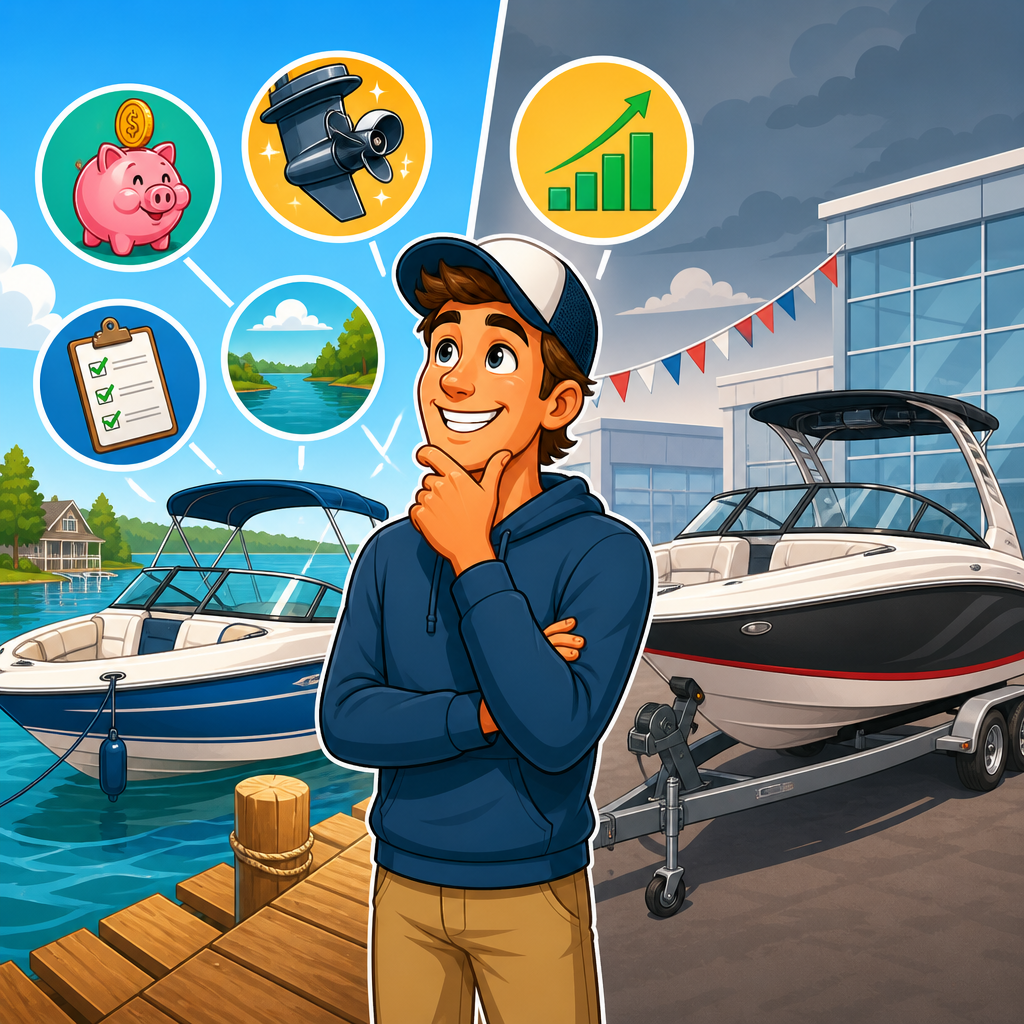
Buying a boat is exciting, but choosing between a new model and a pre-owned one can shape your budget, ownership experience, and long-term satisfaction for years. In marine retail, I have seen buyers focus on glossy showroom finishes while overlooking the practical advantages of the used market. For many families, anglers, and first-time owners, a used boat delivers more value, less financial strain, and a better fit for real-world boating habits. That is why the decision deserves careful analysis, not impulse.
A used boat is any vessel that has had a prior owner, whether it is one season old or twenty years old. A new boat comes directly from a manufacturer or dealer with no prior consumer ownership. On the surface, the comparison seems simple: new boats offer untouched condition and factory warranties, while used boats offer lower prices. In practice, the decision is broader. Buyers must weigh depreciation, financing, insurance, maintenance history, equipment included, technology age, survey results, and how they actually plan to use the boat. Those factors matter more than the model year printed on the title.
This article serves as a hub for the broader question of new vs. used boats: what to consider before you buy. The central argument is straightforward. In most cases, buying used is the smarter move, especially for buyers who want to maximize value and reduce risk. That does not mean every used boat is a bargain or every new boat is overpriced. It means the used market often gives informed shoppers access to proven models, lower ownership costs, and better purchase leverage. Understanding why helps you narrow options faster and avoid expensive mistakes.
Before diving into the five main reasons, it helps to define the key decision criteria. Value means more than sticker price; it includes resale stability, operating costs, upgrades, and repairs. Condition means more than cosmetics; it includes hull integrity, engine hours, service records, electronics performance, and trailer health if one is included. Fit means whether the boat matches your waterways, towing capacity, storage limits, passenger count, and intended activities, from coastal cruising to freshwater fishing. A smart purchase balances all three.
1. Used Boats Cost Less Up Front and Often Deliver Better Value
The most obvious reason to buy a used boat instead of a new one is lower acquisition cost, but the real benefit is how much more boat you can buy for the same money. In today’s market, a buyer with a fixed budget can often move up in length, engine size, build quality, or onboard features by shopping used. I have watched buyers compare a stripped-down new 19-foot runabout with a five-year-old 23-foot bowrider that already included a trailer, upgraded electronics, a bimini top, and watersports gear. The monthly payment difference was manageable, but the usability difference was significant.
Used pricing also opens the door to premium brands that may be unreachable new. Brands such as Boston Whaler, Grady-White, Cobalt, Sea Ray, and Scout typically retain strong reputations and command higher new prices because of fit, finish, ride quality, and materials. On the used market, these boats can become realistic options for buyers who care about construction quality but need to stay within budget. A carefully maintained older premium boat may outperform a lower-tier new boat in durability and owner satisfaction.
Value also includes included accessories. Many used boats are sold as complete packages with trolling motors, chartplotters, life jackets, dock lines, fenders, anchors, wake towers, spare props, and trailers. Those additions would cost thousands if purchased separately on a new rig. National Marine Manufacturers Association guidance and dealer prep standards help define what should be functional at delivery, but they do not erase add-on costs. A used package often reflects the previous owner’s spending, which becomes your savings.
2. Depreciation Hits New Boats Hardest in the Early Years
Depreciation is one of the strongest financial reasons to buy a used boat. Like cars, many new boats lose value fastest in the first few years. The exact rate depends on brand, propulsion type, market conditions, and maintenance, but the principle is consistent: the first owner usually absorbs the steepest drop. That matters because marine lending terms can be long, and buyers who finance too much of a new purchase can spend years paying for value that has already evaporated.
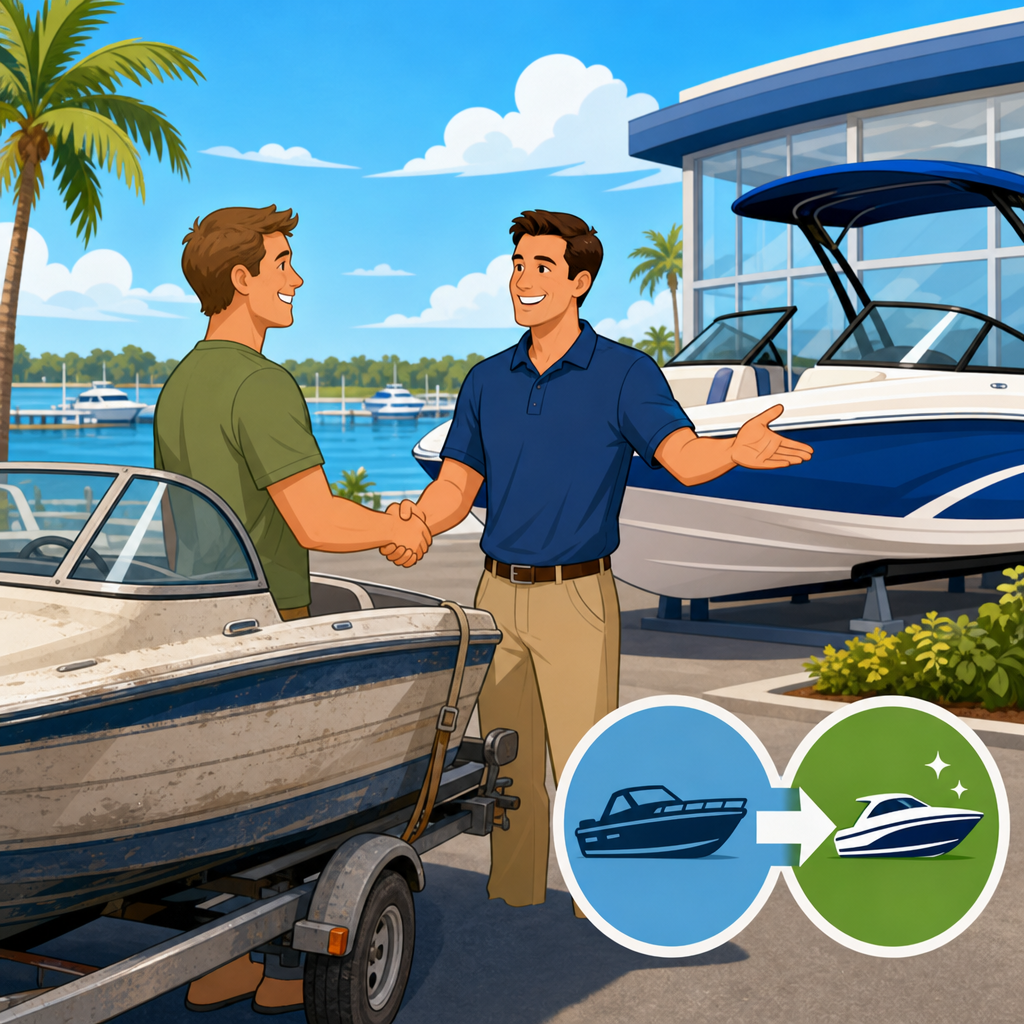
Used boats soften that hit because someone else has already taken the initial depreciation. If you buy a three- to seven-year-old model in good condition, maintain it properly, and avoid overpaying, your resale loss can be relatively modest. I have seen this repeatedly with center consoles and pontoon boats in strong regional markets. Buyers who purchased clean used examples and sold them two or three seasons later often recovered a far larger percentage of their investment than buyers who traded in near-new boats quickly.
Depreciation is also tied to upgrades. New buyers commonly spend on dealer-installed electronics, stereo packages, trailer upgrades, covers, and storage accessories immediately after purchase. Those expenses rarely return full value at resale. By contrast, many used boats already include those upgrades, and the market prices them at a discount. That is why a marine survey and comparable listing analysis matter. Looking at sold prices, not just asking prices, gives a more realistic picture of actual market value.
| Factor | Typical New Boat Outcome | Typical Used Boat Outcome |
|---|---|---|
| Purchase price | Highest initial cost | Lower entry point |
| Early depreciation | Largest in first years | Much of drop already absorbed |
| Included equipment | Often added at extra cost | Frequently included in sale |
| Insurance basis | Higher insured value | Lower insured value |
| Resale flexibility | Can be limited after quick resale | Often stronger if bought well |
3. Insurance, Taxes, and Registration Can Be More Manageable
The purchase price is only the beginning of boat ownership cost. Insurance premiums, sales tax, registration fees, storage, and property taxes in some states or localities all scale with the boat’s value or size. Because used boats generally cost less, they often reduce several recurring expenses at once. Buyers sometimes fixate on loan payment and forget that annual carrying costs can be the difference between frequent use and financial regret.
Insurance is a prime example. Premiums vary based on hull value, horsepower, navigation area, claims history, and operator experience, but a lower insured value usually helps. Marine insurers may write policies on actual cash value or agreed value terms, and the distinction matters. For many used boats, agreed value coverage can offer predictable protection without the premium associated with a much more expensive new vessel. If the boat is trailerable, you also need to consider trailer coverage, roadside assistance, and liability limits.
Taxes and fees matter too. In states with vessel sales tax, a lower transaction price produces immediate savings. Registration and title charges are modest compared with the total purchase, but they still add up alongside launch permits, marina fees, winterization, and off-season storage. I often advise buyers to build a full first-year ownership worksheet before making an offer. When they compare new and used line by line, the used option usually leaves more room for fuel, maintenance, and actual time on the water.
That is especially important for first-time owners. A new boat can stretch the budget so tightly that every repair, slip fee, or accessory purchase feels painful. A used boat with a comfortable ownership cushion is often the wiser path. Boating is supposed to be enjoyable. Financial breathing room helps ensure that it stays that way.
4. A Used Boat Has a Proven Service Record and Real-World Performance History
One overlooked advantage of buying used is that the boat has already lived in the real world. With a new model, you are relying on factory claims, dealer walkthroughs, and short demo impressions. With a used boat, you can inspect service records, review engine diagnostics, look at recurring maintenance patterns, and often learn how the model performs from owner forums, surveyors, and marina technicians. That history reduces uncertainty.
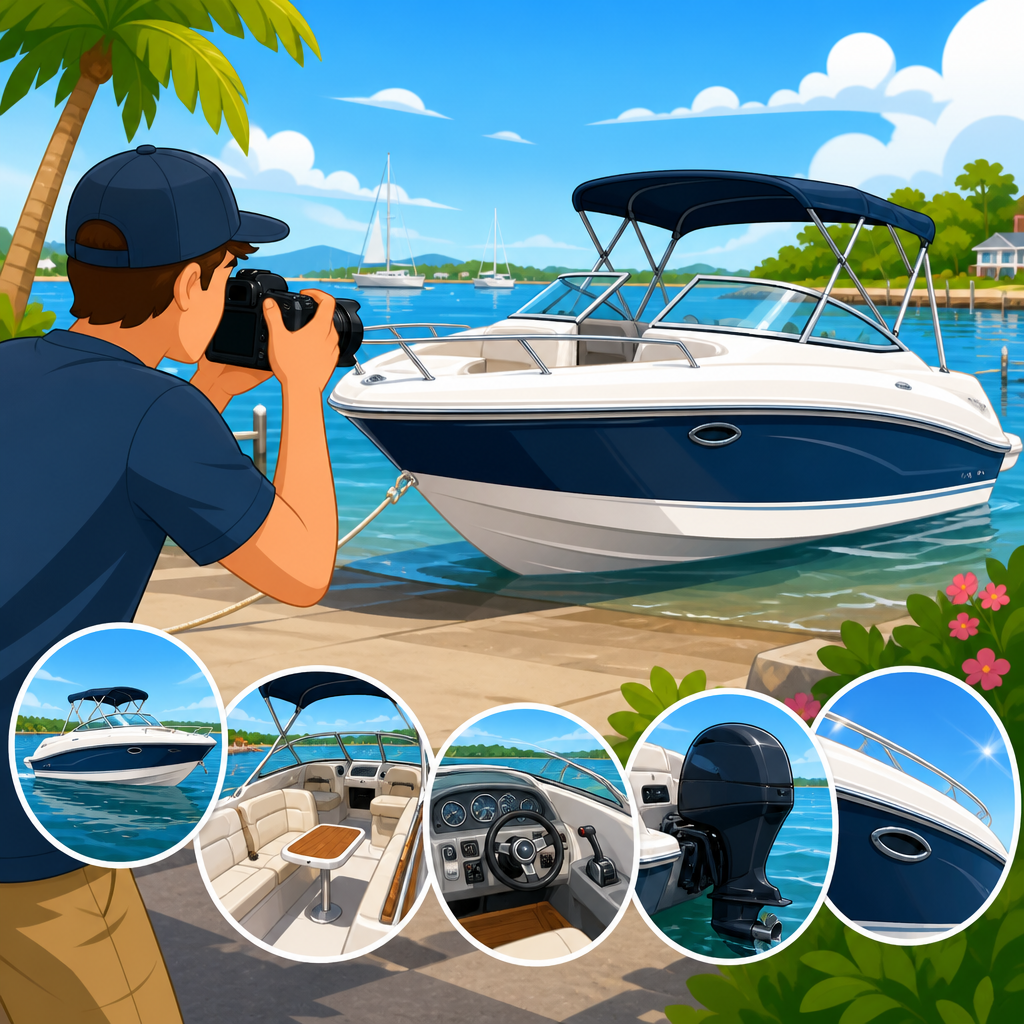
A proper pre-purchase process is what unlocks this advantage. For fiberglass boats, a qualified marine surveyor can evaluate hull condition, moisture readings, stringers, transom integrity, electrical systems, fuel systems, and safety gear. For outboards, a technician can pull engine-hour reports, compression readings where appropriate, and fault-code histories using manufacturer software from brands such as Yamaha, Mercury, Honda, or Suzuki. For sterndrives and inboards, bellows, manifolds, risers, shaft gear, and cooling systems deserve close attention. The point is simple: a good used boat is inspectable in ways a new boat is not yet test-proven.
There is also a practical reliability benefit. If a used boat has made it through its early service life and been maintained correctly, many factory defects or setup issues have already been addressed. I have seen new boats return for punch-list items involving pumps, electronics calibration, trailer adjustments, and upholstery issues during the first season. Those are usually fixable, but they still consume time. A well-sorted used boat can spare you some of that inconvenience.
Model-specific knowledge is another strength. Popular used boats generate a trail of owner feedback. Searchable communities discuss ride quality in chop, fuel burn at cruising speed, common wiring issues, trailer weak points, and the true fishability or family comfort of a layout. That depth of information helps buyers move beyond brochures and understand what ownership actually feels like.
5. Used Boats Are Ideal for Learning What You Really Need
Many buyers do not keep their first boat forever. Their needs evolve after a season or two on the water. A family discovers they need more shade and seating. An angler realizes a bay boat suits local conditions better than a deep-V center console. A wake buyer learns that storage matters more than stereo upgrades. Starting with a used boat lowers the cost of that learning curve.
This is where the broader question of new vs. used boats becomes most practical. What should you consider before choosing either one? Start with use case. Where will you boat: inland lakes, coastal bays, offshore waters, or rivers? How many passengers usually come aboard? Will you tow skiers, fish seriously, cruise at sunset, or beach the boat frequently? Then evaluate ownership logistics: towing vehicle capacity, storage height, marina availability, engine service access, and local dealer support. A used boat lets you answer those questions through experience without committing top dollar to your first guess.
Used boats are also ideal for buyers entering a category for the first time. Pontoon boats, center consoles, bowriders, deck boats, and cuddy cabins all serve different priorities. By buying used, you can spend a few seasons identifying what matters most before stepping into a more expensive long-term purchase. If you decide to upgrade later, a well-bought used boat is often easier to resell than a near-new boat carrying fresh depreciation.
None of this means new boats lack advantages. New boats offer full factory warranty coverage, the latest helm technology, customizable options, and the appeal of being the first owner. For some buyers, that peace of mind justifies the premium. But when the goal is practical value, lower risk exposure, and flexibility, the used market is usually stronger. The key is disciplined buying: insist on a sea trial, verify title status, review maintenance records, inspect the trailer, and never skip a survey on a higher-value purchase. Those steps separate a smart used purchase from a costly project boat.
How to Compare New vs. Used Boats Before You Buy
If you are using this page as a hub for your boat-buying research, the best next step is to compare candidates with a repeatable checklist. Evaluate total cost of ownership, not just sticker price. Review age, hours, maintenance documentation, hull construction, brand reputation, fuel economy, onboard systems, and local service support. Ask whether the boat includes a trailer, safety equipment, and electronics that you would otherwise need to buy. Consider financing terms, because interest rates and loan lengths can narrow or widen the price gap between new and used.
Then test the boat in conditions that reflect your actual use. A calm-water lake demo does not tell you how the boat behaves in afternoon chop, tight docking situations, or while loading passengers repeatedly. During sea trials, listen for rattles, watch engine temperatures, verify gauge function, test bilge pumps and lights, and note time to plane. Small operational details reveal a lot about prior care. In the used market, condition beats age alone every time.
For most buyers, the top five reasons to buy a used boat instead of a new one come down to economics, evidence, and flexibility. You spend less up front, avoid the sharpest depreciation, often pay less to insure and register, gain access to a proven maintenance history, and learn your preferences without overcommitting. Those benefits are substantial, especially if this is your first boat or your budget needs to cover more than the purchase itself.
The best boat is not the newest one on the lot. It is the one that fits your water, your goals, and your finances without creating unnecessary stress. Approach the search carefully, compare real ownership costs, and use inspections to verify condition. If you do that, a used boat can be the smarter, more capable, and more financially sound choice. Start by shortlisting a few proven models in your category, then line up surveys and sea trials before making an offer.
Frequently Asked Questions
Why is a used boat often a better value than a new boat?
A used boat is often a better value because the first owner usually absorbs the steepest depreciation, allowing the next buyer to get more boat for less money. In practical terms, that can mean stepping into a larger vessel, a better-known brand, or a model with more premium features than your budget would allow if you were shopping new. Many pre-owned boats also come with useful upgrades already installed, such as trolling motors, GPS units, depth finders, upgraded seating, anchors, covers, or trailers. Buying those items separately on a new boat can raise the total cost quickly. For families, casual boaters, and first-time owners, this added value can make ownership feel far more manageable. Instead of paying a premium for a factory-fresh model, buyers can focus on condition, maintenance history, and fit for their actual boating needs, which often leads to a smarter financial decision.
How does depreciation make buying a used boat a smarter financial choice?
Depreciation is one of the biggest reasons many buyers choose used over new. Like cars, new boats tend to lose value fastest during the first few years of ownership. The moment a new boat leaves the dealership, its resale value can begin to drop, even if it is still in excellent condition. By purchasing used, you avoid paying top dollar during that highest-loss period. That matters not only on the day you buy, but also when it is time to sell or trade in later. A well-maintained used boat often holds its value more steadily because much of the early depreciation has already happened. This can reduce the long-term cost of ownership and make it easier to move into another boat later without taking as large of a financial hit. For buyers who want flexibility, lower risk, and better control over their money, depreciation alone makes a strong case for choosing pre-owned.
Can buying a used boat lower the overall cost of ownership?
Yes, buying a used boat can lower the overall cost of ownership in several important ways. The purchase price is usually lower, which often means smaller monthly payments if financing is involved, or less cash tied up if you are paying outright. Insurance premiums may also be lower compared with a brand-new model, depending on the boat’s age, type, and value. Registration fees, taxes, and related purchase costs can sometimes be more manageable as well because they are often based in part on sale price or market value. In addition, many used boats include accessories and equipment that a new owner would otherwise need to buy separately. That said, lower ownership cost does not mean buyers should ignore inspections or maintenance. The key is choosing a used boat with a strong service history, solid hull condition, and a reliable engine. When you buy carefully, a used boat can offer a more affordable and less stressful path into boating without sacrificing the experience on the water.
Is a used boat a good option for first-time boat owners?
For many first-time boat owners, a used boat is not just a good option, but often the most practical one. New boat buyers sometimes spend heavily before they fully understand how often they will use the boat, what type of boating they enjoy most, or which size and layout truly fits their lifestyle. A used boat gives beginners room to learn without taking on the higher financial pressure that often comes with buying new. If a first-time owner later decides they want a different style of boat, such as moving from a basic fishing boat to a pontoon or from a runabout to a center console, they are typically less exposed financially than if they had bought new at the top of the market. A pre-owned boat also encourages more realistic decision-making. Buyers tend to focus on engine reliability, storage, seating, towing needs, and local water conditions rather than showroom shine alone. With the right inspection and research, a used boat can be an excellent training ground for learning ownership, maintenance, trailering, docking, and seasonal care.
What should buyers check before purchasing a used boat?
Before purchasing a used boat, buyers should look closely at condition, maintenance records, engine hours, hull integrity, and the overall quality of ownership history. Start by examining the hull for cracks, repairs, soft spots, corrosion, or signs of impact damage. Check upholstery, flooring, electrical systems, gauges, lights, pumps, and onboard electronics to see whether they function properly. Ask for service records to confirm regular maintenance, winterization, engine servicing, and any major repairs or part replacements. Engine condition is especially important, so pay attention to starting performance, idle quality, smoke, noise, and any visible leaks. If the boat includes a trailer, inspect tires, brakes, bunks, lights, and frame rust as well. A water test is highly recommended because it can reveal handling issues, vibration, steering concerns, or engine problems that may not show up on land. Most importantly, consider hiring a qualified marine surveyor or mechanic for an independent inspection, especially on larger or more expensive boats. A careful evaluation protects your investment and helps ensure that the money you save by buying used turns into real value rather than surprise repair bills.