Buying a pre-owned vessel can save tens of thousands of dollars, but only if you know where to look and how to compare it against buying new. In the boating market, “reliable used boats for sale” means listings backed by maintenance records, clear ownership history, realistic pricing, and evidence that the hull, engine, electronics, and trailer have been cared for properly. I have helped buyers evaluate everything from small aluminum fishing boats to late-model center consoles, and the same pattern repeats: the best purchase is rarely the cheapest listing, and the worst mistakes happen when buyers shop by photos alone. This matters because depreciation, financing, insurance, marina costs, and repair exposure all change dramatically between new and used boats. As a hub topic within buying and selling boats, new vs. used boats is the decision that shapes every later choice, including budget, survey scope, negotiating leverage, and resale strategy.
Used boats appeal to practical buyers because someone else has already absorbed the steepest depreciation. In many segments, a new boat can lose meaningful value in the first few years, while a well-kept five- to ten-year-old model may hold value more steadily. New boats, however, offer warranty protection, the latest navigation systems, cleaner emissions, and no hidden wear from neglect or saltwater use. Reliable shopping starts with understanding those tradeoffs before you browse a marketplace, visit a dealer, or bid at auction. Buyers should also define boat type, primary use, storage plan, and total operating budget. A family seeking weekend cruising has different reliability priorities than an angler trailering long distances or a sailor planning coastal passages. When you know the mission, it becomes easier to identify the best places to find reliable used boats for sale and to judge whether a new boat would actually be the better long-term fit.
Start With the Right Buying Strategy: New vs. Used Boats
The smartest boat buyers decide on strategy before they start shopping. A new boat is best for buyers who want factory warranty coverage, customizable options, and minimal near-term maintenance surprises. It is also the easiest path for people who do not want to manage deferred maintenance, outdated electronics, or a missing paper trail. The tradeoff is price. Beyond the sticker, many new-boat buyers pay destination charges, dealer prep fees, sales tax, registration, and higher insurance premiums tied to replacement cost.
A used boat is best for buyers focused on value, lower depreciation, and access to models or brands no longer built. It can also let you step into a larger or better-equipped boat than your budget would allow on the new market. The tradeoff is inspection risk. Even a visually clean boat can hide wet core, corrosion, old fuel, neglected impellers, weak compression, cracked bellows, or trailer axle problems. That is why the question is not simply whether used is cheaper. The real question is whether the listing comes from a source that supports verification. Reliable used boats are found where records, reputation, and inspection access come standard, not where sellers resist basic due diligence.
Best Places to Find Reliable Used Boats for Sale
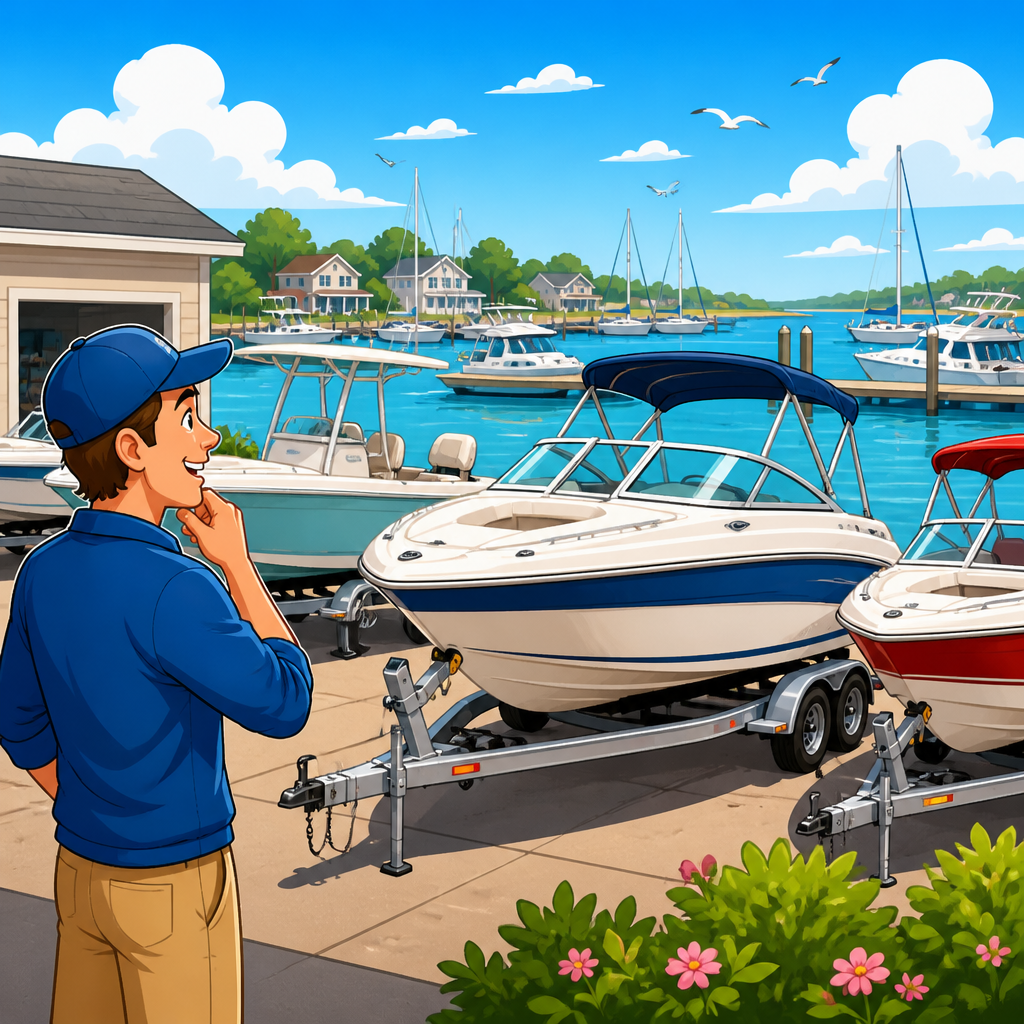
In practice, the most dependable sources are established dealers, major boat marketplaces, reputable brokers, marina bulletin networks, owner communities, and selective auction channels. Dealers often take trade-ins, perform basic service, and can help with title work, financing, and sea trials. A good dealer may cost more than a private seller, but that premium often buys convenience and reduced paperwork risk. Brokers are especially useful for larger cruisers, sailboats, and premium fishing boats because they know model histories, local surveyors, and common defects by brand.
Online marketplaces widen inventory and price visibility. Platforms such as Boat Trader, YachtWorld, boats.com, and regional marina listings make it easy to compare year, engine hours, beam, draft, trailer inclusion, and asking price. The advantage is scale. The limitation is inconsistency: one listing may include service logs and high-resolution engine photos, while another offers only glamour shots and vague wording like “runs great.” Reliability improves when you filter aggressively for complete listings, hull identification numbers, serial details, and seller responsiveness.
Private sellers can offer excellent value when the owner has documented maintenance, winterization receipts, engine diagnostics, and a clear title. I have seen outstanding purchases come from longtime owners who kept every invoice in a binder and could explain exactly when manifolds, batteries, bilge pumps, and electronics were replaced. I have also seen buyers inherit years of neglect from sellers who “just do not use it enough anymore.” The difference becomes clear within ten minutes of asking for records and arranging an independent survey.
| Source | Best For | Main Advantage | Main Risk |
|---|---|---|---|
| Authorized dealer | Late-model powerboats | Trade-ins, paperwork help, possible limited warranty | Higher asking prices |
| Broker | Cruisers, sailboats, premium vessels | Market knowledge and transaction support | Quality varies by broker |
| Major online marketplace | Broad comparison shopping | Large inventory and pricing visibility | Inconsistent listing quality |
| Private seller | Value-focused buyers | Lower prices and direct owner history | Less support if problems appear |
| Marina or yacht club network | Locally maintained boats | Word-of-mouth reputation | Limited selection |
| Auction | Experienced buyers only | Potentially low purchase price | Highest condition uncertainty |
How to Judge Whether a Used Boat Listing Is Actually Reliable
A reliable used boat listing answers the questions serious buyers ask without prompting. It should identify the exact year, make, model, engine brand, horsepower, hours, fuel type, title status, trailer status, location, and recent service. Strong listings mention compression test results, lower-unit service, riser and manifold replacement dates for sterndrives, battery age, upholstery condition, and whether the boat has been stored indoors, lift kept, rack stored, or slipped in saltwater. Good listings also show close-up photos of the hull sides, transom, bilge, engine, helm, trailer tires, bunks, and electronics screens powered on.
Warning signs are easy to spot once you know them. Be cautious if the seller avoids engine hours, refuses a sea trial, cannot produce a hull identification number, or says paperwork will be “easy to figure out later.” Be cautious if fresh paint appears only around corrosion-prone areas, if bilges are unnaturally dry from being recently cleaned, or if cushions and covers look newer than the rest of the boat without explanation. A reliable seller welcomes an out-of-water inspection and understands why lenders and insurers may require a marine survey on certain boats. Transparency is not a bonus in this market; it is the baseline.
Where New Boats Still Make More Sense
Although this article focuses on used inventory, some buyers should choose new. If you plan to keep the boat for many years, want modern fuel efficiency, or need a very specific layout, a new model can be the more rational choice. The strongest case for new appears when the used market is tight and late-model boats are priced only slightly below new retail. During periods of supply disruption, I have seen two- or three-year-old models listed so aggressively that the warranty, updated systems, and cleaner maintenance baseline of a new boat justified the difference.
New boats also reduce transaction friction. Dealers typically handle registration, documentation, lien payoff coordination, and delivery orientation. Manufacturers may bundle warranties on hull structure, outboards, electronics, and accessories, though buyers should read exclusions carefully. A warranty does not cover every inconvenience, and some issues still mean waiting for parts during peak season. Even so, if your priority is predictable early ownership rather than maximum value, new can outperform used despite the higher upfront cost.
Inspection, Survey, and Sea Trial: The Non-Negotiable Reliability Check
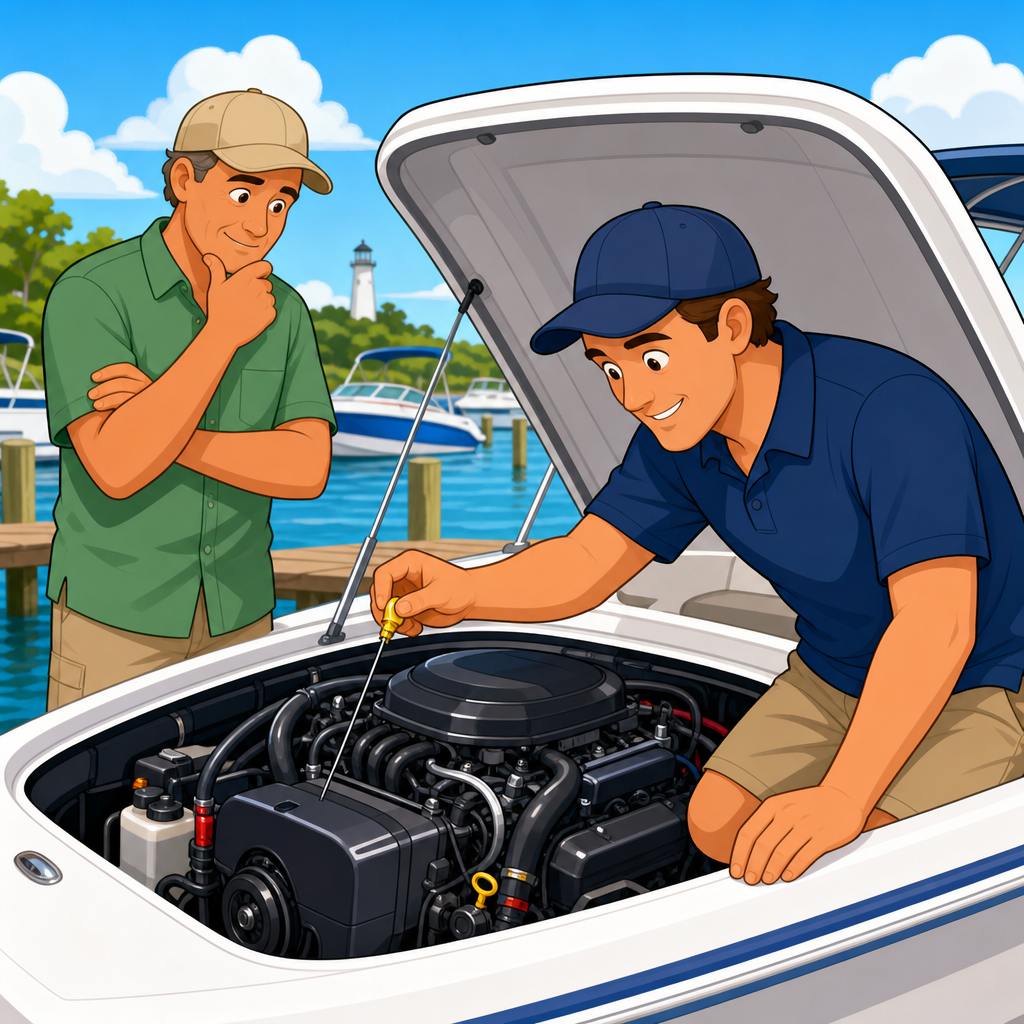
No matter where you find the boat, reliability is proven on inspection day. For small, simple boats, a knowledgeable buyer may handle much of the evaluation personally, but larger fiberglass boats, inboards, and complex systems deserve a certified marine surveyor. A survey typically assesses hull condition, deck softness, moisture intrusion, safety gear, wiring practices, fuel systems, steering, and visible structural concerns. For outboards and stern drives, add an engine inspection by a brand-qualified technician who can pull computer reports, review fault codes, and measure compression where appropriate.
The sea trial matters just as much as the survey. You want to see cold start behavior, idle quality, oil pressure, charging voltage, shift response, full-throttle rpm, trim function, steering load, bilge performance, and electronics operation underway. Ask whether the boat planes correctly with a normal load and whether tabs, pumps, lights, horn, windlass, and gauges work as intended. On the trailer, inspect tire date codes, brake function, bearing condition, lights, winch strap, and frame corrosion. Buyers who skip these steps often spend more correcting hidden defects than they saved by buying used.
Pricing, Negotiation, and Ownership Costs
Finding reliable used boats for sale is only half the job; pricing them correctly is what protects your budget. Start with sold comparables where possible, not just current asking prices. Compare engine hours, trailer inclusion, electronics age, canvas condition, and service history. NADA Guides can offer baseline reference, but actual market value depends heavily on region, season, and equipment. A freshwater-kept pontoon in the Midwest may command a different premium than a similar saltwater-kept boat on the Gulf Coast.
Negotiation works best when tied to evidence. Survey findings, overdue maintenance, old tires, expired batteries, weak canvas, and obsolete chartplotters all have replacement costs that justify a lower offer. At the same time, buyers should respect documented upgrades. New fuel tanks, recent outboards, rewired panels, Garmin electronics, or fresh bottom work can materially improve value. Also budget beyond purchase price. Slip fees, dry storage, haul-outs, bottom paint, annual service, fuel burn, and winterization can quickly eclipse the perceived savings of a bargain listing. A dependable boat is affordable not just to buy, but to own correctly.
How This Hub Supports Smarter Boat Buying
As the core page for this subtopic, this guide frames the questions every buyer should answer before moving deeper into model-specific research, survey checklists, financing, insurance, or resale planning. The main takeaway is simple: the best place to find reliable used boats for sale is any channel that gives you enough evidence to verify condition, history, and fair market value. Dealers, brokers, marketplaces, marinas, and private sellers can all produce excellent boats, but only when documentation, inspection access, and seller transparency are present.
New vs. used boats is not a lifestyle debate; it is a cost, risk, and fit analysis. New offers warranty support, modern systems, and easier early ownership. Used offers stronger value, slower depreciation, and access to more boat for the money. If you approach the process with a defined mission, a realistic budget, and a commitment to surveys and sea trials, you can buy confidently and avoid the expensive shortcuts that trap so many first-time owners. Use this hub as your starting point, then continue into detailed guides on inspections, pricing, and negotiation before you make an offer.
Frequently Asked Questions
Where are the best places to find reliable used boats for sale?
The best places to find reliable used boats for sale are reputable boat dealers, established marine brokerage firms, owner listings on well-known boating marketplaces, and local marinas with bulletin boards or consignment inventory. Dealers and brokers usually offer the biggest advantage if you want better screening, cleaner paperwork, and some help verifying condition, title status, and fair market value. Many also inspect boats before accepting them into inventory, which can reduce the risk of chasing listings that look good online but have serious mechanical or structural problems in person.
Online marketplaces can also be excellent sources, especially if you are looking for a specific type of vessel such as a bass boat, pontoon, center console, ski boat, or trailerable cruiser. The key is to focus on listings that include detailed photos, engine hours, service history, hull identification number information, trailer details, and a clear explanation of ownership. Marinas and dry-stack facilities can be overlooked sources as well, because boats stored there often belong to owners who have kept up with maintenance and seasonal service. In general, the most reliable buying opportunities come from places where sellers can document maintenance, explain usage history, and provide enough detail for you to evaluate the boat before traveling to see it.
How can I tell whether a used boat listing is actually reliable and not just well advertised?
A reliable listing should give you more than attractive photos and a short sales pitch. It should include the year, make, model, engine brand and horsepower, engine hours if available, trailer information, electronics included, recent maintenance performed, storage method, and any known flaws. Strong listings usually mention whether the boat has been kept on a lift, trailer, or in the water, because storage conditions directly affect hull condition, corrosion, and wear on systems. Maintenance records are one of the biggest signals of reliability. A seller who can show invoices for annual service, impeller replacement, lower unit service, winterization, battery replacement, and electronics upgrades is giving you real evidence that the boat has been cared for.
You should also look for consistency. If the photos show a clean deck, intact upholstery, clean bilge, tidy wiring, and an engine that appears maintained rather than neglected, that supports the written description. If a listing claims the boat is turnkey but avoids showing the trailer tires, propeller, helm electronics, or engine cowling, ask why. Reliable sellers answer direct questions clearly and quickly. They should be willing to discuss title status, lien payoff if applicable, reason for selling, and whether the boat has ever had storm damage, grounding damage, or major repairs. In short, a reliable listing is transparent, specific, and supported by documents, not just polished marketing language.
Is it better to buy from a private seller, a dealer, or a boat broker?
Each source has advantages, and the best choice depends on your budget, experience level, and tolerance for risk. Private sellers can offer the lowest prices because there is no dealer markup or brokerage commission built into the transaction. If the seller is organized and honest, you may find a very well-maintained boat at a strong value. However, private-party purchases usually require more homework on your part. You will need to verify ownership, confirm there are no liens, review service records, evaluate condition carefully, and often arrange your own survey and sea trial without much guidance.
Dealers are often a better fit for buyers who want a more structured purchase process. A quality dealer may inspect trade-ins, handle paperwork, help with registration, and sometimes offer limited warranties or financing options. That convenience can be worth the higher price, especially for first-time boat buyers. Brokers are common in larger or more expensive boat transactions and can be valuable because they represent boats professionally, coordinate showings, and help move the deal from offer to closing. A good broker also knows local market values and can identify red flags before you waste time. No matter which route you choose, the real goal is not just finding the lowest price. It is finding the seller type that gives you the best combination of transparency, documentation, and confidence in the boat’s condition.
What should I check before buying a used boat so I do not overpay for hidden problems?
Start with the big-ticket items: hull condition, engine health, electronics function, and trailer condition. Inspect the hull for cracks, repairs, blisters, soft spots, gouges, and signs of impact damage. Check the transom and flooring for structural softness, especially on older fiberglass boats and aluminum fishing boats that may have seen hard use. On the engine side, ask for service records and confirm recent work such as oil changes, lower unit service, spark plugs, filters, impeller replacement, and compression testing if available. Excessive corrosion, neglected wiring, leaks, or difficulty cold-starting can all point to future expense. Electronics should power up and function, including GPS, fishfinder, VHF, lights, bilge pumps, trim tabs, and gauges.
The trailer matters more than many buyers realize. Tires, hubs, brakes, bunks, rollers, lights, winch strap, and frame corrosion all affect both safety and value. A neglected trailer can add immediate cost even if the boat itself is solid. Beyond physical condition, review the paperwork closely. Match the hull identification number and any registration numbers to the documents, confirm title requirements in your state, and verify that there are no outstanding liens. If the boat is expensive enough that a major mistake would hurt, hire a qualified marine surveyor and, for some boats, a mechanic familiar with that engine brand. A survey and sea trial are often the best money spent in the entire transaction because they help you separate a fair deal from an expensive problem disguised as a bargain.
How does buying a reliable used boat compare with buying new?
Buying a reliable used boat can save tens of thousands of dollars while still giving you the features and performance most recreational boaters actually need. New boats come with warranties, the latest electronics, and the appeal of being the first owner, but they also carry the highest upfront price and the steepest early depreciation. A smart used purchase lets someone else absorb much of that depreciation. If the boat has been maintained properly, stored well, and upgraded thoughtfully, you can often get a late-model vessel with proven reliability for substantially less than a comparable new one.
That said, the savings only hold up if you buy carefully. A cheap used boat with poor maintenance, hidden damage, or an unhealthy engine can quickly erase any price advantage. That is why the term reliable used boats for sale matters so much. Reliability is not just about the brand name on the hull. It is about ownership history, records, condition, and realistic pricing based on the current market. When you compare used versus new, factor in not just purchase price but also insurance, financing, immediate repair needs, trailer upgrades, electronics replacement, and how you plan to use the boat. For many buyers, the sweet spot is a well-kept used boat that has already taken its biggest depreciation hit but still has many years of dependable service left.