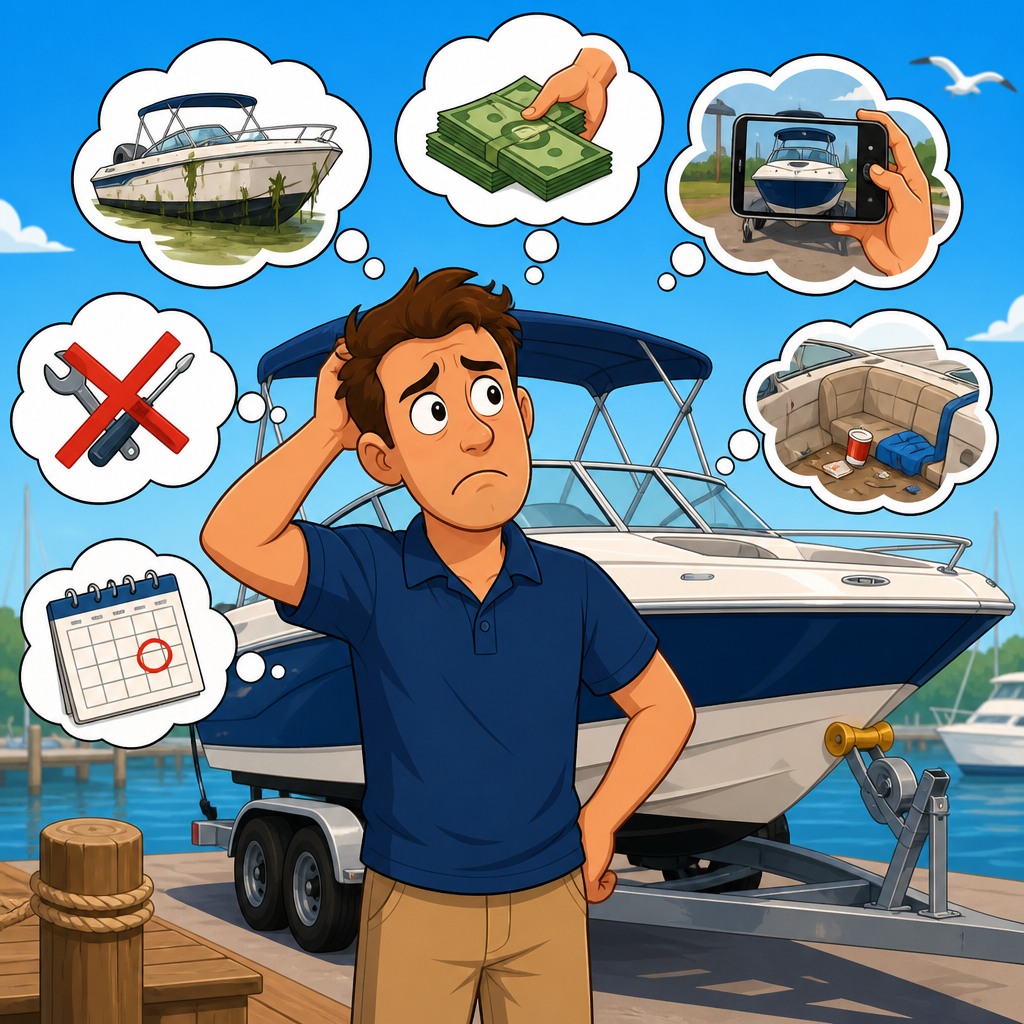
Buying a boat without proper paperwork can turn an exciting purchase into a legal, financial, and logistical problem within days. In the boating world, “proper paperwork” usually means the documents that prove ownership, satisfy state registration rules, show whether a title is required, confirm taxes were handled correctly, and disclose any liens recorded against the vessel. The exact package varies by state and by boat type, but the core documents are consistent: a signed bill of sale, title or manufacturer’s certificate of origin when applicable, current registration, hull identification number documentation, lien release if a lender was involved, and tax records. If any of those items are missing, the buyer may struggle to register the boat, obtain title, insure it, finance it later, or resell it legally.
This matters because boats are regulated through a patchwork of state agencies, wildlife departments, departments of motor vehicles, coast guard documentation systems, and local tax authorities. I have seen buyers assume a handshake deal and an old registration card were enough, only to discover the registration had expired years earlier, the seller never held clean title, or unpaid taxes blocked transfer. Unlike buying low-value personal property at a yard sale, buying a boat creates an ownership chain that needs to be documented clearly. If that chain breaks, the burden usually falls on the buyer to fix it. That can mean bonded title applications, inspections, back taxes, penalties, court affidavits, and months of delay during boating season.
Understanding boat titles, registration, and taxes is essential because each part solves a different problem. A title establishes legal ownership for boats in states that title vessels, much like a car title. Registration gives the boat legal authority to operate on public waters and usually requires numbers and decals displayed on the hull. Taxes, including sales tax, use tax, personal property tax, or county assessment, determine what is owed to state or local governments at purchase and annually in some jurisdictions. Missing paperwork can affect one or all three systems at once. The result is not just inconvenience; it can expose the buyer to fraud, seizure risks, civil disputes, and significant unplanned costs.
The Immediate Risks of Buying a Boat Without Paperwork
The first risk is simple: you may not legally own what you paid for. A seller can physically possess a boat without holding marketable ownership. That happens when a prior transfer was never completed, a lender still has a lien, the boat was inherited but not probated correctly, or the vessel was abandoned and sold informally. If you buy in that situation, your money may be gone even though you cannot complete the transfer. State agencies generally care about documentary proof, not verbal assurances. If the seller says, “I lost the title, but it’s definitely mine,” that statement does not cure the problem.
The second risk is registration denial. Most states require a bill of sale and prior title or registration documents before issuing new registration. If the boat is an outboard package, the trailer may require its own title and registration, and the motor may have a separate serial record. I have worked through transactions where the hull paperwork was present but the trailer title was missing, making transport illegal even though the vessel itself was transferable. In other cases, the buyer had enough to launch privately on day one but could not lawfully use the boat after a marine patrol stop because temporary transfer documents were incomplete.
The third risk is hidden debt. A recorded lien means a lender or other secured party may still have rights in the vessel. Banks, marine finance companies, and repair yards can assert interests depending on state law. On federally documented vessels, lien searches can be more formal through Coast Guard records, while state-titled boats may require title inquiry through the issuing agency. A clear bill of sale does not wipe out an existing lien. If the lienholder enforces its rights, the buyer can lose the boat or be forced to pay someone else’s debt to protect possession.
Boat Title Basics: What a Title Proves and When It Is Required
A boat title is the legal ownership certificate issued by a state for qualifying vessels. It identifies the owner, vessel description, hull identification number, and any recorded lienholders. Not every boat is titled in every state. Some states title all motorized boats above a certain size or model year, while others exempt small boats, non-motorized craft, or older vessels. Because state rules differ, buyers must verify the requirements where the boat will be registered, not just where it is currently located. A vessel legally untitled in one state may need title in the buyer’s home state before registration can be completed.
The key function of a title is chain of ownership. If the seller’s name does not match the front of the title, the transfer is already broken unless there are supporting reassignment documents recognized by the issuing state. Common title issues include open titles never properly assigned, signatures missing from seller or buyer sections, names that do not match identification, altered hull identification numbers, and unreleased liens listed on the face of the title. Those defects can stop processing immediately. Marine agencies are strict because titles are anti-fraud documents, not just receipts.
For newer boats, the manufacturer’s certificate of origin is often the starting ownership document before first retail sale. If a boat was never titled and the certificate is lost, replacing that document can be difficult and sometimes impossible without manufacturer cooperation. Homemade boats, kit boats, and substantially rebuilt vessels create additional complexity. Many states require inspections, assigned hull identification numbers, weight slips, receipts for materials, and sworn statements before issuing title. That means buying a project boat without records is especially risky. What looks like a bargain may become an administrative maze before the boat ever reaches the water.
Registration Rules: Why a Current Registration Card Is Not Enough
Registration and title are related but not interchangeable. Registration is the authorization to operate the vessel on public waterways, usually evidenced by a registration card plus decals and display numbers. A current card does not prove the seller owns the boat free and clear. I regularly tell buyers to treat registration as operating permission, not ownership proof. In some states, older boats may be registration-only, but even then, the transfer history still matters, and agencies often require prior registration records that directly connect the seller to the vessel.
Registration rules commonly depend on boat type, propulsion, and use. Nearly every state requires registration for motorized boats, including those powered by electric trolling motors. Sailboats may be exempt below certain lengths unless mechanically propelled. Non-motorized kayaks, canoes, or inflatables may be exempt, though adding a motor often triggers registration immediately. Buyers should also distinguish state registration from federal documentation. Larger recreational boats used in interstate travel, financing, or certain commercial contexts may be documented with the U.S. Coast Guard’s National Vessel Documentation Center instead of, or in addition to, state systems for numbering and tax purposes.
If you buy without transferable registration documents, your problems can multiply fast. You may face late fees, inspection requirements, penalties for undocumented operation, and delays obtaining numbers needed for insurance marinas. Seasonal buyers feel this most acutely. A spring purchase with bad paperwork can miss the entire summer while agencies request duplicate titles, notarized affidavits, or prior owner contact. That is why serious buyers confirm registration status before payment changes hands. A vessel on a trailer in a driveway may look ready to launch, yet administratively it can be effectively unusable.
Taxes, Fees, and the Cost of Incomplete Records
Boat taxes surprise buyers more than almost any other part of the transaction. At purchase, the most common charge is state sales tax or use tax, calculated from the purchase price, fair market value, or a schedule used by the agency if the declared price appears artificially low. Some counties or municipalities add local tax. Then there are title fees, registration fees, documentation fees, aquatic invasive species permits in certain states, and annual property tax or ad valorem tax in some jurisdictions. If the seller cannot provide accurate purchase documents, the buyer may lose the ability to prove the actual taxable amount.
That matters because agencies do not have to accept a suspiciously low handwritten bill of sale. If a twenty-five-foot center console with a recent four-stroke outboard is sold for one thousand dollars on paper, many states will review the value and may tax based on guides, appraisal, or standard valuation methods. I have seen buyers unintentionally trigger audits by trying to “help” the seller reduce taxes. The short-term savings usually vanish once penalties and revised assessments appear. More importantly, false values on transfer documents can constitute tax fraud, which is a risk not worth taking for any private sale.
Unpaid prior taxes can also follow the vessel in practical terms, even if not always legally as direct successor liability. Local tax offices may place holds, marinas may require proof of compliance, and title transfer may be delayed while ownership dates are verified. Out-of-state purchases add another layer: you may owe use tax when bringing the boat home even if another state collected partial tax. Credit rules vary. The right approach is to budget taxes before purchase, not after. A “cheap” undocumented boat can become more expensive than a properly papered vessel once tax correction, penalties, and processing delays are added.
How to Verify Paperwork Before You Buy
The safest boat purchase starts with document matching. Compare the seller’s identification, title name, registration card, hull identification number on the transom, engine serial number, and trailer VIN. Every mismatch should be explained before money moves. Ask whether there is a lender, whether a lien release exists, whether the boat was ever documented federally, and whether property taxes are current if your area assesses them. For documented boats, search Coast Guard records. For state-titled boats, request title status confirmation from the issuing agency if available. Verification feels tedious on the dock, but it is far easier than repairing a broken ownership chain later.
| Document | What to Check | Why It Matters |
|---|---|---|
| Title or certificate of origin | Seller name, lien release, HIN, signatures | Proves ownership and transferability |
| Registration card | Current status, matching HIN, owner name | Confirms operating record and prior state file |
| Bill of sale | Price, date, buyer and seller details, boat description | Supports taxes, transfer, and dispute resolution |
| Trailer title and registration | VIN, plate status, seller name | Allows legal transport on roads |
| Lien release | Lender identity, account satisfaction, vessel details | Removes secured claims against the boat |
Beyond paperwork, inspect the physical vessel for signs that records may be unreliable. Missing or altered hull identification numbers are major red flags. The HIN should follow U.S. formatting standards for boats built after November 1, 1972, and should appear permanently affixed to the starboard side of the transom, with a secondary hidden location used by the manufacturer. If the visible HIN plate looks replaced, riveted oddly, or inconsistent with the title, pause the deal. Buyers should also confirm that the boat description matches reality, including length, make, model year, and propulsion. Administrative inaccuracies can become fraud indicators quickly.
Finally, do not overlook the trailer and motor. In many transactions, buyers focus on the hull and forget that the trailer is a separate titled asset in numerous states. A missing trailer title can block registration at the motor vehicle office and prevent lawful towing. Outboard motors may have theft records checked through serial numbers, and high-value repower setups deserve special attention. If the boat package includes electronics, trolling motors, or generators, those accessories should be listed on the bill of sale when they materially affect value. Specificity protects both sides and simplifies future resale.
What to Do If You Already Bought the Boat
If you already bought a boat without proper paperwork, act quickly and methodically. First, stop using the vessel until you know whether registration is valid and transferable. Second, gather every available record: texts, emails, canceled checks, bank transfers, old registration cards, prior insurance certificates, maintenance invoices, and photographs showing the hull identification number. Third, contact the seller immediately and request the missing documents in writing. Many problems are resolved when a seller realizes the transfer truly cannot proceed without a duplicate title request, lien release, or notarized affidavit. Written communication matters if the dispute escalates.
Next, contact the state agency that handles boat titling or registration in your jurisdiction and ask for the exact cure process. Depending on the facts, solutions may include duplicate title application by the seller, bonded title, ownership affidavit, inspection by law enforcement or a marine officer, tax reassessment, or court-ordered title. Federally documented vessels may require abstract of title review, mortgage satisfaction filing, and deletion from documentation before state titling. If fraud is suspected, report it promptly. Payment method also matters. Credit card disputes, bank fraud claims, and small claims or civil court actions may be available if the seller refuses to cooperate.
The practical lesson is clear: clean paperwork is part of the boat’s value, not an administrative afterthought. Before you buy, verify title, registration, taxes, liens, and identity with the same care you would give an engine survey. If you already purchased without documentation, move fast, document everything, and work through the responsible agency step by step. Done properly, you can often salvage the deal, but prevention is cheaper than repair. Use this guide as your starting point, then review the detailed pages in your Buying & Selling Boats hub before committing to any vessel purchase.
Frequently Asked Questions
What counts as “proper paperwork” when buying a boat?
Proper paperwork usually includes the documents needed to prove legal ownership, transfer that ownership to you correctly, and satisfy your state’s registration and titling rules. In most cases, that starts with a signed bill of sale showing the buyer and seller’s names, the purchase price, the date of sale, and identifying details for the boat, such as the hull identification number. If your state titles boats, you will also typically need the original title signed over by the seller. If the boat has an outboard motor or trailer that is titled separately, those may require separate title transfers as well.
Beyond the basic transfer documents, proper paperwork can also include current registration documents, proof that sales or use tax was paid or will be paid, lien release documents if there was ever a loan against the boat, and any state-specific forms required by the local boating or motor vehicle agency. In practical terms, “proper paperwork” is what lets you register the boat, legally operate it, insure it, and later sell it without complications. If any of those records are missing, inconsistent, unsigned, or filled out incorrectly, the purchase can quickly become much more complicated than it first appeared.
What can happen if you buy a boat without a title, bill of sale, or other key ownership documents?
If you buy a boat without the right ownership documents, the most immediate problem is that you may not be able to register or legally use it. Many states require proof of ownership before issuing registration numbers, decals, or a title. Without that proof, the boat can sit unusable while you try to track down the seller, correct missing paperwork, or work through a state-specific bonding or verification process. Even if the seller seemed trustworthy, verbal promises are rarely enough once the state asks for formal documentation.
There can also be deeper legal and financial risks. If the seller was not the true owner, or if the title was never properly transferred to them, you may discover that you paid for a boat you cannot legally claim. If there is an unreleased lien, a lender may still have rights to the vessel. If taxes were not handled correctly, you could face delays, penalties, or extra costs when trying to complete registration. In some cases, missing paperwork can even raise questions about whether the boat was stolen, abandoned, or improperly rebuilt. That is why incomplete documentation is not just an inconvenience; it can affect ownership, legality, resale value, and your ability to use the boat at all.
Can you register or insure a boat if the paperwork is incomplete?
Sometimes, but it depends heavily on your state’s rules and on exactly what is missing. A minor clerical error, such as a typo in the hull identification number or a missing date, may be fixable with a corrected bill of sale or a signed affidavit. A missing title, missing lien release, or missing proof of prior ownership is usually a much bigger obstacle. Some states offer alternative procedures, such as bonded title processes, ownership affidavits, inspections, or requests for duplicate titles, but these options can take time and may still require cooperation from the seller or prior owner.
Insurance can be equally difficult. Some insurers will write limited coverage based on the basic details of the boat, but many want confirmation that you actually own it and that the vessel identification information is accurate. If the ownership history is unclear, you may have trouble getting comprehensive coverage, proving the boat’s value, or filing a claim later. In short, incomplete paperwork does not always make registration or insurance impossible, but it often turns a simple transaction into a drawn-out administrative problem. Before assuming you can “fix it later,” it is wise to verify the exact requirements with your state agency and insurer in advance.
How do liens, unpaid taxes, and ownership disputes affect a boat purchase?
These issues are some of the biggest hidden dangers in a boat sale. A lien means another party, often a bank or lender, may still have a legal claim to the boat because a loan was not fully paid off. If that lien was never released, the seller may not have had clear authority to transfer ownership free and clear. That can prevent you from getting title in your name and may expose you to the risk of losing the boat or having to resolve the debt before the paperwork can be cleaned up.
Tax problems can also follow the buyer. If required sales or use taxes were not properly paid or reported, the state may hold up registration until the issue is resolved, and you could end up paying tax based on the purchase price or fair market value, plus penalties or interest in some situations. Ownership disputes are even more serious. If multiple parties claim rights to the boat, or if the seller’s name does not match the title and registration history, the transaction can become legally unstable very quickly. This is why buyers should verify the seller’s identity, compare all vessel numbers carefully, review title and registration records, and obtain a written lien release whenever there is any indication the boat was financed.
What should you do before buying a boat to avoid paperwork problems?
Start by asking to see every ownership and registration document before any money changes hands. Confirm that the seller’s name matches the title or registration exactly, and make sure the hull identification number on the boat matches the number listed on the paperwork. If your state issues titles for boats, do not rely on excuses about a lost title without first confirming what replacement process is required. If the boat includes a trailer or motor, check whether those have separate ownership documents too. Review the bill of sale carefully and make sure it includes all necessary details, including the purchase price, date, signatures, and identifying information for each item being sold.
It is also smart to contact your state’s boating, wildlife, or motor vehicle agency before closing the deal so you know exactly what documents are required for that specific vessel type. Ask whether there are outstanding liens to check for, whether taxes will be due at transfer, and whether inspections or notarization are required. If anything seems inconsistent, such as missing signatures, altered numbers, or a seller who refuses to provide records, treat that as a warning sign rather than a minor issue. The safest approach is simple: if the paperwork is not complete and verifiable before the sale, be prepared to walk away. That decision can save you from expensive legal, financial, and logistical problems later.