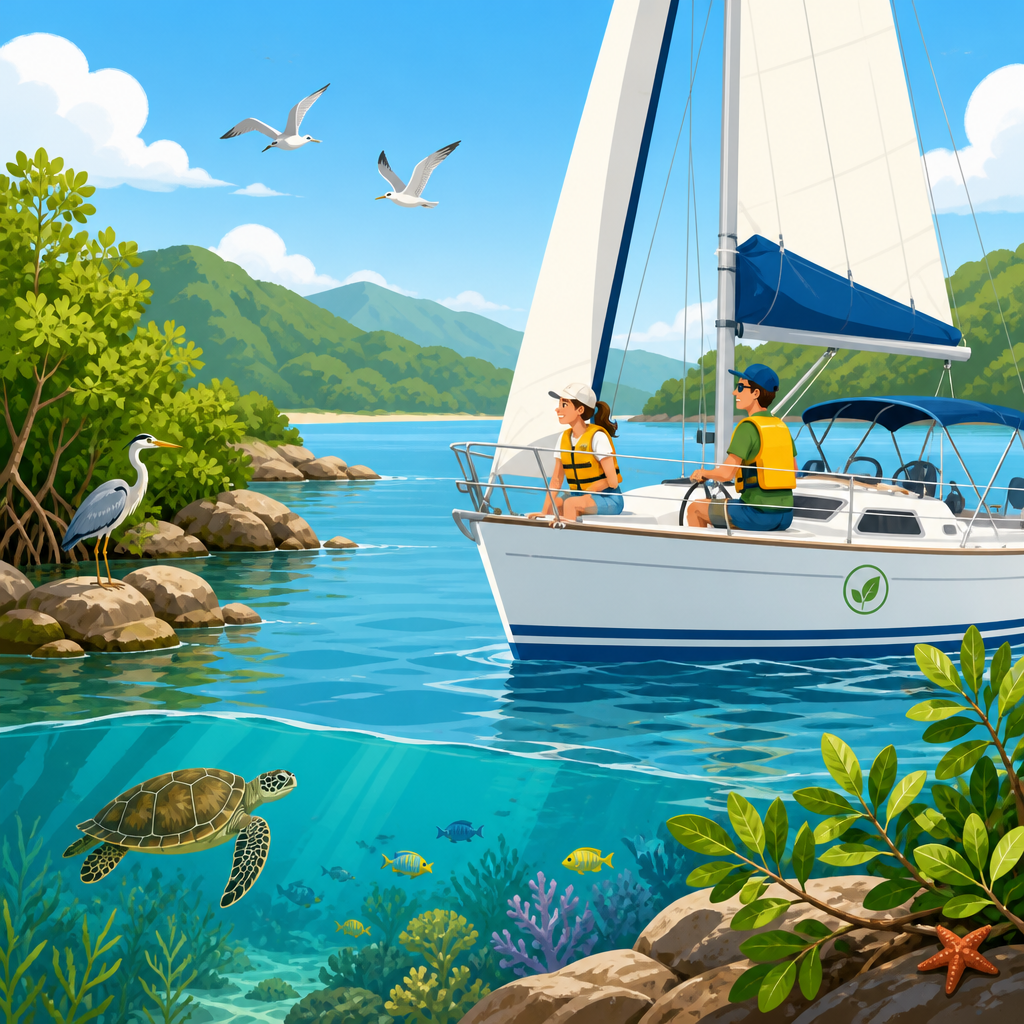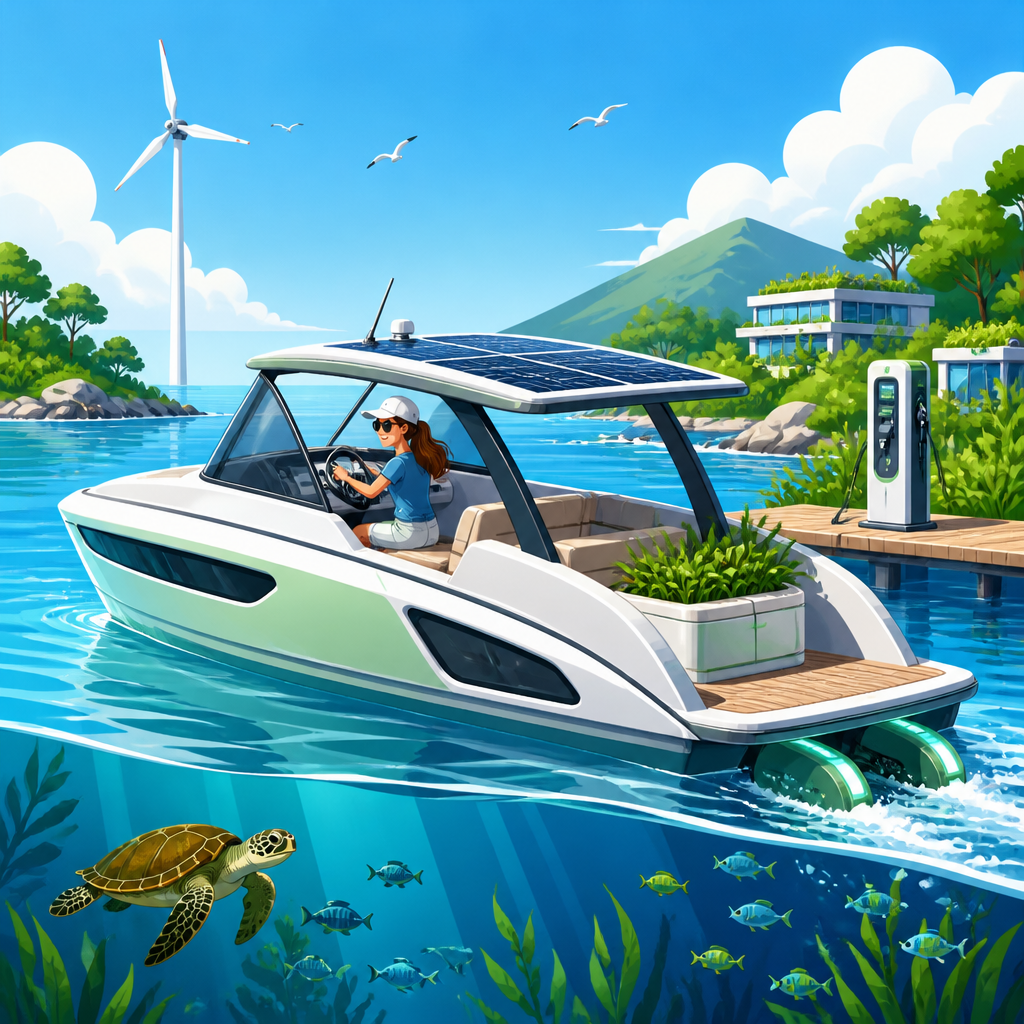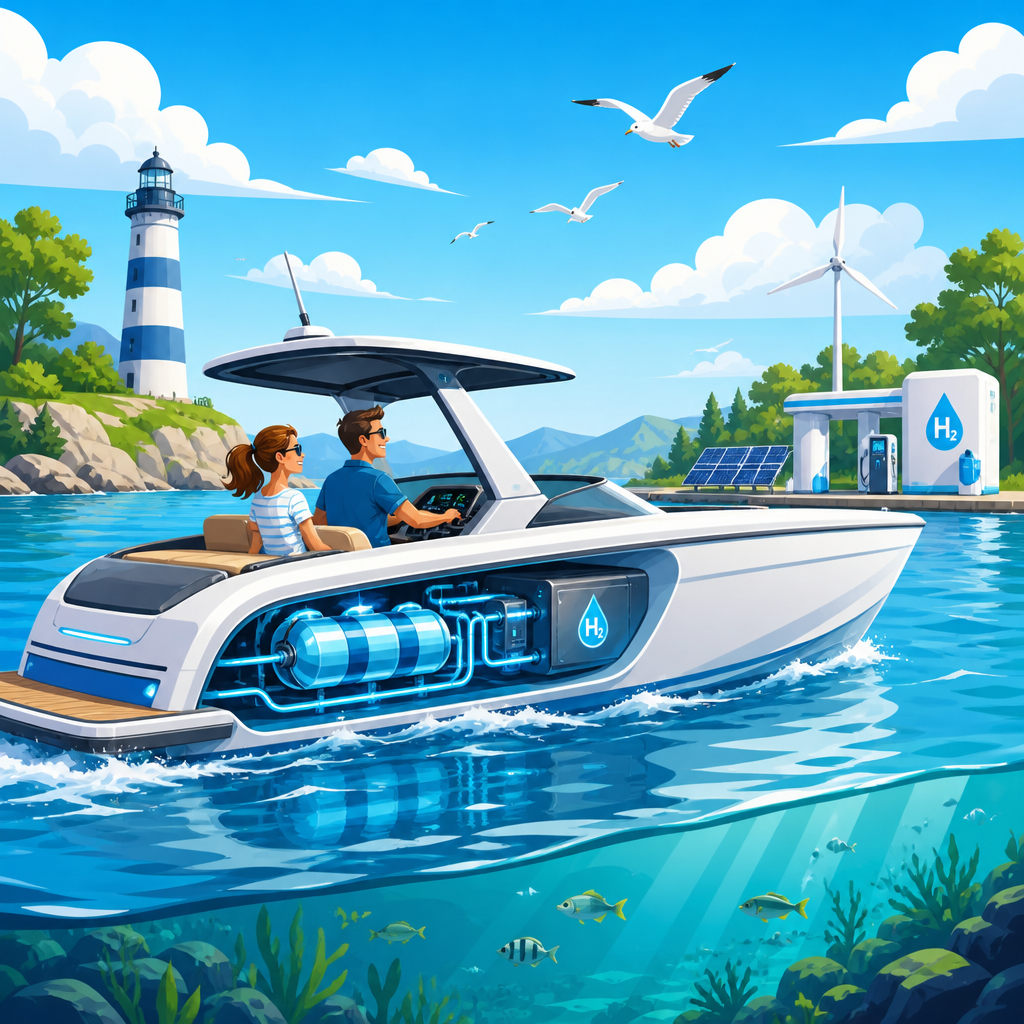
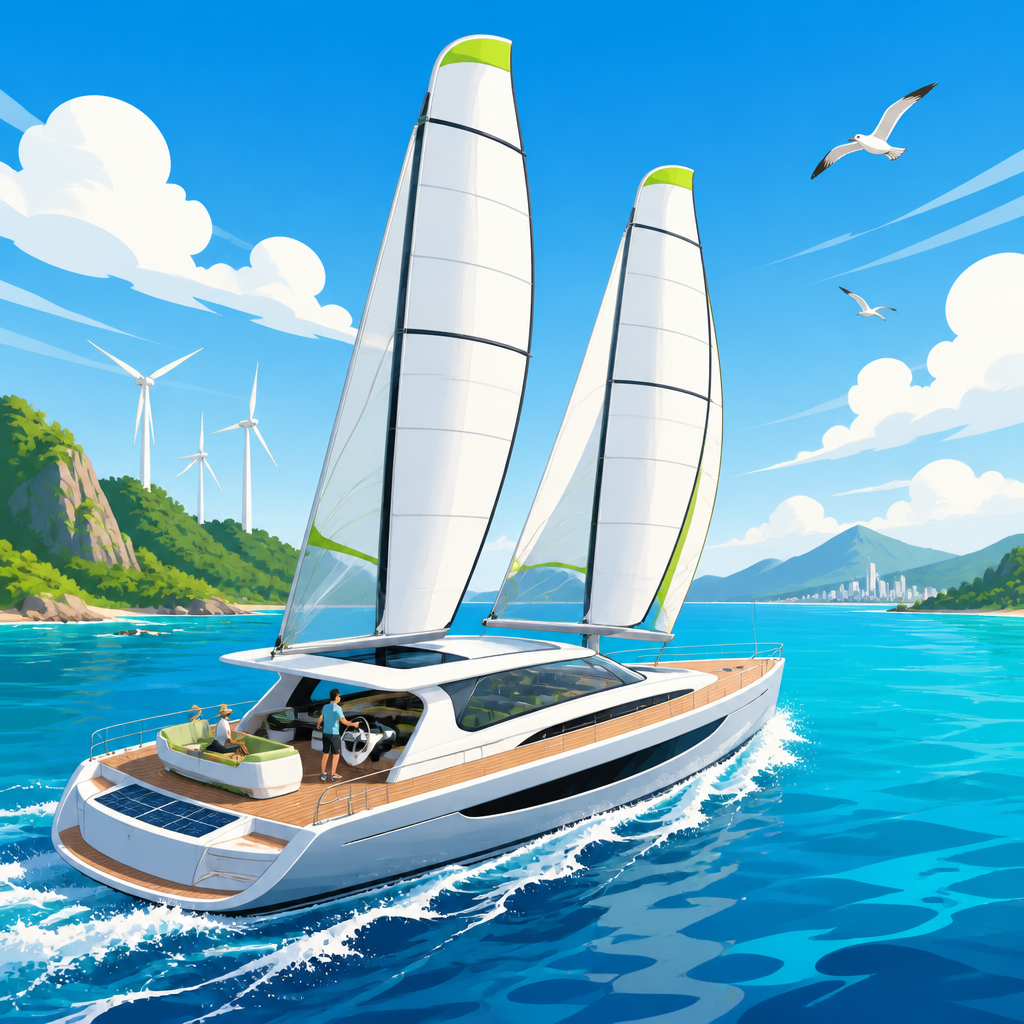
Wind-powered yachts are entering a new phase of development, where traditional seamanship meets advanced engineering to reduce fuel use, emissions, and operating costs across recreational and commercial boating. In practical terms, a wind-powered yacht is any vessel that uses aerodynamic force from sails, wings, kites, or hybrid propulsion systems to generate thrust, either as the primary means of movement or as a major supplement to engines. The topic matters because boating is under pressure to decarbonize, fuel prices remain volatile, and owners increasingly expect quieter, cleaner, and more efficient vessels without sacrificing range or comfort. After working with marine technology teams evaluating low-emission refits, I have seen one point become clear: wind is no longer a nostalgic design choice. It is becoming a serious technology platform.
The future of green boating technology is broader than sails alone. It includes electric drivetrains, battery management systems, regenerative propellers, lightweight composites, hydro-generation, digital route optimization, and alternative fuels used in hybrid architectures. Wind-powered yachts sit at the center of this transition because they can combine several efficiency gains at once. A well-designed sailing yacht can reduce engine hours dramatically, recharge onboard batteries under way, and cut hotel loads through smarter energy management. For long-distance cruisers, expedition yachts, charter fleets, and even luxury builders, that combination has strategic value. It lowers environmental impact while improving self-sufficiency offshore.
Understanding this sector requires a few key definitions. Propulsion describes how thrust is produced. Auxiliary power covers the systems that support living, navigation, communications, and safety onboard. Regeneration is the process of converting motion back into stored electrical energy, often through a free-spinning propeller connected to a motor-generator. Hybrid propulsion blends more than one energy source, such as wind plus diesel-electric or wind plus battery-electric drive. Decarbonization means reducing greenhouse gas emissions over a vessel’s lifecycle, including operation, maintenance, and in some cases construction materials. These terms shape nearly every design decision now being made by builders and naval architects.
For readers exploring eco-friendly and sustainable boating, wind-powered yachts serve as a hub topic because they connect nearly every major innovation in marine sustainability. Questions about battery range, marina charging, hull efficiency, solar integration, digital navigation, recyclable materials, and low-emission onboard systems all converge here. This article explains where the technology stands, what is changing fastest, and how owners can assess real-world options. It also points naturally toward deeper discussions on electric boat propulsion, sustainable yacht materials, marine energy storage, and low-impact cruising practices. If the next era of boating will be cleaner, smarter, and more resilient, wind-assisted and wind-driven yachts will be one of its most visible expressions.
Why Wind-Powered Yachts Are Returning to the Center of Marine Innovation
Wind never disappeared from boating, but for decades it was treated as either a leisure feature or a niche for bluewater cruisers. That is changing because the economics and regulatory environment have shifted. The International Maritime Organization has tightened pressure on emissions, ports are increasingly attentive to air quality, and yacht owners are asking harder questions about fuel burn per nautical mile. At the same time, software, materials science, and electric propulsion have improved enough to make sail-assisted systems measurably more capable. A modern yacht can now use onboard sensors, weather-routing algorithms, and autopilot integration to capture wind energy with a level of precision that was impossible in older analog setups.
The appeal is not only environmental. Wind propulsion improves range resilience. When a vessel can keep moving efficiently without depending entirely on stored electricity or liquid fuel, it gains a practical offshore advantage. This matters for passagemaking yachts, remote cruising, and charter operations where access to fuel or shore power may be limited. It also matters for noise and comfort. Under sail or wing assistance, vibration drops, conversation becomes easier, and wildlife encounters are less disruptive. Those quality-of-life factors often persuade buyers as much as carbon calculations do.
Recent launches show the market expanding in multiple directions. Performance cruising catamarans from builders such as Outremer and HH Catamarans emphasize lightweight construction and efficient passage speeds under sail. Luxury brands including Silent and Sunreef are pushing hybrid and solar-electric concepts that can complement sail systems in future designs. On the commercial side, projects using rigid wing sails and suction-based rotor technologies demonstrate that wind assistance scales beyond small craft. The key lesson is that green boating technology is no longer a single-product story. It is an ecosystem, and wind-powered yachts are one of the best entry points for understanding it.
The Core Technologies Shaping the Next Generation
The future of wind-powered yachts depends on integrated systems rather than one breakthrough component. Efficient hull forms come first. Naval architects reduce drag through careful displacement targets, waterline length optimization, appendage design, and computational fluid dynamics analysis. Weight savings from carbon fiber, infused laminates, and recycled-core materials can produce meaningful efficiency gains, especially in multihulls where excess mass directly affects speed and motion. Better sail plans then build on that foundation. Square-top mainsails, self-tacking jibs, Code zeros, and furling systems allow yachts to maintain power across broader wind angles while keeping handling manageable for short-handed crews.
Electric and hybrid propulsion are the second major pillar. Manufacturers such as Oceanvolt, Torqeedo, and ePropulsion have brought marine electric systems into mainstream conversation, though the best fit depends on vessel size and use profile. In a hybrid sailing yacht, electric motors can provide silent low-speed maneuvering, while diesel generators or range extenders cover longer motoring periods. Pure electric setups work best where daily distances are predictable and charging is reliable. In my experience assessing owner expectations, this is where unrealistic assumptions often appear. Battery-electric propulsion is excellent for marina departures, short coastal hops, and house loads, but sustained high-speed motoring offshore still demands careful energy budgeting.
Energy generation and management complete the picture. Solar arrays on biminis, coach roofs, and hardtops now contribute meaningful daily charging, especially in sunny cruising grounds. Hydro-generation from spinning propellers can restore battery capacity while sailing at passage speeds. Smart power systems balance refrigeration, watermaking, induction cooking, air conditioning, and navigation loads to avoid waste. The result is not a single green feature but a coordinated energy architecture.
| Technology | Main Benefit | Best Use Case | Key Limitation |
|---|---|---|---|
| Electric auxiliary drive | Quiet, low-maintenance maneuvering | Day sailing and short coastal trips | Limited range at high throttle |
| Diesel-electric hybrid | Flexible long-range operation | Cruising yachts with mixed itineraries | Higher system complexity |
| Hydro-generation | Recharges batteries under sail | Passagemaking at steady speed | Creates some drag |
| Rigid wing or advanced sail plan | Higher aerodynamic efficiency | Performance and commercial assistance | Cost and handling integration |
| Solar integration | Reliable hotel-load support | Anchoring and warm-weather cruising | Output varies by weather and area |
Design Trends: From Classic Sailing Yachts to Smart Hybrid Platforms
Design is moving toward platforms that treat every surface and subsystem as part of the energy strategy. Hardtops are being shaped to carry larger solar arrays without compromising visibility or boom clearance. Interior systems are switching from diesel-fed appliances to electric induction cooktops, heat-pump climate control, and variable-speed refrigeration. That matters because a green propulsion system fails in practice if hotel loads remain oversized. Sustainable yacht design therefore starts with demand reduction before adding generation capacity.
Multihulls are playing an outsized role in this transition because they offer deck area for solar, hull volume for batteries, and efficient passage speeds without deep heel angles. Yet monohulls remain highly relevant, especially for offshore capability, storm behavior, and marina accessibility. The better question is not which hull type is universally greener, but which one matches the owner’s operating pattern. A family cruising between marinas with frequent anchoring may benefit from a solar-rich catamaran. A serious offshore sailor prioritizing heavy-weather behavior may still choose a monohull with an efficient hybrid auxiliary and regenerative systems.
Automation is also changing usability. Load-sensing winches, integrated sail controls, and predictive routing software reduce crew workload and improve performance consistency. Systems from B&G, Garmin, Raymarine, and Expedition can combine apparent wind data, polar performance targets, current forecasts, and battery state of charge into better routing decisions. That digital layer is one reason wind-powered yachts are becoming more accessible to owners who value sustainability but lack racing backgrounds. The boat helps manage the complexity, provided the owner invests in commissioning, calibration, and training.
What Sustainability Really Means on a Yacht
True sustainability in boating goes beyond replacing diesel hours with sailing hours. Material choice, manufacturing waste, maintenance practices, end-of-life disposal, and local ecosystem impact all count. Composite construction remains difficult from a recycling standpoint, although progress is being made through thermoplastic resins, recycled PET cores, flax fiber experiments, and resin-infusion methods that reduce volatile emissions. Antifouling coatings are another overlooked issue. Fouling increases drag and fuel use, but some paints release biocides that can damage marine environments. Owners should weigh hull-cleaning schedules, low-toxicity coatings, and local regulations rather than treating bottom paint as an afterthought.
Water and wastewater systems matter too. Efficient watermakers, greywater awareness, blackwater holding compliance, and leak prevention all influence environmental impact. The same is true for anchoring behavior. A yacht with advanced propulsion can still harm seagrass beds if the crew anchors carelessly. Sustainable boating is therefore operational as much as technical. The most responsible vessels are usually run by crews who monitor energy consumption, weather windows, maintenance intervals, and local ecological rules with discipline. Technology makes better choices possible, but it does not automate stewardship.
Cost is the final sustainability filter. A greener system that is too expensive to maintain or too fragile for real cruising will not gain lasting adoption. Builders that succeed in this space are the ones delivering durability, service networks, transparent performance data, and sensible upgrade paths. Owners should ask for energy audits, realistic motoring curves, battery cycle expectations, and service access before accepting sustainability claims at face value.
Challenges, Tradeoffs, and What the Market Will Likely Do Next
The future is promising, but important constraints remain. Batteries are improving, yet marine energy density still lags what many owners expect from road vehicles. Fast charging infrastructure at marinas is inconsistent, especially outside Northern Europe and parts of North America. High-voltage systems require trained installers and careful safety protocols. Insurance and survey practices are adapting, but not uniformly. Spare parts support can also be uneven for newer propulsion brands. These are manageable issues, not deal breakers, but they explain why hybrid systems will likely dominate serious cruising yachts before pure electric propulsion does.
Weather dependency creates another tradeoff. Wind propulsion is powerful, but schedules, charter turnovers, and owner expectations do not always align with available conditions. That is why the most practical future is not an all-or-nothing contest between sail and motor. It is a layered model where wind does the heavy lifting whenever possible, electric systems handle low-speed and onboard loads efficiently, and combustion engines or alternative fuels provide resilience when needed. Methanol-ready generators, hydrogen experiments, and renewable diesel may all find roles, though each has storage, availability, and lifecycle questions still being resolved.
Over the next decade, expect three clear developments. First, more production yachts will be designed from the start around integrated energy systems rather than retrofitted after launch. Second, data transparency will improve, with builders publishing more credible performance and consumption profiles. Third, owners will become more sophisticated buyers, comparing not only sail area and interior volume but kilowatt-hours, regeneration rates, solar yield, and hotel-load efficiency. If you are evaluating the future of green boating technology, start with how a yacht captures, stores, and uses energy as a complete system. That perspective leads to better purchases, smarter cruising plans, and a lower-impact life on the water.
Wind-powered yachts represent a new era of sailing because they merge the oldest renewable marine energy source with the most advanced tools in modern boatbuilding. The result is not merely a cleaner boat. It is a more capable, self-sufficient, and intelligently managed vessel that can travel farther with less noise, lower emissions, and reduced dependence on fossil fuel. For the broader eco-friendly and sustainable boating landscape, this category works as a hub because it links propulsion, materials, route planning, onboard energy use, and responsible seamanship into one practical framework.
The central lesson is straightforward. No single technology will define sustainable yachting on its own. Efficient hulls, well-matched sail plans, hybrid auxiliaries, battery systems, solar generation, hydro-regeneration, and disciplined operations all matter together. Buyers should be skeptical of simple marketing promises and focus instead on whole-vessel efficiency, serviceability, and the realities of their cruising style. A yacht used for marina hopping has different needs than a transoceanic cruiser, and the best green solution reflects that difference honestly.
As this field matures, the winners will be owners and operators who learn enough to ask precise questions and choose systems that fit real use. Use this article as your starting point, then explore deeper topics such as electric boat propulsion, sustainable yacht materials, energy management onboard, and low-impact cruising methods. The future of green boating technology is already taking shape at sea, and wind-powered yachts are showing exactly where it is headed.
Frequently Asked Questions
What exactly is a wind-powered yacht, and how is it different from a traditional sailboat?
A wind-powered yacht is any yacht that uses aerodynamic lift or drag from the wind to move through the water, either as its main source of propulsion or as a major assist to onboard engines. That definition includes conventional sailing yachts, but it also extends well beyond them. Modern wind-powered yachts may use rigid wing sails, automated soft sails, kite-assist systems, rotor sails, or hybrid setups that combine wind propulsion with electric or low-emission mechanical systems. In other words, the category now covers vessels that still rely on seamanship, but also use sensors, software, and advanced materials to capture wind energy far more efficiently than older designs.
The key difference from a traditional sailboat is not simply whether a vessel has sails, but how the wind system is integrated into overall performance and operations. Traditional sailboats typically depend on manually managed sails and hull designs optimized primarily for recreational sailing. By contrast, the next generation of wind-powered yachts often uses computer-controlled trimming, weather-routing tools, lightweight composite structures, energy recovery systems, and hybrid propulsion architecture. These features allow the yacht to reduce fuel consumption, lower emissions, and improve voyage efficiency without giving up reliability or comfort. As a result, the modern wind-powered yacht is becoming less of a niche sailing craft and more of a serious platform for sustainable cruising, chartering, and even commercial marine transport.
Why are wind-powered yachts becoming more important now?
Wind-powered yachts are gaining momentum because the marine sector is facing growing pressure to cut fuel use, reduce greenhouse gas emissions, and control operating costs. Recreational owners, yacht builders, charter operators, and commercial vessel managers are all dealing with higher expectations around environmental performance. Fuel prices remain unpredictable, emissions rules are tightening in many regions, and buyers increasingly want vessels that align with broader sustainability goals. In that environment, wind is no longer viewed as an old-fashioned alternative. It is being re-evaluated as a practical energy source that can help modern yachts travel more efficiently and more responsibly.
What makes this moment especially significant is that the technology has matured enough to make wind assistance far more usable than it was in the past. Advanced sail handling systems can reduce crew workload. Data-driven routing can help captains take better advantage of prevailing conditions. Materials science has produced lighter, stronger spars, sails, and structural components. Hybrid propulsion systems also make it easier to combine the dependability of an engine with the efficiency of wind power. Together, these advances are turning wind propulsion from a romantic concept into a realistic operating strategy. For both leisure and commercial boating, that means lower fuel burn, quieter operation, reduced maintenance stress on engines in some conditions, and a clearer path toward long-term compliance with environmental standards.
What technologies are shaping the future of wind-powered yachts?
Several technologies are driving this new era, and the most important trend is integration. Instead of treating sails and engines as separate systems, modern yacht design increasingly combines them into a single, coordinated propulsion strategy. Automated sail controls are a major part of that shift. These systems use sensors, hydraulic or electric actuators, and onboard software to adjust sail trim, angle, and deployment based on wind speed, course, heel, and sea state. That makes wind propulsion more accessible to smaller crews and more practical for larger yachts that prioritize comfort and safety.
Rigid wing sails and semi-rigid airfoil structures are also attracting attention because they can deliver highly efficient aerodynamic performance. Unlike traditional fabric sails, these systems are engineered to maintain optimized shapes across a wider range of conditions. Kite-assist technology is another promising area, especially for larger vessels, because high-altitude winds can be stronger and more consistent than surface winds. In parallel, hybrid propulsion systems are becoming central to yacht innovation. A yacht may use wind as the primary source of thrust when conditions allow, then switch to electric drive, battery storage, or low-emission engines when maneuvering or maintaining schedule. Add in weather-routing algorithms, digital twins, smart energy management, hydro-generation under sail, and lightweight composite construction, and the result is a vessel that is not only wind-powered in principle, but intelligently optimized in real time for efficiency, range, and reliability.
Can wind-powered yachts really reduce operating costs and emissions in a meaningful way?
Yes, in many cases they can, especially when the yacht is designed from the outset to make strong use of wind propulsion rather than treating it as a secondary feature. The most direct benefit is reduced fuel consumption. When wind provides part or most of the thrust, engines run less often or at lower load, which can cut fuel expenses substantially over time. That reduction becomes even more important on longer passages, in charter operations, or in commercial applications where fuel costs are a major line item. Lower engine use can also reduce wear on propulsion components, potentially extending maintenance intervals and lowering service costs in the right operating profile.
The emissions impact can also be significant. Burning less fuel means lower carbon dioxide output, along with reductions in other pollutants associated with marine engines. For yacht owners and operators navigating environmentally sensitive areas or preparing for stricter regulations, this matters both financially and reputationally. That said, the scale of the benefit depends on the vessel type, route, weather conditions, onboard energy demand, and how effectively the system is managed. A poorly integrated setup will not deliver the same results as a purpose-built wind-assisted yacht with efficient hull lines, modern sail technology, and intelligent energy systems. The realistic takeaway is that wind power is not a magic solution on its own, but when paired with thoughtful naval architecture and hybrid support systems, it can deliver meaningful reductions in both operating costs and environmental impact.
Are wind-powered yachts practical for everyday owners, charter fleets, and commercial marine use?
They are becoming increasingly practical, but suitability depends on the use case. For private owners, modern wind-powered yachts can offer an attractive mix of range, lower fuel dependence, quieter cruising, and a more engaged on-water experience. Automation has reduced many of the physical and technical barriers that once made sailing systems intimidating for casual users. Owners who want sustainability without sacrificing comfort are especially likely to benefit, particularly on coastal passages and longer cruising itineraries where wind can be used consistently. For charter fleets, wind-assisted and hybrid yachts can also be valuable differentiators, appealing to guests who want lower-impact travel and a more distinctive experience on the water.
On the commercial side, practicality is advancing quickly, especially where operators are motivated by fuel savings and emissions targets. Not every route or vessel type is ideal for wind assistance, and schedule-sensitive operations still require dependable auxiliary power. Even so, modern commercial concepts are showing that wind can play a serious supporting role in cargo, expedition, research, and passenger operations. The main considerations include initial capital cost, crew training, deck layout, maintenance planning, and route optimization. As shipyards gain experience and component suppliers scale up, these barriers are likely to continue shrinking. The broader direction is clear: wind-powered yachts are moving from specialized craft into mainstream marine design, where they can serve recreational, luxury, and professional markets with a more efficient and environmentally responsible model of propulsion.