Fuel efficiency on the water is not just about saving money at the marina; it is one of the most practical ways to make boating more sustainable without sacrificing safety or enjoyment. In day-to-day operation, small adjustments in throttle use, trim angle, maintenance routines, route planning, and onboard habits can reduce fuel burn noticeably, cut exhaust emissions, and extend engine life. For boat owners looking for green boating practices for every boater, improving fuel efficiency is the most immediate place to start because it combines environmental benefit with clear operating savings.
Fuel efficiency in boating means moving a vessel the required distance while using the least practical amount of fuel for the conditions, load, and hull type. On a planing powerboat, that often depends on finding the right cruising speed and trim so the hull rides cleanly with minimal drag. On a displacement hull, efficiency is tied more closely to steady speeds, a clean bottom, and avoiding unnecessary weight. For sailboats with auxiliary engines, fuel efficiency also includes knowing when to motor, when to sail, and how to reduce hotel loads so the engine or generator runs less often. Across all boat classes, the same principles apply: reduce resistance, optimize propulsion, maintain equipment, and operate deliberately.
This matters because marine engines consume fuel quickly, especially when they are pushed beyond their most efficient range. A small change in speed can create a large jump in fuel use. In practice, I have seen owners gain meaningful range simply by backing off a few hundred rpm, trimming correctly, and clearing out gear they never use. These are not theoretical gains. They show up on fuel-flow gauges, trip logs, and maintenance invoices. Better efficiency also lowers the risk of range anxiety, reduces the amount of fuel that must be transported and stored, and supports cleaner waterways by reducing air pollutants and the chance of spills during refueling.
As a hub for green boating practices for every boater, this guide focuses on simple adjustments that deliver reliable results. It explains how to improve fuel efficiency with simple boating adjustments, but it also connects that goal to the broader habits of sustainable boating: preventive maintenance, responsible trip planning, cleaner fueling routines, lighter environmental impact, and smarter use of onboard systems. Whether you run an outboard fishing boat, a sterndrive bowrider, a trawler, a pontoon, or a cruising sailboat, the best sustainable boating practice is often the one you can apply on your very next trip.
Find the most efficient speed and trim
The fastest way to waste fuel is to run at a speed that feels good but sits outside the boat’s efficient operating range. Every hull has a sweet spot where fuel burned per mile is lower than at slower or faster settings. On planing boats, that point is usually a moderate cruise just above the minimum clean plane, not wide-open throttle and not the laboring transition zone where the bow is high and the stern digs in. Manufacturers often publish performance bulletins showing rpm, speed, and fuel burn. If your boat has a multifunction display linked to engine data through NMEA 2000, you can identify the best cruise setting directly by watching gallons per hour and miles per gallon.
Trim is equally important. Engine trim and trim tabs change how much hull remains in the water and how the bow meets waves. Too much negative trim keeps excess hull wetted and increases drag; too much positive trim can cause prop slip, porpoising, and reduced control. The goal is a balanced running attitude where the boat planes cleanly, steering feels light, and speed increases without a proportional jump in fuel burn. In real operation, I tell owners to make small trim changes in calm water at a fixed rpm, wait for the boat to settle, and note speed and fuel-flow readings. The efficient setting is usually obvious once you measure it instead of guessing.
Load placement affects trim as much as hardware does. Full coolers, spare anchors, batteries, and water toys stacked aft can force the stern down and waste fuel. Moving gear forward or balancing side-to-side weight can shorten time to plane and reduce throttle demand. On pontoons and center consoles, the difference can be dramatic. Even passengers matter. Asking everyone to stay aft during acceleration may help a sluggish hole shot, but at cruise that same distribution can be inefficient. Sustainable boating starts with awareness, and awareness begins by observing how the boat sits and how small changes alter the numbers on your display.
Keep the hull, propeller, and engine in top condition
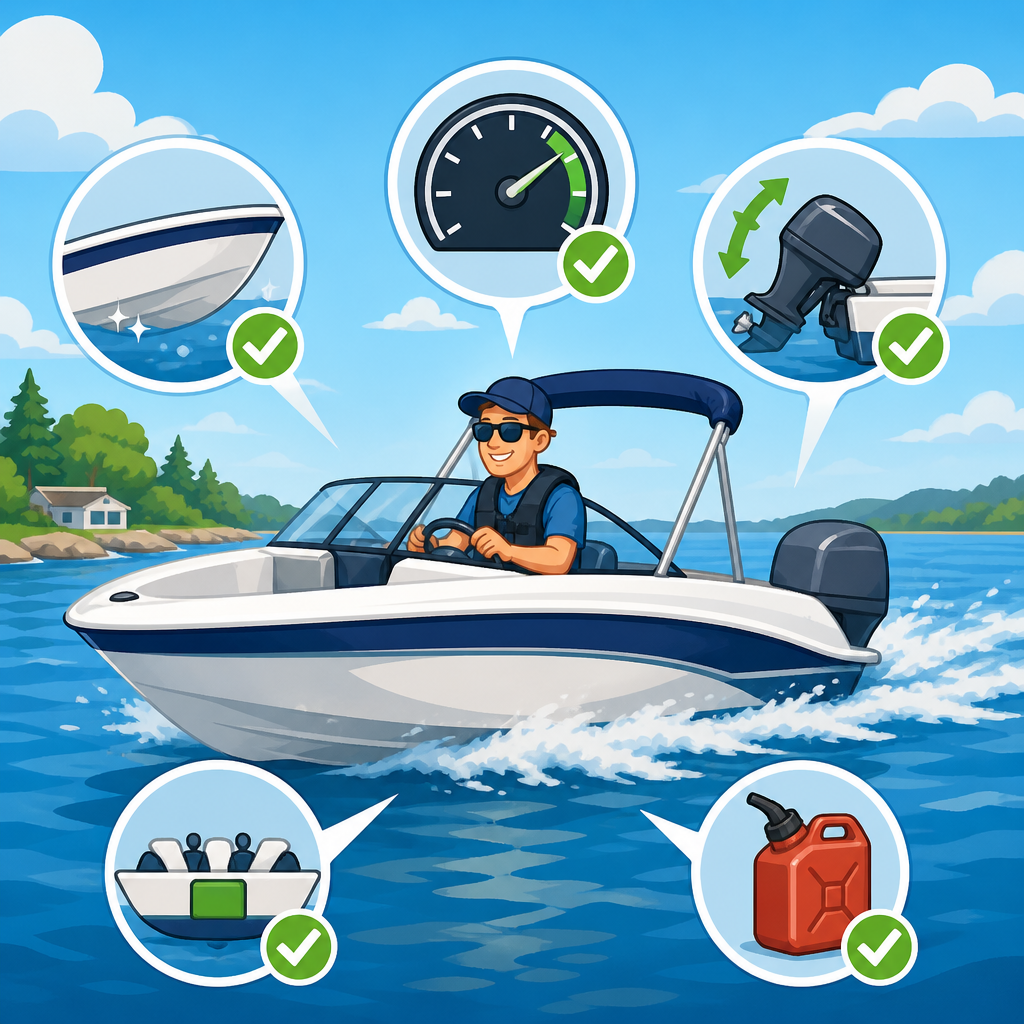
No operating technique can fully overcome poor maintenance. A fouled bottom, damaged propeller, worn spark plugs, restricted fuel filter, or underperforming injector will all raise fuel consumption. Hull fouling is one of the largest hidden penalties in recreational boating. Algae, slime, and barnacles increase surface roughness and drag, forcing the engine to work harder for the same speed. On boats kept in the water, routine bottom inspection and timely cleaning are essential. Antifouling coatings help, but they are not a substitute for checking the hull regularly. In warm marinas, growth can become significant in just weeks.
The propeller deserves the same attention. Nicks, bent blades, poor pitch selection, and incorrect diameter all affect efficiency. A damaged prop reduces thrust and can increase vibration, while the wrong pitch may prevent the engine from reaching the manufacturer’s recommended wide-open-throttle range. When that happens, the engine is overloaded, combustion efficiency suffers, and fuel use rises. A prop shop can often restore performance, and in some cases a different propeller style improves midrange economy. Stainless steel propellers hold shape better than aluminum, though they cost more and are not automatically the best choice for every boat or operating area.
Engine maintenance remains nonnegotiable. Follow the service schedule for oil, gear lube, fuel-water separators, thermostats, belts, and cooling system components. Replace clogged air filters where applicable, inspect ignition parts, and use the fuel grade specified by the engine maker. Modern four-stroke outboards, direct-injection two-strokes, diesel inboards, and gasoline sterndrives all have different service points, but neglect always shows up as wasted fuel or reduced reliability. If idle quality changes, starting becomes harder, or top rpm drops, investigate early. Sustainable boating is not only about using less fuel; it is about keeping machinery efficient enough that it does not consume extra fuel to mask preventable faults.
Reduce weight, drag, and unnecessary electrical load
Every pound on board must be pushed through the water or lifted onto plane, and every source of drag costs fuel. Many boats accumulate gear year after year: duplicate tools, old lines, extra anchors, waterlogged fenders, unused watersports equipment, and emergency items that expired long ago. Conducting a seasonal weight audit is one of the easiest green boating practices for every boater. Keep genuine safety gear, essential spares, and mission-specific equipment, but remove what does not belong on board. Draining unneeded water tanks before a short day trip can also make a noticeable difference, especially on smaller boats.
Drag is not limited to the hull bottom. Canvas left deployed, enclosures catching wind, poorly stowed dinghies, and transducers or brackets that disrupt water flow all add resistance. On trailer boats, even the choice to carry gear in the cockpit instead of the tow vehicle can increase launch weight and fuel use on the water. For anglers, livewells and bait systems should be used intentionally. Running every pump continuously when not needed increases electrical demand, which may in turn increase alternator load and engine effort. The savings from each item may look small, but together they create measurable gains over a season.
Battery charging and hotel loads matter most on cruising boats and sailboats, but the principle applies widely. Refrigeration, air conditioning, inverters, entertainment systems, and watermakers all consume energy that must ultimately come from shore power, solar, battery storage, a generator, or the propulsion engine. Replacing incandescent lighting with LEDs, improving battery management, and using solar panels to offset daytime loads can reduce generator runtime significantly. For eco-conscious boaters, efficiency is not limited to propulsion. It includes every watt consumed and every hour an engine must run to support comfort systems.
Use data, route planning, and weather to your advantage
Skilled operators do not rely on feel alone; they use data. A simple fuel log that records rpm, speed, sea state, passenger count, and gallons added can reveal patterns quickly. Many modern displays show real-time fuel economy, range at current burn, and trip fuel used. Those numbers help you answer practical questions: Is 3800 rpm more efficient than 4000? Does a half-full livewell cut economy enough to matter? Does your boat prefer tabs down in a chop or neutral in flat water? Once you collect evidence, you can repeat efficient setups instead of rediscovering them each weekend.
Trip planning saves fuel before the dock lines are untied. Favor routes that minimize unnecessary detours, idle time in no-wake zones, and adverse current where alternatives exist. Tide and current planning are especially important in inlets, rivers, and coastal passages. Running with a favorable current can reduce time and fuel consumption substantially. Wind and sea state also shape efficiency. Pounding into steep chop at high speed wastes fuel and stresses the boat. Often the greener choice is to leave earlier, choose a more protected route, or delay departure until conditions moderate. Good seamanship and fuel efficiency usually point in the same direction.
| Adjustment | What to check | Typical benefit | Best for |
|---|---|---|---|
| Lower cruise rpm slightly | Compare speed and fuel burn at two nearby settings | Better miles per gallon with small time penalty | Planing powerboats |
| Optimize trim and tabs | Watch bow angle, speed, and fuel-flow data | Reduced drag and cleaner plane | Outboards, sterndrives, pontoons |
| Clean hull and prop | Inspect for slime, barnacles, blade damage | Restores lost efficiency and speed | All boats |
| Reduce onboard weight | Remove unused gear and excess water | Quicker planing and lower fuel burn | Smaller boats, trailered boats |
| Plan around tide and weather | Review forecast, current tables, route options | Less throttle needed and safer passages | Coastal and inland boaters |
Electronics can sharpen these decisions. Chartplotters from Garmin, Raymarine, Simrad, and Furuno integrate weather, routing, and engine information, while engine platforms from Mercury, Yamaha, Honda, Suzuki, Volvo Penta, and Yanmar provide fuel-use data of varying detail. Even if your boat lacks advanced systems, smartphone weather apps, tide stations, and a notebook can accomplish the same purpose. The key is consistency. Sustainable operation comes from repeatable habits backed by numbers, not guesswork.
Adopt greener operating habits on every trip
The most durable fuel savings come from routine behavior. Avoid long warmups on modern engines unless the manufacturer specifies otherwise; today’s marine engines generally need only the time required for checks and safe departure. Minimize aggressive acceleration, repeated full-throttle runs, and unnecessary idling while waiting for passengers or bridges. If you troll for hours, consider whether a trolling motor, drift, sail assist, or a dedicated low-consumption kicker could handle part of the job more efficiently. On multiengine boats, follow the manufacturer’s guidance on engine synchronization and single-engine operation, because improper use can negate any expected savings.
Fueling practices are part of sustainable boating too. Top off thoughtfully rather than overfilling, use absorbent pads, and maintain deck fills and vent systems to prevent spills. A single small spill undermines the environmental benefit of careful fuel management. Choose marinas that maintain clean fueling equipment and support waste disposal, recycling, and pump-out access. If your boat has a holding tank, use pump-out stations instead of illegal discharge. While that does not directly improve miles per gallon, it belongs in the same operating mindset: reduce preventable pollution through normal routine.
For families and crews, set simple standards everyone can follow. Bring only the gear needed for the day. Stow items where they keep the boat balanced. Shut hatches, canvas, and systems not required underway. Record fuel use after each trip. Service the boat on schedule. These habits turn fuel efficiency from a one-time tuning exercise into a complete approach to eco-friendly boating. They also create a clear pathway to related improvements such as quieter operation, longer engine life, fewer breakdowns, and lower annual ownership cost. If you want green boating practices for every boater, start with the adjustments you can make this weekend, measure the result, and keep the practices that deliver cleaner, smarter time on the water.
Improving fuel efficiency with simple boating adjustments works because it addresses the factors that matter most: speed, trim, maintenance, load, and operating discipline. You do not need a new engine or a different boat to see results. Most owners can cut fuel waste by identifying an efficient cruise setting, keeping the hull and propeller clean, reducing excess weight, and planning trips with weather and current in mind. Those changes also support broader sustainable boating goals by lowering emissions, reducing spill risk, and extending the useful life of expensive equipment.
The larger lesson is that eco-friendly boating is practical, not abstract. Green boating practices for every boater begin with actions that improve the boating experience immediately: better range, lower cost, smoother performance, and fewer mechanical surprises. From there, it becomes easier to adopt the next layer of responsible habits, including efficient onboard power use, cleaner fueling routines, and better waste management. Sustainability on the water is built from many small decisions, repeated consistently, until they become standard seamanship.
If you want to make your boat greener, begin with one trip. Check your current rpm and fuel burn, adjust trim carefully, remove unnecessary gear, and log the outcome. Then schedule the maintenance that restores lost efficiency and review your usual routes for avoidable waste. Small adjustments compound quickly over a season. Start now, measure what changes, and make fuel-smart boating your default way to operate.
Frequently Asked Questions
What simple boating adjustments make the biggest difference in fuel efficiency?
The most effective improvements usually come from a handful of everyday operating habits rather than major upgrades. First, smooth throttle control matters a great deal. Rapid acceleration and running at unnecessarily high speeds force the engine to burn more fuel than needed, while steady throttle settings help the boat stay on plane more efficiently. Second, proper trim adjustment can have an immediate impact. When the engine or drive is trimmed correctly, the hull moves through the water with less drag, which means the motor does not have to work as hard to maintain speed. Third, reducing excess weight onboard is one of the easiest fixes many boaters overlook. Extra gear, full storage compartments, and unnecessary equipment increase resistance and fuel consumption. Fourth, keeping the hull clean and the propeller in good condition helps preserve efficiency because marine growth, dents, or damage create drag and reduce performance. Finally, routine engine maintenance, including clean filters, fresh oil, and properly functioning spark plugs, supports complete combustion and more efficient operation. Taken together, these simple adjustments can lower fuel burn noticeably while also reducing emissions and extending engine life.
How does boat speed affect fuel consumption?
Boat speed has a direct and often dramatic effect on fuel use. In general, the faster you go, the more fuel the engine must burn, but the relationship is not always linear. Many boats have a “sweet spot” where the hull is operating efficiently and the engine is producing good performance without excessive strain. Running below that point can sometimes be inefficient if the boat is struggling to stay on plane, while pushing well above that point usually causes fuel consumption to rise sharply. This is especially true when the throttle is advanced aggressively for only a small gain in speed. A practical approach is to test different RPM ranges and note where the boat feels stable, responsive, and economical. Many operators find that slightly reducing top cruising speed delivers meaningful fuel savings with very little sacrifice in travel time. This matters not only for cost control, but also for sustainability, because using less fuel reduces exhaust emissions and lowers the environmental footprint of every trip. Choosing an efficient cruising speed is one of the simplest green boating practices available to any boater.
Why is trim adjustment so important for better fuel economy?
Trim affects how the boat sits in the water and how efficiently the hull moves forward. When trim is set poorly, the bow may ride too high or too low, creating unnecessary drag and forcing the engine to use more fuel to maintain speed. Correct trim helps the hull lift and glide with less resistance, improving both ride quality and fuel economy. In practical terms, boaters should adjust trim gradually while underway and watch for signs of improved performance, such as smoother handling, increased speed at the same RPM, or a more balanced running attitude. If the bow is too high, visibility can suffer and the engine may labor. If the bow is too low, the boat may plow through the water rather than move efficiently across it. Water conditions, passenger distribution, and load size all influence the ideal trim setting, so it is rarely a one-time adjustment. Learning how your specific boat responds is valuable because proper trim not only conserves fuel, but also reduces engine stress and makes the ride more comfortable. It is one of the most immediate and cost-free ways to improve efficiency on the water.
What maintenance habits help improve fuel efficiency over time?
Consistent maintenance plays a major role in long-term fuel efficiency because even small mechanical issues can cause the engine and hull to perform below their designed potential. A clean hull is essential, since algae, barnacles, and other growth increase drag and force the engine to work harder. The propeller should also be inspected regularly for nicks, bends, or wear, because damage can reduce thrust and waste fuel. On the engine side, changing oil at recommended intervals, replacing fuel filters, checking spark plugs, and making sure the air intake and fuel system are clean all help the engine run smoothly and efficiently. It is also important to confirm that the engine is properly tuned and that cooling and ignition systems are functioning as intended. Tire-like issues do not exist on a boat, but alignment-related problems can still appear in the form of poor trim setup, improper mounting, or drivetrain inefficiencies. In addition, carrying old fuel or using the wrong fuel type can reduce combustion quality. Good maintenance is about more than reliability; it directly supports lower fuel consumption, reduced emissions, and better overall boating performance season after season.
Can route planning and onboard habits really reduce fuel use?
Yes, route planning and onboard habits can make a meaningful difference, especially over the course of a season. Planning a route in advance helps avoid unnecessary detours, repeated acceleration, and time spent idling while deciding where to go. It also allows boaters to account for tides, currents, wind, and water conditions, all of which influence how hard the engine must work. Traveling with favorable currents or avoiding rough water when possible can reduce resistance and improve efficiency. Onboard habits matter just as much. Long idle periods, excessive warm-up times, abrupt throttle changes, and carrying gear that is never used all contribute to higher fuel burn. Distributing passenger and cargo weight evenly can help the boat maintain a more efficient running angle, and combining errands or activities into a single well-planned outing can reduce total engine hours. Even small choices, such as topping off only the fuel needed for the trip rather than always carrying maximum weight, can improve performance. These practices are practical, easy to adopt, and fully compatible with safe, enjoyable boating. For owners who want greener boating habits without sacrificing convenience, better planning and smarter onboard behavior are among the most effective tools available.