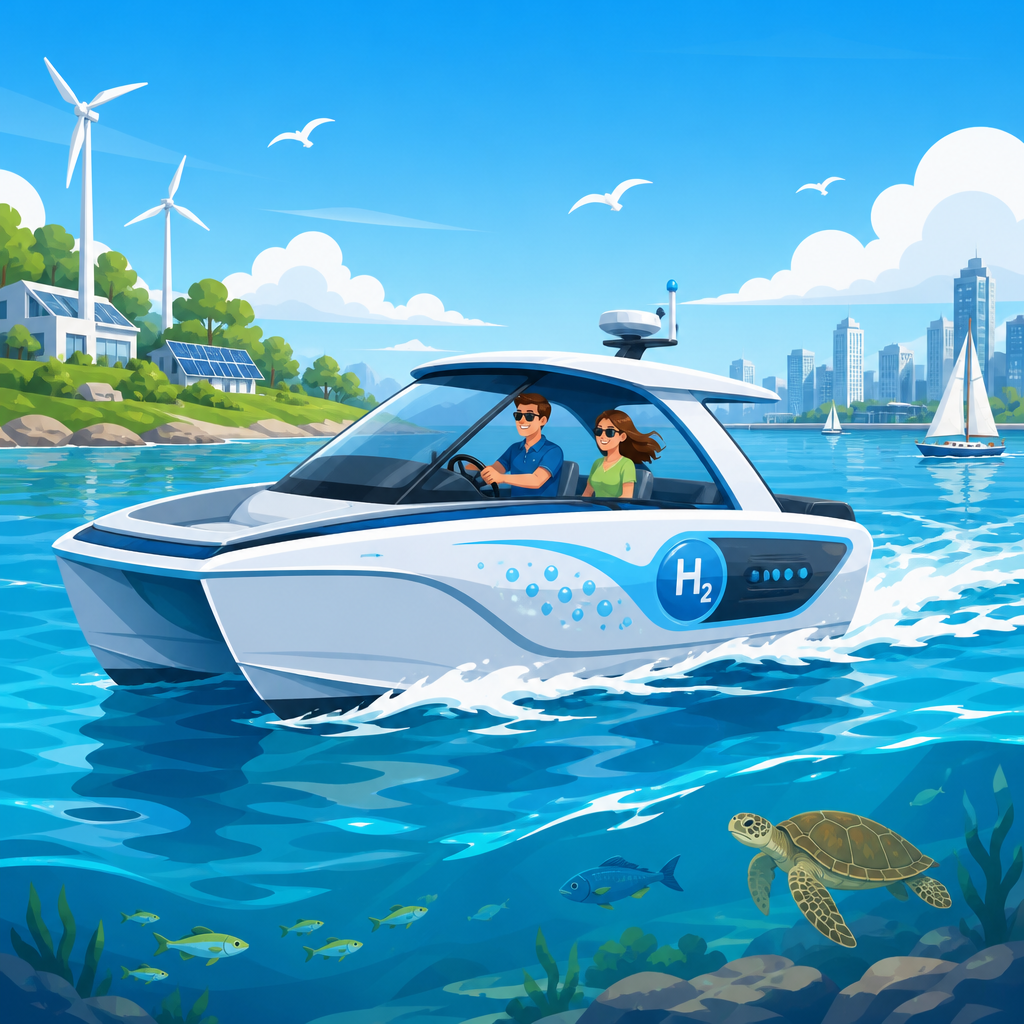
Electric boat batteries last longer when owners treat them like complete energy systems rather than simple fuel tanks. In the electric and solar-powered boats category, battery life sits at the center of cost, range, safety, and sustainability, which is why this hub article matters for anyone building, buying, or maintaining an eco-friendly vessel. Battery life means two related things: cycle life, or how many charge and discharge cycles a pack can deliver before capacity falls too far, and calendar life, or how the pack ages over time even when it is not heavily used. Most modern electric boats rely on lithium-ion chemistry, especially lithium iron phosphate, because it offers strong thermal stability, deep usable capacity, and lower maintenance than lead-acid. Yet even robust marine batteries degrade faster when they are overcharged, overheated, deeply discharged, poorly stored, or paired with undersized charging equipment. I have seen otherwise well-designed systems lose meaningful capacity in only a few seasons because owners ignored charging profiles, ventilation, and state-of-charge targets.
Extending battery life is not only about avoiding replacement costs, although that matters because marine battery banks can represent one of the most expensive components on an electric boat. It also protects resale value, keeps range predictions accurate, and reduces the environmental footprint of boating by delaying manufacturing and recycling impacts. For electric and solar-powered boats, battery care connects directly to propulsion efficiency, onboard electrical design, and charging habits at the dock and on the trailer. This article serves as a central guide to that full picture. It explains how marine battery chemistry works, what operating practices preserve capacity, how charging systems should be configured, how solar integrates with propulsion banks, and which maintenance routines prevent premature decline. If you want cleaner boating without sacrificing reliability, longer battery life is the practical foundation.
Understand what shortens battery life on electric boats
The fastest way to extend the life of your electric boat battery is to identify the conditions that accelerate degradation. In real-world use, the biggest stressors are heat, sustained high state of charge, very deep discharge, charging too fast for the pack design, and leaving the battery unattended with poor monitoring. Heat is especially damaging because elevated cell temperatures speed up side reactions inside the battery that permanently reduce capacity and increase internal resistance. In marine applications, this often happens inside sealed compartments, under dark deck surfaces, or in boats with inadequate airflow around chargers and inverters. Even when the water is cool, enclosed electrical spaces can run hot.
Depth of discharge matters almost as much. A battery cycled from 100 percent down to 10 percent on every outing generally ages faster than one cycled between roughly 80 percent and 30 percent. Many battery management systems permit deep discharge for emergency use, but that does not mean it is ideal for routine operation. High current draw can create a similar problem. If a boat is propped aggressively, overloaded, or pushed against tide and wind at full throttle for long stretches, the propulsion system demands higher amperage, which increases cell stress and heat. I routinely advise owners to view maximum throttle as a short-duration tool, not a cruising default.
Another common life reducer is mismatch between components. An electric boat battery performs best when the charger, solar controller, inverter, motor controller, cabling, and battery management system are configured to the battery manufacturer’s voltage and current specifications. A charger profile designed for lead-acid can over-hold voltage on a lithium pack. Undersized cables can create voltage drop and heating. A weak shore power connection may cause the charger to operate inconsistently. Small errors accumulate over months, then show up as reduced runtime and unbalanced cells.
Choose the right battery chemistry and system architecture
If you are selecting a new bank, chemistry choice strongly affects service life. Lead-acid remains cheaper upfront, but in electric propulsion it usually falls behind lithium iron phosphate because only a portion of its rated capacity is comfortably usable and repeated deep cycling shortens life quickly. AGM batteries can work in hybrid or auxiliary roles, yet they are heavy and less efficient under repeated propulsion loads. Lithium iron phosphate has become the preferred marine option because it commonly delivers thousands of cycles, maintains voltage more steadily under load, and tolerates frequent partial-state-of-charge operation better than many alternatives. That stability helps both propulsion efficiency and battery longevity.
System architecture matters too. A well-designed electric and solar-powered boat separates critical loads, protects the propulsion bank with an appropriate battery management system, and uses charging sources that communicate properly with lithium batteries. In practice, that means verifying low-temperature charge protection, cell balancing strategy, continuous and peak discharge ratings, ingress protection, and emergency disconnect placement. It also means sizing the bank for realistic use rather than optimistic brochure range. Undersized banks age faster because they are pushed harder on every trip. A conservative design with reserve capacity often costs less over the full ownership period than a minimal setup that lives near its limits.
For hub-level planning, think in modules: propulsion battery, house battery, shore charger, DC-DC charging, solar array, MPPT controller, monitoring display, and thermal management. Each deserves its own deeper guide, but the life-extension principle is simple. The more stable and balanced the system, the less stress the cells experience. Good design is preventive maintenance before the boat even touches the water.
Adopt charging habits that preserve capacity
Charging is where most owners either protect or slowly damage an electric boat battery. The healthiest routine is to follow the battery manufacturer’s recommended voltage setpoints and avoid keeping the battery at 100 percent for extended periods unless you need full range immediately. Lithium batteries do not benefit from being floated at maximum charge the way many people assume from lead-acid experience. For many boats, charging to a lower target for normal use, then topping off before a longer trip, is a smart compromise between convenience and longevity.
After years of reviewing marine installs, I have found that three habits consistently produce better battery health: moderate charging rates, prompt recharge after heavy use, and verified charger settings after any equipment change. Moderate charging reduces unnecessary heat, especially in warm marinas. Prompt recharge prevents batteries from sitting deeply discharged, which can trigger protective shutdowns or imbalance. Verifying settings matters because firmware updates, replacement chargers, and reconfigured solar controllers can quietly alter absorption voltage, current limits, or end-of-charge behavior.
| Practice | Why it helps battery life | Practical example |
|---|---|---|
| Charge to a routine target below full when possible | Reduces time spent at high state of charge, slowing calendar aging | Set normal dock charging to about 80 to 90 percent, then top up before a long outing |
| Avoid repeated deep discharges | Preserves cycle life and reduces cell stress | Return to shore with reserve capacity instead of running the pack to cutoff |
| Use the correct lithium charger profile | Prevents overvoltage, excess heat, and poor balancing behavior | Confirm bulk and absorption settings match the battery manufacturer’s documentation |
| Limit charging in extreme heat or freezing conditions | Protects cells from temperature-related damage | Delay charging until the battery compartment cools or low-temperature protection clears |
Owners often ask whether fast charging is bad. The answer is that it depends on the pack, the thermal design, and the charging current relative to capacity. Some marine lithium packs are designed for higher charge acceptance, but repeated high-rate charging still raises temperatures and can increase wear. Unless fast turnaround is operationally necessary, gentler charging usually supports longer service life.
Control temperature, ventilation, and storage conditions
Temperature control is one of the most overlooked aspects of electric boat battery longevity. Batteries prefer a moderate operating band, and marine environments can swing far outside it. Summer sun can turn lockers into ovens. Winter storage can expose packs to freezing conditions, especially in trailered boats. Lithium iron phosphate is more tolerant than some chemistries, but charging below freezing can still cause damage unless the battery includes low-temperature charge protection or an internal heater. Many premium marine batteries from brands such as Victron Energy, Mastervolt, and RELiON include monitoring or protection features, but they only help if owners understand the limits.
Ventilation around chargers and power electronics deserves equal attention. Chargers, inverters, and motor controllers all produce heat, which raises compartment temperature and warms nearby batteries. I have opened battery spaces where the pack itself was healthy, yet the charger fan was clogged with dust and salt residue, causing avoidable thermal stress every time shore power was connected. Simple maintenance such as clearing vents, checking fan operation, and keeping cable runs tidy can lower temperatures enough to make a real difference over multiple seasons.
Storage practices also matter. For offseason layup, most lithium manufacturers recommend storing batteries partly charged rather than completely full or empty, often around the middle of the charge range. Disconnect parasitic loads or verify that standby draws are low enough not to pull the pack down over months. If the boat remains in the water with active systems, use remote monitoring or scheduled inspections. A battery left flat all winter may not recover cleanly, even if the management system prevents catastrophic damage.
Improve efficiency so the battery works less hard
One of the most effective ways to extend the life of your electric boat battery is to reduce how hard it must work. Battery aging is load-dependent, so efficiency gains translate directly into lower current draw, less heat, and shallower cycling. Hull condition is a prime example. Fouling on the hull or propeller forces the motor to pull more power to maintain the same speed. On displacement boats, even small increases in drag can produce noticeable energy penalties. A clean hull, properly sized propeller, and aligned drivetrain reduce electrical stress every trip.
Speed choice has an outsized effect too. Electric boats are most efficient at moderate cruising speeds, not at maximum throttle. Because hydrodynamic resistance rises sharply with speed, adding a few knots often requires disproportionately more power. If a boat can cruise comfortably at a lower setting, the battery may deliver significantly more range per cycle, which means fewer deep discharges over the year. That reduction in cycle severity supports longer battery life.
Weight management helps as well. Extra gear, waterlogged equipment, oversized anchors, and unnecessary accessories all increase displacement. In small electric tenders and dayboats, a surprisingly small weight reduction can improve efficiency. Pair that with smart route planning that uses tides, avoids strong headwinds, and prioritizes charging opportunities, and the bank simply experiences less strain. Good seamanship and good battery care are closely linked.
Use solar strategically on electric and solar-powered boats
Solar does not magically eliminate battery wear, but when designed correctly it can reduce harmful charging patterns and support healthier energy management. On electric and solar-powered boats, solar works best as a steady supplemental source that offsets house loads, extends time between shore charges, and gently returns energy during layovers. That steady input is valuable because it can reduce the frequency of heavy recharge sessions and keep batteries from sitting low after use.
The key is proper integration. Panels should feed a quality MPPT charge controller programmed for the battery chemistry. Wiring should be sized to minimize voltage drop, and panel placement should account for shading from masts, canopies, and radar arches. Flexible panels can save weight, but rigid panels often offer better longevity and cooling. In my experience, the boats that benefit most from solar are not always the ones with the largest arrays. They are the boats whose owners understand their daily energy budget and use solar to maintain a stable charge profile rather than chase unrealistic propulsion-only expectations.
Solar also adds resilience. A moored boat with low standby loads and a correctly sized array can maintain battery health during idle periods without constant shore connection. That can be better for long-term battery life than leaving a charger floating indefinitely at full charge. Still, solar is not a substitute for monitoring. Seasonal sun angle, cloud cover, and shading can all reduce output, so owners should verify actual charge performance through a battery monitor, not assumptions.
Monitor the battery and act on the data
The best-maintained electric boat batteries are rarely managed by guesswork. They are managed with data from a battery monitor, the battery management system, charger logs, and periodic performance checks. At minimum, track state of charge, voltage, current, temperature, and consumed amp-hours. Better systems also display cell-level information, charge acceptance trends, and alarm history. Victron Cerbo GX, Mastervolt EasyView, and similar platforms make this practical for recreational owners.
Data helps you spot small problems before they shorten battery life. A pack that reaches full unusually quickly may have lost usable capacity. A battery that runs hotter than before under the same load may indicate ventilation issues, loose connections, or rising internal resistance. Imbalance warnings can point to a cell-level problem or a charger profile mismatch. Range declining over time is normal, but sudden changes deserve investigation. I tell owners to log a few benchmark trips each season, using the same route and speed, so they can compare energy use over time under familiar conditions.
Professional inspections remain worthwhile, especially on larger systems. Torque checks, infrared scans of connections, firmware review, insulation testing where appropriate, and charger verification can uncover issues that consumer displays will not explain clearly. Preventive diagnostics cost far less than replacing an abused battery bank years early.
Build a maintenance routine for long service life
Electric boat battery maintenance is lighter than maintaining combustion engines, but it is not zero. A practical routine includes visual inspection of cables and terminals, cleaning around equipment, confirming drip protection, reviewing monitor alarms, and checking that the battery compartment remains dry and secure. Corrosion at terminals increases resistance and heat. Loose mounting allows vibration stress. Salt contamination on electronics can impair cooling or damage connectors. None of these issues are dramatic at first, which is exactly why they shorten life quietly.
As the central hub for electric and solar-powered boats, this topic also connects to charger selection, propulsion sizing, marine solar design, battery safety, winterization, and used-boat evaluation. When those subjects are handled well, battery longevity improves as a downstream result. When they are ignored, the battery pays the price first. Treat the battery as the heart of the system and every related decision becomes clearer.
Longer battery life comes from a combination of good design, disciplined charging, thermal control, efficient operation, solar integration, and consistent monitoring. Choose lithium systems with marine-grade protection, size them conservatively, avoid frequent deep discharges, and do not leave them sitting full, hot, or neglected. Keep chargers programmed correctly, use solar as a stabilizing energy source, and verify performance with real data instead of estimates. These habits lower operating cost, preserve range, and strengthen the sustainability case for electric boating by reducing waste and replacement frequency. If you are building your knowledge around eco-friendly boating, use this hub as your starting point, then apply these battery-care principles on every trip and every charging cycle.
Frequently Asked Questions
1. What are the most important things I can do to extend the life of my electric boat battery?
The biggest gains usually come from managing heat, charge levels, discharge depth, and storage habits. Electric boat batteries last longer when they are treated as complete energy systems, not as simple fuel tanks that can be filled and emptied without consequences. In practice, that means avoiding repeated full discharges, limiting long periods at 100% charge when the boat is not about to be used, and keeping the battery within the manufacturer’s recommended temperature range. For many modern lithium battery systems, shallow to moderate cycling is far easier on the cells than regularly draining them close to empty.
It also helps to use a charger and battery management system that are properly matched to the chemistry and voltage of the pack. A high-quality battery management system monitors cell balance, temperature, voltage, and current, helping prevent the kinds of stress that shorten battery life over time. Routine inspection matters too. Loose terminals, corrosion, poor ventilation, and even excess vibration can add resistance, create heat, and slowly damage the system. If your boat includes solar charging, shore power, or regenerative inputs, those charging sources should be configured correctly so the battery is charged steadily and safely rather than aggressively or inconsistently.
Finally, your operating style makes a difference. Fast acceleration, long high-throttle runs, and oversized hotel loads can raise temperatures and increase strain on the battery. Smooth power demand, efficient cruising speeds, and attention to overall energy use can preserve both cycle life and calendar life. Cycle life refers to how many charge and discharge cycles the battery can provide before capacity declines significantly, while calendar life refers to how the battery ages simply over time. Protecting both is the key to getting the longest practical service life from your electric boat battery.
2. Is it bad to charge my electric boat battery to 100% every time?
In many cases, yes, charging to 100% for every cycle can accelerate battery aging, especially with lithium-ion systems. While a full charge is sometimes necessary when you need maximum range for a planned trip, keeping a battery at a very high state of charge for extended periods generally creates more stress inside the cells. That stress can contribute to faster capacity loss over time, which means the battery may still function but hold less usable energy than it did when new.
For day-to-day boating, many owners benefit from charging to a more moderate level unless a full battery is needed immediately before departure. The exact ideal charge window depends on the battery chemistry, the battery management system, and the manufacturer’s guidance. Some systems are designed to make 100% charging routine and safe, but even then, it is often better to avoid letting the pack sit fully charged for days or weeks. If you do charge to full, it is typically best to do so close to the time you plan to leave the dock rather than far in advance.
This is also where smart charging setup becomes important. Programmable chargers, marine energy management systems, and solar controllers can help maintain healthier charging patterns. Rather than thinking only in terms of “full is best,” it is more accurate to think in terms of “appropriate for the next use.” A battery prepared for the trip ahead, instead of always topped off, usually experiences less long-term wear. Over the life of the vessel, that small habit can help preserve range, delay replacement costs, and support safer, more predictable performance on the water.
3. How deeply should I discharge an electric boat battery before recharging it?
As a general rule, avoiding very deep discharges is one of the most effective ways to extend battery life. Repeatedly running an electric boat battery down to a very low state of charge can increase stress on the cells and shorten overall cycle life. Most lithium battery systems prefer partial discharges over full ones, which means it is often healthier to recharge after moderate use instead of waiting until the pack is nearly empty. This is especially important in marine applications, where reliability and reserve power matter for safety as much as convenience.
The right depth of discharge depends on the battery chemistry and the manufacturer’s specifications. Some batteries are rated to tolerate deeper discharge better than others, but tolerance does not necessarily mean it is ideal for longevity. There is a difference between what a battery can do and what is best for long-term health. For example, using 80% or 90% of available capacity occasionally may be perfectly acceptable, but doing it on every outing can age the pack faster than using a smaller portion of its total capacity more routinely.
It is wise to build in an energy reserve for real-world boating conditions such as wind, tide, current, unexpected detours, and additional onboard loads. If you operate with a margin instead of pushing the battery to its minimum limit, you reduce stress and improve safety at the same time. A good display system, battery monitor, or integrated marine control panel can help you track usable capacity more accurately than a simple percentage reading. The goal is not just to avoid getting stranded, but to operate in a charge range that supports both dependable performance and long battery life.
4. How do temperature and storage conditions affect electric boat battery lifespan?
Temperature has a major influence on battery aging, performance, and safety. Excess heat is especially damaging because it can accelerate chemical breakdown inside the cells, reduce long-term capacity, and increase system stress during charging and discharging. In practical terms, a battery that regularly operates in hot engine compartments, enclosed lockers with poor ventilation, or direct summer heat may age much faster than the same battery used in a cooler, better-managed environment. Cold temperatures matter too. Batteries generally deliver less available power when cold, and charging them when they are below the manufacturer’s safe temperature threshold can cause permanent damage in some chemistries.
Storage habits are just as important as operating temperatures. If the boat will sit unused for an extended period, the battery should usually be stored at a partial state of charge rather than completely full or nearly empty. For many lithium systems, a mid-range storage charge is ideal because it reduces stress while leaving enough reserve for monitoring electronics and self-discharge. The exact percentage varies by manufacturer, so it is important to follow the battery maker’s storage guidance instead of relying on a generic rule. Before storage, inspect the battery compartment for moisture, corrosion, poor cable conditions, and ventilation problems, because those issues can compound while the boat is idle.
Long-term storage also calls for periodic checks. Even a well-installed marine battery system should not be ignored for months without review. Owners should confirm that self-discharge remains within expected limits, that chargers or solar maintainers are configured correctly, and that no parasitic loads are draining the pack. In seasonal climates, winterizing and recommissioning procedures should include the battery system as a central step, not an afterthought. Proper thermal management and storage discipline can add meaningful years to battery life while also protecting range and reliability when boating season returns.
5. Does the rest of the boat’s electrical system affect battery life?
Absolutely. The battery does not operate in isolation, and its lifespan is heavily influenced by the design and condition of the entire electrical system. Motors, controllers, chargers, solar arrays, inverters, wiring, fuses, DC-DC converters, and onboard accessories all shape how hard the battery has to work. If any part of that system is undersized, poorly installed, inefficient, or mismatched, the battery may experience unnecessary heat, high current draw, uneven charging, or voltage instability. Over time, those stresses can reduce both performance and service life.
For example, resistance in cables or connections can generate heat and waste energy, forcing the battery to work harder for the same output. Incorrect charger settings can overcharge, undercharge, or improperly balance the cells. Large intermittent loads such as thrusters, refrigeration, induction cooking, or entertainment systems may create heavy demand spikes if the system was not designed to handle them smoothly. Even hull efficiency and propeller matching matter, because a boat that requires more power to maintain speed will cycle the battery harder and more often. In that sense, battery longevity is tied directly to the efficiency of the whole vessel.
This is why battery life should be viewed through a system-level lens. A well-integrated electric or solar-powered boat combines suitable battery chemistry, correct charge equipment, quality installation, accurate monitoring, and efficient energy use. Owners who pay attention to the full ecosystem usually see better range, more stable performance, lower long-term costs, and fewer surprises. If you want to maximize the return on a battery investment, one of the smartest steps is to evaluate the complete propulsion and electrical architecture, not just the battery pack itself.