Hybrid boating technology is reshaping marine transport by cutting fuel use, lowering emissions, and making cleaner cruising practical for private owners, charter fleets, ferries, and commercial operators. In simple terms, a hybrid boat combines two or more power sources, usually a combustion engine and an electric motor, managed by batteries, software, and energy controls that optimize when each source is used. The result is not just a quieter ride or lower fuel bills, but a measurable reduction in carbon dioxide, nitrogen oxides, particulate matter, and harbor-area noise. As marina regulations tighten, fuel prices fluctuate, and more boaters look for sustainable options, hybrid propulsion has moved from niche experiment to serious pathway for the future of green boating technology.
I have seen this shift firsthand in conversations with builders, marina operators, and owners comparing conventional diesel systems with parallel hybrid, serial hybrid, and plug-in electric configurations. Ten years ago, most questions were about whether electric propulsion could survive real marine duty cycles. Today, the questions are more specific: What battery chemistry is safest at sea? How much range is realistic at six knots versus planing speed? Can solar support hotel loads? Which hull types benefit most? Those are the right questions, because hybrid systems are not magic. Their carbon advantage depends on how the vessel is used, where it is charged, how efficiently the hull moves through water, and whether onboard energy management is designed correctly.
For readers exploring eco-friendly and sustainable boating, this article serves as a hub for the broader topic of green boating technology. It explains how hybrid propulsion works, where emissions savings actually come from, which vessel categories are leading adoption, what infrastructure still needs to improve, and how hybrid systems connect to related advances such as shore power, smart energy monitoring, lightweight materials, solar integration, and alternative marine fuels. If you want a practical view of the future of green boating technology, hybrid propulsion is the best place to start because it bridges today’s marine realities with tomorrow’s low-carbon expectations.
How hybrid boating systems work in real marine use
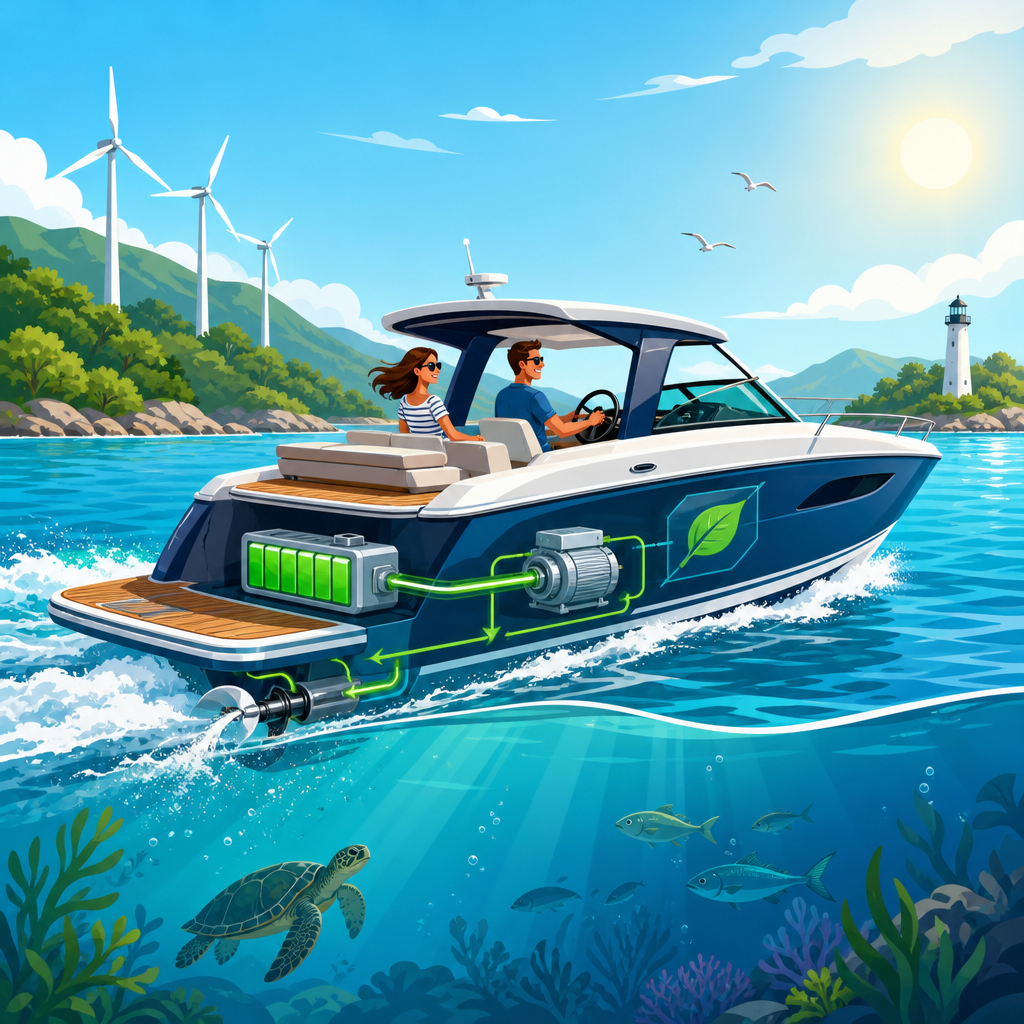
Most hybrid boats use one of three architectures. A parallel hybrid allows the internal combustion engine and electric motor to drive the propeller shaft together or separately. A serial hybrid uses an engine primarily as a generator; propulsion itself is electric. A plug-in hybrid adds the ability to recharge battery banks from shore power, reducing engine runtime even more. In each case, a power management system decides when to draw from batteries, when to run the generator or engine, and how to balance propulsion loads with hotel loads such as lighting, refrigeration, navigation electronics, and air conditioning.
The reason this matters for emissions is straightforward. Combustion engines are least efficient at low loads, yet boats spend a surprising amount of time idling, maneuvering in marinas, holding station, or cruising slowly in no-wake zones. Electric motors are excellent in those situations because they deliver torque instantly and efficiently without burning fuel. During harbor entry, canal cruising, wildlife tours, and short coastal hops, a hybrid boat can operate silently on battery power alone. When higher sustained power is needed offshore, the combustion engine can take over at a more efficient operating point. That operating logic is where much of the carbon reduction occurs.
Battery choice is central. Lithium iron phosphate has become common in marine hybrid projects because it offers good thermal stability, long cycle life, and strong usable depth of discharge compared with older lead-acid banks. Builders pair these batteries with battery management systems, high-voltage safety controls, inverter-chargers, and regenerative features where feasible. On sailing yachts, for example, some systems regenerate modest amounts of electricity under sail by freewheeling or controlled propeller drag. On motor vessels, solar can offset auxiliary loads, though solar alone rarely powers full propulsion except on very light, slow craft. The smartest installations treat the boat as a complete energy ecosystem rather than a single engine swap.
Where carbon reductions come from and how much they can be
Hybrid boating technology reduces carbon emissions through four main mechanisms: lower fuel burn, optimized engine loading, zero-emission operation during low-speed phases, and better integration of renewable or low-carbon electricity. Fuel savings vary widely by vessel and duty cycle, but reductions of 10 to 30 percent are common in well-matched hybrid applications, while some ferries and canal boats achieve larger cuts because they spend so much time in low-speed or stop-start operation. If the boat can complete a high share of annual hours in electric mode, the emissions benefit increases sharply.
Lifecycle reality matters, however. A hybrid boat charged from an electrical grid dominated by coal will not deliver the same carbon performance as one charged from a grid with high shares of wind, hydro, solar, or nuclear generation. Manufacturing batteries also carries an environmental footprint. In practice, though, marine hybrid systems usually still outperform equivalent pure combustion setups over time because operational emissions from fuel use remain substantial, especially for frequently used boats. The cleaner the electricity source and the more often the boat runs electrically, the faster the carbon payback arrives.
| Vessel use case | Why hybrid works | Likely emissions benefit |
|---|---|---|
| Harbor ferry | Frequent docking, low-speed maneuvering, predictable routes | High reduction from electric port operations and efficient load management |
| Canal cruiser | Long low-speed runtime, limited wake, shore charging access | High reduction because electric propulsion covers much of annual use |
| Sailing yacht | Regeneration under sail, low hotel-load optimization, silent anchoring | Moderate reduction, especially with solar and plug-in charging |
| Planing sport boat | High peak power demand at speed | Lower reduction unless use includes extensive idle and no-wake operation |
From my experience reviewing operating profiles, the biggest mistake owners make is assuming every hybrid boat cuts emissions equally. It does not. A displacement hull used five days a week on a short commuter route can deliver outstanding results. A heavy planing yacht that spends most of its time running fast offshore may gain quieter marina maneuvering and somewhat better efficiency, but not a dramatic carbon transformation. Matching technology to usage is the difference between a meaningful sustainability upgrade and an expensive novelty.
Which boats benefit most from hybrid propulsion
The strongest candidates for hybrid systems are vessels with predictable routes, extended low-speed operation, and meaningful hotel loads. Ferries are a leading example. Scandinavian operators have adopted electric and hybrid ferries aggressively because short routes, dense charging infrastructure, and strict environmental standards align well with battery propulsion. Norway in particular has become a benchmark market, demonstrating that hybridization is not theoretical. Passenger ferries, workboats, and sightseeing vessels in emission-sensitive waters often recover fuel and maintenance savings faster than private leisure boats because annual engine hours are high.
In the leisure sector, trawlers, canal boats, catamarans, and sailing yachts often see the most practical value. Trawlers and displacement cruisers operate efficiently at moderate speeds, which reduces battery drain and allows hybrid propulsion to cover larger portions of the trip. Sailing yachts benefit because propulsion hours are lower overall, and solar arrays can support refrigeration, lighting, navigation systems, and communications while reducing generator dependence at anchor. Hybrid catamarans also gain from space advantages: twin hulls can house batteries, motors, and solar panels more flexibly than many monohulls.
By contrast, high-performance powerboats face a tougher physics problem. Planing hulls need very large bursts of power to get onto plane and stay there. Batteries capable of delivering that output for long periods add weight, cost, and charging demands. Hybrid systems still help in marinas, protected waters, and overnight energy management, but the emissions savings per dollar invested may be lower than on slower vessels. That does not make hybrid a poor choice; it means buyers should prioritize honest duty-cycle analysis over marketing claims.
Why hybrid technology matters beyond carbon alone
Carbon emissions are only one part of the marine sustainability equation. Hybrid boating technology also reduces local air pollution in places where people feel it immediately: marinas, waterfront neighborhoods, tourist harbors, inland waterways, and ecologically sensitive anchorages. Electric-only operation cuts tailpipe emissions at the point of use, which means less exhaust odor, lower nitrogen oxides, and fewer particulates around docks and enclosed waterways. That has public-health value as well as environmental value.
Noise reduction is another major advantage that is often underestimated until owners experience it. Wildlife tour operators, anglers, and cruising families consistently value silent propulsion because it changes the onboard experience and lowers disturbance to birds, fish habitat, and coastal communities. Maintenance can improve too. Electric motors have fewer moving parts than internal combustion engines, and hybrid systems can reduce engine hours, which may extend service intervals for the diesel or gasoline component. Operators still need specialized technicians for high-voltage systems, but lower wear on the combustion side is a real operational benefit.
Hybridization also prepares boaters for a regulatory future that is becoming more demanding. Ports, lakes, and protected coastal zones are already tightening discharge, noise, and emissions standards. Builders that invest now in electrified drivetrains, smart monitoring, and shore charging compatibility will be better positioned as rules evolve. For owners, choosing hybrid can preserve access to sensitive cruising grounds and futureproof resale value more effectively than sticking with yesterday’s propulsion assumptions.
The supporting technologies shaping the future of green boating
Hybrid propulsion works best when it is paired with other efficiency technologies. Hull design is first on that list. A cleaner powertrain cannot fully compensate for an inefficient hull. Naval architects increasingly use computational fluid dynamics, optimized weight distribution, low-drag appendages, and advanced coatings to reduce resistance. Even small reductions in drag translate directly into lower energy demand, which matters twice in hybrid boats because every kilowatt saved can reduce both battery size and fuel consumption.
Energy management systems are equally important. Modern marine software can monitor battery state of charge, predict route energy use, schedule generator runtime at efficient load points, and prioritize critical systems. That level of control is one reason hybrid marine systems have become more viable in the last decade. The propulsion hardware matters, but the software layer often determines whether the theoretical efficiency appears in real-world use.
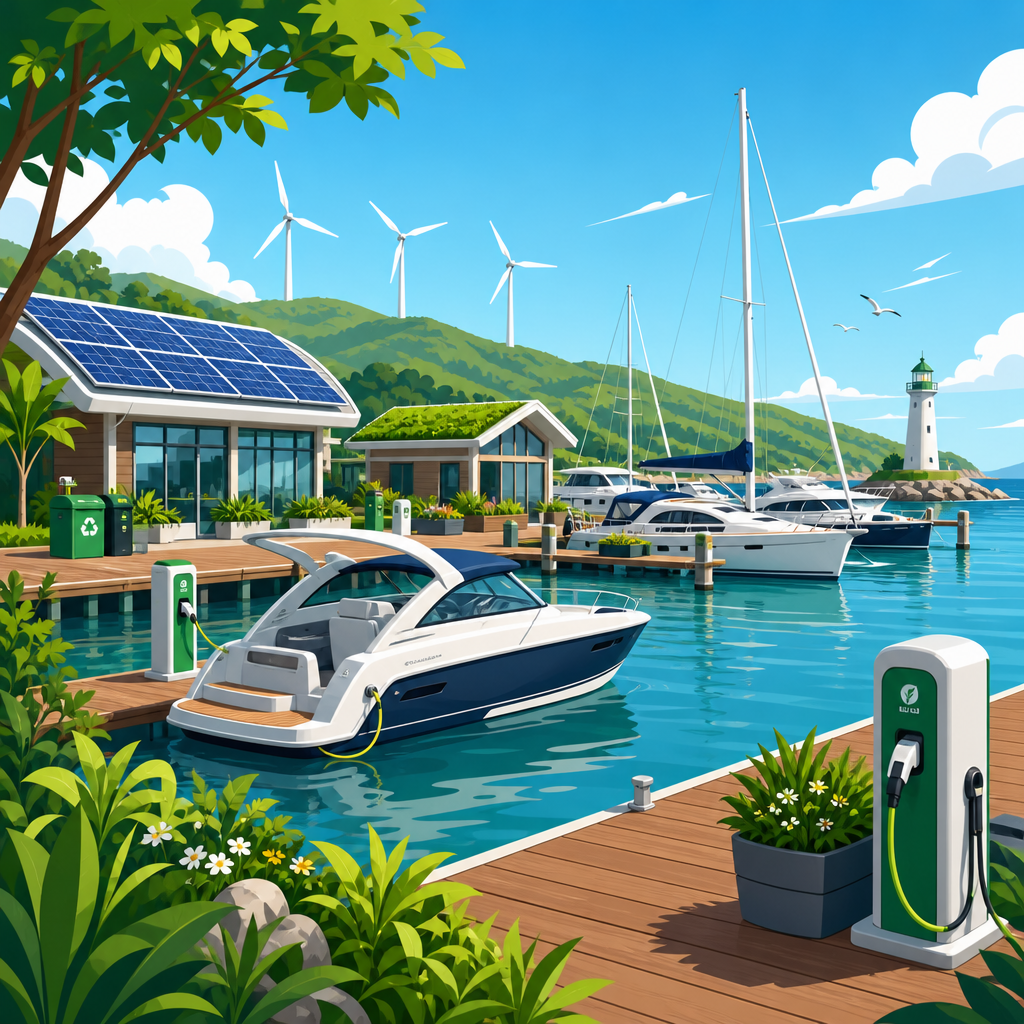
Charging infrastructure is another essential piece of the hub topic. Marina shore power needs upgrades in many regions to support widespread plug-in boating, especially for larger vessels. Smart chargers, load balancing, and standardized connectors will become more important as adoption rises. Alongside charging, alternative energy inputs are expanding. Solar canopies, integrated photovoltaic panels, methanol reformer concepts, hydrogen fuel cells for niche applications, and renewable diesel blends are all part of the broader future of green boating technology. None is a universal answer, but together they create a cleaner marine energy mix.
Challenges, tradeoffs, and what buyers should ask before investing
Hybrid boating technology is advancing quickly, but buyers should understand its limitations. Upfront cost remains the biggest barrier. Batteries, motors, inverters, cooling systems, and marine-grade safety engineering add significant expense compared with conventional propulsion. Weight and space are also critical constraints, especially in retrofit projects where engine rooms were never designed for high-capacity battery banks. Thermal management, waterproofing, corrosion protection, and compliance with standards from bodies such as ABYC and classification societies are non-negotiable.
Prospective owners should ask specific questions before buying. What percentage of annual operating hours can realistically be electric? What is the vessel’s energy use per nautical mile at different speeds? How long does charging take on available shore power? What happens if the battery bank degrades after eight or ten years? Is there redundancy for offshore safety? Which service yards are trained on the system? Those questions separate a practical purchase from a marketing-led one.
Retrofitting can be effective, but it is usually best on boats with favorable hulls, adequate space, and owners committed to a defined operating profile. New builds have an advantage because the entire platform can be designed around hybrid architecture from the start. Either way, the best outcomes come from treating sustainability as a systems decision that includes propulsion, route planning, speed discipline, maintenance, and charging strategy.
Hybrid boating technology is reducing carbon emissions because it tackles the biggest source of marine impact: inefficient fuel combustion during real-world operation. By blending electric propulsion with combustion power only when needed, hybrid boats cut fuel burn, lower local pollution, reduce noise, and create a practical bridge toward cleaner waterways. The strongest results appear in ferries, canal boats, trawlers, sailing yachts, and other vessels with predictable low-speed duty cycles, but the broader lesson applies to the entire marine industry: greener boating comes from smart system design, not from a single headline feature.
As the future of green boating technology unfolds, hybrid propulsion will sit at the center of a wider ecosystem that includes better hulls, cleaner marina power, advanced batteries, solar support, digital energy management, and alternative fuels. No solution is perfect for every boat, and honest tradeoffs around cost, range, weight, and infrastructure still matter. Yet the direction is clear. The marine sector now has proven tools to lower emissions without sacrificing safety or usability, and hybrid systems are among the most credible options available today.
If you are building, buying, chartering, or upgrading a boat, start by evaluating your actual operating profile and emissions goals. Then explore the connected topics within eco-friendly and sustainable boating, from shore power planning to efficient hull design and onboard energy monitoring. The greener future of boating will be built one well-matched system at a time.
Frequently Asked Questions
1. How does hybrid boating technology actually reduce carbon emissions?
Hybrid boating technology reduces carbon emissions by lowering the amount of diesel or gasoline a vessel needs to burn during normal operation. Instead of relying entirely on a combustion engine, a hybrid boat uses a combination of propulsion sources, most commonly an internal combustion engine paired with an electric motor and battery system. Smart energy management software decides when each power source should be used for maximum efficiency. For example, at low speeds, while maneuvering in marinas, or during short cruising periods, the electric motor can often handle propulsion on its own, eliminating fuel burn entirely during those phases.
Emissions reductions become even more meaningful over time because marine engines are often least efficient during idling, low-load operation, and stop-and-go use. Hybrid systems help avoid those wasteful operating conditions by shifting more of that workload to electric power. When the combustion engine is used, it can be run in more efficient ranges, which means less fuel consumed per mile or per hour. The overall result is a measurable drop in carbon dioxide emissions, along with lower output of other pollutants such as nitrogen oxides and particulate matter. In real-world terms, hybrid propulsion makes cleaner boating practical by reducing fuel dependence without requiring operators to give up range, reliability, or day-to-day usability.
2. What types of boats benefit most from hybrid propulsion systems?
Hybrid propulsion can benefit a wide range of vessels, but it is especially effective for boats that spend significant time at variable speeds or in repeated duty cycles. Private cruising yachts, day boats, canal boats, catamarans, harbor craft, passenger ferries, charter vessels, and certain commercial workboats are all strong candidates. These boats often operate in ways that play directly to the strengths of hybrid systems, such as slow-speed cruising, docking, hotel loads at anchor, and short-distance routes with frequent acceleration and deceleration.
Ferries and charter fleets can see particularly strong results because they run on predictable schedules and accumulate high operating hours, making fuel savings and emissions reductions easier to quantify. Private owners also benefit, especially if they value quiet operation, lower fuel costs, and reduced environmental impact. Even commercial operators are increasingly interested in hybrid configurations because they can improve compliance with tightening port and coastal emissions standards. While not every vessel profile is identical, hybrid boating is most effective wherever there is an opportunity to replace inefficient engine use with battery-supported electric operation and intelligent power management.
3. Is hybrid boating practical for long trips, or is it only useful for short-range cruising?
Hybrid boating is practical for both short-range and longer-distance use, although the way the system delivers value can vary depending on the vessel and route. For short trips, the benefits are straightforward: electric propulsion can often power part or all of the journey, especially at lower speeds, which can dramatically reduce fuel use and nearly eliminate local emissions during those segments. For longer passages, the hybrid advantage comes from using electric power strategically rather than continuously. The system can support propulsion during low-speed phases, smooth out engine loads, and allow the combustion engine to run closer to its most efficient operating point.
Many hybrid boats are designed specifically to address concerns about range anxiety. Because they retain a conventional engine alongside electric propulsion, they offer the flexibility and safety margin of traditional boating while still delivering cleaner operation. In some designs, batteries can also be recharged through shore power, regenerative systems, onboard generators, or engine-assisted charging. This makes hybrid setups far more versatile than all-electric systems in applications where long-range travel or limited charging access is a factor. In practice, hybrid boating is not just a short-hop solution; it is a transitional and highly usable technology that helps reduce emissions across many different cruising profiles.
4. Beyond lower emissions, what are the main advantages of hybrid boats for owners and operators?
Lower carbon emissions are a major benefit, but hybrid boats also offer strong operational and financial advantages. One of the most immediate is reduced fuel consumption, which can significantly lower running costs over the life of the vessel. Hybrid systems also enable quieter cruising, especially during electric-only operation, which improves onboard comfort for owners, guests, and passengers. That quieter experience is particularly valuable in marinas, protected waterways, wildlife-sensitive areas, and luxury charter environments where noise reduction enhances the overall quality of the trip.
Another important advantage is improved efficiency in how onboard power is managed. Hybrid boats often integrate propulsion, batteries, hotel loads, and charging systems into a smarter energy ecosystem. This can reduce generator runtime, limit unnecessary idling, and improve the vessel’s overall energy performance. In some cases, maintenance demands may also decline because engines are not working as hard or as often under inefficient conditions. For commercial fleets and ferries, hybrid technology can strengthen sustainability credentials, support environmental reporting goals, and help prepare for future regulations. In short, hybrid boating is not just about being greener; it is about creating a more efficient, comfortable, and future-ready marine operation.
5. Are hybrid boats an important step toward cleaner marine transport in the future?
Yes, hybrid boats are widely seen as an important and practical step toward cleaner marine transport. While fully electric and alternative-fuel vessels are gaining attention, many parts of the marine industry still face infrastructure, range, power-density, and cost challenges that make immediate full conversion difficult. Hybrid technology bridges that gap. It allows boat builders, fleet operators, and private owners to reduce emissions now using systems that are already commercially viable and adaptable to real operating conditions. That makes hybrid propulsion one of the most realistic near-term strategies for decarbonizing a broad segment of recreational and commercial boating.
Hybrid systems also help move the marine sector toward a more advanced energy future by encouraging better battery integration, smarter controls, shore-charging adoption, and cleaner vessel design overall. As battery performance improves and charging networks expand, many of today’s hybrid platforms may become even cleaner and more capable. In that sense, hybrid boating is not a temporary compromise so much as a meaningful transition technology. It delivers immediate carbon reductions, supports regulatory compliance, and helps normalize low-emission marine operations across private, passenger, and commercial use cases. For an industry under increasing pressure to cut its environmental footprint, hybrid boating is a highly credible part of the solution.