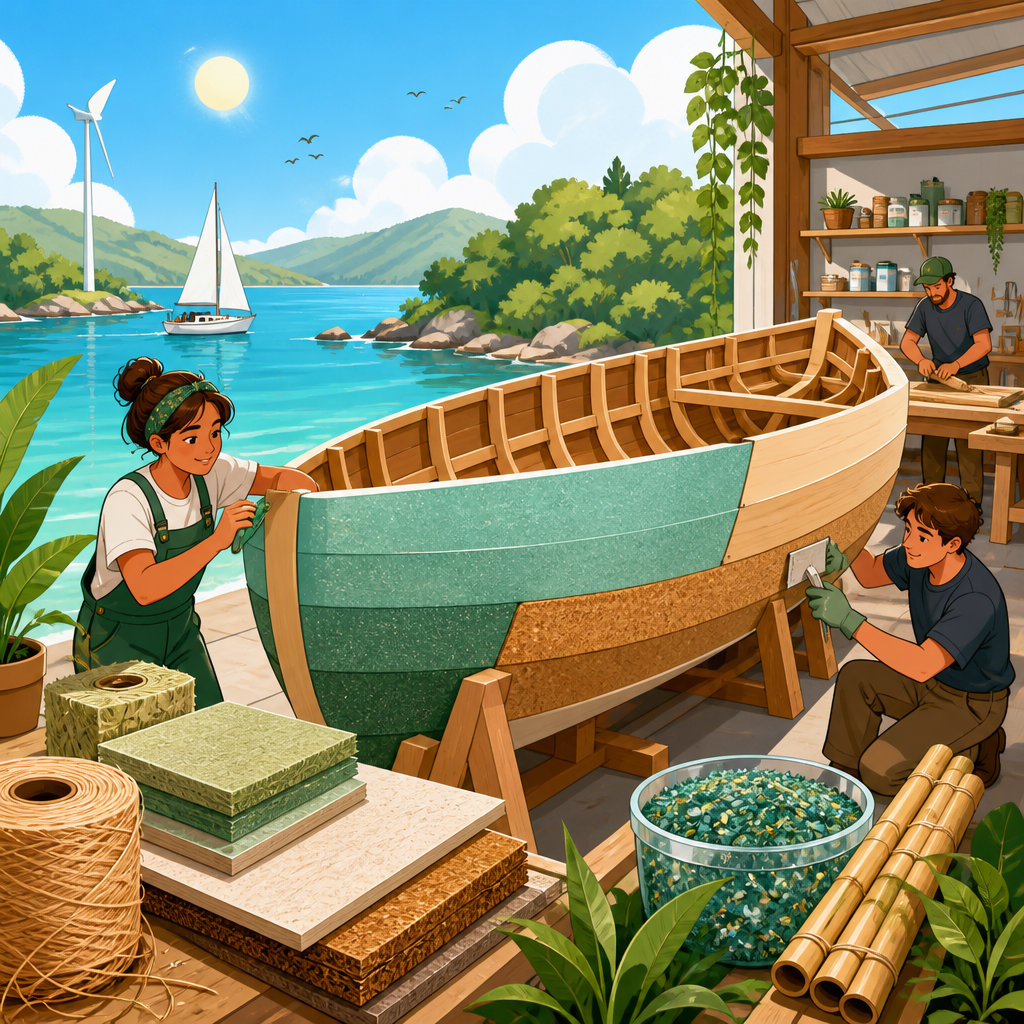
Sustainable boatbuilding materials are changing how vessels are designed, manufactured, operated, and eventually retired, making the marine industry cleaner without sacrificing strength, safety, or performance. In practical terms, sustainable boatbuilding materials include renewable, recycled, low-toxicity, and longer-lasting inputs used in hulls, decks, interiors, cores, coatings, and structural components. This category spans responsibly sourced timber, recycled aluminum, recyclable thermoplastics, natural fiber composites, bio-based resins, cork decking, low-VOC adhesives, and advanced foams with lower environmental impact. I have watched boatyards and designers move from treating sustainability as a marketing add-on to treating it as a technical requirement driven by regulation, owner expectations, and material science. That shift matters because conventional fiberglass construction, solvent-heavy coatings, tropical hardwood extraction, and difficult end-of-life disposal have left boating with a sizable environmental burden. Sustainable boat design and materials address the full lifecycle: raw material extraction, manufacturing energy, maintenance demands, onboard health, repairability, and recyclability. For builders, this means lower waste and better compliance. For owners, it often means lighter maintenance, healthier cabins, and stronger resale narratives. For the wider industry, it opens a path toward circular manufacturing rather than a take-make-dispose model. As a hub topic within eco-friendly and sustainable boating, this subject connects directly to electric propulsion, efficient hull design, green marinas, antifouling choices, and responsible cruising, because material decisions influence every environmental outcome a boat produces.
What sustainable boat design and materials actually include
Sustainable boat design and materials start with a simple question: what can deliver required marine performance with less environmental cost across the vessel’s lifespan? In my work reviewing production methods and refit specifications, the best results come when design teams look beyond one “green” material and instead optimize the entire system. A lower-impact hull paired with toxic coatings and wasteful fabrication is not a sustainable solution. Good practice evaluates embodied carbon, toxicity, durability, maintenance intervals, repair pathways, and end-of-life options together.
In today’s market, several material classes are leading the transition. Marine-grade aluminum already performs well in workboats and expedition craft, and when it contains recycled content its footprint drops significantly compared with primary smelting. Sustainably harvested wood certified through FSC or PEFC remains valuable for interiors, joinery, and some specialized construction, particularly when replacing illegally logged tropical hardwoods. Natural fibers such as flax, hemp, and basalt are increasingly used in composite laminates, especially for interior panels, deckhouses, and secondary structures. Bio-based epoxy and polyester systems partly replace fossil feedstocks while preserving mechanical properties needed for marine use. Recycled PET foam cores, cork, linoleum, and low-emission adhesives reduce toxicity and landfill pressure inside the boat.
Sustainable boat design also includes geometry and engineering choices. Weight reduction lowers propulsion energy. Modular interiors simplify repair and future upgrades. Mechanical fasteners can outperform permanent bonding in areas likely to be serviced. Specifying standard panel sizes reduces offcut waste in production. These decisions may seem small individually, but together they define whether a boat is built for decades of useful service or for premature disposal.
Why conventional materials created pressure for change
Traditional fiberglass boat construction transformed recreational boating because it made mass production possible, but it also introduced difficult environmental tradeoffs. Thermoset fiberglass laminates are durable and corrosion resistant, yet they are notoriously hard to recycle once cured. End-of-life fiberglass boats often become storage liabilities, abandonment risks, or landfill waste because separating resin from glass economically at scale remains challenging. In Europe, this problem has grown large enough to drive focused dismantling and composite recovery programs, and similar pressure is building elsewhere as aging fleets approach retirement.
Conventional marine coatings and adhesives have created another problem. Solvent-rich products can emit volatile organic compounds that affect worker exposure during construction and owner exposure during refits. Traditional antifouling paints historically relied on biocides that protected hull efficiency but could also harm surrounding aquatic ecosystems. Add in the routine use of tropical hardwoods for decks and trim, some sourced through opaque supply chains, and it becomes clear why buyers and regulators started demanding better answers.
Economics have reinforced the shift. Disposal costs are increasing. Insurance and compliance teams want better documentation. Younger buyers often ask where materials come from, whether they can be repaired, and how healthy cabin finishes are. Builders that ignore those questions now risk higher lifecycle costs and weaker brand trust. Sustainable boatbuilding materials are not replacing legacy materials overnight, but they are forcing every serious yard to reassess assumptions that once went unchallenged.
The leading sustainable materials reshaping modern boatbuilding
The most important change is not one miracle material; it is a portfolio of better choices matched to specific marine functions. Recycled aluminum is a standout example because it retains core performance characteristics while requiring far less energy than primary production. In patrol boats, tenders, and passagemakers, aluminum’s repairability and recyclability give it a strong lifecycle case, especially when coatings are chosen carefully to manage corrosion.
Natural fiber composites are another breakthrough area. Flax fiber, used by builders such as Greenboats and explored in racing and leisure applications, can reduce embodied impact compared with glass fiber in selected parts. It also damps vibration well, which can improve onboard comfort. However, it is not a universal replacement for fiberglass; moisture behavior, fiber consistency, and structural load requirements must be engineered carefully. In practice, natural fibers work best in noncritical structures, interior panels, and hybrid laminates where designers can exploit their strengths without overpromising.
Bio-based resins have matured quickly. Suppliers now offer epoxy systems with a significant share of plant-derived carbon while maintaining processing characteristics familiar to composite shops. They do not make a boat automatically recyclable, but they lower dependence on petrochemicals and can reduce worker exposure when paired with better shop ventilation and infusion processes. Recycled PET foam core is now common in quality sandwich construction because it provides strong stiffness-to-weight performance while creating demand for recovered plastic streams.
| Material | Typical Boat Uses | Main Sustainability Benefit | Key Limitation |
|---|---|---|---|
| Recycled aluminum | Hulls, superstructures, workboats | Highly recyclable, durable, lower embodied energy than primary aluminum | Energy intensive if not recycled; corrosion control still required |
| FSC-certified wood | Interiors, trim, decking alternatives | Renewable when responsibly sourced, repairable, lower toxicity | Needs maintenance and verified chain of custody |
| Flax or hemp composites | Panels, deckhouses, secondary structures | Renewable fibers, good vibration damping, lower impact in some laminates | Not ideal for every high-load structural application |
| Bio-based resin | Composite laminates, infused parts | Reduced fossil feedstock dependence | Still often paired with hard-to-recycle thermoset systems |
| Recycled PET foam core | Hulls, decks, bulkheads | Uses recycled plastic, lightweight, strong in sandwich panels | Recycling composite sandwich structures remains difficult |
Other materials deserve attention too. Cork decking can replace some synthetic surfaces and tropical hardwood applications while remaining cooler underfoot and naturally grippy. Bamboo is sometimes used in interiors, though marine suitability depends heavily on adhesives and finishing systems. Linoleum, wool, and recycled textiles are appearing in cabin spaces where indoor air quality matters. The real revolution is that builders no longer have to choose between performance and responsibility as often as they did a decade ago.
How sustainable materials affect performance, safety, and maintenance
A common question from buyers is whether sustainable boatbuilding materials are weaker or less durable than conventional options. The answer is no, provided the material is matched correctly to the application and engineered to marine standards. I have seen recycled aluminum patrol craft withstand punishing duty cycles, cork decking outlast neglected teak in certain use cases, and recycled-core sandwich panels deliver excellent stiffness. Sustainability does not excuse poor engineering; it rewards disciplined engineering.
Performance gains often come from weight control. Lighter structures need less propulsion energy, whether the boat uses diesel, hybrid systems, or electric drives. Weight saved in interiors or superstructures can improve stability margins or allow more efficient battery placement. Composite infusion with precise resin control also reduces waste while producing more consistent laminate quality than older hand lay-up methods. Less excess resin usually means lighter, stronger parts.
Safety and onboard health also improve when builders use lower-emission adhesives, sealants, and finishes. Reduced VOC products can create better working conditions in factories and more comfortable interiors for owners, especially in enclosed cabins where off-gassing lingers. Maintenance benefits are equally important. Modified wood products, high-quality powder coatings, and modern synthetic alternatives can cut sanding, oiling, and refinishing cycles. Sustainable choices are not always maintenance-free, but the best ones reduce recurring labor, chemical use, or replacement frequency. Over a twenty-year ownership period, those reductions can outweigh higher upfront material costs.
Lifecycle thinking is the real industry breakthrough
The biggest advance in sustainable boat design is lifecycle assessment, not any single product label. Smart builders now evaluate where emissions, toxicity, waste, and cost occur from cradle to grave. That means measuring extraction, transport, fabrication losses, use-phase efficiency, refit intervals, and disposal options. A material with slightly higher production impact may still be the better environmental choice if it lasts much longer, saves fuel, and can be recovered at end of life.
This is why design-for-disassembly is gaining traction. If deck hardware, interior modules, batteries, tanks, windows, and electronics can be removed without destroying surrounding structure, repairs become cheaper and boats stay in service longer. The same logic applies to hull construction. Thermoplastic composites, still emerging in mainstream boatbuilding, are attracting attention because they offer welding, reshaping, and improved recycling pathways compared with thermosets. Brands and research groups across Europe are actively testing these systems for serial production.
Standards and certifications help separate meaningful progress from vague claims. ISO standards guide marine safety and quality expectations. FSC certification supports responsible forestry. Environmental Product Declarations and supplier carbon data are becoming more common in professional procurement. In refit projects, I advise clients to ask for chain-of-custody documentation, resin technical data sheets, recycled-content percentages, and coating VOC information. If a supplier cannot provide basic evidence, the sustainability claim is incomplete.
What this means for builders, buyers, and the future of boating
For builders, sustainable boatbuilding materials are becoming a competitive necessity. They can reduce waste disposal costs, strengthen compliance, and create clearer product differentiation in crowded markets. Early adopters are already using sustainability as a design brief, not just a sales message. For buyers, the benefits are tangible: healthier interiors, lower maintenance, stronger resale positioning, and in many cases better efficiency. Commercial operators gain from durability, easier repairs, and growing eligibility for ports, clients, or public contracts that prioritize environmental performance.
The transition is not frictionless. Some materials cost more upfront. Supply chains for natural fibers and bio-based systems can be inconsistent by region. Composite recycling remains a difficult technical frontier. Even so, directionally the industry is set. Regulations on chemicals, waste, and emissions will tighten. Marina infrastructure will evolve. Electric and hybrid propulsion will make lightweight, efficient structures even more valuable. Boatyards that integrate sustainable design and materials now will be better prepared for that future than those relying on outdated construction habits.
This hub topic matters because every related conversation in eco-friendly boating flows through it. Cleaner propulsion works best with lighter boats. Low-impact cruising depends on durable, repairable construction. Responsible ownership starts with understanding what your boat is made from and how those materials behave over time. Sustainable boat design and materials are revolutionizing the industry by moving environmental responsibility from the margins into the structure of the vessel itself. If you are comparing boats, planning a refit, or researching greener marine technology, start by auditing materials, asking for documentation, and choosing designs built for long service life rather than short-term convenience.
Frequently Asked Questions
What are sustainable boatbuilding materials, and how are they different from traditional marine materials?
Sustainable boatbuilding materials are marine-grade inputs chosen to reduce environmental impact across the full life of a vessel, from raw material extraction and manufacturing to daily operation, maintenance, and end-of-life disposal or recycling. In practice, this includes responsibly sourced timber, recycled aluminum, recyclable thermoplastics, bio-based resins, natural fiber reinforcements, low-VOC coatings, and durable core materials designed to last longer and create less waste. Unlike many traditional materials that can be energy-intensive to produce, difficult to recycle, or dependent on high-toxicity chemicals, sustainable alternatives aim to lower emissions, reduce landfill burden, and improve worker and owner safety without compromising marine performance.
The key difference is not simply that these materials are “green,” but that they are selected with both engineering and environmental outcomes in mind. Traditional boatbuilding often prioritized strength and cost above all else, which led to widespread use of composites and coatings that perform well but can be challenging to repair, recycle, or dispose of responsibly. Sustainable materials shift the conversation toward circularity, lower toxicity, renewable sourcing, and long-term durability. That means builders are increasingly looking for materials that can resist corrosion, reduce maintenance cycles, improve fuel efficiency through lighter weight, and still meet strict structural and safety standards. The result is a more modern approach to marine construction that balances performance, compliance, and environmental responsibility.
Do sustainable boatbuilding materials offer the same strength, safety, and performance as conventional options?
Yes, in many applications sustainable boatbuilding materials can match or even improve on the performance of conventional options, provided they are properly specified for the vessel type, operating conditions, and load requirements. Modern marine engineering is not replacing proven materials with weaker substitutes. Instead, it is refining the material mix to deliver better outcomes. Recycled aluminum, for example, retains the essential properties that make aluminum attractive in boatbuilding, including corrosion resistance, favorable strength-to-weight ratio, and long service life. Recyclable thermoplastics and advanced composite systems are also being developed to provide excellent impact resistance, repairability, and manufacturing consistency. Responsibly sourced timber, when selected and treated correctly, remains an outstanding material for many structural and aesthetic uses.
Safety is also a major driver behind sustainable innovation. Low-toxicity resins, adhesives, and coatings can reduce hazardous exposure for workers during construction and for owners during maintenance, while still meeting marine durability standards. Longer-lasting materials can help minimize structural fatigue, moisture intrusion, and coating failure, all of which affect vessel reliability over time. In some cases, lighter and more efficient materials also contribute to better handling, lower fuel consumption, and improved payload flexibility. The important point is that sustainable boatbuilding is not about sacrificing capability for environmental ideals. It is about using smarter materials and better design strategies to achieve high performance with fewer environmental and operational downsides.
How do sustainable materials make the boating industry cleaner throughout a vessel’s lifecycle?
Sustainable materials improve environmental performance at every stage of a boat’s lifecycle. It starts with sourcing and production. Renewable materials and recycled feedstocks generally reduce dependence on virgin resource extraction, while lower-energy manufacturing processes can cut embodied carbon before a boat ever reaches the water. Responsibly managed forests, recycled metals, and advanced polymers designed for reuse all help reduce the upstream footprint of marine manufacturing. In the build phase, low-emission resins, coatings, and adhesives can create healthier production environments by reducing airborne contaminants and hazardous waste.
During operation, sustainable materials can make vessels cleaner in practical, measurable ways. Lighter structural systems can improve fuel efficiency and reduce emissions. More durable hull, deck, and interior materials can extend service intervals and decrease the need for frequent replacement. Lower-toxicity coatings can reduce harmful runoff during maintenance and help limit the environmental impact of normal wear. These materials also support cleaner retirement of vessels. One of the marine industry’s long-standing challenges has been dealing with old boats built from materials that are hard to separate, recover, or recycle. By introducing recyclable thermoplastics, more recoverable metals, and systems designed with end-of-life processing in mind, sustainable boatbuilding helps move the industry closer to a circular model. That lifecycle thinking is what makes this shift so significant: it addresses not just how boats are built, but how responsibly they can be used, maintained, and ultimately retired.
Which parts of a boat can be built with sustainable materials?
Sustainable materials can be used across a wide range of boat components, not just in cosmetic features or niche applications. Hulls, decks, cabin structures, bulkheads, cores, and certain structural elements can incorporate recyclable thermoplastics, recycled metals, bio-based resins, and alternative fiber systems depending on the vessel’s engineering requirements. Interiors are another major area of innovation, where responsibly sourced timber, recycled panels, low-emission adhesives, and durable upholstery materials can significantly reduce a boat’s environmental footprint. Builders are also using sustainable options in cabinetry, flooring, seating substrates, insulation, and liners to create healthier, longer-lasting onboard spaces.
Beyond the visible structure, sustainable thinking extends to coatings, sealants, and maintenance materials. Low-VOC paints and finishes, less toxic antifouling technologies where permitted, and longer-life protective systems all contribute to reducing environmental harm over time. Even metal fittings, rails, and hardware may benefit from recycled-content inputs, especially in aluminum-intensive builds. The exact combination depends on the type of vessel, whether it is a recreational sailboat, powerboat, workboat, ferry, or specialized commercial craft. In most cases, the goal is not to force one material everywhere, but to match the most sustainable high-performing option to each part of the boat. That integrated approach is why sustainable boatbuilding is having such a broad impact across marine design and manufacturing.
Why are sustainable boatbuilding materials considered revolutionary for the future of the marine industry?
They are considered revolutionary because they are changing the industry at multiple levels at once: engineering, manufacturing, economics, regulation, and brand expectations. Historically, boatbuilding has had limited options when it came to balancing durability, weight, cost, and environmental impact. Sustainable materials are expanding that toolkit. They allow builders to rethink how vessels are designed, how parts are fabricated, how much waste is generated, and what happens when a boat reaches the end of its useful life. That is a major shift from the old linear model of build, use, and discard. As these materials improve, they are helping the industry move toward cleaner production, better resource efficiency, and more resilient supply chains.
The revolution is also being driven by market and regulatory pressure. Boat buyers, commercial operators, and investors are paying closer attention to lifecycle impact, emissions, material transparency, and long-term operating costs. At the same time, environmental standards and workplace safety expectations continue to rise. Sustainable materials help manufacturers respond to all of these demands without stepping away from performance. In many cases, they also support innovation in modular construction, easier repair, weight reduction, and product differentiation. Taken together, these benefits explain why sustainable boatbuilding materials are not just a passing trend. They represent a structural transformation in how the marine industry defines quality, responsibility, and future readiness.