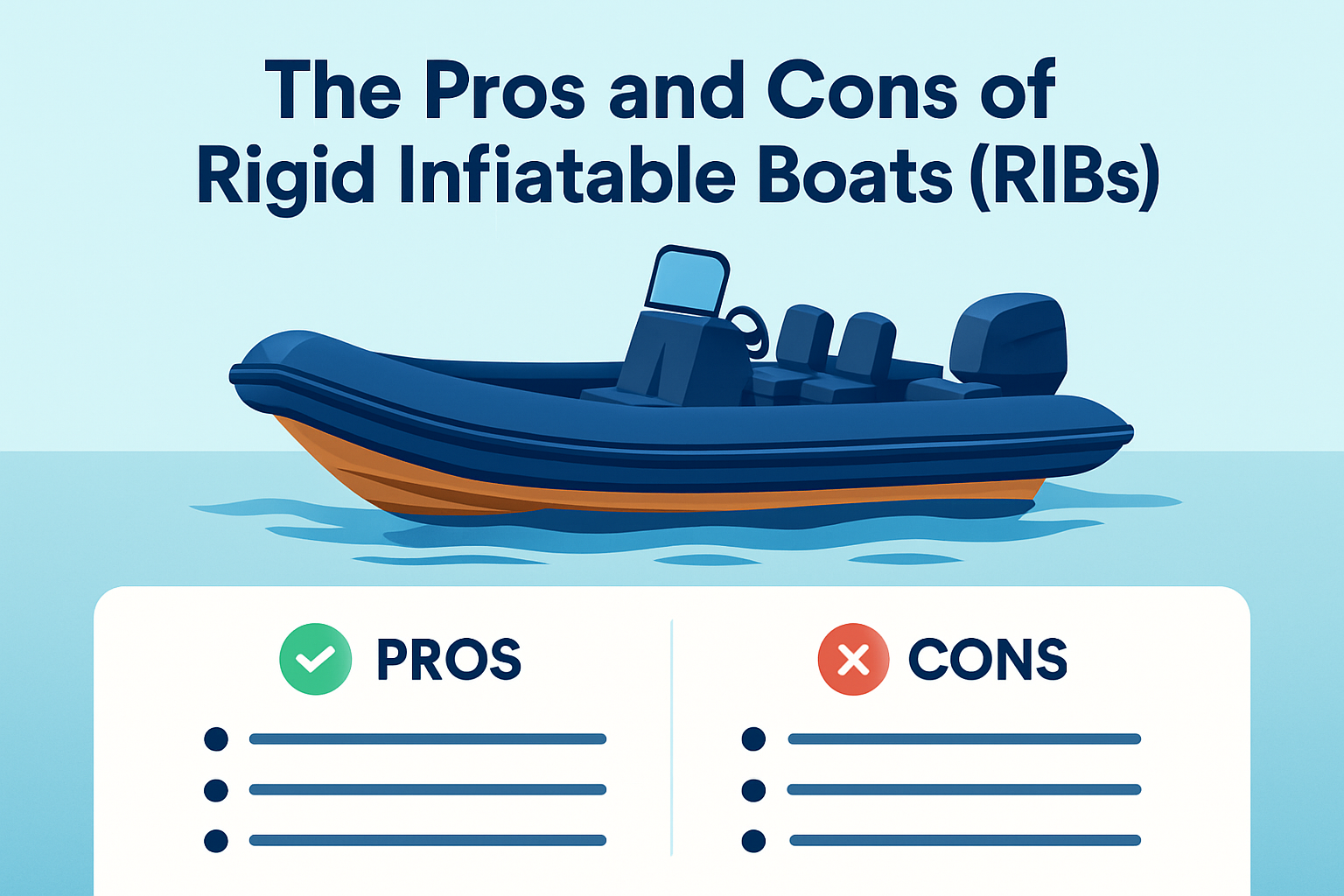
Rigid Inflatable Boats, commonly known as RIBs, are a type of high-performance vessel characterized by their rigid hull and inflatable tubes, known as sponsons, that run along the sides. Gaining popularity for various recreational and professional applications, RIBs combine the strength of a traditional hull with the buoyancy and lightweight properties of inflatable elements. Their unique construction provides a balance of stability, speed, and handling, making them a popular choice for rescue operations, military use, and leisure activities. Understanding the pros and cons of RIBs is important for anyone considering investing in or utilizing these versatile watercraft, as they have both distinct advantages and potential drawbacks that must be taken into account.
Advantages of Rigid Inflatable Boats: Versatility and Performance
One of the foremost advantages of RIBs is their versatility. They can be used for various activities ranging from leisurely cruises and water sports to professional tasks like rescue operations and patrol duties. The combination of a rigid hull and inflatable topsides allows for improved handling in different water conditions, making them well-suited for navigating rough seas or operating in calm waters with equal efficiency.
A key aspect of RIBs’ performance is their speed and maneuverability. Thanks to their lightweight design, they achieve higher speeds with less engine power compared to traditional boats. For instance, the Atlantic 85, used by the Royal National Lifeboat Institution in the UK, is capable of reaching speeds up to 35 knots. This capability ensures rapid deployment and response times, which is crucial for search and rescue missions.
Their lightweight construction also means RIBs are easier to transport and launch compared to fully rigged vessels. This is incredibly advantageous for scenarios requiring quick readiness or frequent deployment from land to water settings. Additionally, their shallow drafts facilitate navigation in areas with limited water depth, further increasing their utility in diverse environments.
Durability and Safety: Key Features of RIBs
Durability is another significant advantage of RIBs. The rigid hull provides a strong, impact-resistant base, while the inflatable tubes offer additional protection by absorbing shock from waves and collisions. This dual structure is particularly beneficial in reducing the risk of capsizing, which enhances the overall safety of the boat.
In terms of safety, RIBs are indispensable in rescue operations due to their enhanced stability and unsinkable nature. For example, during rescue missions in tumultuous water conditions, RIBs’ non-slip surfaces and reinforced hulls stand out for keeping crews secure. The inflatable collars not only provide buoyancy but also offer fender-like protection against bumps and scrapes, often encountered during such high-pressure situations.
Moreover, RIBs are designed to remain afloat even if they sustain damage to their inflatable parts, an invaluable feature in rescue and law enforcement scenarios. This ensures continuous operation without the immediate risk of sinking, allowing crew and passengers to focus on safety and mission success.
Fuel Efficiency and Operational Economies
Another significant benefit of RIBs is their fuel efficiency. The lightweight materials used in their construction require less fuel to propel, contributing to significant savings and making them environmentally and economically attractive. The fuel-efficient nature of RIBs makes them stand out in comparison to traditional powerboats, especially for those who wish to minimize operational costs over time.
For instance, a recreational boating enthusiast could save a considerable amount on fuel costs over a season of regular use, allowing for longer trips or more frequent outings without significant financial strain. This attribute also appeals to commercial operators who maintain large fleets, as it directly correlates to reduced operating expenses and increased margins.
Furthermore, the simplicity of serving and maintaining RIBs enhances their economic advantage. Their design allows easy access to key components, facilitating routine maintenance and potentially extending the vessel’s service life. This ease of maintenance ensures that RIBs remain in excellent condition with less downtime and lower repair costs.
Challenges and Limitations
While RIBs offer numerous advantages, they also come with certain limitations. One of the primary concerns is comfort. Due to their lightweight build and speed-oriented design, RIBs can be less comfortable during extended voyages. The rides tend to be bumpy since their hull design, optimized for speed, doesn’t absorb waves as effectively as heavier boats. Passengers may encounter more spray and motion, which could lead to discomfort, particularly in rough seas.
Another notable limitation involves space and storage. The design prioritizes performance over size, which typically results in less onboard space compared to traditional boats. For instance, families or groups who require space for gear or leisurely accommodation might find the limited room a constraint, especially when planning overnight trips or carrying lots of equipment.
Moreover, while onboard safety is generally high, operating RIBs requires a certain level of skill. Their high speeds and agility demand careful handling and a good understanding of maritime behavior. Inexperienced operators could find RIBs challenging to manage, especially in adverse weather conditions or busy waterways.
Economic and Environmental Considerations
Though RIBs are fuel-efficient, initial acquisition costs can be higher than some counterparts. Materials like Hypalon or PVC used for the tubes, and reinforced composites for the hull, often drive up production costs. As such, potential buyers need to consider the upfront investment against long-term savings from lowered fuel and maintenance expenses when evaluating RIBs for purchase.
Evaluating environmental considerations is also crucial. While RIBs offer fuel efficiency, their use in environmentally sensitive areas requires careful consideration of impact. RIB operators need to be conscientious about wildlife and ecosystems, ensuring that the use of such performance vessels doesn’t lead to disturbances or ecological damage.
Real-World Applications and User Experiences
RIBs see widespread use in various industries and civilian sectors. A real-world example includes their deployment in coastal patrols where agility and speed are necessary for law enforcement to protect against illegal activities. Similarly, in the tourism industry, RIBs are utilized for waterfront tours, offering passengers exhilarating yet safe rides.
Rescue services worldwide rely on RIBs for their unmatched reliability in difficult conditions. During the 2018 Bangkok cave rescue operation, RIBs were instrumental in transporting divers and equipment, showcasing their importance in critical, life-saving missions.
Industries utilizing RIBs:
- Rescue and emergency services
- Military and law enforcement
- Leisure and water sports charter
- Offshore industries
Conclusion and Next Steps
In summary, Rigid Inflatable Boats present a unique blend of advantages such as unmatched versatility, robust durability, excellent performance, and fuel efficiency. These benefits make them ideal for a range of applications from professional maritime operations to recreational activities. While they come with specific limitations, such as reduced comfort and space, the trade-offs are often outweighed by their performance capabilities and operational economy.
For those considering the acquisition or utilization of RIBs, it is imperative to weigh these factors carefully. Assessing your specific needs — whether for leisure, commercial, or rescue purposes — will help determine if a RIB suits your requirements. Trying out a RIB through rentals or demonstrations could be a practical step before committing to a purchase. Embracing the advantages while being proactive about their challenges will ensure a successful and rewarding experience with Rigid Inflatable Boats.
Ultimately, RIBs offer a substantial benefit to users across various sectors. The decision to use or invest in a RIB should consider both the immediate functionality and the broader impact on activities or operations, ensuring a prosperous long-term relationship with these innovative vessels.
Frequently Asked Questions
1. What are the advantages of choosing a Rigid Inflatable Boat (RIB) over a traditional boat?
Rigid Inflatable Boats, or RIBs, are an appealing choice for many boating enthusiasts for a number of reasons. One of the primary advantages is the unique combination of a solid hull with inflatable tubes, which offers exceptional buoyancy and stability. This distinctive construction means RIBs can handle rougher waters with relative ease, making them particularly suitable for rescue operations or environments where swift, nimble handling is crucial.
Another key advantage of RIBs is their lightweight design. The combination of a light fiberglass hull with inflatable sides means that RIBs can achieve impressive speeds, while still retaining maneuverability. This makes them perfect for recreational activities like water skiing or scuba diving excursions, where speed and accessibility are desirable.
Furthermore, their simplistic design tends to offer lower maintenance requirements. The materials used in creating RIBs are designed to withstand harsh marine conditions, and the inflatable tubes provide shock absorption against rough waves. Additionally, the versatility RIBs offer, from leisure activities to utility roles like surveillance and rescue missions, depends largely on the customizability of their setups, be it the seating arrangements or engine type.
2. What are some of the drawbacks of using Rigid Inflatable Boats?
While RIBs come with several benefits, there are also some drawbacks to consider. One main concern is the potential for damage to the inflatable tubes, which although durable and built to last, are still more susceptible to punctures than a conventional boats’ solid hull. This vulnerability necessitates regular inspections and sometimes repairs to ensure safety and reliability at sea.
An additional consideration is the limited storage space. The RIB’s design prioritizes performance and weight reduction, resulting in a compromise on the amount of available storage. For those needing ample space for long journeys or carrying significant cargo, a traditional boat might be more suitable.
Lastly, comfort can sometimes take a back seat in RIBs. The focus on speed and efficiency means that the ride can be bumpy, particularly in choppy conditions. Passengers might find themselves exposed to the elements more so than they would in a more enclosed boat, and there can be fewer amenities onboard. This makes RIBs excellent for short, high-paced activities but less so for leisurely day-long outings.
3. How does the construction of a RIB contribute to its performance on the water?
The architecture of a RIB is central to its high-performance capabilities. By integrating a rigid hull with inflatable sponsons, RIBs achieve a harmonious blend of speed, agility, and stability. The hull, often made from lightweight yet robust materials like fiberglass or aluminum, cuts through the water efficiently, enabling rapid acceleration and enhanced handling.
The inflatable tubes, or sponsons, play a crucial role in enhancing buoyancy. This additional lift makes RIBs much more stable when stationary or at low speeds compared to traditional boats of similar size. The sponsons also act as shock absorbers, providing a softer ride by cushioning the impact of waves, which means smoother transitions even when the sea gets rough.
The balance between performance and safety is further bolstered by the shallow draft of a RIB. This allows the boat to operate close to shore or in shallow waters, offering access to areas traditional boats might struggle with. This flexibility makes them a favorite for patrol duties, coastal exploration, and professional maritime applications.
4. Are RIBs suitable for long-distance travel, and what should be considered for such journeys?
RIBs can be suitable for semi-long-distance travel, depending greatly on the outfitting of the vessel and the conditions of the voyage. Their lightweight construction enables them to navigate waters swiftly, though for extended journeys, additional considerations are necessary.
Firstly, fuel capacity is paramount. RIBs can be fitted with larger fuel tanks or, alternatively, can carry auxiliary tanks to increase their range. The layout should be adjusted to manage the additional weight while maintaining balance. It’s vital to consider fuel efficiency in relation to desired speed and distance.
Secondly, preparing for comfort and sustainability during the journey is crucial. While RIBs have limited onboard space, ensuring the provision of essentials like canopies for shade, proper seating cushions, and perhaps portable coolers for hydration is important. Since space is at a premium, effective use of storage and packing light are recommended strategies.
Finally, the choice of navigation and safety equipment can enhance the journey’s enjoyment and security. Investing in advanced GPS systems, VHF radios, and other communication devices helps navigate unfamiliar waters and keeps the vessel tethered to its team. Having the right equipment is crucial for ensuring both safety and success on longer trips.
5. How do Rigid Inflatable Boats fare in terms of maintenance and durability over time?
When it comes to maintenance, RIBs possess some advantages due to their design, although there are areas of caution. The materials used in the hull and sponsons are designed to withstand UV light, saltwater, and general wear. Typically, RIBs require less maintenance compared to all-fiberglass boats because the inflatable sections eliminate the need for polishing or waxing that a fiberglass hull requires.
However, proactive maintenance is crucial to preserving their longevity. Regular inspections for wear, leaks, or any potential punctures, particularly in the sponsons, are essential. Routine cleaning and protective treatments using specific products designed for inflatables should be part of your maintenance schedule to prevent material degradation.
While RIBs are intrinsically sturdy, engine maintenance follows standard procedures applicable to any outboard or inboard engine. Following manufacturer guidelines ensures the motor stays reliable and efficient. Additionally, storing RIBs properly when not in use — avoiding prolonged exposure to direct sunlight and elements — significantly increases their lifespan, ensuring they deliver many years of service and enjoyment.