Buying your first boat in 2025 is easier than it was a decade ago, but choosing the best boats for first-time owners still requires discipline, realistic budgeting, and a clear understanding of how you plan to use the water. “Beginner boat” does not mean cheap, underpowered, or disposable. It means a boat with forgiving handling, manageable maintenance, predictable operating costs, and enough versatility to help a new owner build confidence instead of collecting repair bills. After helping new owners compare models, inspect used hulls, and match layouts to actual weekends on the water, I have found that the right first boat is usually smaller, simpler, and more multipurpose than buyers expect. That matters because the wrong first purchase often leads to storage headaches, towing stress, and disappointing family outings. The best boats for beginners make launching easier, docking less intimidating, and ownership more enjoyable. In this hub, I will break down the most practical boat categories for first-time owners, explain what features matter most, and show where each style fits. If you are researching runabouts, center consoles, pontoons, aluminum fishing boats, or compact cruisers, this guide will help you narrow the field and make a smart first decision.
What Makes a Boat Good for a First-Time Owner
The best boats for first-time owners share five traits: simple controls, stable handling, low maintenance, accessible pricing, and flexible use. In practical terms, that usually points buyers toward outboard-powered boats between about 16 and 24 feet. Outboards dominate the beginner market in 2025 for good reason. They are easier to service, create more usable interior space, and simplify winterization compared with many sterndrive setups. A first-time owner benefits from being able to tilt the engine clear of the water, visually inspect it at the dock, and find certified service from major networks such as Yamaha, Mercury, Honda, and Suzuki.
Stability matters more than speed. New owners tend to underestimate how much confidence comes from a boat that feels predictable when passengers shift positions, when wakes hit from the side, or when docking in wind. Beam, hull design, and weight distribution all contribute here. Deep-V hulls cut chop well, modified-V hulls balance efficiency and comfort, and pontoon platforms provide unmatched initial stability for family cruising. Capacity ratings also matter. A six-person crew on a 17-foot boat feels very different from the same crew on a 22-foot deck boat or pontoon.
Ownership costs are where many beginners get caught. The purchase price is only the opening number. You also need to account for fuel burn, insurance, registration, trailer maintenance, storage, safety gear, electronics, routine service, and surprise repairs. The most successful first-time owners I have worked with choose boats that fit their full annual budget, not just their financing approval. For many families, that means targeting proven categories with broad dealer support and strong resale value. This hub connects those categories so you can dig deeper later, but the core principle is simple: start with a boat that is easy to own, not one that only looks impressive on a listing.
Best Overall Types of Beginner Boats in 2025
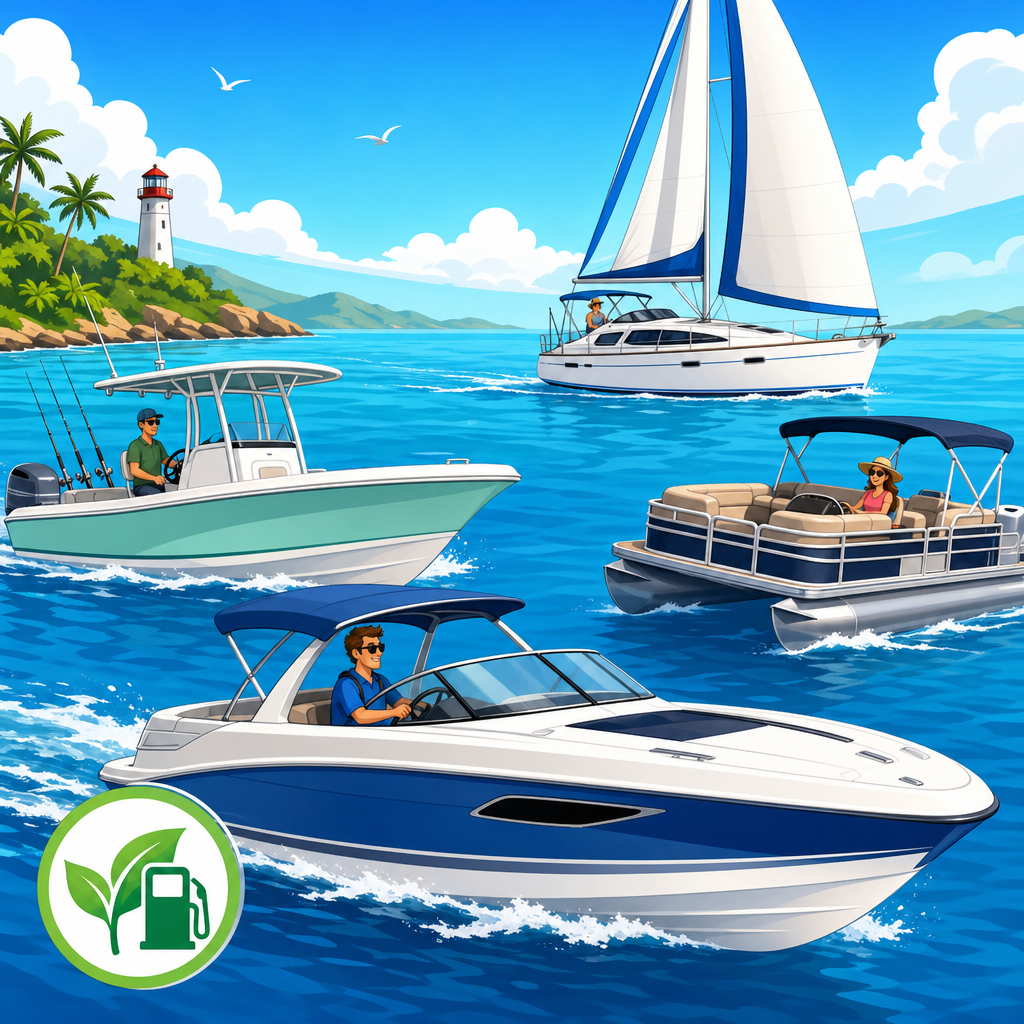
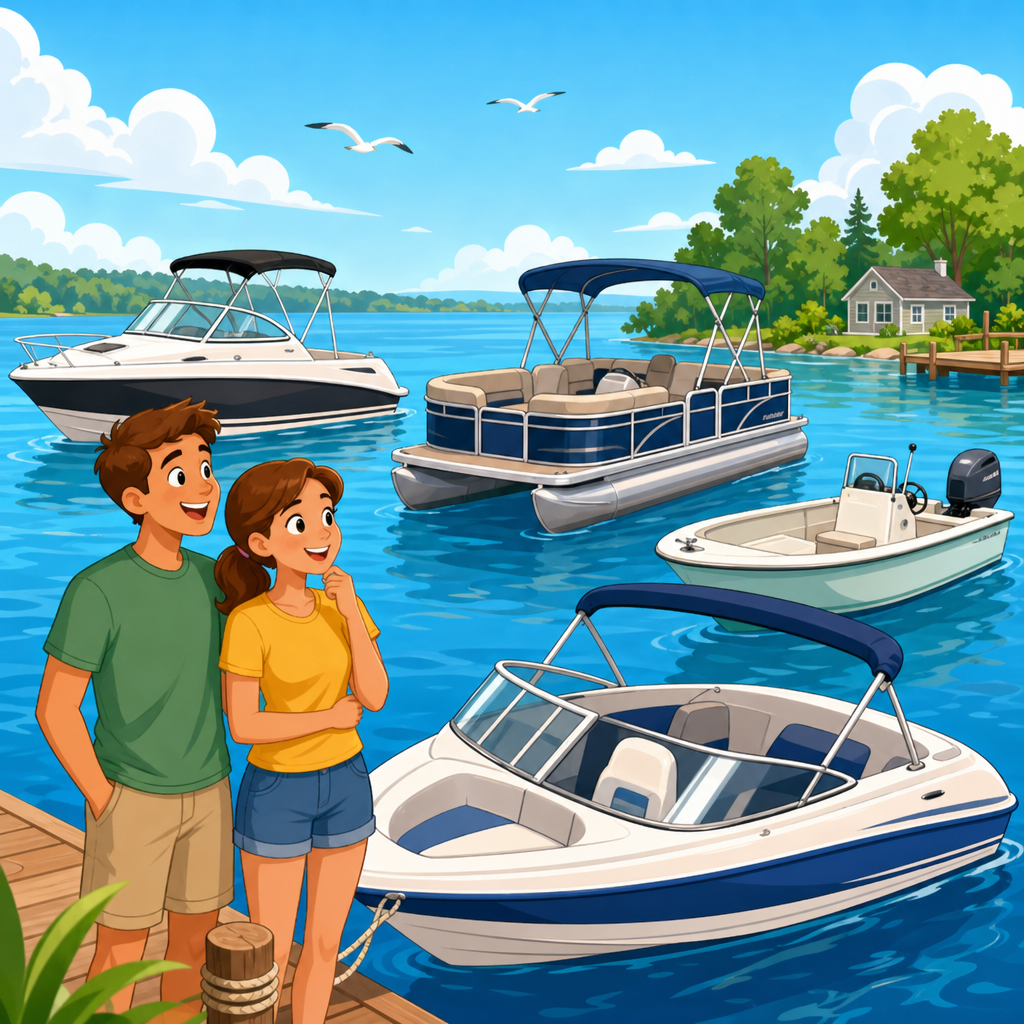
If you want a direct answer, the best boats for beginners in 2025 are pontoons, small center consoles, bowriders, aluminum fishing boats, and compact deck boats. Each of these categories has a strong use case, and each solves a different first-owner problem. Pontoons are ideal for families who prioritize comfort, easy boarding, and social space. Bowriders are excellent for mixed recreation such as cruising, towing, and sandbar days. Small center consoles are the most versatile option for coastal and lake owners who want simple systems and fishability. Aluminum fishing boats offer low weight, low operating costs, and easy trailering. Compact deck boats maximize seating while remaining more approachable than larger cruisers.
The 2025 market has improved beginner options because manufacturers now package many entry-level models with better helm ergonomics, integrated digital displays, no-feedback steering, and cleaner trailer setups. Brands such as Bennington, Sun Tracker, Bayliner, Boston Whaler, Carolina Skiff, Crestliner, Tracker, and Sea Ray continue to dominate first-time buyer consideration because they combine dealer reach with familiar layouts and broad parts availability. That does not mean every model from those brands is right for a beginner, but it does mean ownership support is easier to find.
| Boat type | Best for | Typical beginner size | Main advantage | Main tradeoff |
|---|---|---|---|---|
| Pontoon | Family cruising, entertaining | 18 to 22 feet | Stable, roomy, easy boarding | Less agile in rough water |
| Bowrider | All-around lake use | 18 to 21 feet | Versatile for watersports and day trips | More upholstery and systems to maintain |
| Center console | Fishing and simple coastal use | 18 to 22 feet | Easy cleanup, strong resale | Less weather protection |
| Aluminum fishing boat | Lakes, rivers, budget ownership | 16 to 19 feet | Light, efficient, towable | Less comfort for larger groups |
| Deck boat | Big seating in a compact footprint | 18 to 22 feet | Excellent passenger space | Can ride harder in chop |
Pontoon Boats: The Easiest Family-Friendly First Boat
For many buyers, the best first boat is a pontoon. I have recommended pontoons repeatedly to new owners who care more about relaxing days on calm water than high-speed handling. The reason is straightforward: pontoons reduce stress. Boarding from a dock is easier, seating is generous, layouts are intuitive, and the platform feels secure for children, older passengers, and pets. In 2025, entry-level and midrange pontoons also ride better than many first-time buyers realize, especially triple-log performance packages, though beginners do not always need that upgrade.
A standard 18- to 22-foot pontoon with a reliable outboard in the 60 to 115 horsepower range covers what most new owners actually do: sunset cruises, swimming, light tubing, and casual entertaining. Sun Tracker’s Bass Buggy and Party Barge lines remain popular because they are approachable and widely available. Bennington, Godfrey, and Harris often offer better fit and finish at higher prices, with improved seat construction, fencing hardware, and ride quality. If you are shopping used, inspect flooring condition, underdeck corrosion, tube integrity, steering response, and upholstery seams carefully. Soft flooring and neglected vinyl can turn a “great deal” into a major refit.
The biggest tradeoff is water condition. Pontoons excel on lakes, intracoastal areas, and protected waters, but they are not ideal for inexperienced owners running exposed bays in heavy chop. Wind management also matters during docking. A pontoon presents a lot of side area, and first-time captains need to practice low-speed control. Still, for beginner-friendly ownership, comfort, and group usability, pontoons rank near the top of every practical shortlist.
Bowriders and Deck Boats: Versatile Picks for Mixed Recreation
Bowriders remain one of the best boats for first-time owners because they combine familiar seating with broad recreational range. A good 19- to 21-foot bowrider can handle family cruising, tow a tube or wakeboard, and still trailer easily behind many midsize SUVs or half-ton trucks, depending on total package weight. Models from Bayliner, Sea Ray, Tahoe, and Four Winns continue to attract first-time buyers because the learning curve is manageable and the layout feels immediately useful.
What separates a solid beginner bowrider from a frustrating one is setup discipline. Prioritize a single-engine package, straightforward analog or hybrid digital instrumentation, quality trailer brakes, and enough freeboard for your local conditions. In my experience, new owners should avoid overcomplicated premium options on a first purchase unless they know they will use them. A boat with a basic Bimini, Bluetooth stereo, depth finder, and reliable outboard often delivers more real enjoyment than a flashier setup with expensive touchscreens and little maintenance history.
Deck boats deserve more attention in beginner discussions. They offer open seating similar to a pontoon but with a monohull profile that can feel sportier and easier to store. The tradeoff is that some compact deck boats can pound in chop more than a deeper-V bowrider, and heavily loaded models may feel crowded around gear. Still, for sandbar runs and large family crews, they solve a real problem: fitting many people on a manageable trailerable platform.
Center Consoles and Aluminum Fishing Boats: Simple, Durable, and Easy to Own
If your boating life will involve fishing, crabbing, early-morning launches, or quick washdowns, a small center console is one of the smartest first-boat choices available. These boats are deliberately simple. You get an open deck, easy access around the helm, practical storage, and fewer soft materials to clean or replace. That simplicity is not just convenient; it directly lowers the chance that a first-time owner will fall behind on upkeep. A 19- to 21-foot center console from a mainstream builder can handle lakes, rivers, bays, and light offshore days when conditions allow and the operator is trained and conservative.
Boston Whaler, Mako, Key West, Scout, and Carolina Skiff all appear regularly on beginner shopping lists, though their personalities differ. A Carolina Skiff, for example, is easy to clean and excellent in shallow, protected water, while a deeper-V hull from another brand may provide a softer ride offshore at the cost of draft and efficiency. For first-timers, the key is matching hull style to local water. Buying a bay-friendly skiff for a rough inlet is as problematic as buying a deep-V offshore boat for tiny electric-motor lakes.
Aluminum fishing boats are the budget and practicality champions of the category. Tracker, Lund, Crestliner, and Alumacraft have built large followings because their boats are light, towable, and comparatively affordable to own. They are especially good for freshwater buyers who need dependable access to lakes and rivers without committing to the fuel, storage, and maintenance profile of fiberglass models. Riveted and welded aluminum hulls each have loyal supporters, but condition, use case, and builder quality matter more than internet debates. For a beginner, the biggest benefits are straightforward launching, lower draft, and reduced towing stress.
How to Choose the Right First Boat in 2025
The best way to choose your first boat is to define your use in concrete terms. Start with three questions: where will you boat, how many people will usually come, and what will you do most often? If your honest answer is “four people on a lake for cruising and swimming,” that points to a different purchase than “two anglers in rivers” or “family day trips in a protected bay.” New owners often shop aspirationally, but boats reward specificity. The more precisely you define your routine, the easier it becomes to eliminate poor fits.
Second, budget for ownership, not just acquisition. A common benchmark is to reserve roughly 10 percent of boat value annually for maintenance and incidentals, though real costs vary by age, usage, and storage type. Indoor dry storage, marina slips, and saltwater service all change the math. Insurance premiums depend on horsepower, location, and operator experience. Fuel burn can also vary dramatically. A simple aluminum fishing rig may sip fuel, while a heavier family boat loaded with passengers and gear can consume far more than beginners expect.
Third, inspect before you buy. On used boats, confirm title clarity, engine hours, compression or digital diagnostics where available, service records, trailer condition, and hull integrity. On any boat, test bilge pumps, navigation lights, horn, steering, battery health, and electronics. A sea trial is not optional. I have seen beginners fall for clean upholstery and overlook hard starting, ventilation issues, prop damage, or sluggish planing behavior that became obvious within ten minutes underway. The best beginner boat is the one that starts easily, runs predictably, and matches your real weekends. Use this hub as your starting point, then compare category guides, reviews, and buyer checklists across our Best Boats & Reviews coverage. Narrow your shortlist, take a sea trial, and buy the boat you will use often, not the one you will outgrow only in theory.
The best boats for first-time owners in 2025 are the boats that remove friction from learning. That usually means manageable size, proven outboard power, mainstream dealer support, and a layout aligned with your actual habits on the water. For most new buyers, pontoons, bowriders, center consoles, aluminum fishing boats, and compact deck boats offer the best mix of usability, affordability, and confidence. Each category solves a different problem, but they all outperform oversized, overly complex alternatives as first purchases.
If you remember only a few rules, make them these: buy for your primary use, keep systems simple, respect total ownership cost, and never skip an inspection or sea trial. Those principles consistently lead to better first-boat experiences and stronger resale outcomes. A good beginner boat should help you spend more time boating and less time troubleshooting. Explore the related guides in our Best Boats & Reviews hub, build a shortlist, and take the next step with a model that fits your water, your crew, and your budget.
Frequently Asked Questions
What type of boat is best for a first-time owner in 2025?
For most first-time buyers in 2025, the best boat is one that matches how you will actually use it, not the one with the most features or the flashiest styling. In practical terms, that usually means a versatile, easy-to-handle model in a manageable size range, often between about 16 and 22 feet depending on your tow vehicle, storage situation, and local waters. Bowriders, small center consoles, simple deck boats, and compact pontoon boats continue to rank among the safest bets for beginners because they are predictable underway, widely available, relatively straightforward to maintain, and useful for multiple activities such as cruising, sandbar trips, light fishing, and family outings.
A good beginner boat should feel forgiving at low speeds, easy to dock, and simple to launch and retrieve. That matters more than raw horsepower or premium electronics. New owners benefit from layouts with uncluttered decks, intuitive helm controls, and systems that are common enough that local mechanics can service them without guesswork. In 2025, that often means choosing a mainstream model from a reputable brand with strong dealer support, readily available parts, and a proven engine package. If you are boating on lakes and inland waterways, a bowrider or pontoon may be ideal. If you expect to fish coastal bays or run in choppier conditions, a small center console may be the better fit. The “best” first boat is the one that helps you learn safely, use it often, and avoid getting buried in complexity before you build experience.
How much should a first-time boat owner budget beyond the purchase price?
One of the most important realities for new boat buyers is that the purchase price is only the beginning. A smart first-time owner in 2025 should build a full ownership budget that includes insurance, registration, fuel, routine maintenance, winterization if applicable, storage or marina fees, trailer upkeep, safety equipment, cleaning supplies, and unexpected repairs. Even a boat marketed as “affordable” can become expensive quickly if you ignore the annual operating costs. That is why disciplined budgeting matters just as much as choosing the right hull.
As a rule, first-time owners should avoid stretching to the absolute top of their financing range. Leave room for real-world expenses. Outboard service, battery replacement, bottom cleaning, tire and bearing maintenance on the trailer, and replacing worn covers or pumps are not rare events; they are part of boat ownership. If you plan to keep the boat in a slip, your costs can rise significantly compared with storing it on a trailer at home. Fuel consumption also varies dramatically by hull type, engine size, and how you operate the boat. A modestly powered, efficiently designed boat will usually be more beginner-friendly because it keeps both handling and operating costs under control. The buyers who enjoy their first boat the most are usually the ones who budget conservatively, buy a little less boat than they technically qualify for, and keep a reserve fund for the things that always come up during a season.
Is it better for a beginner to buy a new boat or a used boat?
There is no universal answer, but for many first-time owners, the right choice comes down to risk tolerance, mechanical confidence, and access to trustworthy inspections. A new boat offers obvious advantages: warranty coverage, updated technology, cleaner maintenance history, and fewer immediate surprises. In 2025, new boats also tend to feature better helm ergonomics, more user-friendly electronics, and engine packages designed with efficiency and reliability in mind. For someone who wants a predictable entry into boating and values dealer support, buying new can reduce a lot of stress.
That said, a well-vetted used boat can still be an excellent first purchase, especially if you want to keep costs manageable and avoid the sharpest early depreciation. The key word is vetted. Beginners should not buy used based on cosmetics alone. A shiny hull and fresh upholstery do not tell you whether the engine was serviced properly, whether the transom or flooring has hidden issues, or whether the trailer is roadworthy. A marine survey and engine inspection are often money very well spent. If you go used, focus on simple, popular models with strong reputations, documented maintenance, and readily available parts. Avoid highly modified boats, neglected project boats, or niche models that may be difficult to service. For many new owners, the safest path is either a new entry-level boat from a strong dealer or a clean, uncomplicated used boat with verifiable history. What you want to avoid is buying someone else’s problem just because the sticker price looks attractive.
What features should first-time boat owners prioritize and what should they avoid?
First-time owners should prioritize simplicity, visibility, safety, and ease of operation. Look for a boat with an intuitive helm layout, dependable power, stable handling, comfortable seating, and enough storage to keep the deck clear and organized. A swim ladder, quality bimini or shade option, reliable bilge pump, straightforward electronics, and practical trailer setup all add real value. If you are new to docking and low-speed maneuvering, clean sightlines from the helm matter a lot. So does easy access around the boat for lines, fenders, and passenger movement. A beginner-friendly boat should reduce stress, not introduce unnecessary complexity every time you launch.
What should you avoid? In most cases, avoid buying too much engine, too many systems, or too specialized a layout for your first boat. Twin engines, highly customized fishing rigs, complicated ballast or surf systems, aging sterndrives with uncertain service history, and luxury features that increase maintenance can all make ownership more demanding than it needs to be. Bigger is not automatically better. A boat that looks impressive at the dealership may become intimidating at the ramp, expensive at the fuel dock, and frustrating in storage. The best first boats tend to be the ones that you can operate confidently after a few outings, clean without dread, tow without upgrading your truck, and maintain without constant surprises. Prioritize a solid hull, dependable propulsion, and a layout you will truly use. Everything else should be secondary.
How can a first-time owner choose a boat that will still make sense after a few seasons?
The smartest way to buy your first boat is to think in terms of a realistic ownership horizon, not just the excitement of the first summer. A good beginner boat should help you build skills while remaining useful as your confidence grows. That means choosing a model with enough versatility to handle your most common activities without locking you into a very narrow use case. If you expect a mix of family cruising, occasional towing, swimming, and casual fishing, a flexible all-around platform will usually serve you better than a highly specialized boat designed for just one purpose. In 2025, that versatility is one of the biggest reasons pontoons, bowriders, and small center consoles remain top choices for first-time owners.
You should also think carefully about practical future factors: Will your family size change? Will you keep the boat on a trailer or in the water? Are you likely to move to larger lakes or coastal boating? Do you want something that is easy to resell if your needs shift? Boats from established brands with broad market appeal generally hold buyer interest better than obscure models, and that matters when it is time to trade up or sell. It is also wise to choose a boat with a dealer network, common power options, and a reputation for manageable maintenance, because ownership satisfaction over several seasons depends heavily on serviceability. A first boat does not need to be your forever boat, but it should be capable enough that you do not outgrow it immediately and simple enough that you can spend your early years boating, learning, and enjoying the water instead of constantly troubleshooting problems.