
Choosing the best boat for beginners starts with matching the boat to the way you will actually use it, not with buying the biggest, fastest, or most expensive model on the dealership floor. A beginner boat is a vessel that is easy to launch, predictable to handle, affordable to own, and forgiving when the operator is still learning docking, throttle control, trailering, and on-water judgment. In practical terms, that usually means moderate size, simple systems, clear sightlines, stable hull design, and manageable power. This matters because the wrong first boat can turn an exciting hobby into an expensive frustration, while the right first boat builds confidence, keeps maintenance realistic, and makes family or fishing days far more enjoyable. After helping new owners compare pontoon boats, aluminum fishing boats, center consoles, and compact bowriders, I have found that beginners almost always do best when they prioritize safety, stability, purpose, and total ownership cost over prestige or top-end performance. This guide explains how to choose the best boat for beginners, what types are easiest to own, what tradeoffs matter most, and how to evaluate models as part of a broader Best Boats for Beginners research process.
What Makes a Boat Beginner-Friendly
The best boat for beginners is easy to control at low speed, stable at rest, simple to maintain, and suited to local water conditions. Those four traits matter more than brand reputation alone. New boaters spend most of their early learning period below planing speed, around ramps, marinas, fuel docks, and coves. A boat that tracks predictably, responds smoothly to steering input, and does not feel tippy when passengers move around will reduce stress immediately. In my experience, first-time owners underestimate how much low-speed manners shape confidence. They often focus on horsepower, yet the first ten trips are more about launching, tying off, trimming properly, and reading wind drift.
Size is another key factor. For many beginners, the sweet spot is roughly 16 to 22 feet, depending on use. Boats smaller than that can be very easy to trailer and store, but some feel cramped in chop or with several passengers aboard. Boats much larger than 22 feet can still be beginner friendly if they are well designed, but docking, storage fees, and fuel cost rise quickly. Weight matters too. A tow vehicle that can safely handle the trailer, boat, fuel, and gear is part of the buying decision. The National Marine Manufacturers Association and U.S. Coast Guard boating safety guidance both reinforce a basic reality: safe boating begins with an appropriate vessel, proper capacity management, and operator familiarity.
Hull design shapes ride quality and stability. Deep-V hulls cut chop better and are common on bowriders and center consoles, but they can feel less stable at rest than broader, flatter hulls. Pontoon boats are often ideal for beginners because they are roomy, stable, and straightforward to operate on calm lakes and inland waterways. Aluminum fishing boats with simple tiller or modest console setups are also excellent starter options because they are durable, easy to clean, and relatively inexpensive. Fiberglass runabouts appeal to families who want watersports and cruising, but beginners should choose layouts with uncluttered cockpits, moderate horsepower, and reliable outboard or sterndrive packages from major manufacturers.
Choose the Boat Type Based on Real Use
If you are asking what boat should a beginner buy, answer the use case first. A lake cruiser, fishing platform, watersports boat, and inshore saltwater boat solve different problems. Start by listing where you will boat, how many people usually come, whether fishing matters, whether towing tubers or skiers matters, and whether you will trailer every trip or keep the boat in a slip. This simple exercise prevents the most common mistake I see: buying a do-everything boat that does nothing particularly well and costs more than a focused starter model.
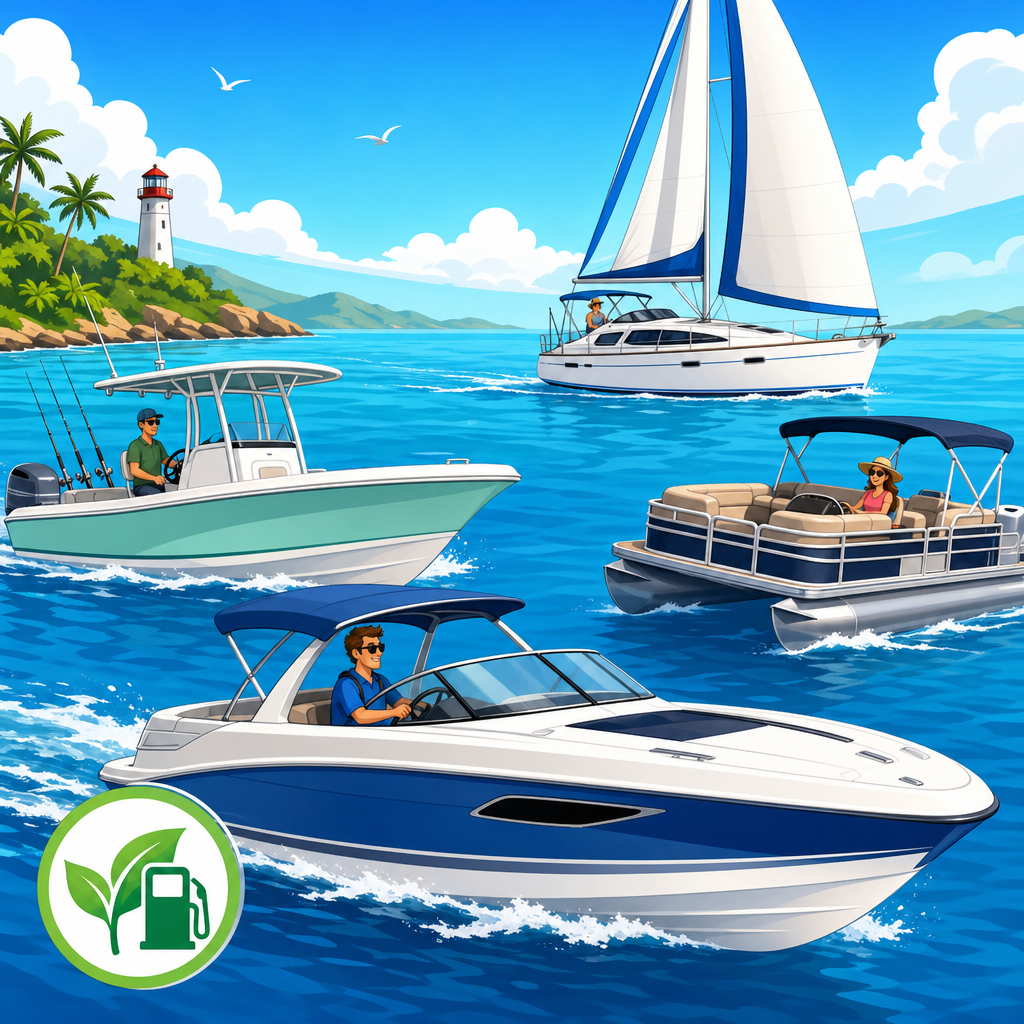
Pontoon boats are among the best boats for beginners who prioritize family comfort, casual cruising, swimming, and entertaining. They offer wide decks, simple boarding, high seating capacity, and reassuring stability. On protected water, they are hard to beat for ease of use. Aluminum fishing boats fit anglers who need a practical, low-maintenance platform for lakes and rivers. Many package rigs from brands like Tracker, Lund, and Crestliner come with trailer, trolling motor, fishfinder, and outboard, making them easy entry points. Bowriders from brands such as Bayliner, Sea Ray, and Yamaha work well for mixed-use recreation, especially when buyers want tubing, day cruising, and a more polished ride than a basic utility boat. Center consoles are excellent for inshore fishing and all-around utility, especially in saltwater, but beginners should be realistic about wind exposure, passenger comfort, and docking in crosswinds.
| Boat type | Best for | Main strengths | Main tradeoffs |
|---|---|---|---|
| Pontoon | Family cruising, calm lakes | Very stable, spacious, easy boarding | Less capable in rough water, large wind profile |
| Aluminum fishing boat | Freshwater fishing, budget ownership | Lightweight, durable, simple systems | Less comfort, can ride harshly in chop |
| Bowrider | Mixed recreation, watersports | Versatile, good performance, family friendly | More maintenance, less fishing-focused layout |
| Center console | Inshore saltwater, all-around utility | Fishable layout, good deck access, capable hulls | More exposure to weather, can be pricier |
For a sub-pillar hub under Best Boats & Reviews, this page should connect readers mentally to deeper comparisons such as best pontoon boats for beginners, best fishing boats for first-time owners, and best small boats for lakes. That hub structure also mirrors how buyers actually research. They begin broadly, then narrow by activity, budget, and water type. If your boating will be 70 percent lake cruising with children and guests, a pontoon is often smarter than a center console, even if center consoles look more adventurous online. If you fish alone or with one partner at dawn and care about quick cleanup, an aluminum rig may outperform a prettier bowrider in real-world satisfaction.
Budget, Ownership Cost, and Value
The purchase price is only the first number. The true cost of a beginner boat includes trailer, registration, insurance, fuel, maintenance, winterization, storage, safety gear, and repairs. I advise new buyers to build a one-year ownership budget before looking at inventory. Doing this early protects you from stretching for a boat that is affordable on paper but frustrating in practice. A used 19-foot bowrider for $18,000 may look attractive, but if it needs bellows service, trailer tires, batteries, and upholstery work, the first season cost can jump fast. By contrast, a newer aluminum package boat at a similar price may come with lower fuel burn, fewer systems, and simpler upkeep.
New versus used is not a simple question. New boats offer warranty coverage, predictable condition, current electronics, and dealer support. Used boats often deliver more size or features per dollar. For beginners, the better choice depends on mechanical confidence and access to a trustworthy marine surveyor or technician. If buying used, inspect service records, engine hours, compression, prop condition, trailer frame corrosion, bilge condition, electrical wiring, and hull damage. On outboards, brands like Yamaha, Mercury, Honda, and Suzuki have large service networks, which matters. On sterndrives, verify maintenance history carefully because deferred service becomes expensive quickly. NADA Guides, sold listings, and dealer comps help establish market value, but condition and maintenance history are what separate a good deal from a future repair bill.
Value also means resale. Beginner buyers often upgrade within two to four seasons. Boats with broad appeal, moderate horsepower, and recognizable brands usually hold demand better than heavily customized or niche models. Neutral upholstery, common engine packages, clean titles, and documented maintenance protect resale. If your first boat teaches you what you truly want, that is success. A beginner boat does not need to be your forever boat; it needs to be safe, enjoyable, and easy enough to use often.
Safety, Training, and Handling Basics
The safest beginner boat is one that matches the operator’s skill, local conditions, and passenger load. Capacity plates are not suggestions. Exceeding them affects freeboard, stability, and handling. Beginners should also prioritize features that reduce operator workload: non-slip decks, secure handholds, easy boarding ladders, navigation lights in good working order, clear helm instrumentation, automatic bilge pump, and reliable battery switching. For families, enclosed storage matters because loose gear on deck creates trip hazards and clutter during docking.
Boater education is essential. Many states require safety courses, and even where not required, a NASBLA-approved boating safety course is worth taking. I strongly recommend adding an on-water orientation with a dealer captain or local instructor. In two hours of real docking practice, most first-time owners learn more than they will from weeks of online browsing. They need to feel wind pushing the bow, understand prop walk, learn approach angles, and practice no-wake throttle control. These are not advanced seamanship topics; they are basic confidence skills that determine whether the boat gets used regularly.
Weather and water conditions should influence the purchase. A beginner boating on small inland lakes can choose a different hull than someone running coastal bays with afternoon chop. Freeboard, deadrise, hull weight, and fuel range matter more as conditions grow less forgiving. This is why there is no universal best beginner boat. There is only the best beginner boat for your water, your crew, and your skill level. If you expect to boat in current, tidal areas, or crowded marinas, favor models with good visibility from the helm and predictable low-speed behavior. Some new owners even choose outboards over sterndrives specifically because tilt, service access, and shallow-water use are easier to manage.
How to Inspect and Test Before You Buy
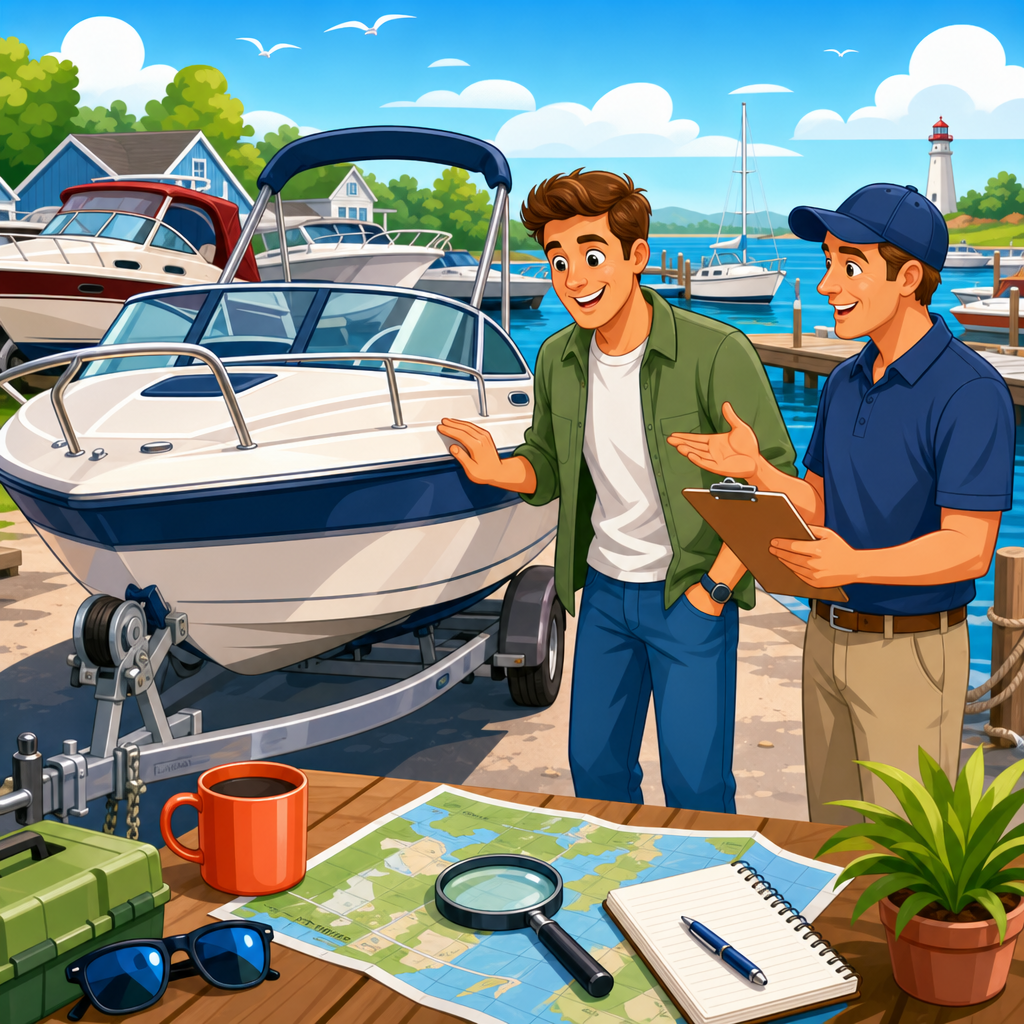
A proper boat-buying process includes a dry inspection, a systems check, and a sea trial. During the dry inspection, look at the hull sides and bottom for repairs, cracks, blisters, gouges, and uneven patches. Open compartments and smell for mold, stale water, or fuel odor. Check upholstery seams, hinges, latches, livewell pumps, lights, electronics, gauges, and switch panels. On trailers, inspect bunks, rollers, brake function, coupler operation, tire date codes, wheel bearings, and lighting. Beginners often focus on shiny gelcoat and miss trailer neglect, even though a failed trailer can ruin a trip before the boat reaches the ramp.
On the water, test cold start behavior, idle quality, steering response, trim operation, bilge pump, horn, tachometer, speedometer or GPS readout, and all electronics. The engine should accelerate cleanly without hesitation, excessive smoke, or abnormal vibration. Watch operating temperature and charging voltage. Run at idle, cruising speed, and if conditions allow, wide-open throttle. Then bring the boat back to the dock and practice a simple approach. Ask yourself a direct question: does this boat make me feel in control, or does it feel like I am managing it with luck? For a first boat, that answer matters more than top speed.
If the boat is used and expensive enough to justify it, hire a marine surveyor. Surveyors check structural integrity, safety systems, electrical issues, and signs of moisture intrusion or previous damage. Their report is also useful for insurance. A survey does not replace a mechanical inspection, so many buyers also pay for an engine diagnostic review. That extra diligence is rarely wasted. The best boat for beginners is not the one with the flashiest listing; it is the one that proves itself during inspection and fits your actual boating life.
Best Beginner Boat Features to Prioritize
When comparing models, prioritize simplicity and usability. Look for forgiving throttle response, uncluttered helm layout, comfortable seating, easy reboarding, abundant storage, and a trailer package that suits your tow vehicle. Hydraulic steering is a plus on larger outboards. Swim platforms and ladders make family use easier. Bimini tops improve comfort on long summer days. For fishing boats, a basic sonar unit and trolling motor are helpful, but avoid overcomplicating the first purchase with expensive electronics you do not yet know how to use. For family boats, a changing area or enclosed head may matter more than premium audio.
Engine power should be appropriate, not maximum for bragging rights. Underpowering can make a boat struggle with a full crew, but overpowering adds cost, fuel burn, and risk for inexperienced operators. A mid-range engine option is often ideal. Reliability, dealer support, and local parts availability are more important than small performance gains. Also think about storage at home. Measure the garage, side yard, or marina slip before you buy. I have seen beginners make otherwise solid choices, then discover the trailer tongue, tower, or beam creates a storage problem that changes the economics completely.
Use this hub as the foundation for narrowing your shortlist. Compare boat types honestly, calculate full ownership cost, take a safety course, and insist on a sea trial. The best boat for beginners is the one you can operate confidently, maintain without surprise, and enjoy often enough to build real experience. Start with purpose, not impulse. Then move to detailed reviews within the Best Boats for Beginners topic, speak with reputable dealers, and test the boats that truly fit your water, crew, and budget. That disciplined approach leads to better first-season memories, fewer regrets, and a smoother path into boating.
Frequently Asked Questions
What type of boat is usually best for a beginner?
For most first-time buyers, the best boat is one that is easy to handle, simple to maintain, and well matched to the kind of boating they realistically plan to do. In many cases, that means a modest-sized bowrider, center console, pontoon, or small fishing boat rather than a large cabin cruiser or a high-horsepower performance model. Beginners generally benefit from a boat with predictable handling, stable hull design, good visibility from the helm, and uncomplicated controls. A boat that is easy to launch, dock, and trailer can make the learning curve much less stressful and much more enjoyable.
The key is to choose for real-world use, not for occasional fantasy use. If most outings will be on a local lake with family, a simple runabout or pontoon may be a better fit than an offshore-capable boat with systems you do not yet know how to operate confidently. If fishing is the priority, a small center console or aluminum fishing boat may offer the right combination of stability, manageable size, and utility. A beginner-friendly boat should feel approachable, not intimidating. When you are still learning throttle control, docking angles, wind drift, and trailering, a simpler platform helps you build skill faster and with fewer costly mistakes.
What size boat should a beginner buy?
A moderate-size boat is often the smartest choice for a beginner because it strikes a practical balance between comfort and control. In general, many new owners do well with a boat in the roughly 16- to 22-foot range, depending on intended use, storage, and towing capacity. Boats in this size bracket are often large enough to feel stable and useful for family outings, cruising, or casual fishing, but still small enough to launch, retrieve, dock, and store without becoming overwhelming. Larger boats can provide more space and smoother rides, but they also tend to be heavier, more expensive, more complex, and less forgiving in tight marinas or on the trailer.
Size should never be chosen in isolation. It needs to be considered alongside beam, hull shape, weight, engine power, passenger capacity, and where the boat will be used. A well-designed 18-foot boat can be easier for a beginner to operate than a poorly matched 24-foot model with more windage, more systems, and greater docking challenges. It is also important to think about life off the water. Can your vehicle tow it safely? Do you have room to store it? Can you launch it at your local ramp without stress? The best beginner boat is not necessarily the smallest boat, but it is usually one that allows a new owner to build confidence without feeling overloaded by size, cost, or complexity.
Is it better for a beginner to buy a new boat or a used boat?
Both new and used boats can be good choices for beginners, but the better option depends on budget, comfort level with maintenance, and willingness to inspect carefully before buying. A new boat offers obvious advantages: warranty coverage, modern safety features, clean service history, and fewer immediate repair surprises. For a first-time owner who wants a straightforward ownership experience and is willing to pay more upfront, a new boat can reduce uncertainty and simplify the first few seasons on the water. You are also more likely to get updated electronics, efficient engines, and a dealer walkthrough of the boat’s systems and operation.
A used boat, however, is often the better value if it has been properly maintained and professionally inspected. Many beginners prefer used boats because they cost less, depreciate more slowly after purchase, and make it less painful to learn the inevitable beginner lessons such as bumping a dock or misjudging trailer alignment. The important part is to avoid buying based only on appearance or price. A pre-purchase marine survey, engine inspection, and water test are especially important for a used boat. Look closely at the hull, transom, flooring, wiring, upholstery, trailer condition, and maintenance records. A clean, simple, well-kept used boat is often a smarter beginner purchase than a larger, newer boat with more features than the owner can comfortably manage.
What features make a boat easier and safer for beginners to operate?
Beginner-friendly boats tend to have a group of practical features that improve visibility, stability, control, and ease of ownership. Clear sightlines from the helm are extremely important because they help new operators judge distance, traffic, docks, buoys, and swimmers more accurately. Stable hull designs, predictable low-speed handling, and moderate engine power also matter because most early mistakes happen during docking, idling, and close-quarters maneuvering rather than while running at speed. Simple controls, intuitive layouts, easy-to-read gauges, and dependable starting systems all reduce confusion and help new boaters focus on safe operation.
Safety and convenience features can make a major difference as well. Reliable bilge pumps, navigation lights, sturdy boarding ladders, non-slip deck surfaces, grab rails, and accessible life jacket storage all support safer use. For trailered boats, a quality trailer with functional lights, good bunks or rollers, and dependable brakes can make ownership much easier. Some beginners also benefit from basic electronics such as GPS mapping, depth finders, and VHF radios, but these should be viewed as aids, not substitutes for boating judgment. In general, simpler is better when starting out. The ideal beginner boat does not overwhelm the owner with overly complex systems, but it does provide the essential equipment needed to operate confidently, safely, and consistently in the environments where the boat will actually be used.
What mistakes should beginners avoid when choosing their first boat?
One of the most common mistakes is buying a boat for image, speed, or occasional dream scenarios instead of normal everyday use. Many first-time buyers imagine offshore trips, watersports weekends, or large social outings, then purchase a boat that is oversized, overpowered, or too specialized for how they will actually spend most of their time. That often leads to higher costs, more difficult handling, more maintenance, and less frequent use. Another major mistake is underestimating the total cost of ownership. The purchase price is only part of the equation. Fuel, storage, insurance, maintenance, registration, trailer upkeep, safety gear, and unexpected repairs all add up quickly.
Beginners should also avoid skipping the test ride, ignoring the trailer, and rushing through inspections. A boat may look excellent on land but handle poorly for a new operator or hide expensive mechanical issues. If buying used, never rely only on the seller’s description. If buying new, do not assume every feature is necessary just because it is available. Overcomplicated systems can create more confusion than value for a first-time owner. Finally, many beginners make the mistake of choosing too much boat too soon. The smartest first boat is the one that helps you learn safely and use it often. A manageable, stable, affordable boat that builds confidence is far more valuable than an impressive model that feels stressful every time you launch, dock, or maintain it.