
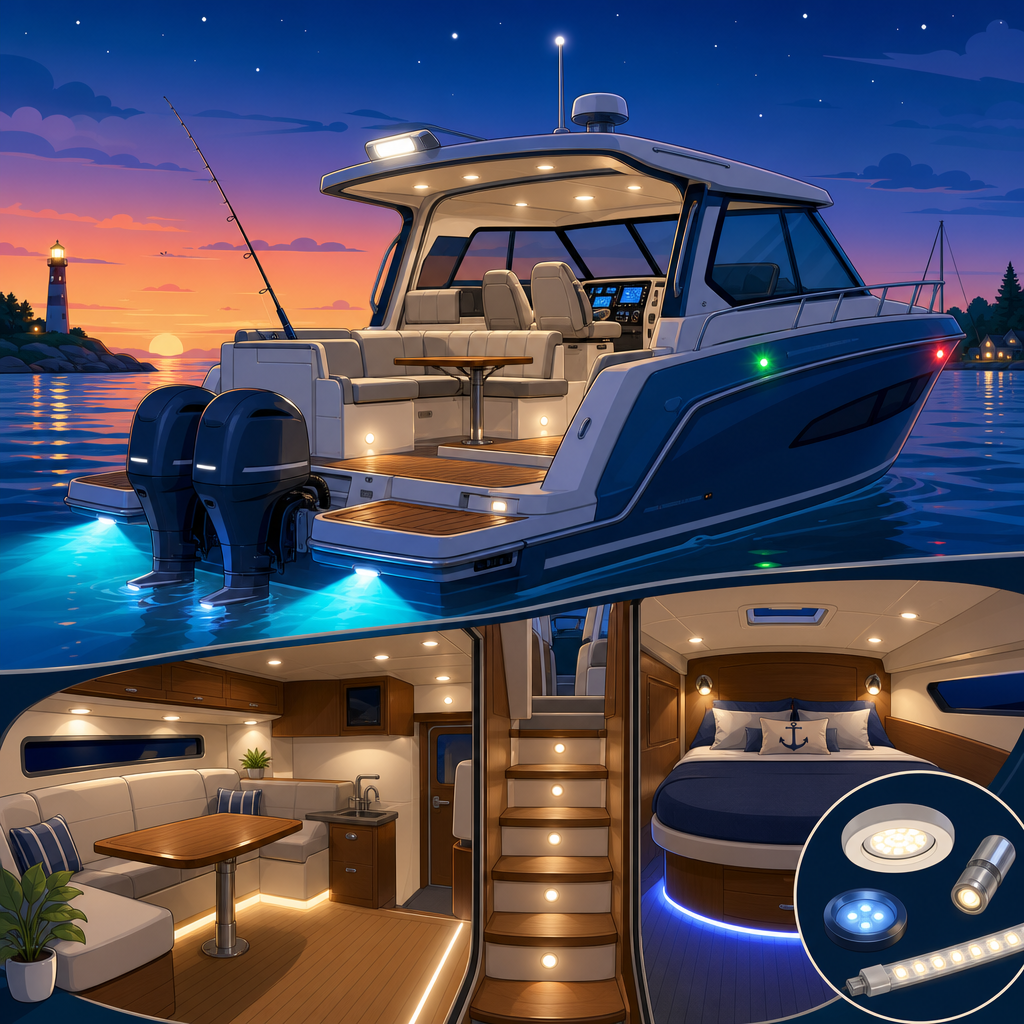
Choosing the best energy-efficient lighting for boats starts with understanding how marine lights affect battery life, safety, maintenance, and the broader goal of building a practical set of eco-friendly boating gear. On working cruising boats, trailerable fishing rigs, and weekend sailboats alike, lighting is one of the simplest upgrades with measurable returns: lower amp draw, longer service life, less heat, and fewer battery charging cycles. In marine terms, energy-efficient lighting usually means LED fixtures and bulbs designed for navigation, cabin, courtesy, spreader, anchor, and underwater use, with sealed housings that resist vibration, salt spray, and corrosion. For boat owners trying to reduce fuel use, shore power dependence, or generator runtime, lighting matters because every saved amp-hour extends the usefulness of the electrical system.
This topic also sits at the center of eco-friendly boating gear because lighting interacts with batteries, solar panels, charging systems, and onboard habits. A boat that replaces incandescent and halogen lamps with well-selected marine LEDs can often cut lighting consumption by 70 to 90 percent, depending on fixture type and usage patterns. A typical 10-watt incandescent cabin bulb drawing about 0.83 amps at 12 volts can be replaced by a 2-watt LED drawing roughly 0.17 amps, while producing comparable or better usable light. Across multiple fixtures used over several hours, that difference is substantial. Reduced consumption lowers alternator load, generator use, and battery cycling, all of which support quieter, cleaner, and more efficient boating.
Good lighting decisions are not only about saving power. They also involve compliance with navigation rules, comfort at night, color temperature, glare control, ingress protection, electromagnetic interference, dimming compatibility, and material durability. I have seen boat owners buy cheap non-marine LEDs online, only to deal with radio noise, early driver failure, water intrusion, or lights that technically worked but produced the wrong beam pattern for safe deck work. The best energy-efficient lighting for boats is purpose-built, correctly installed, and matched to the job. As the hub page for eco-friendly boating gear, this guide explains which lighting types matter, how to compare them, and how they connect to other greener equipment choices onboard.
Why LED marine lighting is the standard for efficient boats
LED lighting has become the standard because it solves several marine problems at once. First, LEDs convert more electrical energy into visible light and less into wasted heat than incandescent or halogen lamps. That efficiency directly protects battery reserves. Second, quality marine LEDs are rated for tens of thousands of hours, often 25,000 to 50,000 hours, compared with a few hundred to around 1,000 hours for many traditional bulbs. Third, LEDs tolerate vibration better because they do not rely on fragile filaments. On a pounding center console or a cruising catamaran slamming into chop, that matters.
For the environment, the benefit is practical rather than abstract. If your boat uses less electricity for lighting, you can downsize generator runtime, rely more effectively on solar, and reduce wear on lead-acid or lithium battery banks. Less frequent bulb replacement also means less material waste. Brands such as Hella Marine, Lumitec, Aqua Signal, Attwood, and Dr. LED built their reputations by engineering sealed fixtures, regulated drivers, and marine-specific optics rather than simply adapting household products. That distinction matters because moisture, voltage fluctuation, and UV exposure destroy poorly built lights quickly.
Marine LEDs also improve control. Dimmable cabin fixtures, red or amber night-vision modes, targeted reading lamps, and tricolor masthead units let boaters use only the light needed for the task. Efficient lighting is not just about lower wattage; it is about reducing unnecessary illumination. A spreader light that floods the whole foredeck during anchoring can be valuable, but an overpowered cockpit courtesy light left on all night is wasted energy and light pollution. The best systems balance output, beam angle, switching zones, and duty cycle.
Which boat lights should you upgrade first
If you want the fastest payoff, upgrade the fixtures that run the longest. On most boats, that means cabin dome lights, reading lights, anchor lights, navigation lights, cockpit courtesy lights, and engine room lights. Anchor lights are often the highest-value conversion because they can run for eight to twelve hours continuously. Swapping a 10-watt incandescent anchor bulb for a 1.5- to 3-watt LED can save more than half an amp per hour. Over a ten-hour night, that may save five to seven amp-hours from a single fixture, enough to matter on a modest house bank.
Cabin lights are next because they are used frequently and in multiples. A four-light cabin using 10-watt incandescent bulbs could draw more than 3 amps total, while equivalent LED fixtures may draw well under 1 amp combined. Courtesy lights, berth lamps, and galley task lights also add up. Navigation lights should be upgraded carefully: the fixture must meet the required visibility range, color boundaries, and certification standards for your vessel length and application. This is not the place for generic bulbs with unknown optics.
| Lighting area | Typical old technology | Recommended efficient option | Main benefit |
|---|---|---|---|
| Anchor light | Incandescent all-round bulb | Certified LED anchor fixture or replacement bulb | Major overnight battery savings |
| Cabin dome light | 10W incandescent | Warm white marine LED fixture | Lower draw and cooler cabin |
| Navigation lights | Filament sidelights | Certified sealed LED nav lights | Compliance and reliability |
| Cockpit courtesy light | Halogen mini fixture | Low-output amber or warm LED | Less glare and lower energy use |
| Spreader/deck light | Halogen flood | Targeted LED flood or combo beam | High output with moderate draw |
Beyond the obvious lights, owners of fishing boats often benefit from efficient livewell, compartment, and bait prep lighting, while sailors gain from masthead tricolor LEDs that reduce wiring losses and improve offshore efficiency. Pontoon and wake boats may focus on accent lighting, but restraint matters: adding dozens of decorative fixtures can erase efficiency gains unless switching and dimming are well managed.
How to choose the best energy-efficient lighting for boats
Start with electrical compatibility. Most small and midsize boats run 12-volt DC systems, while some larger yachts use 24-volt DC. Quality marine LEDs typically accept a voltage range, such as 10 to 30 volts, through regulated drivers that handle charging spikes. That matters because alternators, battery chargers, and solar controllers can raise system voltage well above nominal. Cheap bulbs without regulation often flicker, overheat, or fail early when exposed to real marine charging conditions.
Next, look at light output and beam pattern rather than wattage alone. Lumens describe total output, but useful illumination depends on where the light goes. A focused reading lamp needs a tight beam. A cabin dome needs broad, even spread with a diffuser to reduce glare. On deck, a flood may be right for rigging work, while a narrower beam is better for spotting buoys or lines. Color temperature is also important. Warm white around 2700K to 3200K feels comfortable in cabins, neutral white around 4000K works well for task lighting, and overly cool blue-white light can feel harsh on enclosed boats.
For exterior fixtures, verify IP ratings, housing materials, and hardware. Anodized aluminum, UV-stabilized polymers, stainless hardware, and fully sealed electronics hold up far better than low-cost fixtures with thin gaskets. Ask whether the light is ignition protected for engine spaces, whether it meets USCG, ABYC, or COLREGS-related requirements where applicable, and whether it is tested for EMI. Radio interference is an overlooked problem; I have traced VHF and FM noise directly to bargain LED drivers. Reputable marine manufacturers publish compliance details because they know installation conditions are demanding.
Navigation, anchor, and deck lighting without wasted power
Navigation lighting deserves special treatment because legal visibility and color accuracy come first. The best energy-efficient navigation lights are sealed LED fixtures certified for the vessel’s size and mounting position, not just replacement bulbs dropped into old housings with uncertain optics. On many boats, replacing the entire sidelight, stern light, or all-round anchor fixture provides better performance, weather sealing, and lower maintenance than retrofitting old sockets. Combination bow lights and tricolor masthead fixtures can also reduce windage and wiring complexity when properly selected.
Anchor lights should maximize visibility while minimizing overnight load. LED all-round white fixtures from established brands often draw a fraction of an amp and provide consistent output for long anchoring periods. For deck and spreader lighting, think in terms of task-based illumination. Use enough light to handle mooring, sail changes, or cleaning, but avoid oversized floods that create harsh reflections and waste power. Many modern fixtures offer dual-color modes, allowing white light for work and amber or red light for preserving night vision. That is a meaningful efficiency feature because boaters tend to leave comfortable, low-glare lighting on longer and turn off bright floods sooner.
Underwater lights are the biggest caution category. They can be visually impressive and useful for attracting bait in some fisheries, but they are not inherently eco-friendly if selected purely for spectacle. High-output underwater LEDs may draw several amps each. If your goal is sustainable gear choices, treat them as optional equipment, choose efficient models with smart controls, and use them selectively rather than continuously.
Cabin comfort, solar pairing, and the wider eco-friendly boating gear picture
Inside the boat, lighting affects habit as much as hardware. A well-planned LED cabin layout usually includes general lighting, task lighting, berth reading lamps, red night lighting, and dimmers or zoned switching. That setup reduces the common tendency to switch on every overhead fixture just to complete one task. In practical energy audits I have done on cruising boats, simple zoning often saved almost as much as the bulb upgrade itself because people used light more intentionally. Motion sensors in lockers and heads can help too, especially on family boats where lights get left on.
Lighting also integrates directly with other eco-friendly boating gear. Solar panels become more effective when nighttime loads are reduced. Battery monitors from Victron Energy, Garmin, or Simarine make the savings visible by showing current draw in real time. Lithium iron phosphate batteries handle cycling efficiently, but even with lithium, lower consumption is still better because it reduces charging needs and supports smaller renewable systems. Smart switches, PWM or touch dimmers, and digital switching platforms let owners trim usage further without sacrificing convenience.
This is why lighting works as a hub topic for greener boating equipment. It links to battery banks, solar arrays, inverters, chargers, wiring upgrades, corrosion prevention, and responsible nighttime operation. It also supports comfort: cooler-running LEDs reduce cabin heat, which matters on small cruisers in summer. A complete eco-friendly boating gear strategy usually starts with the easiest electrical efficiency wins, and lighting is almost always near the top of that list because installation is straightforward and savings are immediate.
Common mistakes, maintenance, and long-term value
The most common mistake is buying for brightness alone. More lumens are not automatically better on a boat, where reflections from gelcoat, stainless rails, and water can reduce visibility and strain your eyes. Another mistake is assuming any LED bulb is marine ready. Non-marine products often corrode at the contacts, fail from moisture intrusion, or create polarity and dimming issues. I also see owners mix warm and cool whites randomly, producing cabins that feel patchy and uncomfortable. Planning fixture by fixture avoids that problem.
Installation quality matters. Use tinned marine wire, adhesive-lined heat-shrink connectors, proper fuse protection, and clean switching. Follow ABYC-style wiring practices for support, chafe protection, and circuit labeling. For retrofits, verify whether old dimmers are compatible with LEDs; many are not. Clean lenses regularly, inspect seals annually, and address voltage drop if lights appear dimmer than expected at the end of long cable runs. The long-term value of marine LEDs comes from reduced replacements, fewer battery cycles, and better reliability offshore or at anchor, not from the cheapest upfront purchase.
The best energy-efficient lighting for boats is therefore the system that fits your real usage: certified LED navigation lights for safety, low-draw anchor and cabin lights for battery preservation, controlled deck lighting for task efficiency, and smart integration with solar and battery monitoring. If you are building out eco-friendly boating gear, start by auditing every fixture, prioritizing the longest-running lights, and choosing marine-rated products from proven manufacturers. Small electrical savings compound quickly on the water. Upgrade the right lights now, and the rest of your greener boating plan becomes easier, cheaper, and more dependable.
Frequently Asked Questions
What makes LED lighting the best energy-efficient choice for most boats?
For most boat owners, LED lighting is the clear winner because it delivers the best balance of low power consumption, long service life, durability, and practical onboard performance. Compared with traditional incandescent or halogen bulbs, LEDs use far fewer amps to produce the same or better light output. That matters on a boat because every electrical load pulls from a limited battery bank, especially at anchor, underway at night, or on smaller vessels without large charging systems. Reducing lighting demand can noticeably extend battery runtime and reduce how often you need to run the engine, generator, or shore charger.
LEDs also last dramatically longer than older bulb types, which helps cut maintenance. In a marine environment, changing bulbs is not just inconvenient; it can involve removing sealed fixtures, reaching awkward mounting points, or dealing with corroded sockets. A longer-lasting light means fewer failures and fewer opportunities for moisture intrusion or wiring disturbance. Another major advantage is reduced heat output. Incandescent and halogen bulbs waste a lot of energy as heat, while LEDs stay much cooler, making them safer around enclosed cabins, lockers, and plastic lenses.
Marine-grade LED products also tend to be more vibration-resistant, which is important on trailer boats, fishing boats in chop, and sailboats that pound in rough water. The best options are designed with corrosion-resistant housings, sealed electronics, and proper voltage regulation to handle the fluctuations common in 12V and 24V boat systems. In short, LEDs support battery life, improve reliability, and fit perfectly into a broader eco-friendly boating gear strategy by lowering energy use without sacrificing visibility or safety.
How much can energy-efficient boat lighting really improve battery life?
The improvement can be significant, especially if you replace several frequently used fixtures at once. On many boats, interior cabin lights, courtesy lights, anchor lights, spreader lights, and navigation lights may all be used for long stretches. If those fixtures rely on older incandescent bulbs, the total electrical draw adds up quickly. Swapping them for efficient LED alternatives can reduce lighting power consumption by a large margin, sometimes by 70 to 90 percent depending on the original setup and the replacement products.
In practical terms, that lower amp draw means your house battery bank drains more slowly overnight and during periods away from shore power. For cruisers at anchor, that can translate into another evening of comfortable lighting without worrying as much about voltage drop. For anglers using deck lights early in the morning or after sunset, it means more battery capacity left over for electronics, pumps, trolling motors, or livewell systems. On trailerable boats with modest battery capacity, lighting efficiency can make a disproportionately big difference because the electrical system has less reserve to begin with.
There is also an indirect battery benefit. Because efficient lights draw less power, they reduce the number of charging cycles your batteries go through over time. That can help support longer battery life and lessen the load on alternators, solar systems, and onboard chargers. The exact savings depend on how many lights you run, for how long, and what type they replace, but lighting is one of the easiest and fastest electrical upgrades to measure. For many boaters, it is one of the simplest ways to gain more usable energy onboard without adding batteries or generation equipment.
Are all LED boat lights suitable for marine use, or should you look for specific features?
Not all LED lights are suitable for boats, and that distinction is important. A basic household or automotive LED may work temporarily, but marine conditions are uniquely demanding. Salt air, spray, humidity, UV exposure, vibration, and voltage variation can quickly expose weaknesses in products not built for life on the water. When choosing energy-efficient lighting for boats, it is smart to prioritize true marine-grade fixtures and bulbs from reputable manufacturers that clearly state their intended use and protection ratings.
Look first for corrosion resistance. Materials such as sealed polymers, stainless steel hardware, anodized aluminum, and properly protected circuit boards hold up much better than cheap metal components that rust or pit quickly. Water resistance is equally important. Depending on where the light is mounted, you may need weather-resistant or fully waterproof construction, especially for navigation lights, cockpit lighting, transom lights, and deck fixtures. Good sealing helps prevent internal corrosion and premature failure.
Voltage compatibility and regulation are also key. Boats often experience voltage fluctuations during charging and operation, and better LED products are designed to tolerate those conditions without flickering, dimming unexpectedly, or failing early. For navigation lights, make sure the fixture is compliant with the required visibility and color standards for your vessel type and size. Interior lights should offer suitable color temperature and beam pattern, while task lighting should provide enough focused illumination without harsh glare. In short, the best energy-efficient lighting for boats is not just about low power draw; it is about selecting rugged, properly engineered marine lighting that performs safely and reliably over time.
Which boat lights should you upgrade first for the biggest efficiency gains?
If you want the most noticeable return, start with lights that are used often or left on for long periods. Cabin dome lights, reading lights, courtesy lights, anchor lights, and navigation lights are usually high-value upgrade targets because they combine frequent use with easy energy savings. Interior cabin lighting is often one of the first places boat owners notice an improvement. Replacing multiple incandescent cabin bulbs with LED fixtures or LED replacement bulbs can sharply reduce nighttime battery drain while improving brightness and reducing heat in enclosed living spaces.
Anchor lights are another excellent priority because they may run continuously for many hours overnight. A more efficient anchor light can preserve a meaningful amount of battery capacity by morning, which is especially useful for cruisers and sailors who spend nights away from shore power. Navigation lights also deserve attention because they are safety-critical and often required whenever operating in low light or darkness. Upgrading to compliant marine LED navigation fixtures can improve reliability while lowering draw.
For fishing and working boats, deck and task lighting may be the next best category. These lights are frequently used in low-light conditions and can consume substantial power if they are older halogen-style units. Modern LED spreader or work lights provide strong illumination with far less energy use and much less heat. The broader strategy is simple: identify the fixtures with the longest runtime and highest current draw, then replace those first with marine-grade LED alternatives. That approach gives you the fastest practical gains in efficiency, battery life, and day-to-day convenience.
Does energy-efficient boat lighting improve safety and maintenance, or just save power?
It does much more than save power. While lower energy consumption is the headline benefit, energy-efficient lighting can also improve both safety and maintenance in meaningful ways. Good marine LED lighting tends to offer more consistent output, quicker full brightness, and better optical control than many older bulb types. That can enhance visibility on deck, in the cockpit, in machinery spaces, and along walkways or cabin steps. Better lighting in the right places reduces the risk of slips, trips, wiring mistakes, and other avoidable onboard accidents, especially when moving around at night.
For navigation and anchoring, reliable lighting is directly tied to safe operation and compliance. A dependable LED fixture with proper color output and visibility range helps ensure your boat is seen correctly by others. Because LEDs are less prone to sudden failure from filament shock, they are often better suited to rough water and repeated vibration. That reliability matters when a failed light is not just an inconvenience but a safety issue.
Maintenance is another major advantage. Traditional bulbs burn out relatively often, generate more heat, and can accelerate wear on lenses, sockets, and surrounding materials. LEDs usually last much longer, which means fewer replacements and fewer maintenance interruptions. On boats, where access to fixtures may be awkward and spare parts may not always be onboard, reducing service frequency is a real operational benefit. Combined with less battery strain and lower charging needs, energy-efficient lighting becomes one of the most practical upgrades a boater can make for safety, reliability, and long-term ownership ease.


