Choosing the best sailing schools and courses for beginners around the world is the fastest way to turn a travel dream into a safe, repeatable skill. For new sailors, the biggest challenge is not finding beautiful water; it is finding structured instruction, reliable boats, and destinations where weather, language, and local support make learning manageable. A beginner sailing course should teach boat handling, points of sail, docking basics, safety drills, navigation fundamentals, and the seamanship habits that prevent small mistakes from becoming emergencies. When I evaluate beginner programs, I look first at instructor credentials, student-to-boat ratio, sheltered practice areas, and whether the school follows recognized certification systems such as ASA, RYA, or IYT. Those standards matter because they create a common language for bareboat charter companies and help students progress from day sailing to flotillas, coastal cruising, and independent yacht charters. This matters for travelers because the right school does more than issue a certificate. It teaches judgment about wind, tide, right of way, reefing, anchoring, crew communication, and weather windows, all in places that are worth visiting in their own right. As a hub for best sailing and yacht charter destinations, this guide connects training with travel planning. If you want to compare Europe, the Caribbean, North America, and Asia-Pacific for first-time sailing holidays, start here and use it as your map for the destinations, schools, and course formats that fit your budget, timeline, and confidence level.
What beginners should look for in a sailing school
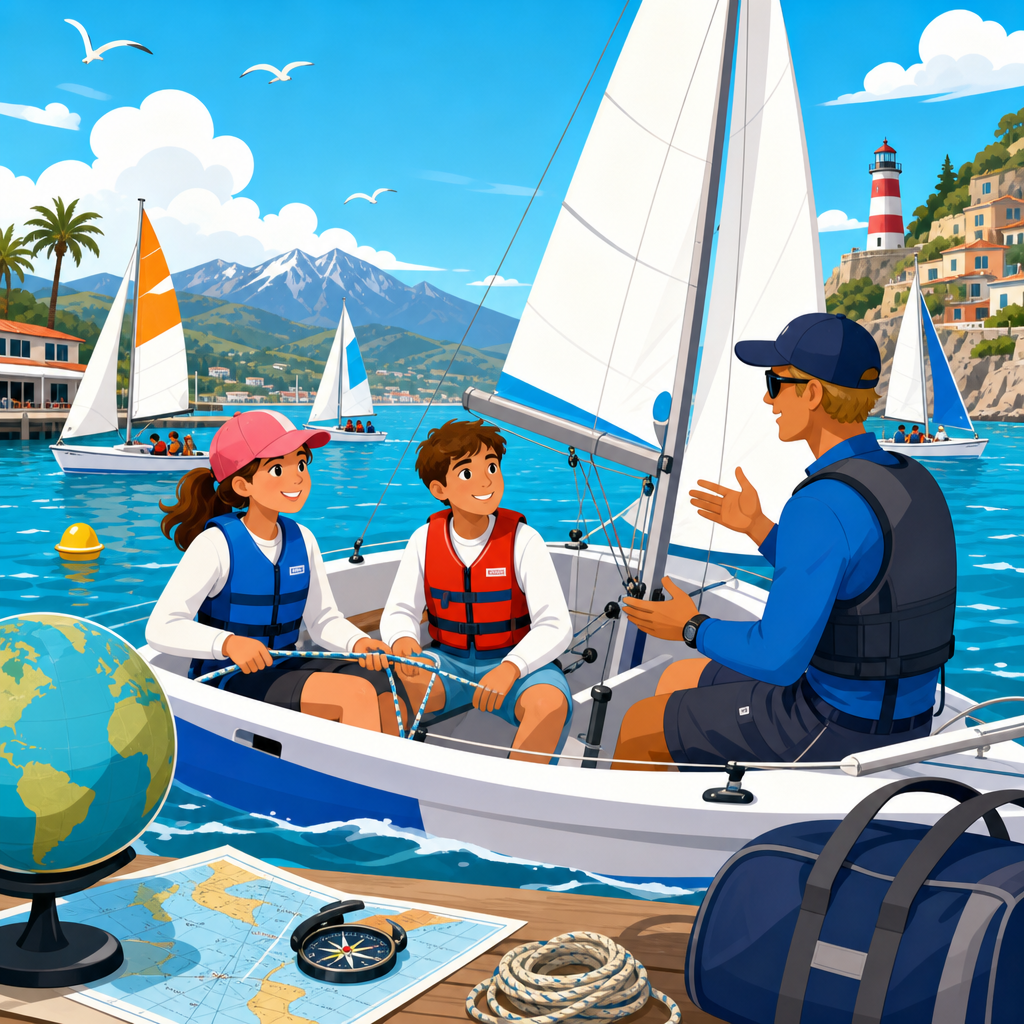
The best sailing school for beginners balances progression with comfort. In practice, that means calm or moderate training waters, modern keelboats or small cruising yachts, and instructors who teach by demonstration rather than shouting corrections from the dock. A beginner should be able to answer a simple question after day one: how does the boat move, stop, turn, and recover when something goes wrong? Schools that teach those fundamentals well usually publish course outcomes clearly. For example, ASA 101 focuses on basic keelboat handling, while RYA Competent Crew introduces onboard roles, line handling, safety equipment, and helming in real cruising conditions. IYT schools often appeal to internationally mobile travelers because their certifications are widely recognized in charter markets.
Course structure matters as much as scenery. Day courses suit travelers with limited time, but liveaboard formats create faster progress because students repeat maneuvers under changing wind and light conditions. A three-day marina-based class may teach tacking and jibing; a five- to seven-day liveaboard usually adds passage planning, anchoring, night awareness, provisioning, and teamwork under fatigue. Ask whether the quoted price includes textbooks, fuel, certification fees, foul-weather gear, and meals. I have seen budget programs become expensive once those extras are added. Also ask about wind reliability. A glamorous destination with light, inconsistent air can be frustrating for a first course, while a modest harbor with predictable sea breezes often produces better sailors.
Another key consideration is the bridge from school to charter. If your goal is a future yacht holiday, choose a school that teaches on boats similar to what you plan to rent. Training on a responsive twenty-two-foot keelboat is excellent for learning sail trim, but beginners aiming for a family bareboat in Croatia or the British Virgin Islands benefit from time on thirty-five- to forty-five-foot monohulls with wheel steering, chartplotters, inboard engines, and bow thrusters. The school should also discuss local charter expectations, security deposits, insurance, and skipper resume requirements. Good training reduces risk; relevant training reduces expensive surprises.
Top beginner-friendly sailing destinations in Europe
Europe offers the broadest mix of training quality and post-course cruising opportunities. The Solent in southern England remains one of the world’s most respected classrooms because it combines tidal planning, commercial traffic awareness, well-marked harbors, and short hops between marinas. RYA schools in Portsmouth, Southampton, and Cowes are rigorous, and beginners who train there gain confidence quickly because they learn in a demanding but supervised environment. The tradeoff is weather. Even in summer, cold fronts, rain, and stronger winds are common, so this is ideal for students who want serious seamanship from the start.
Greece is often the best first Mediterranean option for travelers who want warm weather, line-of-sight navigation, and a direct path to future yacht charters. The Saronic Gulf, near Athens, is especially suitable for beginners because distances between ports are manageable and conditions are usually gentler than the Cyclades. Schools around Alimos Marina and Lavrion often package beginner courses with flotilla-style cruising. Students practice mooring stern-to, handling meltemi-influenced breezes, and anchoring in clear coves. After certification, Greece offers one of the most accessible charter ecosystems in the world, with everything from budget monohulls to premium catamarans.
Croatia is another standout because it combines modern charter infrastructure with protected island routes. Beginner schools operating from Split, Trogir, and Zadar benefit from marinas that are efficient, well serviced, and close to compact cruising grounds. I recommend Croatia to students who want to transition quickly from course completion to a structured flotilla or skippered charter. The Adriatic is not always light; afternoon thermals and bora events demand respect. Still, in settled summer periods, island spacing is forgiving, and there are many bailout harbors. Spain’s Balearic Islands and the Costa Brava also work well for novice sailors, especially outside the peak August crowds, while the Canary Islands are better for students who want year-round sailing and stronger wind experience.
Best beginner sailing schools in the Caribbean and Americas
For warm-water learning and immediate holiday appeal, the Caribbean is hard to beat. The British Virgin Islands are arguably the easiest charter destination on earth for beginners, and that simplicity extends to training. Schools based around Tortola benefit from short passages, numerous protected anchorages, and straightforward navigation by Caribbean standards. A novice can spend a morning practicing sail balance and MOB drills, then anchor in calm turquoise water by afternoon. Because so many charter fleets operate here, the local instruction naturally emphasizes charter checkouts, mooring ball etiquette, and bareboat routines that first-time vacation sailors actually need.
Florida is a practical starting point for North American students. ASA schools in Miami, St. Petersburg, and the Florida Keys offer everything from introductory keelboat classes to liveaboard bareboat programs. Florida’s advantages are accessibility, huge instructor supply, and varied conditions, including bay sailing, tidal current, and coastal passage planning. The downside is weather volatility. Summer thunderstorms and hurricane-season disruptions require flexible scheduling. On the US West Coast, San Diego is excellent for disciplined instruction in moderate conditions, while San Francisco Bay is not a classic beginner destination but can be transformative for motivated students because it teaches current management, reefing discipline, and traffic separation awareness early.
Mexico and Belize deserve more attention from first-time sailors. The Sea of Cortez offers dramatic scenery and, in the right season, manageable training windows from bases near La Paz. Belize combines reef-protected waters with exceptional snorkeling, making it appealing for sailors who want a mixed adventure. In Canada, the Gulf Islands and parts of British Columbia provide outstanding summer instruction for students interested in piloting, currents, and cool-climate cruising. Across these destinations, the core question is simple: do you want the easiest first charter environment, or the fastest route to robust seamanship? The Caribbean often gives you the former; tidal North Atlantic or Pacific schools often give you the latter.
Asia-Pacific and Southern Hemisphere options worth considering
Asia-Pacific beginner sailing options are more varied than many travelers expect. Thailand, especially Phuket and nearby Phang Nga Bay, is one of the easiest entries into tropical cruising in Asia. Schools there use warm, generally protected waters and dramatic limestone island scenery to make the learning curve less intimidating. Beginner-friendly conditions do not mean simplistic training, though. Tides, squalls, and crowded anchorages still require disciplined boat handling. Australia provides a different pathway. The Whitsundays are widely recognized as a premier destination for novice cruising because islands are close together, charter support is strong, and coral-sea conditions can be manageable in the right season. Several schools pair certification with liveaboard itineraries that feel like a holiday while still covering real competencies.
New Zealand is more demanding but excellent for students who want broad capability. Schools around Auckland and the Hauraki Gulf expose beginners to changeable weather, strong maritime culture, and high standards of seamanship. Singapore and Malaysia have smaller training scenes, yet they can suit regional travelers seeking internationally recognized certification without a long-haul flight. In the Southern Hemisphere, seasonality flips planning assumptions. A traveler who misses the Mediterranean summer can still train effectively in Australia or New Zealand. That makes these destinations valuable for people building sailing skills year-round rather than around a single annual vacation.
| Destination | Why it suits beginners | Main caution | Best next step after training |
|---|---|---|---|
| British Virgin Islands | Short passages, protected anchorages, easy charter logistics | Peak-season cost | Bareboat charter or flotilla |
| Saronic Gulf, Greece | Warm weather, manageable distances, strong charter network | Summer crowding and occasional stronger winds | Island-hopping monohull charter |
| Croatia | Excellent marinas, protected routes, modern fleets | Bora risk and marina fees | Adriatic flotilla or one-way charter |
| Solent, England | Exceptional instruction and tidal seamanship | Cold, variable weather | Advanced coastal certification |
| Whitsundays, Australia | Scenic cruising, strong charter support, island shelter | Seasonal weather planning | Liveaboard cruising course |
How course types compare: day classes, liveaboards, and accelerated certifications
Beginners often ask which format is best, and the honest answer depends on how quickly they want to charter. Day classes are ideal for learning core mechanics without the intensity of living aboard. They work especially well in urban sailing centers where students can return over several weekends and gradually absorb terminology, sail trim, collision regulations, and docking practice. Retention can be slower, however, because each session starts with a short reset. Liveaboard courses compress repetition. You wake up on the boat, handle real systems, and practice under changing conditions throughout the day. In my experience, students finishing a five- or seven-day liveaboard are more comfortable with fenders, heads, galley routines, anchoring, and overnight planning than students with the same number of hours spread thinly over a month.
Accelerated certification tracks can be efficient, but they are not automatically beginner-friendly. An intensive sequence like basic keelboat plus basic coastal cruising plus bareboat charter in one extended block can work if the student is fit, focused, and sailing daily in supportive conditions. It can also overwhelm travelers who are still translating vocabulary into physical actions. If your end goal is chartering a yacht in the Mediterranean or Caribbean, the safer route is often a staged progression: complete a fundamentals course, log practice days, then take a cruising or bareboat class on a larger boat. That sequence produces better judgment, and judgment is what charter companies truly care about, even when they primarily ask for certificates and a sailing resume.
How to choose the right school for your budget, goals, and travel style
Start with your target outcome. If you want a one-week sailing vacation with an instructor and no long-term commitment, choose a scenic destination with reliable weather and a liveaboard beginner course. If you want to skipper your own yacht within a year, choose a school whose curriculum aligns with charter expectations in your intended region. Ask direct questions: what boat models are used, how many students share helm time, what happens if wind is too light or too strong, and how often do students actually dock under supervision rather than just observe? Review cancellation terms carefully, especially in hurricane, cyclone, or shoulder-season locations.
Budget is not just tuition. Flights, transfers, marina accommodation, meals, certification fees, gratuities, and travel insurance can change the true price significantly. Greece and Croatia often deliver strong value because competition is high and post-course charter options are abundant. The BVI can be more expensive, but the ease of sailing may justify the premium for first-timers. England and New Zealand may cost more for weather gear and marina nights, yet the seamanship return is substantial. Finally, think about who you travel with. Solo students often learn faster in group courses, couples may prefer private instruction to avoid role confusion, and families should seek schools experienced with younger crew and age-appropriate safety briefings.
The best sailing schools and courses for beginners around the world are the ones that connect instruction, destination, and future cruising plans into one coherent path. Beginners need more than a certificate; they need repeated practice in boat handling, safety procedures, navigation basics, and decision-making under real conditions. Europe leads for variety and charter follow-through, with Greece and Croatia ideal for warm-water progression and the Solent unmatched for rigorous tidal training. The Caribbean, especially the British Virgin Islands, remains the easiest route from first lesson to first charter holiday. North America offers accessible training in Florida and California, while Asia-Pacific destinations such as Thailand and the Whitsundays combine strong scenery with practical beginner cruising grounds.
Use this hub as your starting point for the broader world of best sailing and yacht charter destinations. Match your destination to your learning style, choose a school with recognized standards and relevant boats, and build from fundamentals toward the type of cruising you actually want to do. The right first course will save money, reduce stress, and make every future charter safer and more enjoyable. Pick a region, compare schools, and book a beginner program that gets you on the water soon.
Frequently Asked Questions
1. What should beginners look for when choosing a sailing school or first sailing course?
Beginners should focus on structure, safety, and learning conditions rather than just the destination. A good first sailing school should offer a clear beginner curriculum that covers the essentials in a logical order, including boat handling, points of sail, steering, tacking and jibing, docking basics, safety procedures, navigation fundamentals, and understanding wind and weather. It is also important to look at the school’s teaching ratio. Smaller student-to-instructor groups usually mean more time on the helm, more feedback, and a better chance to build confidence quickly.
The training environment matters just as much as the syllabus. Sheltered bays, moderate winds, and manageable sea states are ideal for first-time sailors because they allow students to practice core skills without being overwhelmed. Reliable training boats, well-maintained equipment, and a professional safety culture are strong signs of a quality operation. If you are traveling internationally, consider whether instruction is offered in a language you understand comfortably, and whether the destination has easy transportation, beginner-friendly accommodations, and support services nearby.
It is also wise to compare certification pathways. Many schools teach through internationally recognized systems such as ASA, RYA, or IYT, and each has a slightly different progression. The best choice depends on your goals. If you want a step-by-step route toward chartering a yacht later, choose a school with a progression from beginner to bareboat and coastal cruising courses. If you simply want a solid first experience and foundational competence, prioritize schools with strong reviews, experienced instructors, and plenty of practical on-the-water time. A beautiful location is a bonus, but for beginners, consistency, instruction quality, and safety should always come first.
2. Which countries or destinations are best for beginner sailing lessons around the world?
Some of the best destinations for beginner sailing are places that combine calm or predictable conditions with established training infrastructure. Greece, Croatia, the British Virgin Islands, Thailand, Australia, Spain, and parts of the United Kingdom are all popular for good reason. These locations often have professional sailing schools, protected cruising grounds, and enough tourism infrastructure to make travel easier for first-time students. For example, the British Virgin Islands are widely known for line-of-sight navigation, short passages, warm water, and relatively straightforward cruising conditions, which can make the learning curve feel more manageable.
In Europe, Greece and Croatia are especially attractive because they offer a mix of scenic islands, developed marinas, and schools that cater to both complete beginners and students working toward certifications. Spain is also a strong option, particularly in regions with established sailing academies and favorable weather for much of the year. In the United Kingdom, training standards are highly respected, especially through RYA-affiliated schools, though conditions can be cooler and more variable, which can actually be valuable for students who want robust seamanship experience from the beginning.
Outside Europe, Thailand can be an appealing destination for beginners who want warm weather, tropical scenery, and accessible training bases. Australia offers excellent instruction and world-class facilities, although conditions vary widely by region, so beginners should look carefully at the local sailing environment. Ultimately, the best destination depends on what kind of learning experience you want. If your priority is calm water and confidence-building, choose a warm-weather cruising destination with protected waters. If your priority is rigorous seamanship training and internationally recognized instruction, locations with long-established training systems may be a better fit. The ideal destination is the one that matches your comfort level, budget, travel plans, and long-term sailing goals.
3. How long does it take for a beginner to learn basic sailing skills?
Most beginners can learn the fundamentals of sailing in just a few days, but becoming truly confident takes more practice. A short introductory course or two- to five-day beginner program can usually teach the basics of steering, trimming sails, understanding points of sail, performing simple maneuvers, responding to basic wind changes, and following core safety procedures. By the end of a well-run entry-level course, many students are able to handle a small training boat or participate meaningfully as crew on a larger yacht.
That said, sailing is a skill built through repetition, not just instruction. The first course gives you the framework, vocabulary, and hands-on exposure, but confidence comes from using those skills in varying conditions. Docking, sail balance, situational awareness, and reading wind patterns often take longer to develop because they depend on timing and judgment as much as technical knowledge. This is why many strong beginner schools emphasize daily practice, supervised repetition, and scenario-based learning rather than just classroom theory.
If your goal is to eventually charter a boat or cruise independently, expect a longer learning path that may involve multiple courses over weeks or months. A common progression is an introductory sailing class, followed by a basic keelboat or basic cruising course, then navigation and bareboat charter training. Some students accelerate this process through liveaboard programs or intensive sailing vacations, while others prefer to spread it out with local practice between courses. In practical terms, you can start learning immediately and gain useful beginner skills quickly, but safe, repeatable competence develops over time with guided experience.
4. Are sailing certifications necessary for beginners, and which ones matter most?
Sailing certifications are not always legally required to begin learning, but they are extremely useful for beginners because they provide a clear training standard and a recognizable record of competence. For someone just starting out, a certification framework helps answer an important question: what exactly should I know before moving to the next level? Systems such as ASA, RYA, and IYT are popular because they break sailing education into progressive stages, covering boat control, safety drills, seamanship, navigation, and eventually cruising and charter skills.
For complete beginners, the most important thing is not the badge itself, but the quality and consistency of the instruction behind it. A beginner-level certificate can be valuable if you plan to continue training in different countries, join flotillas, or work toward chartering in the future. It shows that you have been taught according to a known syllabus and have covered specific practical skills. RYA certifications are particularly well respected internationally, especially in Europe and many professional training contexts. ASA certifications are widely recognized, especially in North America and many charter-focused sailing programs. IYT is another international option used by schools in multiple cruising regions.
If you are not sure which path to choose, think about where you want to sail later. If you hope to charter in the Mediterranean or train within a UK-influenced system, RYA may be especially useful. If you are based in the United States or planning future charter vacations in the Caribbean, ASA may be a practical fit. Still, beginners should avoid overcomplicating the decision. The best first course is one that gives you strong hands-on instruction, real practice on the water, and a safe introduction to seamanship. A respected certification is helpful, but it is the actual skill development that matters most.
5. What skills should a beginner sailing course teach before someone sails independently?
A solid beginner sailing course should cover the full foundation of safe boat operation, not just the exciting parts like steering under sail. At a minimum, students should learn the main parts of the boat, how sails generate power, the points of sail, how to steer a steady course, and how to perform core maneuvers such as tacking, jibing, heading up, and bearing away. They should also understand sail trim basics, basic right-of-way rules, and how wind direction affects decision-making on the water. These are the skills that turn a casual sailing experience into the beginning of real seamanship.
Just as important are the practical and safety-focused skills that many first-time sailors underestimate. A beginner course should teach departure and return procedures, line handling, fender use, anchoring basics where appropriate, and docking fundamentals, even if those docking exercises are initially assisted by the instructor. Students should also practice crew communication, emergency procedures, person-overboard drills, use of life jackets and safety equipment, and how to assess changing weather in a simple, beginner-friendly way. Navigation instruction at the beginner level does not need to be advanced, but students should leave with a basic understanding of charts, markers, hazards, and how to orient themselves in a local sailing area.
Before sailing independently, a beginner should also develop judgment. That means knowing when conditions are suitable, when they are not, and when to delay or cancel a sail. Good schools teach this mindset from day one. They help students understand that safe sailing is about preparation, situational awareness, and repeatable habits, not bravado. A beginner does not need to know everything before sailing without an instructor, but they do need a reliable foundation in boat handling, safety, basic navigation, communication, and decision-making. The best courses are the ones that build both competence and restraint, because that combination is what creates safe, capable sailors over time.