When a boat sinks, survival depends less on luck than on preparation, fast decisions, and the right safety equipment used in the right order. In practical terms, “sinking” includes catastrophic flooding, swamping, capsize, fire damage that forces abandonment, or any loss of buoyancy that leaves the vessel unable to support passengers. I have worked around small craft safety plans, ditch bag checklists, and post-incident reviews long enough to know that people usually imagine a dramatic Hollywood plunge, while real emergencies more often begin with a slow leak, a dead bilge pump, a missed weather shift, or one unsecured hatch. That gap between expectation and reality is exactly why this subject matters.
This guide explains what to do if your boat sinks, which survival gear matters most, and how safety and emergency equipment fit together as a complete system rather than a random collection of products. For recreational boaters, anglers, sailors, paddlers using support craft, and nearshore cruisers, the goal is simple: stay afloat, stay visible, stay together, and stay recoverable until rescuers arrive or you reach safety. The U.S. Coast Guard’s boating safety guidance, International Convention for the Safety of Life at Sea equipment standards, and common marine surveying practice all point to the same truth: survival outcomes improve sharply when a crew has flotation, signaling, communications, thermal protection, and a rehearsed emergency plan.
A strong safety setup also protects every other investment in boating gear and equipment. Life jackets, EPIRBs, PLBs, VHF radios, flares, strobes, throwables, immersion aids, emergency drinking water, manual pumps, and ditch bags are not add-ons. They are the backbone of responsible boating. If you are building a complete safety and emergency equipment plan, this hub article gives you the framework to evaluate every component, understand where each item belongs, and know what to do in the first critical minutes after the hull is compromised.
Recognize the Emergency Early and Try to Keep the Boat Afloat
The first survival tip is counterintuitive: if your boat is sinking, your best life raft may still be the boat itself. Most crews lose valuable time because they delay diagnosis, not because they lack courage. Water over the sole, a continuously cycling bilge pump, sluggish steering, a new list to port or starboard, burning smells, impact after grounding, or engine space alarms are all cues to investigate immediately. On many small powerboats, a failed hose clamp, cracked livewell fitting, damaged bellows, or loose transom drain can flood the bilge faster than a single undersized pump can discharge it.
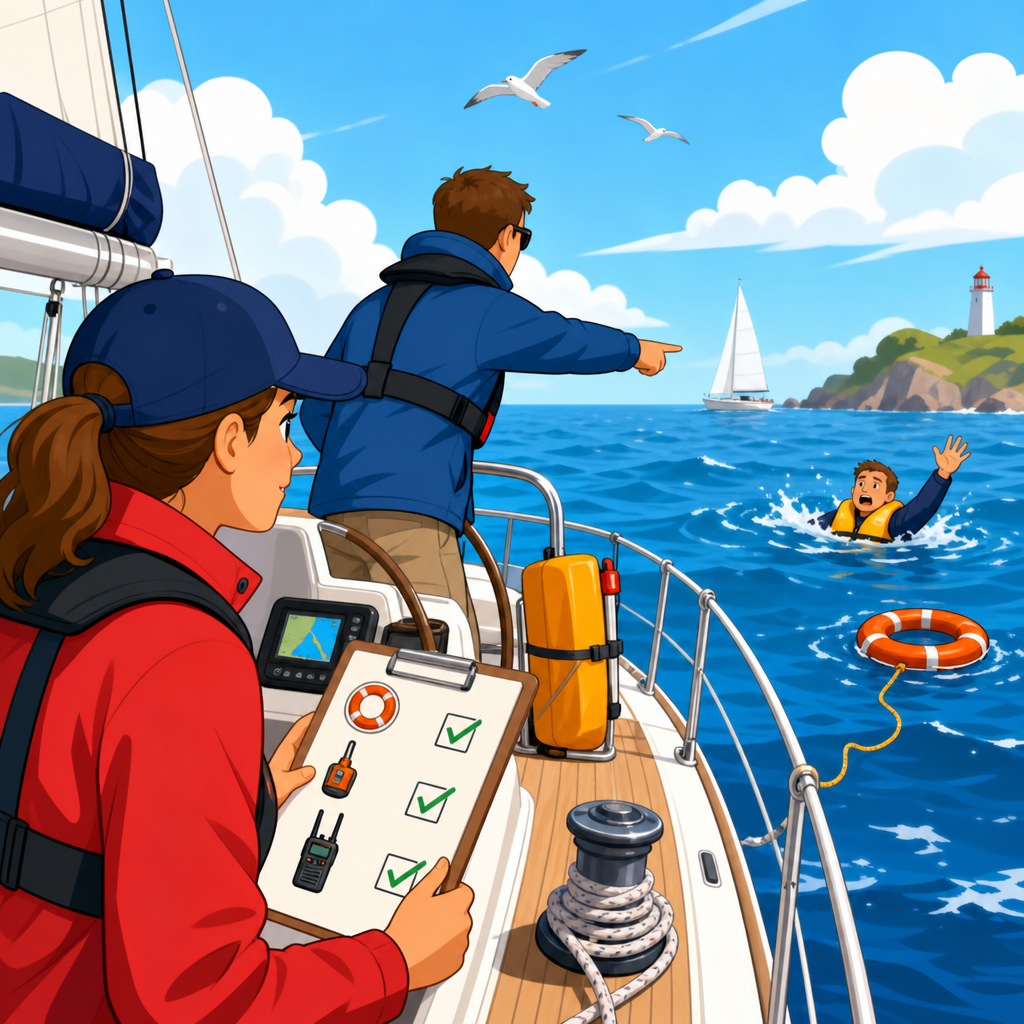
Assign jobs at once. One person should put every passenger in a properly fitted life jacket. Another should locate the source of flooding and close seacocks, stuff leaks with soft wooden plugs, collision mats, towels, or emergency leak repair putty, and start every available bilge pump. Use a manual bilge pump or bucket brigade if needed. Reduce speed if pounding worsens the breach, but maintain control if heading toward shallow water or a safer lee shore increases survival odds. If fire, fuel vapor, or imminent capsize makes the vessel unsafe, transition quickly from damage control to abandonment preparation.
If you can communicate while still aboard, do it early. A Mayday transmitted before electronics fail is far more valuable than a late distress call shouted from the water. Give your position from GPS or chartplotter, nature of distress, number of people aboard, vessel description, and whether you are preparing to abandon ship. Turn on Digital Selective Calling if your VHF is connected to GPS. Activate your EPIRB if the situation is grave or offshore. In rescue analysis, the strongest predictor of rapid recovery is often not the type of boat but whether the crew sent a clear distress alert before entering the water.
What to Do in the Water: Immediate Survival Priorities
If the boat goes down or capsizes, follow a strict sequence: account for people, stay with flotation, reduce heat loss, signal, and avoid unnecessary swimming. The phrase “don’t leave the boat until you have to” remains sound because a swamped hull, overturned skiff, or floating debris field is larger and easier for rescuers to see than individual heads in the water. Even a partially submerged vessel may provide buoyancy, insulation from waves, and attachment points for children or injured passengers.
Count everyone aloud. Panic causes silent separation, especially at night or in breaking seas. Keep the group together because clustered survivors are easier to spot and can share morale, body heat, and signaling tasks. If the water is cold, adopt the Heat Escape Lessening Posture when alone, or huddle when in a group. In water below about 70 degrees Fahrenheit, functional decline can begin faster than many boaters expect, and cold shock in the first minute can trigger gasping and aspiration. That is why properly worn life jackets matter more than stowed life jackets.
Avoid trying to swim for shore unless land is clearly close, conditions are calm, and you are certain of distance and current. I have seen incident reports where survivors overestimated their swimming ability and underestimated tidal set by a wide margin. Shoes, soaked clothing, and chop make even short distances exhausting. If a life raft is available, board it methodically, help weaker passengers first, and retain the ditch bag, water, signaling devices, and handheld radio. Once stabilized, focus on visibility and rescue rather than movement for movement’s sake.
Core Safety and Emergency Equipment Every Boat Should Carry
Safety equipment works as a layered system. Flotation keeps you alive in the first minutes. Communications bring rescuers. Signaling helps them find you. Damage-control tools may prevent abandonment entirely. Thermal protection extends survival time. Medical supplies address injuries that often accompany flooding, grounding, or fire. For a hub page on boating safety and emergency equipment, the categories below are the essential foundation for most recreational vessels.
| Equipment | Primary Purpose | Best Practice | Common Mistake |
|---|---|---|---|
| Life jackets or PFDs | Keep airway above water and reduce fatigue | Wear them before the emergency starts | Stowing them under seats |
| Throwable flotation | Assist a person overboard or weak swimmer | Keep instantly accessible in cockpit | Buying one but burying it in storage |
| Fixed-mount or handheld VHF radio | Send distress calls and receive rescue coordination | Use DSC, know Channel 16 procedure | Relying only on cell service |
| EPIRB or PLB | Transmit distress location by satellite | Register beacon and test on schedule | Owning one with expired battery registration |
| Visual distress signals | Help rescuers pinpoint your position | Carry day and night options | Keeping expired flares only |
| Ditch bag | Organize grab-and-go survival essentials | Use waterproof, floating bag with lanyard | Packing it so heavily it sinks |
| Bilge pumps and buckets | Control flooding before abandonment | Maintain pumps and add manual backup | Assuming one electric pump is enough |
| First-aid kit and thermal aids | Treat injuries and reduce hypothermia risk | Add trauma supplies and exposure blankets | Carrying a basic kit with no cold-water plan |
Beyond these basics, serious boaters should evaluate AIS man-overboard beacons, radar reflectors, immersion suits for cold regions, reboarding ladders, emergency tillers on sailboats, waterproof flashlights, backup navigation lights, and fire suppression suited to engine spaces and lithium battery risks. The right mix depends on boat size, operating area, water temperature, and passenger experience, but no boat benefits from guessing. Build your kit from the risks you actually face, then inspect it before every season and before longer passages.
Life Jackets, Ditch Bags, and Signaling Tools That Save Lives
If you ask which gear saves the most lives, the answer is still the life jacket. Modern Type I, II, III, and inflatable options vary in buoyancy, comfort, and intended use, but the operational rule is straightforward: the best PFD is the one people will wear correctly for the entire trip. Inflatable life jackets are excellent for comfort on many inland and coastal boats, yet they require maintenance, cartridge checks, and user suitability. For children, non-swimmers, and rough conditions, inherently buoyant models remain the safer default.
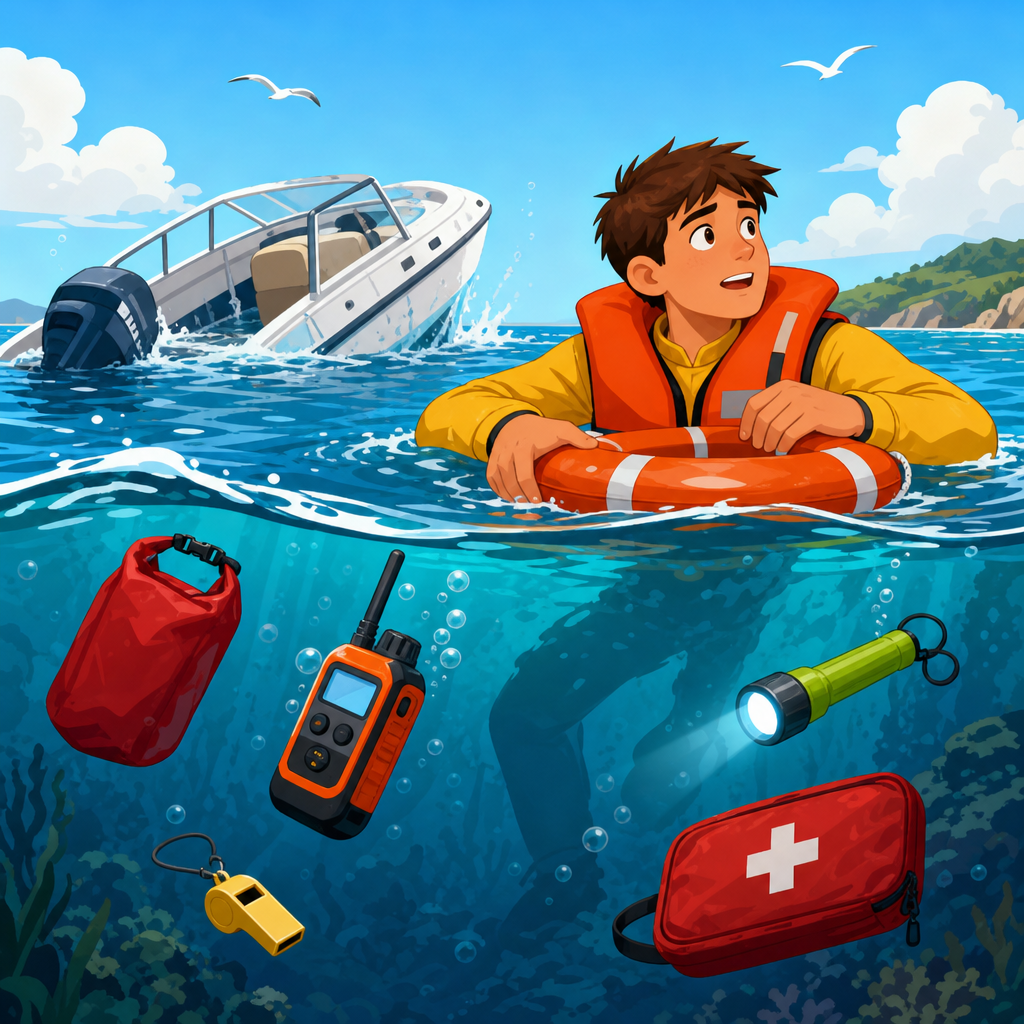
The ditch bag is the second cornerstone because it turns scattered gear into a usable system. A smart ditch bag usually includes a handheld VHF with spare battery or charging option, registered PLB, signal mirror, whistle, waterproof flashlight, strobe, flares or electronic distress light, compact first-aid kit, emergency water, high-calorie rations, thermal blankets, knife, multitool, spare glasses, seasickness tablets where appropriate, and copies of identification or float plan contacts in a waterproof pouch. Attach a lanyard and choose a high-visibility floating bag.
Signaling tools deserve more respect than they often get in casual boating. Flares are effective, but they expire, require safe handling, and provide only brief windows of visibility. Electronic visual distress signals now offer longer operating time and easier storage, though local carriage requirements still matter. A signal mirror can work at remarkable distances in sunlight. A whistle cuts through wind better than shouting. A waterproof strobe attached to each life jacket helps at night when even nearby survivors can disappear between waves. Redundancy here is not excessive; it is professional seamanship.
Communications, Rescue Beacons, and the Value of a Float Plan
Every sinking scenario raises the same urgent question: how will rescuers know where to look? Marine VHF remains the primary nearshore and coastal distress tool because it reaches nearby vessels and rescue authorities quickly. A fixed-mount VHF with a proper antenna usually outperforms a handheld, but the handheld becomes critical if power fails or you enter the raft. Digital Selective Calling, when connected to GPS and paired with an MMSI number, can transmit your identity and position at the push of a distress button. Many owners buy capable radios and never finish that setup, which wastes one of the most valuable safety features onboard.
For offshore or remote cruising, an EPIRB is the gold standard because it alerts the international Cospas-Sarsat satellite network and can transmit precise location data. A PLB offers similar capability for individuals, especially on smaller boats where a full EPIRB may not be installed. Satellite messengers can be useful for tracking and routine check-ins, but they do not replace a proper distress beacon unless their emergency features and monitoring arrangements are fully understood. In actual emergencies, simplicity wins. Push one clearly labeled distress button and let the system work.
A float plan is low-tech but powerful. Before departure, tell a reliable contact where you are going, who is aboard, what boat you are using, when you expect to return, and when they should call authorities if you do not check in. Include launch ramp, vehicle details, trailer plate, intended fishing grounds or waypoints, and communication numbers. In more than one case I have reviewed, a clear float plan narrowed search areas enough to convert a broad overnight search into a fast morning pickup.
Training, Drills, and Maintenance Make Gear Work Under Stress
Boating emergency equipment fails most often through neglect, not design. Batteries die. Flares expire. Inflator cylinders loosen. Bilge pumps clog with debris. Radios are never registered. Crew members do not know where the ditch bag lives. The fix is disciplined maintenance and simple drills. At the start of the season, inspect every PFD, test radios, verify MMSI and beacon registration, check expiration dates, confirm bilge pump float switches, inspect hoses and clamps, and replace corroded flashlight batteries. On trailer boats, also inspect hull fittings and transom plugs before every launch.
Practice matters just as much. Run a man-overboard drill. Rehearse a Mayday call. Have each passenger put on their life jacket before leaving the dock. Show everyone where fire extinguishers, throwable flotation, first-aid kit, and emergency shutoffs are located. If your boat carries a life raft, review deployment steps and painter line use. If children are aboard, assign an adult to each child during emergencies. These actions sound basic, but under stress people revert to what they have practiced, not what they once read online.
The broader benefit of treating this page as your safety and emergency equipment hub is that it creates an upgrade path. From here, boaters can go deeper into life jacket selection, VHF radio setup, EPIRB versus PLB decisions, ditch bag packing lists, flare alternatives, marine first-aid kits, bilge pump sizing, and cold-water survival gear. Start with the essentials, then refine your system around your waters, your crew, and your boat. Review your equipment this week, replace what is outdated, and make sure everyone aboard knows exactly what to do before the next trip.
Frequently Asked Questions
What should you do first if your boat is sinking?
The first priority is to protect life, not the boat. As soon as you realize the vessel is taking on water, losing stability, on fire, or no longer safely supporting everyone aboard, get every person into a life jacket immediately if they are not already wearing one. After that, make a distress call with your VHF radio on Channel 16, activate your emergency beacon if you have one, and give your position as clearly as possible. If the boat is still afloat enough to support people, stay with it while you control flooding, shut down fuel or electrical systems if appropriate, and prepare survival gear. A partially submerged hull is far easier for rescuers to spot than a person in the water. If time allows, deploy visual distress signals, grab the ditch bag, account for every passenger, and assign simple tasks so nobody freezes or panics. In many real emergencies, the best outcomes come from crews who follow a basic order: put on flotation, send a distress alert, control immediate hazards, gather survival gear, and abandon only when remaining aboard is more dangerous than entering the water.
Is it better to stay with a sinking boat or swim away?
In most cases, it is better to stay with the boat, even if it is swamped, capsized, or partially submerged. People often underestimate how quickly energy disappears in open water, especially in cold temperatures, rough chop, current, wind, or darkness. A boat hull, floating debris, or even an overturned vessel provides buoyancy, visibility, and a larger target for search teams. It can also help keep part of your body out of the water, which reduces heat loss and exhaustion. Swimming away should usually be reserved for situations where the boat creates a greater danger, such as active fire, fuel ignition risk, entrapment, surf impact against rocks, or a clear, short, safe route to shore. Even then, the decision must be made carefully, because distances on the water are often badly misjudged. If abandonment is necessary, do it in a controlled way: keep life jackets on, take signaling gear and water if possible, stay together as a group, and remain attached to floating gear or a life raft. The practical rule is simple: unless the boat is actively trying to kill you, it is usually your best survival platform.
What survival gear matters most when abandoning a sinking boat?
The most important gear is the gear you can access quickly and use correctly under stress. Properly fitted life jackets are first, because flotation buys time for every other survival action. Right behind that is a well-stocked ditch bag containing essentials such as a waterproof VHF radio, emergency position-indicating beacon or personal locator beacon, signaling devices like flares, mirror, whistle, and strobe, drinking water or emergency water packets, a compact first-aid kit, flashlight, thermal protection aids, spare batteries, a knife, and basic seasickness medication. If the vessel carries a life raft, that can become the single biggest survival advantage in offshore conditions because it gets people out of the water and improves visibility. A throwable flotation device, heaving line, waterproof phone case, and extra exposure protection such as immersion suits or emergency blankets can also be critical depending on weather and distance from help. The biggest mistake is treating safety gear like a checklist item instead of an actual emergency system. Equipment should be stored where it can be reached in seconds, not buried under coolers or locked in compartments, and everyone aboard should know what it is, where it is, and how to deploy it. In a real sinking event, familiar gear saves lives; fancy gear nobody can find does not.
How do you survive in the water after the boat goes down?
Once you are in the water, the goal shifts from saving the vessel to preserving heat, conserving energy, and staying visible. Keep your life jacket secured and avoid unnecessary swimming, because hard movement burns energy and increases heat loss. If you are alone and not attached to a flotation platform, use a heat-conserving posture by drawing your knees up and keeping your arms close to your chest if conditions allow. If you are with others, form a tight group to improve visibility, morale, and warmth retention. Stay with any floating wreckage, raft, or cooler that adds buoyancy and gets more of your body out of the water. If you have signaling gear, use it when rescuers may be able to see or hear it rather than wasting all signals at once. Cold water is a major killer, and even strong swimmers can lose meaningful function quickly, so focus on calm breathing in the first minutes to control shock and avoid panic. Saltwater ingestion, fatigue, and dehydration also become serious risks over time. If there is a raft, board it as efficiently as possible, help the weakest person first, and then inventory gear, treat injuries, reduce exposure, and continue signaling. Survival in the water is rarely about toughness alone; it is about slowing down the chain of heat loss, exhaustion, and poor decisions.
How can you prepare in advance so a sinking emergency is more survivable?
The best survival tip is to make most of the important decisions before you ever leave the dock. File a float plan with a trusted person, check weather and sea conditions carefully, and match your route to the capability of the boat and the experience of the people aboard. Make sure every passenger knows where life jackets are stored, how to put them on, how to use the radio, and what the command to abandon ship would actually mean. Inspect bilge pumps, batteries, through-hulls, fuel systems, drain plugs, and seacocks, and carry practical damage-control items such as wooden plugs, repair tape, manual bailing options, and extra lines. Keep the ditch bag complete, waterproof, and instantly accessible. Practice man-overboard recovery, radio calls, and emergency assignments so people do not stand still waiting for instructions when stress hits. Also think realistically about the kinds of “sinking” incidents that happen most often on small boats: gradual flooding from failed fittings, swamping from bad weight distribution, capsize in rough weather, collision damage, or a fire that forces rapid abandonment. Good preparation turns those scenarios from chaotic surprises into manageable emergencies. In short, survival is usually built from routine habits: wearing life jackets early, maintaining the boat well, briefing passengers, carrying the right gear, and rehearsing what to do before the water starts coming in.