A man overboard situation is one of the fastest, most dangerous emergencies that can happen on the water, and preparation determines whether the outcome is a close call or a tragedy. In boating, “man overboard” refers to any person who falls or is thrown from a vessel and becomes separated from it, regardless of age or gender. The phrase also covers cases where a passenger enters the water intentionally but cannot reboard, drifts away, or becomes incapacitated. I have run safety briefings for small fishing boats, family cruisers, and sailing crews, and the pattern is always the same: crews assume they will have time to think, but real incidents unfold in seconds.
This topic matters because drowning, hypothermia, propeller injury, and loss of visual contact can happen almost immediately. According to boating safety guidance from the U.S. Coast Guard and the National Association of State Boating Law Administrators, wearing a life jacket, maintaining a proper lookout, using engine cut-off devices where required, and practicing recovery drills are among the most effective ways to reduce fatal outcomes. A prepared crew does not rely on luck. It uses safety and emergency equipment correctly, understands roles, and responds in a sequence that protects both the person in the water and everyone still aboard.
As a hub within boating gear and equipment, this guide explains how to prepare for a man overboard situation by connecting the full safety and emergency equipment picture: life jackets, throwable flotation, recovery devices, communications gear, signaling tools, ladders, lights, first-aid supplies, and crew procedures. It also answers the practical questions boaters ask most: what equipment is essential, where should it be stored, who does what during an emergency, and how do preparation steps differ by boat type, weather, and crew skill. If you build these habits before leaving the dock, your response on the water becomes faster, calmer, and far more effective.
Understand the Risks Before Anyone Falls Overboard
The best man overboard response starts with prevention. People go overboard for predictable reasons: sudden wakes, slippery decks, poor handholds, alcohol impairment, moving around while underway, fighting fish at the rail, sail handling on heeling boats, and losing balance during anchoring or docking. On small powerboats, abrupt throttle changes and tight turns throw passengers off balance. On sailboats, accidental jibes and foredeck work in rough weather create high-risk moments. On pontoons and cruising boats, nighttime movement and wet swim platforms are common factors.
Preparation begins by identifying where falls are most likely on your boat. Walk the deck before departure. Check non-skid surfaces, rail height, gate latches, boarding steps, and grab handles. Assign safer movement routes. If children, older passengers, or weak swimmers are aboard, raise your baseline precautions immediately. I advise skippers to treat every cold-water trip as high risk, even on calm days, because cold shock can incapacitate a strong swimmer in less than a minute. Visibility matters too. In chop, fog, rain, or darkness, a person in the water becomes astonishingly hard to spot.
Risk assessment also includes operational choices. Set rules about remaining seated while underway, one hand for the boat and one for yourself, no riding on bow cushions at speed, and no swimming near running engines. These are simple controls, but they prevent the chain of events that leads to a recovery operation.
Build a Layered Safety and Emergency Equipment System
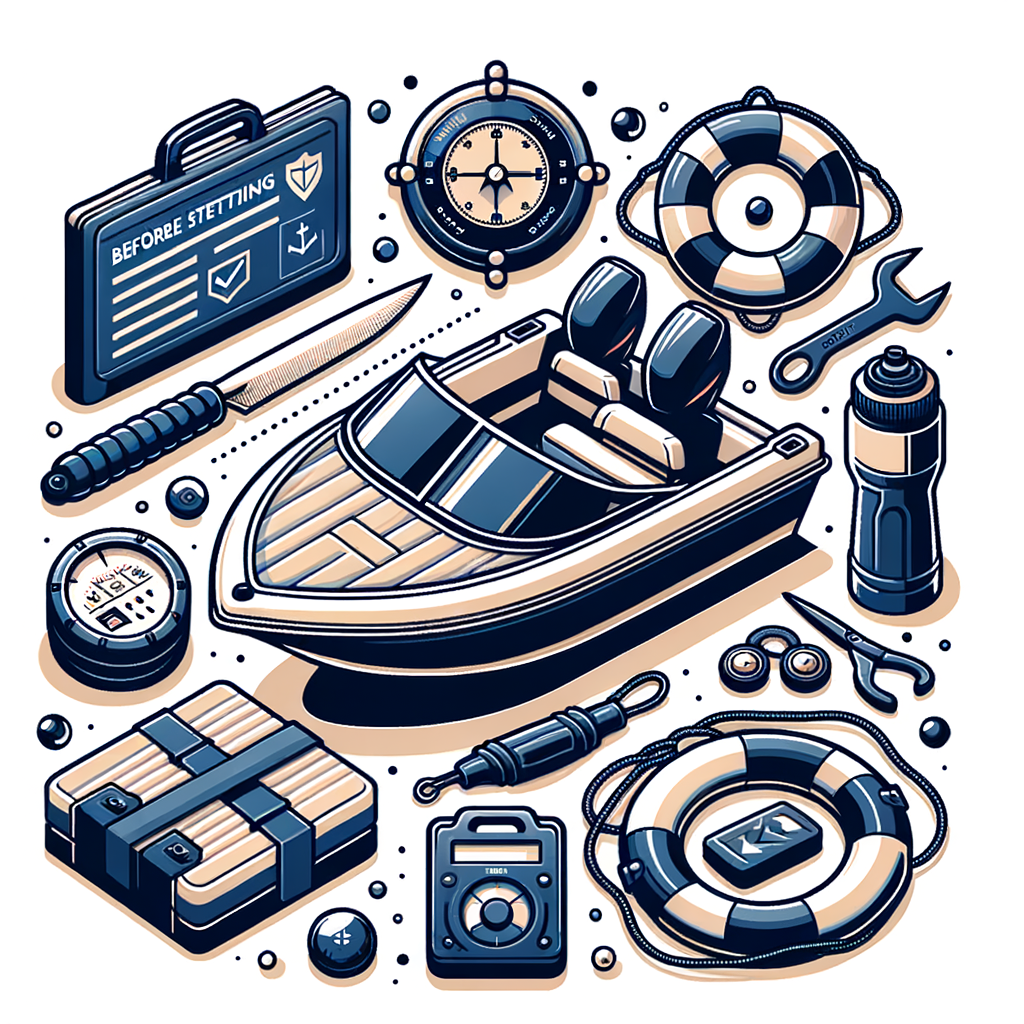
If you want to prepare for a man overboard situation correctly, think in layers rather than individual products. The first layer is prevention equipment: properly fitted U.S. Coast Guard approved life jackets, tethers for offshore sailing when appropriate, jacklines on larger sailboats, deck lighting, non-skid footwear, and an engine cut-off switch lanyard or wireless cut-off device on applicable powerboats. The second layer is immediate response gear: a throwable Type IV device, horseshoe buoy, ring buoy, heaving line, flotation sling, and a loud sound signal. The third layer is location and communication equipment: fixed-mount VHF with Digital Selective Calling, handheld VHF backup, GPS/chartplotter with MOB function, personal locator beacon or AIS man overboard beacon for offshore use, waterproof flashlight, and distress signaling tools.
The fourth layer is recovery equipment. This often gets overlooked. Getting next to a person is not the same as getting them back aboard. You need a boarding ladder that reaches deep enough below the waterline, a rescue sling, tackle or hoisting point for heavier persons, swim platform access, and in some cases a davit, boom lift, or recovery pole. The fifth layer is post-recovery care: blankets, dry clothing, first-aid kit, trauma supplies, and knowledge of hypothermia management. On many recreational boats, the weak link is not flotation; it is reboarding.
Store this equipment where it can be reached in under ten seconds. A ring buoy buried under cushions is decorative, not functional. A throwable cushion strapped behind coolers is effectively unavailable. Label compartments, mount gear near the helm or transom, and verify every regular crew member knows its location.
Choose the Right Equipment for Your Boat
Different boats need different man overboard setups. A bass boat with a high-performance outboard benefits from an engine cut-off lanyard, wearable life jackets, a throwable cushion, and an easy-deploy boarding ladder. A center console offshore boat should add a fixed VHF, EPIRB or PLB depending on range, strong deck lighting, and a recovery sling because freeboard can make lifting difficult. A family bowrider often needs better passenger briefing and seat discipline more than complex rescue hardware, but it still requires throwable flotation and accessible reboarding gear.
Sailboats deserve special mention because recovery under sail requires practiced boat handling. I typically recommend a horseshoe buoy with light, a Lifesling-type system, jacklines for rough conditions, MOB button familiarity on the chartplotter, and a recovery plan that works with your rig and crew size. Cruising catamarans may have more deck space and swim access, but high topsides can still complicate lifting an exhausted person. Kayaks and paddlecraft rely even more on wearable flotation, communication redundancy, thermal protection, and self-rescue methods because separation from the craft happens easily.
| Boat type | Core man overboard gear | Important recovery concern |
|---|---|---|
| Small powerboat | Wearable life jackets, cut-off lanyard, throwable cushion, ladder | Victim may drift behind quickly after acceleration |
| Center console offshore | VHF DSC, PLB/AIS beacon, ring buoy, sling, spotlight | High freeboard makes lifting difficult |
| Sailboat | Horseshoe buoy, MOB light, Lifesling, jacklines, chartplotter MOB | Recovery under sail demands practiced maneuvering |
| Pontoon or cruiser | Throwable device, ladder, deck lighting, first-aid kit | Night movement and swim platform slips are common |
This equipment selection is the foundation for every related safety and emergency equipment article under this hub, because each item affects detection, flotation, communication, retrieval, or treatment.
Create a Clear Man Overboard Response Plan
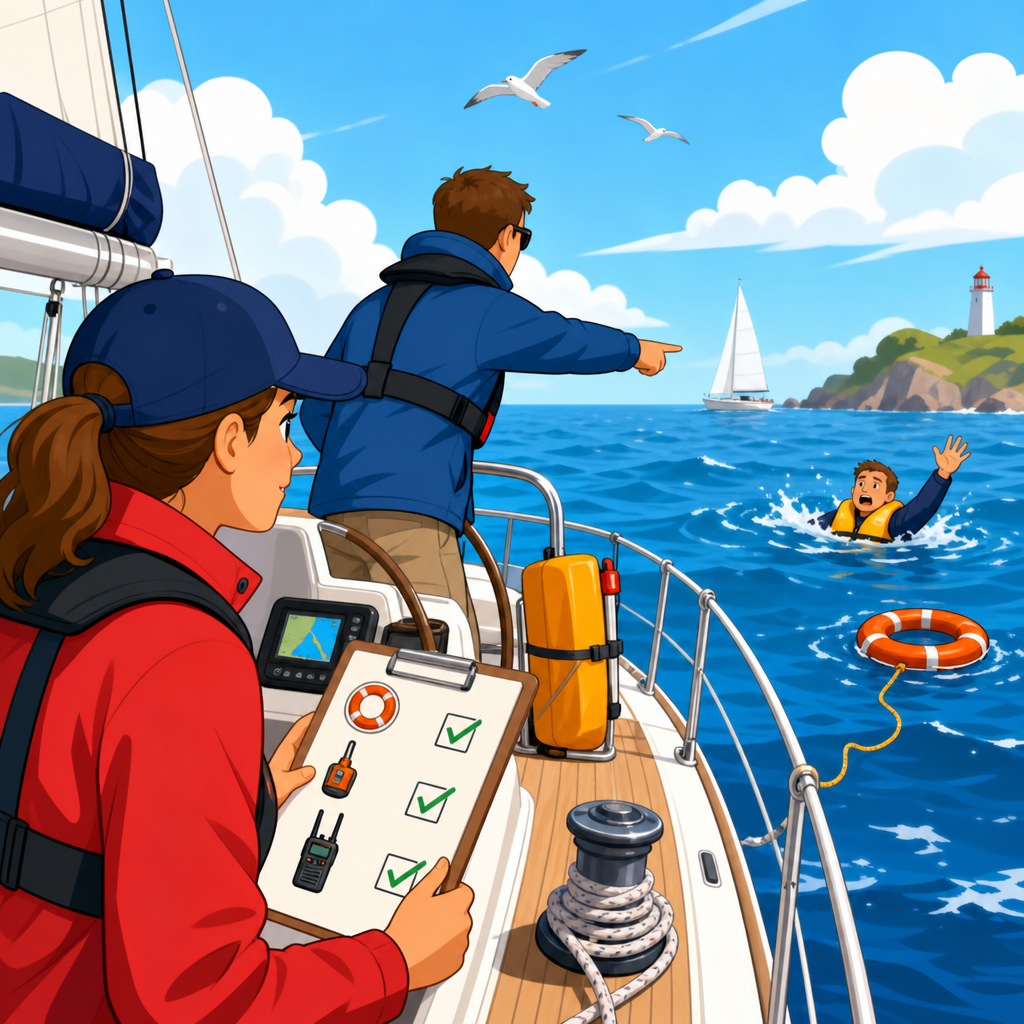
When someone goes overboard, crews lose time to confusion unless roles are assigned in advance. The basic plan is direct and should be taught to every passenger. First, shout “man overboard” immediately. Second, keep continuous visual contact and point at the person without stopping. Third, throw flotation even if the person is wearing a life jacket. Fourth, reduce propulsion danger by shifting to neutral and managing the engine or sails appropriately. Fifth, mark the location using the chartplotter MOB function if available. Sixth, maneuver for recovery from downwind or into the current, depending on conditions and boat type. Seventh, recover the person using the safest side, usually away from propellers and with the best boarding access.
On larger crews, assign a pointer, a helm operator, a spotter backup, a communications person, and a recovery lead. On family boats with only two adults, simplify: one drives, one points and prepares gear. If single-handing, prevention becomes even more critical because self-recovery or remote engine shutdown may be the only immediate option. This is why engine cut-off devices are so important on small powerboats. If the operator falls overboard without one attached, the boat may continue circling or run away.
Write your response checklist on a waterproof card at the helm. In training, I have seen experienced boaters forget basic sequencing when adrenaline spikes. A visible checklist reduces hesitation and keeps the response organized.
Practice Recovery Drills Until Actions Become Automatic
No article about how to prepare for a man overboard situation is complete without drills. Practice is what turns equipment into capability. Start with a throwable fender or weighted buoy as the simulated person. Run daytime and low-light drills. Practice under power and, if relevant, under sail. Time how long it takes to spot, circle back, stop safely, and bring the object alongside. Most crews are slower than they expect, especially when wind and current separate the target from the last known position.
Drills should cover more than maneuvering. Rehearse deploying the throwable device, activating the MOB button, using the VHF to make a pan-pan or mayday call, lowering the ladder, rigging a sling, and lifting an unresponsive person. Also practice “no visual contact” scenarios, where one crew member looks away for three seconds and the floating target nearly disappears. That exercise quickly changes how seriously people take continuous pointing and bright flotation markers.
After each drill, debrief honestly. Could everyone hear the initial call? Was the throwable reachable? Did the ladder deploy cleanly? Did the chartplotter mark correctly? On one training run aboard a coastal center console, the crew executed the turn well but discovered their rescue sling was tied into storage so tightly that it took nearly a minute to free. That is exactly the kind of problem drills are meant to expose before a real emergency.
Prepare for Communication, Visibility, and Medical Aftercare
Once recovery is underway, communication and aftercare often determine survival. If the incident is not resolved immediately, call for help early rather than late. A fixed VHF with DSC connected to GPS lets you send a distress alert with location data quickly. Use channel 16 for voice distress traffic. Cell phones can help near shore, but they are not a substitute for marine radio because coverage, battery life, and water resistance are inconsistent.
Visibility tools matter because people disappear in waves, glare, and darkness. Choose brightly colored life jackets, retroreflective tape, whistle-equipped PFDs, strobe lights for offshore or night use, and searchlights that can hold a beam without blinding the helm. AIS man overboard beacons and personal locator beacons provide another layer for offshore passages, especially when short-handed crews cannot maintain constant visual contact. These devices do not replace immediate action, but they dramatically improve locating ability over distance.
After recovery, assume the person needs assessment even if they say they are fine. Check airway, breathing, circulation, consciousness, and visible trauma. Remove wet clothing if practical, insulate against heat loss, and monitor for hypothermia, secondary drowning concerns after water aspiration, shock, and head or spinal injury. If there was propeller exposure, major bleeding, or prolonged submersion, activate emergency medical support without delay. Preparation is complete only when your crew can prevent the fall, execute the recovery, and manage the first critical minutes afterward.
Preparing for a man overboard situation means building a complete safety and emergency equipment system, not buying a single device and hoping for the best. The essentials are clear: fitted life jackets, throwable flotation, reliable communication gear, location aids, practical recovery tools, and first-aid supplies organized where crews can reach them instantly. Just as important, every person aboard needs a simple response plan and repeated practice. Emergencies on the water punish hesitation, but they reward preparation.
The central lesson from years of drills and onboard safety checks is that recovery is usually hardest at the exact moment people think the problem is solved. Spotting the victim, returning safely, and lifting an exhausted or injured person over the side requires forethought, equipment matched to the boat, and calm role execution. Boat type, crew size, weather, water temperature, and time of day all change the details, yet the principle remains constant: prevention first, immediate flotation second, precise recovery third, and medical care fourth.
Use this hub as your starting point for every safety and emergency equipment decision on your boat. Review your gear, inspect where it is stored, brief your crew before departure, and schedule a man overboard drill this month. The best rescue plan is the one your crew can perform without guessing.
Frequently Asked Questions
What does “man overboard” actually mean in boating, and why is it treated as such a serious emergency?
In boating, “man overboard” describes any situation where a person ends up in the water and becomes separated from the vessel, whether they fell, were thrown, slipped while moving around the deck, jumped in intentionally and could not get back aboard, or drifted away after entering the water. Despite the traditional wording, it applies to any person of any age or gender. It is treated as a critical emergency because the timeline can become dangerous very quickly. A person in the water may be hard to see almost immediately, especially in waves, glare, rain, darkness, or cold conditions. At the same time, the boat may continue moving away, the propeller may pose a hazard, and the person may be injured, disoriented, exhausted, or affected by cold water shock. Even on a calm day, recovery can be much harder than inexperienced boaters expect. That is why a man overboard event is never considered minor. It demands immediate recognition, a practiced response, and a crew that knows exactly what to do without hesitation.
How can boaters prepare in advance for a man overboard situation before leaving the dock?
The best preparation happens long before anyone enters the water. Start with a thorough safety briefing every time you go out, even if the passengers are friends or experienced boaters. People should know where life jackets are stored, when they are expected to wear them, how to move safely around the boat, what to hold onto underway, and what phrase will be shouted in an emergency. Assign basic roles if you have crew, such as who will keep eyes on the person in the water, who will handle communications, and who will prepare flotation or recovery gear. Make sure throwable flotation devices, heaving lines, a boarding ladder, and any rescue sling or recovery equipment are easy to reach and not buried under gear. Test critical systems before departure, including the engine shutoff switch, VHF radio, GPS or chartplotter, navigation lights, and reboarding equipment.
Preparation also means practicing the response, not just talking about it. Run realistic drills so the driver can practice reducing speed, turning safely, and returning under control, while another person acts as spotter and continuously points to the person overboard. Review how to use the MOB button on your GPS if your electronics include one. On smaller boats, emphasize prevention by using engine cut-off lanyards, requiring seated positions while underway when appropriate, and insisting on properly fitted life jackets. On larger recreational boats, review deck safety, handholds, non-slip movement, and nighttime procedures. The goal is to remove confusion. In a real emergency, people do not rise to the occasion as much as they fall back on what they have already practiced.
What are the first things you should do if someone goes overboard?
The first seconds matter most. Shout “Man overboard!” loudly and clearly so everyone on board understands the situation immediately. One person should be assigned instantly to do nothing except keep visual contact with the person in the water and point at them continuously. This sounds simple, but it is one of the most important actions because a head in the water becomes surprisingly difficult to track. Throw flotation right away, even if the person is already wearing a life jacket, because additional buoyancy helps mark their location and gives them support if they are injured or tiring. If your vessel has an MOB function on the GPS or chartplotter, activate it at once to mark the position.
At the same time, the operator should slow the boat carefully and maneuver to avoid striking the person with the hull or propeller. How you turn back depends on the type of vessel, water conditions, visibility, and whether you are under power or sail, but the principle is always the same: maintain control, do not lose sight of the person, and make a deliberate return rather than a panicked one. If the situation is serious, conditions are poor, the person is not visible, or recovery is not immediate, make a distress or urgency call on the VHF radio and provide your position. Keep the approach controlled, come from downwind or into the current when practical, and stop the engine or place it in neutral at the right moment to reduce propeller risk during recovery. Fast action is important, but controlled action saves lives.
What equipment is most important for preventing and responding to a man overboard incident?
The most important equipment starts with properly fitted life jackets, because they are the single best defense against drowning after a fall. On many boats, wearable life jackets should not be viewed as gear that merely satisfies regulations; they should be treated as standard safety equipment for real-world use, especially for children, weak swimmers, during rough weather, in cold water, at night, or anytime conditions are unpredictable. On powerboats, an engine cut-off switch with a lanyard or wireless system is also essential, particularly for operators of small boats, because it can stop the boat from circling away or leaving the person behind if the operator falls overboard. Throwable flotation devices, ring buoys, rescue cushions, and heaving lines are also key because they can be deployed immediately and can help mark the overboard person’s location.
Recovery equipment matters just as much as flotation. A boarding ladder that can be deployed from the water, a rescue sling, sturdy handholds, lifting tackle, and a means of helping an exhausted or injured person over the side can make the difference between a successful rescue and a failed one. Many crews underestimate how difficult it is to lift a wet, tired adult out of the water, especially onto a boat with high freeboard. Communication and navigation tools are equally important: a working VHF radio, GPS, chartplotter with MOB capability, sound-signaling device, and navigation lights for low visibility. In colder regions or shoulder seasons, thermal protection and blankets should also be considered part of your recovery plan. The right equipment is not just about having it on board. It must be accessible, functional, and familiar to the crew.
What mistakes do people make during a man overboard emergency, and how can they be avoided?
The most common mistake is losing sight of the person in the water. Crews often become so focused on turning the boat, starting a radio call, or grabbing equipment that nobody maintains constant visual contact. That one failure can turn a recoverable incident into a search operation. Another frequent mistake is reacting too aggressively with the boat, such as making a high-speed turn, approaching too fast, or bringing the propeller dangerously close to the person. Panic can also cause confusion about roles, with multiple people shouting contradictory directions and no one taking ownership of spotting, communications, or recovery preparation. These problems are preventable with briefings, assigned roles, and regular drills.
Other serious errors happen before the emergency even begins. People move around underway without stable handholds, sit in unsafe places, fail to wear life jackets in risky conditions, or do not use the engine cutoff system on small powerboats. Some crews also assume that a strong swimmer can simply climb back aboard, which is often unrealistic due to fatigue, injury, cold water shock, or the design of the vessel. Avoiding these mistakes means building a safety culture on board: brief every trip, insist on smart behavior, keep rescue gear ready, practice realistic recovery methods, and respect how quickly conditions can deteriorate. The most effective response to man overboard is always the one prepared in advance, because when someone is in the water, there is no time to invent a plan.