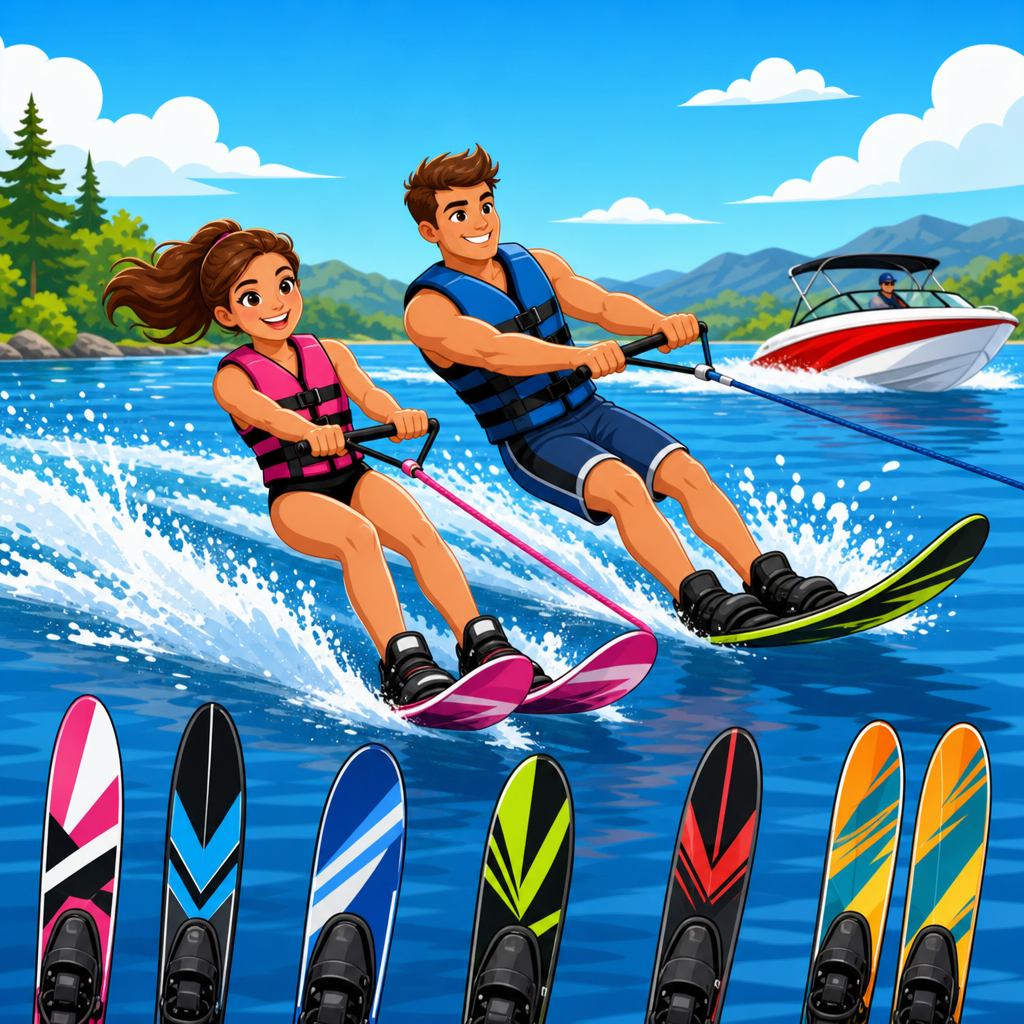
Choosing the best water skis for beginners and advanced riders starts with understanding that no single ski works for every boat, body type, speed, or style. In years of outfitting family boats, coaching first-time skiers, and testing recreational and course-oriented setups, I have seen more progress come from correct ski selection than from almost any other equipment change. Water skis are buoyant planing devices designed to lift the skier onto the surface, reduce drag, and allow controlled turns across a boat wake. The broad category includes combo skis, slalom skis, shaped beginner skis, trainer skis, and high-performance designs tuned for aggressive edge control. A good hub guide matters because buyers are often comparing skis, ropes, bindings, tow points, and safety gear at the same time, and one poor choice can make the entire experience harder. A beginner on a narrow advanced slalom ski will struggle with deep-water starts, while an expert on oversized recreational skis will feel limited through hard cuts. This guide explains the main ski types, sizing principles, construction differences, and setup decisions that shape performance, comfort, and safety, so you can choose water sports equipment that matches real conditions rather than marketing claims.
How to choose water skis by rider level, boat speed, and intended use
The best beginner water skis emphasize stability, forgiveness, and easy starts. In practical terms, that means wider platforms, predictable tracking, softer flex patterns, and bindings that accommodate a range of foot sizes. Combo skis are the classic starting point because they let new riders ski on two skis, then experiment with dropping one ski later. Many beginner-friendly models also include a rear toe strap on one ski so progressing to slalom feels natural. Trainer skis for children add stabilizer bars or connected tips, reducing tip spread and helping small riders maintain alignment behind the boat. For adults learning on lakes and rivers, width is your friend: a wider ski rises onto plane earlier, especially at lower boat speeds around 18 to 24 mph.
Advanced riders need a different tool. Once a skier is running stronger cuts, crossing wakes with intent, and skiing at faster speeds, responsiveness matters more than pure stability. Slalom-specific skis are built to roll edge to edge quickly, hold line pressure efficiently, and finish turns with precision. They are usually skied at higher speeds, often in the 28 to 36 mph range depending on rider size, age, and discipline. Shape matters here. A narrower forebody and refined rocker line can increase acceleration and edge angle, but those same features punish sloppy stance. That is why the best water skis for advanced riders are not automatically the best overall choice; they are best only when the skier has the technique to use them.
Intended use should drive the purchase. Recreational lake skiing, course slalom, family teaching sessions, and occasional barefoot progression all demand different gear. If your boat spends weekends towing mixed-skill riders, versatile combo skis or a crossover slalom setup will see the most use. If one rider is chasing buoy counts on a private course, a dedicated slalom ski makes sense. Matching ski type to real use prevents overbuying and usually saves money for the rest of your boating gear and equipment budget.
Understanding the main water ski categories and where each excels
Combo skis remain the best all-around starting point for most families. They are sold in matched pairs, often between 64 and 69 inches, with moderate sidecut and enough surface area to support deep-water starts. A quality combo set can carry a beginner for several seasons because it teaches stance, balance, wake crossing, and basic carving before the rider transitions to one ski. HO Sports, O’Brien, Connelly, and Radar all produce strong recreational combo options that are widely stocked and easy to service.
Trainer skis are purpose-built for children and very new riders. Typical features include a stabilizer bar, rope retention guides, and soft adjustable bindings. These skis reduce complexity, which is exactly what a first session needs. I have used connected-tip trainer setups with young riders who could stand confidently after only a few attempts because the skis stayed parallel instead of drifting apart during the pull.
Recreational slalom skis are the bridge category. They are wider and more forgiving than tournament slalom models, with design cues that support easy starts and smooth turns at moderate speeds. For an improving adult who has moved beyond two skis but does not want a demanding competition platform, this category is often ideal.
Competition slalom skis are highly specialized. Carbon laminates, PVC cores, precision rocker profiles, and tunable fin systems are common. These skis reward efficient body position and consistent boat speed. They are excellent tools in the right hands and frustrating in the wrong ones.
There are also crossover skis aimed at skiers who split time between open-water free skiing and occasional course passes. They offer a balanced compromise: better tracking and edge grip than beginner skis, but more width and easier starts than full tournament designs. For many experienced recreational riders, crossover skis are the true sweet spot.
Water ski sizing, width, and rider weight: the fit rules that matter most
Length alone does not determine fit; effective surface area does. Still, length is the number most brands publish first, and it correlates closely with rider weight and target speed. Heavier riders generally need more ski, while faster speeds can support slightly shorter, narrower designs. Most brand charts use weight ranges as the primary sizing input, then adjust for ability and use case. Ignoring those charts is one of the most common buying mistakes I see.
Width has an outsized impact on beginner success. Wider skis create more lift at slower speeds, reducing the effort required to get out of the water. This is especially valuable behind smaller runabouts with modest hole-shot performance or when teaching adults who are not naturally explosive athletes. By contrast, narrower advanced skis reduce drag and transition more cleanly edge to edge, but they demand stronger balance and better timing.
Rocker also affects feel. More rocker can soften turns and improve forgiveness in some recreational designs, while flatter or more refined rocker lines can increase speed and efficiency for advanced skiers. Bindings matter too. A snug, supportive fit improves control, yet beginners should avoid painfully tight systems that make entry and release difficult. Adjustable bindings are practical on family boats because multiple users can share the skis.
| Rider profile | Recommended ski type | Typical length range | Common tow speed | Main benefit |
|---|---|---|---|---|
| Child first-timer | Trainer skis | 46–54 in. | 10–16 mph | Maximum stability and controlled starts |
| Adult beginner | Wide combo skis | 64–69 in. | 18–24 mph | Easy planing and confidence |
| Intermediate free skier | Recreational slalom or crossover | 65–69 in. | 24–32 mph | Progression with manageable forgiveness |
| Advanced slalom skier | Performance slalom | 63–68 in. | 30–36 mph | Fast edge changes and precise turns |
Materials, construction, and bindings: what drives performance and durability
Water ski construction ranges from molded composite recreational builds to premium carbon laminates with engineered cores. Beginner and family skis often use fiberglass or composite layups around foam or injected cores. These designs are durable, cost-effective, and stable. They may feel heavier or less lively than premium skis, but that is not automatically a drawback for learning. In fact, a slightly damp, predictable ride can help a novice maintain control in chop.
Higher-end skis use materials like carbon fiber, graphite blends, and advanced core structures to tune flex, rebound, and torsional stiffness. Torsional stiffness is especially important because it influences how consistently the ski holds an edge through a turn. A ski that twists unpredictably under load will feel vague. A ski with controlled torsional rigidity will track more precisely. The tradeoff is price: advanced constructions can cost several times more than entry-level sets.
Bindings deserve close attention. Rubber overlay bindings remain common on recreational skis because they are comfortable, adjustable, and forgiving. Rear toe plates or rear straps allow easy progression into slalom. Hard-shell systems, more common in high-performance skiing, provide stronger connection and repeatable positioning, but they are not necessary for most recreational users. Whatever the style, proper release characteristics matter. A binding that holds too aggressively in a fall can increase injury risk, particularly for knees and ankles. Follow manufacturer mounting guidance carefully and inspect screws, inserts, overlays, and plates regularly.
Best water skis for beginners: features that make learning easier and safer
The best beginner water skis share a few nonnegotiable traits: ample width, stable tracking, simple bindings, and low-speed lift. Tip shape also helps. Wider shovels rise more readily and smooth out the first seconds of a deep-water start. Some beginner skis include channels or subtle bottom contours that improve directional stability without making the ski feel locked in. That balance is important. New riders need guidance, not a platform that resists every correction.
For adults, a combo package from a known brand is usually the smartest purchase. Sets from O’Brien, Connelly, and HO Sports often include adjustable bindings, broad weight compatibility, and dimensions that work behind common recreational boats. For children, trainer-specific models from brands like O’Brien and Airhead are popular because they simplify starts and reduce intimidation. I strongly favor beginner setups that can serve more than one rider, especially on family boats where cousins, neighbors, and guests all want a pull.
Safety and success are linked. A skier who pops up quickly with a balanced stance is less likely to drag, inhale spray, or fatigue early. Pair beginner skis with a proper water ski rope, a U.S. Coast Guard-approved life jacket, and a driver who can hold steady speed. Those support items belong in every water sports and recreational equipment checklist because even the best ski performs poorly when the tow setup is inconsistent.
Best water skis for advanced riders: precision, speed, and control under load
Advanced skiers should focus on edge response, acceleration, and turn finish rather than broad beginner-friendly stability. A high-quality slalom ski from Radar, HO Sports, D3, or Connelly typically offers a carefully tuned rocker profile, stiffer layup zones, and an adjustable fin system. Fin depth, length, and distance from tail all affect how the ski enters and exits turns. Small adjustments can materially change feel, which is why serious skiers record settings and test methodically.
Speed and rope length also shape ski choice. A skier free skiing at 30 mph on open water may love a crossover model that remains composed in variable conditions. A tournament-oriented skier running shorter line lengths at 34 or 36 mph usually benefits from a more specialized platform designed to carry angle efficiently and maintain space before the buoy line. The ski is not working alone; it is part of a system that includes boat path, pylon height, line tension, and skier technique.
One caution from experience: many strong recreational athletes buy an elite slalom ski too soon. They expect instant improvement and instead get exhausting starts and inconsistent turns. Unless you are already stacking well over your front foot, controlling outbound glide, and maintaining disciplined handle position, a crossover or forgiving performance slalom often delivers better real-world results.
Building a complete water sports equipment setup around your skis
This hub sits within boating gear and equipment for a reason: skis are only one part of an effective tow-sports system. Rope choice matters because stretch characteristics affect timing and feedback. A dedicated water ski rope and handle, usually with low stretch and a comfortable grip diameter, is different from a wakeboard rope. Boat setup matters too. A clean tow point, adequate engine power, and even passenger distribution can improve starts and wake shape. On smaller boats, teaching at the correct speed with minimal extra gear onboard often makes a noticeable difference.
Protective equipment is not optional. Use a properly fitted life jacket rated for watersports, maintain a rearview mirror if allowed in your jurisdiction, and assign an observer whenever regulations require one. Gloves can help advanced skiers reduce hand fatigue, while a padded ski bag protects edges and bindings during transport. Routine maintenance is simple but important: rinse skis after use, keep hardware tight, avoid prolonged sun exposure, and replace cracked bindings before they fail on the water.
If you are building a content or buying path for the broader water sports category, the natural companion topics are tow ropes and handles, life jackets, boat mirrors, wakeboards, towable tubes, kneeboards, and storage solutions. Buyers rarely shop skis in isolation, and a complete setup creates a better first day on the water than any single premium component.
The best water skis for beginners and advanced riders are the ones matched to skill level, body size, boat speed, and actual use. Beginners do best on wider combo or trainer skis that make starts easy, keep tracking predictable, and build confidence fast. Intermediate riders usually progress best on recreational slalom or crossover skis that blend forgiveness with stronger edge control. Advanced skiers should look for precision-tuned slalom designs only when their technique and speed justify that specialization. Material quality, binding fit, and proper sizing all matter, but they matter in context; a premium ski that does not suit the rider is still the wrong ski.
For anyone outfitting a family boat or refining a serious slalom setup, the main benefit of choosing correctly is simple: faster progress with fewer frustrating sessions. Good skis reduce effort, improve consistency, and make the rest of your water sports and recreational equipment work better together. Use this hub as your starting point, compare the ski category that matches your level, and then build out the supporting gear with the same care. Pick the right setup before your next day on the water, and every pull behind the boat will feel more controlled, more comfortable, and more fun.
Frequently Asked Questions
What type of water skis are best for complete beginners?
For complete beginners, the best water skis are usually wider, more stable combo skis designed to get up easily and track predictably behind the boat. A beginner benefits most from skis that create plenty of lift at lower speeds, because that extra surface area helps reduce drag during deep-water starts and makes the ride feel less twitchy once on plane. Wider skis also tend to be more forgiving if body position is not perfect, which is important when someone is still learning how to balance, keep the knees bent, and maintain even pressure through both feet.
In practical terms, recreational combo skis are often the smartest starting point for family use because they support a broad range of skier sizes and skill levels. Many beginner-friendly models include a stabilizer bar for new riders, helping keep the skis aligned during starts. Adjustable bindings are also useful, especially if multiple people will share the same set. Softer, more accommodating bindings make entry easier and are generally more comfortable for casual use.
Beginners should not focus only on performance marketing terms. The most important qualities are stability, easy starts, predictable tracking, and a size matched to the skier’s weight and typical boat speed. A ski that is too small can feel unstable and require more speed than a beginner can comfortably handle, while a ski that is too aggressive can punish small mistakes. For most first-time skiers, a forgiving recreational design will produce faster improvement and more confidence than a high-performance model intended for advanced slalom riding.
How do advanced riders choose between recreational skis, performance combo skis, and slalom skis?
Advanced riders should choose based on how they actually ski, not just on skill level alone. Recreational skis prioritize comfort, versatility, and family-friendly use. Performance combo skis sit in the middle, offering more responsiveness and cleaner edging than entry-level recreational models while still keeping the familiar two-ski format. Slalom skis are more specialized and are built for skiers who want stronger turns, more precise edge control, and a more technical ride, especially when crossing wakes or running a slalom course.
If an advanced rider still enjoys open-water cruising, free skiing, and occasional teaching duties, a high-quality performance combo setup may be the best fit. It offers versatility without demanding perfect technique every pass. On the other hand, if the rider spends most of their time skiing on one ski, cares about acceleration across the wake, and wants a tighter turning radius with better line efficiency, then a slalom ski becomes the logical upgrade. At that point, ski shape, rocker profile, width, and flex all matter more, because those design elements directly affect how the ski finishes turns, carries speed, and handles different rope lengths and boat speeds.
It is also important for advanced riders to be honest about typical conditions. A course-oriented slalom ski may shine at specific speeds and cleaner water, but it can feel less forgiving for casual mixed-use boating. The best choice is the ski that matches the rider’s most common environment, preferred speed range, and technical goals. A ski that complements real-world use will usually deliver better performance than one chosen simply because it appears more advanced on paper.
What size water skis should I buy based on weight and boat speed?
Water ski size should always be selected with both skier weight and boat speed in mind, because those two factors work together to determine how easily the ski planes, how stable it feels, and how much control the rider has during turns. Heavier skiers generally need longer or higher-surface-area skis to create enough lift, especially at moderate recreational speeds. Lighter skiers can usually ride shorter skis because they require less surface area to get up and stay on top of the water. Boat speed matters because faster speeds create more lift, which can allow a skier to use a slightly smaller or more performance-oriented ski.
For beginners, it is usually wise to size slightly toward stability rather than maximum agility. A ski with more length or width helps the rider rise out of the water more easily and creates a more planted feel once skiing. That is particularly helpful for family boats that pull at moderate speeds rather than tournament-style speeds. By contrast, advanced skiers who run faster speeds or demand quicker response may prefer a more refined size choice that balances lift with maneuverability.
Manufacturer sizing charts are the best starting point, and they should be treated as more important than generic rules of thumb. Different skis carry width, rocker, and overall design differently, so a 67-inch ski in one model may not behave exactly like a 67-inch ski in another. When in doubt, think about your most common use case: your body weight, your normal towing speed, and whether you value easy starts or sharper performance. The right size is the one that supports your actual skiing conditions rather than an idealized setup you may rarely use.
Are bindings and fin setups really that important when choosing water skis?
Yes, bindings and fin setups matter a great deal, although their importance shows up differently for beginners and advanced riders. Bindings are the skier’s direct connection to the ski, so comfort, support, and fit have a major influence on control and confidence. A poorly fitting binding can make even a good ski feel awkward, while a secure and properly adjusted binding helps the skier maintain better stance, absorb boat chop, and transfer movement more effectively into the ski. For beginners, the priority is usually comfort, ease of entry, and enough support to feel stable without being overly restrictive.
For advanced riders, binding choice becomes even more influential because small changes in stance and support can affect edging, leverage, and turn timing. Some riders prefer more supportive bindings for greater control, while others prefer a setup that allows more freedom of movement. Placement matters too. A binding mounted too far forward or too far back can change how the ski initiates turns, tracks through the wake, and releases at the finish of the turn.
Fin setup is most relevant on slalom skis and higher-performance models. The fin affects how the ski grips, tracks, and turns, and subtle adjustments can change the personality of the ski in noticeable ways. A more aggressive fin setup may provide stronger hold and sharper turns, while a more neutral setup may feel smoother and more forgiving. Casual skiers usually do best leaving the stock fin setting in place, but experienced riders who understand their technique can use fin tuning to dial in performance. In other words, bindings are essential for every skier, and fin setup becomes increasingly important as performance demands rise.
How can I tell when it is time to upgrade to a different pair of water skis?
It is time to upgrade when your current skis no longer match your ability, goals, or normal towing conditions. One common sign is that you are skiing competently but feel held back by a setup that is overly basic, sluggish edge to edge, or built primarily for stability rather than progression. Beginners often improve quickly once they master starts, balance, and simple turns, and at that stage they may benefit from a more responsive ski that encourages cleaner carving and better wake crossings. An upgrade can also make sense if your body size changes, your boat speed changes, or your skiing style becomes more specialized.
Another sign is repeated inconsistency that does not seem tied to technique alone. If the skis feel difficult to control at your normal speed, struggle to hold a line, or require too much effort to perform basic maneuvers, the issue may be the equipment rather than the skier. Likewise, if you have moved from casual cruising into more focused slalom skiing, staying on a general-purpose combo setup may limit your progress. Better equipment will not replace good technique, but the right ski can make correct technique easier to feel and repeat.
You should also inspect the skis themselves. Worn bindings, loose hardware, damaged bottoms, and aged materials can all affect safety and performance. In family-boat environments, gear often sees heavy seasonal use, sun exposure, and storage wear, so condition matters just as much as design. The best time to upgrade is when you can clearly identify a mismatch between the skier and the ski: too much instability for a beginner, not enough responsiveness for an advancing rider, or the wrong shape and size for the speed and style you now prefer. A well-timed upgrade often leads to faster progression, better comfort, and more enjoyable days on the water.