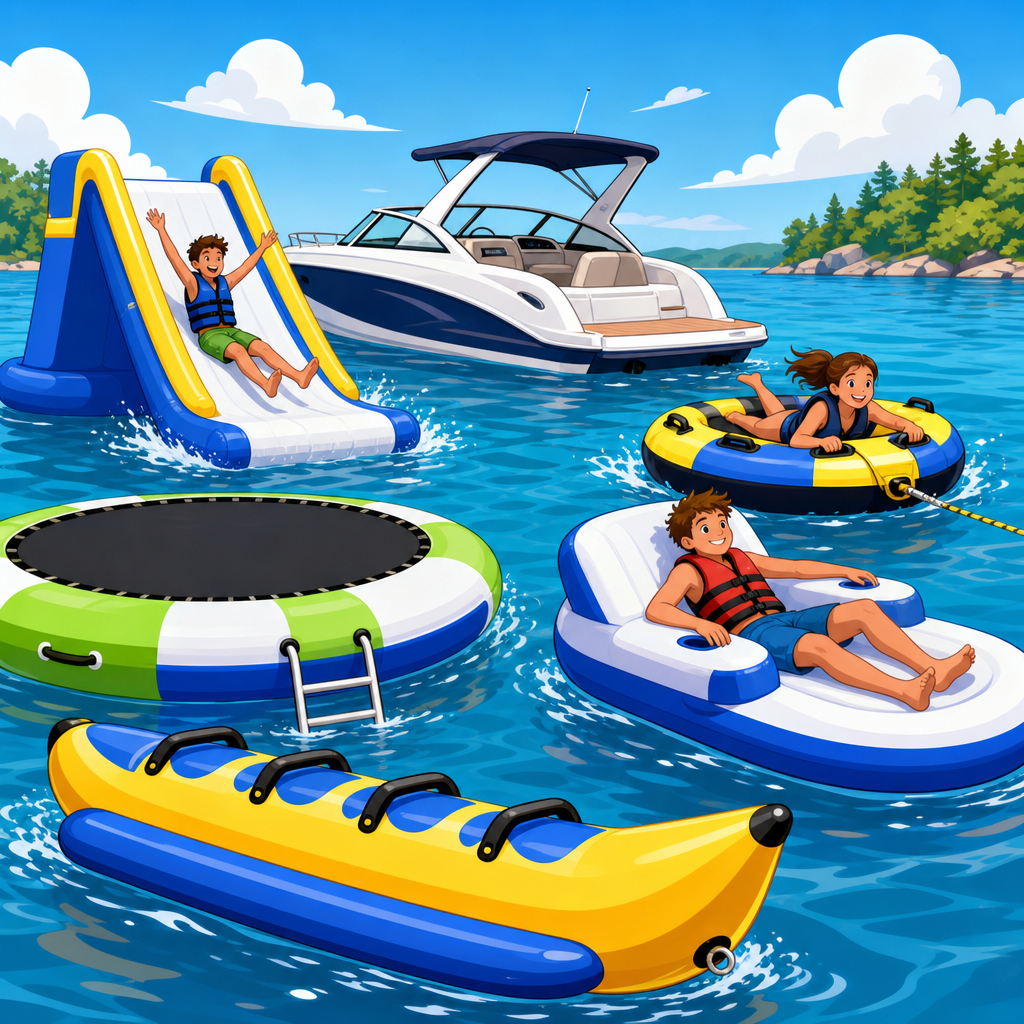
Inflatable water toys for boats turn an ordinary day at anchor into a flexible recreation setup that works for kids, adults, anglers, and active cruisers. In boating gear and equipment, this category sits inside water sports and recreational equipment because it combines fun, exercise, storage efficiency, and onboard safety planning. The term inflatable water toys for boats covers towables, floating mats, inflatable docks, loungers, and water trampolines designed to launch from, tow behind, or secure near a boat. I have tested these products from runabouts, center consoles, and pontoon boats, and the same lesson keeps repeating: the best choice depends less on marketing claims and more on passenger mix, deck space, pump capacity, towing hardware, and the conditions where you actually boat.
This topic matters because the wrong inflatable creates frustration fast. A tube that is perfect behind a ski boat may be useless for a family that mostly beaches a pontoon in a quiet cove. A giant floating island may look impressive online but become a storage burden on a 22-foot bowrider. Quality also varies sharply. Seams, valve design, denier rating, UV resistance, welded versus glued construction, anchor points, and rider weight limits all affect performance and lifespan. Good inflatable recreation gear should be easy to deploy, stable in the water, visible to other boaters, and compatible with your boat’s capacity, transom layout, and electrical system. This hub article explains the five top categories worth buying, what each one does best, and how to choose gear that delivers repeat use instead of becoming expensive clutter in a locker.
1. Towable Tube Inflatable: Best for Speed, Versatility, and Broad Appeal
If you want one inflatable water toy for boats that delivers the widest age range and the most obvious excitement, start with a towable tube. Towables are built to ride behind a powerboat using a tow rope connected to a ski pylon, tow eye, or bridle. The main styles are deck tubes, cockpit tubes, banana-style tubes, and sofa-style tubes. In practice, deck tubes are the easiest all-round option because they can be ridden prone or seated, and they usually plane quickly with moderate horsepower. Brands such as Airhead, HO Sports, and WOW Sports dominate this segment, and their best models use heavy-gauge PVC bladders under full nylon covers to resist puncture and abrasion.
For boat owners, the advantages are clear. A single tube stores smaller than rigid tow gear, launches in minutes, and creates a high-energy activity that guests immediately understand. A two-person tube is often the sweet spot for family boats from 18 to 25 feet because it balances storage and utility. Larger three- and four-person models are fun, but they require more power, more cockpit space during setup, and more care in turns. I have found that many owners overbuy here. A compact, well-made two-rider tube used every weekend is better than a giant model that takes too long to inflate and blocks the swim platform.
Safety and setup matter more with towables than with any other inflatable category. Follow U.S. Coast Guard boating safety guidance for observer requirements where applicable, maintain proper rope length, and never exceed manufacturer rider limits. Use a tow rope rated specifically for tube towing rather than a ski line. Inspect D-rings, quick-connect hardware, and grab handles before every run. Inflation pressure is not optional either. Underinflated tubes drag badly and can taco in sharp turns, while overinflated tubes are more vulnerable in high heat after sitting on deck. For many crews, a 12-volt high-volume pump plus a handheld pressure gauge is the simplest upgrade that improves every outing.
2. Floating Water Mat: Best for Relaxed Anchoring and Group Use
A floating water mat is the most practical inflatable-adjacent relaxation platform for boats that spend more time drifting, cove hopping, or rafted up than towing riders at speed. While foam mats are common, inflatable floating mats and platforms have become more popular because they pack smaller and often include tie-down points. These mats create a soft swim zone behind the boat where people can lounge, climb on, or use the surface as a staging area for snorkeling, paddleboarding, and child-supervised play. They are especially effective for pontoon boats, deck boats, and cruising boats that anchor for long afternoons.
The reason floating mats rank so high is simple: they get used constantly. Unlike a towable tube, which requires a driver, spotter, open water, and fuel burn, a mat works the moment the anchor is set. Families with small children often get more hours from a mat than from any other inflatable. Adults appreciate them too because they provide a low-effort social space in the water without the instability of a single float. Good models use reinforced drop-stitch or multi-layer inflatable construction, textured tops for traction, and stainless or reinforced fabric attachment points for docking lines. BOTE and similar premium brands have helped standardize this platform approach.
When selecting a floating mat for a boat, thickness and attachment layout matter. Thin mats can feel unstable when multiple users climb on from one side. A thicker platform, usually around 4 inches or more in drop-stitch designs, feels more like a raft. Width also affects boarding ease. I recommend thinking through where the mat will sit relative to your propeller, ladder, and swing radius. Even at anchor, current and wind can push a toy under the stern if it is not secured correctly. Use short lines from designated tie points, keep swimmers away from any running engine, and treat the mat as part of the boat’s in-water safety zone rather than as a free-floating toy detached from supervision.
3. Inflatable Dock Platform: Best for Premium Utility and Multi-Sport Use
An inflatable dock platform is the most capable and most useful premium inflatable water toy for boats because it serves as a swim platform, gear staging dock, sun lounge, and boarding extension all at once. These platforms are typically made from rigid-feeling drop-stitch construction, the same category of material used in quality stand-up paddleboards. Once inflated to the recommended pressure, often between 6 and 15 PSI depending on design, they become impressively stable. In real use, that stability changes everything. Guests can sit down without rolling into the water, kids can jump off one side while another person climbs aboard, and divers or snorkelers can use the platform to organize fins, masks, and camera gear.
This is the category I recommend most often to boat owners who want one high-value recreational upgrade rather than several specialized toys. On a tritoon, center console, or cruiser, an inflatable dock extends usable living space beyond the gunwale. It is also one of the best tools for mixed groups. Not everyone wants the speed of a tube ride, but almost everyone can use a stable floating platform. Some models include EVA foam decking, carry handles, ladder compatibility, and modular D-ring placements that allow linking with other platforms or securing personal watercraft alongside for short-term staging.
| Inflatable Type | Best Use | Typical Strength | Main Limitation |
|---|---|---|---|
| Towable Tube | High-speed towing | Excitement and versatility | Needs driver, observer, and open water |
| Floating Mat | Anchored lounging | Easy group use | Less rigid under load |
| Inflatable Dock | Multi-purpose platform | Stability and utility | Higher cost |
| Lounger/Island | Social relaxation | Comfort features | Bulky in wind |
| Water Trampoline/Bouncer | Active anchored play | Jumping fun | Setup complexity |
The tradeoff is cost and storage volume. Inflatable docks usually cost more than simple tubes or mats, and the larger models are heavy when wet. They also demand a serious pump. A weak cigarette-lighter inflator will frustrate you on a hot afternoon. Use a dedicated high-pressure electric pump, follow the pressure spec exactly, and rinse thoroughly after saltwater use to protect valves and deck pads. If your boating style includes snorkeling, sandbar gatherings, or rafting with friends, this category often delivers the best long-term value in water sports and recreational equipment.
4. Inflatable Lounger or Island: Best for Comfort, Social Boating, and Sandbar Days
Inflatable loungers and floating islands are designed for comfort first. They usually include backrests, cup holders, mesh cooling areas, boarding handles, and multiple seating zones. The best use case is social boating at a sandbar, mooring field, or quiet anchorage where the goal is relaxing in the water without fully swimming the whole time. These inflatables are especially popular with pontoon owners and day boaters who entertain often. In my experience, the strongest models are not the biggest ones; they are the ones with thoughtful balance, durable chamber separation, and enough structure that people can board them without flipping one side under.
For buyers, the key decision is whether you want a true island or a compact lounger. Giant islands photograph well but can be awkward in any breeze. They also take longer to inflate, catch wind when tied alongside, and require more stowage volume than many first-time buyers expect. Compact loungers with two to four seating positions often fit real-world boating better. Look for Boston valves or similarly reliable large-bore valves, UV-treated materials, welded seams where available, and grab lines around the perimeter. If the product includes a cooler cutout or table insert, verify whether that feature actually adds structure or simply creates a weak point in the middle.
These inflatables are not high-performance platforms, so set expectations correctly. They are for drifting, talking, cooling off, and giving non-swimmers or tired swimmers a supported place to rest while wearing proper flotation when needed. Keep them away from prop wash, sharp fishing hardware, and docks with exposed fasteners. If you host groups regularly, a quality lounger can become the most requested item on the boat, but it works best as part of an anchored recreation setup alongside a ladder, a swim line, and clear supervision boundaries.
5. Inflatable Water Trampoline or Bouncer: Best for Maximum Active Fun at Anchor
An inflatable water trampoline or water bouncer is the highest-energy anchored option in this category. These products create a springy jumping surface on the water and are usually secured with anchors or mooring lines away from the boat. Premium brands such as Aquaglide and RAVE Sports have long defined this niche, and the distinction between a trampoline and a bouncer matters. A water trampoline has springs and a framed jumping surface, while a bouncer generally uses an all-inflatable rebound design. Both can be excellent, but trampolines often provide a more defined jumping feel, while bouncers can be simpler to set up and maintain.
This is the best choice for lake houses, houseboats, camp operators, and larger boats that spend full days anchored in one location. Kids and teenagers especially love them, but adults use them too. The main benefit is repeated engagement. Unlike some toys that lose novelty after one session, a well-placed water bouncer can stay busy for hours. It also creates a focal point that keeps activity visible and contained. However, these products are not casual impulse buys. They require significant inflation time, careful anchoring, depth awareness, and active supervision. You need to confirm adequate clearance from the boat, bottom hazards, and other traffic.
Before buying, check the manufacturer’s capacity guidance, required water depth, and accessory compatibility for ladders or slides. Also evaluate your boating pattern honestly. If you move every hour, this category may be too cumbersome. If you anchor in the same cove all afternoon, it can be outstanding. As with all inflatable recreation gear, maintenance drives lifespan. Dry completely before long-term storage, patch small abrasions early, avoid dragging across asphalt or rough concrete, and inspect high-stress seams at the start of every season. Properly cared for, these systems can remain reliable for years of heavy seasonal use.
How to Choose the Right Inflatable Water Toy for Your Boat
The best inflatable water toy for boats is the one that matches your hull, crew, and routine. Start with boat type and storage. Bowriders and smaller center consoles usually benefit from one compact towable or a medium floating mat. Pontoons and deck boats have the space and passenger profile for loungers, mats, and docks. Cruisers and houseboats often get the most value from inflatable docks because they expand living space in the water. Next, consider your power and hardware. Towing tubes safely requires sufficient horsepower, a correct tow point, and crew discipline. Anchored toys demand reliable anchor setups, boarding ladders, and separation from props and exhaust.
Then assess who will use the gear most. Children often prefer mats, bouncers, and lower-to-the-water platforms. Teenagers usually want towing action or jumping surfaces. Adults tend to use docks and loungers the longest. Budget should include more than purchase price. Add a quality pump, repair kit, storage bag, tow rope if needed, and possibly extra dock lines. Finally, buy from established brands with replacement parts and clear inflation specifications. The right choice improves every outing, supports safe water sports and recreational equipment planning, and turns your boat into a more versatile platform. Choose one category that fits how you truly boat, use it well, and build your on-water kit from there.
Frequently Asked Questions
1. What are the best types of inflatable water toys for boats?
The best inflatable water toys for boats usually fall into five practical categories: towables, floating mats, inflatable docks, loungers, and water trampolines. Each one serves a different purpose, so the right choice depends on how you use your boat and who will be onboard. Towables are ideal for high-energy fun when you have the horsepower, towing setup, and open water conditions to pull riders safely. They appeal to families with older kids, teens, and adults who want speed and action. Floating mats are a great fit for relaxed swimming areas because they create an easy, stable platform for lounging, walking, or climbing on in calm water. Inflatable docks are especially useful for cruisers and larger boats because they expand your usable space at anchor, giving swimmers, anglers, and paddleboarders a stable launch point. Loungers are designed more for comfort than activity and work well for boaters who want a compact, easy-to-store float for sunbathing and drifting near the boat. Water trampolines bring the biggest “wow” factor and are excellent for active groups, but they also require more setup space, anchoring attention, and storage planning.
For many boaters, the “top five” are not necessarily ranked by excitement alone, but by versatility, storage efficiency, and ease of use. A floating mat and inflatable dock often offer the broadest appeal because children, adults, and even less adventurous guests can use them comfortably. Towables can deliver the most adrenaline, but they demand the most attention to driver skill, spotter use, rider limits, and safe towing practices. Water trampolines are a premium option for boaters who anchor in suitable areas long enough to justify setup time. In short, the best inflatable water toy is the one that matches your boat size, available deck storage, passenger age range, and the type of boating day you want to create.
2. How do I choose the right inflatable water toy for my boat size and boating style?
Start by looking at four key factors: available storage space, weight capacity, intended use, and deployment area. Smaller runabouts and bowriders often benefit from compact options like loungers, one-person towables, or roll-up floating mats that can be deflated quickly and stored in lockers. Mid-size family boats may have enough room for larger mats, multi-person towables, or small inflatable docks. Larger cruisers, pontoons, and yachts can usually support bigger accessories such as full inflatable swim platforms, larger lounges, and water trampolines because they have more deck space, better storage solutions, and a more stable anchoring setup. You should also think about your boating routine. If you primarily cruise from cove to cove and stop to swim, a floating dock or mat may be more practical than a towable. If your crew enjoys watersports while underway, a towable becomes a stronger choice.
It is also important to match the toy to your passengers. Families with younger children usually get more value from low-speed, stationary options that stay close to the boat, such as mats, loungers, or inflatable docks. Active teens and adults may prefer towables or water trampolines. Anglers and divers sometimes like inflatable docks because they create a stable staging area for gearing up or reboarding. Material quality matters as well. Look for marine-grade PVC or reinforced drop-stitch construction, UV resistance, strong seams, quality valves, and stainless or corrosion-resistant attachment points. Finally, consider the practical side of ownership: inflation time, pump requirements, drying time before storage, and whether one or two people are needed for setup. The right toy should fit your boating lifestyle not just when it is on the water, but also when it is being carried, inflated, cleaned, and packed away.
3. Are inflatable water toys for boats safe for kids and adults?
Yes, inflatable water toys for boats can be very safe when they are used correctly, but safety depends far more on setup, supervision, and environmental conditions than on the product alone. Every toy should be used within the manufacturer’s stated weight limit, occupancy rating, and intended purpose. A lounger designed for calm drifting beside an anchored boat should not be used as a towable, and a towable rated for two riders should not be overloaded because that changes how it rides and increases the chance of injury. Children should always be closely supervised around any inflatable, even if they are strong swimmers. U.S. Coast Guard-approved life jackets are strongly recommended, and in many situations essential, especially for kids, weak swimmers, and anyone participating in towing activities. Adults should also wear appropriate flotation when being towed or when water conditions are less predictable.
Boat-related safety practices matter just as much. Keep swimmers and inflatable users well away from propellers, engine exhaust, and active docking areas. Shut off engines when swimmers are near the stern and use a clear boarding and reboarding plan. For towables, always use a dedicated spotter in addition to the driver, inspect the tow rope and connection points before every run, and operate only in open water away from traffic, shallow hazards, and no-wake zones. For anchored play areas, choose calm water with good holding ground and enough separation from channels, current, rocks, and other anchored boats. It is also wise to establish rules before anyone gets in the water: no diving unless the depth is confirmed safe, no roughhousing near ladders or cleats, and no swimming outside the designated zone. Inflatable toys are safest when they are part of a deliberate recreation setup, not an improvised one.
4. How do I set up, anchor, and store inflatable water toys properly?
Proper setup begins before the toy ever touches the water. Inflate it to the manufacturer’s recommended pressure using the correct pump and pressure gauge, especially for drop-stitch docks and trampolines that rely on firm inflation for stability and performance. Underinflation can make the toy feel unstable, while overinflation can stress seams and shorten its lifespan, particularly in hot sun where internal air pressure can rise. Before launching, inspect valves, handles, tow points, straps, and seams for wear or leaks. If the toy will be used at anchor, choose a protected area with enough swing room and water depth for swimmers to move safely around it. Inflatable docks and water trampolines should be positioned so they do not drift into the boat’s hull, swim platform, anchor rode, or neighboring vessels. Depending on the product, you may need separate anchor lines or tie-offs to maintain safe positioning.
Storage is just as important as setup. After use, rinse the inflatable with fresh water to remove salt, sand, algae, and sunscreen residue, all of which can degrade materials over time. Let it dry as thoroughly as possible before deflating and packing it to reduce the chance of mildew, odor, and material breakdown. Fold it according to the manufacturer’s guidance so you do not create unnecessary stress points at the same seam every time. Store it in a cool, dry place out of prolonged direct sunlight when not in use. If your boating season includes extreme heat or freezing temperatures, avoid leaving the inflatable tightly packed in conditions that can damage the material or valves. Regular care dramatically extends service life, preserves seam integrity, and ensures the toy is ready to deploy quickly the next time you anchor out or plan a watersports day.
5. What features should I look for when buying one of the top inflatable water toys for boats?
Focus first on build quality, intended use, and real-world durability. Premium inflatable water toys typically use thicker, marine-grade PVC, reinforced stitching or welded seams, and heavy-duty grab handles that can withstand repeated boarding, towing, and sun exposure. If you are considering an inflatable dock or platform, drop-stitch construction is a major advantage because it creates a firmer, more stable surface that feels closer to a rigid platform. For towables, look for reinforced tow points, durable bottom panels, quality boarding straps, and clearly stated rider capacity. For mats and loungers, check overall buoyancy, surface traction, and whether the toy is easy to climb onto from the water. UV resistance is another key factor because inflatables spend long hours exposed to sun, and low-quality materials tend to fade, weaken, and become more prone to punctures or seam fatigue over time.
Convenience features can make a big difference in long-term satisfaction. Fast-fill valves, included carry bags, repair kits, electric pump compatibility, and compact packed dimensions all improve ease of ownership. You should also look at the toy’s footprint when deployed and compare it with the space you typically have at anchor or underway. Larger is not always better if setup is cumbersome or if it crowds your swim area. A non-slip EVA top on an inflatable dock, multiple tie-down points, boarding handles, and secure attachment loops can make the toy much more user-friendly and safer for a mixed-age group. Finally, buy from reputable marine or watersports brands with clear product support, safety instructions, and replacement part availability. The best inflatable water toy is not just the one that looks fun in photos; it is the one that performs reliably, stores efficiently, and integrates safely with your boat and your style of boating.