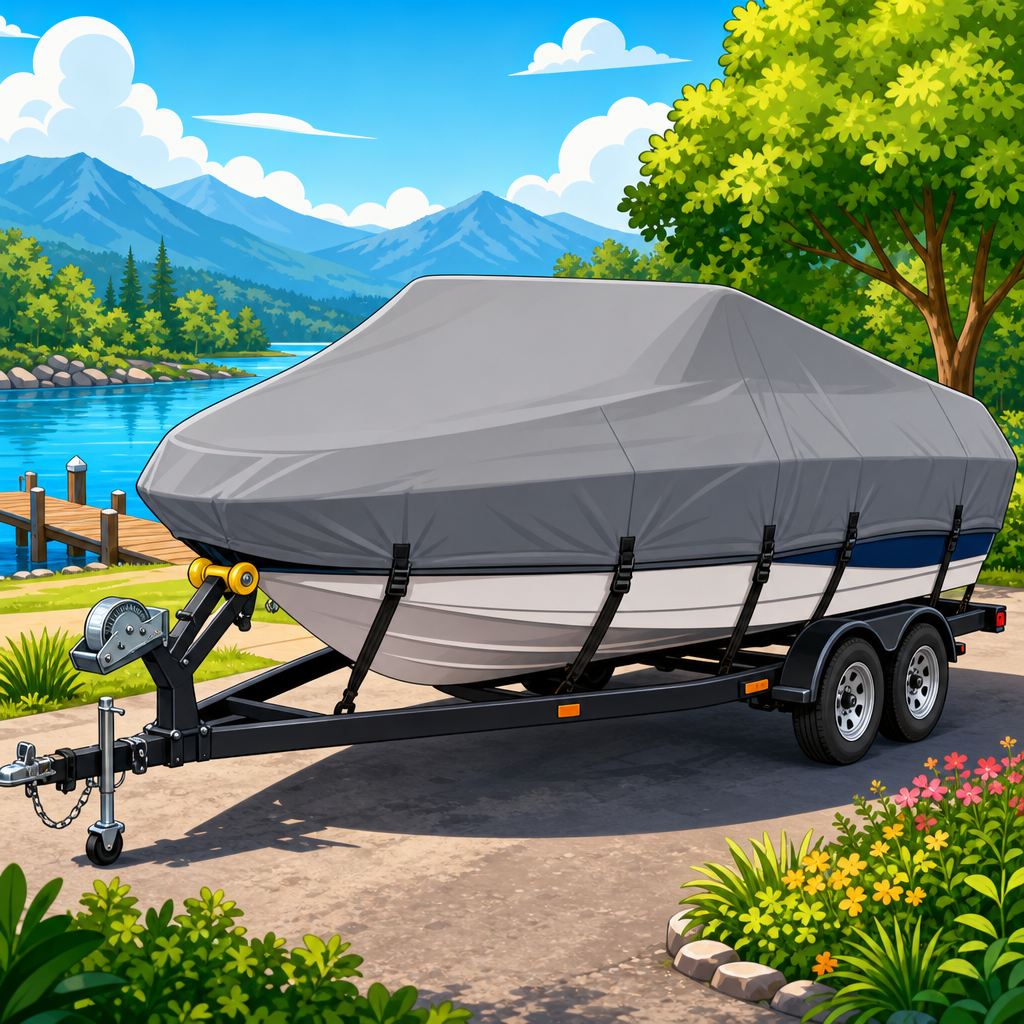
Boat trailer covers are one of the most practical investments a boat owner can make when the goal is long-term protection, lower maintenance, and better resale value. In the shop and at the ramp, I have seen the difference between a boat stored under a well-fitted, weather-resistant cover and one left exposed through a single harsh season. Gelcoat oxidizes, vinyl cracks, electronics corrode, carpets mildew, and trailer components wear faster when ultraviolet light, rain, road grime, and freeze-thaw cycles are allowed to work unchecked. A quality boat trailer cover acts as a barrier system that protects the hull, interior, hardware, and in many cases the trailer itself during storage and transport.
For many buyers, the phrase best boat trailer covers can be confusing because it mixes several needs into one purchase decision. Some covers are designed primarily for mooring, where the boat sits in the water. Others are intended for storage, especially outdoors over months or between seasons. Trailerable covers are built specifically to stay secure at highway speeds, with reinforced tie-down points, hem systems, and fabric strength that can handle wind load. Long-term protection means choosing a cover that balances fit, fabric weight, breathability, water resistance, UV stability, ventilation, and durability at stress points such as windshield corners, cleats, bow rails, trolling motor mounts, and outboard cowlings.
This hub page covers boat covers and protection comprehensively for owners of fishing boats, center consoles, runabouts, pontoons, bass boats, ski boats, and small cruisers stored on trailers. It explains what features matter most, how different cover materials perform, why fit is more important than many first-time buyers expect, and how to match a cover to climate, storage conditions, and towing habits. It also serves as a starting point for deeper articles across the broader boating gear and equipment category, including storage accessories, support poles, anti-chafe systems, shrink wrap alternatives, and cleaning products used to maintain covers over time.
If you want a direct answer, the best boat trailer cover for long-term protection is a trailerable, custom-fit or semi-custom cover made from solution-dyed marine fabric with reinforced stress panels, proper ventilation, and a secure strap or ratchet system. That type of cover lasts longer, protects better in sun and rain, and usually costs less over five years than replacing cheap universal covers every season or two. The details, however, matter, and the sections below explain exactly how to choose well.
What makes a boat trailer cover effective for long-term protection
An effective boat trailer cover must do four jobs at the same time: shed water, resist ultraviolet degradation, stay secure in wind, and prevent trapped moisture from damaging the boat underneath. If even one of those jobs is handled poorly, long-term protection breaks down. I have inspected many covers that looked heavy and durable from the outside but failed because they pooled water in low spots, rubbed through at the windshield, or trapped condensation that created mildew under seats and in storage lockers.
The first requirement is fit. A cover should follow the boat’s beam, bow profile, windshield shape, and motor configuration closely enough to avoid excessive slack. Loose fabric flaps in transport, and flapping quickly turns into abrasion. On gelcoat and painted surfaces, that abrasion can dull finishes. Around railings and corners, it can wear holes in the cover itself. Custom-fit covers from makers such as Westland, Carver, Taylor Made, and Covercraft generally outperform generic universal covers because they are patterned for specific hull types and dimensions.
The second requirement is marine-grade fabric. Polyester is common because it offers strength and shape retention, while premium acrylic and engineered woven materials provide superior UV performance and breathability. Fabric coatings matter too. Polyurethane and acrylic top finishes can improve water resistance, but they need to be balanced with breathability so condensation can escape. Long-term outdoor storage in humid climates often exposes the weakness of bargain covers that are technically waterproof but trap moisture underneath.
Third, attachment hardware matters more than marketing claims. A robust cover uses reinforced webbing loops, integrated straps, or a heavy shock-cord hem paired with adjustable tie-downs. Trailering creates uplift and pressure zones that can rip weak seams or pull a hem loose. Double-stitched seams, rot-resistant thread, and reinforcements at the bow, stern, and windshield are signs of a cover built for real use rather than catalog appeal.
Best boat trailer cover materials and how they compare
Material choice determines most of a cover’s lifespan and performance. In practice, owners usually choose between basic polyester, coated polyester, premium woven marine fabric, and specialty heavy-duty textiles. The right option depends on whether the boat lives outdoors year-round, is trailered frequently, or sits under partial shelter.
Entry-level polyester covers are affordable and lightweight, which makes them easy to install and remove. They suit short-term storage or boats kept under a carport, but they often fade and weaken faster under strong sun. Coated polyester improves water resistance and can work well for moderate climates, though lower-end versions sometimes sacrifice breathability. That tradeoff is manageable in dry areas, but in coastal or southern climates it can lead to condensation.
Premium solution-dyed fabrics are usually the best choice for long-term protection because the color and UV resistance are built into the fiber, not applied only as a surface treatment. Sunbrella is the best-known example, though other high-grade marine fabrics also perform well. These materials cost more up front, but they typically outlast cheaper options by several seasons and maintain tensile strength better. Owners who store bass boats, bay boats, and pontoons outside for years generally recover the added cost through reduced replacement frequency.
Heavy-duty specialty fabrics such as those used in some trailerable cover lines combine abrasion resistance with strong water repellency and structured fit. They are especially useful for highway towing, where wind pressure exposes weak fabric quickly. In my experience, the best results come from matching a premium woven fabric to a properly supported frame or pole system so water cannot pool and stretch the material.
| Material type | Main strength | Limitation | Best use case |
|---|---|---|---|
| Basic polyester | Low cost and light weight | Shorter UV lifespan | Indoor or seasonal storage |
| Coated polyester | Better water resistance | Can trap moisture | Mixed-weather storage |
| Solution-dyed marine fabric | Excellent UV durability and breathability | Higher price | Long-term outdoor storage |
| Heavy-duty trailerable textile | Strong abrasion and wind resistance | Heavier to handle | Frequent towing and exposed storage |
Custom-fit versus universal covers
When owners ask whether a universal cover is good enough, the honest answer is that it depends on expectations and storage time. Universal covers can protect a boat temporarily, especially if the boat is kept indoors or used only occasionally. They are attractive because they are inexpensive and available quickly. However, for long-term outdoor protection or regular trailering, universal designs are usually a compromise.
Custom-fit covers are patterned around exact hull styles, beam widths, windshield heights, and accessory layouts. That precision reduces wind flap, improves water runoff, and lowers the chance of seam stress. On center consoles, for example, a generic cover may leave awkward slack around the leaning post and console, while a model-specific cover includes contouring and support that keeps tension even across the top. On pontoons, a tailored cover can account for fence rails and deck length, which is critical because pooling water over broad flat areas can become extremely heavy.
Semi-custom covers sit in the middle. They fit common boat categories such as V-hull fishing boats, bass boats, or runabouts within a narrow size range. A semi-custom cover from a reputable brand is often a better value than a cheap universal option because it delivers better support and stronger attachment design without the full price of made-to-order fabrication. For many owners, this is the practical sweet spot.
The hidden cost of poor fit is not just weaker protection. It is also inconvenience. A cover that takes too long to install or never quite aligns tends to be used less often. The best cover is one that owners can put on correctly every time, even after a long day on the water.
Features that separate the best boat trailer covers from average ones
The strongest covers share a handful of construction details. Reinforced corners are essential because windshield edges, trolling motors, cleats, and bow rails are the first places ordinary fabric fails. Many premium covers include sewn-in abrasion patches or allow separate anti-chafe pads. Ventilation is another marker of quality. Strategically placed vents reduce billowing while allowing humid air to escape, which helps prevent mildew and interior odor.
Support systems are equally important. A cover stretched directly across a cockpit without support will eventually sag. Once water pools, fabric stays wet longer, seams carry more load, and dirt accumulates. Adjustable support poles, ridge systems, and web straps create high points that move water away. For pontoon boats and larger runabouts, I strongly prefer multi-point support instead of a single center pole because it spreads load more evenly.
Look closely at stitching and seam design. UV-resistant thread, double-needle stitching, and seam sealing all extend service life. Inferior thread often fails before the fabric itself, especially in southern sun exposure. Hem design matters too. An integrated corded hem can tighten fit around the hull, while buckle straps should be placed to avoid rubbing the trailer frame or fenders. Stainless hardware resists corrosion better than plated components in salt-air environments.
Color may seem cosmetic, but it has practical effects. Dark covers can hide stains and often look better longer, yet they absorb more heat. Lighter colors run cooler but may show mildew or dirt more readily. In hot climates, breathable lighter-toned fabrics can reduce heat buildup inside the cockpit, though ventilation still matters more than color alone.
Choosing the right cover for climate, storage, and towing
A cover that performs well in Arizona may be the wrong choice for Florida or the Great Lakes. In high-UV regions, sun resistance is the primary concern, so solution-dyed fabrics and strong thread are worth paying for. In wet climates, water shedding and ventilation become equally important. In snowy regions, load management matters most, and owners should never rely on a standard cover alone to carry heavy snow without a proper frame beneath it.
Storage environment changes the equation. If the boat sits inside a garage, dust protection and easy handling may matter more than extreme weather resistance. If it sits outdoors under trees, debris shedding, mildew resistance, and easy cleaning move higher on the list. Sap, bird droppings, and leaf tannins can stain both fabric and gelcoat, so smooth, cleanable finishes help.
For frequent towing, the cover must be explicitly rated as trailerable. That means reinforced tie-down points, stable panel construction, and a cut that remains secure at speed. Road travel introduces forces very different from static storage. Air gets under loose edges, and repeated vibration causes seam fatigue. I have seen non-trailerable covers shred in a single interstate trip. Buyers should also check whether the manufacturer requires additional straps or recommends speed limitations to preserve warranty coverage.
Accessory configuration matters too. Boats with ski towers, T-tops, pedestal seats, electronics mounts, or bow-mounted trolling motors often need specialty patterns or separate component covers. Trying to force a standard trailer cover over protruding hardware usually leads to pressure points and premature wear.
Maintenance, lifespan, and protection strategy for cover systems
Even the best boat trailer cover will fail early if it is neglected. Routine care is straightforward: wash off salt, pollen, and grime with fresh water, use a fabric-safe cleaner when needed, and let the cover dry fully before storage. Harsh household detergents can strip water-repellent treatments, so marine-specific products from brands like 303, Iosso, and Star brite are safer choices. Periodic retreatment with a compatible water repellent can restore performance on some fabrics, but owners should always follow fabric-maker guidance.
Inspection should be seasonal at minimum. Check seams, vents, straps, buckles, and wear points around hardware. Add anti-chafe patches before a small rub becomes a tear. If the boat is stored outside for winter, confirm that the support structure still creates positive drainage after settling. Small adjustments prevent major failures.
A complete protection strategy goes beyond the main trailer cover. Separate outboard covers, tire covers, and windshield protectors can reduce exposure on components that age differently. In severe winter climates, shrink wrapping remains useful for some owners, but a reusable premium cover often wins on long-term value and waste reduction when supported correctly. The key is to treat the cover as part of a broader preservation system that includes ventilation, drainage, cleaning, and smart storage practices.
For most owners building out the boat covers and protection side of their boating gear and equipment setup, the right path is clear: buy the best fit you can afford, prioritize proven marine fabric, support the cover properly, and maintain it consistently. That combination protects upholstery, electronics, flooring, finishes, and hardware far better than any bargain alternative. Start by measuring your boat accurately, reviewing model-specific options, and choosing a cover designed for your climate and towing habits. A good cover does more than hide a boat from the weather; it preserves the condition you paid for and want to keep.
Frequently Asked Questions
What makes a boat trailer cover suitable for long-term protection?
A boat trailer cover that is truly built for long-term protection does more than simply hide the boat from view. The best options use durable, marine-grade, weather-resistant fabrics that can stand up to ultraviolet exposure, rain, dirt, tree sap, bird droppings, and seasonal temperature swings without breaking down quickly. Material quality matters a great deal because long-term storage exposes a cover to constant stress. A thin or loosely woven cover may be inexpensive upfront, but it often fades, tears, stretches, or allows moisture to seep through far sooner than expected.
Fit is just as important as fabric. A well-fitted cover reduces flapping in the wind, which is one of the fastest ways covers wear out and boat finishes get scuffed. Custom-fit and semi-custom covers generally perform better over time than generic universal covers because they contour more closely to the hull, windshield, and accessories. Reinforced tie-down points, adjustable straps, strong hems, and double-stitched seams also make a major difference in how well a cover survives repeated use and rough weather.
For long-term protection, ventilation should not be overlooked. A quality boat trailer cover should help repel outside moisture while still allowing trapped condensation to escape. Without that balance, mildew, mold, corrosion, and interior odors can develop under the cover even if the outside looks protected. In practical terms, the best long-term cover is one that combines water resistance, UV defense, secure fit, breathability, and reinforced construction so the boat and trailer stay cleaner, drier, and in better shape between uses.
Is a waterproof cover better than a breathable cover for storing a boat on a trailer?
Not always. This is one of the most common points of confusion for boat owners. A fully waterproof cover sounds ideal, but if it traps moisture underneath, it can create serious problems during long-term storage. Boats naturally hold residual moisture in carpet, seats, storage compartments, and bilge areas. Temperature changes can also create condensation under the cover. If that moisture cannot escape, you may end up with mildew on upholstery, corrosion on metal components, and a stale, damp interior.
For that reason, many of the best boat trailer covers for long-term protection are best described as water-resistant and breathable rather than completely waterproof and airtight. A breathable marine fabric helps shed rain and road spray while allowing humidity and trapped condensation to vent out. That balance is especially important in climates with frequent rain, freezing nights followed by warm days, or high humidity. In these environments, breathability can be just as important as water resistance.
The better approach is to choose a high-quality cover designed specifically for outdoor marine storage, then install it correctly so water runs off instead of pooling. Support poles or support systems can help prevent low spots where rain collects. If the boat will be stored for an extended period, it is also smart to remove excess moisture beforehand, open drains where appropriate, and make sure the interior is clean and dry. In short, for long-term storage on a trailer, the best cover is usually one that blocks the weather while still letting the boat breathe.
How do I choose the right size and fit for a boat trailer cover?
Choosing the right size starts with accurate measurement, not guesswork. You should measure the boat’s centerline length from bow to stern and the beam at its widest point, then compare those dimensions to the manufacturer’s sizing chart. It is also important to factor in features such as trolling motors, bow rails, ski towers, consoles, seat pedestals, and windshield height because these can affect whether a cover fits properly or sits under constant tension. A cover that technically matches the boat length but ignores these features may still fit poorly.
Whenever possible, a custom-fit or model-specific cover is the best choice for long-term protection. These covers are designed around the exact hull style and layout, which helps reduce loose areas that catch wind and tight spots that wear prematurely. A universal cover may work for short-term use, but over the long haul it usually provides less protection because it cannot secure evenly across all contours. That means more movement, more abrasion, and more chances for water intrusion.
You should also look closely at the cover’s fastening system. Adjustable straps, buckle placement, elastic hems, ratcheting tie-downs, and reinforced corners all contribute to a more secure fit on the trailer. The cover should sit snugly without stretching so tightly that seams are stressed. If there is enough slack to flap hard in the wind, that is a sign the fit is not ideal. A properly sized and properly secured boat trailer cover will last longer, protect better, and save you from many of the maintenance issues that come from exposure and poor coverage.
Can a boat trailer cover help protect the trailer too, or is it only for the boat?
Its primary job is to protect the boat, but a good boat trailer cover can absolutely provide secondary benefits for the trailer as well. When a cover reduces the amount of rain, debris, ultraviolet light, and airborne contaminants reaching the boat, it often limits what runs down onto the trailer frame and components. Less standing water, less leaf buildup, and less grime around the bunks, winch area, and tongue can help reduce corrosion and general wear over time.
That said, a boat cover is not a substitute for dedicated trailer protection and maintenance. Trailers remain exposed to road salt, mud, sun, and moisture from below and from the surrounding environment. Tires, wheel bearings, brake components, lights, rollers, bunks, and wiring all still require regular inspection and upkeep. If long-term protection is your goal, the smartest approach is to view the cover as one part of a larger storage strategy that includes trailer washing, lubrication, proper tire care, and rust prevention.
In real-world use, covered boats tend to keep their trailers cleaner simply because there is less water intrusion and less interior debris blowing out or washing through the hull area. Over months and years, that cleaner storage environment can make a noticeable difference. So while the cover is not designed solely for the trailer, it can still contribute to better overall preservation of both the boat and the trailer when paired with good maintenance habits.
How long should a quality boat trailer cover last, and how can I make it last longer?
A quality boat trailer cover can last several years, but the exact lifespan depends on the fabric, construction, climate, storage conditions, and how often the boat is towed with the cover installed. Premium covers made from heavy-duty marine fabrics with reinforced seams and UV-resistant coatings generally last much longer than budget covers. A cover that is used mainly for stationary storage under moderate conditions may last significantly longer than one exposed year-round to intense sun, heavy snow, high winds, and highway towing.
If you want the cover to last as long as possible, proper installation and routine care are essential. Always secure the cover tightly enough to reduce wind flap, because constant movement is one of the main causes of tearing and seam failure. Use support poles or a support system to prevent water from pooling. Keep the cover clean by rinsing off dirt, salt, pollen, and bird droppings, since these contaminants can gradually weaken fabric and coatings. If the manufacturer provides cleaning instructions, follow them closely and avoid harsh detergents that can strip protective treatments.
It also helps to inspect the cover regularly for small problems before they become expensive ones. Check for worn straps, loose stitching, abrasion points, and areas where sharp hardware may rub through the material. Make sure the boat itself is clean and dry before long-term storage, because trapped moisture and grime can shorten the life of both the cover and the surfaces underneath it. With the right fit, proper ventilation, regular cleaning, and timely repairs, a good boat trailer cover can deliver dependable long-term protection and pay for itself by reducing cosmetic damage, maintenance costs, and premature aging.