Choosing the best fire extinguishers for boats starts with understanding that marine fires behave differently from fires in homes, garages, or cars. A boat concentrates fuel, batteries, wiring, engines, upholstery, plastics, cooking equipment, and confined spaces into a moving platform that may be far from immediate help. When I inspect boating safety gear, fire protection is always the item owners underestimate most, usually because the extinguisher looks small, sealed, and simple. In practice, the right unit, in the right location, with the right rating, can stop a minor engine flare-up from turning into a total loss.
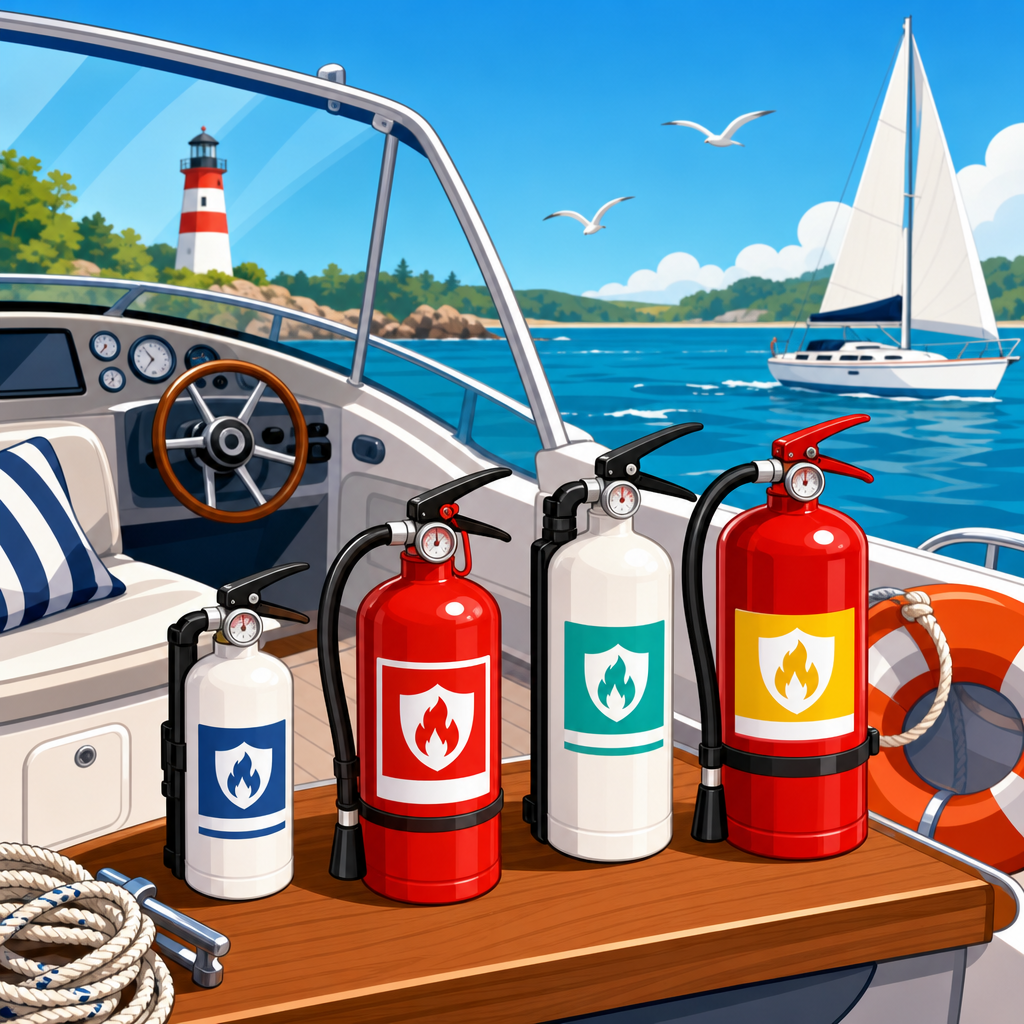
A boat fire extinguisher is a portable device designed to discharge an extinguishing agent onto a fire. On boats, that usually means a dry chemical extinguisher rated for common marine fire risks. Key terms matter. “Class A” covers ordinary combustibles such as wood, paper, and fabrics. “Class B” covers flammable liquids including gasoline and oil. “Class C” covers energized electrical equipment, which is critical on boats because batteries, shore power systems, inverters, chargers, pumps, and helm electronics are everywhere. If you operate a diesel vessel, a gasoline runabout, a center console, a pontoon, a sailboat, or a cruiser, you still need extinguishers selected for the hazards on board, not just to satisfy a checklist.
This topic matters because fire remains one of the most time-sensitive emergencies in boating. The U.S. Coast Guard has long required many recreational vessels to carry approved fire extinguishers, and modern rules focus on both carriage requirements and condition. Even where regulations permit fewer units because of built-in systems or vessel design, prudent owners carry more than the minimum. Fires can start from fuel leaks, overheated wiring, corroded terminals, lithium battery charging, galley mishaps, or engine backfires. They also spread faster on boats because wind, vibration, and flammable finishes add momentum.
As a hub page within boating safety and emergency equipment, this guide explains what type of extinguisher to buy, how many you need, where to mount them, how to inspect them, and when an automatic clean-agent system makes sense. It also connects the extinguisher decision to broader marine safety planning: bilge ventilation, fume detection, wiring standards, emergency shutdown procedures, distress signaling, first aid readiness, and crew drills. If you want a practical answer, it is this: the best fire extinguishers for boats are Coast Guard-compliant marine units with the correct class ratings, enough capacity for your vessel’s size and risk profile, metal valve construction, corrosion resistance, visible mounting, and a maintenance routine you actually follow.
Which type of boat fire extinguisher is best?
For most recreational boats, the best choice is a marine-rated ABC dry chemical extinguisher from a recognized manufacturer such as Kidde, First Alert, Amerex, or Sea-Fire. ABC units are versatile because they handle upholstery and wood fires, fuel fires, and energized electrical fires. On smaller open boats, they are the standard recommendation because they cover the broadest set of likely emergencies with one cylinder. The most common recreational sizes correspond to older B-I and B-II style expectations, though buyers today should focus on the current label, approval, and intended vessel application rather than legacy terminology alone.
Dry chemical units have strengths and weaknesses. Their biggest advantage is effectiveness across multiple fire classes and broad availability at reasonable cost. Their drawbacks are residue, reduced visibility during discharge, and cleanup challenges around electronics and engines. Even so, on a boat, stopping the fire comes first. If you have an enclosed engine compartment, an automatic clean-agent suppression system is often the better primary defense there because it floods the space without requiring you to open the compartment and feed the fire oxygen. In that setup, portable extinguishers still remain necessary for cabins, cockpits, galleys, and backup response.
CO2 extinguishers are less common on small recreational boats. They leave no residue and work well on Class B and electrical fires, but they have limited cooling effect, are bulkier for the amount of firefighting time they provide, and are less practical in windy or open-deck conditions. Water-mist units can be useful around some electrical equipment and enclosed accommodations, but they are not the universal answer for fuel-heavy marine environments. For that reason, if a boat owner asks for one extinguisher type that covers the most realistic boating scenarios, ABC dry chemical remains the default recommendation.
How many extinguishers should a boat carry?
The legal minimum depends on boat length, construction, and whether the boat has permanent fuel tanks, enclosed living spaces, or enclosed engine compartments. Coast Guard carriage rules should be checked directly for your vessel category, because requirements can change and details matter. In practice, experienced owners treat the minimum as a floor, not a target. A 20-foot bowrider with a console and engine area should not rely on one small extinguisher buried under a seat. A 28-foot cabin cruiser with a galley and inboard engine should have multiple portable units plus an engine-room suppression system.
A useful planning method is to place extinguishers by escape route and hazard zone. One should be reachable from the helm. One should be near, but not inside, the galley or cooking area. One should be accessible before entering the cabin or machinery space. If you need to travel toward a fire to reach the extinguisher, placement is wrong. On larger boats, I also like a unit near the sleeping area and another in the cockpit locker if the locker opens externally and the extinguisher remains immediately visible.
| Boat situation | Recommended setup | Why it works |
|---|---|---|
| Open fishing boat under 26 feet | At least 2 portable ABC marine extinguishers | One at the helm, one aft or near fuel/battery area for rapid access |
| Bowrider or pontoon with permanent fuel system | 2 to 3 portable ABC units | Separates coverage between cockpit, console, and engine or battery locations |
| Cuddy cabin or small cruiser | 3 or more portables plus smoke and fume detection | Cabin fire risk and enclosed spaces require faster response options |
| Inboard gas cruiser with enclosed engine room | Automatic clean-agent system plus multiple ABC portables | Suppresses engine fire without opening compartment and preserves backup protection |
| Liveaboard or larger cruiser | Layered system with portables, fixed suppression, alarms, and drills | Longer occupancy and more systems increase ignition sources and response complexity |
Where should fire extinguishers be mounted on a boat?
Mounting location is as important as extinguisher size. A good marine extinguisher does no good if it is stored under piled life jackets, inside a locked compartment, or loose in the bilge. The bracket should secure the cylinder against pounding in waves but still allow one-handed removal. Visible, labeled, quick-access mounting points are best. Common locations include the helm side panel, inside the cabin entrance, near the companionway, adjacent to the galley, and near the exit from the engine space. Avoid mounting directly above areas that get soaked constantly or exposed to severe heat unless the unit is specifically protected and routinely inspected.
Think in terms of approach and retreat. You want to be able to grab an extinguisher while keeping an exit at your back. On a small center console, that may mean a unit on the forward side of the console seat and another in the aft cockpit. On a cruiser, it often means one at the salon entry and one outside the machinery space. If you keep one inside the engine compartment itself, you may lose access when you need it most. Automatic systems solve that problem by operating inside the compartment while portable extinguishers remain outside for follow-up.
Corrosion is another mounting issue boaters miss. Stainless fasteners, proper backing, and occasional bracket inspection matter because brackets fail long before extinguishers do. Salt exposure, vibration, and ultraviolet light degrade plastic parts over time. I have seen extinguishers with healthy pressure gauges hanging in cracked brackets, effectively unusable in rough water. A seasonal inspection should include tug-testing the bracket, checking the locking strap, and making sure the label still faces outward so any passenger can identify the unit quickly.
What features separate a good marine extinguisher from a poor one?
The best fire extinguishers for boats share five traits: marine approval, clear class ratings, durable construction, corrosion resistance, and easy service checks. Start with the label. It should identify the fire classes and intended use, and it should be suitable for marine environments. Many boaters prefer metal valve assemblies over entry-level plastic designs because they generally hold up better over years of vibration and temperature swings. A pressure gauge should be easy to read at a glance. The pull pin needs a tamper seal, but the seal should not make removal difficult during an emergency.
Cylinder finish matters too. Marine environments are brutal on painted steel. Better units use coatings and hardware that resist rust, especially around the base ring, handle, and bracket contact points. Weight and discharge time also deserve attention. Small extinguishers empty quickly, often in seconds. That is another reason multiple units are wiser than one larger unit hidden below. On a boat, rapid first attack is the goal: knock down the flames, shut off fuel or electrical supply if safe, and prepare to abandon if control is lost.
Brand reputation counts because replacement parts, support, and documented approvals make long-term ownership easier. Amerex has a strong reputation in commercial settings. Kidde and First Alert are widely available for recreational owners. Sea-Fire is well known for fixed marine suppression systems. Whichever brand you choose, buy from a reputable marine supplier, not an unknown marketplace listing with vague approval language. Counterfeit or misrepresented safety gear is not theoretical; it appears regularly enough that purchase source should be part of your decision.
Inspection, maintenance, and replacement schedules
Boat fire extinguishers need routine inspection, not just a glance before a holiday weekend. Check the pressure gauge monthly during the season. Confirm the needle is in the operable range, the pin is intact, the tamper seal is unbroken, the nozzle is clear, and the cylinder shows no dents, rust, oil contamination, or caking residue around the discharge end. Lift the extinguisher occasionally; a noticeably lighter cylinder can indicate leakage. Turn and gently invert dry chemical units as directed by the manufacturer if allowed, because powder can compact over time in high-vibration environments.
Annual inspection is the minimum practical standard for most recreational owners, and more often is wise in saltwater use. Fixed systems require closer attention to gauges, cables, indicator lights, and shutdown interlocks for blowers, engines, and generators. If the boat is hauled for winter, that is the right time to inspect every extinguisher bracket, replace damaged labels, and review dates and service markings. Some units are disposable and must be replaced after use or when they fail inspection; others are rechargeable and should be serviced by qualified technicians according to manufacturer instructions and applicable standards.
Replacement timing depends on condition and manufacturer guidance, not superstition. A ten-year-old extinguisher in excellent condition may still require replacement if the maker says so or if it is a non-serviceable design. Conversely, an apparently newer unit with corrosion, a weak bracket, or a low gauge is already unfit. Do not test-fire an extinguisher for curiosity and then put it back in service. Even a short discharge can compromise pressure or seal integrity. Once used, replace or professionally recharge it immediately.
How fire extinguishers fit into a complete onboard safety system
Extinguishers are one layer of marine fire safety, not the whole system. Prevention starts with marine-grade wiring, proper circuit protection, battery isolation, bilge blower use before starting gasoline engines, fuel system inspections, and compliance with accepted practices such as ABYC electrical and fuel recommendations. Add smoke alarms in accommodation spaces, carbon monoxide alarms where appropriate, and gasoline vapor detectors on boats with enclosed engine or fuel spaces. Keep engine compartments clean so oil residue does not become fuel for a hot-surface ignition.
Crew training matters as much as hardware. Every regular passenger should know where extinguishers are mounted, how to operate them, how to shut down engines, where battery switches are, and when to send a distress call. A simple drill makes a measurable difference: point, pull, aim low at the base, squeeze, and sweep, while maintaining an exit path. If the fire is in an enclosed engine space, do not open the hatch prematurely. Shut ventilation, stop machinery if the system design requires it, deploy fixed suppression if equipped, and prepare life jackets, VHF radio, flares, and emergency position signaling equipment in case abandonment becomes necessary.
That broader view is why this page anchors the safety and emergency equipment category. Fire extinguishers connect directly to life jackets, marine radios, EPIRBs or PLBs, first aid kits, ditch bags, emergency lighting, and man-overboard readiness. Good boating safety is layered, redundant, and practiced. Review your boat today, upgrade weak extinguishers, and make fire response part of every pre-departure safety check.
Frequently Asked Questions
What type of fire extinguisher is best for a boat?
The best fire extinguisher for a boat is typically a marine-rated dry chemical extinguisher designed to handle the kinds of fires most likely to happen onboard. In practical terms, that usually means an extinguisher capable of fighting flammable liquid fires from gasoline or diesel, electrical fires involving batteries, wiring, panels, and chargers, and in some cases ordinary combustibles such as cushions, wood trim, paper products, or galley materials. Because boats combine fuel systems, engine compartments, electrical equipment, and enclosed spaces, you want an extinguisher that is versatile rather than specialized for just one hazard. Many boaters choose multipurpose units because they offer broad protection and are easy to use in an emergency.
That said, “best” also depends on where the extinguisher will be used. For example, the needs of a small center console differ from those of a cabin cruiser, sailboat, pontoon, or offshore fishing boat. A compact handheld extinguisher may satisfy the minimum for a smaller vessel, but larger boats often benefit from multiple extinguishers placed in strategic locations such as the helm, galley, cabin, and near sleeping areas. Engine compartments are especially important because they are high-risk fire zones. In some boats, an automatic engine room fire suppression system is a smart upgrade because it can discharge without requiring someone to open the compartment and feed the fire with oxygen.
Marine use matters too. A fire extinguisher on a boat should be built and labeled for the marine environment, where vibration, moisture, corrosion, temperature changes, and salt exposure can shorten the life of ordinary equipment. A household extinguisher may look similar, but if it rusts, loses pressure, or fails when needed, it is the wrong choice. A properly approved marine extinguisher with a secure mounting bracket is the safer and more reliable option.
How many fire extinguishers should you carry on a boat?
The right number of fire extinguishers depends on the boat’s size, layout, propulsion type, and onboard fire risks, not just the legal minimum. Many owners make the mistake of carrying only one small extinguisher because it checks a box, but real-world fire protection requires thinking about access and response time. If a fire starts in the engine space, galley, or electrical panel, you may not be able to reach a single extinguisher stored at the opposite end of the boat. On a vessel, seconds matter, and fire can spread fast through wiring, fuel vapors, upholstery, insulation, and confined compartments.
A better approach is to carry enough extinguishers so that one is always within quick reach from key areas. At minimum, many boaters keep one near the helm and another near cabin or galley spaces if the vessel has them. Larger boats often need additional units so no matter where a fire starts, you can attack it without moving toward the flames to get your extinguisher. Engine compartments deserve special attention because they are common ignition points due to heat, fuel, oil, and electrical components. For those spaces, automatic suppression can add an important layer of protection.
It is also wise to think beyond compliance and consider the actual people on board. If family members or guests may need to respond, extinguishers should be visible, mounted securely, and easy to remove. One larger extinguisher in a hidden locker is usually less useful than several appropriately sized units placed where a fire is most likely to occur. Good fire planning on a boat is about redundancy, access, and matching protection to the vessel’s real hazards.
Where should fire extinguishers be mounted on a boat?
Fire extinguishers should be mounted where they can be reached quickly, seen easily, and removed without delay, while still being protected from damage and accidental discharge. The ideal location is usually near likely fire areas but not so close that the extinguisher becomes inaccessible once the fire starts. For example, placing an extinguisher directly inside the engine compartment is generally less useful than having one mounted just outside it, because you may not be able to access it safely if the compartment is already smoking or burning. The same idea applies to galleys, battery banks, inverters, and electrical panels.
Common smart locations include the helm area, cabin entrance, galley access point, sleeping quarters on larger boats, and near the engine compartment entrance. On open boats, the extinguisher should be mounted where the operator can reach it quickly but where it will not bounce loose, get soaked constantly, or interfere with normal movement. On cabin boats, one extinguisher near the exit is especially important because it can help clear a path out if a fire develops below deck.
Use the proper marine mounting bracket and install it on a secure surface. A loose extinguisher can become damaged, corrode faster, or turn into a projectile in rough water. Visibility matters as much as location. In an emergency, nobody wants to search through lockers or under seats while smoke builds. The best placement supports fast response, safe access, and clear crew awareness. If someone unfamiliar with your boat steps aboard, they should be able to spot the extinguisher without a tour.
How often should boat fire extinguishers be inspected or replaced?
Boat fire extinguishers should be checked regularly, ideally as part of every pre-season setup and routine safety inspection throughout the boating season. A quick monthly glance is a smart habit, especially on boats exposed to weather, vibration, and salt air. You want to confirm that the extinguisher is still in its bracket, the pressure gauge is in the correct range if the unit has one, the safety pin and tamper seal are intact, the nozzle is clear, and there are no signs of rust, leakage, dents, cracking, or corrosion around the cylinder, handle, or mounting hardware.
Marine conditions are tough on safety gear. Even a sealed extinguisher can degrade over time, especially if it is mounted in a damp compartment, exposed to spray, or left baking in direct sun. A unit that looks fine from a distance may actually be compromised by corrosion, pressure loss, or caking of the extinguishing agent inside. That is one reason boat owners should not assume a neglected extinguisher is “probably okay.” If there is visible damage, a failed gauge reading, missing parts, or any doubt about reliability, replacement is usually the safest move.
Replacement timing depends on the extinguisher type, manufacturer guidance, and overall condition. Some units are disposable and meant to be replaced at the end of their service life, while others are rechargeable and can be professionally serviced after use or inspection findings. Any extinguisher that has been discharged, even partially, should be serviced or replaced immediately. For boaters, the rule is simple: if you would hesitate to trust it during an engine fire offshore or at a fuel dock, it is time to replace it before your next trip.
What should you do if a fire starts on a boat?
If a fire starts on a boat, act immediately, stay as calm as possible, and focus on life safety first. Alert everyone onboard right away, stop the boat if appropriate, shut down the engine if it is safe to do so, and cut off fuel and electrical systems when possible. These steps can reduce the fire’s source and limit how quickly it spreads. If passengers are onboard, assign clear instructions such as putting on life jackets, moving away from the fire, and preparing for evacuation if the situation worsens. Confusion wastes time, and on a boat there is very little room for error once smoke and flames begin spreading.
Use the fire extinguisher only if the fire is still small, contained, and you have a clear escape route. Aim at the base of the flames and discharge in controlled sweeps. If the fire involves the engine compartment, avoid opening it fully unless absolutely necessary, because introducing oxygen can intensify the fire rapidly. This is one reason automatic engine room suppression systems are so valuable on larger or enclosed-engine boats. If a fire does not go out quickly, grows beyond the initial stage, or fills the area with smoke, shift immediately from firefighting to evacuation and distress procedures.
Call for help as soon as you can using marine radio, phone, or emergency signaling equipment, depending on what is available. If you are near shore or other vessels, communicate your position and the nature of the emergency clearly. Prepare to abandon the boat only if staying aboard is more dangerous than leaving it, since in many cases the boat remains easier for rescuers to spot than people in the water. The biggest mistake boaters make is waiting too long to escalate the response. A small onboard fire can turn into a life-threatening emergency in moments, so the safest strategy is fast action, proper equipment, practiced procedures, and no hesitation.