
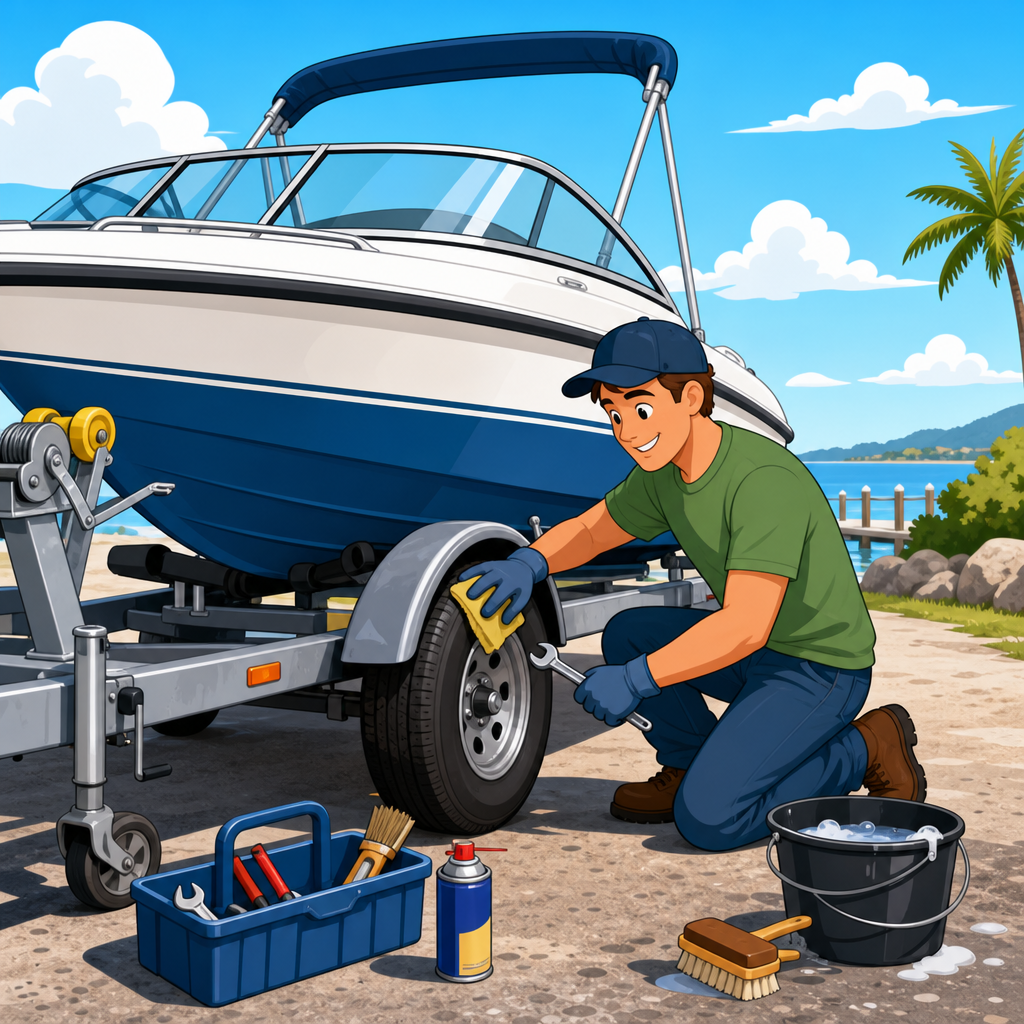
A boat trailer is not just a wheeled frame that gets your rig from the driveway to the launch ramp; it is a corrosion-prone, load-bearing transport system that directly affects safety, cost, and how long your boat stays usable. When people ask how to maintain your boat trailer for long-term use, they usually mean more than washing off mud. They need a repeatable maintenance plan for structural components, wheel bearings, brakes, lights, bunks, winches, tires, couplers, and towing setup. In practical terms, long-term use means keeping the trailer reliable for years of highway miles, steep ramps, salt exposure, and seasonal storage without surprise breakdowns.
Boat trailers work in harsher conditions than utility trailers because they are routinely submerged, then parked wet. Freshwater causes rust over time, but saltwater accelerates corrosion dramatically, especially on brake hardware, leaf springs, galvanized fasteners, wiring connections, and wheel hubs. I have seen trailers that looked acceptable from ten feet away fail inspection once the wheel was removed and the backing plate, U-bolts, and spring hangers were exposed. That is why maintenance must be systematic rather than cosmetic. A clean trailer is helpful, but a truly maintained trailer has documented inspections, correct lubrication, proper torque, adjusted brakes, healthy tires, and sealed electrical connections.
This matters for three reasons. First, safety: trailer failures can lead to wheel separation, brake loss, fishtailing, or a boat shifting during transport. Second, cost: replacing a spindle or repairing road damage after a bearing failure is usually far more expensive than routine grease service and seal replacement. Third, reliability: the value of a trailer is proven at dawn on a launch day, not in the driveway. A dependable trailer lets you focus on boating instead of roadside repairs. As the central guide within Boat Trailers & Towing Equipment, this article covers the full maintenance framework and points to the subtopics every owner should understand.
Start With a Complete Trailer Inspection Routine
The foundation of boat trailer maintenance is a consistent inspection schedule. I recommend three levels: a quick pre-trip check before every tow, a monthly walkaround during active season, and a deeper annual inspection that includes removing wheels and checking service parts. The pre-trip check should confirm tire pressure, lug nut torque, coupler engagement, safety chains, winch strap condition, transom straps, light operation, and the presence of a spare tire and jack. This takes ten minutes and prevents the most common ramp and roadside problems.
Monthly inspections should go further. Look for rust at welds, cracks near spring hangers, elongated bolt holes, loose U-bolts, broken bunk brackets, dry rot in rollers, and corrosion at electrical grounds. Check whether the boat sits centered on bunks or rollers. Uneven loading can indicate bunk wear, axle issues, or improper launch retrieval habits. Also examine the jack wheel, coupler latch, breakaway cable if equipped, and the winch post hardware. If any fastener shows severe rust scaling or thread damage, replace it with the correct grade and coating rather than retightening it and hoping for the best.
Annual inspections should include jacking up each wheel safely, spinning it by hand, and checking for roughness, noise, end play, and brake drag. Pull the hubs if service history is unknown. Inspect seals, bearing races, brake pads or shoes, caliper slide pins, and hydraulic lines. For painted steel trailers, probe suspicious bubbling areas because paint often hides active corrosion. For aluminum trailers, inspect cross-member attachments and stainless-to-aluminum contact points for galvanic corrosion. This annual review is where long-term service life is won or lost.
Protect the Frame, Hardware, and Finish From Corrosion
Corrosion control is the main long-term battle. Painted steel, galvanized steel, and aluminum trailers all require care, but they fail differently. Painted steel looks best when new, yet chips quickly become rust sites. Galvanized trailers resist corrosion better, especially in saltwater, but white oxidation and worn zinc layers still need attention. Aluminum trailers do not rust like steel, though they can pit or corrode where incompatible metals meet. In every case, rinsing after immersion matters more than many owners realize.
After saltwater use, flush the trailer with low-pressure fresh water, concentrating on axles, springs, brakes, hubs, inside frame channels, and the underside of cross-members. High pressure can force contaminants into seals and electrical fittings, so use it carefully. Let the trailer drain and dry before storage. Where coatings are damaged, clean the area thoroughly and use a marine-grade primer and topcoat for painted steel, or a zinc-rich cold galvanizing compound for small galvanized repair spots. For aluminum, use products approved for marine aluminum and isolate stainless hardware with anti-seize or barrier compounds where appropriate.
Do not overlook hardware. U-bolts, shackle bolts, winch stand fasteners, and bunk bracket hardware often corrode faster than the visible frame. Replace heavily compromised pieces in sets so clamping loads remain even. If your trailer lives outdoors, use a breathable cover for the boat but avoid trapping moisture around the trailer itself. Long-term exposure to wet leaves, grass, and soil contact under tires and jacks creates localized corrosion and tire deterioration. A gravel or paved parking surface is significantly better for storage.
Maintain Wheel Bearings, Hubs, and Seals Before They Fail
Wheel bearing service is the most important preventive task on any boat trailer. Bearings support the full load at highway speed, then get dunked at the ramp. Heat from towing followed by rapid cooling can draw water past worn seals. Once water contaminates the grease, rust begins quickly. If you have ever seen milky grease, blue discoloration on bearing surfaces, or scoring on a spindle, you have already crossed from maintenance into repair. Regular service prevents that.
Some trailers use bearing protectors such as Bearing Buddy units; others rely on standard dust caps or vault-style hybrid lubrication systems. Bearing protectors help maintain slight positive pressure in the hub, but they do not eliminate the need for inspection. Grease should be marine wheel bearing grease with water resistance and the correct compatibility for the existing product. Mixing incompatible greases can cause separation or poor lubrication. If history is unknown, clean and repack completely rather than topping off blindly.
At service time, inspect inner and outer bearings, races, spindle surfaces, cotter pins, tang washers, and seals. Replace seals whenever a hub is removed. Torque the spindle nut to seat the bearings, then back off and set preload according to the axle manufacturer’s procedure, commonly from Dexter, Lippert, or AL-KO documentation. A hub should spin freely with minimal end play, not be cinched tight. After a tow, use the back of your hand or an infrared thermometer to compare hub temperatures side to side. A hot hub is an early warning sign that should never be ignored.
Keep Brakes, Tires, and Suspension Roadworthy
Boat trailer braking systems are exposed to water, road debris, and infrequent use, which makes them especially vulnerable to seizure and uneven performance. Surge brakes remain common because they are simple and self-contained, while electric-over-hydraulic systems are increasingly used on heavier trailers for stronger control. Regardless of type, inspect actuators, master cylinders, fluid condition, brake lines, calipers, backing plates, and pads or shoes. Replace cracked rubber lines and corroded steel lines immediately. Brake fluid should be clean and at the specified level; dark or contaminated fluid points to moisture and overdue service.
Tires deserve equal attention. Trailer tires should be Special Trailer rated, not passenger-car substitutes, and should be inflated to the pressure listed on the tire sidewall or according to the trailer manufacturer’s load guidance. Underinflation creates heat, which is the main cause of trailer tire failure. Also check date codes. Even if tread looks acceptable, many trailer tires age out before they wear out, especially under sun exposure. I generally advise close inspection after five years and replacement before seven in demanding service, unless the manufacturer specifies otherwise.
Suspension parts quietly determine stability. Leaf springs rust from the inside, equalizers wear at pivot points, and shackle straps elongate over time. Torsion axles avoid some of that hardware, but the rubber cords inside the axle body also age and can sag. Pay attention to ride height and tire-to-fender clearance. Uneven wear often signals axle misalignment or a worn spring pack. During service, tighten suspension fasteners to specification, not by feel, and recheck after initial miles if parts were replaced.
| Component | What to Check | Typical Warning Sign | Recommended Action |
|---|---|---|---|
| Bearings and hubs | Grease condition, seal leaks, heat, end play | Hot hub or grinding noise | Clean, inspect, repack, replace seals |
| Brakes | Pad wear, fluid, lines, actuator movement | Pulling, weak stopping, seized caliper | Bleed system, replace worn or corroded parts |
| Tires | Pressure, sidewall cracks, date code, tread | Bulges, cupping, blowout risk | Inflate correctly, replace aged or damaged tires |
| Suspension | Leaf packs, shackles, U-bolts, alignment | Uneven tire wear or sagging corner | Replace worn hardware and torque to spec |
Prevent Electrical Failures at the Ramp and on the Road
Trailer light problems are often blamed on bulbs, but the real issue is usually corrosion in connectors, grounds, or splices. Boat trailers need sealed electrical systems because immersion and road spray attack every exposed contact point. LED lights are the current standard because they draw less power, last longer, and tolerate vibration better than incandescent assemblies. Even so, the installation quality matters more than the light brand.
Use heat-shrink butt connectors with adhesive lining, marine-grade tinned wire where possible, and dedicated ground returns instead of relying only on the frame. Ground faults are common on galvanized and painted trailers because corrosion interrupts conductivity at bolted joints. Protect the trailer plug with dielectric grease, keep it off the ground when parked, and inspect pins for green corrosion or looseness. If lights behave intermittently, test the tow vehicle connector first with a simple trailer plug tester or multimeter before replacing trailer parts unnecessarily.
Routing also matters. Wires should be clipped above moving suspension parts and away from sharp edges. Inside-frame routing looks tidy but can trap moisture; if used, grommets and drain paths are important. Submersible marker and tail lights should still be checked after launch days because lens seals and wire entries eventually age. Reliable lighting is not cosmetic compliance. It is a primary safety system that communicates braking, turning, and width to every driver behind you.
Service Bunks, Rollers, Winches, Couplers, and Towing Gear
Support and securement components are easy to ignore because they do not spin or make noise, yet they directly affect hull protection and towing safety. Carpeted bunks should be checked for rot, loose lag bolts, and staples protruding through worn carpet. Rotten bunk boards can collapse and dent a hull during loading. If replacing bunks, use the correct board dimensions, marine carpet or synthetic covers, and align them to match hull strakes and load zones. Rollers should turn freely without split rubber or seized shafts.
The winch system deserves close inspection. Look for frayed webbing, kinked cable, bent handles, and gear slippage under load. A winch strap should be replaced at the first sign of serious edge wear or UV breakdown. The bow stop should contact the boat correctly without excessive pressure on gelcoat. Safety chains or secondary bow retention straps are not optional backups; on rough roads, they are critical. At the stern, transom straps should be rated appropriately and tightened enough to control bounce without crushing components.
At the hitch end, verify the coupler size matches the hitch ball exactly, typically 2-inch, 2-5/16-inch, or 1-7/8-inch on smaller loads. Mismatched couplers are a known cause of trailer separation. Lubricate coupler latch pivots lightly, inspect for wear, and confirm the safety pin or lock is in place every trip. Safety chains should cross under the tongue, allowing control if the coupler disconnects. Also evaluate the broader towing setup: tongue weight generally should fall around 5 to 7 percent of gross trailer weight for many boat trailers, though manufacturer guidance takes priority. Incorrect balance contributes to sway, poor braking, and accelerated tire wear.
Build a Seasonal Maintenance Plan and Know When to Replace Parts
The easiest way to maintain a boat trailer for long-term use is to assign tasks by season and track them. In spring, inspect tires, wheel bearings, brakes, lights, straps, and registration status before the first launch. During peak season, rinse after every saltwater trip and do a monthly check of hubs, tires, lights, and fasteners. In fall, service bearings if annual mileage or immersion frequency warrants it, touch up corrosion, and prepare for storage. During winter storage, keep tires off wet ground when possible, release unnecessary strap tension, and store the trailer on level support.
Replacement timing should be based on condition and risk, not wishful thinking. Replace bearings and races if pitted, blue, rough, or scored. Replace brake components if seized, unevenly worn, or heavily corroded. Replace tires when aged, cracked, puncture-repaired beyond comfort, or unevenly worn from suspension issues. Replace leaf springs in pairs on the axle. Replace winch straps, transom straps, and safety chains when there is visible damage or compromised hardware. If the frame has significant structural rust at load points or cross-members, seek professional assessment; some trailers are no longer economical to save.
Long-term trailer care is ultimately about discipline. A well-maintained trailer launches easier, tows straighter, stops better, protects the hull, and holds its value. More important, it reduces the chance of the kind of failure that ends a trip on the shoulder of a highway. Use this hub as your starting point for the broader Boat Trailers & Towing Equipment category, then build a checklist specific to your trailer’s axle brand, brake type, environment, and annual mileage. Put the schedule on your calendar, keep service notes, and treat trailer maintenance with the same seriousness you give the boat itself.
Frequently Asked Questions
1. What routine maintenance should I perform on a boat trailer to keep it in good condition long term?
A long-term maintenance plan starts with consistency. The best way to extend the life of a boat trailer is to inspect it before and after use, rinse it thoroughly after every launch, and follow a scheduled checklist for key wear items. At a minimum, wash the frame, axles, wheels, brakes, bunks, rollers, winch post, coupler, safety chains, and lights, especially after exposure to saltwater. Salt, road grime, and trapped moisture are some of the biggest causes of premature corrosion, seized hardware, and electrical failure. A thorough rinse should be followed by drying time and visual inspection so you can catch rust spots, cracked welds, loose fasteners, and worn components before they become expensive problems.
It also helps to break trailer care into intervals. Before each trip, check tire pressure, lug nut torque, light operation, coupler engagement, safety chains, winch strap condition, and tie-down security. Monthly or every few uses, inspect wheel bearings, brake components, leaf springs or torsion axles, bunk carpet, rollers, frame finish, and wiring connections. Annually, service the bearings, inspect or replace brake fluid if equipped with hydraulic brakes, examine brake pads or shoes, check for internal rust inside the frame where possible, and touch up chipped galvanized or painted surfaces. If the trailer sees heavy use, long highway runs, or repeated saltwater immersion, shorten the service interval. Boat trailer maintenance is less about one major repair and more about preventing many small issues from stacking up into a breakdown, unsafe tow, or structural failure.
2. How do I maintain boat trailer wheel bearings and hubs so they do not fail on the road?
Wheel bearings are one of the most important systems on any boat trailer because they carry the full load and operate under heat, water exposure, and highway stress. If bearings are neglected, the result can be anything from noisy hubs and uneven tire wear to a seized wheel or a hub coming apart on the road. To maintain them properly, inspect the hubs regularly for excess heat after towing, grease leakage, metal particles, wobble, or unusual sounds. After a drive, place your hand near each hub carefully. A hub that is significantly hotter than the others may indicate a bearing problem, brake drag, or lack of lubrication.
Proper bearing service depends on the hub style, but in general, bearings should be cleaned, inspected, and repacked with a high-quality marine-grade grease at least annually, and more often for trailers used in saltwater or high-mileage towing. If your trailer uses bearing protectors or an easy-lube spindle system, that helps, but it does not eliminate the need for full inspection. Seals should also be replaced when servicing bearings because worn seals allow water intrusion, which quickly damages grease and bearing surfaces. During service, inspect the bearing races for pitting, scoring, discoloration, or roughness. Any sign of damage means replacement is the smart choice. Keep a spare hub kit, seals, grease, and the tools needed for roadside service in your tow vehicle. That level of preparation can save a trip and prevent a minor issue from turning into a dangerous roadside failure.
3. What is the best way to protect a boat trailer from rust and corrosion?
Corrosion control is central to long-term trailer ownership, especially if the trailer is ever dipped in saltwater. Even galvanized trailers and aluminum-framed models can suffer corrosion in fasteners, brake hardware, springs, hubs, wiring grounds, and other steel components. The most effective protection strategy is to rinse the trailer thoroughly with fresh water after every launch, paying special attention to brakes, axles, crossmembers, wheel wells, coupler hardware, and any area where water and salt can collect. A quick top-down spray is not enough. You want to flush hidden pockets and let the trailer dry completely before storage whenever possible.
Beyond rinsing, inspect the finish often and repair damage early. On painted trailers, sand and repaint chipped or scratched areas before rust spreads under the coating. On galvanized trailers, touch up worn areas with a zinc-rich product approved for corrosion protection. Use corrosion-resistant hardware where practical, and apply marine-safe anti-seize or protective spray to exposed bolts, hinge points, winch gears, and other metal interfaces that are prone to seizing. Keep drain holes clear so water does not sit inside the frame. If you store the trailer outdoors, avoid parking it in wet grass or standing water for extended periods. The key is understanding that rust usually starts in small, easy-to-miss places, then advances quietly. Regular washing, drying, touch-up work, and hardware inspection are what stop surface corrosion from becoming structural damage.
4. How often should I inspect and service trailer brakes, lights, tires, and the coupler?
These systems should be checked before every trip and inspected more thoroughly on a recurring schedule, because they directly affect towing safety and legal roadworthiness. Trailer brakes should be tested for proper operation before heading out, especially if the trailer uses surge or electric-over-hydraulic brakes. Look for sticking calipers, rusted rotors, leaking brake lines, worn pads, damaged drums, weak actuator response, and contaminated brake fluid. If the trailer has been sitting, brakes are especially likely to seize or drag. A yearly full inspection is a good baseline, but trailers used frequently, stored near the coast, or submerged often should be checked more aggressively.
Lights and wiring should also be treated as regular maintenance items, not something to fix only when they fail. Check running lights, brake lights, turn signals, and side markers before each trip. Corrosion at connectors, poor ground connections, cracked lens housings, and pinched wires are common problems on boat trailers. Tires should be inspected for sidewall cracking, tread wear, uneven wear patterns, and proper inflation. Trailer tires often age out before they wear out, so even tires with good tread may need replacement after several years depending on condition and manufacture date. Do not forget the spare. The coupler, latch, safety chains, breakaway system if equipped, jack, and winch should be checked for secure mounting, smooth operation, rust, and wear. A properly maintained coupler and towing setup are just as important as brakes because if the trailer is not securely connected to the tow vehicle, every other maintenance step becomes secondary.
5. What are the most commonly overlooked boat trailer maintenance issues that cause expensive repairs later?
Some of the most overlooked issues are also the ones that create the biggest long-term costs. Owners often focus on tires and lights but miss the slow deterioration of bunks, rollers, suspension parts, winch straps, brake lines, and frame attachment points. Bunk carpet can trap moisture against wood, leading to rot that is hidden until a bunk fails or no longer supports the hull correctly. Rollers can become brittle, seize, or wear unevenly. Leaf springs and equalizers can rust internally and crack without much warning. Winch straps may look acceptable at a glance but can be weakened by UV exposure, frayed stitching, or damaged hooks. These are the kinds of parts that often fail at the ramp or during loading, when the trailer is under awkward stress.
Another commonly missed area is trailer setup and load balance. Even a well-maintained trailer will wear out faster if the boat is sitting too far forward or backward, the tongue weight is incorrect, the axle alignment is off, or the bunks are not supporting the hull evenly. That can lead to tire wear, unstable towing, overloaded bearings, and frame strain over time. People also overlook torque checks on lug nuts, U-bolts, winch stand hardware, and suspension fasteners. Vibration loosens things gradually, and loose hardware can elongate mounting holes or damage structural members. Finally, neglecting off-season storage can shorten trailer life. Storing with underinflated tires, no frame cleaning, wet brake components, or no cover on electrical connectors invites problems long before the next launch day. The smartest approach is to treat the trailer as a critical mechanical system, not an accessory. When you inspect the less obvious parts regularly, you prevent the hidden wear that usually leads to the biggest repair bills.


