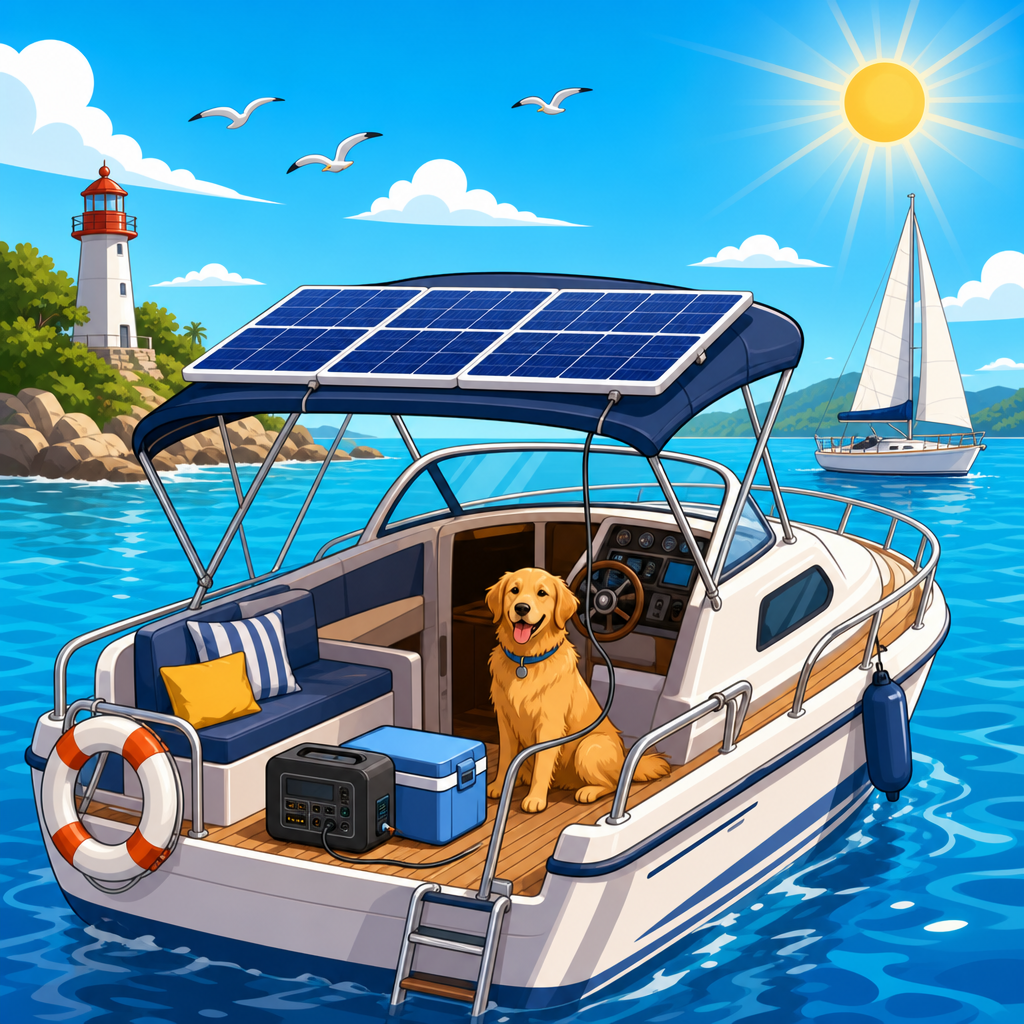
Choosing the best solar panels for boats is no longer a niche upgrade for bluewater cruisers; it is one of the most practical ways to keep batteries charged, electronics reliable, and navigation systems running without depending constantly on shore power or engine hours. In marine terms, a solar charging setup converts sunlight into usable DC electricity for your battery bank, usually through photovoltaic panels, a charge controller, wiring, fusing, and battery monitoring. For boat owners, that matters because modern boating depends on power-hungry equipment: chartplotters, VHF radios, AIS transceivers, GPS antennas, radar, autopilots, fish finders, refrigeration, lighting, inverters, USB charging, and networked instruments. I have installed and troubleshot enough small-vessel solar systems to know the pattern: most electrical failures on the water start with poor energy budgeting, undersized charging sources, or components selected without considering salt, shade, vibration, and limited mounting space. A well-matched marine solar system solves those problems quietly. It reduces engine runtime, preserves battery health, lowers fuel use, and adds redundancy for critical electronics. It also serves as the natural starting point for anyone building out the wider Electronics & Navigation Systems category, because dependable power underpins every device on board.
When boaters search for the best solar panels for boats, they usually mean one of three things. First, they want to know which panel type works best in marine conditions. Second, they want a practical sizing guide based on actual electrical loads. Third, they want a hub that connects solar charging to the rest of the onboard electronics ecosystem. This article addresses all three. It explains rigid, flexible, and portable panels; compares monocrystalline and other cell technologies; outlines controller choices such as PWM and MPPT; and shows how solar integrates with house batteries, battery monitors, chartplotters, communications gear, and safety equipment. It also points toward the related decisions that sit nearby in the same equipment family, including marine batteries, inverters, DC distribution, NMEA 2000 networking, radar power planning, and emergency communication devices. If you understand how solar fits into the whole power chain, you can make smarter choices across your boating gear. The goal is not to chase the highest advertised wattage. The goal is to create a dependable onboard energy system that keeps essential electronics alive under real operating conditions, from a bass boat at anchor to a trawler on passage.
What makes a solar panel good for marine use
The best solar panels for boats share a few traits that matter more on the water than they do on a house roof. They must tolerate salt spray, ultraviolet exposure, flexing, vibration, and partial shading from rails, antennas, booms, rod holders, and radar arches. They also need practical dimensions. A 200-watt panel that cannot fit your bimini, cabin top, hardtop, or stern arch is not the right panel, no matter how efficient the cells are. In my experience, marine buyers should judge panels on usable daily output, build quality, and installation compatibility before looking at marketing claims.
Monocrystalline panels remain the default recommendation because they deliver the best efficiency per square foot, often around 18 to 23 percent in current marine-grade products. That matters on boats, where mounting area is scarce. Polycrystalline panels are less common now in premium marine applications because they are typically less efficient. Thin-film options can help in specialized low-weight installations, but their lower output per area usually makes them a poor fit for boats carrying substantial electronics. The more important distinction for most owners is rigid versus flexible. Rigid panels, usually framed and glass-faced or built with rugged composites, tend to last longer and maintain output better over time. Flexible panels save weight and can bond to curved surfaces, but many budget models suffer from heat buildup, cell cracking, or early delamination in harsh sun.
Marine durability also depends on small technical details. Look for corrosion-resistant junction boxes, tinned copper wiring, robust encapsulation, and waterproof connectors with realistic ingress protection ratings. A panel advertised for “outdoor” use is not automatically marine-ready. Reputable brands publish open-circuit voltage, short-circuit current, temperature coefficients, and power tolerance. Those specifications tell you how the panel behaves outside ideal laboratory conditions. If you are comparing products for a navigation-heavy boat, that documentation matters because the charging source must be predictable enough to support your battery reserve calculations.
Rigid, flexible, and portable panels compared
Each panel style serves a different boating use case. Rigid panels are usually the best long-term value for cruisers, center consoles with hardtops, and trawlers with arches or davits. They maintain airflow underneath, which improves efficiency because solar cells lose output as they heat up. They are also easier to mount at a consistent angle and to protect from foot traffic. If your boat has a hard structure, rigid panels generally provide the best reliability per dollar.
Flexible panels fit boats where weight, windage, or deck profile rules out framed modules. You will see them on biminis, pop tops, and curved cabin roofs. Their advantage is installation flexibility, not superior electrical performance. In many real installations, a flexible panel of the same rated wattage produces less energy across a full day than a ventilated rigid panel because it runs hotter. That tradeoff can still be worth it on smaller sailboats, RIBs, and trailerable boats where every pound and inch counts.
Portable folding panels serve anglers, weekend cruisers, and tenders that need occasional charging rather than permanent infrastructure. They are helpful for topping off a battery at anchor or maintaining a boat in storage. The limitation is obvious: if the panel is not deployed, it is not charging. Portable kits also create more opportunities for connector wear and accidental shading. For critical electronics support, a fixed installation is more dependable.
| Panel type | Best use | Main advantage | Main limitation |
|---|---|---|---|
| Rigid monocrystalline | Hardtops, arches, cabin roofs, cruisers | Longest lifespan and strongest sustained output | Needs solid mounting space |
| Flexible monocrystalline | Biminis, curved roofs, lightweight boats | Low profile and lighter weight | Shorter lifespan and more heat-related loss |
| Portable folding | Storage charging, small boats, occasional use | No permanent installation required | Manual setup and inconsistent daily charging |
How to size solar for boat batteries and electronics
Solar sizing starts with an energy audit, not panel shopping. List every onboard load in amps or watts, estimate daily usage, and convert that into amp-hours at your system voltage. For a 12-volt boat, a 5-amp chartplotter used for six hours consumes 30 amp-hours. A 4-amp fish finder used for five hours adds 20 amp-hours. A VHF on standby may draw less than an amp, but an AIS transceiver, radar pedestal, autopilot drive, refrigerator compressor, anchor light, and instrument network add up quickly. On many coastal cruising boats, daily house consumption lands between 60 and 150 amp-hours. On larger cruising sailboats with refrigeration and autopilot, 150 to 250 amp-hours is common.
Once you know daily consumption, size solar to replace a meaningful share of it. As a rule of thumb, a 100-watt panel in good summer conditions might deliver roughly 25 to 35 amp-hours per day into a 12-volt battery system after normal losses, though latitude, angle, heat, and shading can push that lower. That means a boat using 100 amp-hours daily may need 300 to 400 watts of solar for strong offset rather than mere maintenance. This is why marketing photos of one small panel on a cruising boat are often misleading. For electronics and navigation systems, maintenance charging is not enough; you need production that matches operating reality.
Battery chemistry changes the design. Lithium iron phosphate batteries accept charge efficiently and can use solar output more effectively through a larger portion of the day. AGM batteries are simple and proven but charge acceptance tapers more sharply as they fill. Flooded lead-acid batteries remain cost-effective yet need ventilation and maintenance. Whatever battery type you use, pair solar sizing with battery reserve. Critical navigation gear should not rely on solar alone during poor weather. A healthy battery bank, alternator charging, and shore charger still matter.
Charge controllers, wiring, and installation details
The charge controller is the brains of the system. For most boat solar installations above a very small trickle charger, MPPT controllers outperform PWM controllers because they convert extra panel voltage into additional charging current more efficiently, especially when panel voltage is significantly higher than battery voltage. On real boats, I have repeatedly measured meaningful gains from quality MPPT units from Victron Energy, Morningstar, and similar established manufacturers. PWM controllers still have a place in tiny, budget-conscious systems, but for serious electronics support, MPPT is usually the right answer.
Installation quality determines whether the system is safe and whether the advertised wattage ever reaches the battery bank. Use marine-grade tinned copper cable, correct wire gauge for voltage drop control, proper strain relief, and overcurrent protection near the battery. Keep cable runs as short as practical. Fuse panel strings where required by current ratings, and install a breaker or fuse between the controller and battery. Waterproof deck glands, adhesive-lined heat shrink, and corrosion-resistant fasteners are not luxuries offshore; they are standard practice. Poor crimping and undersized wire cause more marine charging problems than bad panels.
Panel placement should reduce shade first, then optimize angle where possible. A partly shaded panel can lose a disproportionate amount of output, especially if one cell string is blocked by a boom or antenna. Bypass diodes help, but they do not eliminate the penalty. If your boat lives with intermittent shade, use separate panel groups or controllers so one shaded panel does not drag down the entire array. This is especially relevant for sailboats, where rigging shadows move constantly through the day.
Best solar panel choices by boating style
For offshore and cruising sailboats, the best solar panels for boats are usually rigid high-efficiency monocrystalline modules mounted on a stern arch, davit frame, or robust bimini structure, paired with an MPPT controller and a battery monitor such as the Victron SmartShunt or BMV series. These boats often depend on autopilots, AIS, GPS, refrigeration, and communication gear for long periods away from marinas, so durability and harvest matter more than sleek appearance. Multiple smaller panels can outperform one large panel because they fit irregular spaces and handle partial shading more gracefully.
For center consoles, bay boats, and fishing boats, low-profile rigid or semi-flexible panels on a T-top or hardtop work well for maintaining starting and house batteries while supporting fish finders, livewell pumps, stereo systems, and USB charging. These boats may not need a large autonomous energy system, but they benefit from solar that offsets electronics use while drifting or spending long hours with the engine off.
For trawlers and power cruisers, roof space often allows larger arrays, making solar a meaningful contributor to daily hotel loads and navigation electronics. A 400- to 800-watt system is realistic on many midsize cruisers, especially when paired with lithium batteries and inverter loads managed intelligently. For tenders and small daysailers, the best choice is often a compact panel sized to preserve battery health and support basic loads like lights, handheld charging, and occasional GPS or radio use.
How solar supports the wider Electronics & Navigation Systems hub
This page sits at the center of the broader Electronics & Navigation Systems topic because electrical supply connects every device category on board. A chartplotter is only as useful as the battery feeding it. Radar installation must include peak and average current planning. VHF, AIS, EPIRBs, and satellite messengers all belong within a larger power resilience strategy. The same goes for autopilots, depth sounders, wind instruments, NMEA 2000 backbones, and onboard Wi-Fi or cellular routers.
In practical terms, boaters researching the best solar panels for boats usually need adjacent guidance on battery monitors, marine batteries, inverter sizing, DC fuse panels, alternator regulators, and emergency power backup. Internal equipment planning should follow the chain from generation to storage to distribution to consumption. If you are building or upgrading this category on your boat, start with an energy audit, then map your high-priority electronics, then choose charging sources. Solar often delivers the best return because it is silent, low maintenance, and available whenever daylight exists. It is not a complete substitute for alternator, shore, or generator charging, but it is the most efficient way to reduce dependence on them.
The strongest boat systems are not built around one product. They are built around balance: enough panel output, enough battery capacity, correct charging profiles, and honest expectations about weather and usage. Choose marine-grade monocrystalline panels, favor rigid modules when you have the space, use an MPPT controller for most serious installations, and size the array from real daily loads rather than brochure claims. Protect the investment with proper wiring, fusing, and battery monitoring. Most importantly, treat solar as the foundation for the rest of your Electronics & Navigation Systems decisions, because reliable power is what keeps charting, communication, safety, and onboard convenience working when you need them most.
If you want your power supply running consistently, begin with a simple load calculation and a realistic survey of mounting space. From there, select the best solar panels for your boat based on environment, battery type, and the electronics you actually use. A thoughtful system will pay you back every trip in quieter charging, longer battery life, and more dependable navigation. Use this hub as your starting point, then build out the rest of your boating gear with the same discipline.
Frequently Asked Questions
What size solar panel system do I need for my boat?
The right size depends on how much electricity you use each day, how long you stay away from shore power, and how much mounting space your boat actually has. A good starting point is to total the daily power draw of your key loads, including navigation electronics, chartplotters, autopilot, VHF radio, lighting, refrigerator, fans, instruments, USB charging, and any inverter-powered devices. Once you know your daily amp-hour consumption, you can estimate how much solar capacity is needed to replace that energy under normal conditions. In real-world marine use, panel output is affected by clouds, heat, shading from rigging, sail covers, radar arches, and the changing angle of the sun, so it is wise to build in a safety margin rather than sizing a system on ideal laboratory ratings alone.
For smaller boats with modest electrical needs, a compact setup may be enough to keep a starting battery topped off and support light electronics use. Cruising boats with refrigeration, autopilot, and multiple devices often need significantly more wattage to make solar a meaningful part of the onboard charging strategy. In most cases, the best approach is to size the system around daily consumption first, then match it to battery bank capacity and available deck, bimini, arch, or rail space. If you routinely anchor out and want to reduce engine run time, it usually makes sense to install as much high-quality solar capacity as your boat can reasonably support, provided the wiring, charge controller, and batteries are sized correctly to handle it.
Are rigid, flexible, or portable solar panels best for marine use?
Each panel type has strengths, and the best choice depends on your boat layout, budget, and long-term expectations. Rigid panels are generally the top choice for efficiency, durability, and value. They are commonly mounted on arches, davits, hardtops, cabin tops, or sturdy bimini frames, and they usually offer better airflow underneath, which helps reduce heat buildup and maintain output. They also tend to last longer in demanding marine environments when properly installed with corrosion-resistant hardware and sealed electrical connections.
Flexible panels can be a smart solution when weight, low profile, or curved mounting surfaces are the main priority. They are often used on dodgers, biminis, or cabin tops where a rigid frame would be impractical. That said, flexible panels typically run hotter, may produce less power over time, and often have a shorter service life than quality rigid panels, especially in harsh sun and saltwater exposure. Portable panels are useful for boats with limited permanent mounting space or for occasional supplemental charging. They can be moved to chase the sun and stored when not needed, but they require setup and takedown, and they are less convenient as a primary charging source for serious cruising. For most boat owners who want dependable daily charging, rigid panels remain the strongest all-around option, while flexible and portable panels serve more specialized needs.
Do I need a charge controller for boat solar panels, and which type is best?
Yes, in nearly every practical boat installation, a charge controller is essential. Solar panels do not feed batteries directly in a controlled way that is safe or efficient for long-term battery health. A charge controller regulates voltage and current from the panels so the batteries receive the proper charging profile. This helps prevent overcharging, supports better absorption and float stages, and protects your investment in the battery bank. On a boat, where charging reliability matters for navigation, communications, and house loads, the controller is not just an accessory; it is a core part of the system.
The two main controller types are PWM and MPPT. PWM controllers are simpler and more affordable, and they can work well in small systems, especially where panel voltage is closely matched to battery voltage. MPPT controllers are generally the better choice for marine solar systems because they are more efficient, especially when panel voltage is higher than battery voltage or when conditions vary throughout the day. They can harvest more usable energy in cooler weather, partial cloud, and less-than-perfect sunlight angles. For many cruising boats, that extra efficiency translates into better battery recovery and less reliance on alternator or shore charging. It is also important to choose a controller that supports your battery chemistry, whether flooded lead-acid, AGM, gel, or lithium, and one with marine-friendly features such as remote monitoring, temperature compensation where appropriate, and properly sized input and output ratings.
How do shading and panel placement affect solar performance on a boat?
Shading has an outsized effect on marine solar performance, and it is one of the most overlooked parts of system planning. On a boat, shadows from masts, booms, backstays, antennas, radar domes, dinghies, and sail covers can cut output dramatically, even if only part of a panel is shaded. Because boats swing at anchor and change heading underway, a location that looks perfect at the dock may experience repeated shadowing throughout the day. This is why placement matters just as much as panel wattage when you are trying to build a dependable onboard charging system.
The best panel location is one that gets the most uninterrupted sun for the longest part of the day while still being structurally secure and safe for movement around the boat. Solar arches, davits, hardtops, and well-supported biminis are often ideal because they elevate the panels away from foot traffic and can reduce interference from deck gear. If you must split the array across different areas, careful wiring design and controller selection can help reduce losses. On some boats, using multiple smaller panels instead of one large panel can make the system more tolerant of irregular shading patterns. In all cases, marine-grade wiring, waterproof glands, proper strain relief, and corrosion-resistant connectors are critical, because a well-placed panel still needs a clean and reliable electrical path to deliver its full benefit.
Can solar panels alone keep my boat batteries charged?
They can in many situations, but the honest answer depends on your electrical demand, your battery bank, your climate, and how you use the boat. For weekend cruising, moored boats, and efficient setups with moderate loads, solar can often maintain batteries very effectively and may eliminate the need for frequent shore charging or unnecessary engine run time. Boats with LED lighting, efficient refrigeration, modern electronics, and disciplined power use are especially good candidates for solar-first charging. In these cases, a properly sized array can keep house batteries healthy and ensure critical systems remain ready.
However, solar is not magic, and it works best as part of a complete energy plan. Heavy loads such as large refrigerators, watermakers, high-draw autopilots, inverters, electric cooking appliances, air conditioning, or extended cloudy-weather operation can exceed what even a well-designed solar array can produce. Seasonal sunlight, latitude, panel orientation, and shading all affect daily harvest. That is why many serious cruisers use solar as the foundation of their charging strategy, supported by alternator charging, shore power, wind generation, or a portable backup source when needed. The goal is not always to make solar the only charging method; it is to use it to reduce engine hours, improve battery health, increase self-sufficiency, and keep critical onboard power available more consistently.