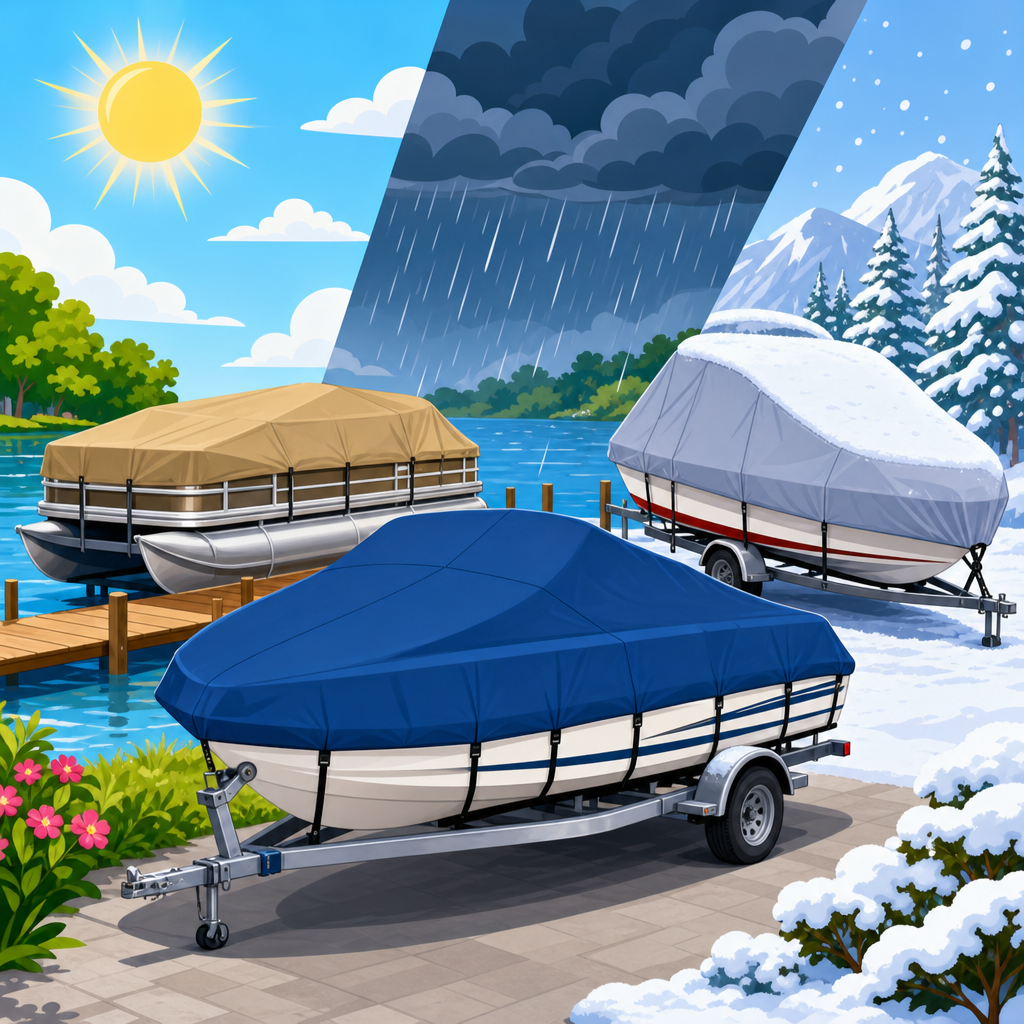
The best boat covers to protect against sun, rain, and snow do more than keep a hull dry. They reduce ultraviolet damage, prevent mildew, limit freeze-thaw wear, and extend the life of upholstery, electronics, flooring, and finishes. In practical terms, a quality cover is one of the least expensive ways to protect a boat’s resale value. I have seen uncovered boats age five seasons in what looked like two simply because sun, standing water, and winter debris were allowed to work uninterrupted.
Boat covers fall into several broad categories: universal-fit covers, semi-custom covers, custom pattern-made covers, mooring covers, trailering covers, storage covers, and full shrink-wrap systems. Each serves a different purpose. A mooring cover is designed for a boat sitting in the water or at the dock. A trailering cover must handle highway wind load and needs reinforced tie-down points. A winter storage cover has to shed snow, resist pooling, and support ventilation. The phrase “best boat cover” only makes sense when matched to climate, storage method, and boat type.
This matters because weather damage rarely comes from one event. It comes from accumulation. Sun oxidizes gelcoat and dries stitching. Rain finds low spots, then trapped moisture feeds mildew and corrosion. Snow adds weight, stretches fabric, and can collapse weak support poles. Even tree sap, bird droppings, and airborne pollution become harder to remove when they bake into exposed surfaces. For owners comparing options across the broader boating gear and equipment category, boat covers and protection deserve hub-level attention because they connect directly to maintenance costs, comfort, and seasonal readiness.
This guide covers the major materials, fit types, seasonal requirements, support systems, care practices, and buying criteria that determine whether a cover truly protects against sun, rain, and snow. It also clarifies when a cover is enough and when you should step up to a heavier storage system. If you are building out a complete protection plan, this page sits naturally alongside topics like boat cleaning supplies, dehumidifiers, dock lines, trailer accessories, and marine-grade storage solutions.
What makes a boat cover effective in harsh weather
An effective boat cover does three jobs at once: blocks sunlight, sheds water, and maintains structural stability under load. The first job depends on fabric chemistry. Solution-dyed polyester and marine-grade acrylic fabrics generally outperform low-cost polypropylene for long-term UV exposure because color and protective properties are built deeper into the fiber rather than applied as a surface finish. In the field, that translates into less fading, less brittleness, and better tear resistance after seasons of exposure.
The second job, water management, is about more than waterproof claims. Truly protective covers are shaped and supported so water runs off quickly. If rain pools, the fabric stretches, seams are stressed, and leakage risk rises. Breathability also matters. A completely impermeable cover can trap condensation, especially during temperature swings, leading to mildew on seats and inside compartments. That is why many premium covers use water-resistant, breathable fabrics with venting rather than simple tarp-style waterproof sheeting.
The third job is structural. Wind is often more destructive than rain. On a trailer, air pressure can turn a loose cover into a parachute. At a dock, repeated flapping wears through contact points on windshield corners, cleats, and tower mounts. The best designs account for this with reinforced panels, sewn-in straps, heavy-duty hems, and strategically placed vents that reduce billowing. In snowy regions, support systems are just as important as fabric weight because even a strong cover can fail if wet snow is allowed to sit in deep pockets.
Choosing the right cover type for storage, mooring, and trailering
Universal-fit covers are affordable and widely available, making them a practical entry point for basic weather protection. Brands such as Classic Accessories and iCover offer size-based models that fit common hull lengths and beam widths. These work best for short-term driveway storage or moderate climates where exact contour fit is less critical. Their limitation is predictable: because they are designed to fit many boats, they often leave slack around windshields, transoms, or trolling motors, which can lead to chafe and water pooling.
Semi-custom covers bridge the gap by tailoring dimensions to broad boat categories such as center console, bass boat, pontoon, or runabout. In my experience, semi-custom is where value improves sharply. You gain better coverage around bows, consoles, and stern seating without paying for a full pattern-made product. For many owners with trailer-stored fishing boats or family bowriders, this is the sweet spot.
Custom covers are the premium option. Companies like Westland, Carver, and local marine canvas shops build covers using specific hull patterns or direct measurements. These are usually the best boat covers for long-term sun, rain, and snow protection because they fit tightly, include reinforcement where hardware contacts fabric, and offer material upgrades suited to local weather. A custom cover costs more up front, but on higher-value boats the math is straightforward: replacing one sun-cracked helm, a set of cushions, or a mildew-damaged interior can exceed the price difference.
Shrink-wrap belongs in the conversation too. It is not a daily-use cover, but for winter layup in severe climates it remains one of the most effective seasonal protection systems. Properly installed shrink-wrap creates a drum-tight shell that sheds precipitation and blocks contamination. The tradeoff is cost, single-season use unless recycled, and reduced convenience if you need regular access during storage.
Best boat cover materials for sun, rain, and snow
Material selection is the core buying decision because it determines longevity, maintenance, and weather performance. Polyester is common because it balances strength, water resistance, and price. Marine-grade polyester in the 300D to 600D range appears in many midrange covers, while heavier deniers can improve abrasion resistance for trailering. However, denier alone is not a quality score. Weave, coating, seam construction, and UV treatment matter just as much.
Solution-dyed acrylic fabrics, including Sunbrella Marine, are a benchmark for UV resistance and colorfastness. They breathe well, resist fading, and perform exceptionally in hot, sunny regions. Many premium mooring and storage covers use acrylic for exactly that reason. Their weakness is not durability but cost, and some owners overestimate their water repellency after years of use. Acrylic often needs periodic retreatment to maintain strong water beading.
Poly-cotton blends and basic polypropylene fabrics appear in lower-cost products. They can work for indoor storage or short seasonal use, but they are rarely the best choice for full-time outdoor exposure. I have replaced many inexpensive covers after two or three seasons when stitching failed or fabric became chalky and thin. That replacement cycle makes a cheap cover expensive over time.
| Material | Best Use | Main Strength | Main Limitation |
|---|---|---|---|
| Marine-grade polyester | General storage and trailering | Good balance of cost, strength, and water resistance | UV life varies widely by quality level |
| Solution-dyed acrylic | Sunny climates, premium mooring covers | Excellent UV resistance and breathability | Higher cost and periodic water-repellent retreatment |
| Polypropylene | Short-term or budget use | Low purchase price | Shorter lifespan outdoors |
| Shrink-wrap polyethylene | Winter layup | Outstanding seasonal enclosure | Not reusable like a fitted fabric cover |
For snow, fabric weight and support matter together. A heavier fabric without a ridge system still fails if snow compacts into a basin. For rain, prioritize seam sealing, vent placement, and contour fit. For intense sun, choose solution-dyed fabrics and avoid dark covers in extreme heat if cockpit temperatures are a concern.
Fit, support poles, and ventilation: the details that prevent failure
A cover usually fails at stress points, not in the middle of a clean panel. Windshield corners, bimini hinges, bow rails, cleats, trolling motor heads, and radar mounts create abrasion points that need reinforcement or padding. The best covers include sewn wear patches, adjustable support poles, and integrated strap systems that distribute load evenly. If yours does not, add protective pads before leaving the boat covered for long periods.
Support poles are essential for rain and snow management. A single center pole may work on a small runabout, but larger boats often need multiple supports or a web-style support system to create a high ridgeline. On pontoon boats, long flat decks almost guarantee pooling without careful framework. For winter storage, many owners use boat cover support systems with straps attached to the trailer frame, creating a tent-like shape that handles snow far better than a few compression poles.
Ventilation is the overlooked variable. Mold growth needs moisture, organic residue, and stagnant air. You cannot eliminate all humidity, but you can reduce condensation with vents, moisture absorbers, and periodic inspection. This is especially important for boats stored with life jackets, carpet, canvas curtains, or residual lake water in compartments. In humid regions, a breathable cover with vent caps often protects interiors better than a totally sealed tarp.
How to choose by boat type and climate
Boat type changes everything. Bass boats need snug fitting around low windshields, pedestal seat bases, and trolling motors. Center consoles need height and contour around electronics boxes, leaning posts, and T-tops if covered in place. Pontoon boats need broad support across open deck spans. Ski and wake boats often require tower-compatible designs or separate tower boots to avoid severe chafe. Cuddy cabins and cruisers may benefit from cockpit covers combined with full storage covers for layered protection.
Climate should drive your final decision. In the Southeast and Gulf Coast, UV, humidity, and sudden downpours are the dominant threats, so breathable UV-stable fabric and venting outrank extreme snow load. In the Pacific Northwest, persistent moisture makes mildew resistance and runoff design critical. In the Upper Midwest and Northeast, snow load and freeze-thaw cycles make winter support structures and seasonal shrink-wrap highly relevant. In arid western climates, dust and sun exposure can age vinyl and dash surfaces quickly even when rainfall is low.
One useful rule is to buy for your hardest month, not your average month. If one winter storm or one month of brutal summer sun can destroy a marginal cover, the yearly average weather is irrelevant. The best cover for your boat is the one that remains stable during the worst realistic conditions where the boat actually sits.
Maintenance, lifespan, and when to replace a boat cover
A boat cover needs maintenance to keep protecting properly. Wash salt, pollen, sap, and bird waste off with mild soap and water; harsh detergents can strip coatings. Let the cover dry completely before folding. Reapply water-repellent treatment when water stops beading on the surface, using products compatible with the original fabric. Inspect seams, webbing, buckles, and reinforcement panels at least twice a season. Stitching failure often appears before panel failure, and catching it early allows inexpensive repair by a canvas shop.
Lifespan varies widely. A low-cost universal cover exposed year-round may last two to four seasons. A quality semi-custom polyester cover often delivers four to seven years with proper care. Premium custom acrylic covers can go longer, especially when not abused during trailering. Real lifespan depends on sun intensity, wind exposure, storage habits, and fit. Boats parked under trees, near saltwater, or in high-wind corridors age covers faster than boats stored in covered slips or indoor facilities.
Replace a cover when it no longer sheds water, has multiple seam failures, shows fabric thinning at contact points, or fits so loosely that wind damage becomes likely. If you are patching several areas every season, replacement is usually the smarter financial choice. A tired cover creates a false sense of protection, and that is when expensive interior damage happens.
Building a complete boat protection system
The strongest approach is not relying on the cover alone. Pair the cover with a support system, desiccant or ventilation strategy, fender and dock protection where relevant, and disciplined cleaning before storage. Remove food, empty water-holding areas, charge or maintain batteries correctly, and treat vinyl before long layups. For trailer-stored boats, check that straps do not rub gelcoat and that the motor position does not create fabric stress. For dock-stored boats, verify that the cover can coexist with mooring lines and still drain properly.
As a hub within boat covers and protection, this topic also connects to specialized subtopics worth exploring next: pontoon covers, center console T-top covers, winterization covers, shrink-wrap versus fabric storage systems, support pole kits, cover cleaning and waterproofing products, and how to measure a boat correctly for a custom fit. Those related decisions determine whether your cover performs like a temporary accessory or a true protective system.
The best boat covers to protect against sun, rain, and snow combine the right material, the right fit, and the right support for your exact storage conditions. Polyester and acrylic fabrics dominate for good reason, but performance depends on construction details such as reinforced wear points, venting, seam quality, and tensioning. Universal covers can work for budget protection, semi-custom covers offer strong value, and custom covers or shrink-wrap make sense when weather is severe or the boat is too valuable to risk.
If you remember one principle, make it this: water must run off, air must circulate, and fabric must stay tight under wind load. When those three conditions are met, most weather damage drops sharply. When any one is ignored, even an expensive cover can disappoint. A good cover protects far more than gelcoat. It protects upholstery, wiring, electronics, flooring, and the time you want to spend boating instead of repairing preventable damage.
Use this hub as your starting point for evaluating boat covers and protection across your full equipment setup. Measure your boat carefully, match the cover to your climate and storage method, and invest once in a system that handles your harshest conditions. That choice will pay back every season your boat stays cleaner, drier, and ready to launch.
Frequently Asked Questions
What type of boat cover offers the best protection against sun, rain, and snow?
The best boat cover is one that matches both your climate and how the boat is stored. For full seasonal protection, a heavy-duty marine-grade cover made from solution-dyed polyester or similarly weather-resistant fabric is usually the strongest all-around choice. These materials are designed to resist ultraviolet fading, shed water, and hold up better under long exposure to heat, moisture, and winter weather than lightweight universal covers. If your boat sits outdoors year-round, look for a cover specifically rated for all-weather or winter use, not just basic storage.
Fit matters just as much as fabric. A well-fitted semi-custom or custom cover protects better than a loose cover made from premium material because it reduces flapping, pooling, and gaps where wind-driven rain or debris can enter. Reinforced seams, secure tie-down points, ventilation features, and a support system to create slope are also essential. In snowy climates, a cover that can work with poles or a frame to prevent water and snow accumulation is especially important. In short, the best cover is not simply the thickest one; it is the one with durable fabric, proper fit, strong construction, and the ability to stay tight and elevated in real weather conditions.
How do boat covers help prevent sun damage and extend a boat’s lifespan?
Sun exposure is one of the most consistent and destructive forces a boat faces, and a quality cover is one of the simplest ways to slow that damage. Ultraviolet rays gradually dry out vinyl, fade gelcoat, weaken stitching, age upholstery, and degrade plastic components. Dash panels, seating, flooring, and even exposed electronics can all suffer when left unprotected. Over time, constant sun can make a relatively new boat look prematurely worn, which affects not only appearance but also long-term resale value.
A good boat cover acts as a barrier that limits direct UV exposure across the interior and exterior surfaces it protects. That means less cracking in seats, less fading on finishes, less heat buildup in storage compartments, and less stress on materials that are expensive to replace. It also keeps airborne dirt, leaves, bird droppings, and tree sap from sitting on the surface and baking in the sun. While no cover stops aging entirely, a high-quality cover dramatically slows the process. For many owners, it is one of the lowest-cost maintenance decisions with the highest long-term return, especially when compared with the cost of replacing cushions, refinishing surfaces, or repairing weathered trim.
Can a boat cover really prevent mildew, mold, and water damage during rainy seasons?
Yes, but only if the cover is both water-resistant and properly ventilated. Many people focus only on keeping rain out, but trapped moisture can be just as damaging as direct rainfall. A quality cover helps by shedding water before it reaches upholstery, carpet, storage areas, and wood-backed components. This reduces the chance of standing moisture that can lead to mildew odor, staining, fabric breakdown, and even hidden rot in certain materials.
That said, a completely sealed cover without airflow can create condensation underneath, especially in humid climates or after temperature swings. That is why vented designs are so valuable. Built-in vents or breathable marine fabrics allow moisture vapor to escape while still protecting against rain. Pairing the cover with a support pole or frame is equally important because it creates runoff instead of allowing water to pool in low spots. Water pooling stretches fabric, stresses seams, and increases the chance of leaks. If mildew prevention is a priority, the best setup is a tightly fitted, breathable cover with proper elevation, regular drainage checks, and a clean, dry interior before the boat is covered.
What should I look for in a boat cover if I need winter protection from snow and freeze-thaw conditions?
For winter storage, durability and structure become especially important. Snow is heavy, and repeated freeze-thaw cycles can expose weak points in a cover very quickly. A winter-capable boat cover should have reinforced stitching, abrasion-resistant panels in high-stress areas, and strong tie-down systems that can hold the cover firmly in place through wind and weather. Fabric strength matters, but so does the ability to support snow load by encouraging runoff and preventing sagging.
The most effective winter setups use a support system such as poles, bows, or a frame beneath the cover. This creates a tented shape so snow and ice are less likely to accumulate. Without support, even a good cover can collect water that freezes overnight, adding weight and strain to seams and attachment points. In cold climates, it is also wise to look for covers with enough toughness to resist cracking or stiffness in low temperatures. A properly chosen winter cover helps reduce freeze-related wear, protects against debris accumulation, and keeps repeated moisture intrusion from damaging interior materials during storage. If your boat will spend months outside, investing in a cover designed for winter rather than general dust protection is the safer move.
Is a custom boat cover worth it, or is a universal cover good enough?
A universal cover can be perfectly adequate for short-term use, mild weather, or budget-conscious owners, but it usually involves compromise. Because universal covers are designed to fit a range of hull shapes and dimensions, they often leave extra slack, uneven tension, or exposed areas. That looseness can cause flapping in wind, which wears the fabric faster and may scuff finish surfaces over time. It can also make it easier for rainwater to collect and for debris to work underneath the edges.
A custom or well-made semi-custom cover is often worth the extra cost if the boat is stored outdoors regularly or if long-term protection is the goal. Better fit means better water runoff, less movement, stronger coverage over sensitive areas, and a cleaner overall seal against weather. It also tends to be easier to install correctly once you know the pattern. For owners concerned about preserving upholstery, electronics, flooring, paint, gelcoat, and resale value, the improved protection usually justifies the higher price. In practical terms, a better-fitting cover often pays for itself by reducing cosmetic deterioration and helping the boat age more slowly under constant exposure to sun, rain, and snow.