Boat cleats and tie-down systems are the foundation of safe docking, secure trailering, and confident boat ownership because they control how loads move from hull to line, line to dock, and boat to trailer. In practical terms, a cleat is the hardware you tie to, while a tie-down system includes straps, lines, chain, hooks, ratchets, winches, chocks, and anchor points that keep a boat from shifting, chafing, drifting, or breaking loose. This matters every time wind builds across a marina, current changes under a bridge, a wake rolls through a slip, or a trailer hits a pothole at highway speed. I have seen expensive gelcoat repairs, bent rails, ripped bow eyes, and even partial sinkings caused by using the wrong cleat style, undersized fasteners, or bargain straps with weak stitching. Security on the water is not one product; it is a system built around load paths, material strength, proper installation, and correct line handling.
For boat owners shopping within anchors, ropes, and docking essentials, the best approach is to treat cleats, dock lines, fenders, anchors, shackles, chain, and trailer restraints as interconnected gear. A polished stainless horn cleat may look strong, but if it is backed poorly or paired with stiff polypropylene line, the setup is still vulnerable. Likewise, a premium ratchet strap cannot compensate for a corroded stern eye or a trailer winch strap that is UV-damaged. Choosing the best boat cleats and tie-down systems for security means matching hardware to boat size, displacement, mooring conditions, and use case: day docking, overnight mooring, rough-water marina slips, or long-distance trailering. The goal of this hub is to explain what to buy, how to evaluate quality, and how cleats, ropes, anchors, and docking accessories work together to protect your boat.
What makes a boat cleat secure
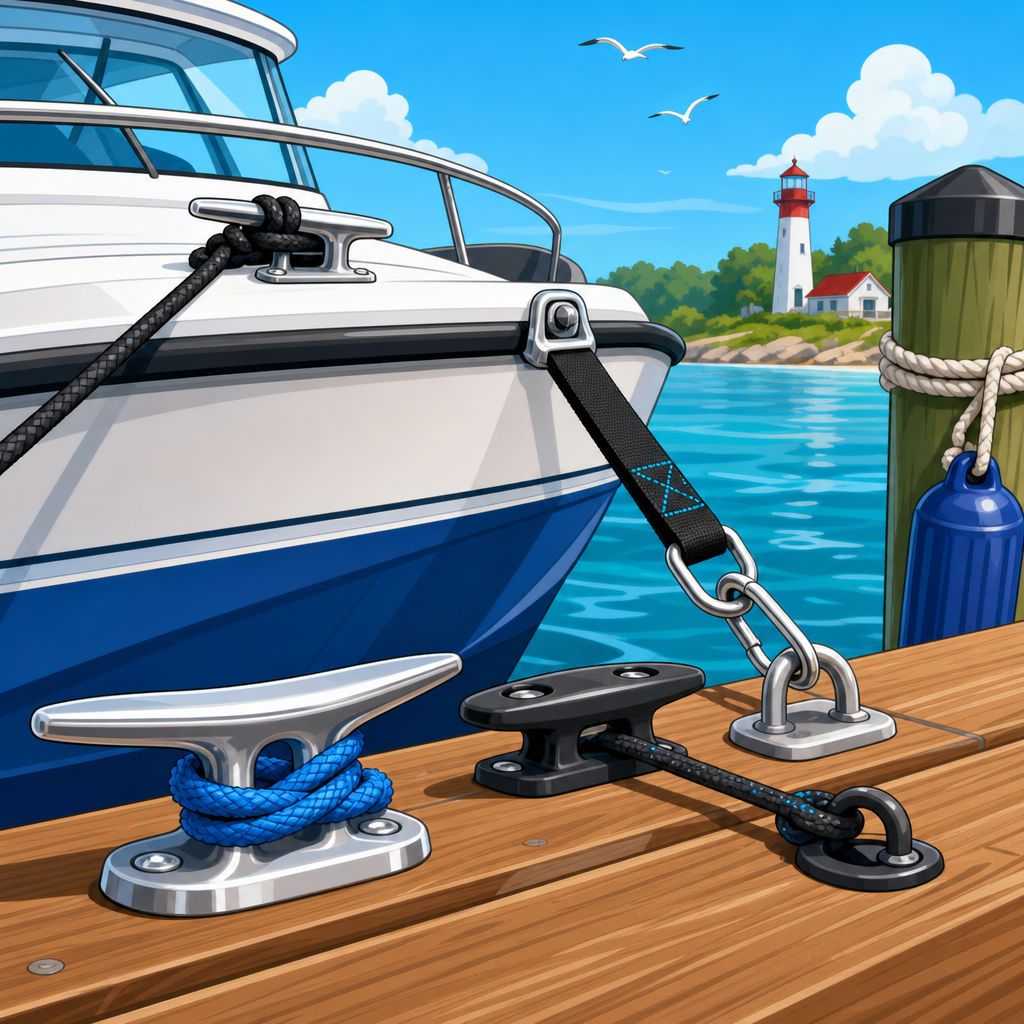
A secure boat cleat does three jobs well: it spreads load, resists corrosion, and holds lines without damaging them. The most common options are horn cleats, pull-up cleats, pop-up cleats, and jam cleats. For primary docking and mooring, traditional horn cleats remain the standard because they accept a full cleat hitch, allow quick adjustments, and handle changing line angles better than compact specialty hardware. On working boats and larger recreational boats, cast 316 stainless steel and hot-dip galvanized cleats are the most trusted materials. Aluminum cleats are common on small fishing boats and skiffs, especially where weight matters, but they require attention to galvanic corrosion when mounted against dissimilar metals in saltwater.
Size matters more than many buyers expect. Cleat length should correspond to line diameter and expected loading, not simply deck space. A small six-inch cleat may be adequate for light utility boats, but cruising boats often need eight-inch or ten-inch hardware with substantial backing plates. The key strength factor is not only the cleat body but the entire mounting assembly: through-bolts, washers or backing plate, bedding compound, and deck structure underneath. In my experience, failures happen at the base long before quality cast cleats snap. A proper installation uses marine-grade stainless fasteners, a metal or G10 backing plate, and sealant such as 3M Marine 4200 or Sikaflex where appropriate to keep water out of coring. If the deck is cored, sealing the exposed core around bolt holes is mandatory.
Placement also affects security. Bow cleats should support spring lines and dock lines without forcing severe bends around rails. Stern cleats need clean access for quick tie-offs. Midship cleats are especially valuable because they simplify spring-line control when docking in wind or current. On boats without a dedicated midship cleat, owners often struggle to control fore-and-aft movement, and that leads to rushed line handling. Security starts with enough cleat points in the right places.
Best materials, designs, and mounting methods
The best material for most boat cleats in saltwater is 316 stainless steel because it combines corrosion resistance, strength, and a smooth finish that is gentle on dock lines. Bronze remains an excellent traditional choice on classic boats because it is durable and highly resistant to the marine environment, though it is heavier and usually more expensive. Galvanized steel is widely used on commercial docks and mooring systems because it tolerates heavy loads and rough use, but it can abrade line fibers more than polished stainless if the finish degrades. Nylon or reinforced composite cleats appear on lightweight craft and personal watercraft, yet they are usually not the first choice for serious mooring loads.
Design details separate dependable hardware from decorative hardware. Look for generous radiused horns, substantial base thickness, and a footprint that allows wide bolt spacing. Reputable marine brands such as Attwood, Sea-Dog, Perko, Schaefer, and Accon produce cleats with published dimensions and marine-specific alloys. Pop-up cleats are useful where snag hazards matter, especially on wake boats and deck boats, but they must lock positively and be kept clean of salt and grit. Pull-up cleats offer a cleaner deck profile yet generally have less working surface than a fixed horn cleat. For heavy-weather docking, I still prefer fixed cleats because they are always accessible and leave no doubt about engagement under load.
Mounting method is where many installations become unsafe. Through-bolting is the correct standard for primary cleats; sheet-metal screws are not. A backing plate distributes force over a larger area and reduces the risk of deck cracking or localized compression. Aluminum plate, stainless plate, and G10 fiberglass laminate are common backing materials. G10 is especially useful because it is stiff, strong, and not prone to corrosion. Fasteners should be isolated where needed to reduce galvanic interaction. Torque should be firm but not so aggressive that it crushes cored laminate. After installation, test each cleat by loading the line gradually and inspecting for deck flex, bedding squeeze-out gaps, and fastener movement.
Dock lines, knots, and chafe protection that complete the system
The cleat is only as reliable as the line tied to it. For docking and mooring, nylon remains the best all-around rope material because it stretches under load, absorbs shock, and reduces peak forces caused by wind gusts and wakes. Double-braid nylon is the preferred dock line on many recreational boats because it is strong, supple, and easy on the hands. Three-strand nylon is also widely used and offers excellent elasticity, though some owners find it less manageable. Polyester stretches less and is useful where dimensional stability matters, but it transfers more shock into cleats and hardware. Polypropylene floats, which is helpful in a few applications, yet it has poor UV durability and is not ideal for serious docking loads.
Line diameter should match the boat and conditions. A common rule is roughly one-eighth inch of line diameter for every nine feet of boat length, then increasing for heavier boats or exposed slips. That rule is only a starting point. A beamy cruiser in a tidal marina may need thicker lines than a lightweight center console of similar length. Length matters too. Bow and stern lines should allow proper lead angles; spring lines should be long enough to control surge. I routinely recommend carrying at least two long spring lines because they do more to stabilize a boat in a slip than many owners realize.
Correct knots and chafe gear are nonnegotiable. The cleat hitch is the standard because it is secure, quick to untie, and easy to inspect visually. Eye splices are stronger and cleaner than repeated knots at permanent dock line ends. Chafe protection should be added where lines pass through chocks, around pilings, or against rough dock edges. Leather, tubular webbing, and purpose-made chafe guards all work when secured properly. Without chafe gear, even quality nylon can fail after hours of cyclic rubbing. In storm preparation, the best practice is to increase line size, add redundancy, improve lead angles, and protect every wear point.
How anchors, chain, and shackles relate to cleat security
Anchoring is part of docking security because the same load-management principles apply. The anchor itself holds bottom, but the boat’s cleats or bow eye often carry the working load once the rode is set. For that reason, selecting an anchor without evaluating bow hardware is incomplete. Modern anchor types such as Rocna, Mantus, Delta, and Bruce-style claw anchors have different setting behavior, but all rely on adequate rode, chain, and attachment hardware. A secure anchor setup uses chain sized to the boat, galvanized or stainless shackles with moused pins where appropriate, and a snubber or bridle to absorb shock loads rather than letting a windlass or bow roller take continuous strain.
On smaller boats, owners sometimes cleat off the anchor rode directly after setting. That is acceptable if the cleat and deck structure are sized for the load and the lead is fair. On larger boats, a snubber line attached to a bow cleat or pair of cleats is better because it reduces noise, limits shock, and protects the windlass gearbox. Scope also matters. In calm conditions, five-to-one may hold; in stronger wind or overnight anchoring, seven-to-one or more is often safer depending on depth and swing room. These decisions affect hardware stress directly. Short scope increases load and can cause jerking that punishes cleats and line fibers.
Shackles and swivels deserve scrutiny. Many failures come from cheap, unmarked hardware with unknown metallurgy. Trusted options from Crosby and peer marine suppliers provide working load information and predictable quality. Swivels can help reduce twist, but they should not be treated as magical upgrades; poor designs can become weak links. Every component between anchor and cleat should be inspected as one chain of security. If one piece is marginal, the system is marginal.
Trailer tie-down systems for highway security
Trailering adds a separate but equally important layer of boat security. The best trailer tie-down system uses the trailer winch strap at the bow, a properly fitted safety chain, and transom tie-downs rated for the boat’s weight and road conditions. Ratchet straps and over-center transom tie-downs from established makers such as BoatBuckle and Fulton are common because they hold tension well and are easy to inspect. The bow eye should be snug to the winch post, but not crushed downward by excessive winch force. The stern should be restrained so the hull cannot bounce independently of the trailer over expansion joints and rough pavement.
What should not be used? Generic hardware-store straps with open hooks, low-quality stitching, or no published working load limit. Tie-down security depends on working load limit, not just break strength. Safe systems also consider angle. A transom strap pulling slightly downward and forward usually stabilizes the hull better than a flat horizontal pull. Soft loops and protective sleeves help prevent finish damage where contact is unavoidable. On long trips, straps should be checked at fuel stops because webbing settles and trailer suspension movement can reduce tension.
| Component | Best use | What to look for | Common mistake |
|---|---|---|---|
| Horn cleat | Primary docking and mooring | 316 stainless, through-bolted base, backing plate | Mounting with screws only |
| Double-braid nylon dock line | Slips, transient docks, spring lines | Proper diameter, eye splice, chafe gear | Using polypropylene for permanent docking |
| Anchor snubber | Reducing shock on anchor rode | Nylon line, fair lead, secure cleat attachment | Loading the windlass instead of cleats |
| Transom tie-down straps | Trailering | Rated hardware, protected hooks, corrosion resistance | Relying only on the winch strap |
For larger trailer boats, add a secondary bow safety chain and inspect the bow eye backing structure at least annually. I have replaced too many rusted U-bolt backing plates hidden behind interior panels to treat this as optional maintenance. Highway forces are repetitive and deceptive. If a tie-down point is corroded, elongated, or flexing, replace it before the next trip.
Choosing the right setup by boat type and use case
Small jon boats, inflatables, and personal watercraft need compact, corrosion-resistant hardware and simple restraint systems, but they still benefit from proper line choice and reliable trailer straps. Fishing boats and center consoles typically need robust stern and bow cleats plus at least one functional midship tie point for real docking control. Pontoon boats should use hardware mounted to structural members, not lightly supported deck skin, because windage is high and docking loads can be surprisingly large. Wake boats often favor retractable cleats for deck safety, yet owners should verify the manufacturer’s load ratings before using them as primary storm-mooring points.
Cruisers, sailboats, and heavier pilothouse boats need the most conservative approach. Oversized cleats, reinforced deck mounting, long nylon lines, multiple spring lines, and dedicated anchor snubbers are all worthwhile. In tidal areas, line length and lead angle matter as much as raw hardware strength. In hurricane-prone regions, doubling lines, crossing springs, and using substantial chafe gear can determine whether a boat survives a storm surge. Marina rules may also govern line type, fender placement, or anchor storage, so the best system is one that fits both the boat and the facility.
If you are building a complete docking kit, start with fixed or rated retractable cleats, matched dock lines, two or more quality fenders, chafe protection, an anchor sized for local bottom conditions, galvanized chain, rated shackles, and trailer restraints with visible load ratings. This creates a reliable base for every other article in anchors, ropes, and docking essentials.
Inspection, maintenance, and replacement intervals
Security depends on inspection more than branding. At least every season, check cleats for hairline cracks, loose fasteners, bedding failure, corrosion staining, and deck compression around the base. Remove one suspect fastener if necessary to inspect for crevice corrosion or wet core. Examine dock lines for glazing, stiffness, flat spots, fading, and internal damage near splices. Replace lines that have become hard, fuzzy at wear points, or contaminated with grit and salt that cannot be rinsed out fully. Inspect anchor rode stitching, shackle pins, chain wear at the first few feet, and any swivel for elongation or side loading marks.
Trailer tie-downs should be rinsed after salt exposure and replaced when webbing shows cuts, edge fraying, sun damage, rust staining around sewn joints, or ratchet slippage. Winch straps deserve the same attention. Lubricate moving hardware lightly where the manufacturer allows it, but never hide damage under grease. When in doubt, replace suspect components with marine-rated parts from known suppliers. The cost is minor compared with hull repair, insurance claims, or a boat that breaks free. Good security comes from treating cleats, lines, anchors, and tie-downs as one integrated system and upgrading the weakest link before it fails. Review your setup now, correct anything marginal, and build a docking kit that will hold when conditions stop being easy.
Frequently Asked Questions
What is the difference between a boat cleat and a tie-down system, and why do both matter for security?
A boat cleat is the fixed hardware mounted to the boat, dock, or trailer that gives you a reliable point to secure a line. A tie-down system is the broader setup that controls movement and distributes force, including dock lines, trailer straps, winches, hooks, ratchets, chains, chocks, and anchor points. In other words, the cleat is one critical component, while the tie-down system is the full method used to keep the boat stable, centered, and under control.
Both matter because security on the water and on the road depends on how loads are transferred. At the dock, wind, tide, wake, and current constantly try to push or pull the boat out of position. A properly installed cleat gives you a strong attachment point, but the line material, knot choice, angle of pull, and number of lines all affect whether the system holds safely. On a trailer, the same principle applies: stern straps, a bow winch, a safety chain, and solid anchor points work together to prevent bouncing, shifting, and forward or backward movement during braking, cornering, and rough-road travel.
The biggest mistake owners make is focusing on one piece of hardware instead of the entire load path. A heavy-duty cleat will not compensate for undersized backing plates, worn line, cheap hooks, poor strap angles, or weak trailer attachment points. True security comes from matching the cleat or tie-down hardware to the boat’s size, weight, and use, then inspecting every part of the system regularly. When everything is sized correctly and used properly, you reduce the risk of dock damage, gelcoat stress, trailer movement, and breakaway incidents.
How do I choose the best boat cleats for docking and mooring?
The best boat cleats are selected based on boat size, line diameter, mounting strength, and the conditions the boat will face. Material is one of the first things to consider. Stainless steel is a popular premium choice because it offers excellent corrosion resistance, high strength, and a clean appearance. Aluminum cleats are lightweight and common on many boats, but quality and intended load matter. Nylon or reinforced polymer cleats can work well in lighter-duty applications, especially on smaller boats, but they are generally not the first choice for heavier vessels or more demanding mooring conditions.
Shape and mounting style are also important. Open-base cleats are common and functional, while enclosed-base models can offer a smoother look and fewer snag points. Folding or pop-up cleats are useful where deck space is limited or where you want to reduce tripping hazards, but they should still be evaluated for strength and real-world load handling. More important than style, however, is installation. A cleat should be through-bolted with proper backing plates or reinforcement underneath, not simply screwed into thin fiberglass or decking material. The hardware is only as strong as the structure supporting it.
Size matters because a cleat must accommodate the line you plan to use and the loads you expect it to handle. A cleat that is too small makes secure line handling difficult and can create dangerous line stacking or slipping. A cleat that is properly sized gives you enough room for clean figure-eight wraps and a locking turn without overcrowding. For boats exposed to rough weather, strong tidal movement, or frequent overnight mooring, it is wise to prioritize robust, marine-grade hardware from reputable manufacturers over decorative or low-cost options.
Finally, think about placement. Bow, stern, and spring line positions affect how well the boat can be controlled alongside a dock. Well-positioned cleats reduce line chafe, improve docking angles, and make it easier to balance load across multiple lines instead of overloading a single attachment point. The best cleat is not just strong in isolation; it is part of a layout that supports safe docking, predictable boat movement, and long-term durability.
What features should I look for in a boat trailer tie-down system?
A quality boat trailer tie-down system should secure the boat at the bow and stern while minimizing shifting in every direction. At minimum, look for a strong bow winch strap or cable, a backup safety chain, and transom straps rated appropriately for the boat’s weight. The system should keep the hull seated firmly on bunks or rollers without excessive compression that could damage the boat. Good tie-down systems are designed to resist upward bounce, rearward movement during acceleration, forward surge during braking, and lateral movement when turning.
Working load limit and break strength are key specifications. The best systems clearly display ratings and use corrosion-resistant materials suited to marine exposure. Polyester webbing is commonly preferred for trailer straps because it offers good strength, low stretch, and reliable performance when properly maintained. Hardware such as ratchets, snap hooks, and S-hooks should be heavy-duty, coated or stainless where appropriate, and designed to stay connected under vibration. Safety latches on hooks add another level of confidence, particularly on long trips or rough roads.
Ease of use matters too, because a system that is difficult to operate tends to be used inconsistently. Reliable ratchet mechanisms, accessible anchor points, padded contact areas, and properly sized hooks all make it easier to secure the boat correctly every time. The bow eye connection should be snug and aligned with the winch stand so the boat is pulled forward into the bow stop without twisting. Stern tie-downs should angle downward and outward in a way that stabilizes the transom instead of simply pulling straight down with minimal restraint.
Do not overlook compatibility with your hull and trailer setup. A bass boat, center console, ski boat, and pontoon often have different securement needs based on hull shape, weight distribution, and trailer geometry. The best trailer tie-down system is one that matches your specific rig, uses rated components, protects the finish from abrasion, and is inspected often for frayed straps, rust, UV damage, bent hooks, or worn ratchets. Security on the road is not about tightening everything as hard as possible; it is about creating controlled, balanced restraint that keeps the boat stable without damaging it.
How can I tell if my cleats, lines, or tie-downs are overloaded or unsafe?
There are usually warning signs before a complete failure, and recognizing them early can prevent serious damage. For cleats, check for movement at the base, loose fasteners, stress cracks in the surrounding deck, corrosion around mounting hardware, or deformation of the cleat itself. If the cleat rocks under load, shows signs of pulling upward, or has visible damage in the fiberglass or aluminum around it, the mounting system may be compromised even if the cleat still looks intact from above.
For dock lines and mooring gear, look for glazing, hard spots, flat sections, cuts, fading, unraveling, or excessive chafe near chocks and cleats. Lines that are undersized or repeatedly shock-loaded in wind and wake can weaken much faster than many owners realize. If lines are stretched tight with no ability to absorb motion, the system may be transferring sharp loads directly into hardware and deck fittings. Proper line sizing, good lead angles, and chafe protection are essential if the boat spends significant time at a slip or mooring.
On trailer tie-downs, signs of trouble include frayed webbing, cracked stitching, rusted ratchet components, bent hooks, loose anchor points, and straps that frequently loosen during transit. If the boat shifts on the trailer, the bow pulls away from the stop, or the stern bounces noticeably over bumps, the system is not controlling movement effectively. Any clicking, slipping, or incomplete locking in a ratchet mechanism is a reason to replace it. Tie-down hardware is relatively inexpensive compared to the damage caused by a failed strap at highway speed.
One of the best habits is to inspect under realistic load, not just at rest. After launching and retrieving, after a road trip, or after a windy day at the dock, reevaluate the system. Hardware that seemed acceptable in the driveway may reveal wear, loosening, or poor alignment after actual use. If you are ever in doubt about load rating, structural backing, or condition, replacement is usually the smarter choice. Marine security equipment is a safety system, not an area where “good enough” is a wise standard.
What are the best practices for securing a boat at the dock and on the trailer for maximum safety?
At the dock, start with the right line setup. Use bow, stern, and spring lines as needed to control forward, backward, and side-to-side motion. Adjust line length to account for tide, wake, and water-level changes, and avoid tying the boat so tightly that it cannot move naturally with conditions. Use chafe guards where lines pass through chocks or rub against rough surfaces, and check that each line leads cleanly to a properly mounted cleat. Secure lines with correct cleat hitches rather than improvised knots that may jam or slip under load.
Fenders are also part of dock security because they reduce impact loads and protect the hull when the boat moves against the dock. Place them at the right height and spacing based on dock configuration and hull shape. In rougher marinas or exposed slips, doubling lines and adding shock-absorbing snubbers can help reduce sudden loading. During storms or strong