A boat hook looks simple, but when docking pressure rises, wind pushes the bow off, and a piling suddenly seems farther away than it should, this basic tool becomes one of the most important pieces of boating gear on board. Knowing how to properly use a boat hook for docking means understanding far more than how to grab a line or fend off gently. It requires judgment, timing, safe body position, and an awareness of how boat hooks fit into the broader system of anchors, ropes, and docking essentials that every skipper relies on. In practical terms, a boat hook is a pole, usually telescoping, with a blunt hook on one end designed to reach dock lines, pilings, cleats, and floating objects without putting hands or feet in dangerous places. Used correctly, it improves control and reduces panic. Used poorly, it can damage gelcoat, strain crew, or create injury risk.
I have used boat hooks on small center consoles, cruising sailboats, and heavier inboard-powered cabin boats, and the pattern is always the same: crews who prepare lines, fenders, and assignments before the approach make the boat hook useful; crews who treat it as a last-second rescue tool usually create more work. That is why this topic matters beyond the hook itself. Docking is a system. The hook supports line handling. Line handling depends on proper dock lines, knot selection, cleat technique, and fender placement. In many marinas, changing tide, crosswind, and current can make a routine landing feel technical within seconds. A boater who understands this full picture docks more safely, protects hardware, and reduces stress for everyone aboard.
This guide serves as a hub for anchors, ropes, and docking essentials by showing where the boat hook fits and how to use it effectively. You will learn how to choose the right boat hook, how to stage your approach, when to grab a piling versus a line, how to avoid common mistakes, and how docking tools connect to mooring lines, spring lines, cleats, chafe protection, fenders, and anchoring workflow. If you have ever asked, “Where should the crew stand?” “Can a boat hook pull the whole boat?” “What length is best?” or “How do I dock in wind without risking fingers?” this article answers those questions directly and clearly.
What a Boat Hook Does and Does Not Do
A boat hook is primarily a reach and retrieval tool, not a lever for muscling a vessel into place. Its best uses in docking are catching a dock line, pulling a light line aboard, controlling the last foot of distance to a piling, nudging off gently from a dock, and helping a crew member guide a loop over a cleat or post when hands cannot safely reach. On a sailboat, it often helps pick up a mooring pendant. On a powerboat, it frequently assists with piling approaches or retrieving a bow line dropped short. The hook extends your reach; it does not replace momentum control from throttle, gear selection, rudder angle, or thrusters where fitted.
What a boat hook should not do is carry high loads. Many bent rails and cracked hooks come from trying to stop a moving boat with the pole braced against a dock. That is poor seamanship and a common cause of shoulder, wrist, and back injuries. The correct principle is simple: use the engine and helm to manage boat movement, use lines to secure the boat, and use the boat hook only to bridge the gap safely. If the vessel is coming in too fast for the crew to handle lightly with a hook, the solution is another approach, not more force.
The design matters here. Most modern boat hooks use anodized aluminum or fiberglass shafts with polymer heads and a rounded tip opposite the hook. The rounded tip is for pushing off softly or guiding a line. The hook itself should be smooth enough not to chafe rope fibers. Better models have non-slip grips, positive locking telescoping sections, and corrosion-resistant fittings. In saltwater service, weak twist locks often seize or slip, so checking extension hardware is part of routine gear maintenance.
Choosing the Right Boat Hook, Lines, and Docking Setup
The right boat hook length depends on freeboard, beam, and typical docking environment. For small runabouts or bass boats, a six- to eight-foot model is often enough. For cruising boats with higher topsides, eight to twelve feet is more practical. Telescoping models save storage space, but fixed-length hooks are often stiffer and stronger. If you routinely dock alongside high pilings, choose more reach. If storage is limited and your docks are low and close, compact telescoping gear is fine as long as the lock is dependable.
Material choice affects handling. Aluminum is light and common, but quality varies. Fiberglass can feel better in hand and resists some corrosion issues, though it may be heavier. Composite heads reduce marking on surfaces. I prefer a model with a secure positive lock over a friction lock, because in wet conditions a slipping section turns a useful tool into a nuisance. A bright shaft color also helps crew find it quickly in a cockpit locker.
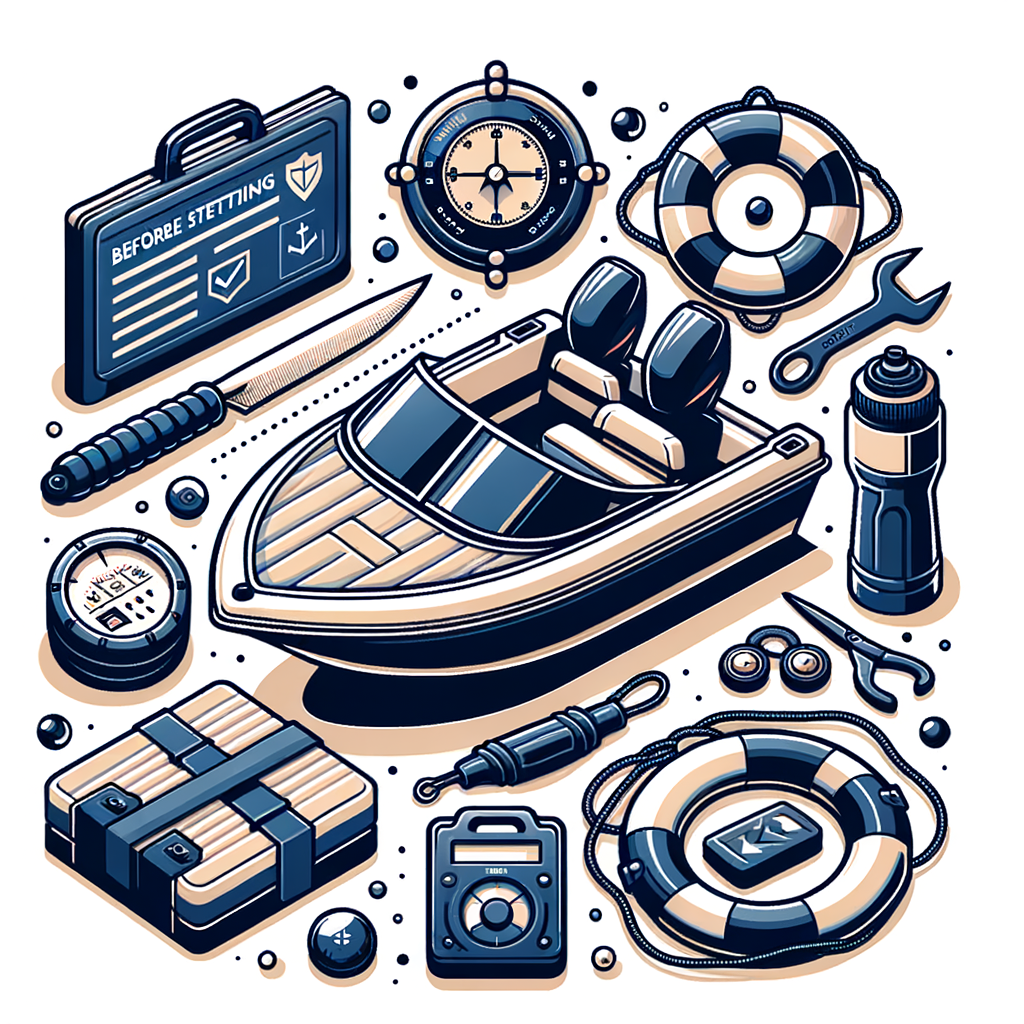
Because this article is a hub for docking essentials, the hook should be considered alongside dock lines and fenders. Standard docking usually requires at least bow, stern, and spring lines sized to the boat. Nylon remains the preferred fiber for many dock lines because of its elasticity and shock absorption, especially in tidal marinas or areas with passing wake. Double-braid nylon is popular for hand feel and durability, while three-strand nylon remains effective and economical. Fenders should be deployed before the approach, not during it, and positioned at likely contact points based on dock height and hull shape. The hook is most effective when the crew already has the correct line in hand and knows the assignment.
| Docking Essential | Primary Purpose | Best Practice |
|---|---|---|
| Boat hook | Extend reach to lines, cleats, pilings, and moorings | Use for light control and retrieval, never to stop heavy momentum |
| Bow line | Controls forward end of the boat | Lead outside rails and lifelines, coil without knots before approach |
| Stern line | Controls aft movement and keeps stern positioned | Prepare on the docking side with enough length for tide and wake |
| Spring line | Prevents fore-and-aft surging and helps pivot the boat | Use early in wind or current; it often matters more than the bow line |
| Fenders | Protect hull from contact | Set height to match dock or piling before entering the slip |
| Cleats and chocks | Secure and lead lines safely | Inspect backing plates, fair leads, and chafe points regularly |
How to Properly Use a Boat Hook for Docking Step by Step
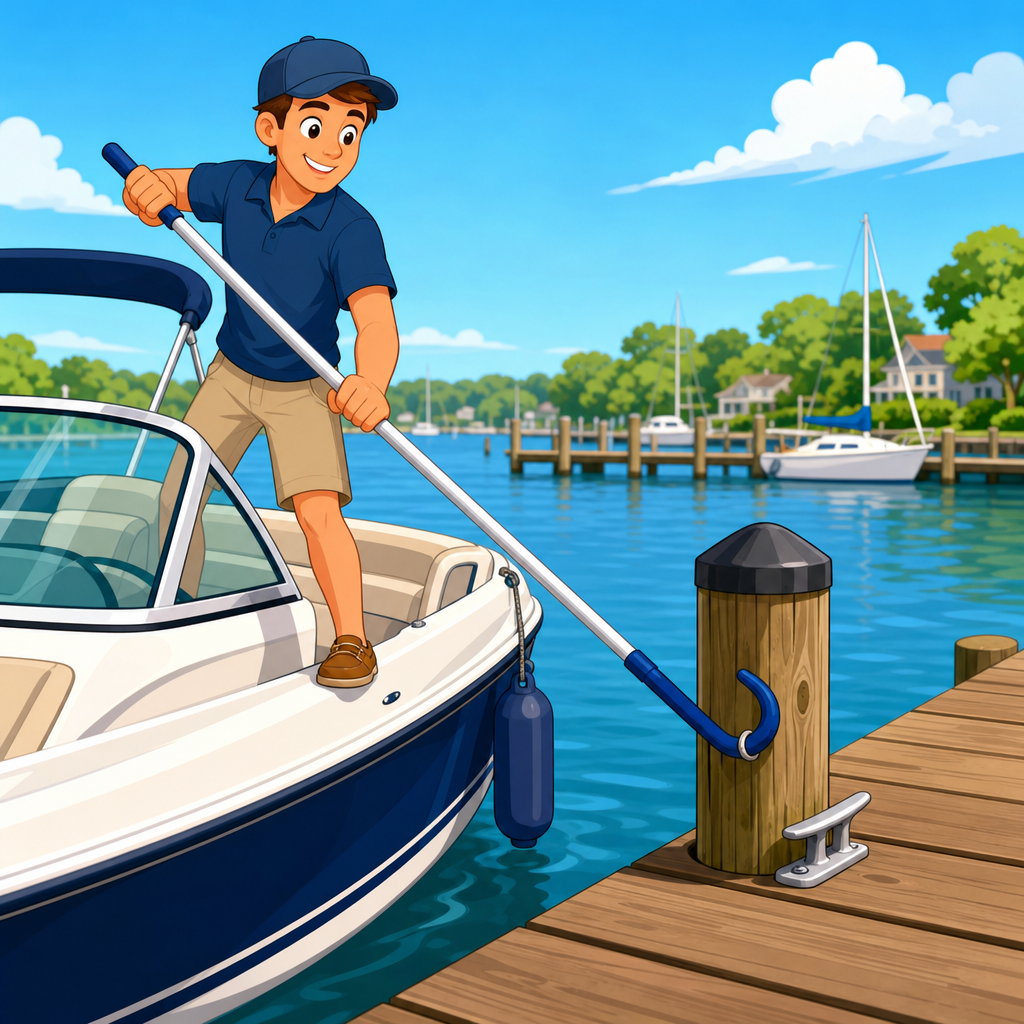
Proper use starts before the boat enters the fairway. Assign who handles the bow, stern, and midship or spring line. Place fenders on the docking side. Lead each line outside stanchions, rails, and canvas. Open the boat hook and lock it at the needed length before the final approach. The crew member using it should stand balanced, knees slightly bent, one hand near the grip and one farther forward for control. Never lean out beyond the gunwale to gain another foot of reach; change boat position instead.
On the approach, keep speed low enough that the boat remains steerable but can be stopped with a brief shift to neutral or reverse. In wind, plan the angle that lets the environment help rather than fight you. If wind is blowing off the dock, a slightly steeper approach may be needed so the crew can catch a piling or get a spring line on early. If wind is blowing onto the dock, control closing speed carefully and avoid pinning the boat too hard against fenders.
When the dock is just out of hand reach, the hook’s first job is usually to capture something stable: a piling, ring, line, or cleat. If there is a dock line hanging, catch the bight or loop and bring it aboard. If there is a piling, hook around it lightly and use small pulls to hold position while a real line is secured. The key word is lightly. The crew should not drag the full boat mass with arms and a pole. Instead, the operator uses short bursts of propulsion and steering to keep the hull aligned while the crew uses the hook to prevent drift.
One of the most effective techniques is using the boat hook to place a spring line. For example, when coming alongside, the crew can use the hook to drop a midship spring loop over a dock cleat that is slightly ahead of the helm position. Once that spring is on, the helmsman can turn the wheel away from the dock and apply gentle forward idle against the secured spring. This pivots the boat alongside in a controlled way and is far safer than trying to haul the bow in by hand. It is a standard maneuver because it uses the boat’s power and geometry, not crew strength.
When pushing off, use the rounded end against a strong point such as a piling or rub rail area, not fragile hardware. Keep the pole at an angle that guides the boat away without sudden slipping. Hands stay on the shaft, never between the boat and dock. Feet stay clear too. Many docking injuries come from instinctively trying to fend off with a shoe or hand. The boat hook exists to prevent exactly that mistake.
Docking in Wind, Current, Tides, and Tight Slips
The harder the conditions, the more valuable preparation becomes. In crosswind, the boat hook helps buy seconds, not solve everything. On a single-screw inboard, prop walk may influence stern movement in reverse; on sterndrive and outboard boats, prop wash over the steering changes low-speed response. Whatever the propulsion, you need to know how your hull behaves. I have found that crews improve fastest when they practice in calm weather first, specifically rehearsing who takes the first line and when the hook is deployed. Under stress, familiarity matters more than theory.
Current deserves special respect because it acts on the underwater body and often feels stronger than expected near pilings or marina entrances. In current, approach from the up-current side whenever possible so you maintain steerage with minimal speed over ground. The boat hook can then stabilize your position long enough to secure a line. In tidal areas, line length and fender height must account for rise and fall. A beautifully placed short line at high tide can become dangerously tight later, loading cleats and chocks and pulling the boat into awkward angles.
Tight slips require a disciplined sequence. Fenders go out on both sides if clearance is limited. The hook is extended beforehand but kept under control, not waved around. The crew focuses on one job, usually securing the first useful line, often a midship spring. If neighboring boats are close, the boat hook can help fend off gently from a piling or finger pier without using hands. However, avoid pushing against lifelines, stanchions, canvas frames, or radar mounts on your own boat, because these are not designed for side loads. In marinas with floating docks, lower attachment points may make line retrieval easier, while fixed docks with tall pilings demand more reach and better timing.
Common Mistakes, Maintenance, and Related Gear Every Boater Needs
The most common mistake is using the boat hook as a brake. The second is failing to prepare lines and fenders before entering the docking area. The third is poor communication: the helm assumes the crew can reach, the crew assumes the helm will come closer, and the result is a rushed grab. Clear commands fix this. Agree on simple phrases such as “bow line ready,” “take spring,” “neutral,” and “back out.” Avoid shouting long explanations during the final ten seconds.
Another mistake is neglecting the rest of the docking system. Worn dock lines with glazed fibers, flattened spots, or UV damage fail when loads spike. Undersized fenders protect poorly. Loose cleats with weak backing plates become structural hazards. Chafe gear matters on boats kept in slips for long periods, especially where surge causes repetitive movement through chocks. Knots matter too. A cleat hitch should be fast, secure, and easy to release under load. Bowlines remain useful for fixed loops, while round turn and two half hitches works well around posts in many situations.
Boat hook maintenance is straightforward but often skipped. Rinse after saltwater use. Extend and collapse telescoping sections to flush grit. Lubricate only if the manufacturer recommends it, because some products attract dirt. Inspect locking mechanisms, grip surfaces, head attachment screws, and any metal fittings for corrosion. If the plastic head is cracked or rough enough to snag line fibers, replace it. Store the hook where it is reachable in seconds, not buried under life jackets and shore power cables.
As part of anchors, ropes, and docking essentials, remember that anchoring gear overlaps with docking workflow. Anchor rodes, chain, snubbers, and shackles are separate systems, but the same seamanship principles apply: choose appropriate gear, inspect it regularly, understand load paths, and avoid shock loading. Good boaters treat line management as a core skill whether tying to a dock, picking up a mooring, or setting an anchor for the night. The boat hook is one of the simplest tools in that kit, yet it becomes extremely effective when used with preparation, proper lines, and calm execution.
Used correctly, a boat hook makes docking safer, cleaner, and less stressful because it extends reach without putting hands or feet at risk. The right method is to prepare fenders and lines first, approach slowly under control, use the hook to capture a line, cleat, or piling lightly, and secure a working line—often a spring line—as early as possible. Just as important, know its limits: never try to stop a moving boat with the pole, never overreach, and never substitute the hook for sound throttle and helm work.
The broader lesson is that docking success comes from systems, not heroics. Boat hooks, dock lines, fenders, cleats, chafe protection, and anchoring hardware all support the same goal: controlling the boat predictably while protecting people and equipment. If you want more consistent landings, practice in easy conditions, refine crew communication, inspect your gear, and build repeatable routines for each marina or slip type. Start by checking your current boat hook, lines, and fender setup before your next trip, and make sure every item is ready before you begin the approach.
Frequently Asked Questions
What is the proper way to use a boat hook when docking?
The proper way to use a boat hook when docking is to think of it as a controlled reach-and-guide tool, not a lever for dragging the boat into place. As your boat comes alongside a dock, piling, or cleat, the boat hook should help you extend your reach safely so you can catch a line, guide the bow or stern a few inches, or hold the boat off lightly while a crew member secures lines. The key is timing: approach the dock slowly, stay calm, and use the hook only once the boat is moving at a manageable speed. If the boat still has too much momentum, forcing the hook against a piling or dock edge can damage the boat, bend the hook, or throw you off balance.
Body position matters just as much as technique. Keep both feet planted, maintain a stable stance, and hold the boat hook with a firm but relaxed grip. Extend from your shoulders and arms rather than overreaching with your whole body. It is much safer to guide the boat gently than to lean out over the rail trying to make contact at the last second. In most docking situations, the best use of the hook is to pull a dock line within reach, catch a mooring line, or create a small cushion of space between the hull and a fixed object. Used this way, a boat hook becomes part of an organized docking routine that includes throttle control, fenders, and properly prepared lines.
Can a boat hook be used to push the boat away from the dock or pull it in?
Yes, but only within limits, and this is where many boaters make mistakes. A boat hook can be used to push the boat away gently from a dock, piling, or another boat if contact is light and the forces are small. For example, if wind is nudging your bow toward a piling during a slow docking maneuver, a quick, controlled push with the boat hook can help maintain separation long enough for the helmsman to correct the angle. In the same way, you may use it to pull the boat a short distance by grabbing a line or a secure point on the dock when the boat is already nearly in position.
What a boat hook should not be used for is overcoming the full weight and momentum of the vessel. If the boat is drifting hard in wind or current, trying to stop it with a boat hook can injure your shoulders, wrists, back, or hands. It can also snap the hook or cause you to lose your footing. A better approach is to let the engine, steering, spring lines, and dock lines do the heavy work. The boat hook is a precision tool for fine adjustments, not a substitute for seamanship. When in doubt, reduce speed, set up another approach, and use lines strategically instead of trying to muscle the boat with the hook.
What are the most common mistakes people make with a boat hook during docking?
One of the most common mistakes is waiting too long to prepare it. A boat hook should be ready before the boat enters the docking area, especially if wind, current, or tight quarters are involved. Too many people leave it stowed until the last second, then scramble to extend it while the boat is already drifting off line. Another frequent mistake is using the hook aggressively, such as jamming it into the dock to stop the boat or trying to fend off with too much force. A boat hook works best with gentle, deliberate motions. Once docking turns into a wrestling match, the problem usually is not the hook but the approach speed, angle, or line handling plan.
Another major error is poor body mechanics. Leaning too far over the gunwale, reaching with one hand while bracing awkwardly, or putting fingers between the boat and the dock can lead to serious injuries. Some boaters also focus entirely on the boat hook and forget that docking is a team process involving communication and preparation. Fenders should already be deployed, lines should be led correctly, and the helmsman and crew should know who is responsible for bow, stern, and spring lines. The safest, most effective use of a boat hook happens when it supports a docking plan, rather than becoming the only plan when things start going wrong.
How do you use a boat hook safely in wind or current?
In wind or current, the first rule is to respect the added force on the boat. Conditions that seem mild can create strong sideways movement, especially on boats with high freeboard or in crowded marinas where room to maneuver is limited. In these situations, a boat hook is useful for buying a moment of control, but not for fighting the environment directly. Approach more slowly than usual, account for drift early, and have your lines and fenders in place before committing to the docking maneuver. The boat hook should be used to catch a line, guide the bow, or maintain a small gap from a piling while the boat is still under control from the helm.
Safe use also means choosing your contact points carefully. Push against strong, stable surfaces when necessary, and avoid placing the hook where it can slip suddenly. Keep your hands away from pinch points, and never try to trap the hook between the boat and a hard object. If wind or current is pushing the vessel too hard for a safe correction, the smart move is often to back off and set up another approach rather than forcing the landing. Experienced boaters know that good docking is rarely about heroics. It is about patience, boat speed, angle, and using every tool on board, including the boat hook, within its proper role.
How does a boat hook fit into the bigger docking system with ropes, anchors, and other gear?
A boat hook is best understood as one part of a larger docking and close-quarters handling system. It works alongside dock lines, spring lines, fenders, cleats, and sometimes anchoring gear depending on the situation. During docking, the boat hook often serves as the bridge between the moving boat and the fixed dock structure, allowing you to reach a line, snag a mooring pendant, or control spacing long enough to secure the boat properly. Once a line is on a cleat and the boat is under control, the hook’s job is mostly done. It is not the primary load-bearing tool; the ropes and cleats are.
That bigger picture matters because successful docking is rarely about any single piece of equipment. A well-placed fender prevents damage, a properly led spring line controls fore-and-aft motion, and clear communication between skipper and crew reduces rushed decisions. In some scenarios, especially around moorings or when retrieving lines near the water, the boat hook becomes essential because it lets you work safely without overreaching. It can also support anchoring tasks, such as catching a pickup line or guiding rode away from the hull. When boaters understand how the hook integrates with the full system of docking essentials, they stop treating it like an emergency stick and start using it as a smart, efficient seamanship tool.