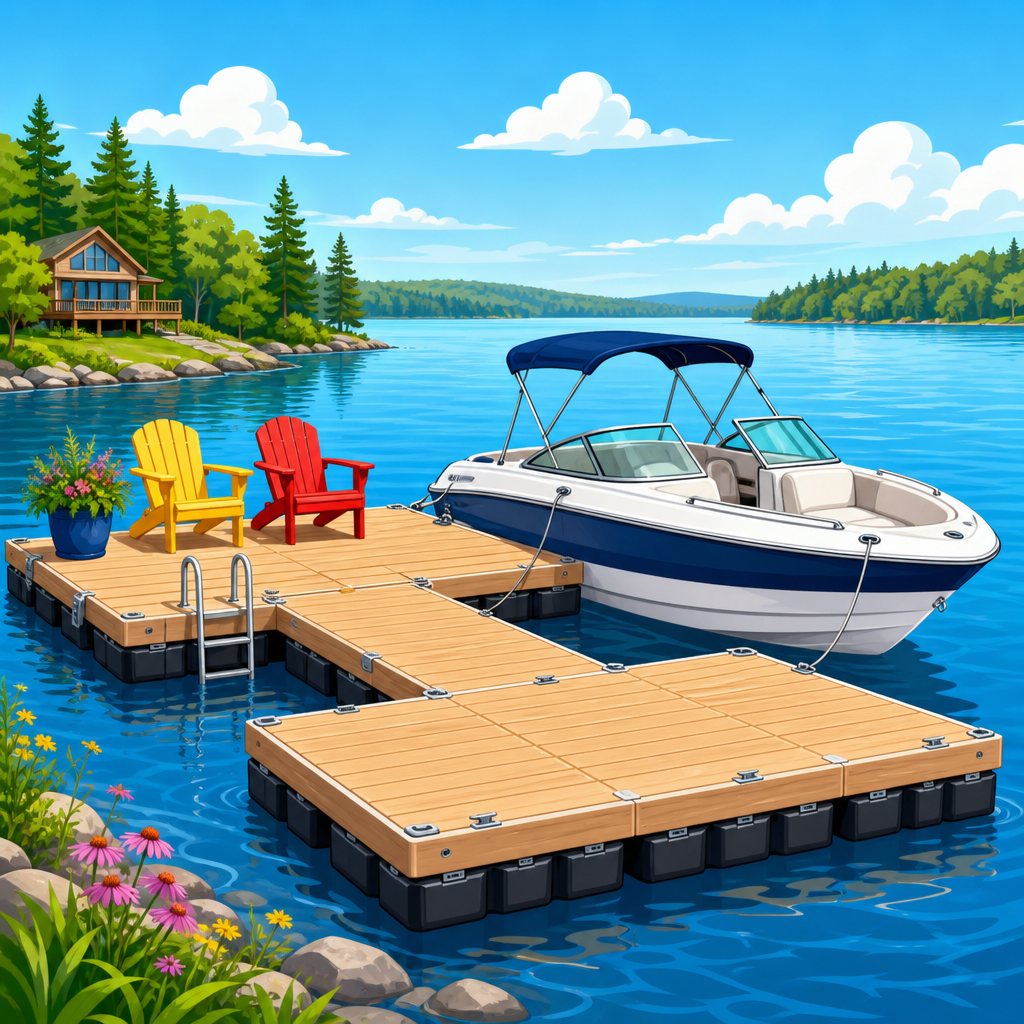
Choosing the best floating dock systems for your boat starts with understanding that a dock is not just a parking spot. It is part access point, part safety system, and part protection plan for your hull, lines, hardware, and crew. In practical terms, floating docks rise and fall with changing water levels, which keeps boarding more predictable than fixed piers in many settings. For owners on lakes, tidal rivers, reservoirs, and waterfront homes, that difference matters every time weather shifts, fuel is loaded, or passengers step aboard.
As a hub within boating gear and equipment, this guide covers the full picture behind floating dock systems and the docking essentials that make them work: anchors, ropes, cleats, fenders, gangways, connectors, and maintenance routines. I have helped outfit docks for small fishing skiffs, heavy pontoon boats, and mid-size runabouts, and the same lesson repeats on every shoreline: the dock system is only as reliable as its weakest component. A premium float section paired with undersized anchors or poor dock lines will fail long before the brochure says it should.
Key terms are worth defining up front. A floating dock system is a modular or fixed-layout platform supported by buoyant chambers, usually high-density polyethylene floats, encapsulated foam, aluminum frames, wood framing, or composite decking. Docking essentials include the hardware and soft goods that secure the system and protect the boat, such as anchor piles, chain, deadweights, dock lines, spring lines, fenders, cleats, and chafe guards. Together, these elements determine stability, lifespan, ease of use, and storm performance.
Why does this matter so much? Because poor docking setups create expensive damage. Gelcoat scuffs, bent rails, prop strikes, snapped cleats, line failure, and unsafe boarding incidents often happen at idle speed, not offshore. The right floating dock system reduces those risks while improving convenience, resale appeal, and day-to-day boating confidence. Whether you keep a personal watercraft, a bass boat, a sailboat tender, or a family cruiser, this article will help you compare dock types, choose the right anchoring method, and build a complete docking setup that fits your water conditions.
What makes a floating dock system the best for a boat
The best floating dock systems share five traits: buoyancy matched to load, structural rigidity, secure anchoring, low-maintenance decking, and hardware sized for real conditions rather than ideal ones. In use, this means the platform stays level when two or three adults step on from one side, does not rack excessively under wave action, and keeps freeboard at a comfortable boarding height for your boat type. For most recreational boats, a stable freeboard and predictable movement matter more than headline load ratings alone.
Material choice drives most of the performance differences. Aluminum-frame systems are popular because they resist corrosion, stay relatively light, and pair well with composite or polyethylene decking. Encapsulated flotation and rotationally molded float cubes are common in modular systems from brands such as Candock, EZ Dock, and Jet Dock, especially for PWCs and lighter boats. Traditional wood-frame floating docks can still work well when built with quality pressure-treated lumber and marine hardware, but they usually demand more upkeep and closer inspection for fastener loosening, checking, and rot over time.
Boat size and hull shape also affect what “best” means. A pontoon needs generous side access, broad stability, and bumper coverage at the rub rail height. A V-hull runabout benefits from longer finger piers, spring-line attachment points, and enough water depth at the berth to avoid skeg or prop contact. PWCs often work best with drive-on floating platforms that reduce hull fouling and simplify launch. On tidal water, modular floating sections connected with flexible couplers usually outperform rigid home-built layouts because they absorb motion instead of concentrating stress at one joint.
In short, the best floating dock system for your boat is the one engineered for your shoreline exposure, water fluctuation, vessel weight, and boarding habits. A beautiful dock that is under-anchored, too narrow, or wrong for your hull will create problems immediately.
Types of floating dock systems and where each works best
There are three main categories worth comparing: modular cube docks, framed sectional docks, and drive-on floating platforms. Modular cube docks use interlocking polyethylene cubes that can be configured into almost any shape. They are easy to expand and useful in locations where owners may need to reconfigure layouts seasonally. They are especially common for personal watercraft, kayaks, rowing shells, and smaller fishing boats. Their tradeoff is feel underfoot. Some owners love the adaptability, while others prefer the more solid walking surface of framed sections.
Framed sectional docks usually use aluminum or galvanized steel framing with separate flotation and deck panels. These are often the best choice for mixed-use waterfronts that need walkability, seating areas, utility runs, and slips for larger boats. They can support accessories more easily, including benches, ladders, power pedestals, kayak launches, and heavy cleats. In my experience, they also present the most familiar dock feel for families and guests who are carrying coolers, tackle, or fuel tanks.
Drive-on platforms are specialized systems designed to cradle a PWC or smaller boat out of the water. Their biggest advantage is reduced marine growth, less need for bottom cleaning, and easier maintenance access. The limitation is obvious: they are not a complete dock replacement for larger boats or for users who need broad deck space for loading and social use.
| Dock system | Best for | Main advantages | Main limitations |
|---|---|---|---|
| Modular cube dock | PWCs, kayaks, light boats, flexible layouts | Reconfigurable, easy expansion, corrosion resistant | Less rigid feel, accessory mounting can be limited |
| Framed sectional floating dock | Runabouts, pontoons, mixed-use family docks | Stable walking surface, strong accessory support, scalable slips | Higher upfront cost, more involved installation |
| Drive-on floating platform | PWCs and smaller boats stored out of water | Cleaner hull, easy launch, reduced fouling | Limited deck space, not suitable for many larger boats |
If you are building a subtopic plan around anchors, ropes, and docking essentials, framed sectional docks typically provide the broadest platform for those components. They accept heavier cleats, better fender placement, and more deliberate line geometry, which becomes important as boat size rises.
Anchors and mooring methods that keep floating docks secure
Anchoring is where many dock projects succeed or fail. A floating dock must resist wind load, wave energy, current, and the surge created when a boat lands on lines. The right method depends on bottom composition, depth, water fluctuation, and exposure. Common options include pipe or pile guides, deadweight anchors, helical anchors, and shore-tie systems. Each has a place, but none should be chosen casually.
Pile-guided docks are common in tidal and fluctuating water because the dock can rise and fall while remaining laterally controlled. Steel, timber, or composite piles pass through guide sleeves attached to the dock frame. When engineered correctly, this is one of the most durable and predictable solutions. Deadweight anchors, usually concrete blocks or cast anchors connected by chain, are more common on inland water. They can work very well, but sizing matters, and installers must account for chain catenary, seasonal water level changes, and bottom holding characteristics. Helical anchors are excellent in suitable soils because they deliver strong holding power with less footprint, but they require specialized installation equipment and local permitting review.
For shoreline owners, one practical rule stands out: dock anchors must be sized for the dock and the berth loads together, not separately. If your system allows a boat to stay tied through storms, the anchor plan must consider windage from the boat, wave lift under the dock, and line shock transmitted through cleats. This is why many reputable installers use engineered layouts rather than simple “one anchor per corner” rules of thumb.
Hardware details matter too. Hot-dip galvanized chain is standard in many freshwater applications, while stainless steel may be used selectively above the waterline where inspection is easier. Shackles need mousing or secure pins. Swivels can reduce twist but are not substitutes for correct geometry. Every season, inspect wear points where chain contacts rings, eyes, or anchor bridles. I have seen expensive docks drift because a single corroded shackle pin backed out unnoticed.
Ropes, dock lines, and cleat setup for safer docking
Dock lines are not generic ropes. For most boats at floating docks, nylon remains the preferred fiber because it stretches under load, absorbing shock better than low-stretch materials like polyester or polyethylene. Double-braid nylon offers a good balance of strength, handling, and durability. Three-strand nylon is also effective and often easier to splice, though it can kink and hockle more in everyday use. Polypropylene floats, but it degrades faster in sunlight and is usually a poor primary choice for permanent dock lines.
Line sizing should match boat length and displacement, with a safety margin for exposure. As a broad rule, many owners use 3/8-inch lines for smaller boats under about 25 feet, 1/2-inch for mid-size boats, and 5/8-inch or larger for heavier vessels, but manufacturer guidance and real conditions should decide. Oversized lines can be awkward on small cleats, while undersized lines fail from shock and chafe. Length also matters. Bow and stern lines usually need enough run to allow proper angles, while spring lines should be long enough to control forward and aft motion without creating steep, ineffective geometry.
A proper cleat setup uses backing plates on the dock, quality fasteners, and placement that supports line angles instead of forcing unnatural bends. On a typical slip, use bow and stern lines plus forward and aft spring lines. That four-line arrangement limits surging far better than bow and stern lines alone. Add chafe protection anywhere lines pass over rough hardware or rub continuously at one point. Leather guards, tubular chafe gear, and reinforced sleeves all work if inspected regularly.
Knots and terminations should be simple and repeatable. A cleat hitch remains standard for dock cleats because it is secure and easy to release. Eye splices are stronger and neater than repeated knotting at working ends. If you boat in regions with squalls or ferry wakes, consider snubbers or compensators on permanent lines to reduce shock loads. These are not gimmicks. They can materially extend cleat life and reduce jerk forces on both dock and boat.
Docking essentials beyond the dock: fenders, bumpers, gangways, and accessories
A complete floating dock system includes more than flotation and anchors. Fender strategy is central. Cylindrical boat fenders protect the hull during approach and while tied, but dock bumpers protect the structure itself and cover fixed contact zones along finger piers, corners, and slip entrances. Polyethylene or vinyl dock edging, corner bumpers, and vertical face pads are especially useful for pontoons and boats with high freeboard variation. The best setup uses both boat-mounted fenders and dock-mounted protection, because docking loads are rarely perfectly centered.
Gangways deserve careful attention. A floating dock can perform beautifully on the water yet feel awkward or unsafe from shore if the gangway is too steep, too narrow, or lacks proper handrails. Aluminum gangways with non-slip surfaces are standard because they handle moisture well and keep weight manageable. For accessibility and easier cart movement, wider gangways with gentle slope changes are worth the extra expense.
Other useful accessories include swim ladders, utility conduits, fish-cleaning stations, solar lighting, and dock boxes. These seem secondary until they interfere with line handling or boarding. Keep cleat zones clear. Place dock boxes away from spring-line paths. Use low-glare lighting that aids footing without blinding helmsmen on night approach. If shore power is installed, it should comply with marine electrical standards and be inspected routinely. Electricity near docks is not an area for improvisation.
For boat owners planning future upgrades, modular accessory rails and standardized mounting points are valuable. They let you add seating, kayak racks, or additional cleats without drilling into random structural members later. That preserves both strength and warranty coverage on many systems.
How to choose the right system for your shoreline, climate, and boat
Start with four site questions: How much water level change do you get, how exposed is the shoreline, what is the bottom composition, and what boat will use the dock most often? A calm inland lake with modest fluctuation may support a simple deadweight-anchored sectional dock. A tidal creek with current and debris flow may demand pile guides, stronger connectors, and elevated gangway transitions. Rocky bottoms complicate anchor installation. Soft sediment may favor helical anchors. Fetch length determines wave energy more accurately than casual descriptions like “usually calm.”
Climate changes the maintenance equation. In freeze zones, docks may need seasonal removal or ice-management planning. In hot southern climates, ultraviolet resistance, cooler decking surfaces, and hardware corrosion become larger concerns. Saltwater adds another layer. Aluminum performs well, but mixed metals, unprotected steel, and neglected fasteners deteriorate quickly. Always ask manufacturers for application-specific hardware recommendations rather than assuming a freshwater package will translate to brackish or coastal use.
Finally, think in systems, not parts. The right floating dock, correct anchor design, properly sized dock lines, quality fenders, and disciplined inspection routine work together. That integrated approach saves money because it prevents the repetitive small failures that eventually become major repairs. If you are comparing options now, map your shoreline conditions, list your boat’s dimensions and weight, and speak with a qualified dock installer or marine contractor who can verify loads and permits. That is the fastest path to a floating dock system that protects your boat and performs reliably for years.
Frequently Asked Questions
What makes a floating dock system better than a fixed dock for many boat owners?
A floating dock system is often the better choice when water levels change throughout the season or even throughout the day. Unlike a fixed dock, which stays at one elevation while the water moves up and down around it, a floating dock rises and falls with the water. That means the distance from the dock surface to your boat remains more consistent, making boarding, unloading gear, and tying off safer and easier. For boat owners on lakes, tidal rivers, reservoirs, and residential waterfronts, this predictability can make a major difference in daily use.
Another advantage is protection. Because the dock moves with the boat instead of staying rigidly above or below it, there is often less strain on dock lines, cleats, and hull contact points during changing conditions. That can reduce wear on your equipment over time. Floating dock systems also tend to be modular, which gives owners more flexibility to expand, reconfigure, or add accessories such as kayak launches, jet ski ports, benches, bumpers, and swim ladders. In many situations, that adaptability makes a floating dock not just a place to park your boat, but a more complete access and safety platform for the entire waterfront.
How do I choose the best floating dock system for my specific boat and waterfront conditions?
The best floating dock system is the one that matches both your boat and your environment. Start with the basics: boat length, beam, weight, freeboard, and how you use the vessel. A small fishing boat, a pontoon, a wake boat, and a center console all create different docking needs. You should also think about whether you want simple side-tie access, a slip layout, or a drive-on style platform for personal watercraft. The right dock has to support safe boarding, easy line handling, and enough clearance to protect your hull and hardware without making access awkward.
Next, evaluate the conditions at your shoreline. Water depth, bottom composition, exposure to wind and waves, tidal change, current, ice, and seasonal storm activity all affect dock performance. In calm water, lighter modular systems may work well. In more exposed areas, you may need a heavier-duty frame, stronger anchoring, more robust connectors, and larger flotation capacity. Material selection matters too. Aluminum frames are popular because they resist corrosion and keep weight manageable. Plastic or composite deck sections are often low maintenance and slip resistant. Encapsulated flotation is important for long-term buoyancy and durability. Finally, think beyond installation day. The best system should be serviceable, compatible with your shoreline access, and scalable if you upgrade boats or want to expand the layout later.
What features should I look for in a high-quality floating dock system?
A high-quality floating dock system starts with structural integrity. Look for durable framing, dependable flotation, and hardware that is designed for marine exposure. If the system uses aluminum, it should be marine-grade and well engineered. If it uses polyethylene or composite components, they should be UV resistant and built to handle long-term exposure without becoming brittle. The dock should feel stable underfoot, not overly flexible or unstable when people board from the boat. Stability is especially important if children, older adults, or pets will use it regularly.
You should also pay close attention to connection points and anchoring options. The best docks are only as good as the way sections are joined and secured. Heavy-duty connectors help the dock absorb movement without failing prematurely, while appropriate anchoring keeps the system in place during wind, waves, and water-level changes. Decking texture matters as well. A slip-resistant surface improves safety in wet conditions, and good drainage helps reduce standing water. Additional features worth considering include integrated rub rails, corner bumpers, cleat locations, utility channels, ladder options, and accessibility upgrades. The strongest floating dock systems combine safety, durability, low maintenance, and thoughtful usability rather than relying on one headline feature.
Are floating docks durable enough for rough weather and year-round use?
Yes, many floating dock systems are durable enough for demanding conditions, but durability depends on choosing the right design for your site rather than assuming any floating dock will perform the same. A well-built system can handle seasonal water changes, regular traffic, and moderate weather very well. In rougher environments, the dock needs to be engineered for those loads. That means adequate flotation, strong frame construction, reinforced connectors, and anchoring that is appropriate for your shoreline and exposure level. In places with heavy fetch, current, or tidal movement, underbuilding the system is one of the most common and costly mistakes.
Year-round use also depends on local climate. In regions with freezing conditions, snow load, or moving ice, some floating docks can remain in place if they are specifically designed for that environment, but many owners choose seasonal removal or winter repositioning to reduce damage risk. In storm-prone areas, removable sections or dock layouts that can be partially disassembled may be a smart choice. Regular inspection is part of long-term durability too. Checking floats, connectors, anchoring lines, deck hardware, and wear points before and after severe weather helps catch problems early. In other words, floating docks can absolutely be durable, but real durability comes from matching the system to your water conditions and maintaining it properly over time.
How much maintenance does a floating dock system require compared with other dock options?
Floating dock systems are often considered lower maintenance than many traditional fixed wood docks, but they are not maintenance free. One of their biggest advantages is that many modern systems use materials such as aluminum, composite, and molded polyethylene, which generally resist rot, corrosion, splintering, and insect damage better than untreated or aging wood structures. That can significantly reduce sanding, staining, board replacement, and other recurring tasks. For many homeowners and boat owners, this lower upkeep is a major selling point.
That said, every floating dock should still be inspected and cared for regularly. Basic maintenance includes washing off debris, algae, and mud; checking cleats and fasteners; inspecting flotation units for damage; examining connection hardware for wear; and confirming that anchoring remains secure after storms or water-level shifts. If the dock includes accessories such as ladders, bumpers, gangways, or utility runs, those components should be checked too. In marine or brackish environments, salt exposure may require more frequent rinsing and hardware review. The good news is that routine maintenance is usually straightforward, and staying ahead of small issues helps preserve both safety and longevity. Compared with many fixed systems, especially older wood docks, a quality floating dock often delivers a better balance of convenience, reliability, and long-term ownership costs.