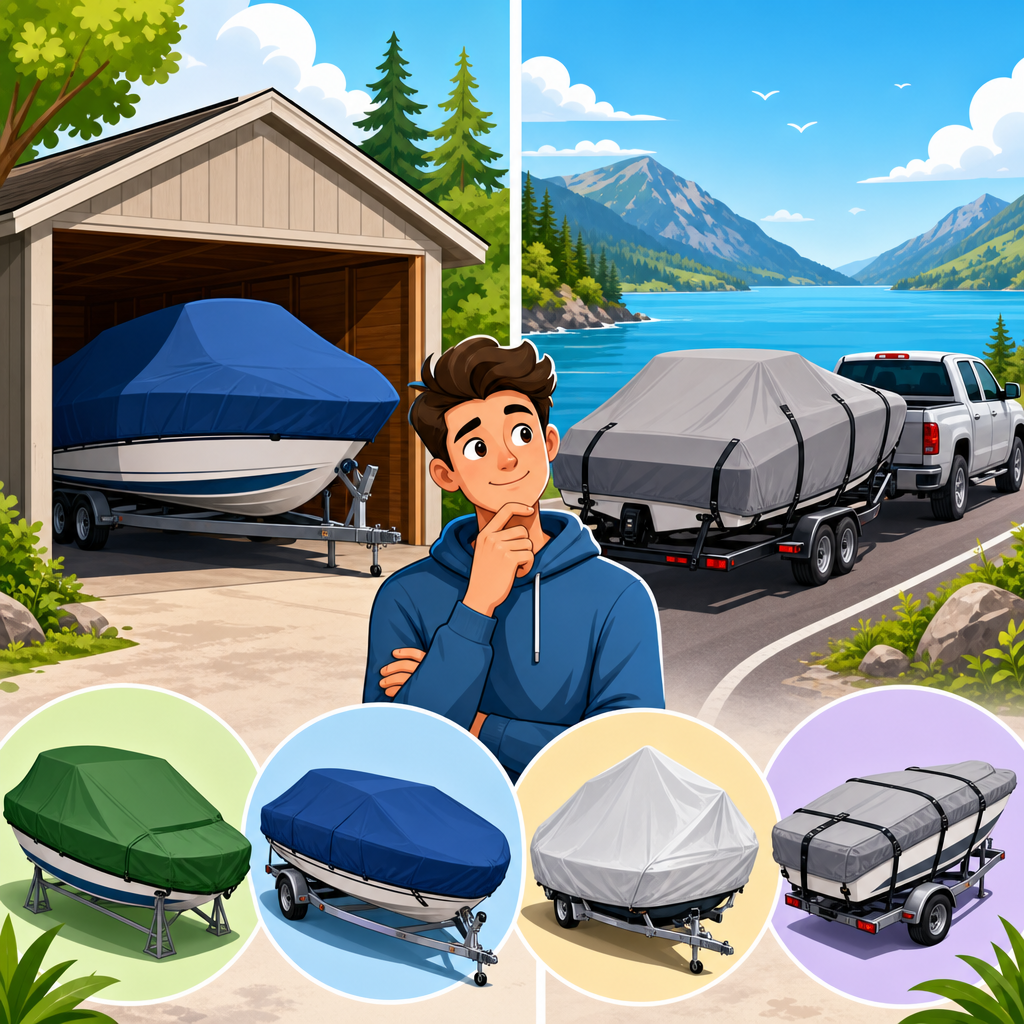
Choosing the right boat cover for storage and travel protects far more than paint, upholstery, and pride of ownership. A well-matched cover shields gelcoat from ultraviolet damage, keeps mildew from taking hold in damp compartments, prevents leaves and grit from clogging drains, and reduces the wear that road vibration can inflict during towing. In practical terms, the right boat cover is not a generic tarp. It is a purpose-built protective system designed around the boat’s dimensions, storage conditions, climate exposure, and transportation demands.
Boat covers and protection form one of the most important categories in boating gear and equipment because they affect maintenance costs, resale value, and readiness between trips. I have seen owners save thousands in interior replacement simply by switching from loose-fitting covers that trapped water to breathable, trailerable models with proper support poles and reinforced tie-downs. The opposite is also true: a cheap cover can fail at the seams, flap itself apart at highway speed, and create more damage than leaving the boat uncovered for a short period.
When comparing options, start with a few key terms. A mooring cover is intended for short-term outdoor protection at the dock or on a lift. A storage cover is meant for seasonal protection, often with support systems that prevent pooling. A trailerable cover is engineered to remain secure at road speed, with a tighter cut, stronger webbing, and reinforced stress points. Custom-fit means the cover is patterned for a specific hull and model family, while semi-custom and universal covers fit broader size ranges with more compromise.
This topic matters because different use cases require different construction details. Indoor winter storage demands dust control and breathability. Outdoor storage demands water shedding, UV resistance, and snow-load management. Highway travel demands aerodynamic fit, reinforced seams, and secure attachment. If you choose based only on price or length range, you risk poor protection, difficult installation, and premature replacement. The best boat cover for storage and travel balances fit, material, ventilation, support, and fastening hardware with the actual way you use the boat.
Start with fit, measurements, and how the boat is used
The first decision is fit, because every other feature depends on it. Measure the boat’s centerline length from bow to stern, excluding removable outboard brackets unless the cover is designed to accommodate them. Then measure beam at the widest point. Also note bow rails, trolling motors, wake towers, ski pylons, windshield height, and boarding ladders. On fishing boats, pedestal seats and electronics mounts often create stress points. On runabouts and deck boats, windshields and cleats can rub through unsupported fabric. On pontoons, rail height and motor profile change the cut significantly.
In my experience, owners underestimate how much hardware shape affects cover performance. Two boats with the same published length and beam can require different covers because one has a tall trolling motor, a folding bimini, or integrated anchor lights. That is why custom-fit covers generally outperform universal covers in both storage and trailering. They distribute tension more evenly, reduce fabric flutter, and eliminate the sagging pockets where water pools. Universal covers can work for short-term storage, but they rarely deliver the same durability under repeated towing.
Match the cover type to the use pattern. If the boat spends most of the season on a trailer and regularly travels to ramps, prioritize a trailerable design. If it sits outdoors through fall and winter, prioritize water shedding, venting, and support structure. If it is stored indoors, breathability and dust protection may matter more than heavy waterproof coatings. A bass boat owner towing every weekend needs different reinforcement than a pontoon owner covering the boat at a marina slip.
Choose the right material for climate, storage duration, and road use
Material determines how a cover handles moisture, sunlight, abrasion, and wind. Most quality boat covers use woven polyester because it resists stretching and holds shape better than many low-cost alternatives. Solution-dyed marine fabrics provide superior fade resistance because color penetrates the fibers rather than sitting on the surface. Acrylic fabrics are durable and breathable, though they are more common in premium marine applications and can cost significantly more. Entry-level covers often use polyester with polyurethane or similar coatings to improve water resistance.
Breathability matters as much as water resistance. A fully impermeable cover can trap condensation, especially in regions with large day-night temperature swings. That moisture settles into carpet, vinyl, and foam, leading to mildew and odor. Premium marine fabrics strike a balance: they repel rain while allowing vapor to escape. This is especially important for long-term outdoor storage. If you have ever removed a cover after winter and found damp seat seams despite no visible leaks, trapped condensation was likely the cause.
Fabric weight is another practical indicator. Heavier materials often provide better tear strength and abrasion resistance, but they are bulkier and harder to handle. For trailering, the real issue is not just weight; it is stability under load. At highway speed, the cover behaves like a sail if it is loose. Materials with strong dimensional stability and properly reinforced hems handle this far better than bargain fabrics. Look for double-stitched or top-stitched seams, reinforced corners, and webbing in high-stress zones around windshields and transoms.
| Cover Type | Best Use | Main Strength | Main Limitation |
|---|---|---|---|
| Universal cover | Budget indoor or short-term outdoor storage | Lower cost and broad availability | Loose fit, more flutter, weaker trailering performance |
| Semi-custom cover | Common hull styles with moderate outdoor use | Better shape match than universal options | Still compromises around hardware and accessories |
| Custom-fit storage cover | Seasonal outdoor protection | Excellent water shedding and reduced abrasion | Higher price and longer lead time |
| Custom-fit trailerable cover | Frequent towing plus outdoor storage | Secure at road speed with reinforced attachment points | Requires accurate model-specific fit and setup |
Focus on support, ventilation, and water management
A cover fails quickly when water is allowed to pool. Standing water stretches fabric, overloads seams, and eventually leaks through stitching or worn coatings. The fix is a proper support system. Adjustable support poles, tension straps, and bow-to-stern support frameworks create a pitched surface so water drains off. For larger boats, multiple support points are often necessary. Pontoons and center consoles especially benefit from structured support because their open deck areas create broad spans that sag under rainfall.
Ventilation is equally important. Integrated vents reduce billowing during trailering and allow moisture vapor to escape during storage. Some premium systems use cowl vents or mesh-backed openings positioned to minimize water intrusion while improving airflow. In humid coastal climates, this can make a measurable difference in mildew prevention. I recommend checking whether vents are reinforced, because poorly attached vent housings can become tear points under wind load.
Water management also depends on what is beneath the cover. Remove cushions if the boat will sit for extended periods, clean drains before storage, and make sure the bow is slightly elevated on the trailer. That small angle helps runoff and keeps bilge water from settling forward. For winter storage in snow regions, the cover alone may not be enough. A support frame or shrink wrap may be more appropriate for heavy snow loads, although shrink wrap sacrifices reusability and requires proper vent installation.
Evaluate attachment systems, trailering features, and wear protection
The best trailerable boat cover uses a secure perimeter and controlled tension. Ratchet systems, sewn-in straps, under-trailer straps, and heavy-duty elastic hems each have a place, but they are not interchangeable. Elastic alone may be acceptable for light storage use, yet frequent highway travel calls for more positive retention. Under-trailer straps help keep the cover centered and prevent uplift. Quick-release buckles speed installation, but they should be backed by sturdy webbing and bar-tack reinforcement where stress concentrates.
Look closely at contact points. Windshield corners, trolling motor heads, cleats, rub rails, and windshield frame screws can abrade fabric from the inside out. Reinforcement patches at these spots extend service life. Some owners add soft wear pads or cover socks over sharp hardware. This is a small investment with a large payoff, especially on long trips. If a cover begins to flutter at one corner, that motion can destroy a seam over a single season.
Do not overlook the motor area. Outboards change the fit at the stern and often require a motor hood section or extra allowance in the pattern. Sterndrive boats need clearance around the drive when trimmed. A poor stern fit is one of the most common reasons water enters during storms and why covers loosen during towing. Before buying, confirm whether the cover is designed for the engine configuration and whether trailering is approved by the manufacturer.
Balance cost, lifespan, and maintenance requirements
Price matters, but replacement frequency matters more. A low-cost cover that lasts two seasons outdoors can be more expensive over five years than a premium cover that lasts six to eight seasons with routine care. Material quality, UV resistance, seam construction, and fit drive that difference. Established marine brands often provide model-specific fit guides and clearer trailering ratings, which reduces guesswork. They also tend to offer stronger warranty support, though warranties usually exclude damage caused by improper installation, pooling water, or road use beyond stated limits.
Maintenance extends cover life significantly. Clean bird droppings, tree sap, and salt residue before they degrade coatings or stitching. Use a marine-safe fabric cleaner rather than household detergents that can strip water-repellent finishes. Let the cover dry fully before folding it for storage. Reapply fabric protectant if the manufacturer recommends it. I have seen otherwise solid covers fail early because they were stored damp in a dock box and developed mildew that weakened the fibers.
For owners building out a broader protection plan, this hub should connect naturally with related topics: bimini tops and enclosures, shrink wrap versus reusable winter covers, mildew prevention, dehumidifiers for enclosed storage, trailer tie-down best practices, and marine fabric care. Those supporting articles matter because a boat cover performs as part of a system, not in isolation. Good support poles, clean drainage, secure straps, and regular inspection make even a strong cover work better and last longer.
The right boat cover for storage and travel is the one that fits the boat precisely, matches the climate, and is built for the way the boat actually moves or sits between trips. Fit should be your first filter, material your second, and support and attachment your third. When those elements align, the cover protects upholstery, electronics, finishes, and hardware while reducing cleanup and long-term repair costs. That is the real value of investing in proper boat covers and protection.
If you are choosing today, measure carefully, list the boat’s accessories, and decide whether your primary need is outdoor storage, road travel, or both. Then compare custom-fit and trailerable options before defaulting to the cheapest universal cover. A well-chosen cover will pay for itself in fewer repairs, less fading, and faster launch-day prep. Use this hub as your starting point, then move into the related guides on winter protection, fabric maintenance, and trailer security to build a complete protection setup.
Frequently Asked Questions
What is the difference between a boat cover for storage and one designed for travel?
A storage cover is primarily built to protect your boat while it sits parked, whether indoors, outdoors, on a trailer, or at a dock. Its main job is to defend against sun exposure, rain, dust, leaves, bird droppings, and moisture buildup. A travel cover, by contrast, has to do all of that while also withstanding highway speeds, constant wind pressure, road vibration, and the repeated stress that comes from towing. That means the right travel cover typically needs stronger fabric, reinforced seams, secure tie-down systems, and a tighter, more tailored fit so it does not flap excessively or shift during transport.
This distinction matters because not every cover marketed as “heavy-duty” is suitable for trailering. A loose-fitting cover may work fine for seasonal storage, but on the road it can rub against gelcoat, damage sharp corners, wear through at windshield edges, and even tear under wind load. If you need one cover to handle both storage and travel, look for a model specifically labeled for trailerable use. It should fit the exact style and dimensions of your boat, include support for water runoff, and use fastening points that keep the cover stable without creating abrasion. In short, storage protection and travel protection overlap, but travel demands a much higher level of structural performance.
How do I make sure a boat cover fits properly?
Proper fit starts with knowing more than just the boat’s length. You also need the beam width, hull style, windshield configuration, bow shape, motor setup, and any permanent accessories that affect the profile, such as trolling motors, towers, ski pylons, consoles, or bow rails. A cover that is advertised for a broad size range may technically go over the boat, but that does not mean it will protect it well. The best fit is usually a custom-fit or semi-custom cover designed around your specific boat make and model or, at minimum, your exact hull category and dimensions.
A well-fitting cover should sit snugly without being overstretched. It should fully protect vulnerable areas, extend to the proper points along the hull, and avoid large loose sections where wind can get underneath. You also want enough structure for water to run off instead of pooling in the middle. During travel, this becomes even more important because extra slack creates flapping, and flapping creates friction, seam stress, and premature fabric failure. When evaluating fit, pay close attention to how the cover handles protrusions and corners, whether tie-downs pull evenly, and whether the cover remains stable after installation. A good fit is not just about appearance; it is a key factor in preventing mildew, avoiding gelcoat abrasion, and preserving the cover itself over time.
What material is best for a boat cover used in both storage and towing?
The best material is one that balances durability, water resistance, breathability, UV resistance, and weight. For long-term value, marine-grade polyester fabrics are often a strong choice because they hold up well against sunlight, resist stretching, and perform reliably in both storage and trailering applications. Solution-dyed fabrics and other UV-stable materials are especially valuable if your boat spends a lot of time outdoors, since ultraviolet exposure is one of the biggest causes of fading, fabric breakdown, and surface deterioration. A quality coating or treatment can also improve water repellency while still allowing trapped moisture to escape.
Breathability is a major factor that many boat owners overlook. A completely waterproof but non-breathable cover can trap condensation underneath, creating the damp environment that mildew loves. That is why the best covers function as protective systems rather than simple barriers. They shed external water while helping interior moisture dissipate. Reinforced panels are also important anywhere the fabric crosses windshields, cleats, corners, or hardware, since these areas experience concentrated wear in both storage and travel. Avoid thinking in terms of the “thickest” fabric alone. A cover can be heavy yet poorly engineered. What you want is a marine-grade fabric with proven weather resistance, reinforced construction, and enough structural integrity to stay stable on the road without becoming so stiff or cumbersome that it is hard to use consistently.
What features should I look for to prevent mildew, water pooling, and damage during storage?
To prevent mildew and standing water, look for a cover system that promotes ventilation and proper runoff. One of the most important features is a support structure, such as poles, bows, or an integrated support design, that creates a peak and keeps the cover from sagging. Without that shape, rainwater can collect in low spots, stretching the fabric, stressing seams, and eventually allowing moisture to seep or condense beneath the cover. Pooling water can also add weight that presses the cover against upholstery or compartments, increasing the likelihood of mildew and staining.
Ventilation features are equally important. Built-in vents or breathable fabric panels help reduce condensation, especially in changing temperatures and humid climates. Strong hems, reinforced stress points, and secure attachment systems help the cover stay in place so leaves, grit, and debris do not constantly work their way underneath. This matters because organic debris can clog drains, trap moisture, and accelerate deterioration in hidden areas of the boat. If the boat is stored outdoors, prioritize UV protection as well, since sunlight can damage gelcoat, vinyl, dashboards, and exposed trim even when the boat is not in use. The best storage setup combines a properly fitted cover, good support, airflow, and routine checks to make sure the cover remains tight, clean, and free of abrasion points.
Is a custom boat cover worth it, or can I use a universal cover?
For many owners, a custom boat cover is worth the investment because fit is directly tied to protection. A universal cover may be less expensive upfront, but it usually involves compromises. It may leave some areas exposed, bunch excessively in others, require awkward tie-down workarounds, or create loose sections that flap in the wind. Those issues are not just cosmetic. They can lead to chafing on the hull, wear on upholstery edges, water intrusion, debris accumulation, and reduced performance during travel. If your boat has features like a wake tower, center console, unusual windshield layout, or upgraded accessories, the limitations of a universal cover become even more obvious.
A custom or model-specific cover is designed around the boat’s actual shape, which usually means better tension distribution, cleaner runoff, stronger protection in high-wear zones, and a more secure installation for towing. It is also typically easier to put on and remove once you learn the routine, which increases the odds that you will use it consistently. That convenience matters more than many people expect. Even the best cover cannot protect a boat if it is too frustrating to install. While a universal cover may be acceptable as a short-term or budget solution for basic storage, a well-made custom cover is usually the smarter long-term choice for owners who want dependable protection during both storage and travel.