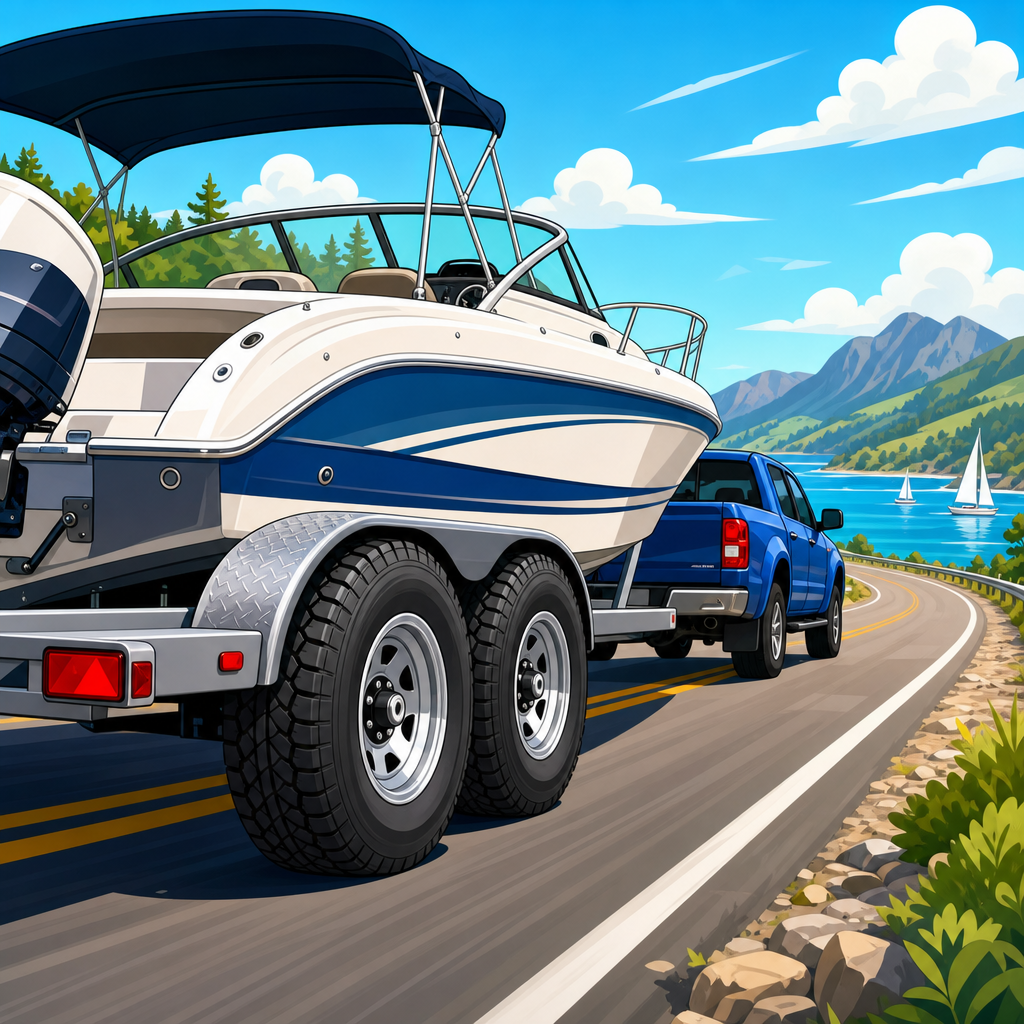
Choosing the best boat trailer tires for long trips and heavy loads starts with understanding that tires are the single most failure-prone part of a trailer, yet they are also the most preventable towing problem. I have spent years setting up trailers for coastal runs, interstate tournament travel, and oversized center-console hauls, and the same pattern repeats: blowouts usually trace back to the wrong tire type, inadequate load capacity, poor inflation discipline, or aging rubber that looked fine in the driveway. A boat trailer tire is not the same as a passenger-car tire or even a light-truck tire. It is engineered with a stiffer sidewall, a higher load focus, and construction intended to control sway while carrying substantial static weight for long periods. For owners shopping under the broader category of boat trailers and towing equipment, tires are the foundation that affects braking, wheel bearings, hubs, suspension wear, fuel economy, and safety at highway speed.
This hub article explains how to choose the right boat trailer tires, what specifications actually matter, and how tires fit into the rest of a dependable towing system. It also serves as a central guide for the wider boat trailers and towing equipment topic, connecting tire selection to wheel sizing, axle ratings, trailer brakes, tongue weight, spare-tire planning, and maintenance intervals. Key terms matter here. Load range refers to the tire’s ply-rating equivalent and maximum load capability at a stated pressure. ST means Special Trailer, the category designed specifically for trailers. LT means Light Truck, sometimes used in niche trailer applications but not a universal substitute. Gross Vehicle Weight Rating, or GVWR, is the maximum safe operating weight of the trailer and cargo combined. Long trips and heavy loads demand that every one of these numbers align. When they do, towing becomes calmer, cooler-running, and dramatically more reliable.
What Makes a Boat Trailer Tire Right for Long Trips and Heavy Loads
The best boat trailer tire is the one whose real-world capacity exceeds the trailer’s actual operating load with margin to spare. That sounds obvious, but many trailers leave the dealership with minimal reserve capacity. Add a full fuel tank, batteries, ice chests, safety gear, trolling motors, and gear stored in the boat, and the tire set may be operating too close to its limit. On long highway runs, heat becomes the enemy. Heat rises when a tire is overloaded, underinflated, run too fast for its rating, or built with too little headroom. In practice, I prefer at least a 10 to 15 percent capacity buffer above measured axle load, and more for hot-weather interstate travel.
For most boat trailers, ST tires are the first choice because they are built for trailer dynamics. Their sidewalls are stiffer than passenger tires, reducing flex that can contribute to sway. Their tread and carcass design prioritize carrying heavy vertical loads rather than steering, braking, and ride comfort like automotive tires do. Radial construction is the standard recommendation for long trips because radial trailer tires run cooler, wear more evenly, and typically perform better at sustained highway speeds than bias-ply designs. Bias-ply tires still have uses on short-haul, rough-surface, or utility applications, but for long-distance boat towing, a quality ST radial usually wins on durability and stability.
Wheel diameter matters less than many buyers think; load rating, inflation pressure, and overall capacity matter more. A 13-inch trailer tire is not automatically inferior to a 15-inch tire, but smaller tires often have lower capacity and may spin faster at highway speed, increasing heat. For heavy loads, tandem-axle and triple-axle boat trailers frequently benefit from moving into 14-inch, 15-inch, or 16-inch combinations that allow stronger load ranges. Also, a tire is only as strong as the wheel it is mounted on. Every upgrade should verify wheel pressure rating, wheel load rating, valve stem specification, and fender clearance.
How to Read Boat Trailer Tire Specifications
Reading the sidewall correctly prevents expensive mistakes. A common size such as ST225/75R15 breaks down into trailer category, section width, aspect ratio, construction type, and wheel diameter. The load index and speed symbol, where provided, tell you how much weight the tire can carry and at what maximum speed. Load Range C, D, E, and F indicate increasing strength and inflation pressure. For example, an ST225/75R15 Load Range D tire generally carries less weight than the same size in Load Range E. If you upgrade load range, confirm that the wheel is approved for the higher psi. Many trailer owners overlook this and create a mismatch between tire and rim.
Date code is another non-negotiable specification. The DOT code ends with four digits showing the week and year of manufacture. A tire marked 2424 was built in the 24th week of 2024. For boat trailers, age matters as much as tread depth because UV exposure, ozone, salt air, and long periods of static loading degrade rubber internally. In my experience, replacing trailer tires at roughly five to six years from manufacture is prudent even if tread looks acceptable. Some owners push longer, but for long trips carrying a valuable boat, conservative replacement is cheaper than roadside damage to fenders, wiring, or hull gelcoat.
| Specification | What It Means | Why It Matters for Boat Trailers |
|---|---|---|
| ST | Special Trailer tire category | Built for high vertical loads and trailer stability |
| Radial | Steel or fabric cords run perpendicular to tread | Runs cooler and lasts longer on highway trips |
| Load Range | Ply-rating equivalent and max pressure/capacity | Determines whether the tire can safely carry the trailer |
| Speed Rating | Maximum tested operating speed | Critical for interstate towing in summer heat |
| DOT Date Code | Week and year of manufacture | Helps prevent running aged, brittle trailer tires |
Best Boat Trailer Tire Types, Brands, and Use Cases
For long trips and heavy loads, premium ST radial tires consistently outperform bargain imports with vague specifications. Among established options, Goodyear Endurance has become a frequent benchmark because it is widely available, made for sustained highway use, and carries stronger speed capability than many older trailer tire designs. Carlisle Radial Trail HD is another respected option with broad fitment coverage and a solid service record on bass boat, pontoon, and offshore trailers. Maxxis M8008 ST Radial remains popular for owners who prioritize long-term reputation and consistent build quality. Providers such as Kenda, Hercules, and Provider also appear often in the market, but the right choice depends on verified load rating, country of manufacture, warranty support, and local availability when you need a replacement on the road.
For heavier aluminum and fiberglass boats, especially tandem-axle setups heading hundreds of miles to coastal ramps, I generally steer owners toward ST radial tires in Load Range D or E, not because higher is always better, but because reserve capacity helps control heat. A single-axle skiff trailer may perform perfectly on ST175/80R13 or ST205/75R14 tires when properly matched. A 26-foot center console on a tandem or triple-axle trailer may need ST225/75R15 Load Range E or larger 16-inch packages, depending on actual axle weights. The best tire is application-specific. There is no universal “top tire” independent of boat weight, trailer geometry, axle count, and travel distance.
Bias-ply tires deserve a brief mention because some boaters still use them for seasonal storage yard moves, short ramp runs, or rough launch access roads. Their sidewalls can resist bruising in certain conditions, but they tend to run hotter and wear less evenly on long interstate drives. That is why the best boat trailer tires for long trips are almost always radial. If you are upgrading an older trailer, replacing all tires as a matched set is smart. Mixing radial and bias-ply construction on the same trailer is a bad practice because handling and heat characteristics differ.
Matching Tires to Axles, Brakes, Bearings, and Weight Distribution
Tires do not work in isolation. A safe towing setup begins with actual scale weight. Weigh the tow vehicle and trailer together, then weigh trailer axles separately if possible. Compare those measured numbers against the tire capacity, axle rating, wheel rating, and trailer GVWR. Many owners focus only on the boat’s published dry weight, which is almost never the real towing weight. Fuel alone can add hundreds of pounds. Twin batteries, anchors, trolling motors, and gear frequently push rigs far beyond brochure numbers.
Axle count changes the tire conversation. On a tandem-axle trailer, the load is spread across four tires, but scrub forces during turns place extra stress on the tread and sidewall. On a triple axle, that stress increases again, making inflation and alignment even more important. Underinflated tires on multi-axle trailers often fail not from puncture but from cumulative heat and sidewall fatigue. Proper alignment, equalized suspension, and healthy leaf springs or torsion axles protect tire life. If one axle is carrying more than its share because of worn suspension parts, one pair of tires can disappear quickly.
Boat trailers and towing equipment also include brakes, actuators, hubs, and bearings, all of which affect tire survival. Dragging disc brakes, seized calipers, or poorly adjusted drum brakes raise wheel-end temperature and can cook a tire from the inside out. Failing bearings create the same risk. During every fuel stop on a long trip, I put a hand near each hub and sidewall or use an infrared thermometer. A hotter-than-normal wheel station is an early warning sign. Tire wear patterns also tell a story: center wear suggests overinflation, edge wear often indicates underinflation, and one-sided wear points to alignment or suspension problems.
Maintenance Practices That Prevent Blowouts on the Highway
The most effective maintenance habit is checking inflation pressure before every trip when the tires are cold. Not after driving to the fuel station. Not by kicking the sidewall. With an accurate gauge. Trailer tires are designed to carry rated load at specified pressure, and even a modest drop in psi can significantly increase heat. For many ST trailer tires, running at the maximum cold inflation listed on the sidewall is the correct practice when carrying near-rated loads, though you should always confirm manufacturer guidance for your exact setup.
Inspection should include tread depth, uneven wear, sidewall cracking, valve stem condition, and any bulges, cuts, or impact damage. Because boat trailers often get submerged at the ramp, rinse the tires, wheels, and brakes with fresh water after saltwater launches. Salt accelerates corrosion around steel belts, wheels, lug seats, and valve hardware. Torque lug nuts to the wheel manufacturer’s specification and recheck after the first 25 to 50 miles following tire installation. I have seen more than one “mystery tire issue” turn out to be a wheel that had loosened slightly after a shop visit.
Storage matters too. UV exposure and static loading age trailer tires quickly. If the trailer sits for long periods, move it occasionally to change the contact patch, cover the tires from sunlight, and store on a firm surface rather than damp soil. Maintain proper inflation during storage. If the trailer is blocked for winter, do it correctly so the frame is supported safely without overloading one axle or twisting the suspension. Carrying a road-ready spare, a properly rated jack, wheel chocks, and a lug wrench that fits your trailer wheels is essential for long-distance towing. A spare older than the tires on the ground is not really a backup.
Building a Complete Boat Trailers and Towing Equipment Setup
This hub would be incomplete without placing tires in the wider towing system. The best boat trailer tires can only deliver their full benefit when paired with the right supporting equipment. Start with the coupler and hitch ball size, verify the hitch rating, and confirm tongue weight is generally in the 5 to 7 percent range often favored for boat trailers, though exact needs vary by design. Too little tongue weight can invite sway; too much can overload the tow vehicle’s rear axle and alter braking balance. Safety chains should be properly crossed under the coupler, and the breakaway system on brake-equipped trailers must be functional and tested.
Lighting and wiring matter because roadside tire service often happens in poor visibility. Waterproof LED lighting, sealed harness connections, and protected wiring runs reduce failures. Bearing protectors or oil-bath hubs, depending on the trailer design, should be inspected regularly. Winches, bow stops, transom straps, and guide-ons all contribute to stable transport, especially over rough roads where load shift can alter axle loading. If you are building a dependable towing package, prioritize these related topics next: trailer brake types, wheel bearing service intervals, trailer jack selection, spare hub kits, and trailer alignment checks. Put simply, boat trailers and towing equipment should be treated as one integrated system, not a collection of unrelated parts.
The key takeaway is straightforward. Choose an ST radial tire from a reputable brand, size it by measured load rather than guesswork, maintain inflation precisely, replace aging tires before they fail, and support them with healthy wheels, bearings, brakes, and suspension. That approach delivers the real benefit every boater wants on a long trip: arriving with the boat, trailer, and schedule intact. If you are evaluating your trailer now, start with the sidewall data, check the DOT date codes, weigh the rig, and build your maintenance checklist before the next highway run.
Frequently Asked Questions
What type of trailer tire is best for long-distance boat towing and heavy loads?
For long trips and heavy boats, a dedicated trailer tire marked ST, which stands for Special Trailer, is usually the best choice. ST tires are built specifically for trailer duty, which means they are designed with stiffer sidewalls to control sway, support higher vertical loads, and handle the unique stresses that come with towing rather than steering or driving. That matters a lot when you are pulling a heavy boat at highway speeds for hours at a time. Many tire failures happen because owners install passenger-car or light-truck tires that may physically fit the wheel but are not engineered for the same trailer-specific demands.
When choosing among ST tires, focus first on load range, weight capacity, and speed rating rather than just brand name or price. If your trailer and boat combination is close to the tire’s maximum rating, you are already reducing your margin for safety and heat control. A better setup is one where each tire has enough reserve capacity to comfortably support the real-world load, including fuel, batteries, gear, coolers, and anything else that travels with the boat. For heavy-load applications and frequent interstate use, higher-quality radial ST tires are generally preferred because they run cooler, track better, and offer better tread life than bias-ply options. Bias-ply tires still have uses, especially for shorter hauls, rough ramps, or lower-speed service, but for long-distance towing, radial ST tires are usually the smarter investment.
If you tow a large center console, offshore boat, or heavily equipped rig, it is also worth considering premium trailer tires with upgraded internal construction, stronger belts, and better heat resistance. Long trips create sustained heat, and heat is one of the main enemies of trailer tires. A well-built ST radial tire with the right load range, a realistic safety margin, and a speed rating that matches your towing habits is the best foundation for reliable long-haul performance.
How do I know if my boat trailer tires have enough load capacity for the boat, trailer, and gear?
The right way to determine tire capacity is to start with actual weight, not estimates. Too many trailer owners look only at the dry boat weight and ignore the trailer itself, full fuel tanks, outboards, trolling motors, anchors, ice chests, safety gear, tools, and all the extras that quietly add hundreds or even thousands of pounds. For a reliable answer, weigh the fully loaded rig as you actually tow it. A public scale is the best option because it gives you a real operating number rather than a brochure figure that may not reflect reality.
Once you know the loaded trailer weight, compare it to the combined capacity of your tires. As a general rule, each tire should carry its share of the load with reserve capacity left over. You do not want to run trailer tires right at their maximum rating on every trip. That leaves almost no cushion for uneven loading, road shock, heat buildup, or side-to-side weight differences. In practice, having a healthy margin above your actual operating weight is one of the best ways to improve durability and reduce blowout risk on long highway runs.
It is also important to confirm that the wheel rating and axle rating match the tire upgrade, because a stronger tire does not help if the wheel cannot safely support the same pressure and load. Check the trailer’s certification label, the axle tags, the wheel markings, and the tire sidewall data. If your current setup looks borderline, upgrading to a higher load range may be a smart move, but only if the wheels and inflation requirements support it. In heavy-load towing, under-capacity tires are one of the fastest ways to create heat, sidewall stress, and premature failure. Capacity should never be treated as a rough guess.
What tire pressure should I run in boat trailer tires for highway travel?
In most cases, boat trailer tires should be inflated to the pressure required to support their rated load, and for many ST trailer tires that means running them at the maximum cold pressure shown on the sidewall. Trailer tires are different from passenger vehicle tires in this respect. Passenger tires are often adjusted for ride comfort and varying load conditions, but trailer tires typically depend on proper full inflation to carry weight safely, maintain sidewall stability, and minimize heat buildup. Underinflation is one of the leading causes of trailer tire failure, especially on long summer drives where highway speed and heavy load combine to generate dangerous internal temperatures.
The key phrase is cold pressure. Always check tire pressure before driving, not after the tires have been rolling in the sun or on the highway. Heat naturally increases pressure, and bleeding air out of a warm tire can leave it significantly underinflated once it cools back down. Use a dependable tire gauge and make pressure checks part of your pre-trip routine. For long-distance towing, that discipline matters just as much as the tire brand. A high-quality tire that is consistently underinflated will still fail early.
You should also factor in storage periods and seasonal changes. Trailer tires often sit for weeks or months, and pressure can drop while the trailer is parked. Before a trip, especially a long interstate haul, inspect and inflate every tire including the spare. If your setup uses metal valve stems, quality valve caps, and a tire pressure monitoring system, even better. Those small details help you catch slow leaks and rising temperatures before they become roadside failures. Correct pressure is one of the simplest maintenance steps, but it has an outsized effect on tire life, handling, and towing safety.
How old is too old for a boat trailer tire, even if the tread still looks good?
Age matters at least as much as tread depth on a boat trailer tire, and often more. Trailer tires usually age out before they wear out because they spend so much time parked, exposed to sun, heat, moisture, salt air, and long periods of inactivity. A tire can still have plenty of tread and look acceptable from a distance, yet the internal structure may be deteriorating from oxidation, UV exposure, and repeated heat cycles. That is why old trailer tires are such a common source of “sudden” blowouts that seem to happen without warning.
A practical rule is to inspect trailer tires very closely once they reach around five years of age and strongly consider replacement by the six- to seven-year range, depending on use, storage conditions, climate, and manufacturer guidance. In harsh environments, especially coastal areas with heat and salt exposure, replacement may be wise even sooner. To determine age, check the DOT code on the sidewall. The last four digits show the week and year the tire was manufactured. For example, a code ending in 2422 means the tire was made in the 24th week of 2022.
Visible warning signs include sidewall cracking, weather checking, bulges, tread separation, uneven wear, or any tire that has spent long periods overloaded or underinflated. But even without obvious damage, aging rubber loses resilience over time. For boat trailers that make long trips or carry heavy loads, replacing aging tires proactively is much cheaper than dealing with shredded rubber, damaged fenders, wiring, brake lines, or missed travel plans on the shoulder of the interstate. If there is doubt about age or condition, replacement is usually the right call.
What maintenance steps help prevent boat trailer tire blowouts on long trips?
The best prevention plan starts before the trailer ever leaves the driveway. First, inspect the tires for cracking, cuts, bulges, irregular wear, punctures, and any signs of tread separation. Then verify cold inflation pressure with a quality gauge and make sure the spare is road-ready as well. Check lug nut torque, look over the valve stems, and confirm that the tires match in size, type, and load range. Mismatched tires can create uneven loading and handling issues, especially on tandem-axle trailers carrying heavy boats.
Next, make sure the trailer is not overloaded and that weight is distributed properly. Poor loading can overload one axle or one side of the trailer, which quietly shortens tire life and increases heat. Bearings, brakes, and suspension also affect tire reliability more than many owners realize. A dragging brake, a worn spring, a bent axle, or bad alignment can destroy a good set of trailer tires in a surprisingly short time. If you see one tire wearing faster than the others, that is a signal to inspect the running gear, not just replace the tire and move on.
During long trips, stop periodically to walk around the trailer. Feel for unusual heat near the tires and hubs, look for low tires, and pay attention to any change in tracking or vibration. Avoid pushing beyond the tire’s speed rating, because excess speed dramatically increases heat buildup. Protecting the tires during storage also helps: use covers when possible, keep the trailer on a clean surface, and avoid leaving the full load parked on the tires for extended periods without movement. In the real world, blowout prevention is rarely about one magic product. It is about correct tire selection, sufficient load capacity, proper inflation, reasonable speed, and consistent inspection every time the trailer rolls.