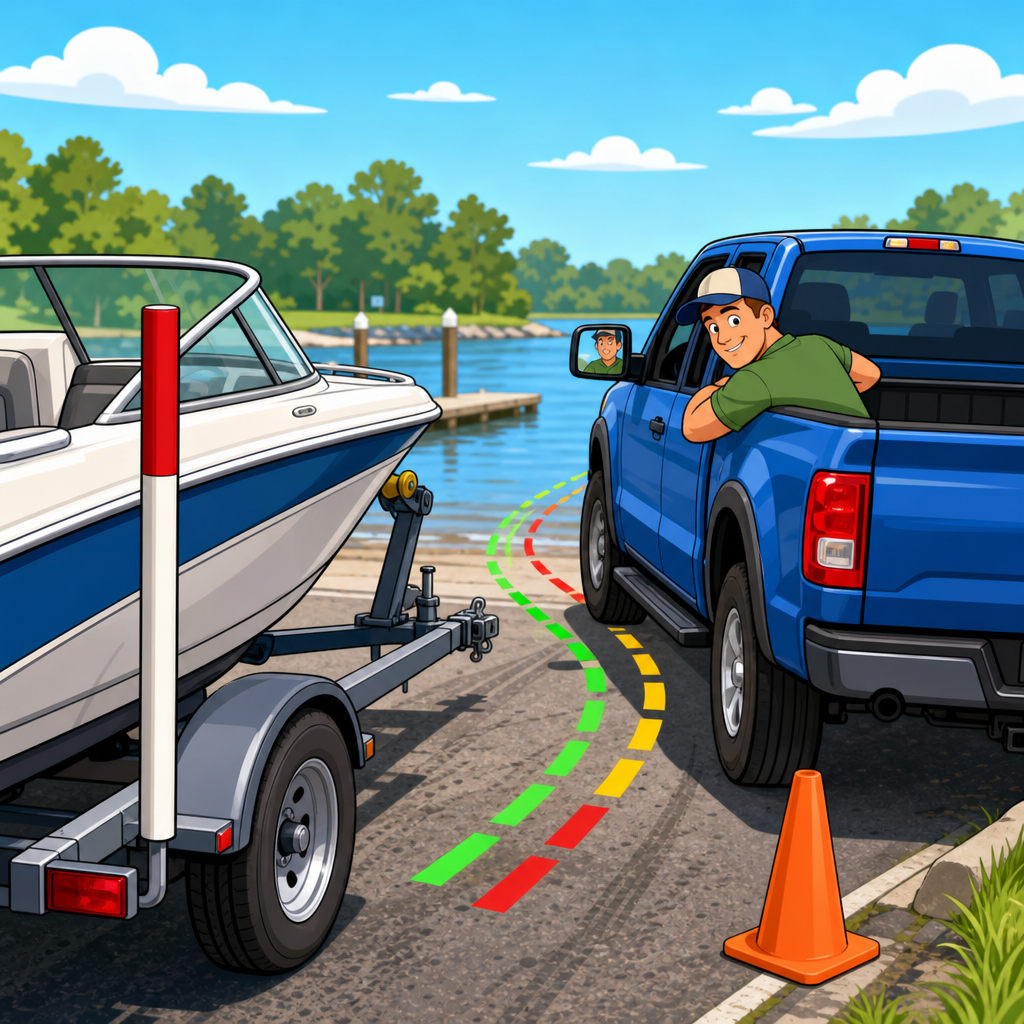
Backing up a boat trailer is one of the most important skills in boating gear and equipment, because every launch, retrieval, storage move, and roadside correction depends on controlled reversing. In practical terms, boat trailers and towing equipment include the trailer frame, coupler, hitch ball, safety chains, tongue jack, winch stand, bunks or rollers, lights, brakes, tires, and the tow vehicle systems that manage load and traction. I have spent years helping new boat owners at ramps and in storage yards, and the same pattern repeats: people fear the reverse maneuver, rush the setup, and overlook the towing hardware that makes safe backing possible. A boat trailer responds differently than a utility trailer because tongue length, axle placement, hull weight, and ramp conditions all affect how quickly it turns and how much correction is needed.
This matters for three reasons. First, safety: poor backing can jackknife a trailer, damage a propeller, crush a fender, or put people in danger around the ramp. Second, equipment life: misalignment at the ramp twists bunks, strains winches, overheats brakes, and scuffs tires. Third, confidence: if you can place a trailer accurately, you reduce launch time, avoid blocking others, and make boating more enjoyable. This hub page covers the full scope of boat trailers and towing equipment, but its central goal is simple: help you back up a boat trailer like a pro by understanding the gear, the technique, and the checks that prevent expensive mistakes. Whether you tow a small skiff on a single-axle trailer or a heavy cabin boat on tandem axles with surge or electric-over-hydraulic brakes, the principles are consistent. Set up correctly, steer deliberately, make small inputs, and use your equipment the way it was designed.
Know Your Boat Trailer and Towing Equipment Before You Reverse
The safest backing job starts before the vehicle moves. Every boat trailer has a maximum gross vehicle weight rating, axle rating, tire load rating, and coupler size, commonly matched to a 2-inch, 2-5/16-inch, or occasionally 1-7/8-inch hitch ball. The coupler must fully seat on the ball and lock, safety chains must cross under the tongue, and the breakaway system, if equipped, must be functional. Trailer tongue weight should usually land around 5 to 7 percent of gross trailer weight for many boat trailers; too little encourages sway and makes backing twitchy, while too much overloads the rear axle of the tow vehicle and can reduce steering authority.
Trailer geometry explains why some rigs are easy to reverse and others feel unruly. A longer tongue reacts more slowly and gives the driver more time to correct. A short tongue turns faster and punishes oversteering. Tandem-axle boat trailers generally track better at speed and offer more stability, but they can scrub tires during tight turns and require more power on steep ramps. Single-axle trailers are lighter and more maneuverable but often react quickly in reverse. Bunk trailers support the hull over long contact points and are common for fiberglass and aluminum boats. Roller trailers reduce launch friction and can be useful in shallow ramps, but they demand careful winch and bow-stop adjustment because the boat moves more easily. If your trailer has disc brakes, common in marine use because they resist corrosion better than drum setups, inspect the calipers, lines, actuator, or electric-over-hydraulic pump regularly.
The tow vehicle matters just as much. Extended mirrors, a functioning reverse camera, a low-range transfer case on some trucks, and a transmission cooler all improve control. I advise owners to test mirror position before leaving home: you should see the trailer tires and a slice of the lane on both sides. If your vehicle offers trailer backup assist, blind-spot monitoring for trailers, or selectable tow/haul mode, learn those systems in an empty parking lot before trusting them on a crowded ramp. Technology helps, but it does not replace understanding trailer behavior.
The Pre-Backing Checklist That Prevents Most Ramp Mistakes
A methodical checklist prevents the majority of backing problems. Before approaching the ramp or storage slot, stop in a staging area. Remove tie-down straps at the stern only when you are close to launching, keep the winch strap and safety chain attached to the bow until the boat is in the water, install the drain plug, load gear evenly, and disconnect trailer lights if your manufacturer recommends it for incandescent systems entering cold water. Many modern sealed LED lights are submersible, but checking the manufacturer guidance is still good practice.
Next, confirm tire pressure when cold, because underinflated trailer tires run hot and flex excessively during sharp backing turns. Inspect sidewalls for cracking and verify lug nut torque to the trailer builder specification. Check that the coupler latch is pinned, the jack is fully raised, the transom saver is removed if used, and the outboard or stern drive is trimmed high enough to clear the ground but not so high that the center of gravity becomes unstable. On steep ramps, engage four-wheel drive before backing if your vehicle requires it. Wet algae, silt, and smooth concrete routinely defeat two-wheel-drive trucks with light rear-axle loading.
Spotters reduce risk when they are trained and positioned correctly. The best spotter stands where the driver can see them in the left mirror, never between the trailer and an obstacle, and uses simple hand signals agreed on in advance: straight back, turn driver side, turn passenger side, stop. Confusion at the ramp usually comes from too many voices. One spotter is enough. If visibility is poor, get out and look. Professional drivers call this GOAL, get out and look, and it prevents the classic mistake of backing over a curb, dropping a wheel off the pavement, or clipping a piling hidden below mirror level.
How to Back Up a Boat Trailer Step by Step
The core technique is straightforward. Put your hand at the bottom of the steering wheel. When you move your hand left, the rear of the trailer goes left. When you move your hand right, the rear of the trailer goes right. This cue works because it matches what you see in the mirrors and reduces mental reversal. Begin with the tow vehicle and trailer aligned as straight as possible. Reverse slowly and make very small steering inputs. Most beginners steer too much, then chase the trailer with larger corrections until it jackknifes.
Use your mirrors more than the rear camera. Cameras distort distance and often lose depth perception on steep ramps, while mirrors show trailer angle reliably. Watch both trailer fenders. If the driver-side fender disappears quickly, the trailer is cutting too sharply to that side. Pause, pull forward to straighten, and try again. There is no penalty for resetting. In fact, skilled towers reset early because it preserves control. On a narrow ramp, favor the side with better visibility, usually the driver side, and approach so your final backing path is as straight as possible.
Control speed with the brake, not the accelerator. Idle in reverse is enough for most launches. If the ramp is steep, use brief brake releases and avoid riding the throttle. Sudden power can spin the wheels on algae or shove the trailer sideways. Once the trailer starts turning, unwind the steering wheel before the angle becomes extreme. Think in three phases: start the turn, follow the turn, then straighten. If you wait too long to straighten, the trailer will continue folding inward. If you straighten too early, it will drift away from the intended line.
| Situation | Best Driver Response | Why It Works |
|---|---|---|
| Trailer starts turning too fast | Stop, pull forward, realign | Resets angle before a jackknife develops |
| You lose sight of one trailer side | Pause and check mirrors or GOAL | Prevents striking curbs, posts, or ramp edges |
| Ramp is slippery | Engage tow mode or 4WD and move at idle | Improves traction and reduces wheelspin |
| Crosswind pushes the trailer | Start with a slight upwind offset | Gives room for wind drift without overcorrecting |
| Approach angle is poor | Circle and set up again | Straight entries are easier than dramatic corrections |
Ramp Launching, Retrieval, and Special Conditions
Boat ramp backing adds variables that do not exist in parking lots: slope, water depth, current, wind, drop-offs, and impatient crowds. For launching, back until the stern begins to float while the tow vehicle remains well clear of the waterline. The exact depth depends on hull type and trailer design. With bunk trailers, many owners need more immersion than they expect, but too much depth removes the self-centering effect of the bunks and lets the boat drift off line. With roller trailers, less depth is often needed, and caution is critical because the boat can release suddenly when the winch hook is disconnected.
For retrieval, the process reverses but alignment matters even more. Keep the trailer straight in the lane, submerge it to the depth recommended by the trailer or boat manufacturer, and winch the boat up rather than powering hard onto the trailer where prohibited. Many marinas and states discourage or ban power loading because prop wash erodes the ramp base. Guide-ons, PVC posts, and properly adjusted bunks make retrieval easier in wind or current. If the bow stops short of the bow roller, do not assume the strap will pull it tight for road travel; on steep exits the boat can settle backward. Re-float, reposition, and winch until the bow eye is firmly seated.
Special conditions require conservative decisions. In crosswinds, widen your setup and expect the trailer to drift downwind as soon as it starts rolling. In current, launch and retrieve on the up-current side when possible. At unimproved or gravel ramps, verify edge support before backing; I have seen trailers sink one wheel into soft shoulder material because the waterline hid the transition. At night, reduce glare by dimming the instrument panel, cleaning the camera lens, and using a headlamp only when outside the vehicle. If conditions are beyond your comfort level, wait for slack current, lower traffic, or daylight. Good judgment is part of professional trailer handling.
Common Backing Errors, Maintenance Priorities, and Smart Upgrades
The most common backing mistake is overcorrection. The second is poor setup. Drivers approach at a bad angle, then try to fix it during the last twenty feet. Another recurring error is looking only over one shoulder instead of scanning both mirrors. That habit hides wheel placement and causes side impacts. New owners also forget that trailer tires track inside the tow vehicle path on turns, so a rear truck tire clearing a post does not guarantee the trailer fender will clear it. When in doubt, use more space.
Maintenance directly affects backing safety. Grease wheel bearings on the service interval recommended for the hub system, inspect bearing protectors for leaks, and replace seals that allow water intrusion. Check brake actuator travel on surge systems, flush brakes if the manufacturer specifies it, and test electric brake controllers before travel. Inspect winch straps for fraying, safety chains for corrosion, bunk carpet for wear, rollers for flat spots, and U-bolts for rust jacking. Replace tires based on age as well as tread. Many trailer tires age out before they wear out; after five to six years, sidewall and belt risk increases even if tread looks acceptable.
Smart upgrades can make backing easier. Tall guide posts improve trailer visibility in mirrors and help center the boat during retrieval. A high-quality tongue jack with a wheel or footplate improves maneuvering by hand on level ground. Reverse lights on the trailer, if legal and wired correctly, increase visibility at dawn ramps. Backup cameras mounted at the rear of the vehicle or above the license plate are useful, but the most practical upgrade for many owners is simply better mirrors. For hub pages covering boat trailers and towing equipment, the key takeaway is that backing skill is inseparable from proper rigging, weight balance, brake function, and routine inspection. Master the equipment, practice in an empty lot with cones, and every ramp becomes more predictable.
To safely back up a boat trailer like a pro, focus on fundamentals that work every time: know your trailer geometry, inspect the towing equipment, stage the boat correctly, set up straight, move slowly, and make small steering inputs. Use mirrors as your primary reference, rely on a single spotter when needed, and reset early instead of forcing a bad angle. At the ramp, match trailer depth to your hull and trailer style, and respect conditions such as wind, current, algae, and soft shoulders. Those habits protect people, preserve equipment, and shorten launch time.
This hub article also frames the broader boat trailers and towing equipment topic. Safe backing depends on correct tongue weight, properly matched couplers and hitch balls, working brakes, healthy tires, secure winches, visible lights, and trailer designs suited to your hull. In my experience, confident boat owners are rarely the ones with the fanciest trucks; they are the ones who practice, maintain their gear, and follow a repeatable process. If you want better launches and fewer towing problems, start by walking around your rig before every trip, then spend an hour practicing reverse control in an empty lot. That simple routine will do more for your boating season than any shortcut.
Frequently Asked Questions
What is the safest way to start backing up a boat trailer if I am new to it?
The safest way to begin is by slowing the entire process down and setting up before you ever shift into reverse. Start with a full walk-around inspection of the tow vehicle and trailer. Make sure the coupler is fully seated on the correct hitch ball, the latch is locked, safety chains are crossed and attached, the tongue jack is raised, lights are working, tires are properly inflated, and the load is secure. If you are at a launch ramp, also check that drain plugs, transom straps, bow winch connection, and any ramp prep items have been handled in the staging area rather than on the slope. A rushed setup is one of the biggest reasons beginners get into trouble.
Once you are ready to reverse, position the vehicle and trailer as straight as possible. Straight-line backing is always easier and safer than trying to correct a poor angle after you have already started moving. Put your hands at the bottom of the steering wheel so the trailer responds in a more intuitive way: move your hand left and the trailer tends to go left, move it right and the trailer tends to go right. Back up slowly, using tiny steering inputs and then pausing to let the trailer respond. New owners often oversteer because they expect the trailer to react instantly. In reality, small corrections are much more effective than aggressive wheel movements.
If you have a spotter, use one, but agree on simple hand signals before you begin. The spotter should stay where you can always see them in the driver-side mirror and should never stand directly behind the trailer. If you lose sight of the spotter, stop immediately. If you do not have a spotter, get out and check as often as needed. That is not a sign of inexperience; it is a sign of good judgment. The safest new-driver habit is this: back a little, stop, reassess, and continue only when you know exactly where the trailer is going.
Why does a boat trailer seem to go the opposite direction when backing up, and how can I control it better?
A trailer feels backward in reverse because it pivots at the hitch point rather than following the same path as the tow vehicle. When you turn the tow vehicle while moving forward, the trailer tracks behind you. When backing up, the rear of the tow vehicle pushes the trailer, and that changes the pivot dynamics. Even a small steering input can quickly create a larger trailer angle, especially with shorter trailers or lighter setups. That is why beginners often feel like the trailer has a mind of its own. The behavior is normal; learning to anticipate it is the key.
The best way to control this is to think in terms of trailer direction first and vehicle direction second. Decide where you want the trailer to go, then make small steering inputs to guide it there. If the trailer starts turning too sharply, do not keep cranking the wheel and hope it sorts itself out. Instead, gently steer back to follow the trailer and reduce the angle before it tightens into a jackknife. The earlier you correct, the easier the correction will be. Once the trailer gets too far off-line, the safest move is often to pull forward, straighten everything, and restart the approach.
Practice in an empty parking lot is one of the fastest ways to build confidence. Set up cones or visual markers and work on backing straight, backing slightly left, backing slightly right, and recovering from overcorrection. Learn how your specific trailer responds, because boat trailers vary by length, axle placement, tongue length, and load balance. A longer trailer often reacts more slowly and can be easier for beginners to control, while a shorter trailer may respond faster and require gentler inputs. The more familiar you become with your own equipment, the less mysterious reverse steering will feel.
How can I avoid jackknifing or damaging my boat trailer while backing down a ramp?
The best prevention is proper alignment before you start down the ramp. Approach wide enough to line up the trailer and tow vehicle in a straight path with the lane you intend to use. The steeper or narrower the ramp, the more important that straight setup becomes. Once the trailer starts down the slope, traction changes, visibility changes, and corrections become harder. If you begin crooked, you are much more likely to overcorrect, lose alignment, or put the trailer tires off the edge of the ramp. Good backing at the water starts with good positioning in the parking lot.
Back slowly and continuously monitor your mirrors. Watch the trailer fenders, tires, and frame position relative to the ramp edges. If the trailer begins to fold too sharply toward the tow vehicle, stop immediately. Jackknifing does not usually happen all at once; it develops from a series of increasingly large corrections. Stopping early prevents damage to the trailer tongue, rear bumper, taillights, boat hull, winch post, or even the coupler connection. There is no prize for forcing a bad angle to work. Pull forward, straighten out, and try again.
You should also remember that ramp conditions can make backing more hazardous than backing on dry pavement. Algae, mud, standing water, loose gravel, and uneven concrete can affect traction and braking. Four-wheel drive may help in some situations, but it does not eliminate the need for control. Use low speed, keep your wheels as straight as possible, and avoid sudden throttle or brake inputs. If your trailer has brakes, make sure they are functioning properly and know how they behave in reverse. Some surge brake systems need specific features or procedures for backing. Understanding your equipment before ramp day helps prevent the kinds of surprises that lead to trailer damage or unsafe launches.
What should I check on my boat trailer and towing equipment before backing up?
Before any backing maneuver, confirm that the basic towing connection is secure. Check that the hitch ball size matches the coupler, the coupler latch is fully closed and pinned, the safety chains are crossed underneath and attached correctly, and the electrical plug is firmly connected. Make sure the trailer lights work, especially brake lights and reverse-related visibility lighting if applicable. Verify that the tongue jack is fully raised and locked so it cannot strike the ground while reversing. These are simple checks, but they matter because a backing maneuver puts side loads and directional stress on the connection points.
Next, inspect the trailer itself. Look at the tires for proper inflation, sidewall condition, and tread. Confirm that lug nuts are secure, the winch stand is tight, the bow eye is attached to the winch strap or cable, and any safety chain at the bow is in place. Check bunks or rollers to make sure they are in good condition and properly supporting the hull. If the boat is being moved on the road before backing, ensure stern straps are secure until you reach the launch prep area. Also check that nothing loose in the boat or tow vehicle can shift and distract you during the maneuver.
Finally, assess the tow vehicle systems that influence control. Mirrors should be adjusted for the widest practical view of the trailer. Backup camera systems can help, but they should support mirror use rather than replace it. Understand your vehicle’s traction control, hill assist, transmission behavior, and braking feel with the trailer attached. If your vehicle has a tow/haul mode, use it when appropriate. Good backing is not just about steering skill; it is about making sure the trailer frame, coupler, hitch setup, brakes, tires, lights, and vehicle controls are all working together as a safe system.
How do experienced boat owners back up a trailer smoothly and confidently in tight spaces or crowded ramps?
Experienced boat owners rely less on quick reactions and more on planning, spacing, and repeatable technique. They study the approach before moving, note ramp angle, lane width, dock position, current, wind, and where other vehicles or pedestrians are likely to create pressure. Then they set up early so the trailer enters the lane with minimal correction. That calm, deliberate approach is what makes them look smooth. In most cases, confidence comes from reducing variables before reversing, not from making dramatic steering saves after things start going wrong.
They also keep their speed extremely low. Smooth backing is almost always slow backing. That gives the driver time to read the mirrors, feel the trailer start to move, and make tiny corrections before they become large ones. Experienced drivers rarely spin the wheel aggressively. They turn a little, wait for the trailer to respond, and then either continue or unwind the steering to follow the trailer’s path. If they lose the line, they pull forward and reset without embarrassment. That is an important habit to copy. Skilled trailer operators do not force bad setups; they fix them early.
In tight spaces, experienced owners use every visibility tool available. They trust mirrors, use a reliable spotter when possible, and physically get out to look if needed. They stay aware of trailer swing, fender clearance, ramp edges, and nearby people who may not understand how much room a trailer needs. At crowded ramps, courtesy is part of professionalism. Prep the boat away from the lane, communicate clearly with helpers, and avoid blocking others while you sort out gear. The real mark of backing up like a pro is not speed. It is control, patience, safety, and the ability to place the trailer exactly where it needs to go without risking damage to the boat, the trailer, the tow