Towing another boat safely and legally is a crucial aspect of boating. Whether you are helping a stranded friend or part of a search and rescue operation, it’s important to know the ins and outs of boat towing. Not just about maneuvering skills, towing involves understanding the equipment, following legal requirements, and ensuring safety for everyone involved. In this article, we’ll explore the comprehensive steps, preparing you to safely tow another vessel, keeping both legality and safety as top priorities. Towing isn’t just attaching a line and pulling; it demands knowledge, preparation, and specific skills. Recognizing the responsibility is vital, as improper towing can result in damage to the vessels, legal issues, or even serious accidents. We’ll delve deep into the technical, legal, and safety aspects, so you are well-equipped to handle towing tasks with utmost competence. Through this guide, we’ll cover everything from choosing the right gear, legal paperwork, navigation techniques, and emergency measures, ensuring you are prepared for all facets of the towing process.
Understanding Boat Towing Legalities
The first step in safely and legally towing another boat is understanding the legal framework. Each region or country has its own set of maritime laws that dictate how towing should be conducted. These laws may cover aspects such as the size and type of boats that can be towed, necessary equipment, and the qualifications of individuals undertaking the towing task. It’s essential to familiarize yourself with these laws to avoid potential fines or penalties. Start by consulting local maritime authorities or coast guards for the latest regulations, as rules can frequently change. Typically, towing regulations may define routes where towing is permissible, speed limits, and specific signaling techniques required during towing. Permits might be mandatory in certain scenarios, especially for larger vessels. Adhering to these regulations ensures not just compliance but also lays the groundwork for a safer towing operation.
Besides regulatory compliance, insurance plays a crucial role. Verify that your insurance policy covers towing operations. Insurance coverage can protect against unforeseen incidents during towing. Policies often stipulate procedural requirements for claims, hence understanding these can alleviate complications post-incident. Moreover, failure to comply with legal towing requirements might impact insurance claims, leaving you financially responsible. Safety isn’t merely a guideline—it’s a shared responsibility that, when neglected, can have legal repercussions. By prioritizing legal compliance, you protect yourself, your crew, and the vessel from unnecessary risks.
The Right Equipment for Towing
Towing equipment is specialized, designed to ensure safety and efficiency. At the heart of towing is the towline, which must be strong enough to withstand the forces involved. Nylon and polyester ropes are popular choices due to their strength and elasticity, which help absorb shock loads. Consider the length as well—a longer towline provides better maneuverability and absorbs wave action’s impact more effectively. Equip yourself with lines that have high breaking strengths, and check them regularly for wear and tear. Essential alongside the towline are bridle systems. These distribute the load across multiple attachment points, ensuring even weight distribution. They are particularly useful for keeping the towed vessel centered, reducing yawing and swaying.
Equipping the towing vessel with proper cleats and winches is vital. Cleats ensure that lines are securely fastened, while winches assist in adjusting the towline tension, maintaining optimal towing conditions. Modern boats may have specialized towing equipment, such as towing eyes or stern posts, designed to facilitate safer and more efficient connections. Consider using buoyancy aids that help in marking lines, preventing them from getting caught in the propeller. This simple measure significantly reduces the risk of accidents. Communication devices also play a pivotal role; equip both vessels with radios tuned to the same frequency, ensuring constant communication during towing. This allows for quick response to any changes in conditions or if either crew identifies a problem.
Safety Protocols During Towing
Emphasizing safety is paramount during any towing operation. The first step involves performing a risk assessment, identifying potential hazards that might occur. Crew members should be briefed on emergency procedures, ensuring everyone knows their roles. Wearing life jackets is non-negotiable, given the unpredictable nature of the task. Each crew member should be positioned strategically, ensuring visibility and readiness to act. Monitoring weather conditions is critical as they directly influence the towing effort. Avoid towing in adverse conditions such as heavy winds or currents, as they can compromise stability, making steering difficult. If conditions worsen unexpectedly, have contingency plans in place—these might include cutting the tow line to prevent capsizing or collision.
Communication is an ongoing process during the tow, not just between the two vessels, but also within each crew. Regularly update each other on progress and any changes in the operation. Adjustments to the towline length should be communicated clearly, as improper tension can lead to line breaks or loss of control. Visibility aids like flags or signs help alert other vessels to your activity, reducing collision risks. These should be visible in low light conditions, with additional signaling equipment for nighttime towing. Caution should be exercised when navigating busy channels or during high traffic periods, where evasive maneuvers may be necessary. Finally, if in doubt, seek assistance from maritime authorities. Their expertise can guide complex or high-risk towing tasks, ensuring both legality and safety are adhered to.
Executing the Towing Task
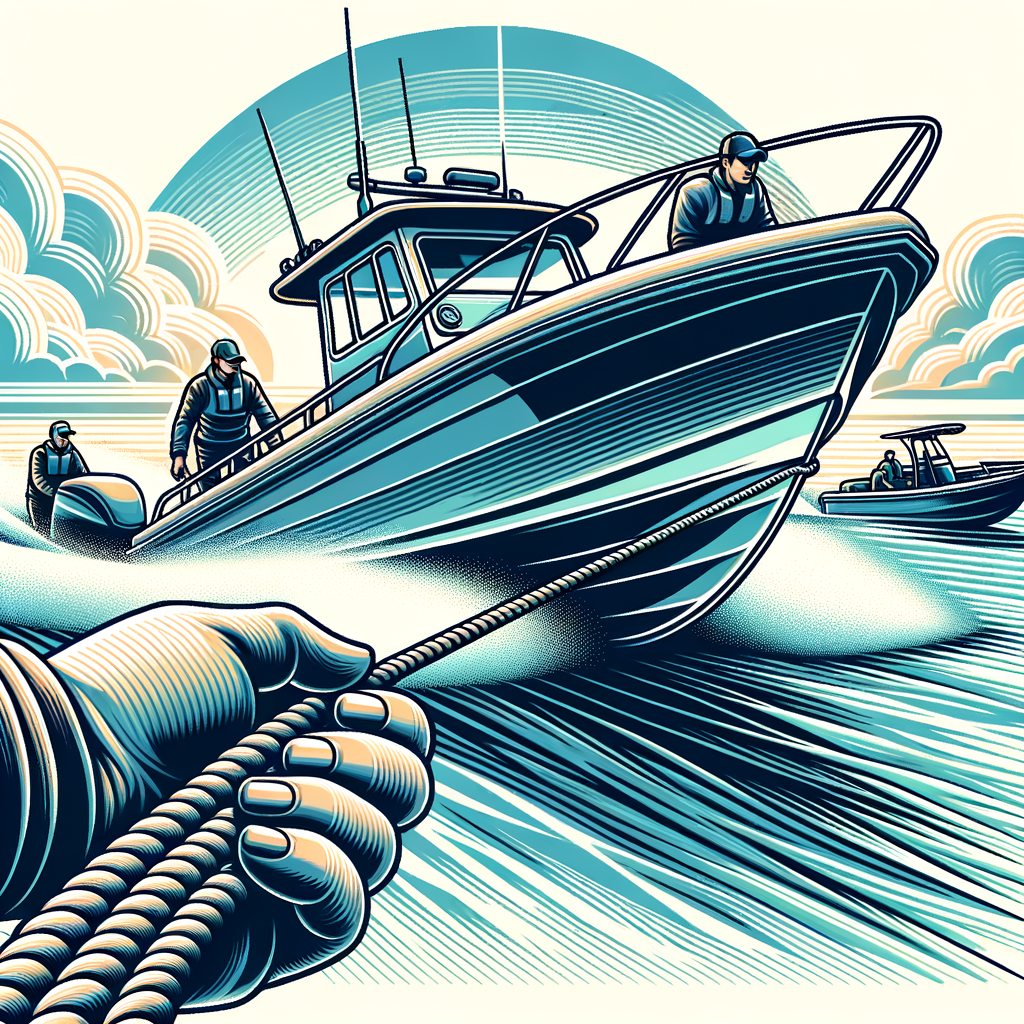
Executing the towing operation itself is where preparation comes to fruition. Start by establishing a secure towing connection. Make loops at each end of the tow line before securely connecting them to both vessels. Check the integrity of knots and the condition of fastenings, ensuring no slack. Maneuver both vessels into proper alignment before commencing the tow. The pulling boat should accelerate slowly, gradually increasing speed to avoid jerking, which can damage equipment or destabilize the towed boat. Balance speed with safety; excessive speed increases strain on the lines and reduces control.
Maintain a steady course, adjusting for water and weather conditions. Watch for signs of strain, such as stretching of lines or the towed vessel veering. Adjust speed and course as necessary, communicating any changes to the crew of the towed boat. Look out for oncoming traffic, utilizing sound signals as required by maritime rules. Engine adjustments might be necessary to maintain balance and control, particularly in choppy waters. Aim for a smooth, predictable ride, staying vigilant for obstacles or sudden changes. Pay careful attention during turns, which require wider arcs to prevent the towed boat from swinging around uncontrolled.
Emergency Preparedness
Despite careful planning, situations can arise where immediate action is required. Preparedness involves having defined protocols for emergencies, ensuring quick responses. Equipment such as bolt cutters or knives should be easily accessible for cutting lines if they become a hazard. Practice man-overboard and line retrieval drills, ensuring crew members can respond effectively. If the towed vessel begins taking on water or capsizing, disconnecting the tow may eliminate further risk. Similarly, machinery failure on the towing boat necessitates swift action to secure both vessels. Emergency signals, previously agreed upon, should be immediate and clear, initiating rapid responses. Rescue equipment like lifebuoys or floating devices should be on hand and accessible. Initiate emergency contact to local authorities if the situation escalates beyond control, indicating the nature of the problem and location. This maximizes assistance effectiveness, mitigating potential threats to life and property.
Conclusion
Towing another boat safely and legally demands a comprehensive understanding of regulations, equipment, and safety protocols. By investing time in preparation, understanding the right tools, and prioritizing safety, you can execute towing effectively. Familiarity with legal guidelines, assurance of insurance coverage, and adherence to communication protocols are fundamental. Choosing appropriate equipment tailored to the task, alongside meticulous preparation for every eventuality, supports a seamless towing experience. Crew readiness through emergency drills and constant communication ensures proactive management of potential threats. Remember, successful towing isn’t merely about moving a vessel from one point to another; it’s about ensuring each operation concludes safely and without incident. Strict adherence to procedures, coupled with alertness and adaptability, makes it possible to tackle unforeseen challenges. By mastering the art of towing, you contribute to safer waterways, upholding not just legal responsibilities but also the shared duty of maritime safety. Through knowledge and vigilance, towing becomes not only a task but a testament to competent and responsible seamanship.
Frequently Asked Questions
1. What equipment do I need to tow another boat safely?
Towing another boat requires specific equipment to ensure the process is both safe and efficient. First and foremost, you need a strong and reliable towing line, preferably a floating rope that’s visible on the water and prevents entanglements. A towing bridle can be crucial if you are pulling a heavier vessel, as it distributes the towing load evenly, minimizing stress on any single point. You’ll also need suitable cleats or towing eyelets on both boats to secure the tow line without risk of it slipping or causing damage. Additionally, it might be prudent to have a set of marine two-way radios for clear communication between both vessels. Equipment checklist complete, make sure to inspect each piece thoroughly to ensure it’s up to the task before setting out.
2. What are the essential safety tips for towing another boat?
Towing another boat safely isn’t just about tying a rope and going full throttle. Begin by conducting a safety briefing for everyone involved, ensuring they understand the tasks and risks. Establish a safe speed limit, avoiding sudden acceleration that could cause stress on tow lines or instability. Always maintain a steady speed and take wide turns to avoid dragging the towed vessel sideways. Visibility is critical; make sure both boats have working lights and signals, especially if towing at dusk or in low-visibility conditions. Personal flotation devices should be worn by everyone on board, and it’s advisable to have someone on lookout duty, watching for obstacles or sudden changes in the environment. And remember, always keep other boaters informed of your intentions by using light signals or a short blast from your horn.
3. What are the legal requirements for towing another boat?
Understanding the legal landscape of towing is paramount to staying compliant and avoiding fines or penalties. Laws can vary by region, so first check the local maritime regulations for any specific towing restrictions. Most jurisdictions require that the towing vessel has suitable capacity and power to handle the extra load; this means checking your boat’s weight limits and horsepower guidelines. Proper documentation for both boats is usually required, which suggests keeping your boat’s registration and proof of insurance on hand. You must also comply with the rules of the road (or waterway), which might mean obtaining a permit if the towed load exceeds certain size limitations. Additionally, ensure you have the necessary distress signals aboard, as towing often happens in emergencies. Familiarize yourself with any legalities pertaining to salvage rights, especially if towing an abandoned or derelict vessel.
4. How do you prepare the towing line and attach it to both boats?
Proper preparation of your towing line makes a significant difference in towing operations. Start by choosing a line appropriate for the weight of the towed boat, taking into account weather conditions and tension levels. Inspect the line for any frays or weak spots before use. If using a towing bridle, attach it securely to the cleats or winches of the towing boat—distributing the stress across multiple points. When ready to attach the line to the other boat, approach slowly to minimize tension and allow gentle, controlled attachment. It’s vital to thread the line through a fairlead to ensure it runs smoothly and doesn’t get damaged by chafing. Make sure knots are secure yet capable of being quickly released if necessary. Triple-check the connections once everything is set to guarantee the setup is sound and ready for action.
5. What should you do in an emergency while towing?
Emergency situations while towing can escalate quickly if not handled with care, so remain vigilant and prepared. If you encounter an obstacle or if the weather worsens, communicate immediately with the crew of the towed boat. This can be done via signals or marine radio. In the event of a line snapping, stay calm and retrieve the broken ends with caution, ensuring no one is in harm’s way. If the towed vessel begins to take on water or shows signs of distress, halt the tow and consider other means of rescue, such as bringing individuals aboard your boat or calling for professional help. Every crew member should know where safety equipment is located, including life jackets, flares, and first-aid kits. Regularly assess the situation to decide if it might be safer to release the towed boat, ensuring all actions comply with good seamanship and marine safety regulations. Always err on the side of caution, maintaining communication and clarity in every step you take during an emergency.