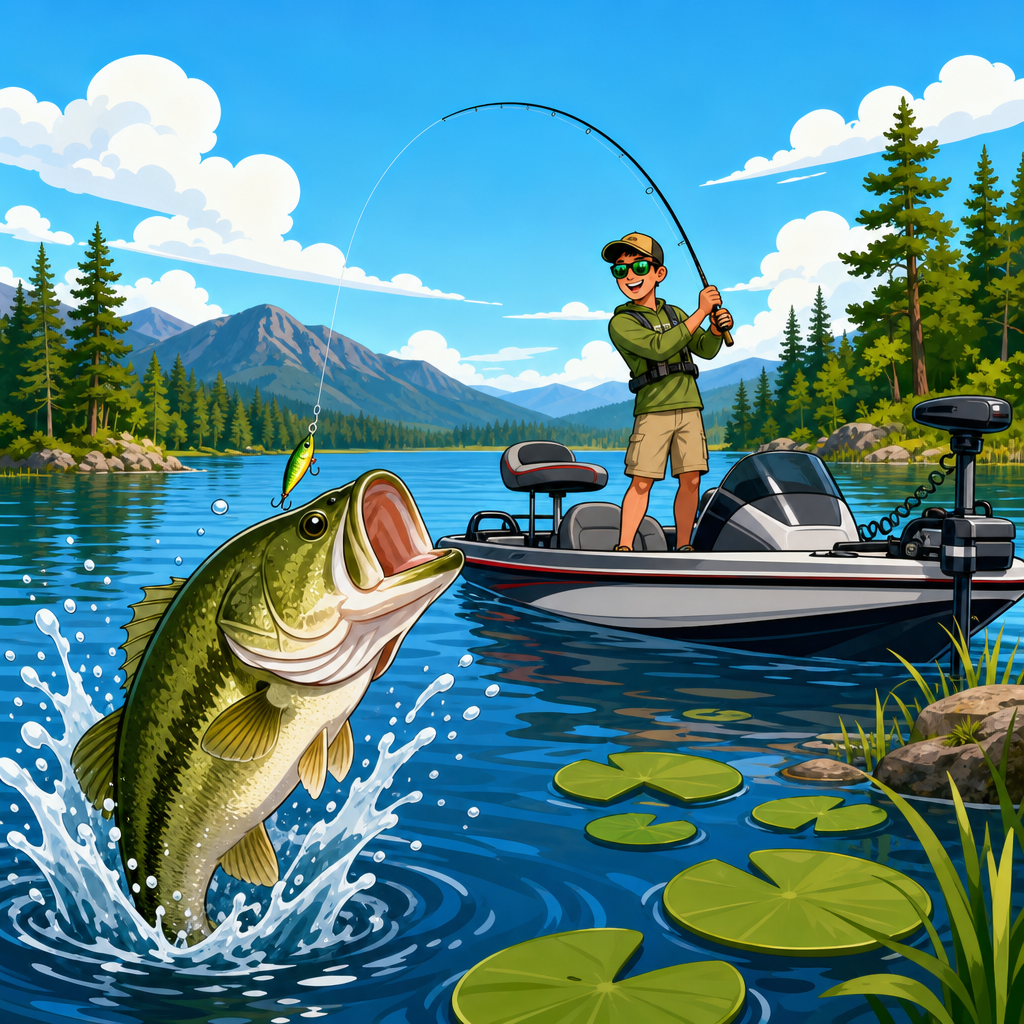
The best bass fishing lakes you can boat to in the U.S. combine navigable water, strong fish populations, dependable access, and the kind of regional character that turns a day of casting into a destination trip. In practical terms, a bass fishing lake earns that label when it gives boaters reliable ramps and marinas, enough fishable water to spread out, and realistic opportunities to catch largemouth, smallmouth, or spotted bass through multiple seasons. I have planned and run bass trips on reservoirs, natural lakes, and sprawling river impoundments, and the pattern is always the same: the most memorable waters are not only productive, they are easy to approach by boat and rewarding to learn over time. That matters for traveling anglers because fuel, lodging, launch logistics, and weather windows all affect whether a trip feels smooth or frustrating. This hub covers the best fishing destinations by boat with a bass focus, highlighting the lakes that consistently stand out across the country and explaining what makes each worth the run.
Bass fishing in the United States is not one thing. Florida’s vegetation-heavy fisheries demand different boat positioning than the clear, rocky reservoirs of the Ozarks or the deep highland impoundments of the Southeast. Water clarity, forage base, current, lake level management, and fishing pressure all shape how bass behave and how boaters should navigate. The lakes in this guide were chosen because they repeatedly produce quality fish, support recreational boating infrastructure, and offer enough variety to reward both visiting anglers and experienced tournament fishermen. Some are famous for giant largemouth; others are better known for numbers, bronzeback smallmouth, or mixed-species action. As a hub article, this page gives you the big-picture map of America’s top bass waters by boat so you can match your destination to your season, boat size, and fishing goals.
What Makes a Bass Fishing Lake Worth Boating To
The best bass fishing destinations by boat share five traits: healthy fisheries, navigable structure, dependable access, seasonal consistency, and surrounding trip support. Healthy fisheries start with habitat and forage. Lakes with threadfin shad, blueback herring, alewives, crawfish, bluegill, or stocked trout often grow bass faster than waters with limited food. Navigable structure means more than simple size. A great boating lake has fish-holding points, creek channels, grass lines, ledges, docks, bluff walls, offshore humps, and protected coves you can reach efficiently without spending half the day idling around hazards. Access includes quality public ramps, marina slips, fuel docks, parking, and clear local regulations. Seasonal consistency matters because a destination lake should fish through prespawn, spawn, summer offshore patterns, and fall feeding windows. Finally, trip support includes nearby lodging, tackle shops, guides, and service yards if something goes wrong with a trailer, lower unit, or electronics.
Boat access changes the bass equation dramatically. Shore anglers are limited to visible bank cover and public access corridors. Boaters can target secondary points during prespawn, pull up on offshore shell beds in summer, drift windblown main-lake shoals for smallmouth, or pick apart untouched backwater vegetation before recreational traffic starts. Modern sonar, GPS mapping, and trolling motors have only increased the advantage. Tools such as Humminbird LakeMaster, Garmin Navionics+, Lowrance C-MAP, Minn Kota Spot-Lock, and forward-facing sonar let anglers move safely and fish efficiently, but the lake still has to support that style of travel. Big open water with no protected launches can be dangerous in wind. Timber-filled reservoirs can punish fast runs if you do not know marked channels. The best bass lakes reward preparation, but they do not require local knowledge just to survive the first morning.
Top Southern Lakes for Largemouth Numbers and Size
If your primary goal is largemouth bass from a boat, the South still sets the standard. Lake Guntersville in Alabama remains one of the country’s most complete grass fisheries, with hydrilla, milfoil, eelgrass, creek mouths, bridges, and expansive ledges supporting fish all year. Boaters can launch from multiple public ramps, stay in towns with established tournament infrastructure, and fish shallow or offshore depending on conditions. Guntersville is famous for lipless crankbait and vibrating jig bites in late winter and spring, but summer ledge fishing and frog fishing over mats also produce heavyweight bags. Florida’s Lake Okeechobee is different but equally important. It is a vast, shallow system driven by vegetation, water management, and wind. When conditions line up, Okeechobee can deliver trophy largemouth around reed heads, hydrilla, pennywort, and eelgrass. Running safely there demands attention to marked trails and local reports, yet for boat anglers chasing a true giant, few waters compare.
Texas contributes several elite boating lakes. Sam Rayburn Reservoir is one of the most reliable big-bass destinations in the country, blending grass, drains, timber edges, and offshore structure. It has won a reputation for producing enormous tournament weights because it supports both numbers and size. Lake Fork, also in Texas, is more specialized. It is packed with standing timber and submerged cover, so navigation discipline matters, but its genetics and management have made it synonymous with trophy largemouth. California’s Clear Lake deserves mention despite fluctuating conditions because it remains a premier option for boaters targeting heavyweight fish around tule lines, docks, rock, and offshore grass. In the Carolinas and Georgia, Santee Cooper, Lake Murray, and Lake Seminole give traveling anglers strong alternatives, each with combinations of stump fields, grass, herring-influenced schooling behavior, and broad public access that make them productive and practical by boat.
Best Smallmouth and Mixed-Bass Lakes for Traveling Boaters
For anglers who prefer bronze-backed fish and clearer water, the northern tier and Tennessee River region offer some of the best bass fishing lakes in America. Lake St. Clair is arguably the country’s most consistent destination for numbers of quality smallmouth accessible by boat. Its shallow flats, grass, current influence, and goby-rich forage base support remarkable catch rates. A boater can launch near Detroit, run to Canadian-adjacent water where legal, and spend a full day drop-shotting, dragging tubes, or covering water with jerkbaits and swimbaits. The Great Lakes demand weather awareness, but on stable days St. Clair is hard to match. Lake Erie, particularly the western and central basins, offers even bigger smallmouth potential, though it requires larger-capable boats and more caution because conditions can deteriorate quickly.
Table Rock Lake in Missouri and Bull Shoals on the Missouri-Arkansas border are highland reservoirs where clear water, steep structure, and spotted bass and smallmouth mixes make boat control critical. These lakes reward electronics, disciplined casting angles, and seasonal movement tracking. Dale Hollow, straddling Tennessee and Kentucky, is historically significant as the birthplace of the world-record smallmouth and still provides exceptional bronzeback fishing around bluff ends, gravel transitions, and deep points. Cherokee Lake and Pickwick Lake are more current-oriented options with strong spring and winter smallmouth opportunities, especially where bait stacks along channel swings and hard-bottom staging areas. These lakes stand out because they offer not only excellent fisheries, but also enough marinas, ramps, and navigable lanes for out-of-state boaters to arrive with a plan and fish effectively within a day or two.
Seasonal Planning: Where to Go and When
Timing matters as much as destination. Prespawn is the most forgiving season for traveling bass anglers because fish group up, feed aggressively, and position predictably between wintering areas and spawning habitat. In February through April, depending on latitude, Guntersville, Okeechobee, Santee Cooper, and Lake Fork are prime choices for largemouth, while Table Rock, Cherokee, and Dale Hollow shine for smallmouth and spots. During the spawn, shallow cover and protected pockets become central, but this period can be volatile due to fronts, water-level changes, and local spawning regulations. Summer separates lakes that hold offshore fish well from lakes that become difficult under heavy recreational traffic. Rayburn, Pickwick, Kentucky Lake when healthy, and many Tennessee River impoundments fish best offshore around ledges, shell beds, and current seams, making boat electronics especially valuable.
Fall is often underrated for destination planning. Cooling water and bait migration push bass into creeks, onto flats, and around windblown banks, which creates excellent power-fishing opportunities for visiting boaters. Northern smallmouth lakes can be exceptional before turnover and late-season storms, while southern reservoirs often become more comfortable and less crowded after peak summer heat. Winter narrows the field but can be outstanding on lakes with stable forage and grouped fish. Clear southern impoundments such as Lanier, Hartwell, and Smith Lake produce with jerkbaits, underspins, and finesse tactics, while Florida and South Texas remain viable for trophy largemouth. The best approach is to match your travel window with a lake’s strongest seasonal pattern rather than chasing brand recognition alone.
| Lake | Primary Bass Strength | Best Season | Boating Note |
|---|---|---|---|
| Lake Guntersville | Largemouth size and numbers | Late winter through spring | Multiple ramps and strong tournament infrastructure |
| Lake Okeechobee | Trophy largemouth | Winter through early spring | Follow marked routes; wind can limit runs |
| Sam Rayburn | Big tournament bags | Spring and early summer | Excellent access and broad fishable water |
| Lake St. Clair | Numbers of quality smallmouth | Summer through early fall | Watch weather and cross-border rules |
| Dale Hollow | Smallmouth and spotted bass | Spring and fall | Deep clear water rewards mapping and sonar |
Boating Access, Safety, and Trip Logistics
Choosing the best bass fishing lake is not only about fish; it is also about how smoothly you can operate a boat there. Public ramps vary widely in quality. Some lakes, such as Guntersville, Rayburn, and Table Rock, have numerous well-maintained launches with ample parking, courtesy docks, nearby fuel, and marina services. Others may have outstanding fishing but fewer access points, shallow ramps during drought, or long no-wake zones that cut into fishing time. Before any destination trip, check lake level reports from the managing authority, whether that is the U.S. Army Corps of Engineers, TVA, a state wildlife agency, or a local water district. Corps and TVA lakes often post daily elevation and generation data that directly influence navigation and fish position.
Weather and boat fit are equally important. A 19- to 21-foot bass boat can handle large reservoirs well, but Great Lakes water like Erie and big open expanses like Okeechobee or Champlain demand serious attention to forecast, wind direction, and wave period. If you run a smaller aluminum boat, selecting protected reservoirs or riverine systems may be smarter than forcing a big-water itinerary. Carry updated charts, paper backups for unfamiliar water, a functioning VHF or reliable mobile communication plan where appropriate, and basic spare parts including trailer bearings, hub kits, prop hardware, and fuses. I have seen more trips compromised by preventable mechanical problems than by slow fishing. Smart travel planning means booking lodging close to the ramp, identifying backup launches for wind shifts, and knowing where the nearest marine service shop is before the first cast.
How to Choose the Right Lake for Your Boat and Fishing Style
The right destination depends on the intersection of your boat, your confidence level, and the type of bass fishing you actually enjoy. If you like shallow power fishing with spinnerbaits, frogs, flipping jigs, and vibrating jigs, fisheries with grass, wood, and broad flats will keep you engaged longer than ultra-clear deep reservoirs. That points you toward Guntersville, Okeechobee, Seminole, Santee Cooper, and Rayburn. If you prefer graphing offshore structure, chasing schools, and using drop shots, spoons, football jigs, or deep crankbaits, then Pickwick, Table Rock, Bull Shoals, Lanier, and Cherokee are better fits. For anglers who want constant action and are comfortable in open water, St. Clair is often the best trip in the country. For those who want one bite that could exceed eight or ten pounds, Lake Fork, Okeechobee, Clear Lake, and selected California Delta windows deserve priority.
This hub should also help you branch into narrower destination guides under the broader boating destinations and travel category. A family-friendly boating trip may call for a lake with beaches, marinas, and multi-species options in addition to bass. A serious tournament pre-practice trip may prioritize historical seasonal patterns, electronics-friendly contour mapping, and nearby tackle inventory. Budget matters too. Some marquee lakes have abundant affordable cabins and campgrounds; others become expensive during peak tournament weeks or vacation seasons. Start with three questions: What species mix do I want, what water can my boat safely handle, and what seasonal pattern do I fish best? Answer those honestly, and the best bass fishing lakes you can boat to in the U.S. become much easier to narrow down.
The best bass fishing lakes you can boat to in the U.S. are not simply the most famous names on tournament schedules. They are waters where fish populations, navigable structure, public access, and practical travel support come together to create repeatable success for real boaters. Southern lakes such as Guntersville, Okeechobee, Rayburn, and Fork lead the conversation for largemouth, while St. Clair, Erie, Dale Hollow, Table Rock, and Cherokee stand out for smallmouth or mixed-bass opportunities. Seasonal timing, launch quality, weather exposure, and your boat’s capabilities matter just as much as reputation. A lake that matches your strengths will usually outperform a legendary fishery that forces you outside your comfort zone.
Use this page as your starting point for planning the best fishing destinations by boat, then drill deeper into the lakes and regional guides that fit your schedule and style. When you choose a destination with the right seasonal window, safe boating conditions, and a fishery aligned with your strengths, your odds improve immediately. Make a shortlist, check current water and weather reports, and book the trip while the pattern is in your favor.
Frequently Asked Questions
What makes a lake one of the best bass fishing lakes you can boat to in the U.S.?
The best bass fishing lakes you can boat to in the U.S. are not defined by reputation alone. A truly standout lake has to work well for boaters first, and that means reliable public ramps, marina support, navigable water, clear channel marking where needed, and enough room to fish without feeling boxed in. From a bass angler’s perspective, the lake also needs a healthy and consistent fishery. That includes strong populations of largemouth, smallmouth, or spotted bass, solid forage, seasonal patterns that are dependable enough to plan around, and habitat variety such as points, creek arms, grass lines, timber, bluff walls, ledges, docks, or offshore structure.
Another major factor is fishability across more than one season. The best destination lakes are not just good for a short spring window. They give anglers real opportunities in prespawn, spawn, postspawn, summer, and fall, even if the patterns change. Lakes like that let boaters adapt rather than start from scratch every trip. Accessibility matters too. If you can launch easily, refuel, get bait, stay nearby, and run to multiple productive zones safely, the lake becomes much more than a place with bass in it. It becomes a practical bass destination. That combination of navigable water, dependable access, strong fish populations, and regional personality is what separates a famous lake from a genuinely great one for boating anglers.
Which regions of the U.S. offer the best boat-access bass fishing lakes?
Several regions consistently stand out, and each has its own style of bass fishing. The Southeast is often the first place anglers think of because it offers a deep lineup of productive, boat-friendly fisheries. Lakes across Texas, Alabama, Tennessee, Florida, Georgia, and the Carolinas regularly produce quality largemouth fishing, and many of them are supported by mature boating infrastructure, including large launch facilities, marinas, rental slips, fuel docks, lodging, and tournament-ready access. Reservoirs in this region often feature creek channels, offshore ledges, brush, grass, docks, and river current, which gives boaters a wide range of techniques to work with.
The Ozarks and Mid-South are also major destinations, especially for anglers who enjoy spotted bass and smallmouth mixed in with largemouth. Large highland reservoirs in Missouri, Arkansas, Oklahoma, and nearby states often have vast fishable water and enough arms, pockets, and secondary structure to spread out pressure. Farther north, the Great Lakes region and portions of the Upper Midwest offer outstanding smallmouth fishing, with clear water, rock, shoals, islands, and long runs that reward experienced boaters. These fisheries can be phenomenal, but they also demand more attention to wind, wave conditions, and seasonal weather.
Out West, certain California and desert reservoirs have long been respected for trophy potential and year-round fishability, though water conditions and access can vary more from season to season. In short, the “best” region depends on what kind of bass fishing trip you want. If you want vegetation and heavyweight largemouth, the Southeast is hard to beat. If you want clear-water structure and mixed-species action, highland reservoirs are excellent. If your goal is bronzebacks and expansive open-water boating, northern waters deserve a serious look.
What should boaters look for before planning a bass fishing trip to a destination lake?
Start with access and navigability. Before choosing a lake, verify ramp quality, launch fees, parking capacity, marina locations, fuel availability, and water-level conditions. Some lakes fish very differently when water is high, low, muddy, or under heavy current generation schedules, so it is smart to check recent reports from marinas, local fisheries agencies, and weather sources. If the lake is large, look at how far you may need to run between productive areas and whether your boat setup matches the water. A destination lake can be incredible on paper and still be a poor fit if long runs, rough open water, or submerged hazards make it stressful for your particular rig.
Next, think through the seasonal pattern you are targeting. Prespawn and spawn trips can offer high numbers and visible fish movement, but they also draw pressure. Summer can be excellent on ledges, deep brush, grass, and current-related structure, while fall often creates fun reaction-bait fishing as bass chase bait into creeks and flats. Winter can be surprisingly productive on some southern lakes, especially for anglers comfortable with slower presentations. Match your timing to the type of fishery you want to fish rather than just picking dates at random.
It also helps to research local regulations, horsepower restrictions if any, no-wake zones, tournament schedules, and nearby services. A major event can change ramp traffic, lodging prices, and fishing pressure overnight. Finally, build a practical plan: identify two or three launch options, mark safe travel routes, save marina phone numbers, and prepare for changing weather. The most enjoyable bass trips usually come from planning not just where the fish should be, but how the day on the water will actually work from launch to loading back up.
Are the best bass lakes better for largemouth, smallmouth, or spotted bass?
That depends entirely on the lake, and many of the best boat-access fisheries are valuable precisely because they offer more than one quality bass option. Some lakes are known primarily for largemouth because they combine shallow cover, grass, wood, docks, and fertile water that grows heavy fish. These are often the destinations anglers choose when they want the chance at a personal-best bass or a high-volume day flipping, winding, frogging, or fishing offshore schools. Florida-style natural lakes and many major southern impoundments fit this profile.
Other destination lakes are best known for smallmouth, especially in clear, rocky systems where current, shoals, points, and offshore structure dominate the pattern. These trips often appeal to anglers who like moving around, graphing structure, and fishing with finesse tactics, jerkbaits, topwaters, or swimbaits. Then there are lakes famous for spotted bass, particularly in deep, clear reservoir systems with standing timber, bluff transitions, cane piles, brush, and suspended bait. Spotted bass lakes can be outstanding for action and are often extremely pattern-driven, which makes them fun for anglers who enjoy electronics and offshore precision.
The strongest overall bass destinations are often the ones that provide a mix. A boater might spend the morning targeting largemouth in creek arms or grass, then move to rocky points or offshore structure for smallmouth or spots later in the day. That diversity is a huge advantage on a travel trip because it gives you backup plans if weather, water clarity, or fishing pressure changes. So rather than asking whether the best lakes are only for one species, it is more useful to ask which species a lake does best, what seasonal patterns support it, and whether the fishery is versatile enough to stay productive throughout your trip.
How can anglers get the most out of a bass fishing trip on a major destination lake?
The best approach is to treat the trip like a mix of boating plan, fishing strategy, and local learning opportunity. Start by narrowing your water. On large destination lakes, anglers often waste time trying to sample everything. A better plan is to pick one major section of the lake, learn its seasonal pattern, and fish it thoroughly. Focus on the structure and cover most likely to hold bass for the time of year, whether that is staging points, spawning pockets, offshore humps, grass edges, creek channels, bluff ends, or dock-heavy pockets. Major lakes reward efficiency, and efficiency usually starts with saying no to unproductive water quickly.
Use your electronics and mapping aggressively, especially if you are on a reservoir with ledges, brush, channel swings, or offshore schools. Good graphs, current mapping, and waypoint management can save hours and help you repeat productive patterns across the lake. At the same time, do not ignore obvious shallow opportunities. On many famous lakes, especially in transitional seasons, the winning pattern may be less about fishing “deep” or “shallow” and more about identifying the specific type of place fish are using that week. That could be windy secondary points, isolated grass in cleaner water, marina-adjacent docks, or creek-mouth breaks with bait nearby.
It also pays to lean on local knowledge without depending on it completely. Talk to marina staff, tackle shops, and guides to understand current conditions, but use that information to shorten your learning curve rather than copy a single report. Conditions change fast on big lakes. Weather, current generation, water color, and angling pressure can move fish in a day. Finally, leave room to enjoy the destination itself. The best bass fishing lakes in the U.S. are memorable not just because of what they produce, but because of the experience around them: scenic runs, regional food, well-run marinas, and the satisfaction of figuring out a fishery by boat. When you combine preparation with flexibility, you give yourself the best chance at both a productive day and a trip worth repeating.